
Reviewed · AGRA DAY TRIPS FROM DELHI
3 Days Golden Triangle Tour Delhi Agra Jaipur by Private AC Car
A whirlwind Golden Triangle without the stress. You’ll move fast between Delhi, Agra, and Jaipur, with private AC comfort and guide help, so you can hit the big landmarks in just three days. I like that the route is built for getting a lot done—Qutub Minar, Lotus Temple, Humayun’s Tomb, Taj Mahal, Agra Fort, and Jaipur’s forts and palaces—without you planning each leg. One possible drawback: you’ll be spending a lot of time on the go, so if you crave slow sightseeing and deep museum time, this pace may feel tight.
Two things I especially like: first, the focus on high-impact sights that explain the story of the Mughal and Rajput eras, like Taj Mahal paired with Agra Fort, and Hawa Mahal paired with the observatory at Jantar Mantar. Second, the tour has a track record of guides and drivers who are genuinely professional and friendly—people like Mr. Vicky in Agra, plus drivers such as Anil and Manoj—so you’re not just “transported,” you’re guided. The main consideration is cost beyond the tour price: monument entrance fees are extra, and they can add up, so I’d budget for that up front.
In This Review
- Key Highlights Worth Paying Attention To
- Golden Triangle in Three Days: Fast, Focused, and Practical
- Delhi Day 1: Qutub Minar, Lotus Temple, and the Old Delhi Wall of Energy
- Qutub Minar: A tall start with real medieval power
- Lotus Temple: Peaceful design break before the bustle
- Red Fort and the big-government sweep: pass by, then move on
- Agrasen Ki Baoli and the stepwell atmosphere
- Humayun’s Tomb: First garden mausoleum energy
- Connaught Place and the food stop you can actually use
- Chandni Chowk and Jama Masjid: where the city tightens
- Khari Baoli: spice wholesale, hands-on atmosphere
- End of the day: drive to Agra and hotel drop
- Agra Day 2: Sunrise Taj Mahal and the Fort That Explains Power
- Taj Mahal early in the morning: the photo you didn’t have to fight for
- Agra Fort: palaces and courtyards with UNESCO gravitas
- Itmad-ud-Daulah: the so-called Baby Taj
- Agra food break and then a drive to Jaipur
- Jaipur Day 3: Fort Views, Hawa Mahal Windows, and Jantar Mantar’s Logic
- Jaigarh Fort: on the Aravalli hills
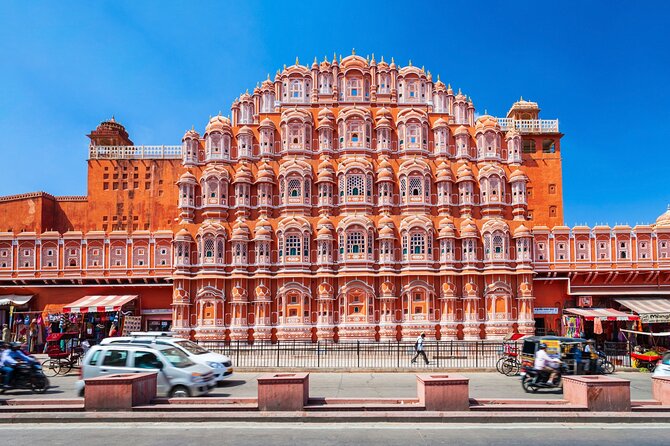
- Hawa Mahal: 953 windows and a quick photo blitz that still makes sense
- City Palace: courtyards, gardens, and the center of town
- Jal Mahal: the palace in the lake
- Jantar Mantar: UNESCO observatory with practical science vibes
- Return drive to Delhi or drop at Jaipur airport
- Private AC Car Logistics and Why It Changes Your Whole Trip
- Price and Value: $250 Tour Fee Plus Entrance Fees
- Who This Tour Suits Best (and Who Might Want More Time)
- Should You Book This 3-Day Golden Triangle Tour?
- FAQ
- What’s included in the $250 per person price?
- Are monument entrance fees included?
- What time can I be picked up in Delhi?
- Is this tour private?
- How are tickets handled?
- What happens if I cancel?
Key Highlights Worth Paying Attention To
- Private AC car with a professional driver, plus hotel/airport pick-up and drop-off across Delhi, Agra, and Jaipur
- Government-approved local guides at sightseeing stops, not just a quick handoff
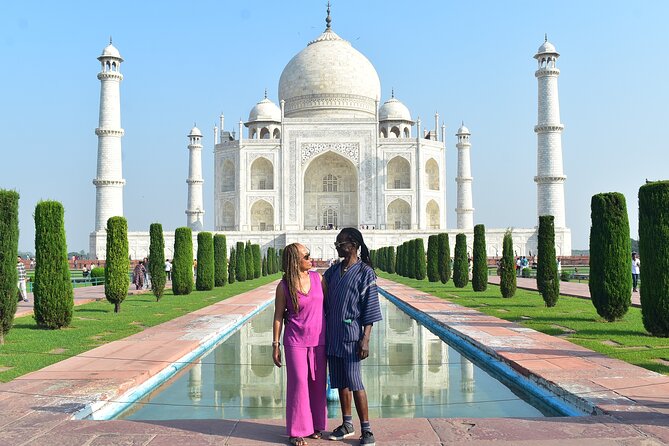
- A dawn-style Taj Mahal visit timed early so you get the classic morning mood
- Delhi’s mix of monuments and markets, from Qutub Minar and Humayun’s Tomb to Chandni Chowk and Khari Baoli
- Jaipur “icon day” hits: Hawa Mahal, City Palace, Jal Mahal, and Jantar Mantar
- Pro-level service feedback in reviews, including clear explanations and tailoring for families with kids
Golden Triangle in Three Days: Fast, Focused, and Practical
This is a straightforward Golden Triangle tour with a simple promise: see the top sights in Delhi, Agra, and Jaipur in about three days, using a private car and local guides. That matters because North India distances add up quickly, and good routing is half the battle.
The day-by-day structure is also designed around timing. Delhi starts with a pickup window in the morning, and Agra builds toward an early Taj Mahal visit. Jaipur is planned as a single sight-heavy day after breakfast.
The smart part for most visitors: you get a clean flow with fewer decisions. You’re still going to walk, climb, and manage your own hydration and comfort, but you won’t be stuck figuring out tickets, meeting points, or transport between cities.
Other Agra runs out of Delhi worth a look




Delhi Day 1: Qutub Minar, Lotus Temple, and the Old Delhi Wall of Energy
Day 1 is a full Delhi sampler—new-city architecture, major monuments, and then Old Delhi markets. If you’ve only got limited time, this first day gives you immediate context for what you’ll see later.
Qutub Minar: A tall start with real medieval power
You’ll begin with Qutub Minar, a UNESCO World Heritage site erected in 1193 by Qutub-ud-din Aibak. This minaret is inspired by the Minaret of Jam and is famous for its carvings, so it’s a strong opener if you want your trip to feel anchored in history.
The stop is about an hour, which is long enough to get photos, understand the structure, and notice details. If you’re prone to rushing, set your pace early—Qutub Minar rewards slow looking.
Lotus Temple: Peaceful design break before the bustle
Next comes the Lotus Temple, completed in 1986. It’s a Bahá’í House of Worship with flower-like architecture, and it’s open to people of all religions, which gives the day a calmer emotional tone.
This is a shorter stop (around 30 minutes). That’s fine, because it’s more about the design and atmosphere than a long program. Dress comfortably, keep your expectations simple, and let the shapes do the work.
Red Fort and the big-government sweep: pass by, then move on
You’ll pass by the Red Fort, a huge Mughal fortress built between 1639 and 1648 by Shah Jahan. Even though you’re not entering, it’s still worth mentally clocking because you’ll see the fortress story echoed again later at Jama Masjid and Chandni Chowk.
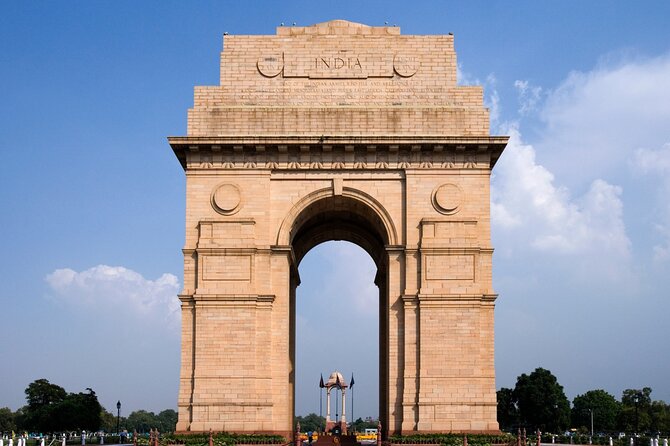
You’ll also pass by the Tomb of the Unknown Soldier (with 13,300 Indian army names from World War I) and the 330-acre New Delhi area built starting in 1929 by Sir Edwin Lutyens and Herbert Baker. Plus, you’ll pass Parliament House, home to Lok Sabha and Rajya Sabha.
This “pass by” sequence is useful if you want orientation. Delhi can feel confusing at first; seeing these landmarks even from the road helps you map the city fast.
Chasing the Pink City? More Jaipur day trips

Agrasen Ki Baoli and the stepwell atmosphere
Then it’s Agrasen ki Baoli, an old stepwell in Delhi. It’s known for its architecture and a mood that feels eerie or ominous, and it’s linked to urban legends and paranormal activity.
It’s only about 30 minutes, so you won’t be stuck. Still, stepwells like this are exactly the kind of place that makes the Golden Triangle feel more than just postcard landmarks.
Humayun’s Tomb: First garden mausoleum energy
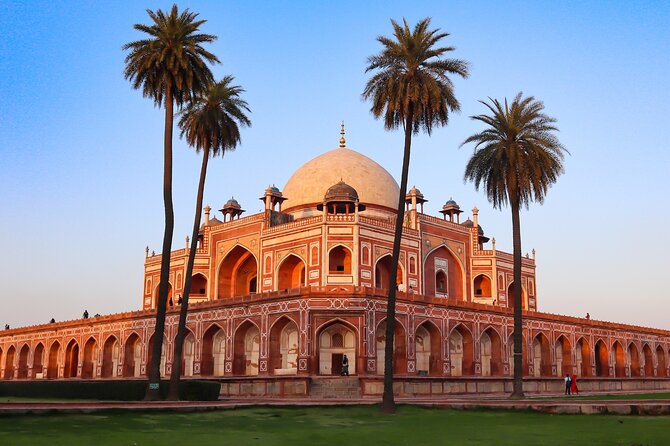
After that, you’ll reach Humayun’s Tomb, another UNESCO World Heritage site and described as India’s first garden mausoleum. Commissioned by his wife after his death, it’s a key Mughal architecture stop with a planned garden setting.
You’ll have about an hour. That’s enough to understand the garden-mausoleum idea rather than just snapping pictures and leaving.
Connaught Place and the food stop you can actually use
At Connaught Place, your guide sets you up for lunch-style browsing and local food options. This stop is about 45 minutes, and since it’s not tied to a single ticketed attraction, it’s a flexible reset.
I like this break because it keeps you from grabbing the same generic meal at the same times every day. Ask your guide what’s good and what to avoid based on spice level and crowding.
Chandni Chowk and Jama Masjid: where the city tightens
Then comes Chandni Chowk, one of the center points of Old Delhi. It’s a lively bazaar where you’ll find stalls selling spices, dried fruits, silver jewelry, and colorful saris, and the lanes are narrow.
Right after, you’ll go to Jama Masjid, India’s biggest mosque, built in 1656 with help from 5,000 people. It sits opposite the Red Fort in Old Delhi, with a large red sandstone courtyard.
Both stops are around an hour each. This is where your senses turn up. If you want a smoother experience, keep your pace slow in the market lanes and don’t try to “cover everything.” Pick a few side streets, watch how people shop, and move when it feels crowded.
Khari Baoli: spice wholesale, hands-on atmosphere
Finally on Day 1, you’ll visit Khari Baoli, described as Asia’s biggest wholesale spice market. It sells spices, herbs, and dried fruits, and it’s only about 30 minutes.
This is a great place to buy small souvenirs like spice mixes—if you want edible memories instead of plastic ones. Just remember: markets like this can be intense for your nose. Bring a scarf or keep tissues handy.
End of the day: drive to Agra and hotel drop
Once Delhi sightseeing ends, you’ll travel to Agra by car and be dropped at your hotel to rest. The drive portion is about three hours, which is reasonable for a tour day that’s already packed.
Agra Day 2: Sunrise Taj Mahal and the Fort That Explains Power
Day 2 is classic Golden Triangle: Taj Mahal early, then Agra Fort, plus a side stop with Itmad-ud-Daulah. The pacing is tight, but the order makes sense.
Taj Mahal early in the morning: the photo you didn’t have to fight for
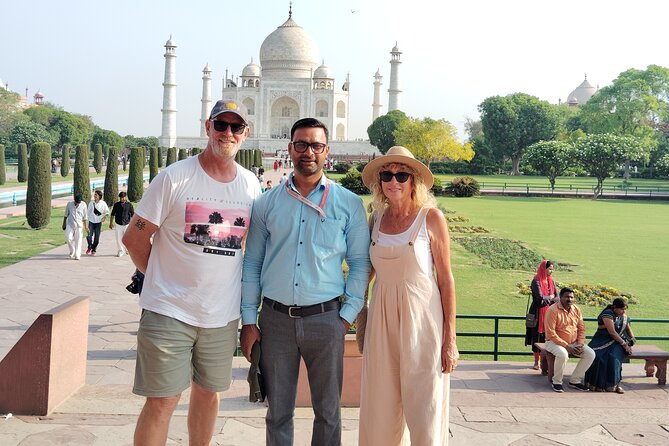
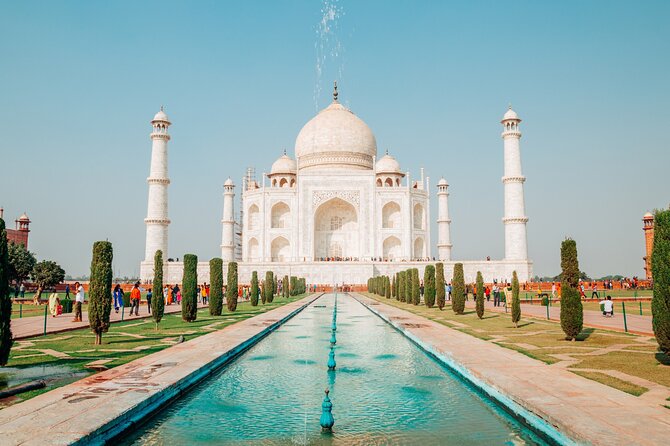
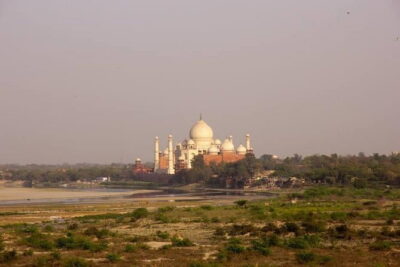
You’ll visit the Taj Mahal in the morning for a dawn view. It’s a white marble mausoleum built by Emperor Shah Jahan in 1630 for Mumtaz Mahal, and early timing helps you see it in its softest light.
You’ll have about three hours here, which is a good window. It’s long enough to walk the main areas, understand the symmetry concept, and take breaks without feeling like you’ve been rushed.
Agra Fort: palaces and courtyards with UNESCO gravitas
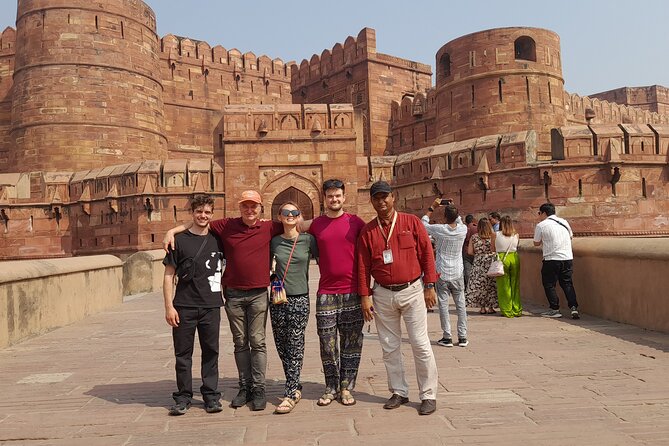
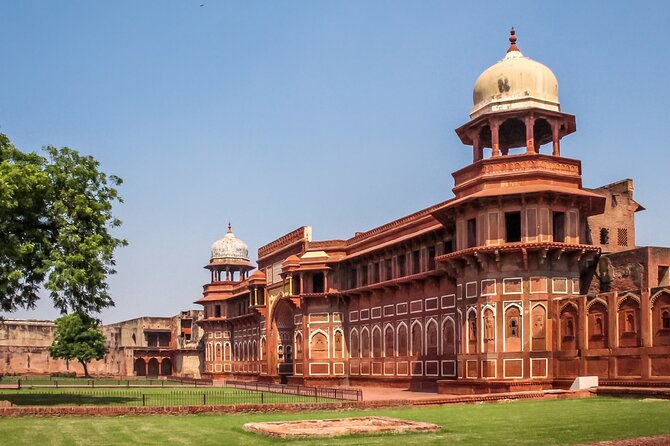
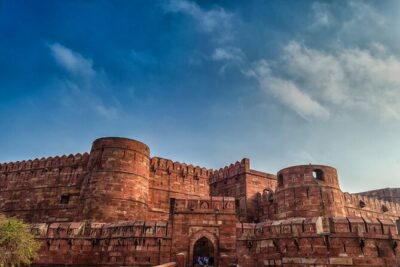
Next is Agra Fort, a UNESCO World Heritage Site and a 17th-century fortress. It’s known for magnificent pavilions, palaces, and courtyards, described as a striking fusion of Islamic styles.
This stop is shorter (about an hour), but it works as a companion to the Taj visit. If the Taj Mahal feels like love and beauty, the Fort helps you remember power, control, and the political world around the monument.
Itmad-ud-Daulah: the so-called Baby Taj
Then you’ll see Itmad-ud-Daulah, often called the Baby Taj. It’s noted as the first Mughal monument with elaborate pietra dura inlay work, and it’s made completely of white marble.
This is a brief stop (around 30 minutes). I’d treat it as a detail-and-materials stop, not a long wander. If you love seeing craftsmanship up close, you’ll appreciate the time.
Agra food break and then a drive to Jaipur
After sightseeing, you’ll have a 45-minute food stop in Agra based on your guide’s recommendations. Then you drive to Jaipur, with about four hours of travel and a hotel drop for the night.
This is one of the reasons I like this tour for value: transport between cities is handled for you in one private push, so you don’t burn half a day negotiating taxis or waiting for rides.
Jaipur Day 3: Fort Views, Hawa Mahal Windows, and Jantar Mantar’s Logic
Jaipur is where the tour shifts from monuments to identity—Rajput architecture, city planning ideas, and landmark silhouettes.
Jaigarh Fort: on the Aravalli hills
Day 3 starts after breakfast with Jaigarh Fort, built in 1726 by Maharaja Sawai Jai Singh II. It sits atop the Aravalli hills, so even without turning this into a “viewing day,” the location helps you feel where power and protection were meant to be.
You’ll have about two hours. That’s enough to walk key sections without feeling like you have to rush to the next stop.
Hawa Mahal: 953 windows and a quick photo blitz that still makes sense
Next is the famous Hawa Mahal or Palace of the Winds. It’s a five-story pink and red sandstone palace built in 1799, designed with 953 tiny windows called jharokhas.
The stop is short (about 30 minutes). Still, it’s one of those landmarks where a short visit works—once you understand what the windows are for, you get the idea fast and your photos turn out better.
City Palace: courtyards, gardens, and the center of town
Then you’ll explore the City Palace of Jaipur, located in the center of Jaipur. It’s described as housing gardens and courtyards, and as an architectural wonder with parts that were once royal.
This stop lasts about an hour. I like the length because it’s enough to see how it feels inside without turning it into a full museum-day.
Jal Mahal: the palace in the lake
After that is Jal Mahal, a 17th-century palace in the middle of Man Sagar Lake, in traditional Rajput style. It’s about 30 minutes, focused on views rather than long galleries.
If you want a calmer moment after the fort and palace walking, this works well. Keep expectations realistic: it’s a scenic stop built around the setting.
Jantar Mantar: UNESCO observatory with practical science vibes
Finally comes Jantar Mantar, a UNESCO World Heritage site and one of India’s best-preserved historic observatories. It’s connected to Maharaja Sawai Jai Singh, and it’s a good way to finish because it reminds you these civilizations measured the world, not only decorated it.
The stop is about 30 minutes. Again, quick but effective. If you ask your guide how the structure worked, you’ll get more out of it than just taking a few wide shots.
Return drive to Delhi or drop at Jaipur airport
At the end, you’ll return toward New Delhi in a drive that’s about four hours. There’s also an option for drop-off at Jaipur Airport if your timing works better.
Private AC Car Logistics and Why It Changes Your Whole Trip
A private AC car is one of the biggest reasons this tour feels easier than DIY. You don’t have to schedule separate rides between monuments, and you avoid losing time coordinating check-ins and meet-ups.
You also get hotel/airport pick-up and drop-off in Delhi, Agra, and Jaipur, and the tour is set up as private activity for your group only. That means your guide can adjust pacing if your group moves slower or faster, and it can matter a lot when you’re mixing big-ticket sights and market lanes.
The most praised aspect in reviews is the service tone and clarity. People highlighted guides like Mr. Vicky for professional, friendly explanations of Taj Mahal and Agra Fort. Other mentions included drivers like Anil and Manoj, with Manoj especially described as communicative, on time, and supportive with small essentials like water.
I’d treat that as a strong signal: the people assigned to you aren’t just steering; they’re helping you understand what you’re seeing.
Price and Value: $250 Tour Fee Plus Entrance Fees
The headline price is $250 per person for a 3-day Golden Triangle with a private AC car, professional driver, local guides, and transport between cities. You also get pickup options across Delhi NCR areas, plus the tour includes mobile ticket and confirmation at booking.
What’s not included is the big variable: entrance fees to monuments are listed as $70.00 per person. That means your true budget is closer to $320 per person, plus tips.
For value, here’s how I see it:
- If you’re traveling as a family or group, the private car cost is easier to justify.
- If you hate planning and want guides at major sites, this price starts to look fair fast.
- If you’re a super fast independent traveler who already knows how to book and navigate tickets, you might find lower-cost alternatives, but you’ll trade convenience.
Also, entrance fees aren’t optional in practice if you want full access. So I recommend mentally setting that money aside before you land.
Who This Tour Suits Best (and Who Might Want More Time)
This tour is best for people who want a clear checklist outcome: Delhi big monuments, Taj Mahal at the right time, and Jaipur’s key icons. It’s also a strong match if you want help with logistics and prefer private comfort over public transport.
It’s especially suitable if you’re traveling with kids or mixed-age groups. One review mentioned a guide tailoring the tour to young kids, and that kind of flexibility is exactly what you want when energy levels vary.
Who might feel cramped: anyone who wants long, slow time in museums, deep craft workshops, or lots of off-the-map wandering. With market lanes, forts, tombs, and palaces, walking time adds up.
Should You Book This 3-Day Golden Triangle Tour?
I’d book it if you want a guided, private Delhi–Agra–Jaipur sprint that hits the big sights in a logical order and handles transport between cities. The early morning approach for the Taj Mahal and the pairing of Mughal sites in Delhi and Agra are practical choices, not random stops.
I’d pause before booking if you hate tight schedules or you’re budgeting hard and don’t want to add the $70 entrance fees on top of the tour price. If that sounds like you, consider adding more days so you can slow down where you care most.
If you do book, do one thing that makes a difference: go into Day 1 expecting busy lanes and sensory overload, and pace yourself. Then let the dawn Taj day and the Jaipur icon day be your payoff days.
FAQ
What’s included in the $250 per person price?
The tour includes a private air-conditioned car with a professional driver, hotel/airport pick-up and drop-off in Delhi, Agra, and Jaipur, sightseeing with government-approved local guides, and all parking fees, tolls, fuel, taxes, and service charges. It may also include two nights accommodation if you choose the hotel option.
Are monument entrance fees included?
No. Entrance fees to monuments are listed as $70.00 per person and are not included in the tour price. Gratuities/tips are also not included.
What time can I be picked up in Delhi?
Pickup is available from places in Delhi NCR such as Delhi, Noida, Gurugram, Ghaziabad, or Faridabad, with a choice of pickup time between 7 a.m. and 11 a.m.
Is this tour private?
Yes. It’s a private tour/activity, and only your group will participate.
How are tickets handled?
You’ll receive a mobile ticket.
What happens if I cancel?
This experience is non-refundable and cannot be changed for any reason. If you cancel or ask for an amendment, the amount you paid will not be refunded.
The Full Golden Triangle, More Options
- 3-Days Private Golden Triangle Tour: Delhi, Agra & Jaipur by Car
★ 5.0 · 1,107 reviews - 3-Days Private Golden Triangle Tour: Delhi, Agra & Jaipur by Car
★ 5.0 · 1,098 reviews - 3-Day Delhi, Agra and Jaipur Private Tour – India Golden Triangle
★ 5.0 · 812 reviews - Four-Day Private Luxury Golden Triangle Tour to Agra and Jaipur From New Delhi
★ 5.0 · 807 reviews - 5 Nights 6 Days Private Golden Triangle Tour – Delhi Agra Jaipur
★ 5.0 · 574 reviews
Onward to Jaipur: More Day Trips
- 3-Days Private Golden Triangle Tour: Delhi, Agra & Jaipur by Car
★ 5.0 · 1,107 reviews - 3-Days Private Golden Triangle Tour: Delhi, Agra & Jaipur by Car
★ 5.0 · 1,098 reviews - 3-Day Delhi, Agra and Jaipur Private Tour – India Golden Triangle
★ 5.0 · 812 reviews - Four-Day Private Luxury Golden Triangle Tour to Agra and Jaipur From New Delhi
★ 5.0 · 807 reviews - Jaipur Day Trip from Delhi by Car or Train – All Inclusive
★ 5.0 · 663 reviews
More Agra Day Trips out of Delhi
- Same Day Taj Mahal, Agra Fort & Baby Taj Tour from Delhi by Car
★ 5.0 · 4,304 reviews - Full Day Taj Mahal, Agra Fort & Baby Taj Tour from Delhi by Car
★ 5.0 · 3,647 reviews - From Delhi: Taj Mahal & Agra Private Day Trip with Transfers
★ 4.9 · 3,181 reviews - From Delhi: Taj Mahal and Agra Fort Private Sunrise Tour
★ 4.9 · 2,270 reviews - Sunrise Taj Mahal, Agra Fort & Baby Taj Tour from Delhi by Car
★ 5.0 · 2,243 reviews
Just added: more New Delhi reviews to browse
- 7 Days Golden Triangle Private Tour – Delhi Agra Jaipur Tour from Delhi★ 5.0 · 5 reviews
- 5-Day Private Luxury Golden Triangle Tour to Agra and Jaipur★ 5.0 · 5 reviews
- Agra: Taj Mahal Vip tickets with Professional Photographer★ 3.6 · 5 reviews
- Taj Mahal Tour By Superfast Train From Delhi★ 5.0 · 5 reviews
- Private Night View of Delhi Tour 4 Hours★ 5.0 · 5 reviews
- From Delhi: Same Day Taj Mahal, Agra Day Tour By Car★ 5.0 · 5 reviews
Agra Day Trips from Delhi, compared.
 ★ 5.0Same Day Taj Mahal, Agra Fort & Baby Taj Tour from Delhi by CarFrom $624,304 reviews
 ★ 5.0Full Day Taj Mahal, Agra Fort & Baby Taj Tour from Delhi by CarFrom $623,647 reviews
 ★ 4.9From Delhi: Taj Mahal & Agra Private Day Trip with TransfersFrom $43,181 reviews
 ★ 4.9From Delhi: Taj Mahal and Agra Fort Private Sunrise TourFrom $592,270 reviews
 ★ 5.0Sunrise Taj Mahal, Agra Fort & Baby Taj Tour from Delhi by CarFrom $622,243 reviews
 ★ 5.0Taj Mahal and Agra Private Car Tour from Delhi with 5* LunchFrom $331,633 reviews
 ★ 4.9From Delhi: Private Taj Mahal and Agra Tour by Express TrainFrom $751,605 reviews
 ★ 5.0Taj Mahal, Agra Fort, Baby Taj Tour from Delhi by Superfast TrainFrom $751,494 reviews
Browse the lists this tour appears in