
Golden Triangle in 7 days feels fast. That pace is the whole point: you move between Delhi, Agra, and Jaipur with smooth air-conditioned transfers and a set of big-name sights that stay doable. I like that you get a private format (just your group) with professional, long-experienced guides, plus a real focus on getting you to the right places at the right time, including a Taj Mahal visit when sunrise is recommended. The one thing to watch is that not every monument day lists admissions the same way, so you’ll want to confirm what’s included for your specific dates.
What also works well is the mix of classic monuments and one more local-feeling night: in Jaipur, you get an evening at Chokhi Dhani with Rajasthani food and live entertainment. I especially like how the Delhi day layers Old Delhi flavor (Jama Masjid and a rickshaw ride) with New Delhi landmarks like India Gate and Humayun’s Tomb. The possible drawback is simple: you’ll be without dinner in your package, so you’ll need to plan where you’ll eat most evenings.
In This Review
- Key Things I’d Pay Attention To
- Value Check: What You’re Really Paying For
- Day 1 in Delhi: Airport Welcome and a Real Start
- Day 2 in Delhi: Jama Masjid, Rickshaw Ride, and the New Delhi Contrast
- Day 3: Transfer to Jaipur and the Chokhi Dhani Night
- Day 4 in Jaipur: Amber Fort, Hawa Mahal, Jal Mahal, City Palace, and Jantar Mantar
- Day 5: Fatehpur Sikri and Chand Baoli En Route to Agra
- Day 6 in Agra: Taj Mahal at Sunrise and the Fort + Baby Taj Combo
- Day 7: Back to Delhi and Airport Transfer for Your Next Step
- Guides, Drivers, and Service Style: What Stands Out
- Food Notes: Breakfast and Lunch, Then Plan Your Evenings
- Who This Tour Fits Best
- Should You Book This 7-Day Golden Triangle Private Tour?
- FAQ
- What is the duration of the tour?
- How much does the 7-day Golden Triangle private tour cost?
- Is pickup included?
- Is this tour private?
- Where does the tour start?
- Are meals included?
- Are monument entrance fees included?
- What are the highlight activities in Delhi and Jaipur?
- What is the cancellation window?
- What’s the best way to plan around Taj Mahal timing?
Key Things I’d Pay Attention To
- Private tour for your group means less waiting around and a more flexible pace with your guide
- Sunrise recommendation for Taj Mahal helps you time one of India’s most photographed sights
- Old Delhi + rickshaw ride gives you a quick, sensory contrast to the grand monuments
- Jaipur fort day packs Amber Fort, Hawa Mahal, Jal Mahal, City Palace, and Jantar Mantar into one sweep
- Chokhi Dhani night adds food and performances beyond temples and palaces
Value Check: What You’re Really Paying For
At $700 per person, this is a mid-range private Golden Triangle option. You’re not just buying a ride between cities. You’re paying for a schedule that strings together major UNESCO sites and iconic landmarks, plus the on-the-ground support that makes the days run smoothly.
Inclusions listed for the tour are a few practical items that add up: bottled drinking water, breakfast (6), lunch (6), and monument entrance fees are shown as included. That matters because entrance lines and last-minute ticket purchases can eat time in this part of India. Still, the detailed day notes do say that some admissions are not included and some are free, so don’t assume it’s 100 percent uniform across every stop. A quick message to confirm what you’ll pay (if anything) is worth the effort.
Also, dinner is not included. That’s common on monument-heavy tours. Just plan for it so you’re not hungry and stuck choosing a random meal near a busy site.
Other Agra runs out of Delhi worth a look




Day 1 in Delhi: Airport Welcome and a Real Start
Your tour begins at 9:00 am, with a meet-and-transfer setup. On day 1, you’re welcomed at Delhi Airport and taken to your hotel in an air-conditioned vehicle, then you settle in for the night.
This kind of start is a big deal if you’ve been flying. Golden Triangle itineraries can fall apart when transfers are chaotic. Here, you get a clear arrival handoff: someone meets you, you go straight to your hotel, and you’re ready for an early sightseeing day next.
If you’re arriving the day of the tour, you’ll still want to keep your expectations realistic: Delhi traffic can be intense, and hotel check-in timing matters. But the planned transfer takes the stress out of that first move.
Day 2 in Delhi: Jama Masjid, Rickshaw Ride, and the New Delhi Contrast
Day 2 is where Delhi earns its reputation. After breakfast, the full-day sightseeing mixes Old Delhi and New Delhi so you see contrasts instead of repeating the same kind of scenery.
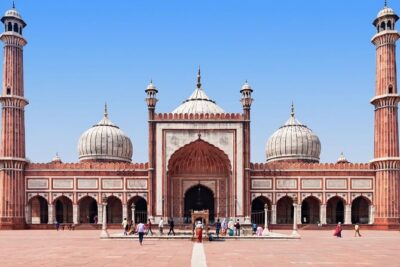
Old Delhi highlights include Jama Masjid and a rickshaw ride—a great way to get your bearings fast, then see the lanes without turning the day into a walking test. There’s also a Red Fort photo stop. Even if you’re not going inside, standing back and taking in the scale helps you understand why it’s such a central symbol in Delhi.
You also get Gandhi Memorial, which is a useful pause in the middle of the political and architectural stops. Then the tour shifts to New Delhi with Parliament House, India Gate, and landmarks that many visitors find easier to photograph from wider viewpoints.
The day’s later stops are strong: Humayun’s Tomb and the Qutub Minar Complex. Humayun’s Tomb is often a favorite because the setting feels calmer, and Qutub Minar brings that unmistakable vertical drama. If you like history but hate long lectures, the guide-led flow helps you stay focused on what matters: what you’re looking at and why it’s there.
One note: the day lists an admission ticket as not included. Since other sections of the package say monument entrance fees are included, you should verify what tickets you’ll need to cover for day 2 in your exact itinerary.
Day 3: Transfer to Jaipur and the Chokhi Dhani Night
After breakfast on day 3, you check out and transfer to Jaipur. When you arrive, you check in, then you get some downtime to reset. That break matters because the next day is a full fort-and-palace day.
Evening brings one of the more fun cultural additions: Chokhi Dhani. The experience is described as a village-life style evening, with Rajasthani food and traditional entertainment like dancers and acrobats. There are also snack stalls and activities that feel a bit like an adventure park.
This is a smart inclusion if you want Golden Triangle days that go beyond marble. It gives you a different kind of memory: color, performances, and a meal you can treat as part of the show.
Just keep in mind that the schedule notes admission is not included for this stop. So plan your budget accordingly and ask about ticket handling.
Day 4 in Jaipur: Amber Fort, Hawa Mahal, Jal Mahal, City Palace, and Jantar Mantar
Day 4 is a big one. After breakfast, the itinerary moves through the main hits of Jaipur with a guide leading the way.
Start with Amber Fort. It’s a standout because it’s not just a single building—it’s a whole fort complex with views that make it worth the effort. The day description also notes you’ll ascend the fort, which usually means you’ll spend time on slopes and steps. Comfortable shoes are not optional here.
Next comes Hawa Mahal (Palace of Wind). This is the iconic facade you’ll recognize even before you arrive. It’s great for photos, but even better with a guide who can explain what you’re seeing and where to stand for the best angles.
Then you have Jal Mahal (Water Palace). It’s often photographed from viewpoints looking toward the water setting, and the idea here is to see it in the way the palace was meant to be seen—part of the landscape, not just an object.
The day also includes City Palace & Museum and Jantar Mantar, the 18th-century stone observatory. Jantar Mantar is one of those places that rewards attention. Instead of feeling like random ruins, it reads like a system. A good guide can help you understand it in a way that makes the time feel worthwhile rather than rushed.
As with other days, the schedule notes admissions as not included here. Confirm ticket coverage so you’re not surprised later.
Chasing the Pink City? More Jaipur day trips
Day 5: Fatehpur Sikri and Chand Baoli En Route to Agra
On day 5, you leave Jaipur early—starting at 8:00 am—and drive to Agra. En route you visit Fatehpur Sikri, described as a ghost town (but still a living UNESCO story through its structures). Seeing it as a complex, not just as a name on a list, helps the Golden Triangle feel more connected rather than like three disconnected stops.
You also stop at Chand Baoli, a stepwell with a village-life feel around it. Stepwells are one of those travel details you can miss if you only chase the headline monuments. Here, you get that extra texture: quieter spaces, different architecture, and a breather from the palace-and-fort rhythm.
After these stops, you arrive and check in to your Agra hotel for the night.
This is also one of the days marked with admission tickets as free, which again suggests some stops may be handled differently than others. If ticket costs matter to you, ask the operator to send a clear list of what you pay on the spot.
Day 6 in Agra: Taj Mahal at Sunrise and the Fort + Baby Taj Combo
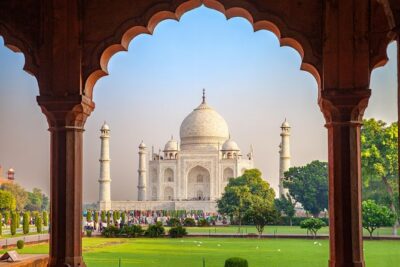
Day 6 is the main event. After breakfast, you visit Taj Mahal, with the schedule specifically recommending that sunrise is best. Even if you’re not a morning person, this is the kind of timing that can change your experience: softer light, calmer energy, and fewer crowds at the start of the day.
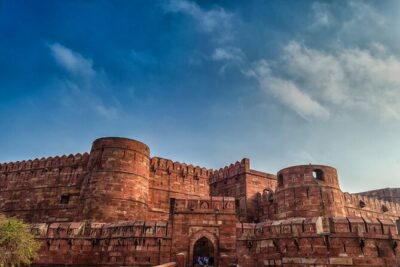
After Taj Mahal, you move to Agra Fort (also UNESCO-listed) and Itmad-ud-daulah, often called the Baby Taj. The strength of this pairing is variety. Taj Mahal is your grand emotion. Agra Fort gives you the military-political scale. Itmad-ud-daulah shifts you into a more intimate-feeling monument where details matter.
The itinerary lists Taj Mahal admission tickets as not included on day 6. Double-check this before you arrive so you don’t have to scramble for tickets at the gate.
Day 7: Back to Delhi and Airport Transfer for Your Next Step
The final day keeps things simple. After breakfast, you drive back to Delhi—around 3 to 4 hours—then you’re transferred to the airport for your onward flight. Your tour ends with the “sweet memories” part of the sales pitch, but the real win is having an organized finish without last-minute logistics.
If you have a flight later in the day, this structure is usually comfortable. If you’re trying to catch a tight international connection, build in a buffer, because Delhi road timing can shift quickly.
Guides, Drivers, and Service Style: What Stands Out
The clearest theme in the experience vibe is people. You’ll likely notice it right away: polite, supportive guides and a driver described as an expert on Indian roads.
The tour’s communication also emphasizes experienced support—over two decades for drivers and guides is mentioned in the service responses. That matters because Golden Triangle routes aren’t just scenic. They’re also about navigation, timing, and knowing how to keep the day moving when traffic and crowds could otherwise slow everything down.
There’s also a strong focus on practical guidance. In addition to site explanations, you get help with the best spots for photography at historical monuments. That’s a real value-add. Most people don’t realize that getting a good angle is half the job in places like Taj Mahal and Hawa Mahal.
On the human side, one review response thanks Amarjeet by name, and another mentions Marjeet Singh with praise for a gentle, helpful approach. Either way, it points to the same thing: a team that tries to keep things calm.
Food Notes: Breakfast and Lunch, Then Plan Your Evenings
Food is straightforward: breakfast and lunch are included, with 6 breakfasts and 6 lunches listed. Dinner is not included.
In Delhi and Jaipur, that usually means you’ll be eating close to sightseeing flow rather than choosing from endless menus. On the brighter side, your Jaipur evening at Chokhi Dhani is built around food and entertainment, so you may not need to think about dinner there in the same way.
Still, for the evenings in Delhi and Agra, you’ll want to plan ahead. Ask your hotel concierge for a safe, easy option near where you’ll be, or you can follow your guide’s suggestions.
Who This Tour Fits Best
This private Golden Triangle tour is a good fit if you want:
- A structured 7-day plan that hits Delhi, Agra, and Jaipur without DIY stress
- Monument days supported by guide explanations and help with photo viewpoints
- A mix of big sights and a Jaipur cultural night that isn’t just another temple
- A private setup for your group rather than shared pacing
It may be less ideal if you:
- Prefer to wander slowly and avoid early starts
- Want full board meal coverage (especially dinner)
- Need absolute clarity that every single entrance ticket is covered without any extra payments (the schedule notes some admissions vary)
Should You Book This 7-Day Golden Triangle Private Tour?
I’d book it if you want a practical Golden Triangle experience where the logistics are handled and you can focus on seeing the highlights without constant decision-making. The private format, the guide-led flow, and the chance to see Taj Mahal with a sunrise recommendation are the big reasons.
I’d think twice and confirm ticket coverage if you’re tight on budget for entrances. The package lists monument fees as included, but the day notes say admissions are sometimes not included and sometimes free—so get a clear answer before you go.
If you want an efficient, good-value way to see Delhi, Agra, and Jaipur in one week—with help from experienced staff and one fun cultural evening—this is a strong contender.
FAQ
What is the duration of the tour?
The tour runs for 7 days (approx.).
How much does the 7-day Golden Triangle private tour cost?
The price is $700.00 per person.
Is pickup included?
Yes. Pickup is offered, and you also have transfers by air-conditioned vehicle on the trip.
Is this tour private?
Yes. It’s listed as a private tour/activity, meaning only your group participates.
Where does the tour start?
The tour meeting point information lists a start time of 9:00 am. On day 1, you’re welcomed at Delhi Airport and transferred to your hotel.
Are meals included?
Yes. The tour includes breakfast (6) and lunch (6). Dinner is not included.
Are monument entrance fees included?
Monument entrance fees are listed under Included, but the day-by-day notes also show some days as admission ticket not included and others as free. It’s smart to confirm which specific sights are covered for your dates.
What are the highlight activities in Delhi and Jaipur?
Delhi includes Jama Masjid and a rickshaw ride in Old Delhi. Jaipur includes an evening at Chokhi Dhani with Rajasthani food and traditional entertainment.
What is the cancellation window?
You can cancel up to 3 days in advance for a full refund. If you cancel less than 3 days before the experience start time, the amount paid is not refunded.
What’s the best way to plan around Taj Mahal timing?
The schedule recommends sunrise for Taj Mahal, so plan for an early start on that day.
The Full Golden Triangle, More Options
- 3-Days Private Golden Triangle Tour: Delhi, Agra & Jaipur by Car
★ 5.0 · 1,107 reviews - 3-Days Private Golden Triangle Tour: Delhi, Agra & Jaipur by Car
★ 5.0 · 1,098 reviews - 3-Day Delhi, Agra and Jaipur Private Tour – India Golden Triangle
★ 5.0 · 812 reviews - Four-Day Private Luxury Golden Triangle Tour to Agra and Jaipur From New Delhi
★ 5.0 · 807 reviews - 5 Nights 6 Days Private Golden Triangle Tour – Delhi Agra Jaipur
★ 5.0 · 574 reviews
Onward to Jaipur: More Day Trips
- 3-Days Private Golden Triangle Tour: Delhi, Agra & Jaipur by Car
★ 5.0 · 1,107 reviews - 3-Days Private Golden Triangle Tour: Delhi, Agra & Jaipur by Car
★ 5.0 · 1,098 reviews - 3-Day Delhi, Agra and Jaipur Private Tour – India Golden Triangle
★ 5.0 · 812 reviews - Four-Day Private Luxury Golden Triangle Tour to Agra and Jaipur From New Delhi
★ 5.0 · 807 reviews - Jaipur Day Trip from Delhi by Car or Train – All Inclusive
★ 5.0 · 663 reviews
More Agra Day Trips out of Delhi
- Same Day Taj Mahal, Agra Fort & Baby Taj Tour from Delhi by Car
★ 5.0 · 4,304 reviews - Full Day Taj Mahal, Agra Fort & Baby Taj Tour from Delhi by Car
★ 5.0 · 3,647 reviews - From Delhi: Taj Mahal & Agra Private Day Trip with Transfers
★ 4.9 · 3,181 reviews - From Delhi: Taj Mahal and Agra Fort Private Sunrise Tour
★ 4.9 · 2,270 reviews - Sunrise Taj Mahal, Agra Fort & Baby Taj Tour from Delhi by Car
★ 5.0 · 2,243 reviews
Just added: more New Delhi reviews to browse
- 7 Days Golden Triangle Private Tour – Delhi Agra Jaipur Tour from Delhi★ 5.0 · 5 reviews
- 5-Day Private Luxury Golden Triangle Tour to Agra and Jaipur★ 5.0 · 5 reviews
- Agra: Taj Mahal Vip tickets with Professional Photographer★ 3.6 · 5 reviews
- Taj Mahal Tour By Superfast Train From Delhi★ 5.0 · 5 reviews
- Private Night View of Delhi Tour 4 Hours★ 5.0 · 5 reviews
- From Delhi: Same Day Taj Mahal, Agra Day Tour By Car★ 5.0 · 5 reviews
Agra Day Trips from Delhi, compared.
 ★ 5.0Same Day Taj Mahal, Agra Fort & Baby Taj Tour from Delhi by CarFrom $624,304 reviews
 ★ 5.0Full Day Taj Mahal, Agra Fort & Baby Taj Tour from Delhi by CarFrom $623,647 reviews
 ★ 4.9From Delhi: Taj Mahal & Agra Private Day Trip with TransfersFrom $43,181 reviews
 ★ 4.9From Delhi: Taj Mahal and Agra Fort Private Sunrise TourFrom $592,270 reviews
 ★ 5.0Sunrise Taj Mahal, Agra Fort & Baby Taj Tour from Delhi by CarFrom $622,243 reviews
 ★ 5.0Taj Mahal and Agra Private Car Tour from Delhi with 5* LunchFrom $331,633 reviews
 ★ 4.9From Delhi: Private Taj Mahal and Agra Tour by Express TrainFrom $751,605 reviews
 ★ 5.0Taj Mahal, Agra Fort, Baby Taj Tour from Delhi by Superfast TrainFrom $751,494 reviews
Browse the lists this tour appears in