
Reviewed · TOURS
03 Days Buddhist Tour Varanasi Bodhgaya Rajgir Nalanda Form Delhi By Flight
Three days, four sacred stops, one smooth plan. The big win here is how you move fast between Uttar Pradesh and Bihar with flights, then slow down at the places tied to the Buddha’s life. You also get a guided, site-by-site approach instead of aimless wandering.
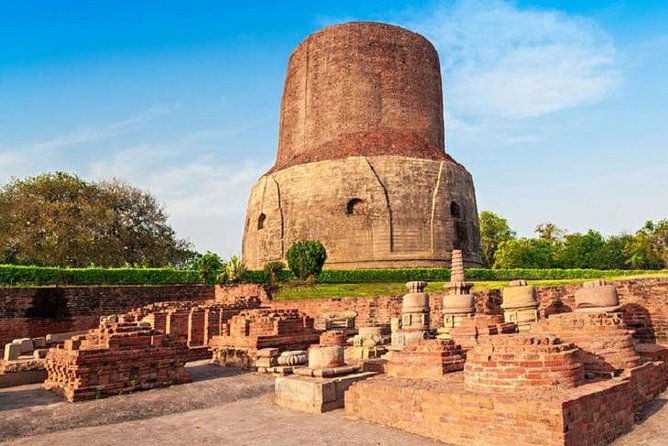
What I like most is the focus on the right moments. Private monument guides help you understand what you’re looking at, and the route is built around major stops like Sarnath’s Dhamek Stupa and Bodhgaya’s Maha Bodhi Temple. The other thing that really clicks for me is the included on-the-ground logistics: 4-star hotel nights in Varanasi and Bodhgaya, plus entrance fees and a mix of transport like a rickshaw ride and a Ganges boat.
The main drawback to consider is how packed the days are. It’s only set up for two breakfasts, and because it’s a short circuit, you may find you have less time to linger on your own after the scheduled stops.
In This Review
- Key Highlights That Make This Tour Worth Your Time
- Flight-First Plan: Getting From Delhi to Varanasi Quickly
- Sarnath’s Stupas, Museums, and the Bharat Mata Temple in One Big Afternoon
- Sunrise on the Ganges: The Boat Ride That Changes the Mood
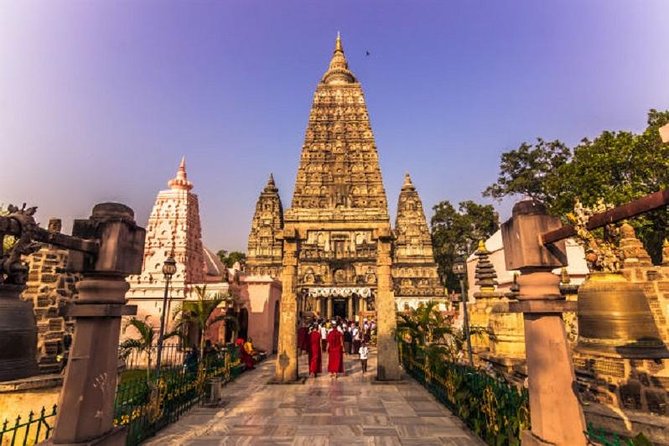
- Maha Bodhi Temple and the Bodhi Tree: Bodhgaya’s Must-See Core
- Rajgir and Nalanda: One Day, Two Worlds of Ancient Teaching
- Hotels, Guides, and Included Costs: Is It Good Value?
- Timing and Energy: How to Prepare for a Short, Packed Buddhist Circuit
- Should You Book This 03-Day Varanasi–Bodhgaya–Rajgir–Nalanda Tour?
- FAQ
- What is included in the tour price?
- Which cities and major sites are visited?
- Is this tour private?
- What type of transportation is used?
- Are entrance fees included?
- Are breakfasts included?
- Can I request vegetarian meals?
- When does pickup happen in Delhi?
Key Highlights That Make This Tour Worth Your Time
- Flying for time savings so you can cover Varanasi, Bodhgaya, Rajgir, and Nalanda without a multi-day train shuffle
- Sarnath’s core landmarks including Dhamek Stupa and Chaukhandi Stupa, explained by a private guide
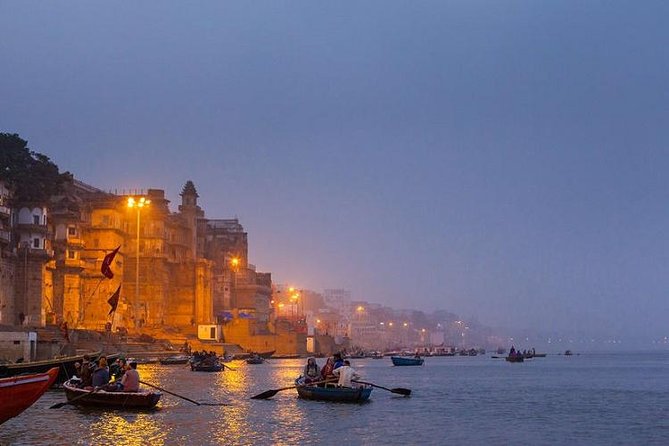
- A sunrise Ganges boat ride focused on the bathing ghats and the cremation areas, with a spiritual feel
- Bodhgaya’s primary focus on the Maha Bodhi Temple and the Bodhi Tree area
- Rajgir + Nalanda as one day’s arc, using private vehicle time efficiently
- Private group size (max 9), which usually means less waiting and more attention from the guide
Flight-First Plan: Getting From Delhi to Varanasi Quickly
This itinerary works because it starts by respecting your time. Instead of treating Delhi to Varanasi as a whole travel day, you fly, and the morning pickup is designed around your flight timing. That means you’re not burning hours in transit before you even hit the spiritual sights.
Once you land in Varanasi, you’re met and assisted, then checked into your hotel. From there, the plan quickly moves you toward Sarnath, about 12 km away. If you only have a short window in India, this is the key value: you still get a meaningful circuit, not just a couple of photo stops.
You’ll be relying on a mix of transport styles through the tour. Some legs use private air-conditioned vehicle, while other moments are meant to feel local, like the rickshaw ride in Varanasi and the boat ride on the Ganges. Together, it keeps things moving but avoids making the trip feel like nonstop driving.
Still deciding? Here is how it stacks up against other Delhi picks we have written up.


Sarnath’s Stupas, Museums, and the Bharat Mata Temple in One Big Afternoon
Sarnath is where the day finds its rhythm. This is the place tied to the Buddha’s first sermon after enlightenment, and the tour keeps you in that storyline without getting tangled in too many side paths.
You visit the Dhamek Stupa and the Chaukhandi Stupa, plus the Sarnath Museum and Mulagadha Kuti Vihar. Those stops matter because they each connect to the area’s layers of Buddhist tradition: stupa architecture, associated historical sites, and the physical traces that help you visualize what happened there.
One detail I especially like is the way the plan broadens beyond strictly Buddhist buildings. You also visit the Bharat Mata temple, known for its large marble relief map of India, along with the Durga temple and Tulsi Manas Mandir. That combination helps you understand how Indian sacred spaces often overlap. Even if your main interest is Buddhism, you get a clearer picture of the broader religious landscape around these monuments.
The day also includes an evening visit to the ghats in Varanasi. The note you get here is simple: don’t treat it like a quick detour. Ghat time is where Varanasi stops feeling like a schedule and starts feeling like a place. Even if you don’t sit through anything long, you’ll want to be there with your senses turned on.
Practical consideration: afternoons in this part of India can be warm. If you’re sensitive to heat, plan to pace yourself inside temple complexes and take the guide’s advice on where to slow down.
Sunrise on the Ganges: The Boat Ride That Changes the Mood
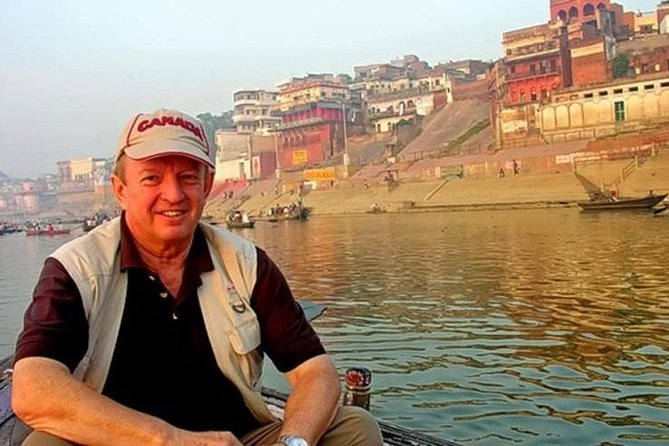
Day 2 opens with an early start, and it’s one of the most distinctive parts of the whole circuit: a Ganges boat ride before breakfast. The focus is specifically on the bathing ghats and the cremation areas, and the tour positions it for sunrise on the riverfront.
That’s a powerful choice. A sunrise boat ride gives you two benefits at once. First, the light helps you see the river life clearly. Second, you get a calmer emotional tone than you usually get in midday crowds. You’re also seeing the Ganges in a way that feels tied to daily ritual rather than just sightseeing.
After returning to the hotel for breakfast, you transfer to Bodhgaya and check in. This shift is important. You go from Varanasi’s devotional present to Bodhgaya’s devotion-as-memorial feeling. The change in atmosphere can be noticeable, especially because Bodhgaya is centered on one core story: where the Buddha is associated with enlightenment.
If you’re hoping the trip will feel spiritual rather than checklist-like, this transition is where that tone starts.
Maha Bodhi Temple and the Bodhi Tree: Bodhgaya’s Must-See Core
Bodhgaya is the tour’s anchor stop, and it doesn’t waste time before you get to the heart of it. You visit the Maha Bodhi Temple area, the Bodhi Tree, and key nearby sights such as the Buddha statue. You also stop at the Janki temple.
I like this structure because it keeps the focus. You’re not just moving between scattered viewpoints. You’re walking through the spaces that people come for year after year, and the guide’s role here is to connect what you see with the meaning of the place.
Bodhgaya can feel intense in a good way. Even without any special history lesson, the sheer centrality of the shrine and the tree area pulls your attention into one lane. That’s ideal for a short tour, where you don’t want to spend your time figuring out what’s important.
Also note how the itinerary includes a Bodhgaya Multimedia Museum. Museums like this can be hit-or-miss depending on your preferences, but as part of a tight schedule, it often helps you get quick context before you’re standing inside the sacred precincts.
You finish the day with overnight stay in Bodhgaya, so you’re not rushing out right after the main sights.
Rajgir and Nalanda: One Day, Two Worlds of Ancient Teaching
Day 3 is built for people who want both Buddhism and ancient monastic education in a single sweep. You start with early breakfast, then head toward Nalanda, about 90 km away. But before you get there, the itinerary puts Rajgir first.
At Rajgir, you climb into the story of Gridhkuta Peak (at Ratnagiri hill), a place where the Buddha preached many sermons. There’s also mention of the Peace Pagoda, built by the Buddha Sangh of Japan. The point of adding this is that the landscape itself helps you understand why these locations became spiritual centers: views, elevation, and a sense of separation from everyday noise.
Then the tour continues with Venuvanaram and Bimbisara Prison. These stops keep the narrative grounded in specific places tied to the Buddha’s interactions and teachings. Even if you don’t know the details beforehand, a good guide turns them from random ruins into a chain of ideas.
After Rajgir, you continue to Nalanda for the ruins of the ancient university. The itinerary highlights that Nalanda was one of the greatest monastic universities in the ancient world, with an establishment dating to the 5th century BC. It’s also presented as a place where the Buddha is associated with teaching, and where Lord Mahavir is connected to the institution’s religious role. When you walk around sites like this, having that context matters because it makes the remaining structures feel purposeful rather than simply broken.
You’ll likely end this day tired, but in a satisfying way. This is a lot of concentrated meaning in a single stretch.
Hotels, Guides, and Included Costs: Is It Good Value?
At $1,158.67 per person for a 3-day circuit, value comes down to what’s bundled rather than the headline number. Here’s what you’re getting without having to add it yourself:
- Two nights in 4-star hotels, with one in Varanasi and one in Bodhgaya
- Two breakfasts
- Professional private tour guides at the monuments
- Entrance fees to sites on the itinerary
- Domestic flights: Delhi to Varanasi, and then Patna to Delhi
- Transport by private air-conditioned vehicle
- Local add-ons that would cost time (and often extra money): a rickshaw ride in Varanasi and a boat ride on the Ganges
For short trips, flights and hotel nights are usually the biggest cost buckets. This tour also takes care of the “messy middle” you’d otherwise manage yourself: guiding, entry fees, and the specific local transport moments. If you want the ability to focus on sites rather than logistics, that’s where the price starts to make sense.
One more value point: the group limit is up to 9 people, and it’s treated as a private group experience. Smaller groups tend to mean less waiting and more conversational guide time when you have questions.
What’s not included is also important: only two breakfasts are part of the package. So you’ll be planning your own lunches and dinners. If you dislike that kind of freedom, check your expectations before you book.
Timing and Energy: How to Prepare for a Short, Packed Buddhist Circuit
This is not a slow travel tour. It’s a circuit designed to cover major sites efficiently, which means you’ll be trading leisure for coverage. If you’re the type who likes to wake up, move out, and keep momentum, you’ll probably enjoy the rhythm.
A few practical ways to set yourself up:
- Expect early starts on at least two days, since sunrise boat time and morning temple timing are part of the plan.
- Plan for warm weather by using light layers and protecting yourself from sun when you’re outdoors between sites.
- Dress respectfully for temple visits. Even if you don’t know the exact dress rules at each stop, covering shoulders and knees is a safe move in India.
- Use the guide time well. When you’re in Sarnath, Rajgir, and Nalanda, a guide isn’t just “nice to have.” It’s the difference between seeing stones and understanding the places.
Also, the tour is explicitly vegetarian-option friendly if you notify in advance. If you have any dietary limits, flag them early so the schedule doesn’t get awkward.
Should You Book This 03-Day Varanasi–Bodhgaya–Rajgir–Nalanda Tour?
I’d recommend booking this tour if you want a fast, structured Buddhist itinerary with the big, recognizable sites—and you care about learning what you’re seeing. It’s especially well-suited for short stays in India, people who dislike long overland journeys, and anyone who wants a clear spiritual arc from Varanasi to Bodhgaya and then onward to Rajgir and Nalanda.
I’d pause before booking if you want lots of unstructured downtime. With only two breakfasts included and a packed third day, you’ll likely feel the schedule’s pace. Also, since you’re flying as part of the routing, make sure you’re comfortable with domestic flight timing as part of the overall plan.
One last note from the tour’s strong reputation: the experience is consistently praised for the spiritual connection people feel when they visit key Buddha-linked sites, and for the helpful combination of guide support and driver coordination. If that’s what you’re after, this circuit fits the bill.
FAQ
What is included in the tour price?
The tour includes 2 nights of 4-star hotel accommodation (one night each in Varanasi and Bodhgaya), 2 breakfasts, professional tour guides at monuments, rickshaw ride in Varanasi, boat ride on the Ganges, transport by private air-conditioned vehicle, entrance fees to sites on the itinerary, and flights (Delhi to Varanasi and Patna to Delhi).
Which cities and major sites are visited?
The route covers New Delhi (pickup and flight connection), Varanasi and Sarnath (including Dhamek Stupa, Chaukhandi Stupa, Sarnath Museum, and Mulagadha Kuti Vihar), Bodhgaya (including Maha Bodhi Temple and the Bodhi Tree area), Rajgir (including Gridhkuta Peak/Ratnagiri hill and nearby sites), and Nalanda (the ruins of the ancient university).
Is this tour private?
Yes. It is a private tour/activity, meaning only your group participates, with a maximum of 9 people per booking and a minimum of 1 person.
What type of transportation is used?
You use flights (Delhi to Varanasi and Patna to Delhi) plus private air-conditioned vehicle on the ground. You also have a boat ride on the Ganges and a rickshaw ride in Varanasi.
Are entrance fees included?
Yes. Entrance fees to sites included in the itinerary are covered.
Are breakfasts included?
Yes. The itinerary includes 2 breakfasts total.
Can I request vegetarian meals?
Yes. A vegetarian option is available, and you should advise dietary requirements at the time of booking.
When does pickup happen in Delhi?
Pickup is offered in Delhi starting at 07:00 am at your hotel or the airport or another location in Delhi. The exact pickup time is based on your flight timing.
More Tours in New Delhi
- Old & New Delhi City Tour – Half or Full Day Options Available
★ 5.0 · 4,811 reviews - Half Day Private Delhi City Tour
★ 5.0 · 4,474 reviews - Same Day Taj Mahal, Agra Fort & Baby Taj Tour from Delhi by Car
★ 5.0 · 4,304 reviews - Taj Mahal Day Tour from Delhi by Superfast Train – TOP RATED TOUR
★ 5.0 · 4,166 reviews - Delhi: Old and New Delhi Private Full or Half-Day Tour
★ 4.9 · 3,776 reviews
More Tour Reviews in New Delhi
- Old & New Delhi City Tour – Half or Full Day Options Available
★ 5.0 · 4,811 reviews - Half Day Private Delhi City Tour
★ 5.0 · 4,474 reviews - Same Day Taj Mahal, Agra Fort & Baby Taj Tour from Delhi by Car
★ 5.0 · 4,304 reviews - Taj Mahal Day Tour from Delhi by Superfast Train – TOP RATED TOUR
★ 5.0 · 4,166 reviews - Delhi: Old and New Delhi Private Full or Half-Day Tour
★ 4.9 · 3,776 reviews
Just added: more New Delhi reviews to browse
- 4 days Golden Triangle Tour★ 5.0 · 3 reviews
- Discover Old & New Delhi: Private Tour with Street Food★ 5.0 · 3 reviews
- Taj Mahal Tour From Delhi By Private Car★ 4.5 · 3 reviews
- Golden Triangle Tour 5 Days★ 5.0 · 3 reviews
- Taj Mahal: Express Entry Ticket For Sunset Tour with guide★ 5.0 · 3 reviews
- Agra Taj Mahal Sunrise & Sunset Tour from Delhi★ 5.0 · 3 reviews
Tours, compared.
 ★ 5.0Old & New Delhi City Tour – Half or Full Day Options AvailableFrom $384,811 reviews
 ★ 5.0Half Day Private Delhi City TourFrom $374,474 reviews
 ★ 5.0Same Day Taj Mahal, Agra Fort & Baby Taj Tour from Delhi by CarFrom $624,304 reviews
 ★ 5.0Taj Mahal Day Tour from Delhi by Superfast Train – TOP RATED TOURFrom $1004,166 reviews
 ★ 4.9Old and New Delhi Private Full or Half-Day TourFrom $23,776 reviews
 ★ 5.0Full Day Taj Mahal, Agra Fort & Baby Taj Tour from Delhi by CarFrom $623,647 reviews
 ★ 5.0Taj Mahal Tour from Delhi by Express Train (Viator Award Winner)From $752,849 reviews
 ★ 5.0All Inclusive Private Taj Mahal Luxury Tour from Delhi by CarFrom $622,564 reviews