
Reviewed · GOLDEN TRIANGLE TOURS
4 days Golden Triangle Tour
A car that connects India’s icons fast.
This Golden Triangle tour lines up Delhi, Agra, and Jaipur with English-speaking guides, so you spend less time figuring out logistics and more time seeing the big names. I especially like that it’s built around clear time blocks at each stop.
I also like the hands-on approach: a professional driver handles the road while you’re guided through highlights like the Taj Mahal and Amber Fort. The hotel setup is solid for the price too, with 3-star accommodation and daily breakfast included.
One drawback to plan for: most main monuments do not include entrance tickets (Taj Mahal, Agra Fort, Amber, City Palace, Jantar Mantar, Hawa Mahal). Also, with only 4 days, the pace is efficient rather than slow and dreamy.
In This Review
- Key moments worth your attention
- What $400 buys you on a 4-day Golden Triangle
- Day-by-day flow: Delhi to Agra to Jaipur without chaos
- India Gate and Rashtrapati Bhavan: a quick Delhi welcome
- Getting to Agra: why the schedule matters
- Taj Mahal at first light: the 2-hour payoff
- Agra Fort after breakfast: Mughal power in red stone
- Fatehpur Sikri: a compact UNESCO-style stop
- Jaipur’s Amber Palace: UNESCO views plus Rajput-Mughal styling
- City Palace and Jantar Mantar: royal HQ meets science
- Jal Mahal and Hawa Mahal: quick stops with photo momentum
- Drivers and guides: where the trip becomes easy
- Entrance fees: the part you must budget for
- Timing and pacing: efficient, not slow
- Who this Golden Triangle tour suits best
- Should you book Maharaja Trails for the Golden Triangle?
- FAQ
- Where does the tour start and end?
- What time does the tour begin?
- Is pickup included?
- How long is the tour?
- What’s included in the price?
- Are monument entrance fees included?
- Is airfare included?
- Do I need to buy tickets for the Taj Mahal?
- Is this a private tour?
- What’s the cancellation option?
Key moments worth your attention
Private tour, just your group: no mixing with strangers, and your guide can pace things for you.
Early Taj Mahal timing: you get a morning visit window, which helps you beat the worst crowds and heat.
Entrance fees add-ons: some stops are free, but several major sites are not included—budget ahead.
A driver named for punctuality: drivers like Sanjay and Bunty are singled out for being on-time and helpful.
Built-in structure, not a free-for-all: each stop has a planned duration so you don’t lose the day.
Jaipur’s contrasts: royal palaces, astronomy, and photo-friendly landmarks all land in one route.
What $400 buys you on a 4-day Golden Triangle
For about $400 per person, you’re paying for the “connect-the-dots” part of India travel: a private, air-conditioned vehicle, 3-star hotel stays, and daily breakfast. You also get an English-speaking tour guide, which is the difference between seeing buildings as shapes versus understanding what you’re looking at.
You’re not paying for every ticket. Monuments entrance fees are not included, and that matters most at the Taj Mahal and several Jaipur sites. Think of the price as covering comfort and guidance, not admission.
The other practical win is the schedule starts and ends in the same place. You start at Indira Gandhi International Airport at 1:00 pm, and the tour ends back at that meeting point after you return to Delhi.
Delhi, Agra and Jaipur: more full circuits



Day-by-day flow: Delhi to Agra to Jaipur without chaos
This tour is designed to keep the route tight across three cities. After pickup at the airport, you begin with a quick “see-you’re-in-Delhi” stop, then the plan drives you onward toward Agra. The idea is simple: hit the highlights while you still have energy, and let the car handle distance.
The first day mixes a couple of easy, outside-the-gates sights before you transfer to Agra. It’s a smart approach if you want history and landmarks on arrival day without stacking long museum-style visits.
In total, you’ll spend a defined amount of time at each major attraction. That’s useful in India, where street-level navigation can eat time fast. You’ll still do plenty of walking, but you won’t be stuck improvising the whole day.
India Gate and Rashtrapati Bhavan: a quick Delhi welcome
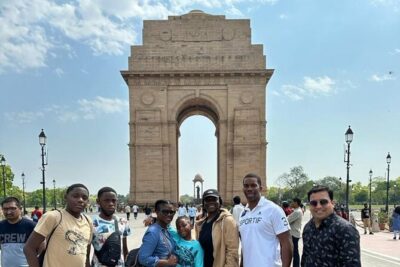
You begin with India Gate, which gets about 45 minutes. This is one of those places where the scale hits you fast. It’s also a good “orientation stop” after arrival—big landmark, easy to understand at a glance.
Next is Rashtrapati Bhavan (the President’s Palace), visited from the outside for about 15 minutes. You’re not going for a full interior visit here. You’re getting context and a visual anchor before the tour heads toward Agra.
Both stops are listed with free admission, so this is also a cost-friendly start. If you’re jet-lagged, these are the kind of stops that don’t require peak focus.
Getting to Agra: why the schedule matters
On this route, your time on the road is part of the plan. After the Delhi sightseeing, you drive to Agra so you can wake up early for the big one.
If you’re the type who hates “wasted time,” you’ll likely appreciate how the itinerary sets expectations. Instead of spreading major sights across random days, it compresses them into a structure that fits 4 days.
The main thing you should keep in mind: even with an efficient route, India road travel can still be unpredictable. The value here comes from having a professional driver watching the road while your guide keeps the day moving.
Taj Mahal at first light: the 2-hour payoff
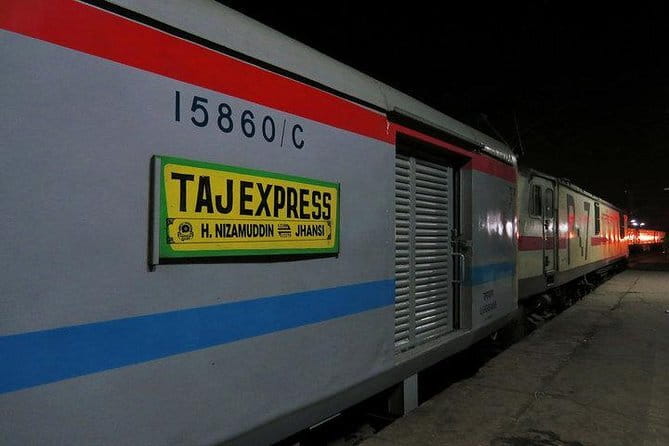
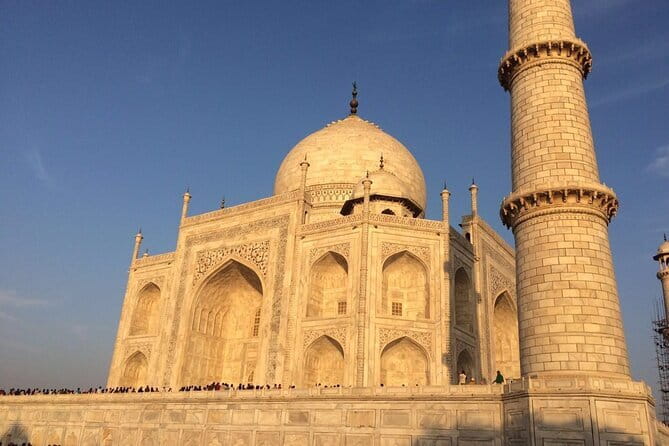
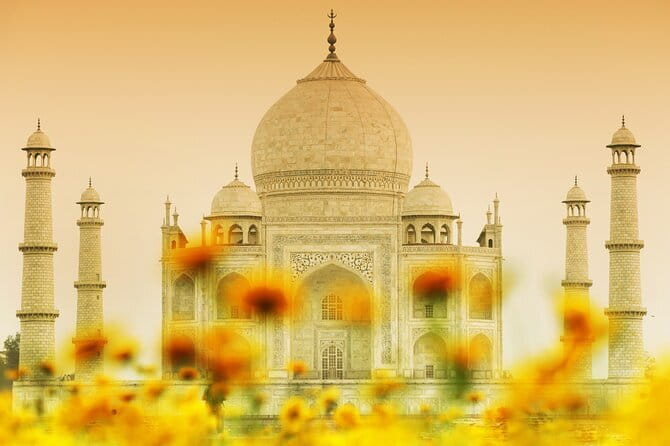
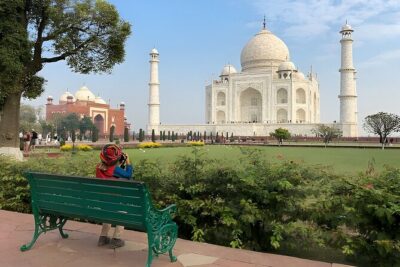
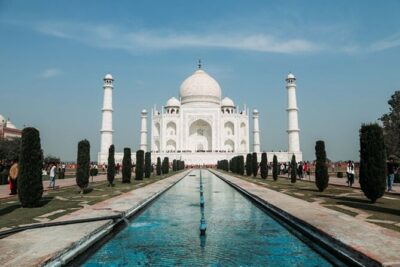
The star stop is the Taj Mahal with an early morning visit, lasting about 2 hours. This matters because the Taj Mahal is more than a photo stop. It was commissioned in 1631 by Shah Jahan to house the tomb of his wife, Mumtaz Mahal, and it also contains Shah Jahan’s tomb.
That background turns the white marble from pretty into meaningful. You can read the design choices as part of a monument built for devotion and memory, not just decoration.
Practical note: since Taj Mahal entrance fees are not included, budget for ticket costs separately. Also, being there early usually means less heat and softer light for photos, so you’re not fighting the sun as much.
Worth putting side by side with this New Delhi pick:
Agra Fort after breakfast: Mughal power in red stone
After breakfast, you check out and move into Agra Fort for about 1 hour 30 minutes. The fort is described as a Mughal fort in Agra, also known as Agra’s Red Fort, built from red sandstone.
It’s not just a backdrop. The site ties into real turning points: Humayun was crowned there in 1530, Akbar renovated it from 1565, and the current structure was completed in 1573.
The benefit of pairing Agra Fort right after breakfast is pacing. You get energy for walking and viewpoints, and you’re still in Agra’s mindset before the route shifts again. As with other major sites, entrance tickets are not included.
Fatehpur Sikri: a compact UNESCO-style stop

Then you move to Fatehpur Sikri, visited for about 2 hours. This place is listed as free admission on the tour, which is a nice relief in a day where tickets show up later.
Fatehpur Sikri is described as a small city west of Agra, founded by a 16th-century Mughal emperor. You’ll see red sandstone buildings grouped around the center, including Buland Darwaza as the entrance to the Jama Masjid. Nearby are the marble Tomb of Salim Chishti, the carved pillar hall called Diwan-E-Khas, and royal spaces like Jodha Bai Palace and the Panch Mahal with its overlooking views.
The practical advantage here is variety. It’s not only one monument. It’s a whole complex, which makes your guided time feel efficient. The potential tradeoff: the site can still mean walking across multiple areas in heat, so bring water and plan for sun.
Jaipur’s Amber Palace: UNESCO views plus Rajput-Mughal styling
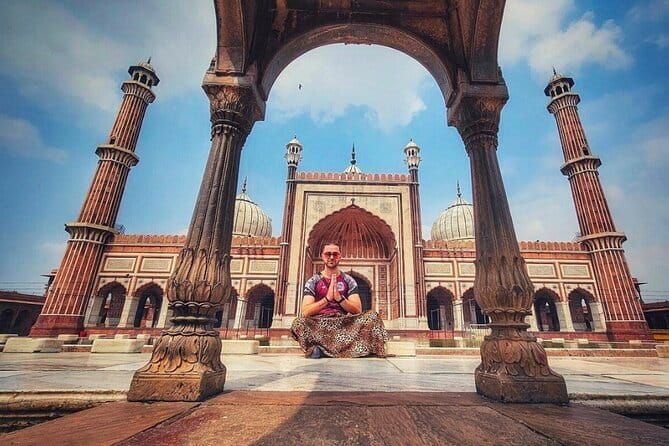
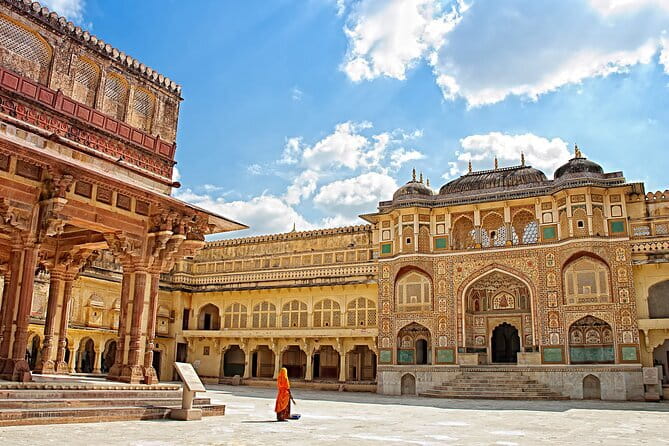
In Jaipur, the day begins at Amber Palace (Amer Fort) for about 2 hours. This is a UNESCO World Heritage Site and a palace complex built in the 16th century that blends Rajput and Mughal architectural styles.
The reason this fort works on a timed tour is that it gives you both spectacle and context. You’re dealing with artistic details plus wide viewpoints, so you don’t feel like you’re only touring walls.
Entrance fees here are not included, so remember that Amber is a paid-add-on. If you like forts and palace complexes, this is usually the stop you’ll remember longest from Jaipur—partly because of the views and partly because it feels lived-in, even centuries later.
City Palace and Jantar Mantar: royal HQ meets science
After Amber, you go to the City Palace of Jaipur for about 1 hour. The City Palace is a royal residence and former administrative headquarters of the Jaipur rulers, with construction starting soon after Jaipur’s founding under Maharaja Sawai Jai Singh.
Then comes Jantar Mantar for about 1 hour. This UNESCO-listed site includes 19 astronomical instruments built by Sawai Jai Singh and completed in 1734. It’s especially known for having the world’s largest stone sundial. It also sits near City Palace and Hawa Mahal.
This is one of the smarter sequences of the trip. City Palace gives you the political story. Jantar Mantar gives you the scientific one. Together, they make Jaipur feel more than just Instagram landmarks.
Entrance fees are not included for both stops, so plan your budget for tickets on these days.
Jal Mahal and Hawa Mahal: quick stops with photo momentum
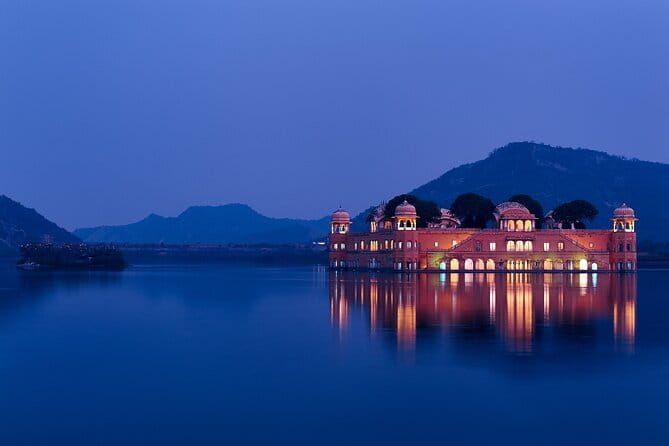
You get a short stop at Jal Mahal for about 15 minutes. It’s a palace in the middle of Man Sagar Lake, originally constructed around 1699, then renovated and enlarged in the early 18th century by Maharaja Jai Singh II of Amber. This is listed as free admission, so it’s a good low-cost breather.
Next is Hawa Mahal (Palace of Wind) for about 15 minutes. It’s built from red and pink sandstone and sits at the edge of City Palace. The structure extends toward the Zenana, the women’s chambers. It’s known as the palace of winds, built by Maharaja Sawai Pratap Singh in 1799.
Because these are short timed stops, you’ll want to be ready to move quickly. The upside is you get the iconic looks without losing your whole afternoon.
Entrance fees are not included for Hawa Mahal, but the time block is short enough that you won’t feel trapped if you’d rather spend longer elsewhere.
Drivers and guides: where the trip becomes easy
This tour’s value really shows up in the human logistics. You’re assigned an English-speaking tour guide and a professional driver in an air-conditioned vehicle.
From the experience patterns tied to this operator, drivers such as Sanjay and Bunty are described as helpful and punctual—exactly what you want when your schedule is tight. One guide-led Taj Mahal visit is specifically noted as knowledgeable, which matters because Taj Mahal’s details and symbolism can be hard to pick up on your own.
If you’re traveling as a family, the standout here is organization. Jitendra is mentioned as managing a family itinerary with care for their well-being. That’s the kind of service that helps when kids need pacing or someone needs a bathroom stop without turning the day into a production.
Entrance fees: the part you must budget for
Here’s the simple budget reality: the tour includes guiding and transport, but monument entry fees are not included. Some sights are listed as free—like India Gate, Rashtrapati Bhavan (outside), Fatehpur Sikri, and Jal Mahal—but several major attractions are ticketed separately.
Not included entrance fees are specified for:
- Taj Mahal
- Agra Fort
- Amber Palace
- City Palace of Jaipur
- Jantar Mantar
- Hawa Mahal
So you’ll want to set aside money for tickets on the biggest days. If you don’t, you’ll feel it later when you’re at the gates. Plan ahead and the trip feels smooth.
Timing and pacing: efficient, not slow
This is a “see a lot” route. You’ll have planned time slots: Taj Mahal gets around two hours, Agra Fort 1.5 hours, Fatehpur Sikri 2 hours, Amber 2 hours, City Palace 1 hour, Jantar Mantar 1 hour, and then the short photo stops in Jaipur.
The upside: you hit the key highlights in 4 days and return to Delhi to depart. The tradeoff: you won’t have hours and hours to wander off-script. If you want to linger, ask your guide to adjust within the time available.
Also, bring patience for the early start. The Taj Mahal morning visit is a highlight, but it’s still an early day, especially after a travel day.
Who this Golden Triangle tour suits best
This one is a good fit if you:
- Want the Golden Triangle in 4 days without planning every connection yourself.
- Prefer a private group setup and an English-speaking guide.
- Like structured city sightseeing with specific time blocks at major monuments.
- Value air-conditioned comfort on driving days.
It’s less ideal if you want lots of free time to roam independently, or if you strongly dislike paying entrance fees on top of the base price.
Should you book Maharaja Trails for the Golden Triangle?
Yes, if you want a clean, organized route that gets you to the famous places with a guide and driver handling the heavy lifting. At $400 per person, the value is strongest when you appreciate guidance and comfort more than “do it all solo.”
Before you book, do the math on entrance tickets. Since key sites like Taj Mahal and several Jaipur landmarks are not included, your true cost will be base price plus monument fees.
If you’re flexible on pacing and ready for an efficient 4 days, this tour can be a solid way to check off Delhi, Agra, and Jaipur without turning your trip into a logistics puzzle.
FAQ
Where does the tour start and end?
The tour starts at Indira Gandhi International Airport, New Delhi and ends back at the same meeting point.
What time does the tour begin?
The start time is listed as 1:00 pm.
Is pickup included?
Pickup is offered as part of the experience.
How long is the tour?
The duration is about 4 days.
What’s included in the price?
Included items are an air-conditioned vehicle, 3-star hotel accommodation, daily breakfast, and an English-speaking tour guide.
Are monument entrance fees included?
No. Monuments entrance fees are not included.
Is airfare included?
No. Any air fare is not included.
Do I need to buy tickets for the Taj Mahal?
The Taj Mahal entrance ticket is not included.
Is this a private tour?
Yes. It’s listed as private, meaning only your group participates.
What’s the cancellation option?
There is free cancellation up to 24 hours in advance for a full refund.
More Tours in New Delhi
- Old & New Delhi City Tour – Half or Full Day Options Available
★ 5.0 · 4,811 reviews - Half Day Private Delhi City Tour
★ 5.0 · 4,474 reviews - Same Day Taj Mahal, Agra Fort & Baby Taj Tour from Delhi by Car
★ 5.0 · 4,304 reviews - Taj Mahal Day Tour from Delhi by Superfast Train – TOP RATED TOUR
★ 5.0 · 4,166 reviews - Delhi: Old and New Delhi Private Full or Half-Day Tour
★ 4.9 · 3,776 reviews
More Tour Reviews in New Delhi
- Old & New Delhi City Tour – Half or Full Day Options Available
★ 5.0 · 4,811 reviews - Half Day Private Delhi City Tour
★ 5.0 · 4,474 reviews - Same Day Taj Mahal, Agra Fort & Baby Taj Tour from Delhi by Car
★ 5.0 · 4,304 reviews - Taj Mahal Day Tour from Delhi by Superfast Train – TOP RATED TOUR
★ 5.0 · 4,166 reviews - Delhi: Old and New Delhi Private Full or Half-Day Tour
★ 4.9 · 3,776 reviews
The Full Golden Triangle, More Options
- 3-Days Private Golden Triangle Tour: Delhi, Agra & Jaipur by Car
★ 5.0 · 1,107 reviews - 3-Days Private Golden Triangle Tour: Delhi, Agra & Jaipur by Car
★ 5.0 · 1,098 reviews - 3-Day Delhi, Agra and Jaipur Private Tour – India Golden Triangle
★ 5.0 · 812 reviews - Four-Day Private Luxury Golden Triangle Tour to Agra and Jaipur From New Delhi
★ 5.0 · 807 reviews - 5 Nights 6 Days Private Golden Triangle Tour – Delhi Agra Jaipur
★ 5.0 · 574 reviews
Just added: more New Delhi reviews to browse
- 4 days Golden Triangle Tour★ 5.0 · 3 reviews
- Discover Old & New Delhi: Private Tour with Street Food★ 5.0 · 3 reviews
- Taj Mahal Tour From Delhi By Private Car★ 4.5 · 3 reviews
- Golden Triangle Tour 5 Days★ 5.0 · 3 reviews
- Taj Mahal: Express Entry Ticket For Sunset Tour with guide★ 5.0 · 3 reviews
- Agra Taj Mahal Sunrise & Sunset Tour from Delhi★ 5.0 · 3 reviews
Golden Triangle Tours, compared.
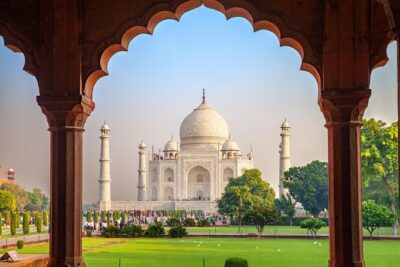 ★ 5.03-Days Private Golden Triangle Tour: Delhi, Agra & Jaipur by CarFrom $1271,107 reviews
★ 5.03-Days Private Golden Triangle Tour: Delhi, Agra & Jaipur by CarFrom $1271,098 reviews
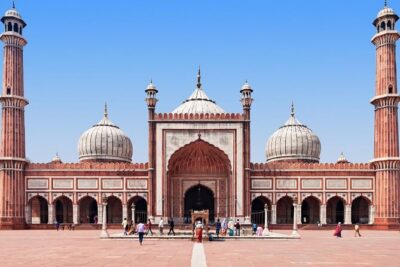 ★ 5.03-Day Delhi, Agra and Jaipur Private Tour – India Golden TriangleFrom $110812 reviews
 ★ 5.0Four-Day Private Luxury Golden Triangle Tour to Agra and Jaipur From New DelhiFrom $160807 reviews
 ★ 5.05 Nights 6 Days Private Golden Triangle Tour – Delhi Agra JaipurFrom $240574 reviews
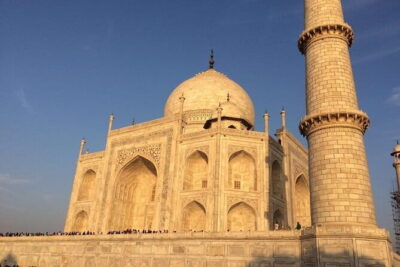 ★ 5.04 Days Golden Triangle TourFrom $146499 reviews
 ★ 5.0Private Car and Drive for Golden Triangle (4N/5D)From $167451 reviews
 ★ 5.0Private Golden Triangle Tour Delhi Agra Jaipur ( Top Rated )From $148436 reviews