
Reviewed · GOLDEN TRIANGLE TOURS
Golden Triangle Tour 5 Days
Five days, three cities, zero guesswork. The Golden Triangle Tour 5 Days is a smart way to cover Delhi, Agra, and Jaipur without juggling transport, thanks to airport pickup and an English-speaking guide. You also get a private, small-group setup that keeps the day feeling organized rather than chaotic.
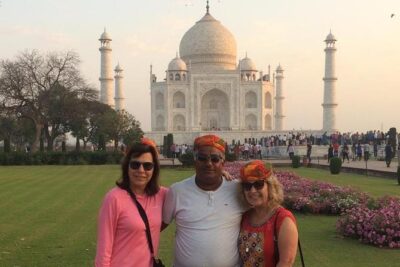
What makes this plan especially workable is the flow: you start in Delhi, hit the headline monuments (India Gate, Qutub Minar, Humayun’s Tomb), then move on to Agra for the big one—Taj Mahal—and finish in Jaipur with forts and palaces. One key consideration: monument fees aren’t included, so you’ll want to budget for entrance tickets once you see the total list.
If you’re the type who likes a clear route and a driver who’s already figured out the timing, this fits well. If you want total freedom to wander for hours at your own pace, you might feel a bit “on schedule” in a few spots.
In This Review
- Quick reasons this Golden Triangle route works
- Golden Triangle Tour 5 Days: the value in how the route is stitched together
- Price and what you’re actually paying for ($338 per person)
- Day 1 in Delhi: India Gate and Chandni Chowk with an organized check-in
- India Gate: a quick hit of ceremony and scale
- Chandni Chowk: medieval-bazaar chaos (the good kind)
- Day 2: Qutub Minar and Humayun’s Tomb before heading to Agra
- Qutub Minar: UNESCO power in 1 hour
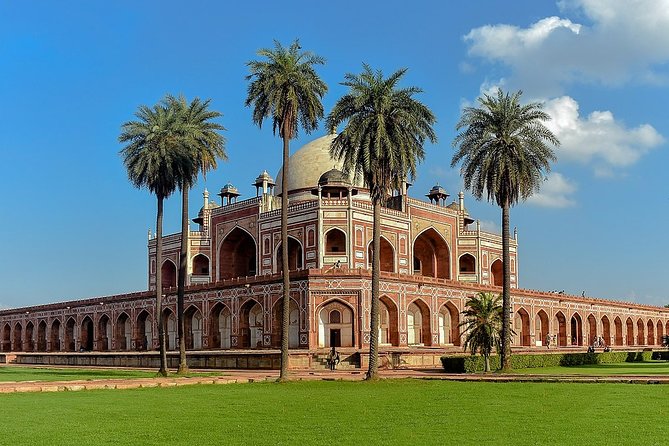
- Humayun’s Tomb: the first great garden-tomb feeling
- Drive to Agra after lunch: check-in and reset
- Day 3: Taj Mahal in the morning, Agra Fort, then Fatehpur Sikri to Jaipur
- Taj Mahal: your “one must-do” monument
- Agra Fort: imperial residence energy
- Fatehpur Sikri: red sandstone capital on the way
- Arrive Jaipur and check in
- Day 4: Amber Fort to Jantar Mantar—Jaipur’s biggest sights in one long day
- City start: Jaipur orientation through key monuments
- Amber Fort: the fort you’ll remember most
- Jal Mahal: a quick pause at the Water Palace
- Hawa Mahal: the iconic Palace of Wind
- City Palace: royal spaces and palace-complex scale
- Jantar Mantar: astronomical instruments in stone
- Day 5: drive back to Delhi for your flight
- Monument fees and the money-shock factor (what to budget)
- Comfort and timing tips that make this route easier
- Who this tour suits best—and who should compare alternatives
- Should you book this Golden Triangle Tour with Tour Trips India Holidays?
- FAQ
- What time does the tour start?
- Is airport pickup and drop-off included?
- What is included in the $338.00 per person price?
- Are monument fees included?
- How long is the Golden Triangle Tour?
- Can I cancel for a full refund?
Quick reasons this Golden Triangle route works
- Airport pickup and drop-off that removes the first-day stress in Delhi
- English-speaking guide to help you connect the dots at each site
- Taj Mahal morning time for a classic Golden Triangle highlight
- Fatehpur Sikri included en route, not as an extra add-on
- Jaipur’s main sights in one long day (Amber Fort to Jantar Mantar)
- Clean, comfortable car and small comforts like water and sweets mentioned in feedback
Golden Triangle Tour 5 Days: the value in how the route is stitched together
The Golden Triangle is famous for a reason: Delhi gives you power, history, and living city energy; Agra delivers the ultimate Mughal landmark; Jaipur adds forts, geometry, and royal scale. What you’re really buying with this 5-day version is not just sightseeing—it’s the logistics layer.
You’ll travel by an air-conditioned vehicle, with an English-speaking tour guide guiding you through the big names. That matters because Delhi, Agra, and Jaipur aren’t “one monument in one place” cities. Distances add up fast. So instead of spending your time figuring out where to go next, you follow a route that’s been built to connect the dots efficiently.
And you’re not going solo through it, either. This is a private tour/activity limited to your group only. That generally helps things feel smoother: you can ask questions in real time, and you’re not pushed to match a large crowd’s pace.
Delhi, Agra and Jaipur: more full circuits



Price and what you’re actually paying for ($338 per person)
The tour price is $338.00 per person for about 5 days. On paper, that’s just a number. In practice, it covers several high-value pieces:
- Air-conditioned vehicle for all the moving days
- English-speaking tour guide
- Airport pickup and drop-off
- Breakfast included for 4 days
That’s why the cost can make sense even before you add up monuments later. Transport inside India’s big cities can be time-consuming, and guides often save you from the “I saw it, but I didn’t understand it” problem—especially at places like Qutub Minar, Humayun’s Tomb, and Jantar Mantar.
The one thing not included is the monument fee. So you’ll want to think of the $338 as the framework (transport + guide + most basic meals), then add an extra budget line for entrances.
Day 1 in Delhi: India Gate and Chandni Chowk with an organized check-in
Day 1 starts with pickup from the airport in Delhi and transfer to the hotel. Check-in is listed for 12:00, which is helpful if you land earlier and don’t want to sit around.
Then you head to two very different Delhi experiences:
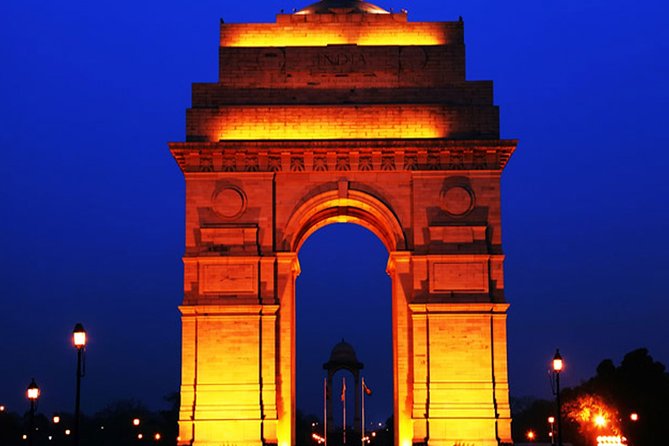
India Gate: a quick hit of ceremony and scale
India Gate is a war memorial on Rajpath, set on the “ceremonial axis” of New Delhi. You’ll spend about 30 minutes there. This stop works well as a first-day orientation. Even if you’re tired from travel, you get a sense of Delhi’s layout—wide avenues, formal geometry, and monumental design.
Consideration: because it’s short, don’t expect deep time for photos and roaming. Think of it as a strong “starter scene.”
Chandni Chowk: medieval-bazaar chaos (the good kind)
After that, you go to Chandni Chowk—one of Old Delhi’s oldest markets, laid out as a main thoroughfare with hawkers and porters. The plan gives you around 2 hours here, with a classic view of the Fatehpuri Mosque from across the area.
This is where Delhi stops feeling like landmarks on a map and starts feeling like a living city. Expect dense streets, food options, and lots of eyes on you as you move through wholesale-style lanes where people actually work.
Tip for comfort: wear shoes you can handle on uneven streets, because you’ll be walking and standing longer than you might think for “just a market.”
Worth putting side by side with this New Delhi pick:

Day 2: Qutub Minar and Humayun’s Tomb before heading to Agra
Day 2 keeps Delhi moving at a good pace, then transitions to Agra after lunch.
Qutub Minar: UNESCO power in 1 hour
Qutub Minar is a towering minaret/victory tower in the Mehrauli area, reaching 72.5 meters (238 ft). The itinerary places you there for about 1 hour, and it’s tied to the Delhi Sultanate era—construction starting in 1192.
If you’ve never seen it in person, the thing that hits you is how “vertical” it feels. The site’s age and scale can do more for your understanding than photos alone.
Practical note: monument time is limited. If you want extra photo angles, arrive ready to move fast rather than lingering.
Humayun’s Tomb: the first great garden-tomb feeling
Next is Humayun’s Tomb, the final resting place of Emperor Humayun. It’s described as the first garden-tomb in the Indian subcontinent and a UNESCO World Heritage site (listed in 1993). You’ll have about 1 hour.
What makes this stop special is the design logic—garden layout, red sandstone at massive scale, and Mughal architecture with Persian influences. It’s the kind of place where a guide helps you “read” what you’re seeing: why the layout matters and how it connects to later Mughal masterpieces.
Drive to Agra after lunch: check-in and reset
After lunch, you drive to Agra, arriving for hotel check-in. The drive time is listed at about 3 hours.
This is a smart rhythm. You get two major Delhi sites, then you’re not trying to cram Agra sightseeing the same day—so you can reset, eat, and be fresh for tomorrow’s heavy hitter.
Day 3: Taj Mahal in the morning, Agra Fort, then Fatehpur Sikri to Jaipur
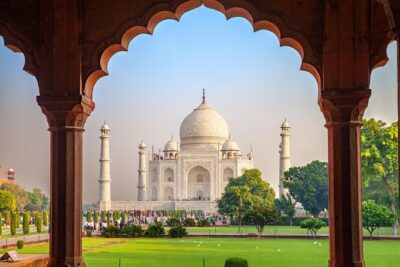
Day 3 is the heart of the Golden Triangle: Taj Mahal, Agra Fort, and a stop at Fatehpur Sikri on the way to Jaipur.
Taj Mahal: your “one must-do” monument
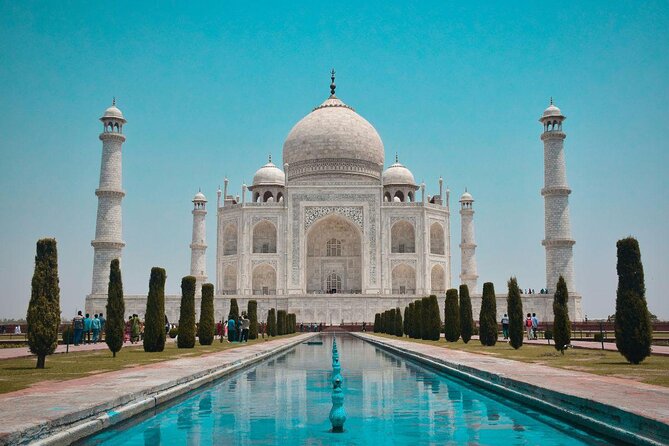
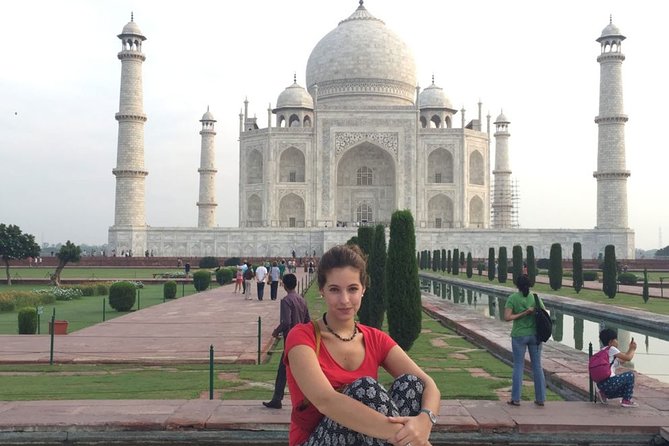
You’ll visit the Taj Mahal in the morning with about 3 hours allocated. This is the centerpiece built in white marble by Shah Jahan between 1631 and 1648, in memory of Mumtaz Mahal. It sits on the Yamuna River banks.
The time matters. Three hours gives you room to slow down, look at the marble detail, and understand how the building is designed to be seen from different angles. You’re not just doing a quick photo-and-go.
Weather reality: this is a marble monument. It can feel hot, and it can also feel crowded. Plan water and take breaks when you need them.
Agra Fort: imperial residence energy
After Taj Mahal, you’ll move on to Agra Fort. It’s described as the former imperial residence of the Mughal Dynasty and also a UNESCO World Heritage site.
In many Golden Triangle trips, Agra Fort gets less time than it deserves. Here, it’s included on Day 3, so you get more than just the Taj Mahal “postcard moment.” You get a sense of the fort-city scale behind the royal life.
Fatehpur Sikri: red sandstone capital on the way
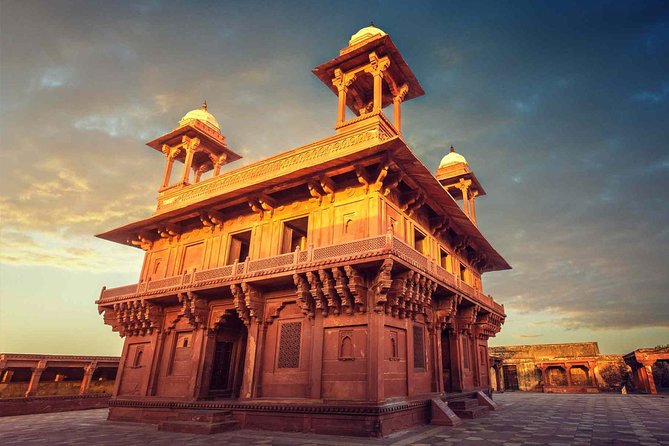
Later, you depart Agra for Jaipur by car (about 4 hours listed), with a stop at Fatehpur Sikri. This is a one-day trip site on its own, built from red sandstone, founded in the 16th century by Akbar, and once the empire’s capital for about fifteen years.
The plan allows about 1 hour for Fatehpur Sikri. In that time, you’ll likely focus on the headline monuments mentioned in the itinerary:
- Jodha Bai’s palace
- Jama Mosque
- Buland Darwaza
- The Tomb of Salim Chisti
Consideration: one hour is short for a UNESCO site that contains multiple major buildings. If you’re the type who likes to linger, you might want to prioritize what you care about most with your guide’s help.
Arrive Jaipur and check in
Then you head to Jaipur and check into your hotel for an overnight stay. The goal here is to arrive in time to rest rather than squeeze extra stops before bedtime.
Day 4: Amber Fort to Jantar Mantar—Jaipur’s biggest sights in one long day
Day 4 is a full Jaipur day with guiding and multiple stops, totaling roughly 8 hours for the day’s core program.
City start: Jaipur orientation through key monuments
You’ll start with a guided look at Jaipur, then move straight into the Golden Triangle highlights.
Amber Fort: the fort you’ll remember most
Amber Fort (Amer Fort) is located in Amer, around 11 km from Jaipur, high on a hill. You’ll have about 2 hours here. This is the kind of place where architecture and layout do the storytelling: you can see why it was positioned where it was, and how royalty used the terrain.
Tip: forts involve stairs and open courtyards. Wear comfortable, grippy shoes.
Jal Mahal: a quick pause at the Water Palace
Next is Jal Mahal (Water Palace), described as located in the middle of Man Sagar Lake and renovated/enlarged in the 18th century by Maharaja Jai Singh II. The allotted time is about 15 minutes.
This stop is more about the view than deep exploration. With only a short time window, you’ll get a glance and move on. If you love photographing reflected architecture, this can be satisfying. If you’re expecting more interior time, temper expectations.
Hawa Mahal: the iconic Palace of Wind
Then comes Hawa Mahal, the Palace of Wind—named for the screen-wall design that let women of the royal household observe street festivals while staying unseen from outside. You’ll spend about 20 minutes.
This is the stop that usually looks better in person than in photos. The facade details and the sheer “designed for appearance” feeling are hard to capture fully unless you’re standing there.
City Palace: royal spaces and palace-complex scale
You’ll also visit the City Palace of Jaipur, including the Chandra Mahal and Mubarak Mahal palaces and other buildings. The plan allows about 2 hours.
This is where Jaipur shifts from “wow facades” to “understanding the royal campus.” It’s a longer stop, so it’s one you can actually settle into.
Jantar Mantar: astronomical instruments in stone
The day ends with Jantar Mantar, a collection of nineteen architectural astronomical instruments, built by Rajput king Sawai Jai Singh and completed in 1734. The itinerary lists about 2 hours.
If you like science, you’ll enjoy it. If you don’t, you’ll still come away with a sense that Jaipur wasn’t only about palaces—it was also about measurement, observation, and knowledge systems made visible.
Evening is free for Jaipur, which is a good breather after a long day.
Day 5: drive back to Delhi for your flight
Day 5 is the wrap-up. You’ll check out after breakfast, then drive back to Delhi. The drive time is listed at about 5 hours, and you’ll be transferred to the Delhi airport based on your flight schedule.
This “last-day transfer” structure is practical. You’re not losing your final hours trying to find transport or negotiate rides. It’s the simple kind of help that makes the whole trip feel less stressful.
Monument fees and the money-shock factor (what to budget)
One big theme here is that monument fees are not included. That matters because some days include several sites in sequence.
Your itinerary includes ticket-not-included items such as:
- India Gate
- Chandni Chowk (market experience)
- Qutub Minar
- Humayun’s Tomb
- Taj Mahal
- Agra Fort
- Fatehpur Sikri
- Amber Fort
- Jal Mahal
- Hawa Mahal
- City Palace
- Jantar Mantar
So what’s the practical takeaway? Build a buffer for entrance fees at multiple stops. If you don’t, you might end up reacting at the counter instead of planning calmly.
The good news: because you have a guide, you’re less likely to waste time asking which place costs what. The plan is already structured.
Comfort and timing tips that make this route easier
Even with good planning, Golden Triangle days can feel full. Here’s how I’d set you up to enjoy it:
- Start early where possible. Morning is when you’re more likely to have energy and fewer crowds.
- Hydration helps. One piece of positive feedback in the tour experience is that you’re provided with bottles of water during the tour, plus sweets as a compliment—nice on long walking days.
- Plan for walking within “short” stops. A stop listed as 15–30 minutes can still mean moving through areas quickly.
- Use the guide time. Since this is an English-speaking guide setup, ask questions that connect monuments—how they connect across centuries, why designs differ, and what to look for during your photos.
Who this tour suits best—and who should compare alternatives
This Golden Triangle Tour 5 Days fits best if you want:
- A clear route across Delhi, Agra, and Jaipur
- A private group experience (your group only)
- An English-speaking guide to connect meaning to the monuments
- A trip that balances big-ticket sights with market and city texture
It might not be the best match if you:
- Want total freedom to linger for long periods at each site
- Prefer to plan your own transport between cities rather than rely on a driver and schedule
That said, the plan does leave some flexibility in Jaipur with free evening time, which helps.
Should you book this Golden Triangle Tour with Tour Trips India Holidays?
If you want an efficient, structured Golden Triangle that reduces stress and keeps you moving between the right places, I think this is a solid choice—especially at $338 per person with airport pickup/drop-off, air-conditioned transport, a guide, and 4 breakfasts included.
Book it if your priority is seeing the headline sights—Delhi’s major monuments, the Taj Mahal, Fatehpur Sikri, and Jaipur’s fort-and-palace core—without spending your vacation time solving logistics. The kind feedback around Gaurav’s attention, along with a clean car and small comforts like water and sweets, suggests you’re likely to feel looked after rather than “shuffled.”
I’d say compare alternatives if you strongly prefer doing things at your own pace or you know you’ll want lots of extra time inside monuments without moving on.
FAQ
What time does the tour start?
The meeting start time is listed as 9:00 am.
Is airport pickup and drop-off included?
Yes. Airport pickup and drop-off are included.
What is included in the $338.00 per person price?
The package includes an air-conditioned vehicle, an English-speaking tour guide, airport pickup and drop-off, and breakfast for 4 days.
Are monument fees included?
No. Monument fees are not included.
How long is the Golden Triangle Tour?
It runs for 5 days (approx.).
Can I cancel for a full refund?
Yes, the policy states free cancellation. You must cancel at least 24 hours before the experience’s start time for a full refund.
More Tours in New Delhi
- Old & New Delhi City Tour – Half or Full Day Options Available
★ 5.0 · 4,811 reviews - Half Day Private Delhi City Tour
★ 5.0 · 4,474 reviews - Same Day Taj Mahal, Agra Fort & Baby Taj Tour from Delhi by Car
★ 5.0 · 4,304 reviews - Taj Mahal Day Tour from Delhi by Superfast Train – TOP RATED TOUR
★ 5.0 · 4,166 reviews - Delhi: Old and New Delhi Private Full or Half-Day Tour
★ 4.9 · 3,776 reviews
More Tour Reviews in New Delhi
- Old & New Delhi City Tour – Half or Full Day Options Available
★ 5.0 · 4,811 reviews - Half Day Private Delhi City Tour
★ 5.0 · 4,474 reviews - Same Day Taj Mahal, Agra Fort & Baby Taj Tour from Delhi by Car
★ 5.0 · 4,304 reviews - Taj Mahal Day Tour from Delhi by Superfast Train – TOP RATED TOUR
★ 5.0 · 4,166 reviews - Delhi: Old and New Delhi Private Full or Half-Day Tour
★ 4.9 · 3,776 reviews
The Full Golden Triangle, More Options
- 3-Days Private Golden Triangle Tour: Delhi, Agra & Jaipur by Car
★ 5.0 · 1,107 reviews - 3-Days Private Golden Triangle Tour: Delhi, Agra & Jaipur by Car
★ 5.0 · 1,098 reviews - 3-Day Delhi, Agra and Jaipur Private Tour – India Golden Triangle
★ 5.0 · 812 reviews - Four-Day Private Luxury Golden Triangle Tour to Agra and Jaipur From New Delhi
★ 5.0 · 807 reviews - 5 Nights 6 Days Private Golden Triangle Tour – Delhi Agra Jaipur
★ 5.0 · 574 reviews
Just added: more New Delhi reviews to browse
- 4 days Golden Triangle Tour★ 5.0 · 3 reviews
- Discover Old & New Delhi: Private Tour with Street Food★ 5.0 · 3 reviews
- Taj Mahal Tour From Delhi By Private Car★ 4.5 · 3 reviews
- Golden Triangle Tour 5 Days★ 5.0 · 3 reviews
- Taj Mahal: Express Entry Ticket For Sunset Tour with guide★ 5.0 · 3 reviews
- Agra Taj Mahal Sunrise & Sunset Tour from Delhi★ 5.0 · 3 reviews
Golden Triangle Tours, compared.
 ★ 5.03-Days Private Golden Triangle Tour: Delhi, Agra & Jaipur by CarFrom $1271,107 reviews
★ 5.03-Days Private Golden Triangle Tour: Delhi, Agra & Jaipur by CarFrom $1271,098 reviews
 ★ 5.03-Day Delhi, Agra and Jaipur Private Tour – India Golden TriangleFrom $110812 reviews
 ★ 5.0Four-Day Private Luxury Golden Triangle Tour to Agra and Jaipur From New DelhiFrom $160807 reviews
 ★ 5.05 Nights 6 Days Private Golden Triangle Tour – Delhi Agra JaipurFrom $240574 reviews
 ★ 5.04 Days Golden Triangle TourFrom $146499 reviews
 ★ 5.0Private Car and Drive for Golden Triangle (4N/5D)From $167451 reviews
 ★ 5.0Private Golden Triangle Tour Delhi Agra Jaipur ( Top Rated )From $148436 reviews