
Reviewed · TAJ MAHAL TOURS FROM DELHI
1- Day Delhi And 1- Day Taj Mahal Agra Tour From Delhi
Delhi plus the Taj Mahal is a smart one-two punch. You get major Mughal and imperial landmarks in Delhi, then the big payoff in Agra at sunrise. I especially like the mix of famous monuments (Qutub Minar, Humayun’s Tomb, Taj Mahal) and practical add-ons like a private vehicle, live guide, and mineral water. I also like that the guide can handle photos and timing—one review specifically called out Haris as both professional and a strong photographer. One thing to consider: monument entrance fees are not included, and closures can affect what you see depending on the day.
This is also a night tour, so you’re not rushing the Taj Mahal like a fly-by. You stay one night in Agra, then wake up early for sunrise, when lines and crowds are typically easier. I like that you also get Agra Fort and Fatehpur Sikri in the second day, so you leave with more than just one postcard sight.
If you’re sensitive to long drives or early mornings, plan accordingly. And if you’re visiting religious sites, you’ll want to follow the dress rules—shoulders and knees matter.
In This Review
- Key highlights worth your attention
- The Delhi-and-Agra loop that makes sense
- Pickup, a/c comfort, and the Yamuna Expressway ride
- Jama Masjid: scale, faith, and respectful pacing
- Chandni Chowk and spice-market time for real Delhi life
- Humayun’s Tomb and Qutub Minar: Mughal ambition, Hindu-metal precision
- India Gate, Rashtrapati Bhavan, and Parliament from the outside
- Lotus Temple and the lunch/bazaar break you’ll actually use
- Sunrise Taj Mahal: why staying overnight matters
- Agra Fort (Lal Qila) and what the red sandstone adds
- Fatehpur Sikri: a historical detour with practical payoff
- Price and logistics: where the real value sits
- Who this tour is best for (and who should think twice)
- Practical details that prevent trip-day headaches
- Should you book this Delhi and Taj Mahal night tour?
- FAQ
- What’s included in the tour price?
- Are monument entrance fees included?
- What does night tour mean here?
- Do I need a hotel in Agra?
- Which closures should I know about?
- What’s the dress code for religious sites?
- How long is the drive between Delhi and Agra?
- Can I cancel for a full refund?
Key highlights worth your attention
- Sunrise Taj Mahal: early start for softer light and fewer people at the entrance
- Live guide + photo help: Haris was singled out as professional and taking great pictures
- Old Delhi texture: Jama Masjid and Chandni Chowk’s spice market time
- Mughal monument variety: Qutub Minar, Humayun’s Tomb, and the Agra Fort complex
- One-night Agra setup: you sleep there, then return to Delhi on day two
- Private transportation: AC vehicle with tolls, fuel, parking, and taxes covered
The Delhi-and-Agra loop that makes sense
This tour is built around a simple goal: see the most important sights without juggling chaos. You start in Delhi for classic landmarks, then you move to Agra for one night so you can do the Taj Mahal properly the next morning. That one-night stop is the difference between watching the Taj Mahal through a crowd and actually getting a calmer visit.
I like that the experience is paced with real breaks built in: restroom and snack stops can be arranged during the drive, and the plan includes time for lunch in Agra’s day. It’s also helpful that it’s a private activity for your group, so you’re not constantly negotiating with strangers about when to move.
Value check: the price covers transport, guide, the hotel stay (if you choose that option), and basic comforts. It does not cover monument entrance fees, so you’ll still need to budget for tickets once you’re on the ground.
More ways to reach the Taj, weighed side by side




Pickup, a/c comfort, and the Yamuna Expressway ride
The tour includes pickup and drop-off to anywhere in Delhi, Noida, Faridabad, and Ghaziabad. You’ll travel in an air-conditioned private vehicle, with the right size depending on your group: sedan for 1–2 people, six-seater for 3–5, and larger vans for bigger groups. That matters more than people think. It can be the difference between a smooth day and a day where everyone’s climbing over bags.
Expect a drive that uses the Yamuna Expressway route. The program notes around 3 hours for the Delhi–Agra transfer. You can request toilet and snack breaks during the journey, which is a big deal on a long day.
A small practical tip: keep your photo ID handy. The plan explicitly says you need a valid photo identity for checks at monuments.
Jama Masjid: scale, faith, and respectful pacing
Jama Masjid is one of the main reasons to spend time in Old Delhi. The program describes it as one of India’s most beautiful and largest mosques, built in the 17th century by Shah Jahan. It also notes the sheer capacity—up to about 25,000 people can pray in the complex.
What I like about including Jama Masjid here is the pacing. It’s not just a quick look from outside. You get a longer stop so you can notice how the complex is laid out and how daily worship shapes the space. If you’re not used to mosques being active places (not just museum stops), you’ll appreciate the time to reset your expectations.
Chandni Chowk and spice-market time for real Delhi life
Chandni Chowk is where you start to feel the city beyond monuments. The plan frames it as Delhi’s oldest and busiest market, built in the 17th century by Shah Jahan and designed by his daughter Jahanara. It also points out one practical angle: the market is famous for spices.
This stop is a great chance to do two things you’ll thank yourself for later:
1) Pick up small gifts and snacks without hunting
2) Get a feel for local prices and what to ask for
One caution: Old Delhi markets can feel intense. If you don’t enjoy tight streets and lots of movement, go slowly, keep your wallet secure, and stick close to your guide.
Humayun’s Tomb and Qutub Minar: Mughal ambition, Hindu-metal precision
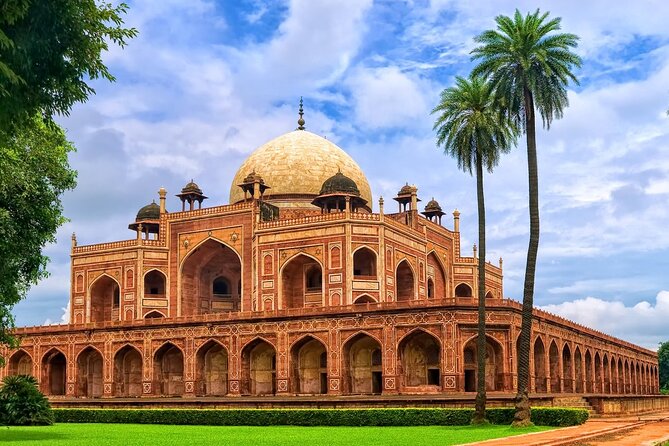
Two of the most satisfying stops on day one are Humayun’s Tomb and Qutub Minar. Humayun’s Tomb is presented as the tomb of the second Mughal emperor, and it’s described as the first Mughal monument built in the Indian subcontinent. That alone makes it an important anchor point for understanding Mughal-era architecture.
Then you get Qutub Minar, described as the world’s tallest minaret and built by Qutubuddin Aibak. The height is given as about 73 meters, and it’s also called the Victory Tower. The numbers help here. When you see it in person, that scale turns a landmark into a real physical presence.
The value of stacking these two stops close together is timing and comparison. You’ll start noticing how the style shifts from one era’s ideas to another’s techniques.
Other Agra runs out of Delhi worth a look


India Gate, Rashtrapati Bhavan, and Parliament from the outside
Not every major sight needs a ticket. India Gate is included with a short stop, positioned as India’s war memorial. Nearby, you also pause for the view of National War Memorial elements.
Then you get outside views of Rashtrapati Bhavan (the President of India’s official residence) and Parliament House. These are brief stops, but they work well if you want context without losing time in lines.
I like how this part balances emotion (war memorial) with civic symbolism (democracy and governance). You’ll also find it helpful for orienting yourself: seeing the government cluster once makes later city navigation easier.
Lotus Temple and the lunch/bazaar break you’ll actually use
Lotus Temple is one of those Delhi sights that feels calm after the market energy. The plan notes it’s built in the shape of a lotus and is a place of worship for the Baha’i faith. It’s included with time to visit, plus the day plan mentions lunch and a chance to explore Delhi bazaar for souvenirs.
Two practical things to remember:
- Dress code applies in worship spaces, including temples and religious complexes. Cover shoulders/chest/upper arms, and wear lower clothing at least below the knee.
- The program notes Lotus Temple is closed on Mondays. So if you’re choosing dates, confirm the day you’re going.
If you’re shopping for small souvenirs, keep your “one-hour” window realistic. Lotus Temple is serene, but the bazaar can still swallow time if you’re not paying attention.
Sunrise Taj Mahal: why staying overnight matters
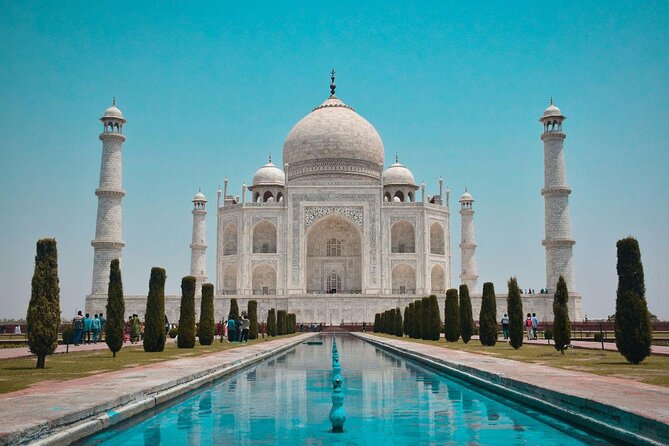
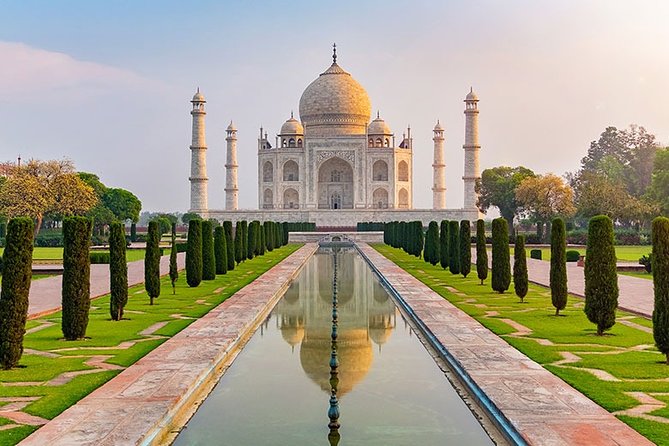
The Taj Mahal is listed as the #1 Agra stop, timed for sunrise. The program explicitly says wake up early and admire it at sunrise, and that sunrise is believed to be one of the best times for photos with fewer people.
I like this approach because it respects how the Taj Mahal works. Light changes quickly. Crowds matter. And the early schedule lets you see it when the color and atmosphere feel most gentle, not harsh.
After sunrise, the plan includes breakfast back at the hotel, then you move on to Agra Fort. That sequence works because your energy is used logically: awe first, then the next big structure.
Heads-up: Taj Mahal is closed every Friday. If your travel dates land on Friday, you’ll need a date change or an alternate plan.
Agra Fort (Lal Qila) and what the red sandstone adds
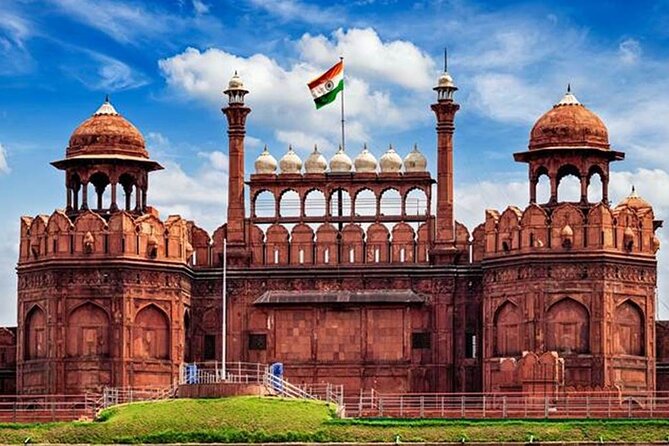
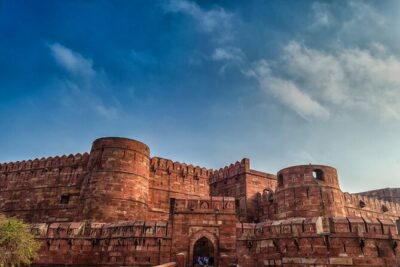
Agra Fort is described as a red sandstone Mughal residence, also called Lal Qila or Red Fort. The construction is attributed to Akbar the Great, with the start date noted as 1565.
This stop is often overlooked by first-time visitors who treat Agra like a one-sight city. That’s where this tour helps. Forts aren’t just for looking. They give you a different scale for power and daily court life.
The plan also notes Red Fort is closed on Mondays. Since the fort is called Lal Qila in the description, assume this closure can affect Agra Fort on Mondays. If your trip might land on Monday, treat it as an important variable.
Fatehpur Sikri: a historical detour with practical payoff
Fatehpur Sikri is included on the way back toward Delhi. It’s described as an old small city founded by Akbar, made of red sandstone, about 40 km from Agra, and reachable in about an hour. The plan also notes it was once the capital during Akbar’s time.
This is a strong add-on because it’s not the same “style repeat” as the Taj and the fort. It changes the mood. You’ll also likely get a more complete sense of how the Mughal world spread beyond one major monument.
The tour includes lunch on the return route. That timing matters. You’ll feel it in your energy levels when you roll back toward Delhi.
Price and logistics: where the real value sits
The listed price is $101.65 per person for about 2 days. On paper, that looks like a steal, but don’t stop there. Here’s what’s actually included versus what you’ll probably pay separately.
Included:
- Pickup and drop-off within Delhi/Noida/Faridabad/Ghaziabad
- Private air-conditioned vehicle with tolls, fuel, parking, and taxes
- Hotel in Agra with breakfast (if you select that option), twin sharing
- Live tour guide
- Mineral water bottles
Not included:
- Monument entrance fees
- Lunch and dinner
So the real value is the bundle: transport + guide + one-night base in Agra. If you add up those costs on your own, the price usually looks more realistic than it first appears.
Budget tip: plan for the monument tickets separately. The tour is generous with sights, and entrance fees can add up fast, especially for multiple sites across two days.
Who this tour is best for (and who should think twice)
This works well for you if:
- You want Delhi and Agra in one trip with limited time
- You care about seeing the Taj Mahal at sunrise, not just later in the day
- You like a guided tour with someone who can also help with photos (Haris was praised for this)
- You’d rather travel with a private vehicle than fight public transit between stops
It might not be the best fit if:
- You’re uncomfortable with early mornings
- You’re sensitive to long drives or have medical limitations (the program notes it’s not recommended for travelers with heart problems or other serious medical conditions)
- You want everything to be fully flexible on-site, because timed monument access and closures can change what fits
Practical details that prevent trip-day headaches
Dress code is not optional on this one. For temples and mosques, the program states:
- Upper wear must cover shoulders, chest, navel, and upper arms
- Lower wear must be at least below the knee
Also bring a photo ID for monument checks.
Closures to plan around:
- Taj Mahal is closed every Friday
- Akshardham, Lotus Temple, and Red Fort are closed every Monday
Because this plan includes Lotus Temple and Agra Fort (Red Fort), Monday can affect your sightseeing order.
And a small comfort note: the tour provides complementary mineral water bottles, which is handy during drives.
Should you book this Delhi and Taj Mahal night tour?
Yes, I’d book it if you want the classic combo—Delhi monuments plus the Taj Mahal—without wasting time. The biggest reason is the overnight setup in Agra for sunrise. That’s the part that makes the trip feel like more than a checklist.
I’d also feel good choosing it if you value guide quality. The reviews highlight Haris as professional, kind, and a strong photographer who takes great pictures, and that kind of guide can turn “I saw it” into “I got it.”
Only hold off if your dates fall on a closure day (Friday for the Taj Mahal, Monday for Lotus Temple and Red Fort) or if you’re not ready to handle entrance fees on arrival. With those two checks done, this tour is a practical, high-impact way to see two former capitals in one go.
FAQ
What’s included in the tour price?
The tour includes pickup and drop-off in Delhi/Noida/Faridabad/Ghaziabad, transport by private air-conditioned vehicle with tolls, fuel, parking, and taxes, a live tour guide, complementary mineral water bottles, and a hotel in Agra with breakfast in the 3-star/5-star category if that option is selected.
Are monument entrance fees included?
No. Monument entrance fees are not included in the tour price. You’ll need to pay them on-site.
What does night tour mean here?
It means you stay one night in Agra. You’ll explore the Taj Mahal at sunrise on the next morning, then continue sightseeing and return to Delhi.
Do I need a hotel in Agra?
The program includes a hotel in Agra with breakfast if you select the option. The room type is twin sharing.
Which closures should I know about?
The Taj Mahal is closed every Friday. Akshardham, Lotus Temple, and Red Fort are closed every Monday.
What’s the dress code for religious sites?
You need to dress respectfully: upper wear must cover shoulders/chest/navel/upper arms, and lower wear must be at least below the knee. This applies to temples and mosques.
How long is the drive between Delhi and Agra?
The program notes about 3 hours to reach Agra via the Yamuna Expressway.
Can I cancel for a full refund?
Yes. You can cancel up to 24 hours in advance for a full refund. If you cancel less than 24 hours before the start time, the amount paid is not refunded.
More Tour Reviews in New Delhi
- Old & New Delhi City Tour – Half or Full Day Options Available
★ 5.0 · 4,811 reviews - Half Day Private Delhi City Tour
★ 5.0 · 4,474 reviews - Same Day Taj Mahal, Agra Fort & Baby Taj Tour from Delhi by Car
★ 5.0 · 4,304 reviews - Taj Mahal Day Tour from Delhi by Superfast Train – TOP RATED TOUR
★ 5.0 · 4,166 reviews - Delhi: Old and New Delhi Private Full or Half-Day Tour
★ 4.9 · 3,776 reviews
More Agra Day Trips out of Delhi
- Same Day Taj Mahal, Agra Fort & Baby Taj Tour from Delhi by Car
★ 5.0 · 4,304 reviews - Full Day Taj Mahal, Agra Fort & Baby Taj Tour from Delhi by Car
★ 5.0 · 3,647 reviews - From Delhi: Taj Mahal & Agra Private Day Trip with Transfers
★ 4.9 · 3,181 reviews - From Delhi: Taj Mahal and Agra Fort Private Sunrise Tour
★ 4.9 · 2,270 reviews - Sunrise Taj Mahal, Agra Fort & Baby Taj Tour from Delhi by Car
★ 5.0 · 2,243 reviews
The Taj, Reached a Few More Ways
- Same Day Taj Mahal, Agra Fort & Baby Taj Tour from Delhi by Car
★ 5.0 · 4,304 reviews - Taj Mahal Day Tour from Delhi by Superfast Train – TOP RATED TOUR
★ 5.0 · 4,166 reviews - Full Day Taj Mahal, Agra Fort & Baby Taj Tour from Delhi by Car
★ 5.0 · 3,647 reviews - From Delhi: Taj Mahal & Agra Private Day Trip with Transfers
★ 4.9 · 3,181 reviews - Taj Mahal Tour from Delhi by Express Train (Viator Award Winner)
★ 5.0 · 2,849 reviews
Just added: more New Delhi reviews to browse
- 4 days Golden Triangle Tour★ 5.0 · 3 reviews
- Discover Old & New Delhi: Private Tour with Street Food★ 5.0 · 3 reviews
- Taj Mahal Tour From Delhi By Private Car★ 4.5 · 3 reviews
- Golden Triangle Tour 5 Days★ 5.0 · 3 reviews
- Taj Mahal: Express Entry Ticket For Sunset Tour with guide★ 5.0 · 3 reviews
- Agra Taj Mahal Sunrise & Sunset Tour from Delhi★ 5.0 · 3 reviews
Taj Mahal Tours from Delhi, compared.
 ★ 5.0Same Day Taj Mahal, Agra Fort & Baby Taj Tour from Delhi by CarFrom $624,304 reviews
 ★ 5.0Taj Mahal Day Tour from Delhi by Superfast Train – TOP RATED TOURFrom $1004,166 reviews
 ★ 5.0Full Day Taj Mahal, Agra Fort & Baby Taj Tour from Delhi by CarFrom $623,647 reviews
 ★ 4.9From Delhi: Taj Mahal & Agra Private Day Trip with TransfersFrom $43,181 reviews
 ★ 5.0Taj Mahal Tour from Delhi by Express Train (Viator Award Winner)From $752,849 reviews
 ★ 5.0All Inclusive Private Taj Mahal Luxury Tour from Delhi by CarFrom $622,564 reviews
 ★ 4.9Same Day Taj Mahal, Fort & Baby Taj Tour from Delhi by CarFrom $502,534 reviews
 ★ 4.9From Delhi: Taj Mahal and Agra Fort Private Sunrise TourFrom $592,270 reviews