
Reviewed · NEW DELHI
15 Days Glimpses of Colorful India
One country, five moods, one tight route. This tour strings together Delhi’s Mughal-era icons with Rajasthan wildlife and a late-chapter Varanasi Ganges boat ride, all with flights built in to save time.
What I like most is the hands-on pace: you get guided sight time in the cities and then real “out in nature” focus in Ranthambore, not just a drive-by. I also like that the group stays small, capped at six people, which makes it easier to move and ask questions without feeling like you’re in a crowd-control line.
The one drawback to think about: this is not a slow, relaxing holiday. You’ll be up early for key stops and you’ll spend a lot of days transitioning between cities. Plus, Ranthambore is closed July to September, so the tour won’t run then.
In This Review
- Key Highlights That Shape the Whole Trip
- How This 15-Day Route Feels: Time-Savers and Trade-Offs
- Old Delhi Day 2: Jama Masjid, Chandni Chowk, and Red Fort
- Jama Masjid: big scale, real rules
- Chandni Chowk + spice markets: color and chaos with a plan
- Red Fort: a must-see, but watch the calendar
- Jaipur Stops That Matter: City Palace, Jantar Mantar, and Albert Hall
- City Palace: Rajput-Mughal blend with a useful central viewpoint
- Jantar Mantar: astronomy made of stone
- Albert Hall Museum: a pretty break in the middle
- Hawa Mahal to Amber Fort: Jaipur’s Classic Morning Rhythm
- Hawa Mahal: 152 windows for a reason
- Amber Palace: when the palace sits above the city
- Jal Mahal: a lake palace, renovation included
- Pushkar Lake and Brahma Temple: Spiritual India at Human Scale
- Pushkar Lake: the legend and the built environment
- Brahma Temple: the one where Brahma is the star
- Ranthambore Safaris: Wildlife Time With a Naturalist
- Why two jeep safaris are better than one
- Note on seasonality: Ranthambore timing matters
- Agra Without the Full-Pressure Day: Chand Baori En Route
- Taj Mahal Morning Planning: Marble, Meaning, and Closures
- Agra Fort: The Powerful Follow-Up After the Marble
- Varanasi Days 11–12: Ganges Water, Sunrise Energy, and Religion On Foot
- Annapoorna Devi Temple and nearby focus
- Ganga Aarti atmosphere and the ghat focus
- Sarnath and Banaras Hindu University: A Side of India Beyond the River
- Sarnath: Buddhist pilgrimage context
- Banaras Hindu University: modern India inside the sacred city
- New Delhi Final Days: Qutub Minar, Humayun’s Tomb, Lotus Temple, India Gate, Birla Mandir
- Qutub Minar: early Indo-Islamic engineering
- Humayun’s Tomb: the Taj Mahal cousin
- Lotus Temple: modern faith, big shape, closure note
- India Gate: a war memorial in the middle of the city
- Birla Mandir: temple with an inclusion note
- Price and Value: Is $1,000 a Fair Deal?
- Service and Group Size: Why Small Matters on This Route
- Who This Tour Is Best For (and Who Might Skip It)
- Should You Book This 15 Days Glimpses of Colorful India Tour?
- FAQ
- Which cities are included in the tour?
- How long is the tour?
- What is the meeting point and start time?
- Are domestic flights included?
- Is Ranthambore National Park included, and what happens there?
- Is the Ganges boat ride included?
- Are monument entrance tickets included?
- Are breakfast and meals included?
- When does the tour not operate?
- What’s the cancellation policy?
Key Highlights That Shape the Whole Trip
- Old Delhi in a focused loop: Jama Masjid, Chandni Chowk, and the Red Fort area on Day 2
- Jaipur’s best photo blocks: Hawa Mahal early, then Amber Fort and Jal Mahal for classic skyline shots
- Pushkar’s spiritual core: Pushkar Lake and the Brahma Temple, both directly on the lake circuit
- Ranthambore safari time that actually matters: two shared jeep safaris with a naturalist
- Agra’s two biggest hits: Taj Mahal plus Agra Fort, with planned breaks to keep the day workable
- Varanasi by sunrise + water: sunrise at the ghats and a boat ride on the Ganges (weather permitting)
How This 15-Day Route Feels: Time-Savers and Trade-Offs
This trip covers Delhi, Jaipur, Pushkar, Ranthambore, Agra, and Varanasi, then returns you to Delhi. The big value is that it uses two internal domestic flights (Delhi → Varanasi → Delhi) so you’re not spending days stuck on long road transfers across India.
You’ll travel in an air-conditioned private car with an English-speaking driver for transfers and sightseeing. And in Ranthambore, you shift from roads to a naturalist-led safari by shared jeep—morning and afternoon. That’s where the “glimpses” name makes sense: each region shows you a different India, with enough time in the right places to feel the contrast.
The trade-off is pacing. You’re moving almost every day, and some stops are timed like you mean it (early morning starts for Taj Mahal and for sunrise in Varanasi, plus morning and afternoon safari sessions). If you want a holiday where your day is mostly yours, this isn’t that kind of plan.
Still deciding? Here is how it stacks up against other Delhi picks we have written up.



Old Delhi Day 2: Jama Masjid, Chandni Chowk, and Red Fort
Day 1 is arrival and an overnight in Delhi. Day 2 is where Old Delhi grabs you by the collar—in a good way.
Jama Masjid: big scale, real rules
You start with Jama Masjid, described as the largest mosque in India, built over 13 years and completed in 1650. The courtyard can hold about 25,000 devotees, and there’s a strenuous climb to the top of the southern tower for panoramic views over rooftops.
Practical tip: dress for the mosque. The program is clear that you must cover your head, legs, and shoulders, and attire is available there if you forget. Also, the admission ticket is free for this stop.
Chandni Chowk + spice markets: color and chaos with a plan
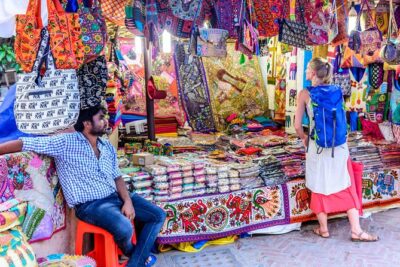
Next comes Chandni Chowk, one of Old Delhi’s oldest and busiest markets. This is your Moonlight Square vibe, plus nearby Red Fort context. After that, you move toward Khari Baoli Road for the wholesale spice market—hundreds of shops dealing in local and exotic spices. This is a great place to photograph but also a place to slow down just enough to notice the textures: piles of spices, shop signs, and the busy flow of people.
The best part: these markets are included as part of a guided city block, so you’re not trying to navigate them solo right after arrival.
Red Fort: a must-see, but watch the calendar
You finish Day 2 at Red Fort, the Mughal stronghold that began construction in 1638. The itinerary notes that the fort is closed on every Monday, which matters if your tour date lands there. Admission is not included here, so you’ll want to budget for monument entry fees and any camera charges.
After Red Fort, you return to the hotel in Delhi. The day is a full one, but the structure helps: mosque → market → fortress, all in a walkable logic.

Jaipur Stops That Matter: City Palace, Jantar Mantar, and Albert Hall
You drive to Jaipur on Day 3 (about 5–6 hours by car) and meet your guide after arrival. There’s a coffee break around the Delhi crossing, then lunch and sightseeing.
City Palace: Rajput-Mughal blend with a useful central viewpoint
The City Palace sits in Jaipur’s old city and mixes Rajput and Mughal architecture. You’ll hear about Chandra Mahal, the seven-storey centerpiece. Even if you’re not focused on museums, the layout here helps you understand Jaipur’s design mindset: palace life built around views and control of the city.
Admission is not included, so treat this as a place where you pay entry to get the full effect, not just a photo spot.
Jantar Mantar: astronomy made of stone
Next is Jantar Mantar, built in the 18th century by Maharaja Sawai Jai Singh II. The masonry instruments were used to study star movement, and the huge sundial is still noted for accurate time, with daily corrections. This is one of those stops that changes how you see “old monuments.” It’s not just decoration—it’s applied science.
Admission is not included, but it’s a short stop, so it’s easy to fit.
Albert Hall Museum: a pretty break in the middle
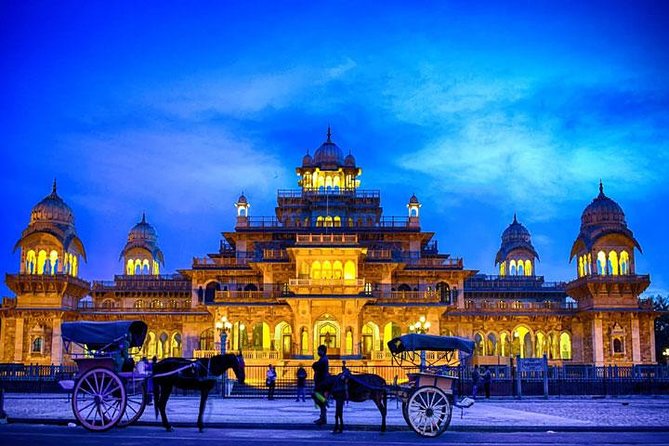
Then you get a drive pass photo chance at Albert Hall Museum in Ram Niwas Garden. It’s positioned for handicraft and archaeological collections, and the program specifically frames it as a brief photography stop rather than a long museum visit.
For me, this works as a breathing point. Jaipur days can get intense fast, and this stop prevents “sight fatigue” from becoming total burnout.
Hawa Mahal to Amber Fort: Jaipur’s Classic Morning Rhythm
Day 4 is an early start after breakfast, and the itinerary is built around lighting and timing.
Hawa Mahal: 152 windows for a reason
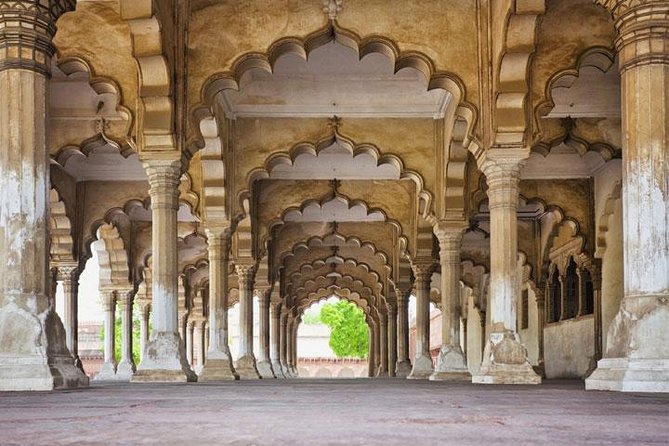
You visit Hawa Mahal for outside photos, with the note that direct sunlight is most amazing. Built in 1799, it’s the five-storey semi-octagonal landmark with 152 windows and latticed balconies. It was designed for royal women to view street life and processions.
This stop is quick, but it’s one of the most recognizable visuals in India. Also, admission isn’t included, since your time is focused on viewpoints and photos.
Amber Palace: when the palace sits above the city
Next is Amer Fort (Amber Palace), on hills and known for the blend of Hindu and Muslim architecture. The red sandstone and white marble pavilions reflect in a lake at the fort’s base—meaning you’re not just looking at buildings; you’re looking at the fort’s relationship with the surrounding landscape.
Admission is not included, but this is one of the stops where your paid entry tends to be worth it because you’re inside a complex, not just viewing a single façade.
Jal Mahal: a lake palace, renovation included
On the way, you stop at Jal Mahal, a small palace set in Man Sagar Lake. The itinerary notes that renovation around the lake is in progress, so part of your experience may be “scaffolding reality” rather than pristine postcard perfection. Still, it’s a good photo opportunity.
Lunch is followed by a stop connected to block printing—labeled as a chance to see the most unique art of Jaipur. The key here is you’re not only doing monuments; you’re adding a craft element.
Pushkar Lake and Brahma Temple: Spiritual India at Human Scale
Day 5 moves you to Pushkar. You check in, then visit Pushkar’s religious centerpiece.
Pushkar Lake: the legend and the built environment
Pushkar Lake is described as one of India’s most sacred lakes, surrounded by 52 palaces, 400 temples, and 52 ghats (steps leading down to the water). The legend ties it to Brahma’s lotus petals, and the program highlights the annual November pilgrimage dip and the fair near the lake.
Admission is free for this stop. That’s a big plus—this is a core cultural area where you can spend time without entry fees adding up quickly.
Brahma Temple: the one where Brahma is the star
Day 6 focuses on Brahma Temple, the lone Hindu temple in India dedicated to Lord Brahma. It’s situated on the banks of Pushkar Lake, built in the 14th century, with features like the red spire, marble floors, and the swan associated with Brahma.
Again, admission is free, and the itinerary emphasizes the temple’s raised platform and icon details. The point for you: Pushkar doesn’t feel like a checklist. It feels like a place people return to.
Ranthambore Safaris: Wildlife Time With a Naturalist
Day 7 is travel to Ranthambore and overnight there. Day 8 is safari day in two parts.
Why two jeep safaris are better than one
You’ll do a morning jeep safari with a naturalist, then return for breakfast and day time free in the hotel. Later, you meet again for an afternoon jeep safari.
The itinerary notes about 3 hours spent in the park each safari session, and that includes two shared jeep safaris. Sharing jeeps can mean less control over exact positions, but it also helps keep the overall trip value strong. Most importantly: you’re going twice, so if wildlife timing is slow in the morning, you get another shot.
Note on seasonality: Ranthambore timing matters
The tour doesn’t operate from July to September because Ranthambore National Park is closed during those months. If your travel window falls there, you’ll need a different itinerary.
This is one of those real-world logistics details that can make or break your plans, so double-check dates before you book.
Agra Without the Full-Pressure Day: Chand Baori En Route
Day 9 includes travel toward Agra. On the way you stop at Chand Baori stepwell, an old step-well with narrow steps across multiple stories. The itinerary says the oldest parts date back to the 8th century, with upper levels built later during the Mughal era. It totals about 3,500 narrow steps across 13 stories and goes roughly 30 meters deep.
Admission is not included here, but it’s a short stop that gives you variety on the road. It’s also a good mental reset after the intensity of earlier city days.
Then you arrive in Agra, check in, and overnight.
Taj Mahal Morning Planning: Marble, Meaning, and Closures
Day 10 is dedicated to Taj Mahal in the early morning. The itinerary stresses that you meet your guide at the hotel and then visit the monument. It also mentions the Taj Mahal is closed every Friday, which is critical if your day falls on a Friday.
You then return for breakfast and a 1-hour rest at the hotel. That matters more than it sounds. After Taj Mahal, you’ll need a breather before Fort time and before the energy dip that can hit late-morning sightseeing.
Admission for Taj Mahal is not included. Plan to budget for entry and possible camera fees.
Agra Fort: The Powerful Follow-Up After the Marble
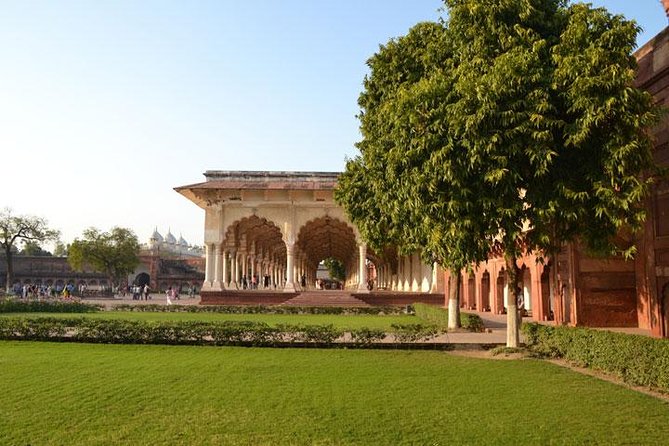
Later on Day 10 you visit Agra Fort with a guide. This is described as the Red Fort of Agra, built as a 16th-century fortress with palaces like Jahangir Palace and Khas Mahal, plus audience halls and two mosques.
The program also notes the fort’s role in Mughal power and imprisonment history—specifically Shah Jahan being held prisoner there by Aurangazeb, his son.
Admission is not included. The value here is contrast: Taj Mahal is beauty as memory; Agra Fort is power as architecture.
Varanasi Days 11–12: Ganges Water, Sunrise Energy, and Religion On Foot
After Agra, the tour uses a flight to move to Varanasi. Day 11 includes transfer to Delhi airport and boarding the domestic flight to Varanasi, then arrival and hotel check-in. In the afternoon, you start sightseeing around religious sites.
Annapoorna Devi Temple and nearby focus
The itinerary highlights Annapoorna Devi Temple, dedicated to the goddess of nourishment, Annapurna. It describes the pairing with Kasi Viswanath Temple, located adjacent with only a few yards separating them. Admission is free for this stop.
Ganga Aarti atmosphere and the ghat focus
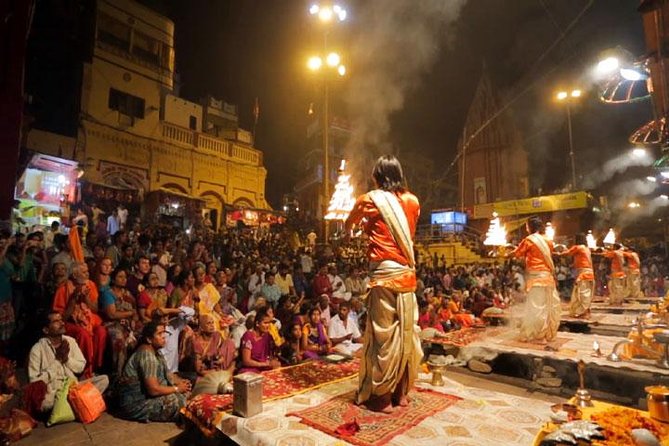
Day 12 starts with an early morning drive to the Varanasi ghat for sunrise, plus a boat ride on the Ganges. The boat ride is listed as included in the trip features, and it’s subject to weather conditions, so expect possible adjustments based on local conditions.
Then you return for breakfast, and later you visit other places in the afternoon.
This is the “different kind of India” portion of the trip: you’re not just looking at monuments behind tickets. You’re watching the river life and the sacred rhythms at close range.
Sarnath and Banaras Hindu University: A Side of India Beyond the River
Day 12 also includes stops outside the immediate ghat area.
Sarnath: Buddhist pilgrimage context
Sarnath is about 10 km from Varanasi, described as one of four significant Buddhist pilgrimage places. The stop focuses on the site where Lord Buddha first delivered a lecture after attaining nirvana. You visit the Sarnath Buddhist Temple area, including the Mulagandhakuti Vihar, with notes about twentieth-century temples supported by monks from Tibet, China, and Japan.
Admission isn’t included for the temple stop. But it’s still a strong addition because it shows India’s spiritual layers: Hindu devotion on the ghats, plus Buddhist pilgrimage a short ride away.
Banaras Hindu University: modern India inside the sacred city
Then you visit Banaras Hindu University (BHU), described as a public central university established in 1916, with over 30,000 students and a claim as the largest residential university in Asia.
Admission isn’t included here either. Still, the value is perspective. Varanasi isn’t only rituals; it’s also classrooms, campus life, and modern education.
New Delhi Final Days: Qutub Minar, Humayun’s Tomb, Lotus Temple, India Gate, Birla Mandir
Day 13 is essentially travel back to Delhi (transfer to the airport, flight, meet and greet, and return to hotel). Day 14 is your big New Delhi sightseeing day.
Qutub Minar: early Indo-Islamic engineering
You start with Qutub Minar, called the tallest brick minaret in the world, built in 1206. The itinerary notes the origin is mysterious, with theories about celebrating victory or signaling Muslim rule. Admission isn’t included here.
Humayun’s Tomb: the Taj Mahal cousin
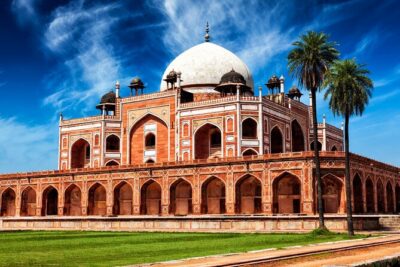
Next is Humayun’s Tomb, built in 1570 and described as an inspiration for the Taj Mahal. It’s tied to Mughal architecture and houses the body of the second Mughal emperor, Humayun.
Admission isn’t included.
Lotus Temple: modern faith, big shape, closure note
Then comes Lotus Temple, a Bahai House of Worship known for its lotus shape and white marble build. The itinerary specifically notes it’s particularly pretty at night when attractively lit. Also, it’s closed every Monday, so timing matters.
Admission is free for this stop.
India Gate: a war memorial in the middle of the city
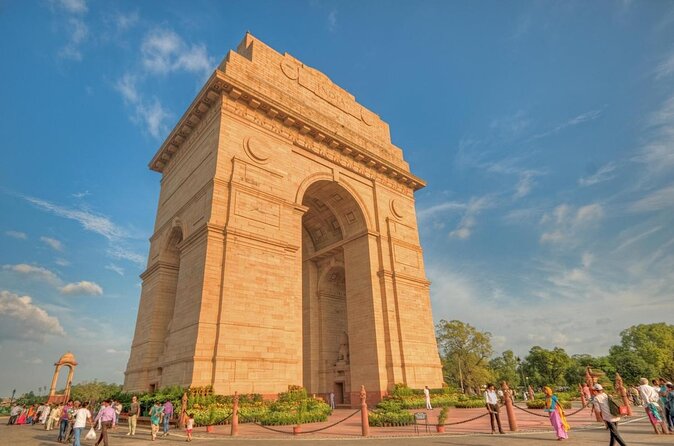
Then India Gate, the towering archway in central New Delhi, built as a war memorial for Indian soldiers who lost their lives fighting for the British Army in World War I. Admission is free.
Birla Mandir: temple with an inclusion note
Finally, Birla Mandir (Lakshmi Narayan) near Connaught Place. Built in 1938 and dedicated to Goddess Laxmi and Narayana, it’s noted as inaugurated by Mahatma Gandhi with stipulations that people of all castes can enter. Admission is free.
You return to the hotel and overnight in Delhi. Day 15 ends with transfer to the airport for your onward flight.
Price and Value: Is $1,000 a Fair Deal?
At $1,000 per person for roughly 15 days, the value mainly comes from the big-ticket inclusions that reduce decision stress:
- Two internal flights (Delhi ↔ Varanasi ↔ Delhi)
- Two Ranthambore jeep safaris in shared jeeps, plus a naturalist
- A Ganges boat ride (weather dependent)
- Private air-conditioned vehicle with an English-speaking driver for transfers and sightseeing
- 3-star accommodations with breakfast included
- Mobile ticket for the experience
Where you’ll need to plan extra is also clearly spelled out:
- Monument entrance tickets and camera fees are not included
- Lunch and dinner aren’t included unless specified above
- Tips and laundry aren’t included
- A Gala dinner on X-Mass and New Year is mandatory and paid at the hotel if your dates overlap
So for value, think of this as: you’re paying to have the route put together, transportation handled, and the hard-to-organize parts (safaris and domestic flights) taken care of. If you’re the type who hates spending hours planning and bargaining, this price makes sense. If you want maximum independence and you already know you want to pick your own guides and tickets, then the cost might feel heavier.
Service and Group Size: Why Small Matters on This Route
This trip caps at maximum 6 travelers, which is a real advantage. It means drivers and guides can stay responsive, and your schedule is less likely to feel like it’s designed only for the slowest person.
From the service notes associated with this operator, the standout theme is responsiveness and care. I saw mentions of a director called Amid Bhai and a guide named Mohammad Ibrahim for professionalism and attentiveness. Even without knowing who you’ll personally have, the consistent message is that someone is actively managing the trip so you’re not stuck figuring things out alone.
Who This Tour Is Best For (and Who Might Skip It)
Best fit:
- You want a big cross-section of India in one trip: Mughal monuments, Jaipur architecture, Pushkar spirituality, Ranthambore wildlife, Agra landmarks, and Varanasi river life.
- You like structured days, with guided time for key sights and included experiences where planning would be a headache.
- You’re comfortable with early starts and a lot of transit days.
Skip it if:
- You want a slow pace with lots of downtime.
- You’re traveling only in July–September and were hoping to see Ranthambore anyway (the park closure prevents operation).
- You hate paying extra for monuments and camera fees, since many major sites require those tickets.
Should You Book This 15 Days Glimpses of Colorful India Tour?
I’d book it if you want a well-packaged route that covers the major regions without forcing you to manage domestic flights, safari logistics, and guide coordination day by day. The included safaris, the domestic flight saving, and the Varanasi boat ride (when conditions allow) are the kinds of pieces that cost you time and energy if you plan them yourself.
I wouldn’t book it if your priority is downtime or if you’re trying to keep costs ultra-low, because entrance fees and meals add up fast in a trip this packed.
If you’re ready for a structured, high-contrast journey, this tour has a clear strength: it puts the right kinds of experiences in the itinerary, then handles the connections.
FAQ
Which cities are included in the tour?
The tour covers New Delhi, Jaipur, Pushkar, Ranthambore, Agra, and Varanasi, with the trip ending back in Delhi.
How long is the tour?
It runs for about 15 days.
What is the meeting point and start time?
The meeting point is IGI Airport T3 Road, Aerocity, Indira Gandhi International Airport, New Delhi, Delhi 110037, India, with a start time of 9:00 am.
Are domestic flights included?
Yes. The tour includes two internal domestic flight tickets (Delhi / Varanasi / Delhi).
Is Ranthambore National Park included, and what happens there?
Yes. The tour includes two sharing jeep safari sessions in Ranthambore National Park, one in the morning and one in the afternoon, with a naturalist.
Is the Ganges boat ride included?
Yes, a boat ride in Varanasi is included, but it is subject to available weather conditions.
Are monument entrance tickets included?
No. Monuments entrance tickets or camera fees are not included where applicable.
Are breakfast and meals included?
Breakfast is included for 14 breakfasts. Lunch and dinner are not included unless specified above in the tour details.
When does the tour not operate?
The tour is not operating from July to September throughout the year because Ranthambore National Park is closed during those months.
What’s the cancellation policy?
Free cancellation is available. You can cancel up to 24 hours in advance of the experience’s start time for a full refund.
More Tour Reviews in New Delhi
- Old & New Delhi City Tour – Half or Full Day Options Available
★ 5.0 · 4,811 reviews - Half Day Private Delhi City Tour
★ 5.0 · 4,474 reviews - Same Day Taj Mahal, Agra Fort & Baby Taj Tour from Delhi by Car
★ 5.0 · 4,304 reviews - Taj Mahal Day Tour from Delhi by Superfast Train – TOP RATED TOUR
★ 5.0 · 4,166 reviews - Delhi: Old and New Delhi Private Full or Half-Day Tour
★ 4.9 · 3,776 reviews
Just added: more New Delhi reviews to browse
- 4 days Golden Triangle Tour★ 5.0 · 3 reviews
- Discover Old & New Delhi: Private Tour with Street Food★ 5.0 · 3 reviews
- Taj Mahal Tour From Delhi By Private Car★ 4.5 · 3 reviews
- Golden Triangle Tour 5 Days★ 5.0 · 3 reviews
- Taj Mahal: Express Entry Ticket For Sunset Tour with guide★ 5.0 · 3 reviews
- Agra Taj Mahal Sunrise & Sunset Tour from Delhi★ 5.0 · 3 reviews