
Reviewed · TAJ MAHAL TOURS FROM DELHI
2-Days Private Delhi and Agra Taj Mahal Tour ( Overnight in Agra)
Two days, two Mughal icons. This private Delhi-and-Agra tour strings together major monuments in Delhi, then lands you in Agra for sunrise Taj Mahal with a real guide. You get private car transfers and a tight plan built around big sights and clear context.
I love the air-conditioned private car. It saves you from bus or train stress and keeps the day moving between stops. I also like that breakfast in Agra is included along with pickup and drop-off, so the trip feels planned instead of improvised.
One consideration: the schedule marks several monument admissions as not included, but the package notes that monument fees are included (based on the option you choose). Before you go, confirm what your option covers so you don’t get surprised at ticket gates.
In This Review
- Key things to love about this Delhi and Agra private tour
- Private car transfers plus one night in Agra
- Day 1 in Delhi: Jama Masjid, Chandni Chowk, and the Red Fort payoff
- Jama Masjid: scale and symmetry first
- Chandni Chowk spice market: smell the city
- Red Fort: where Mughal power lived
- Gurudwara Bangla Sahib, India Gate, and the Delhi government photo stops
- Gurudwara Bangla Sahib: a calm reset
- India Gate: a World War I memorial you can read
- Parliament House and President’s House: quick views, quick photos
- Humayun’s Tomb and Qutub Minar, plus Akshardham and Lotus Temple options
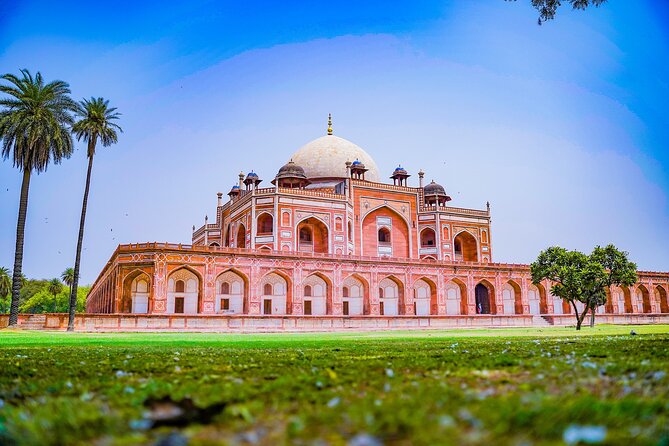
- Humayun’s Tomb: the garden-tomb idea in action
- Swaminarayan Akshardham: modern scale with old-world styling
- Qutub Minar: tall, ancient, and instantly recognizable
- Lotus Temple: your calm finish in the evening light
- Drive to Agra: saving energy for an early start
- Sunrise Taj Mahal: why 5:45 AM is the smart move
- Agra Fort and Itmad-ud-Daula: the Mughal side after the main event
- Agra Fort: power, then control
- Itmad-ud-Daula: quieter, more delicate, and worth the hour
- End of tour: driven back to your station or airport
- Price and logistics: what you’re really paying for
- Who this tour fits best (and who should look elsewhere)
- Should you book this Delhi and Agra private tour?
- FAQ
- How long is the Delhi and Agra tour?
- Do I get pickup and drop-off?
- Is there an overnight stay in Agra?
- What time is the sunrise Taj Mahal visit?
- Are monument entry fees included?
- Are meals included?
- Does the tour include photos at the Taj Mahal?
- Is this a private tour?
- Can I cancel for a full refund?
Key things to love about this Delhi and Agra private tour
- Private A/C car with pickup and drop-off across Delhi NCR and onward to your station/airport
- Agra overnight + breakfast so you’re not racing back to Delhi after a long day
- Sunrise Taj Mahal at 5:45 AM for the best lighting and a calmer start
- A guide-led, monument-to-monument plan from Jama Masjid to Lotus Temple in Delhi
- Taj Mahal photo time (5 photos) and a complimentary water bottle
- Flexible choices in Delhi between certain sights to fit your timing and interests
Private car transfers plus one night in Agra
If your time is tight, this is exactly the kind of trip that keeps your energy for the sights. The biggest win is the private A/C car with pickup and drop-off. Instead of figuring out routes, coordinating trains, or packing and repacking, you get a driver and you go door-to-door in Delhi NCR.
Then there’s the second win: you’re not doing Taj Mahal as a day-trip grind. You spend one night in Agra with breakfast, which lets day two start early and still feel human. The pace is fast, but you’re not exhausted from constant transit.
Value-wise, this is priced at $80 per person for a two-day private experience that includes a hotel night, breakfast, taxes/fuel/parking, and sightseeing under a single plan. For many first-time visitors, that combination helps a lot because you can budget one package and focus on what matters: monuments, morning light, and good guidance.
More ways to reach the Taj, weighed side by side




Day 1 in Delhi: Jama Masjid, Chandni Chowk, and the Red Fort payoff
Delhi can feel like a blur, but this plan gives you a clear story arc on day one. You start with pick-up, meet your guide, and then head out right away. The itinerary even mentions starting by tuk-tuk after you meet the guide, which is a fun, low-key way to get going before the bigger drives.
Jama Masjid: scale and symmetry first
Jama Masjid is India’s largest mosque, built in 1656 with the help of 5,000 workers. Walking the red sandstone courtyard gives you a sense of size fast. It’s also a great start because it sets the tone for Mughal-era Delhi style—clean geometry, strong lines, and a big open space that helps you orient.
A small heads-up: the schedule lists Jama Masjid admission as not included, so if your package option doesn’t cover it, plan on paying at the site.
Chandni Chowk spice market: smell the city
From the formal mosque setting, you shift into street-level Delhi at Chandni Chowk. The guide-led stop focuses on the spices—how they’re used and what to look for. This is one of those stops that’s not about taking photos; it’s about connecting the dots between markets and daily Indian life. Even if you don’t buy much, you’ll understand why this area matters.
Red Fort: where Mughal power lived
Then comes the heavy hitter: Red Fort. Built by Shah Jahan between 1639 and 1648, it served as the main residence of Mughal emperors. The architecture mixes Indo-Islamic and Mughal influences, and the fort’s mass makes it feel like a city within a city.
The schedule lists Red Fort admission as not included, again pointing to the need to confirm what your chosen option includes. If it’s covered, great. If not, you’ll still enjoy it—but you’ll want that cash ready.
Other Agra runs out of Delhi worth a look


Gurudwara Bangla Sahib, India Gate, and the Delhi government photo stops
Day one keeps balancing faith, memorials, and the capital’s political skyline—so you don’t get only one type of attraction.
Gurudwara Bangla Sahib: a calm reset
Next is Gurudwara Bangla Sahib, a Sikh gurdwara. You’ll hear the story tied to 1664, when the eighth Sikh Guru visited and people were reportedly helped during a smallpox and cholera epidemic by water from the tank. It’s a powerful detail because it explains why these places feel more than decorative—they connect to community care.
This stop is listed as free admission, and it’s one of the easiest places to slow down. Even a short visit feels different after the fort-and-market energy.
India Gate: a World War I memorial you can read
Then you reach India Gate, built in 1921 as the Tomb of the Unknown Soldier. On the wall are names of 13,300 Indian army servicemen who died in the First World War. The number is striking, and the carved names make it feel personal, not abstract.
It’s a quick stop (about 15 minutes), but it’s worth using for a couple of calm minutes—especially if your day in Delhi has been nonstop up to that point.
Parliament House and President’s House: quick views, quick photos
After India Gate, you drive past Parliament House and also see the President’s House. These are mostly photo/drive-by moments. If you’re expecting something like a museum, you might find it brief. But for most first-time visitors, it’s a useful way to get a feel for Delhi’s layout and official architecture without losing hours.
Humayun’s Tomb and Qutub Minar, plus Akshardham and Lotus Temple options
Delhi’s UNESCO sites and big faith landmarks make day one feel like multiple “chapters.” This part of the itinerary includes Humayun’s Tomb, Swaminarayan Akshardham, Qutub Minar, and Lotus Temple—but with some flexibility on which you spend time at.
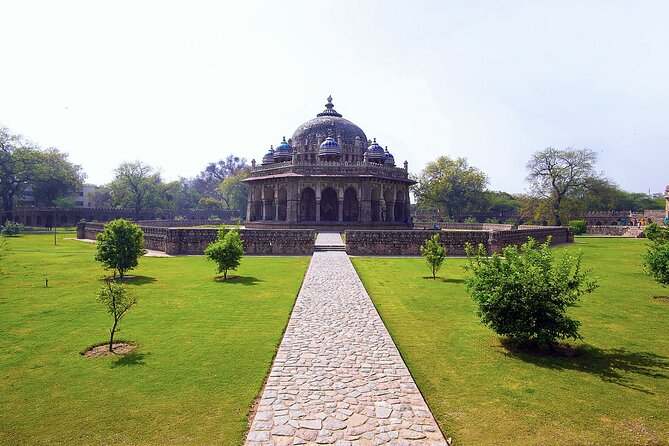
Humayun’s Tomb: the garden-tomb idea in action
Humayun’s Tomb is a UNESCO World Heritage Site and is noted as the first Garden Tomb of India. The plan explains that it was built after Humayun’s death by his wife, which gives the building an emotional logic beyond its architecture.
The schedule lists Humayun’s Tomb admission as not included. Still, even if you pay, it’s a high-impact stop because it feels composed and designed—pathways, symmetry, and a calm mood that contrasts with the city’s noise.
Swaminarayan Akshardham: modern scale with old-world styling
Swaminarayan Akshardham is one of the biggest Hindu temples. It was constructed in 2005, but the architecture creates an impression of age—like it’s been there for centuries. If you like grand visual design (and not only Mughal stonework), this is the stop that broadens your Delhi picture.
This itinerary indicates a choice around time, mentioning options to visit Humayun’s Tomb or Akshardham Temple. In practice, you should treat this as a route that may shift based on traffic and your guide’s plan. You still get the main sights, but the order or which one takes priority can change.
The good news: Akshardham is listed as free admission in the itinerary.
Qutub Minar: tall, ancient, and instantly recognizable
Next is Qutub Minar, part of the UNESCO Qutub complex. It’s described as the tallest minaret built in 1192 with bricks. Even people who don’t know much about history recognize it immediately because it’s such a vertical landmark.
The schedule lists Qutub Minar admission as not included, so confirm your package coverage. Still, the structure’s scale makes it feel worth the ticket if you end up paying.
Lotus Temple: your calm finish in the evening light
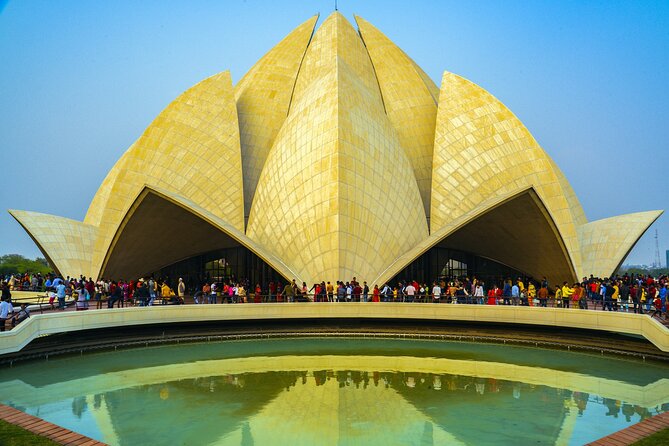
Finally, Lotus Temple closes the Delhi circuit. It’s a Bahá’í House of Worship, dedicated in December 1986, and it’s known for its flower-like shape. The schedule lists it as free admission and gives about an hour.
If you’re tired from a packed day, Lotus Temple helps. It’s open, bright, and easy to walk around without feeling rushed.
Drive to Agra: saving energy for an early start
After Lotus Temple, you drive to Agra and overnight there. This leg matters more than it sounds. A sunrise Taj Mahal day is early by definition, and sleeping in Agra reduces the risk of delays stealing your morning.
Think of the overnight as part of the experience, not just a necessity. It’s what makes the second day’s timing workable.
Also, the tour includes complimentary water bottles, which helps during hot-season walks. You’ll still want to bring your own snack if you get hungry between meals, since meals are marked as not included.
Sunrise Taj Mahal: why 5:45 AM is the smart move
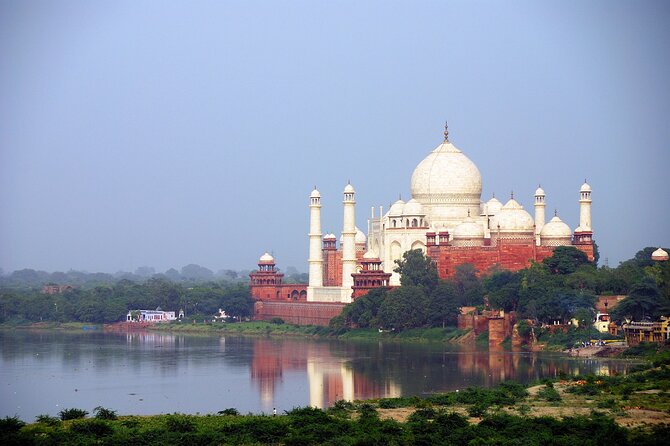
The next morning starts at 5:45 AM, when you meet your private guide in the hotel lobby for the sunrise visit. This is the right time to aim for Taj Mahal, because the light hits the marble differently and the whole scene feels more cinematic when the crowds haven’t peaked.
The Taj Mahal is described as an ivory-white marble mausoleum on the Yamuna’s bank, commissioned in 1632 by Mughal emperor Shah Jahan. When you see it early, it’s easier to focus on details like how the marble reflects light and how the gardens and gateways shape the view.
The schedule lists Taj Mahal admission as not included, but the package also says monument fees are included (based on your option). So, the practical move is simple: check your option details before you arrive so you know if your Taj Mahal entry is covered.
You’re given 5 photos in Taj Mahal as part of the tour. That’s a nice touch for people who don’t want to keep asking strangers to shoot their family.
Agra Fort and Itmad-ud-Daula: the Mughal side after the main event
After the Taj Mahal, day two continues with two more stops that help round out the Mughal story in Agra.
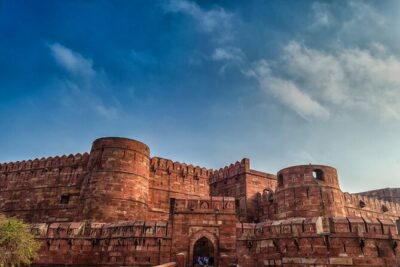
Agra Fort: power, then control
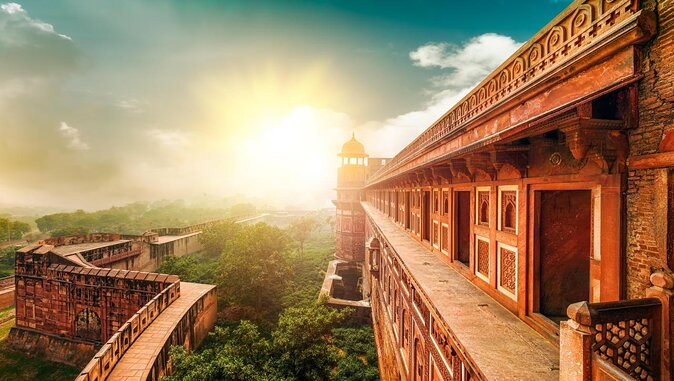
Agra Fort is a major historical fort and was the Mughal emperors’ main residence until 1638, when the capital shifted to Delhi. It’s often called “Lal-Qila” because of its red sandstone presence, and the itinerary gives about one hour.
The schedule lists admission as not included. Still, this stop is where you start connecting Taj Mahal as a work of empire planning, not just romantic marble. Fort walls, gates, and the overall layout make the city feel strategic.
Itmad-ud-Daula: quieter, more delicate, and worth the hour
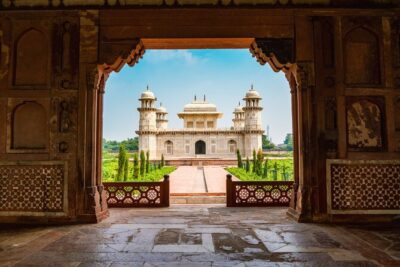
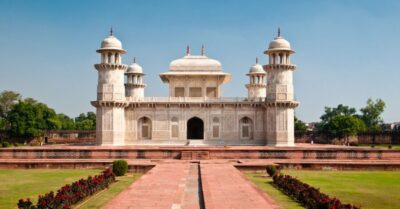
Next is Itmad-ud-Daula, described as a masterpiece of the domeless class of Mughal tombs. It’s noted as the first building finished in white marble and as a transitional phase from red stone to white marble.
This is the kind of site you might love if you care about craft and design. Even if you’re already Taj Mahal-ed out, this tomb’s scale and detail can feel like a softer epilogue—less famous, but very readable.
Admission is listed as not included on the itinerary, so again, confirm your monument-fee option.
End of tour: driven back to your station or airport
After the final stop, you’re driven to New Delhi airport or railway station, and the tour ends. That’s a useful finish for travelers who want to keep the whole India loop moving without extra planning.
Price and logistics: what you’re really paying for
At $80 per person, the headline is affordable for a private two-day itinerary—especially because it includes things that add up fast when booked separately.
Here’s what feels like strong value:
- Private A/C car with pickup and drop-off across Delhi NCR
- One night in Agra + breakfast
- All taxes/fuel/parking handled
- Attraction entry fees included depending on your chosen option
- Taj Mahal photo time (5 photos) and a complimentary water bottle
Where costs can pop up:
- Several sites in the schedule show admission ticket not included (Jama Masjid, Red Fort, Humayun’s Tomb, Qutub Minar, Taj Mahal, Agra Fort, Itmad-ud-Daula).
- The included section says monument fees are included, based on the option you choose.
So your best move is to confirm your exact monument-fee coverage before you arrive. If you do that one check, the “no costly surprises” promise tends to feel real.
One more practical detail: the tour is private, but it’s still a “sightseeing tour” with a full schedule. That means you’ll want comfortable shoes and a water plan, even though water bottles are provided.
Who this tour fits best (and who should look elsewhere)
This is ideal if:
- You want a first-time-friendly route through Delhi and Agra in about two days
- You hate travel logistics and want door-to-door private transport
- You care about seeing sunrise Taj Mahal at 5:45 AM
- You prefer having a guide to explain the why behind the buildings
It may be less ideal if:
- You’re the kind of traveler who wants slow pacing and long stays in each monument. The itinerary is packed, and you’ll move from one landmark to the next.
- You’re very price-sensitive and want to pay for only a few sites. Since admission coverage depends on your chosen option, you might want a more flexible ticket plan.
Based on past guide experiences tied to this style of tour, your guide could be someone like Imran (Delhi) with a driver such as Babban, or a Delhi guide like Anou paired with Shein in Agra, and other guides such as Yogi. The consistent theme is that good guides help you make sense of the city fast, not just point at buildings.
Should you book this Delhi and Agra private tour?
I’d book it if your goal is maximum monument value per day with private comfort and a real plan—especially for the sunrise Taj Mahal timing. The combination of a Delhi day with major landmarks, then an Agra overnight, is what makes this itinerary work.
I’d hesitate only if you want complete freedom to roam and linger. This tour is built for visitors who want structure: guided stops, set timing, and an easy end at the airport or train station.
If you book, do one simple homework step: confirm which monument fees are included under your option. Then pack for early mornings, wear good walking shoes, and you’ll get exactly what this tour is selling: a fast, meaningful look at two of India’s most famous cities.
FAQ
How long is the Delhi and Agra tour?
It’s an approximately 2-day private tour.
Do I get pickup and drop-off?
Yes. Pickup and drop-off are included to anywhere in Delhi, Noida, Gurugram, Ghaziabad, and Faridabad, and after the tour you’re driven to New Delhi airport or railway station.
Is there an overnight stay in Agra?
Yes. The tour includes one night’s accommodation in Agra, plus breakfast.
What time is the sunrise Taj Mahal visit?
You meet your private guide at 5:45 AM in the hotel lobby to visit the Taj Mahal for sunrise.
Are monument entry fees included?
The tour states that monument fees are included for the option chosen. However, the itinerary lists some admissions as not included, so you should confirm what’s covered in your selected option.
Are meals included?
Breakfast is included. Meals are not included.
Does the tour include photos at the Taj Mahal?
Yes. It includes 5 photos in the Taj Mahal.
Is this a private tour?
Yes. It’s a private tour/activity, and only your group participates.
Can I cancel for a full refund?
Yes. Free cancellation is available, and you can cancel up to 24 hours in advance for a full refund.
More Tour Reviews in New Delhi
- Old & New Delhi City Tour – Half or Full Day Options Available
★ 5.0 · 4,811 reviews - Half Day Private Delhi City Tour
★ 5.0 · 4,474 reviews - Same Day Taj Mahal, Agra Fort & Baby Taj Tour from Delhi by Car
★ 5.0 · 4,304 reviews - Taj Mahal Day Tour from Delhi by Superfast Train – TOP RATED TOUR
★ 5.0 · 4,166 reviews - Delhi: Old and New Delhi Private Full or Half-Day Tour
★ 4.9 · 3,776 reviews
More Agra Day Trips out of Delhi
- Same Day Taj Mahal, Agra Fort & Baby Taj Tour from Delhi by Car
★ 5.0 · 4,304 reviews - Full Day Taj Mahal, Agra Fort & Baby Taj Tour from Delhi by Car
★ 5.0 · 3,647 reviews - From Delhi: Taj Mahal & Agra Private Day Trip with Transfers
★ 4.9 · 3,181 reviews - From Delhi: Taj Mahal and Agra Fort Private Sunrise Tour
★ 4.9 · 2,270 reviews - Sunrise Taj Mahal, Agra Fort & Baby Taj Tour from Delhi by Car
★ 5.0 · 2,243 reviews
The Taj, Reached a Few More Ways
- Same Day Taj Mahal, Agra Fort & Baby Taj Tour from Delhi by Car
★ 5.0 · 4,304 reviews - Taj Mahal Day Tour from Delhi by Superfast Train – TOP RATED TOUR
★ 5.0 · 4,166 reviews - Full Day Taj Mahal, Agra Fort & Baby Taj Tour from Delhi by Car
★ 5.0 · 3,647 reviews - From Delhi: Taj Mahal & Agra Private Day Trip with Transfers
★ 4.9 · 3,181 reviews - Taj Mahal Tour from Delhi by Express Train (Viator Award Winner)
★ 5.0 · 2,849 reviews
Just added: more New Delhi reviews to browse
- 4 days Golden Triangle Tour★ 5.0 · 3 reviews
- Discover Old & New Delhi: Private Tour with Street Food★ 5.0 · 3 reviews
- Taj Mahal Tour From Delhi By Private Car★ 4.5 · 3 reviews
- Golden Triangle Tour 5 Days★ 5.0 · 3 reviews
- Taj Mahal: Express Entry Ticket For Sunset Tour with guide★ 5.0 · 3 reviews
- Agra Taj Mahal Sunrise & Sunset Tour from Delhi★ 5.0 · 3 reviews
Taj Mahal Tours from Delhi, compared.
 ★ 5.0Same Day Taj Mahal, Agra Fort & Baby Taj Tour from Delhi by CarFrom $624,304 reviews
 ★ 5.0Taj Mahal Day Tour from Delhi by Superfast Train – TOP RATED TOURFrom $1004,166 reviews
 ★ 5.0Full Day Taj Mahal, Agra Fort & Baby Taj Tour from Delhi by CarFrom $623,647 reviews
 ★ 4.9From Delhi: Taj Mahal & Agra Private Day Trip with TransfersFrom $43,181 reviews
 ★ 5.0Taj Mahal Tour from Delhi by Express Train (Viator Award Winner)From $752,849 reviews
 ★ 5.0All Inclusive Private Taj Mahal Luxury Tour from Delhi by CarFrom $622,564 reviews
 ★ 4.9Same Day Taj Mahal, Fort & Baby Taj Tour from Delhi by CarFrom $502,534 reviews
 ★ 4.9From Delhi: Taj Mahal and Agra Fort Private Sunrise TourFrom $592,270 reviews