
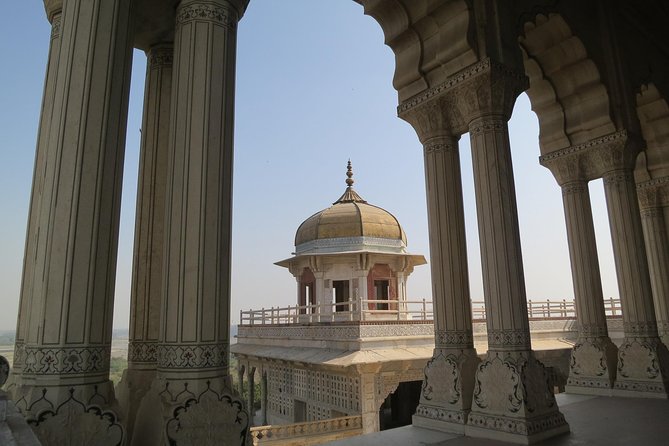
Reviewed · AGRA DAY TRIPS FROM DELHI
2 Days Private tour of Delhi and Agra with Stay at 5 Star Hotel
Taj Mahal in two days, done right. This private Delhi and Agra plan is built to pack in the big icons with real-day pacing, from Qutub Minar to Taj Mahal, while a 5-star hotel keeps you comfortable overnight instead of scrambling between sights.
I especially like the human touch of the guide team. Naveen is repeatedly praised for patient, careful attention at major monuments, and that matters on days that start early and move fast. I also like the convenience: airport or hotel pickup plus private-car transport makes the schedule feel like it’s under control.
One thing to consider: monument fees are not included, so you should budget for tickets at Qutub Minar, the Taj Mahal, and Agra Fort on top of the tour price.
In This Review
- Key highlights to notice before you go
- Delhi Day 1: From Qutub Minar to Lotus Temple without wasting time
- Qutub Minar: the one ticket stop you should plan for
- India Gate and Rashtrapati Bhavan: quick stops that teach you Delhi’s layout
- Gandhi Smriti: why the last 144 days matter
- Lotus Temple: a short, satisfying reset
- Day 2 to Agra: getting to the Taj Mahal with the right rhythm
- Taj Mahal practicalities: tickets, time, and what to focus on
- Agra Fort: red sandstone walls and a second dose of Mughal scale
- The guide team experience: why Naveen shows up in the highlights
- 5-star overnight stay: what you gain by not sleeping rough
- Price and value: is $210 per person fair?
- Who this private Delhi and Agra tour suits best
- Should you book this Delhi and Agra private tour?
- FAQ
- What is included in the 2-day private tour?
- Is monument entry included in the tour price?
- How long is the tour?
- Do I get airport or hotel pickup?
- Is this a private tour or shared group?
- Are there any sites with free admission on the itinerary?
- When does the Taj Mahal visit happen on the second day?
- Is a ticket or confirmation sent after booking?
- What if the weather is bad?
- What is the cancellation policy?
Key highlights to notice before you go
- Private Delhi–Agra transport keeps transfers simple and keeps you on the timetable
- Guide-led pacing across Delhi’s highlights, with free stops like India Gate and Gandhi Smriti built in
- Taj Mahal timing after breakfast gives you a strong window at the main site
- Agra Fort plus craft shopping time turns the day into more than just one photo stop
- 5-star overnight stay helps you recover after a long first day
- Private group only, so your day is not built around a crowd
Delhi Day 1: From Qutub Minar to Lotus Temple without wasting time
Day 1 is a classic best-of Delhi route, but it’s organized to keep you from bouncing back and forth across the city. You start with pickup from the airport or your hotel, then you check in and get rolling. That setup is more valuable than it sounds—Delhi traffic can be unpredictable, so beginning with a driver and guide reduces the “where do we go next” stress.
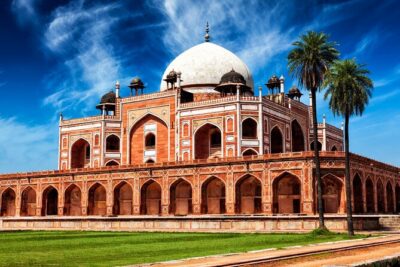
The first stop is Qutub Minar, famous for being the tallest brick minaret in the world. It’s one of those monuments where you don’t just look up—you notice the details: the scale, the layered structure, and how the whole complex feels like it’s been here forever. Plan for about an hour here, and remember the admission ticket is not included in the tour price. If you want the best value, treat this as a must-pay stop since it anchors the Mughal-era story line for the rest of your day.
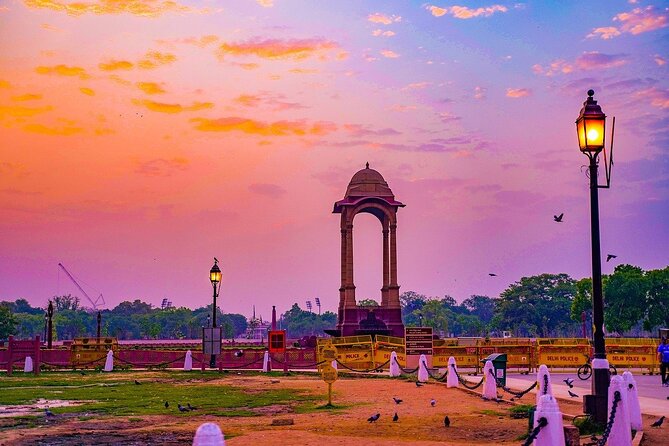
Next comes India Gate, a war memorial along Rajpath. It’s a short stop (about 20 minutes) and admission is free. This is also where Delhi’s “ceremonial axis” vibe becomes clear. Even if you’re not the type to linger at memorials, India Gate is a quick way to get your bearings about how modern Delhi lines up with its historical planning.
After that you’ll visit Rashtrapati Bhavan, the official residence of India’s president, located at the western end of Rajpath. Admission is listed as free and the visit time is short. Expect mostly exterior viewing from the grounds area rather than a long museum-style stop—so go in with the right mindset: this is about the setting and symbolism, not a deep interior experience.
Then you move to Gandhi Smriti, the site connected to Mahatma Gandhi’s last days and assassination on January 30, 1948. This stop is about an hour and admission is free. Gandhi Smriti works well in the flow of your itinerary because it shifts the tone from grand empire visuals to human history. If you’re the type who likes context—why a place matters, not just how it looks—this is a strong pause before the more modern-feeling parts of the city.
Finally, you end at the Lotus Temple. It’s open to all, and it’s free to visit. The flower-like shape is the headline, but the best part is the reset you get at the end of a busy day. You’ll have about 30 minutes, which is enough to see the architecture and still feel like you have time to breathe.
Other Agra runs out of Delhi worth a look




Qutub Minar: the one ticket stop you should plan for
Qutub Minar is the first place on this route where you’ll feel the “ticket not included” detail. Since monument fees aren’t included for Qutub Minar, Taj Mahal, and Agra Fort, this is where you start paying the real-world costs of seeing major heritage sites in India.
In practical terms, it helps to think about this day as two layers:
1) the free exterior stops and museum-like sites in Delhi
2) the paid heritage anchor sites (Qutub Minar today)
So if you’re trying to decide how much to budget, don’t treat the tour price as your total spend. This tour still offers strong value because it bundles transport, pickup, a local guide, and a 5-star overnight stay, but heritage tickets add up fast when you’re hitting the big names.
Also note the itinerary calls for moderate physical fitness. You’re not doing anything extreme, but you will be walking and moving at several monuments in one day. If you take your time and wear comfortable shoes, you’ll enjoy it more and feel less rushed.
India Gate and Rashtrapati Bhavan: quick stops that teach you Delhi’s layout
Some people see India Gate and Rashtrapati Bhavan as “photo stops,” but I like them for a different reason: they help you understand Delhi’s structure. Rajpath is the spine of the city’s formal presentation, and these two stops frame it. When you later see the Taj Mahal day two, you’ll notice how Indian cities often pair monuments with grand planned axes and viewpoints.
The tight timing helps too. India Gate is listed at about 20 minutes, and Rashtrapati Bhavan another 20 minutes. That doesn’t give you hours for deep exploration. Instead, it gives you quick orientation that makes the rest of the day feel coherent.
Admission is free for both, which boosts value. If you’re budgeting, these are the parts of the itinerary where you’re not paying extra just to stand in front of famous landmarks.
Gandhi Smriti: why the last 144 days matter
Gandhi Smriti is one of those places where the “why” carries as much weight as the “what.” The site is dedicated to Mahatma Gandhi and marks where he spent the last 144 days of his life and was assassinated on January 30, 1948. Admission is free and the scheduled time is about an hour.
This stop is particularly worth it if you like learning while you stand in place. You’ll get a calmer pace than at Qutub Minar, and the tone changes from imperial scale to personal sacrifice and national turning points.
If your day has felt packed already, this is also the stop that gives you mental breathing room. You end it with a temple that offers quiet, and together they create a strong emotional arc for day one.
Lotus Temple: a short, satisfying reset
Lotus Temple is the final Delhi stop, and it’s scheduled for about 30 minutes. It’s free and it’s designed as a Baháʼí House of Worship open to people of all religions. That openness is not just a line in a description—it shapes how the space feels, and it tends to make the visit calmer.
Architecturally, the “lotus” form is the headline. But what you’ll likely remember after you leave is the shift in atmosphere at the end of a long day. You’re not just checking off another spot—you’re closing day one with a place that’s made for reflection.
If you’re trying to manage energy, this is the stop to treat as your recharge button. Don’t rush it. Give yourself a moment to look at the structure from different angles and let the quiet do its job.
More private days with a guide of your own
Day 2 to Agra: getting to the Taj Mahal with the right rhythm
Day 2 starts after breakfast with an early journey to Agra. The plan is to reach Agra by 12:00 PM, then enjoy the Taj Mahal’s main visit time. That pacing is practical for a two-day itinerary: early start, but not so early that you spend the day exhausted.
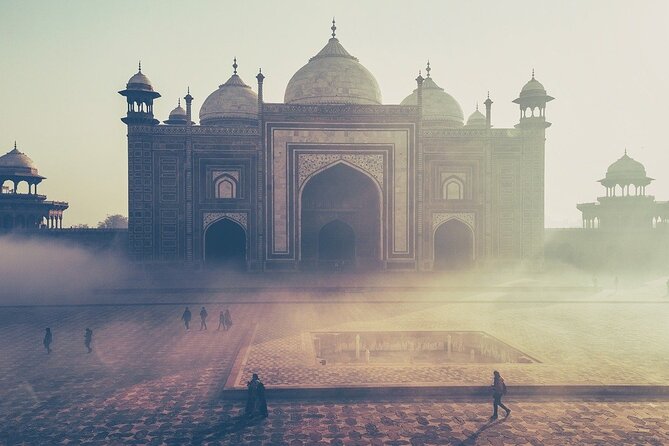
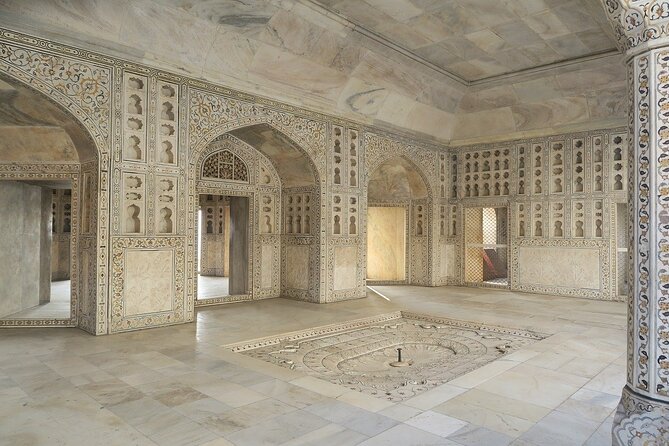
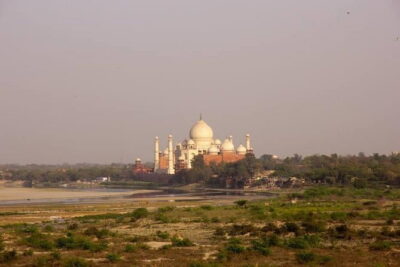
The Taj Mahal is listed for about two hours, with admission ticket not included. It’s described as an ivory-white marble mausoleum on the Yamuna’s southern bank, commissioned in 1632 by Shah Jahan to house Mumtaz Mahal, and it also houses Shah Jahan’s tomb. Even if you’ve seen pictures before, the sheer scale and white marble surfaces look different in person. Expect you’ll want time to walk, pause, and absorb the symmetry from a few distances.
This is also where having a strong guide helps. One of the best themes in the experience is how Naveen is praised for explaining Agra and the Taj Mahal with historical clarity and careful pacing. On a monument like this, a guide’s job isn’t just reciting dates—it’s helping you notice what matters so the visit feels fuller than the typical “stand and snap” circuit.
Taj Mahal practicalities: tickets, time, and what to focus on
Since monument fees for Taj Mahal are not included, you’ll want to accept that the Taj Mahal is the biggest “out of pocket” line item on your route. The tour still offers good value overall because it handles transport from Delhi, provides a local guide, and includes overnight accommodation in a 5-star hotel.
During the Taj Mahal visit window (about 2 hours), I’d focus on three things:
- Symmetry: the composition looks one way up close and another from further back
- Marble details: look at seams, surfaces, and decorative work rather than only the full building
- Tomb garden flow: notice how the space directs your movement
This isn’t just for aesthetics. It turns your limited time into a meaningful visit.
Also, keep in mind the booking description notes good weather is required. If weather is poor, the experience may be canceled and you’ll be offered a different date or a full refund. For a place like the Taj Mahal, weather can change the light and the comfort level, so it’s worth taking that seriously.
Agra Fort: red sandstone walls and a second dose of Mughal scale
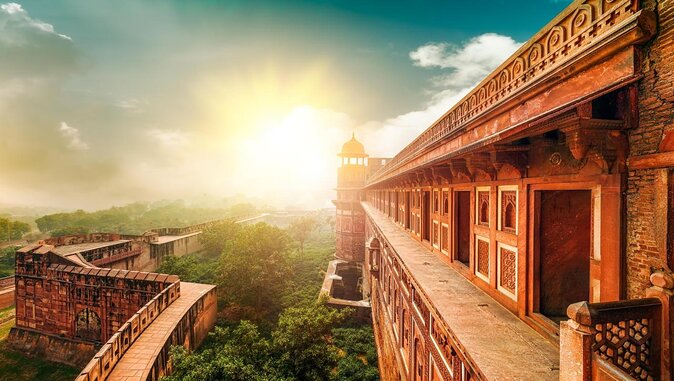
After lunch, you’ll head to Agra Fort, about a two-kilometer distance from the Taj Mahal. The fort visit is listed for about one hour, with admission ticket not included.
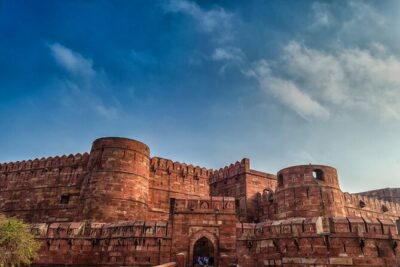
Agra Fort is built by Mughal Emperor Akbar, and it’s made of red sandstone. One of the neat parts of this stop is that it includes time for the surrounding area and mentions art and crafts for souvenirs in the Agra market. That means your day isn’t only about big architecture; it also gives you a chance to take something home that reflects the city.
If you’re shopping, do it thoughtfully. You’ll get a market window, not hours of wandering, so it’s smart to decide before you arrive what you’re looking for—small crafts, textiles, or keepsakes that match your travel style.
The guide team experience: why Naveen shows up in the highlights
The most repeated praise in the experience is about the guide team—especially Naveen. People describe him as punctual, friendly, courteous, and protective, and they also highlight his patience and trustworthiness. That combination matters more than most folks realize.
At heritage sites, timing and movement can be stressful—entry lines, crowd flow, and the simple fact that you’re in a new environment. When your guide handles logistics calmly, you spend less mental energy figuring things out and more energy actually seeing the places.
There’s also mention of Sam and Deepesh as part of the team. That suggests your tour may benefit from a small support network, not just one person trying to do everything. In practice, that often means smoother transitions and better adaptation if your group has different interests.
5-star overnight stay: what you gain by not sleeping rough
This tour includes an overnight accommodation in a 5-star hotel. Even without diving into brand details, you’ll feel what that means on a two-day plan: after a full Delhi day and then the long drive to Agra, you want a bed that feels like a reset.
It also helps with morning timing. Day 2 depends on getting going after breakfast, so you don’t want to wake up in a place that doesn’t let you recover. The hotel also supports the “private” nature of the itinerary—your pickup and drop-off are coordinated around your stay.
Price and value: is $210 per person fair?
At $210 per person for a two-day private tour, the value comes from what’s bundled. You get:
- Private transport in a car
- Hotel pickup and drop-off
- A local guide
- An overnight stay at a 5-star hotel
- Mobile ticket and group discounts
- A private group setup where only your party participates
What’s not bundled: monument fees. Qutub Minar, Taj Mahal, and Agra Fort all list admission tickets as not included. That’s the tradeoff with most heritage-focused tours—you pay for the access you can’t legally recreate on your own.
So the fair way to judge price is: compare it to what you’d pay to independently book private car transport, guide time, and a proper hotel for one night. In many cases, once you add those up, this package price starts to feel more reasonable, and your day gets simpler.
One more small but important point: the itinerary includes several free sites in Delhi (India Gate, Rashtrapati Bhavan, Gandhi Smriti, Lotus Temple). That means your paid spending is concentrated at the big three heritage stops rather than scattered everywhere.
Who this private Delhi and Agra tour suits best
This plan is a strong match if you want:
- A tight two-day schedule that still covers both cities’ highlights
- Convenience: pickup, private car, and guided pacing
- A guide who is known for careful handling at the Taj Mahal and in Agra
It may not be ideal if you want total freedom to linger for hours at each monument. This itinerary is structured, with set time windows at most stops. If you’re the type who hates schedules, a self-guided plan might feel better. But if you prefer not thinking about logistics, you’ll probably appreciate how this day is built.
Also note the fitness note: moderate physical fitness is recommended. That usually means comfortable walking and standing at major sights. If you handle that fine, you’ll enjoy the flow.
Should you book this Delhi and Agra private tour?
I’d book it if you’re serious about seeing both Delhi and Agra in two days and you don’t want to wrestle with transportation or timing. The combination of private pickup, a guided route through Delhi’s key sites, and the Taj Mahal + Agra Fort pairing is exactly what makes a short trip work.
Before you click confirm, do two quick checks:
- Budget for monument fees, since major admissions are not included
- Be ready for an early start on day two, with a schedule that values efficiency
If that sounds like your style, this is a solid value way to hit the best-known sights without losing your day to confusion.
FAQ
What is included in the 2-day private tour?
The tour includes overnight accommodation, airport/departure tax, a local guide, hotel pickup and drop-off, and transport by private vehicle.
Is monument entry included in the tour price?
No. Monument fees are not included. Admission tickets are listed as not included for Qutub Minar, the Taj Mahal, and Agra Fort.
How long is the tour?
It runs for about 2 days.
Do I get airport or hotel pickup?
Yes. Hotel pickup and drop-off are included, and pickup is offered from the airport or your hotel.
Is this a private tour or shared group?
It’s a private tour/activity, and only your group participates.
Are there any sites with free admission on the itinerary?
Yes. India Gate, Rashtrapati Bhavan, Gandhi Smriti, and Lotus Temple are listed as having free admission.
When does the Taj Mahal visit happen on the second day?
You start after breakfast and travel to Agra so you can explore the Taj Mahal after reaching Agra by about 12:00 PM, with a visit time of about 2 hours.
Is a ticket or confirmation sent after booking?
Confirmation is received at the time of booking, and the experience includes a mobile ticket.
What if the weather is bad?
The experience requires good weather. If it’s canceled due to poor weather, you’ll be offered a different date or a full refund.
What is the cancellation policy?
You can cancel up to 24 hours in advance for a full refund. If you cancel less than 24 hours before the start time, the amount paid is not refunded.
More Tours in New Delhi
- Old & New Delhi City Tour – Half or Full Day Options Available
★ 5.0 · 4,811 reviews - Half Day Private Delhi City Tour
★ 5.0 · 4,474 reviews - Same Day Taj Mahal, Agra Fort & Baby Taj Tour from Delhi by Car
★ 5.0 · 4,304 reviews - Taj Mahal Day Tour from Delhi by Superfast Train – TOP RATED TOUR
★ 5.0 · 4,166 reviews - Delhi: Old and New Delhi Private Full or Half-Day Tour
★ 4.9 · 3,776 reviews
More Tour Reviews in New Delhi
- Old & New Delhi City Tour – Half or Full Day Options Available
★ 5.0 · 4,811 reviews - Half Day Private Delhi City Tour
★ 5.0 · 4,474 reviews - Same Day Taj Mahal, Agra Fort & Baby Taj Tour from Delhi by Car
★ 5.0 · 4,304 reviews - Taj Mahal Day Tour from Delhi by Superfast Train – TOP RATED TOUR
★ 5.0 · 4,166 reviews - Delhi: Old and New Delhi Private Full or Half-Day Tour
★ 4.9 · 3,776 reviews
More Agra Day Trips out of Delhi
- Same Day Taj Mahal, Agra Fort & Baby Taj Tour from Delhi by Car
★ 5.0 · 4,304 reviews - Full Day Taj Mahal, Agra Fort & Baby Taj Tour from Delhi by Car
★ 5.0 · 3,647 reviews - From Delhi: Taj Mahal & Agra Private Day Trip with Transfers
★ 4.9 · 3,181 reviews - From Delhi: Taj Mahal and Agra Fort Private Sunrise Tour
★ 4.9 · 2,270 reviews - Sunrise Taj Mahal, Agra Fort & Baby Taj Tour from Delhi by Car
★ 5.0 · 2,243 reviews
Just added: more New Delhi reviews to browse
- 4 days Golden Triangle Tour★ 5.0 · 3 reviews
- Discover Old & New Delhi: Private Tour with Street Food★ 5.0 · 3 reviews
- Taj Mahal Tour From Delhi By Private Car★ 4.5 · 3 reviews
- Golden Triangle Tour 5 Days★ 5.0 · 3 reviews
- Taj Mahal: Express Entry Ticket For Sunset Tour with guide★ 5.0 · 3 reviews
- Agra Taj Mahal Sunrise & Sunset Tour from Delhi★ 5.0 · 3 reviews
Agra Day Trips from Delhi, compared.
 ★ 5.0Same Day Taj Mahal, Agra Fort & Baby Taj Tour from Delhi by CarFrom $624,304 reviews
 ★ 5.0Full Day Taj Mahal, Agra Fort & Baby Taj Tour from Delhi by CarFrom $623,647 reviews
 ★ 4.9From Delhi: Taj Mahal & Agra Private Day Trip with TransfersFrom $43,181 reviews
 ★ 4.9From Delhi: Taj Mahal and Agra Fort Private Sunrise TourFrom $592,270 reviews
 ★ 5.0Sunrise Taj Mahal, Agra Fort & Baby Taj Tour from Delhi by CarFrom $622,243 reviews
 ★ 5.0Taj Mahal and Agra Private Car Tour from Delhi with 5* LunchFrom $331,633 reviews
 ★ 4.9From Delhi: Private Taj Mahal and Agra Tour by Express TrainFrom $751,605 reviews
 ★ 5.0Taj Mahal, Agra Fort, Baby Taj Tour from Delhi by Superfast TrainFrom $751,494 reviews