
Reviewed · AGRA DAY TRIPS FROM DELHI
2 nights 3 days trip to Agra and Jaipur
Some places hit you in the first glance.
This Delhi–Agra–Jaipur circuit is built around the big names, but it also keeps things human: you’re picked up with a private driver, shown what matters, and dropped back safely. I especially like that the day two plan starts with Taj Mahal at sunrise, so you’re not just ticking a box—you’re seeing the monument when the light feels right.
Two things I really like: first, the pacing is sensible for a tight 2 nights / 3 days trip, with real time blocks at key stops instead of nonstop sprinting. Second, the service feels dependable—the company emphasizes safety and long-serving chauffeurs and local guides, and the overall organization is the kind that reduces stress when you’re moving across cities.
One possible drawback: several of the most famous sites have admission tickets not included (so you’ll budget for entry fees on your end). Also, you’ll spend meaningful time in the car between cities and between monuments—comfortable, but it’s still travel.
In This Review
- Key things to know before you go
- Private transport that makes the circuit actually feel doable
- Day 1 in Delhi: India Gate, Raj Ghat, and Mughal-era highlights
- India Gate photo stop (and a quick history hit)
- Drive past Rashtrapati Bhavan (the formal side of Delhi)
- Raj Ghat, where the meaning is immediate
- Red Fort and Jama Masjid: two sides of power
- Qutub Minar (UNESCO) for a deeper look
- Day 2 in Agra: Taj Mahal at sunrise plus Agra Fort’s walled-city feel
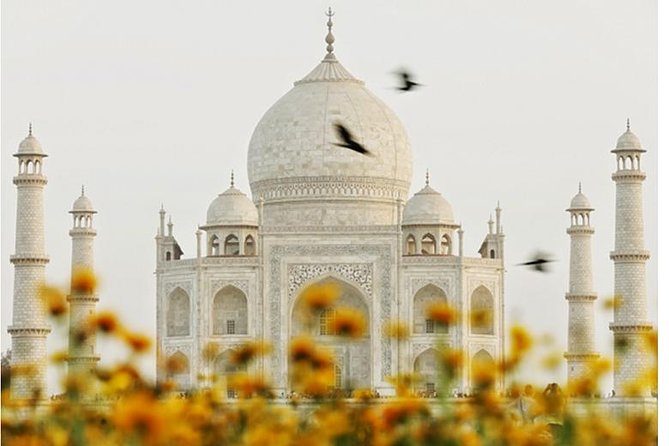
- Taj Mahal just after sunrise (3 hours gives you breathing room)
- Agra Fort: the “city inside a fort” perspective
- Day 3 in Jaipur: Amber mirrors, Hawa Mahal color, and a science stop
- Amber Palace and the Sheesh Mahal (2 hours you can actually use)
- Hawa Mahal (red and pink sandstone, women’s-chamber connection)
- City Palace (1727 origins and the royal family legacy)
- Jal Mahal in the Man Sagar Lake: quick sight, big mood
- Jantar Mantar: the world’s largest stone sundial vibe (45 minutes)
- Ram Niwas Garden and the Central Museum area (45 minutes)
- Price and value: what $249.27 buys you (and what it doesn’t)
- Safety, service, and the human touch behind the scenes
- Who this trip fits best
- Should you book this Delhi–Agra–Jaipur heritage tour?
- FAQ
- How long is the Delhi–Agra–Jaipur tour?
- Where does the tour start and end?
- Is transportation included?
- Are entrance tickets included for the major monuments?
- What is included in the price besides transport?
- Can I cancel, and what if weather affects the trip?
Key things to know before you go
- Sunrise Taj Mahal: built into the schedule, with a solid 3-hour block for the experience
- Private transportation: your group stays together with a chauffeur, not mixed shuttles
- Delhi history in short stops: India Gate, Raj Ghat, Jama Masjid, and Qutub Minar each get their moment
- Jaipur palaces plus science: Amber Palace and Hawa Mahal pair nicely with Jantar Mantar
- Admission fees likely on you: Taj Mahal, Agra Fort, Amber Palace, Hawa Mahal, City Palace, and Qutub Minar are marked not included
- Local guidance matters: you’ll get help understanding what you’re seeing (and names like Sheena Sewal show up in customer feedback)
Private transport that makes the circuit actually feel doable
For a heritage trip, the biggest problem is often simple: you see the photos, then you realize you also have to fight traffic, time windows, and directions. This tour is designed to remove most of that friction with private transportation and a chauffeur-driven plan from your start point in New Delhi to your return at the end.
You’re also not asked to figure things out alone. The tour is set up around meeting a chauffeur and staying with the same group through the main sites. That matters because Delhi, Agra, and Jaipur each have their own rhythms, and getting stuck waiting around is how short trips turn into long days.
One more subtle win: the tour emphasizes safety from pickup to drop-off. That doesn’t mean everything is stress-free in India traffic, but it does mean you’re not improvising your day around strangers.
Other Agra runs out of Delhi worth a look




Day 1 in Delhi: India Gate, Raj Ghat, and Mughal-era highlights
Delhi can feel like information overload. The first day plan helps you manage it by mixing major landmarks, photo stops, and sites with dedicated time.
India Gate photo stop (and a quick history hit)
You begin at India Gate, with about 30 minutes to click photos and take it in. This memorial honors 70,000 soldiers of the British Indian Army who died between 1914 and 1921, and it was designed by Sir Edwin Lutyens. Even if you know the names, the scale and the symmetry make it worth your time.
Practical tip: this stop is short by design, so decide what you want—wide shots first, then details—because the rest of the day moves fast.
Drive past Rashtrapati Bhavan (the formal side of Delhi)
Next is a drive-past of Rashtrapati Bhavan, the President’s residence. The estate is huge—about 130 hectares—and the building sits on the western end of Rajpath. You only get a few minutes here, but it’s one of those landmarks that helps you understand why Delhi’s civic architecture feels so grand.
Raj Ghat, where the meaning is immediate
You then visit Raj Ghat for about 45 minutes. It’s a black marble platform marking the spot where Mahatma Gandhi was cremated on 30 January 1948, the day after his assassination. This is one of the stops where the monument’s simplicity makes it powerful. You don’t need a guide to grasp the tone; you just need a few quiet minutes.
Chasing the Pink City? More Jaipur day trips
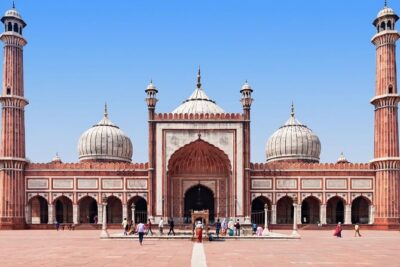
Red Fort and Jama Masjid: two sides of power
The day includes a stop at Red Fort. While your time there isn’t clearly stated, you’ll at least get the chance to see the fort and understand its importance. It’s closely tied to India’s Independence Day ceremony, when the Prime Minister hoists the tricolour flag from the ramparts.
Then it’s on to Jama Masjid (Masjid e Jahan Numa), one of the largest mosques in India. Built by Mughal emperor Shah Jahan between 1650 and 1656, it’s known for its scale and classic Mughal design language. You get a short 3-minute window here, so think of it as a “see it, notice it, move on” stop.
Qutub Minar (UNESCO) for a deeper look
To finish the day, you head to Qutub Minar, with about 1 hour on-site. The minaret is part of the Qutab complex, a UNESCO World Heritage Site. It stands 73 meters high, and construction of the first storey began around 1192 under Qutb ud Din Aibak, founder of the Delhi Sultanate.
This is the day one stop I’d treat with extra attention. It’s architectural, not just iconic. If you’re curious about how styles evolved across centuries, Qutub Minar gives you a concrete anchor.
Day 2 in Agra: Taj Mahal at sunrise plus Agra Fort’s walled-city feel
Day two is where the trip earns its reputation. Starting just after sunrise at the Taj Mahal isn’t just a nice touch—it’s the difference between seeing it and really seeing it.
Taj Mahal just after sunrise (3 hours gives you breathing room)
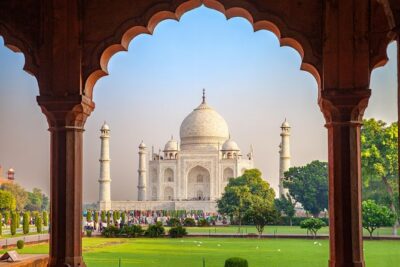
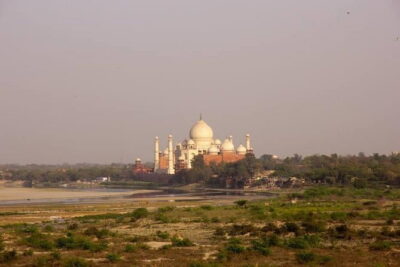
You visit the Taj Mahal early, with about 3 hours allocated. This ivory-white marble mausoleum sits on the south bank of the Yamuna River and was commissioned in 1632 by Mughal emperor Shah Jahan to house the tomb of his favorite wife, Mumtaz Mahal. It also contains Shah Jahan’s tomb.
The Taj Mahal complex is set within a 17-hectare garden with formal layout, and it includes a mosque and a guest house. You’re not just walking past buildings—you’re moving through an intentional design meant to slow you down.
Practical tip: sunrise means you might want a layer. Then as the day warms, you’ll be grateful you brought something light for later.
Budget note: the Taj Mahal admission is marked as not included on this tour, so plan to pay entry fees directly.
Agra Fort: the “city inside a fort” perspective
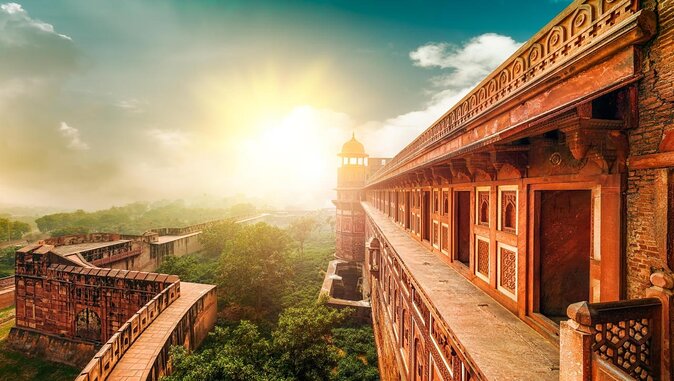
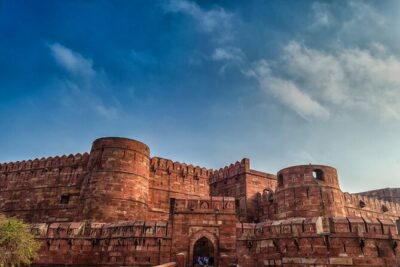
After the Taj, you go to Agra Fort for about 1 hour. It’s about 2.5 km northwest of the Taj Mahal and it functioned as the main residence of Mughal emperors until 1638, when the capital shifted to Delhi. Before British capture, the last Indian rulers to occupy it were the Marathas, and the fort is UNESCO-listed.
What’s cool here is the walled-city feeling. You’re not just looking at one monument—you’re seeing how rulers organized space, defense, and residence in one place. And because the fort is described as the only place in India where all early Mughal emperors lived, it carries an extra “first chapter” weight.
Again: admission for Agra Fort is marked as not included, so don’t assume it’s covered in the tour price.
Day 3 in Jaipur: Amber mirrors, Hawa Mahal color, and a science stop
Jaipur is a different vibe than Delhi and Agra. It’s where you can shift from pure monument admiration to noticing design, materials, and layout.
Amber Palace and the Sheesh Mahal (2 hours you can actually use)
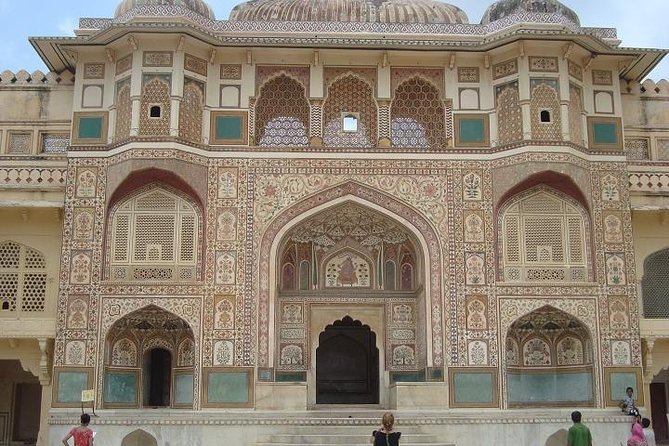
Your morning includes a visit to Amber Palace (Amer Fort), with about 2 hours. Amber served as the ancient capital of the state, and you can see the Sheesh Mahal, the Hall of Victory, famous for mirror work that sparkles in the light.
Amber is one of those places where you can feel the blend of aesthetics and power. It’s also a good stop for photos, but don’t rush. The real win is taking time to notice how the palace design directs views and movement.
Admission for Amber Palace is marked not included.
Hawa Mahal (red and pink sandstone, women’s-chamber connection)
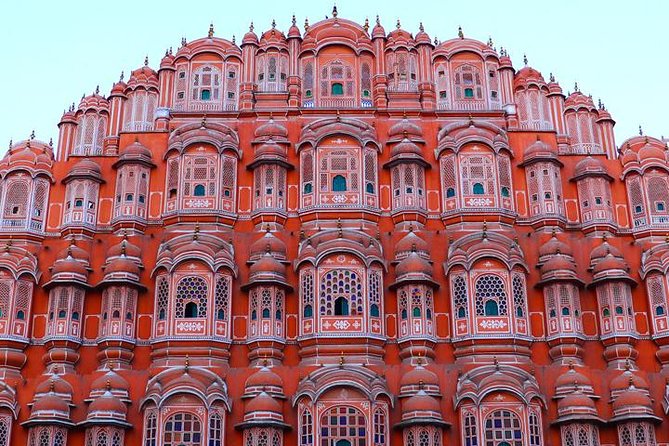
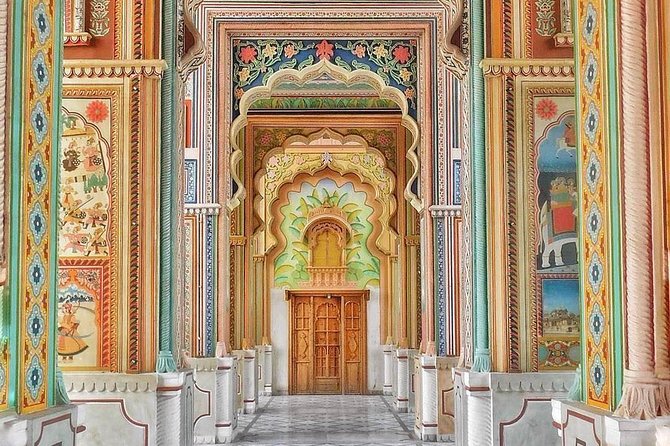
Next comes Hawa Mahal, the famous palace made of red and pink sandstone. It sits on the edge of the City Palace complex and extends toward the zenana, the women’s quarters. It was built in 1799 by Maharaja Sawai Pratap Singh.
There’s also detail on renovation: works were undertaken in 2006 after a gap of 50 years, with an estimated cost of Rs 4.568 million. For you, the takeaway is simple: this is a working historic structure that people have tried to protect, not a monument frozen in time.
Admission is marked not included.
City Palace (1727 origins and the royal family legacy)
Then you visit the City Palace of Jaipur for about 1 hour. The palace complex was established in line with the founding of Jaipur, when Maharaja Sawai Jai Singh II moved his court from Amber to Jaipur in 1727. Today, it houses the Maharaja Sawai Man Singh II Museum, and it continues as home of the Jaipur royal family.
It’s a useful complement to Amber and Hawa Mahal because it connects the city planning idea to the royal administrative life.
Admission is marked not included.
Jal Mahal in the Man Sagar Lake: quick sight, big mood
You also stop for Jal Mahal, the Water Palace set in the middle of Man Sagar Lake. The palace and lake were renovated and enlarged in the 18th century by Maharaja Jai Singh II of Amber.
You may not spend long here, but it’s a nice contrast. After hours in palaces built for power and display, Jal Mahal shows a softer side of how Jaipur used water and landscape in its design.
Jantar Mantar: the world’s largest stone sundial vibe (45 minutes)
For a different kind of “wow,” you head to Jantar Mantar for about 45 minutes. This is a collection of nineteen architectural astronomical instruments built by Sawai Jai Singh II and completed in 1734. It’s UNESCO-listed and includes the world’s largest stone sundial.
If you like the idea that people built tools to measure the sky without electronics, this is your stop. Even if you don’t know astronomy, the instruments are physical, big, and easy to understand in broad strokes. The observatory is an example of Ptolemaic positional astronomy shared across civilizations.
Admission is free on this tour.
Ram Niwas Garden and the Central Museum area (45 minutes)
Finally, you visit Ram Niwas Garden for about 45 minutes. The garden covers about 33 acres and was built in 1868 by Maharaja Sawai Ram Singh. Inside the garden is the Albert Hall Museum, now known as the Central Museum, named after King Edward VII (Albert Edward). Foundation stone information is given as 6 February 1876.
This stop is good if you want a breather after palace interiors and stone courtyards. It’s also a chance to see how Jaipur’s monument landscape includes green spaces, not just architecture.
Admission is free on this tour.
Price and value: what $249.27 buys you (and what it doesn’t)
At $249.27 per person, you’re paying for a tight, private, multi-city experience—not just entrance tickets.
Included items are clearly listed: private transportation, GST, parking fees, and breakfast (2). You also get a mobile ticket, which is handy when you’re juggling multiple stops.
Where the value gets interesting is how this structure saves time. Two nights and three days is short for Delhi–Agra–Jaipur. Private transport and an organized route mean you spend less energy guessing and more energy actually looking.
Where you should be prepared: several monuments mark admission as not included. On this plan, you’ll likely pay entry fees at Taj Mahal, Agra Fort, Amber Palace, Hawa Mahal, City Palace, and Qutub Minar. If you want to avoid surprises, I’d budget for those gates upfront.
Safety, service, and the human touch behind the scenes
The tour’s main pitch is safety and reliable service—from meeting your chauffeur to being dropped back at the end. That’s not just marketing fluff. When you’re doing a fast circuit, “safe and on time” is what keeps the experience enjoyable instead of chaotic.
You’ll also benefit from local guidance at the main stops. One name that shows up in customer feedback is Sheena Sewal, credited with meticulous planning and resourcefulness. Even without seeing the planning process, you can feel the result in a schedule that stays consistent and doesn’t treat your day like a rigid assembly line.
And because the tour is private, you don’t have to worry about matching other group pace. Only your group participates, which is a huge factor for families and anyone traveling with adults who hate rushing.
Who this trip fits best

This is a great match if you:
- want the Delhi–Agra–Jaipur highlights without the headache of coordinating transport yourself
- like structured time blocks (sunrise Taj plus set durations at each major site)
- value private movement and less stress between cities
- are okay paying monument admissions on your end for the biggest-ticket sights
It may be less ideal if you:
- hate driving hours or prefer slow travel with extra nights in one city
- want a fully ticket-inclusive price with no additional gate payments
Should you book this Delhi–Agra–Jaipur heritage tour?
If your goal is to see the core monuments in a smart, low-stress way, I’d lean yes. The sunrise Taj Mahal timing, the private transport, and the way the day plans give you real time at major stops make this a strong value for a short trip.
My main “yes, but” is budgeting for admissions at the big sights marked not included. If you’re ready for that—and you’re okay with some time in the car—this tour can turn what could be a stressful sprint into a clear, memorable heritage route.
FAQ
How long is the Delhi–Agra–Jaipur tour?
It’s a 3-day trip with 2 nights.
Where does the tour start and end?
It starts in New Delhi, Delhi, India, and ends back at the meeting point.
Is transportation included?
Yes. Private transportation is included.
Are entrance tickets included for the major monuments?
Not always. Several admissions are listed as not included, including places like the Taj Mahal, Agra Fort, Amber Palace, Hawa Mahal, City Palace, and Qutub Minar. Some stops are listed with free admission.
What is included in the price besides transport?
The tour includes GST, parking fees, and breakfast for 2 days.
Can I cancel, and what if weather affects the trip?
Free cancellation is available if you cancel up to 24 hours in advance for a full refund. The experience requires good weather, and if it’s canceled due to poor weather, you’ll be offered a different date or a full refund. Confirmation is received at booking unless you book within 10 hours of travel.
More Tour Reviews in New Delhi
- Old & New Delhi City Tour – Half or Full Day Options Available
★ 5.0 · 4,811 reviews - Half Day Private Delhi City Tour
★ 5.0 · 4,474 reviews - Same Day Taj Mahal, Agra Fort & Baby Taj Tour from Delhi by Car
★ 5.0 · 4,304 reviews - Taj Mahal Day Tour from Delhi by Superfast Train – TOP RATED TOUR
★ 5.0 · 4,166 reviews - Delhi: Old and New Delhi Private Full or Half-Day Tour
★ 4.9 · 3,776 reviews
Onward to Jaipur: More Day Trips
- 3-Days Private Golden Triangle Tour: Delhi, Agra & Jaipur by Car
★ 5.0 · 1,107 reviews - 3-Days Private Golden Triangle Tour: Delhi, Agra & Jaipur by Car
★ 5.0 · 1,098 reviews - 3-Day Delhi, Agra and Jaipur Private Tour – India Golden Triangle
★ 5.0 · 812 reviews - Four-Day Private Luxury Golden Triangle Tour to Agra and Jaipur From New Delhi
★ 5.0 · 807 reviews - Jaipur Day Trip from Delhi by Car or Train – All Inclusive
★ 5.0 · 663 reviews
More Agra Day Trips out of Delhi
- Same Day Taj Mahal, Agra Fort & Baby Taj Tour from Delhi by Car
★ 5.0 · 4,304 reviews - Full Day Taj Mahal, Agra Fort & Baby Taj Tour from Delhi by Car
★ 5.0 · 3,647 reviews - From Delhi: Taj Mahal & Agra Private Day Trip with Transfers
★ 4.9 · 3,181 reviews - From Delhi: Taj Mahal and Agra Fort Private Sunrise Tour
★ 4.9 · 2,270 reviews - Sunrise Taj Mahal, Agra Fort & Baby Taj Tour from Delhi by Car
★ 5.0 · 2,243 reviews
Just added: more New Delhi reviews to browse
- 4 days Golden Triangle Tour★ 5.0 · 3 reviews
- Discover Old & New Delhi: Private Tour with Street Food★ 5.0 · 3 reviews
- Taj Mahal Tour From Delhi By Private Car★ 4.5 · 3 reviews
- Golden Triangle Tour 5 Days★ 5.0 · 3 reviews
- Taj Mahal: Express Entry Ticket For Sunset Tour with guide★ 5.0 · 3 reviews
- Agra Taj Mahal Sunrise & Sunset Tour from Delhi★ 5.0 · 3 reviews
Agra Day Trips from Delhi, compared.
 ★ 5.0Same Day Taj Mahal, Agra Fort & Baby Taj Tour from Delhi by CarFrom $624,304 reviews
 ★ 5.0Full Day Taj Mahal, Agra Fort & Baby Taj Tour from Delhi by CarFrom $623,647 reviews
 ★ 4.9From Delhi: Taj Mahal & Agra Private Day Trip with TransfersFrom $43,181 reviews
 ★ 4.9From Delhi: Taj Mahal and Agra Fort Private Sunrise TourFrom $592,270 reviews
 ★ 5.0Sunrise Taj Mahal, Agra Fort & Baby Taj Tour from Delhi by CarFrom $622,243 reviews
 ★ 5.0Taj Mahal and Agra Private Car Tour from Delhi with 5* LunchFrom $331,633 reviews
 ★ 4.9From Delhi: Private Taj Mahal and Agra Tour by Express TrainFrom $751,605 reviews
 ★ 5.0Taj Mahal, Agra Fort, Baby Taj Tour from Delhi by Superfast TrainFrom $751,494 reviews