
Reviewed · AGRA DAY TRIPS FROM DELHI
3-Day Luxury Golden Triangle Tour: New Delhi, Agra & Jaipur
First, Golden Triangle in 3 days feels tight, in a good way. This private tour strings together New Delhi, Agra, and Jaipur with an air-conditioned car, local guides, and a smart rhythm of major monuments plus local-market time. I especially like that you can customize the route to fit your pace and priorities without turning the trip into a scavenger hunt.
Second, I like the way the plan handles big crowd moments: the Taj Mahal sunrise start is built in, and you also get the classic Old Delhi rickshaw experience in Chandni Chowk. One consideration: the itinerary is packed, so if you want long, slow museum-style hangs, you may feel time pressure between stops.
In This Review
- Key highlights you’ll actually notice
- Why the Golden Triangle makes sense on a short clock
- Day 1 in New Delhi: Lutyens highlights plus Old Delhi real life
- India Gate and the government-city view
- Raj Ghat: a calm pause in a big city
- Chandni Chowk: history mixed with shopping chaos
- Jama Masjid and the mosque architecture lesson
- Humayun’s Tomb and Qutub Minar: UNESCO monuments that anchor the day
- Lotus Temple: a different mood before you head to Agra
- Taj Mahal at sunrise: the timing that makes the trip feel worth it
- The Taj Mahal moment: more than a photo stop
- Agra Fort right after: adding depth to the day
- Fatehpur Sikri on the drive to Jaipur: a good break between eras
- Jaipur’s royal hits: Amber Fort to Hawa Mahal
- Amber Fort (Amer Fort): fort views with real spectacle
- Jal Mahal: great-looking from the outside
- Gaitore Ki Chhatriyan: cenotaphs for a slower moment
- City Palace and the mix of styles
- Jantar Mantar: the astronomy you can see
- Hawa Mahal and the city’s photo appeal
- Patrika Gate: a modern photo stop with a Rajasthan twist
- Comfort and movement: what “private luxury” looks like here
- Price and tickets: where value shows up
- How customization actually helps your day
- Who should book this Golden Triangle plan
- Should you book this 3-day luxury Golden Triangle tour?
- FAQ
- Is this tour private or shared with other people?
- Does the tour include pickup and drop-off?
- What does the price include, and are tickets extra?
- Is hotel accommodation included?
- What time does the Taj Mahal sunrise visit start?
- Is there a rickshaw ride during the tour?
- What happens if there is a Friday on the second day?
Key highlights you’ll actually notice
- Private, dressed-driver transport in a comfortable AC car, with hotel/airport pickup and drop-off
- Old Delhi rickshaw ride through Chandni Chowk, plus spice-market time at Khari Baoli
- Taj Mahal at sunrise with guide-led logistics and a battery bus from the parking area
- UNESCO stops in Delhi such as Humayun’s Tomb and Qutub Minar
- Jaipur’s core sights in one sweep: Amber Fort, City Palace, Jantar Mantar, and Hawa Mahal area views
- Flexible hotel choice (3-, 4-, or 5-star) when you book accommodation through the tour
Why the Golden Triangle makes sense on a short clock
The Golden Triangle is the fastest way to see India’s “greatest hits”: imperial Delhi, Mughal Agra, and royal Jaipur. The trick is pacing, and this tour aims to keep you moving while still giving you real time at signature sights like the Taj Mahal, Jama Masjid, and the forts and palaces in Jaipur.
Because it’s private, you’re not stuck with other people’s slow decisions or sudden photo stops. You can also choose options that fit your budget, especially on the hotel side. If you’re a first-timer and short on days, this kind of structure can help you avoid the usual trip-planning stress.
Other Agra runs out of Delhi worth a look




Day 1 in New Delhi: Lutyens highlights plus Old Delhi real life

Day 1 balances the two Delhis: the official, wide streets of New Delhi and the older, tighter lanes of Old Delhi. The day starts with Lutyens’ Delhi, then shifts gears into markets and major Mughal-era landmarks, all with a guide in your preferred language.
India Gate and the government-city view
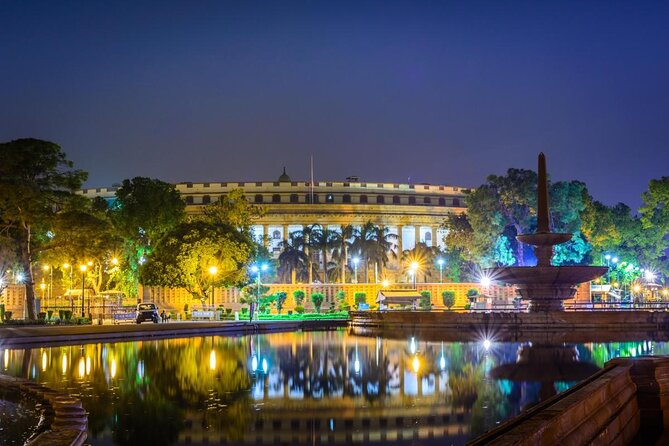
You’ll drive past India Gate, the war memorial, and Rashtrapati Bhavan, the President of India’s residence. It’s not just sightseeing from a bus window. Getting these landmarks in the morning light helps you quickly understand how New Delhi was planned and where the city’s power centers sit.
Raj Ghat: a calm pause in a big city
Raj Ghat is the memorial of Mahatma Gandhi, set in gardens. The stop is short, but it gives you a reset after the bigger streets and driving. It’s a useful breather before the day turns more sensory with markets.
Chandni Chowk: history mixed with shopping chaos
Chandni Chowk is one of Delhi’s oldest markets, dating back to the 17th century. You’ll spend about an hour here, which is a good length for wandering, people-watching, and grabbing snacks if you choose. The big value is having a guide help you make sense of what you’re seeing so you don’t just walk in circles.
If you’re trying to shop for spices or small gifts, Khari Baoli right near Chandni Chowk is a great follow-up. It’s described as Asia’s largest wholesale spice market dating back to the 17th century, so even if you don’t buy anything, it’s easy to understand why it’s famous.
Chasing the Pink City? More Jaipur day trips
Jama Masjid and the mosque architecture lesson
Jama Masjid is one of the largest mosques in India, built by Shah Jahan between 1644 and 1656. You’ll get around an hour, which is enough time to take in the scale, notice the Mughal-style details, and absorb what your guide explains about its role in Old Delhi.
Humayun’s Tomb and Qutub Minar: UNESCO monuments that anchor the day
Humayun’s Tomb is a UNESCO World Heritage Site and one of Delhi’s stand-out Mughal-era monuments. It’s built in 1570 and is linked to Empress Bega Begum, Humayun’s wife. You’ll spend about an hour, and that’s a comfortable window for slow looking instead of rushed picture-taking.
Then comes Qutub Minar, also UNESCO-listed. It’s described as the tallest brick minaret in the world and an Indo-Islamic architecture highlight. If you’ve seen minarets in photos before, this stop tends to make them feel real—the height and construction details hit differently in person.
Lotus Temple: a different mood before you head to Agra
The Lotus Temple is a Bahá’í House of Worship with lotus-shaped architecture, completed in 1986. You’ll get about a half hour, and it’s a good change of pace after heavy historical sites. Think of this as your calm landing pad before the long transition toward Agra the next day.
Taj Mahal at sunrise: the timing that makes the trip feel worth it
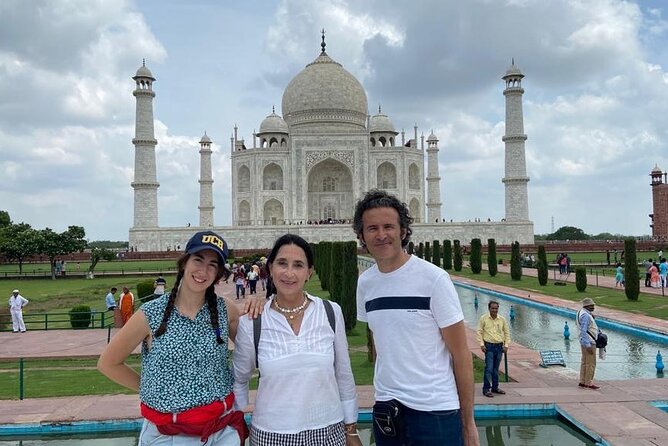
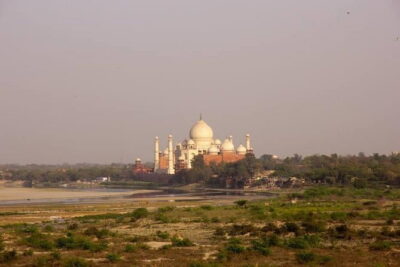
Day 2 is built around a 6:00 AM Taj Mahal sunrise visit. That early start is a major reason this tour works for first-time visitors—sunrise timing usually means softer light, fewer late-day crowds, and a more “icon moment” feel for the main event.
The tour includes pickup from your hotel for the Taj Mahal visit, then you’ll use a battery bus from the parking area up to the monument. That’s a practical detail. In peak-season heat, saving that walking time can be the difference between enjoying the morning and spending it in pain.
The Taj Mahal moment: more than a photo stop
You’ll have about three hours for the sunrise visit. That time matters because the Taj is not just one view. You can move to different angles, slow down for details, and still keep the visit from becoming a blur.
Your guide’s job here is to keep the sight meaningful—explaining what you’re looking at, pointing out architectural elements, and helping you understand why the Taj Mahal became such a global symbol. Even if you’ve seen it on every postcard, having context turns the visit into something you remember for years.
Agra Fort right after: adding depth to the day
After the Taj Mahal, you return for breakfast and then check out before heading to Agra Fort later. Agra Fort is UNESCO-listed and you’ll have about an hour there. The fort can feel like “bonus time” on tours that rush. Here, it’s placed after the main event so you get to keep your energy from the early start.
If you love when one monument leads you to the next story of an empire, this pairing works well: the Taj Mahal’s beauty and the fort’s strategic presence give you a fuller picture of Mughal Agra.
Fatehpur Sikri on the drive to Jaipur: a good break between eras
After Agra Fort, you travel to Jaipur—the famed Pink City of Rajasthan. The journey includes a stop at Fatehpur Sikri, described as a historic Mughal capital that once flourished.
You’ll have about four hours for this leg overall, including driving and the Fatehpur Sikri stop. The practical value here is simple: you’re not stuck doing only car time. You also get one more major “South-to-North” architectural chapter before Jaipur’s royal look takes over.
Just know this is a stop, not a long stay. If you want to do Fatehpur Sikri with museum-level detail, you might want to add time on another trip. But as a stop within the Golden Triangle loop, it adds variety without derailing your schedule.
Jaipur’s royal hits: Amber Fort to Hawa Mahal

Jaipur day is where the tour really leans into Rajasthan’s iconic shapes: forts on hills, palaces with mixed styles, and the city’s old-meets-new spectacle. You’ll hit a lot of sites, but they’re the ones most first-timers come for.
Amber Fort (Amer Fort): fort views with real spectacle
Amber Fort is one of Jaipur’s most iconic landmarks, perched on a hilltop overlooking Maota Lake. You’ll get about two hours, with admission included. This is one of those places where time helps you do two things at once: take in the big fort setting and still notice the carvings and design details you’d otherwise miss.
Amber Fort also gives you a sense of why Jaipur became a power center. It’s not just pretty. It was built for control, defense, and court life, and that context makes the architecture feel purposeful.
Jal Mahal: great-looking from the outside
You’ll stop at Jal Mahal, the Water Palace on Man Sagar Lake. Entry is prohibited, so you’re viewing it from the outside area. That’s important to know upfront. It still works as a photo and a palate cleanser between bigger fort and palace interiors, but you won’t get the “walk inside” experience here.
Gaitore Ki Chhatriyan: cenotaphs for a slower moment
Next is Gaitore Ki Chhatriyan, described as magnificent cenotaphs blending Rajput and Mughal architectural styles. You’ll spend about half an hour, and that shorter timing fits its feel—more of a quiet, decorative stop than a giant “must-see building” sprint.
You also get details about the white marble chhatri of Maharaja Sawai Jai Singh II and intricate carvings and latticework. Even with limited time, this stop adds texture to your Jaipur experience beyond the biggest-ticket sites.
City Palace and the mix of styles
City Palace is a blend of Rajput, Mughal, and European architecture and is tied to royal heritage. You’ll have around two hours, which is a good chunk because palaces tend to include multiple sections and viewpoints.
If you like royal residences, this stop can be one of your favorites because it’s part architecture, part symbolism. The guide helps connect the pieces so you’re not just reading signs and moving on.
Jantar Mantar: the astronomy you can see
Jantar Mantar is described as the world’s largest stone astronomical observatory and is UNESCO-listed. You’ll have about one hour. This is a rare stop that turns “science” into something visible. The guide can help you understand how the instruments were used, which makes the stone structures feel less random and more intentional.
Hawa Mahal and the city’s photo appeal
Hawa Mahal is described as a five-story palace built in 1799, with 953 jharokhas (windows) designed for royal women to observe street life. The tour lists it as a stop, without a detailed time allocation, so plan to treat it as a “see it, soak it, photograph it” moment.
Patrika Gate: a modern photo stop with a Rajasthan twist
Patrika Gate sits at the entrance of Jawahar Circle Garden and is described as one of Jaipur’s most photographed landmarks. You’ll have about 20 minutes, and it’s free. This stop rounds the day off with something lighter than the forts and palaces.
Then the tour concludes with the return journey from Jaipur back to Delhi.
Comfort and movement: what “private luxury” looks like here
The tour’s comfort isn’t just a luxury label. It’s the everyday stuff that keeps a packed schedule from turning miserable. You’ll ride in an air-conditioned private car with a uniformed, dressed driver, and the itinerary includes mineral water in the vehicle.
On the Delhi day, you also get a rickshaw ride in Old Delhi at Chandni Chowk. That’s one of the most classic ways to experience the narrow lanes without feeling like you’re walking miles for no reason. If you like small moments of local life, this is one of those “you’ll remember it later” add-ons.
And on the Taj Mahal morning, the battery bus transfer from the parking area is a smart logistical help. You still walk, but you avoid the worst of the extra early-distance fatigue.
Price and tickets: where value shows up
The listed price is $105.00 per person for the 3-day tour. Based on what’s included—private AC car, hotel pickup/drop, live tour guides, rickshaw ride, Taj Mahal battery bus transfers, bottled water, tolls/fuel/parking, and accommodation options when booked—this is priced for convenience and planning help rather than pure monument entrances.
Entrance tickets are where you’ll need to budget more. Entrance fees (tickets) are listed as about $65.00 per person. Even though some stops are marked free or included within the day-by-day plan, the tour’s general note is that ticket costs should be expected separately.
If you already plan to pay for guides and timed entry tickets, this kind of bundled structure can feel like a bargain. If you’d rather do everything DIY with public transport, you may feel the cost is too high for a basic sightseeing plan.
How customization actually helps your day
This tour is described as private and customizable to your needs. That matters because Delhi and Jaipur can be overwhelming if you don’t know what to prioritize. If you care most about photography at certain spots, you can likely spend more time where you’re most interested.
You also have control over hotel level, from 3-star to 5-star options, as well as whether you book accommodation through the tour or on your own. If your budget is tight, you can reduce hotel spending by booking your own place. If you want everything handled, the included option provides two nights with breakfast when you choose the hotel package.
There’s also an itinerary switch to know about: if there’s a Friday on the 2nd day of your tour, the order changes to Delhi–Jaipur–Agra–Delhi. If you booked hotel independently, you’ll need to message for the revised plan.
Who should book this Golden Triangle plan
You should strongly consider this tour if you want:
- A first-time Golden Triangle route with major sights in a tight window
- A guided experience in your preferred language
- Comfortable transport in an AC private car
- Sunrise Taj Mahal logistics handled for you, including the battery bus transfer
- A mix of big monuments and real local atmosphere (Old Delhi markets)
You might want to look for a longer itinerary instead if:
- You hate schedules and prefer slow, stand-alone museum time
- You don’t want to pay for guided visits and entrance tickets
- You want more depth in one city at the expense of the others
If you like to connect the dots—imperial Delhi, Mughal Agra, royal Jaipur—this format helps you see the pattern without spending days on planning.
Should you book this 3-day luxury Golden Triangle tour?
Yes, it’s a strong booking choice if your goal is to get the most out of limited time with a private setup. The best parts are the built-in structure: Taj Mahal sunrise, a full Delhi day with UNESCO highlights, and Jaipur’s core landmarks all in one sweep. Add in named guide quality you could encounter—such as Adin in Delhi, Rajesh Singh in Jaipur, and Faizan Hussain in Agra—and the experience sounds designed for clarity, not just transport.
Before you book, do two quick reality checks:
1) Confirm your total budget including the estimated $65 per person for tickets.
2) Decide whether a packed schedule is your style. If you can handle walking and multiple monuments per day, you’ll likely feel like you’re getting your money’s worth.
FAQ
Is this tour private or shared with other people?
It’s a private tour/activity, so only your group participates.
Does the tour include pickup and drop-off?
Yes. You get airport or hotel pickup and drop-off from Delhi, Noida, and Gurugram, plus the option of pickup from any desired location in Delhi.
What does the price include, and are tickets extra?
The $105 per person covers the private air-conditioned car, dressed driver, live tour guides, rickshaw ride in Old Delhi, battery bus transfers to and from Taj Mahal parking, mineral water, tolls/fuel/parking/taxes, and breakfast for two mornings if you book the hotel option. Entrance fees are listed as $65 per person and are not included.
Is hotel accommodation included?
You can choose to include accommodation (3-, 4-, or 5-star options). If you choose the hotel option, it includes 2 nights with breakfast. You can also book without hotel and arrange your own stay.
What time does the Taj Mahal sunrise visit start?
The sunrise Taj Mahal visit is scheduled with pickup at 6:00 AM from your hotel.
Is there a rickshaw ride during the tour?
Yes. You’ll have a rickshaw ride in Old Delhi, specifically around Chandni Chowk.
What happens if there is a Friday on the second day?
If Friday falls on the 2nd day of your tour, the itinerary switches to Delhi–Jaipur–Agra–Delhi. If you booked your own hotel, you should message to get the revised itinerary.
The Full Golden Triangle, More Options
- 3-Days Private Golden Triangle Tour: Delhi, Agra & Jaipur by Car
★ 5.0 · 1,107 reviews - 3-Days Private Golden Triangle Tour: Delhi, Agra & Jaipur by Car
★ 5.0 · 1,098 reviews - 3-Day Delhi, Agra and Jaipur Private Tour – India Golden Triangle
★ 5.0 · 812 reviews - Four-Day Private Luxury Golden Triangle Tour to Agra and Jaipur From New Delhi
★ 5.0 · 807 reviews - 5 Nights 6 Days Private Golden Triangle Tour – Delhi Agra Jaipur
★ 5.0 · 574 reviews
Onward to Jaipur: More Day Trips
- 3-Days Private Golden Triangle Tour: Delhi, Agra & Jaipur by Car
★ 5.0 · 1,107 reviews - 3-Days Private Golden Triangle Tour: Delhi, Agra & Jaipur by Car
★ 5.0 · 1,098 reviews - 3-Day Delhi, Agra and Jaipur Private Tour – India Golden Triangle
★ 5.0 · 812 reviews - Four-Day Private Luxury Golden Triangle Tour to Agra and Jaipur From New Delhi
★ 5.0 · 807 reviews - Jaipur Day Trip from Delhi by Car or Train – All Inclusive
★ 5.0 · 663 reviews
More Agra Day Trips out of Delhi
- Same Day Taj Mahal, Agra Fort & Baby Taj Tour from Delhi by Car
★ 5.0 · 4,304 reviews - Full Day Taj Mahal, Agra Fort & Baby Taj Tour from Delhi by Car
★ 5.0 · 3,647 reviews - From Delhi: Taj Mahal & Agra Private Day Trip with Transfers
★ 4.9 · 3,181 reviews - From Delhi: Taj Mahal and Agra Fort Private Sunrise Tour
★ 4.9 · 2,270 reviews - Sunrise Taj Mahal, Agra Fort & Baby Taj Tour from Delhi by Car
★ 5.0 · 2,243 reviews
Just added: more New Delhi reviews to browse
- 4 days Golden Triangle Tour★ 5.0 · 3 reviews
- Discover Old & New Delhi: Private Tour with Street Food★ 5.0 · 3 reviews
- Taj Mahal Tour From Delhi By Private Car★ 4.5 · 3 reviews
- Golden Triangle Tour 5 Days★ 5.0 · 3 reviews
- Taj Mahal: Express Entry Ticket For Sunset Tour with guide★ 5.0 · 3 reviews
- Agra Taj Mahal Sunrise & Sunset Tour from Delhi★ 5.0 · 3 reviews
Agra Day Trips from Delhi, compared.
 ★ 5.0Same Day Taj Mahal, Agra Fort & Baby Taj Tour from Delhi by CarFrom $624,304 reviews
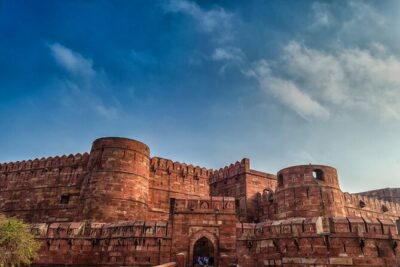 ★ 5.0Full Day Taj Mahal, Agra Fort & Baby Taj Tour from Delhi by CarFrom $623,647 reviews
 ★ 4.9From Delhi: Taj Mahal & Agra Private Day Trip with TransfersFrom $43,181 reviews
 ★ 4.9From Delhi: Taj Mahal and Agra Fort Private Sunrise TourFrom $592,270 reviews
 ★ 5.0Sunrise Taj Mahal, Agra Fort & Baby Taj Tour from Delhi by CarFrom $622,243 reviews
 ★ 5.0Taj Mahal and Agra Private Car Tour from Delhi with 5* LunchFrom $331,633 reviews
 ★ 4.9From Delhi: Private Taj Mahal and Agra Tour by Express TrainFrom $751,605 reviews
 ★ 5.0Taj Mahal, Agra Fort, Baby Taj Tour from Delhi by Superfast TrainFrom $751,494 reviews