
Reviewed · TAJ MAHAL TOURS FROM DELHI
3-Day Luxury Golden Triangle Tour to The Taj Mahal, Agra & Jaipur from Delhi
One word: sunrise changes everything. This 3-day Golden Triangle plan has two big wins I really like: Taj Mahal at sunrise (when conditions cooperate) and private SUV comfort with a professional local guide. The main thing to watch is timing: long road stretches and an early 6am start on Day 2, plus the Taj Mahal can be affected by weather and it’s closed on Fridays.
I also like how the itinerary stacks the must-sees with built-in breathing room. You get Delhi’s headline monuments first, then you stay overnight in Agra so you’re not rushing the Taj at the wrong time of day. The trade-off is that your days are packed, and you’ll spend a lot of hours on the road between cities.
The tour is labeled luxury, and most of what that means here is practical: hotel pickup and drop-off, air-conditioned vehicle, entrance fees handled, and two nights of accommodation included. Just keep your expectations realistic—some stops are photo-driven (like Hawa Mahal and Jal Mahal), and the shopping/craft demonstrations can feel more sales-forward than museum-style.
In This Review
- Key things to know before you go
- Three-Day Golden Triangle Luxury: What the Private SUV Plan Really Gives You
- Day 1 in Delhi: Qutub Minar, India Gate, and the Government District Drive-By
- Sunrise Taj Mahal: Timing, Tickets, and Why This Stop Is Worth the Early Start
- Agra Fort and Fatehpur Sikri: UNESCO Stops That Change the Story
- Amber Fort and Hawa Mahal: Jaipur Views That Reward Walking
- City Palace, Jantar Mantar, and Jaipur Crafts: Where the “Luxury” Becomes Cultural
- Timing, Meals, and Comfort: What You’ll Feel Day to Day
- Price and Logistics: Is $304 Per Person Good Value?
- Should You Book This 3-Day Golden Triangle Tour from Delhi?
- FAQ
- What time does pickup start on Day 1?
- Is the Taj Mahal included, and is sunrise guaranteed?
- How long are the drives between the cities?
- What’s included in the meals?
- Are entrance fees included?
- Can I cancel for a refund?
Key things to know before you go
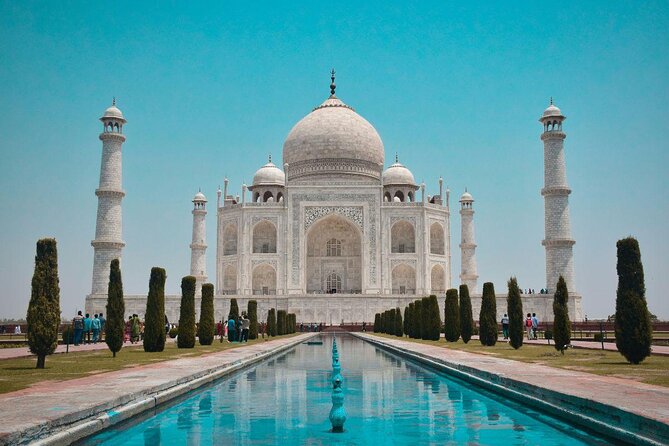
- Taj Mahal sunrise is the centerpiece with a very early departure (6am) from Agra
- Private guides and a private SUV mean less waiting and more flexibility than typical big-group tours
- UNESCO sites in three cities: Qutub Minar, Taj Mahal, Agra Fort, and Fatehpur Sikri
- Jaipur is heavy on viewpoints and palaces: Amber Fort, Hawa Mahal, and City Palace
- Included demonstrations (marble, zardozi embroidery, and hand-knotted carpets) add cultural context but also time
- Taj Mahal timing depends on weather and Friday closures, so plan with a little backup patience
Three-Day Golden Triangle Luxury: What the Private SUV Plan Really Gives You
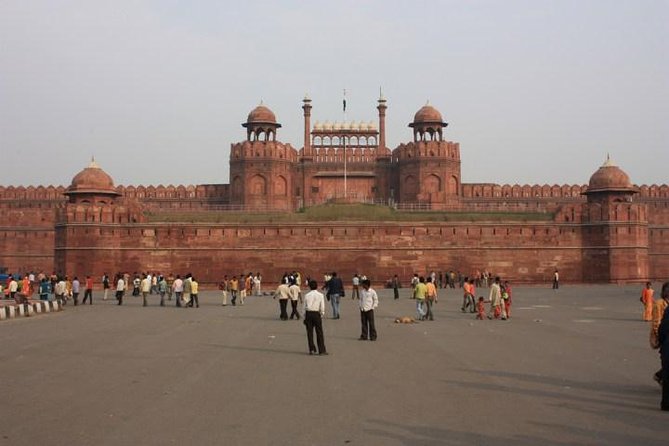
The Golden Triangle is popular for a reason. Delhi gives you India’s political and imperial landmarks; Agra delivers the Taj Mahal; Jaipur is where you feel Rajasthan’s pageantry in pink stone. What’s different here is how the tour is structured to reduce stress: private transport by SUV plus a guide who can keep your day moving without the herd effect.
You’ll start in New Delhi with pickup from the airport, train station, your hotel, or other chosen spot in Delhi/Noida/Gurugram. From there, the trip runs on a classic rhythm: sightseeing in the morning, transit in the middle of the day, then palace-and-fort time in the afternoon. Expect traffic to matter. The itinerary lists drive times like 3–4 hours, but in real life you’re at the mercy of road conditions.
The “luxury” part also shows up in the inclusions. Monument entrance fees, two nights of accommodation (twin sharing with breakfast), and a private live guide are included. That’s not just convenience—it can be real money saved versus paying each admission and guide on your own. You also get a mobile ticket, which reduces friction at entry points.
The one drawback I’d keep in mind is pace. This isn’t a slow travel tour. It’s a highlights tour with a few deeper stops, and you’ll be on the move. If you hate early starts, or if long drives make you cranky, you’ll want to prepare mentally.
More ways to reach the Taj, weighed side by side




Day 1 in Delhi: Qutub Minar, India Gate, and the Government District Drive-By
Day 1 focuses on Delhi’s iconic, high-recognition monuments, and that’s a smart way to start. You begin with Qutub Minar, one of Delhi’s most important historical towers. It dates back to the 11th century and is tied to Qutub-ud-din Aibek of the Slave Dynasty. You’ll spend about an hour here, which is enough time to understand what you’re seeing without feeling rushed into the next stop.
Right after, you hit India Gate, a memorial for about 90,000 Indian army soldiers who died in World War I, plus those connected to the Northwest Frontier operations and the 1919 Anglo-Afghan War. It’s brief—around 30 minutes—but it gives your trip emotional weight. It’s also a great way to orient yourself to Delhi’s scale. You see how monumental the city’s planning is, especially around ceremonial roads and wide open views.
Next comes a drive pass of major government buildings, including Parliament House (Sansad Bhavan) and other key British Raj–era landmarks like the President’s House. You’re not meant to linger here. The value is in perspective: Delhi isn’t only temples and bazaars; it’s also the seat of modern governance, layered on top of earlier architecture.
The day ends with a roughly 3-hour drive to Agra via the expressway. You’re arriving for the overnight, which is the key to doing the Taj Mahal properly the next morning. If you’re coming from the airport or a long day of travel, this is the best kind of Day 1. You don’t try to cram everything in; you set yourself up for sunrise.
Sunrise Taj Mahal: Timing, Tickets, and Why This Stop Is Worth the Early Start
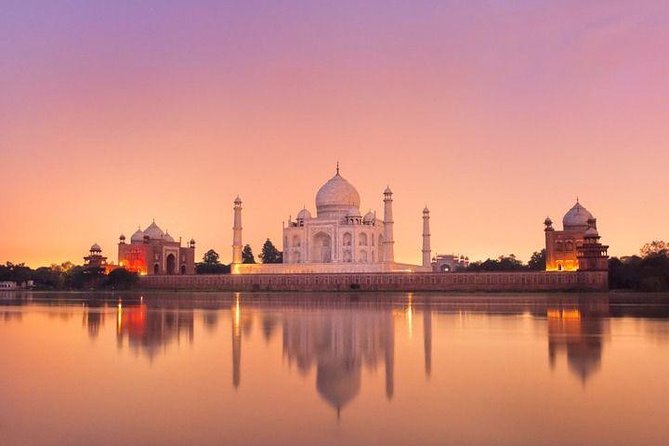
Day 2 is all about one thing: the Taj Mahal at sunrise. The tour picks you up at around 6am to catch the monument under morning light. You’ll explore the Taj Mahal for about 2 hours, and the experience is designed to feel monumental rather than rushed.
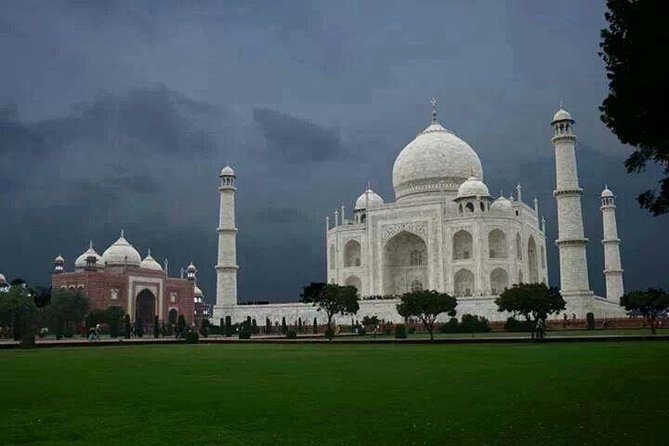
A practical heads-up: the Taj Mahal is closed on Fridays, and sunrise access is also subject to weather conditions. So if your travel dates fall on a Friday, or if the forecast looks rough, you should treat the plan as “sunrise if possible.” That’s not a complaint—that’s just how Agra works.
What makes the Taj Mahal stop special in this itinerary is the way it’s framed. You’re not just looking at a photo landmark; you’re learning what you’re seeing. The Taj Mahal was built over 17 years by about 20,000 men as a memorial for Shah Jahan’s wife. You’ll hear about the white marble and semi-precious stone details, and you get the sense of why this complex became a world symbol of love and power combined.
Another reason this works for you is crowd control. Early starts tend to mean fewer big tour groups and softer light for photos. Even if you don’t chase perfect shots, sunrise also makes the surfaces look less harsh than midday glare.
After the Taj, breakfast happens and then you move straight into Agra Fort. That flow is efficient: you see the icon, then you move to the “how did they rule here?” story.
Agra Fort and Fatehpur Sikri: UNESCO Stops That Change the Story
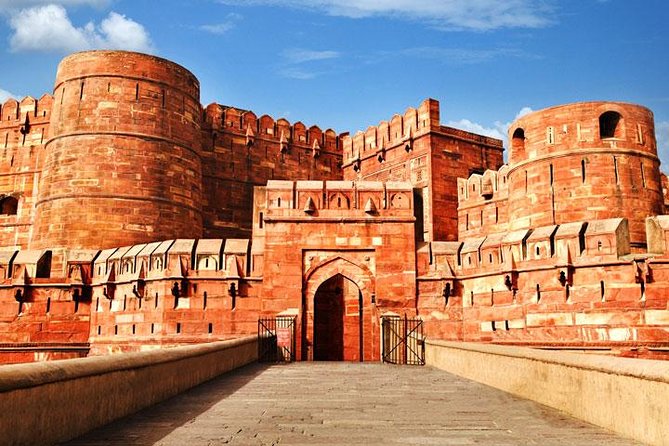
Once you’ve had the Taj Mahal moment, you still need context. Agra Fort gives you that. It’s UNESCO-listed and built as a powerful fortress of red sandstone. Within its enclosure walls (about 2.5 km long), you’ll see palace spaces and the imperial city layout inside.
The fort includes notable palaces like Jahangir Palace and Khas Mahal, plus audience halls such as Diwan-i-Khas, and two beautiful mosques. Even with only about an hour, you’ll understand the fort wasn’t just military. It was governance, ceremony, and daily court life—set inside impressive walls.
From there, the itinerary shifts gears toward a quieter kind of wow: Fatehpur Sikri. You’ll stop around 1 hour en route to Jaipur. It’s described as a perfectly preserved ghost town, built by Akbar in the late 16th century, and abandoned after only 14 years. What’s left is still elegant—walled city architecture that feels frozen in time.
This is a great counterbalance to the Taj. The Taj says romance and refinement. Fatehpur Sikri says ambition, planning, and sudden change. If you enjoy architecture and feel a pull toward places where history is visible in the stones, this stop delivers.
Then you head to Jaipur with about a 4-hour drive to the Pink City. By the time you arrive, you’re ready for Rajput-era palaces and street-level drama.
Amber Fort and Hawa Mahal: Jaipur Views That Reward Walking
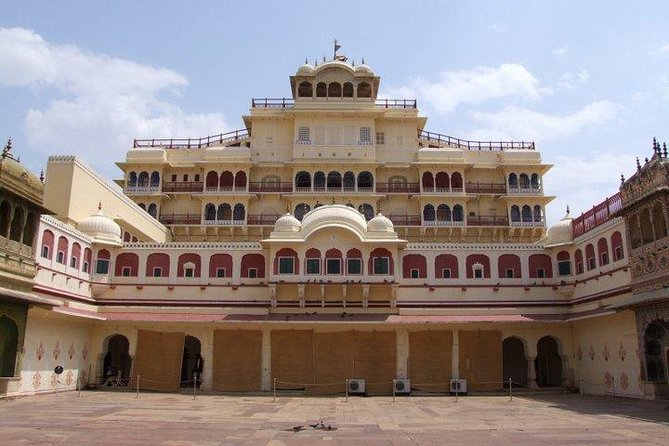
Jaipur is where the Golden Triangle really turns visual. On Day 3, you start with Amber Fort. After breakfast and checkout, you’ll go at about 8am. Amber was the capital of the Kachhwaha clan before Jaipur became official capital in 1727. You’ll spend about 2 hours exploring, which is enough time to see the fort layout and appreciate why this became a royal center.
Amber Fort also sets up the next stop perfectly. Jaipur’s most famous photo landmark, Hawa Mahal (Palace of Winds), is next. The tour includes time for photo stops around midday and then another dedicated stop at Hawa Mahal. Built in 1799 by Maharaja Sawai Pratap Singh, it’s a five-story pink sandstone masterpiece known for its semi-octagonal, honeycombed windows.
Important practical detail: Hawa Mahal is famous, but it can’t be fully “absorbed” in one quick pass. It’s designed for light and ventilation. Your experience here will likely be best if you slow down and look closely at the window patterns and how the building acts like a façade for the street.
You also get a photo stop at Jal Mahal, the Rajput-style Water Palace in the middle of Man Sarobar lake. The lake can be dry during summer, but in winter monsoons it fills and looks more like the postcard version. The tour gives you about 30 minutes—enough time to get your bearings and take a few shots if conditions are good.
Other Agra runs out of Delhi worth a look


City Palace, Jantar Mantar, and Jaipur Crafts: Where the “Luxury” Becomes Cultural
After lunch, you’ll visit City Palace, the principal residence of the ruling family and now partly converted into a museum. The tour schedules about 2 hours, which is a nice middle ground. You can walk through key sections without feeling trapped in a long museum marathon.
City Palace is also a strong place to connect Jaipur’s royal story to what’s outside your window. It helps you understand why Jaipur is called the Pink City and why so many buildings look like they belong to a single visual language.
The plan also mentions Jantar Mantar, a stone observatory raised in the 18th century. Even if you don’t go deep into every instrument, it’s a memorable shift from palaces to the science of time and measurement.
Then the tour adds a craft stop: a Carpet and Textile House where you can watch how silk carpets are handmade. This is optional if time permits, but it’s on the itinerary. You’ll also already have included live demonstrations earlier for marble craftsmanship, Zardozi embroidery, and hand-knotted carpet weaving. Here’s the practical way to think about it: this adds cultural context and a look at how artisan techniques are taught, but it can also eat time that you might otherwise spend wandering in a market.
If you like hands-on demonstrations, you’ll enjoy this. If you dislike structured shop stops, go in with a calm mindset and treat it as a bonus stop—ask what you’re seeing, don’t feel pressured to buy.
Finally, the day ends with a drive back to Delhi—about 4 hours—and drop-off at your hotel or the airport in the evening.
Timing, Meals, and Comfort: What You’ll Feel Day to Day
Let’s talk human factors. This tour is built around early mornings and transit blocks. Day 1 has Delhi sightseeing in the morning and early afternoon, then a drive to Agra. Day 2 begins before sunrise and continues with Taj Mahal and Agra Fort, then transitions toward Jaipur mid-to-late day. Day 3 starts with Amber Fort and ends back in Delhi.
That means you’ll want to travel with a plan for comfort:
- Wear smart casual clothing as requested.
- Keep water and snacks in mind, because the tour notes drinks are not included.
- Budget for heat and sun, especially during photo stops like Hawa Mahal and Jal Mahal.
On meals: the overview indicates breakfasts and lunches are included, while the included list explicitly highlights breakfast (2). Since lunch is mentioned in the summary, I’d treat it as part of your package, but it’s smart to double-check your exact meal schedule at booking so nothing surprises you.
The hotel piece matters too. You get two nights of accommodation with breakfast, twin sharing. That’s a real value component because it removes the hassle of finding lodging in three different cities. You also get pickup and drop-off to your hotel.
If you’re vegetarian, there’s an option and you should advise at booking. That’s one of those details that can make or break a long itinerary, so it’s worth handling early.
Price and Logistics: Is $304 Per Person Good Value?
At $304 per person, the value comes from the bundled structure. You’re paying for:
- private SUV transport across the Golden Triangle
- a professional private live guide
- two nights of hotel accommodation
- monument entrance fees
- morning Taj Mahal time (with its built-in early start)
- and multiple included demonstrations
If you tried to piece this together yourself—vehicle, driver, guide, admissions, lodging—you’d likely end up paying comparable or higher totals, especially when you include the “time value” of having someone handle the schedule and entry logistics.
This is also one of those tours where private matters. A private tour can reduce the time you lose to group synchronization. And since the tour is private for your group, you’re not competing for attention with ten other people trying to take selfies at the same moment.
The price consideration isn’t hidden costs. The listed “Not Included” items say drinks and gratuities are on you. Also, a mandatory gala dinner on Christmas and New Year Eve is charged extra if applicable. If your trip lands near those dates, check with your hotel or provider in advance.
The best value scenario is when you want comfort and you don’t want to manage logistics across three cities. The downside scenario is when you’re already independent, enjoy DIY travel planning, and can handle long transit days without someone organizing it for you.
Should You Book This 3-Day Golden Triangle Tour from Delhi?
I think this is a strong choice if you want the Golden Triangle highlights with less friction. You’ll get the big hits—Qutub Minar, India Gate, Taj Mahal sunrise, Agra Fort, Fatehpur Sikri, Amber Fort, Hawa Mahal, and City Palace—and the private SUV plus guides make the plan feel easier than a DIY route.
I’d consider skipping or switching to a slower option if:
- you dislike early starts (sunrise Taj Mahal means an early pickup)
- you travel on a Friday and can’t be flexible about Taj scheduling
- you prefer unstructured wandering over fixed photo stops and demonstrations
If you do book, one smart move is to be ready for craft and marble/embroidery/carpet demonstrations. Use those stops to ask questions and learn how the work is made, but don’t feel like every stop must end in a purchase.
Also, don’t overlook the people factor. In past trips, drivers and guides have been named like Boby, Sanju, and a Jaipur guide named Ashok—and that kind of friendly, talk-to-you guidance is exactly what turns a checklist tour into a smoother story.
If your goal is to see the classics well-organized—without spending your vacation managing tickets and transit—this one fits.
FAQ
What time does pickup start on Day 1?
The tour starts at 9:00 am in New Delhi. Pickup is offered from the airport, train station, hotel, or other chosen point in Delhi/Noida/Gurugram.
Is the Taj Mahal included, and is sunrise guaranteed?
Yes, the tour includes a sunrise visit to the Taj Mahal with an early pickup around 6am. It is subject to weather conditions, and the Taj Mahal is closed on Fridays.
How long are the drives between the cities?
The itinerary lists about 3 hours driving from Delhi to Agra, about 4 hours from Agra to Jaipur, and about 4 hours driving back to Delhi at the end.
What’s included in the meals?
The tour description includes breakfasts and lunches, and the included section explicitly notes breakfast (2). Drinks are not included.
Are entrance fees included?
Yes. Monument entrance fees are included, along with live demonstrations for marble craftsmanship and textile work such as Zardozi embroidery and hand-knotted carpet weaving.
Can I cancel for a refund?
Yes. It’s free cancellation if you cancel at least 24 hours before the experience starts for a full refund.
Onward to Jaipur: More Day Trips
- 3-Days Private Golden Triangle Tour: Delhi, Agra & Jaipur by Car
★ 5.0 · 1,107 reviews - 3-Days Private Golden Triangle Tour: Delhi, Agra & Jaipur by Car
★ 5.0 · 1,098 reviews - 3-Day Delhi, Agra and Jaipur Private Tour – India Golden Triangle
★ 5.0 · 812 reviews - Four-Day Private Luxury Golden Triangle Tour to Agra and Jaipur From New Delhi
★ 5.0 · 807 reviews - Jaipur Day Trip from Delhi by Car or Train – All Inclusive
★ 5.0 · 663 reviews
More Agra Day Trips out of Delhi
- Same Day Taj Mahal, Agra Fort & Baby Taj Tour from Delhi by Car
★ 5.0 · 4,304 reviews - Full Day Taj Mahal, Agra Fort & Baby Taj Tour from Delhi by Car
★ 5.0 · 3,647 reviews - From Delhi: Taj Mahal & Agra Private Day Trip with Transfers
★ 4.9 · 3,181 reviews - From Delhi: Taj Mahal and Agra Fort Private Sunrise Tour
★ 4.9 · 2,270 reviews - Sunrise Taj Mahal, Agra Fort & Baby Taj Tour from Delhi by Car
★ 5.0 · 2,243 reviews
The Taj, Reached a Few More Ways
- Same Day Taj Mahal, Agra Fort & Baby Taj Tour from Delhi by Car
★ 5.0 · 4,304 reviews - Taj Mahal Day Tour from Delhi by Superfast Train – TOP RATED TOUR
★ 5.0 · 4,166 reviews - Full Day Taj Mahal, Agra Fort & Baby Taj Tour from Delhi by Car
★ 5.0 · 3,647 reviews - From Delhi: Taj Mahal & Agra Private Day Trip with Transfers
★ 4.9 · 3,181 reviews - Taj Mahal Tour from Delhi by Express Train (Viator Award Winner)
★ 5.0 · 2,849 reviews
Just added: more New Delhi reviews to browse
- 4 days Golden Triangle Tour★ 5.0 · 3 reviews
- Discover Old & New Delhi: Private Tour with Street Food★ 5.0 · 3 reviews
- Taj Mahal Tour From Delhi By Private Car★ 4.5 · 3 reviews
- Golden Triangle Tour 5 Days★ 5.0 · 3 reviews
- Taj Mahal: Express Entry Ticket For Sunset Tour with guide★ 5.0 · 3 reviews
- Agra Taj Mahal Sunrise & Sunset Tour from Delhi★ 5.0 · 3 reviews
Taj Mahal Tours from Delhi, compared.
 ★ 5.0Same Day Taj Mahal, Agra Fort & Baby Taj Tour from Delhi by CarFrom $624,304 reviews
 ★ 5.0Taj Mahal Day Tour from Delhi by Superfast Train – TOP RATED TOURFrom $1004,166 reviews
 ★ 5.0Full Day Taj Mahal, Agra Fort & Baby Taj Tour from Delhi by CarFrom $623,647 reviews
 ★ 4.9From Delhi: Taj Mahal & Agra Private Day Trip with TransfersFrom $43,181 reviews
 ★ 5.0Taj Mahal Tour from Delhi by Express Train (Viator Award Winner)From $752,849 reviews
 ★ 5.0All Inclusive Private Taj Mahal Luxury Tour from Delhi by CarFrom $622,564 reviews
 ★ 4.9Same Day Taj Mahal, Fort & Baby Taj Tour from Delhi by CarFrom $502,534 reviews
 ★ 4.9From Delhi: Taj Mahal and Agra Fort Private Sunrise TourFrom $592,270 reviews