
Reviewed · AGRA DAY TRIPS FROM DELHI
3-Day Private Golden Triangle Tour: Delhi, Agra & Jaipur
Big monuments, tight schedule, real convenience.
This private 3-day Golden Triangle tour strings together Delhi, Agra, and Jaipur with live guides and AC pickup, so you spend less time figuring out transport and more time looking at stone. I especially like the early 6 AM sunrise visit to the Taj Mahal and the hands-on stop at Chandni Chowk by rickshaw, which makes day 1 feel like a lived-in city instead of a checklist. One drawback to plan around: some sites are picture-friendly but entrance is prohibited at Jal Mahal and Hawa Mahal, so you’ll get views, not full exploring, and you may want to stay firm about staying on the sightseeing track if any shop/restaurant stops pop up.
For the people who get a good driver-and-guide team, this format works fast: you’re picked up in Delhi/Noida/Gurgaon and moved city to city with minimal hassle. If you’re lucky, you’ll get a guide like Ishaan in Agra, paired with a driver like Amit, who can smooth out the long drives and keep the monuments organized instead of scattered.
In This Review
- Key moments that make this tour worth your time
- How Private Golden Triangle Transport Keeps You From Losing Time
- Day 1 Delhi: Humayun’s Tomb, Qutub Minar, Akshardham, and Chandni Chowk by Rickshaw
- Day 1 Delhi’s Hidden-Feeling Stops: Unknown Soldiers, Lutyens-Baker New Delhi, and Gandhi Smriti
- Day 2 Agra’s Morning Magic: Taj Mahal Sunrise at 6 AM, Then Agra Fort
- Fatehpur Sikri in the Middle of the Drive: A Long Stop That Feels Worth It
- Day 3 Jaipur: Amber Palace First, Then Jal Mahal Photo Angles
- Jantar Mantar and Hawa Mahal: Observational Science and Wind-Sculpted Views
- Price and What You’re Really Paying For
- Who This 3-Day Golden Triangle Tour Fits Best
- Should You Book This Golden Triangle Tour?
- FAQ
- What cities are included in the Golden Triangle tour?
- How early is the Taj Mahal sunrise visit?
- Are entrance fees included for monuments?
- Will I be picked up from my location in the region?
- What rides and comfort items are included in the tour?
- Does the tour include accommodation and meals?
- How does day 3 handle a departure from Delhi?
Key moments that make this tour worth your time
- Sunrise at the Taj Mahal (6 AM): a rare slot that helps you see the white marble in soft morning light.
- Delhi by rickshaw at Chandni Chowk: you get motion through the market, not just a photo stop from the curb.
- UNESCO pairing on day 1: Humayun’s Tomb and Qutub Minar land early, before crowds and heat build up.
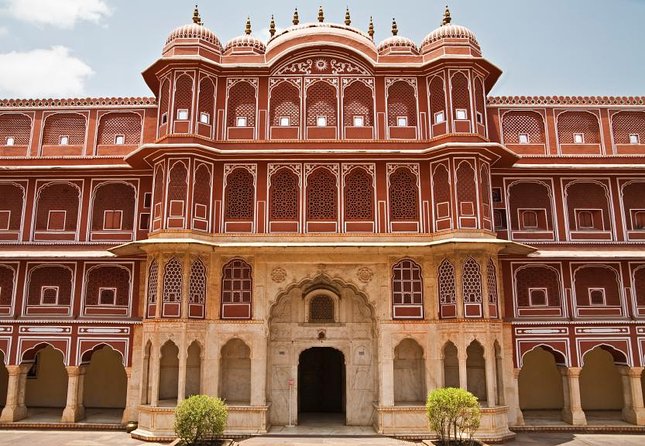
- Photo stops where entry is blocked: Jal Mahal and Hawa Mahal are best used for quick framing and angles.
- Live guides at sites: the tour leans on explanation, not just tickets and time stamps.
- Planned pace across three cities: AC chauffeured transport keeps the days efficient and predictable.
How Private Golden Triangle Transport Keeps You From Losing Time
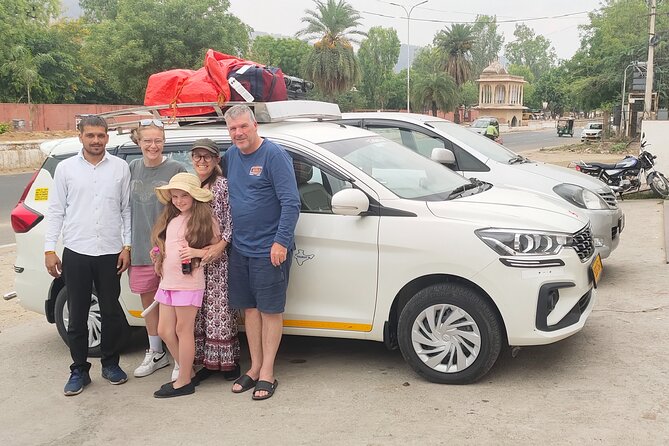
The biggest practical win here is the private setup. You can be picked up from anywhere in Delhi/Noida/Gurgaon/Ghaziabad/Faridabad in a private AC car, and the itinerary is structured around moving you between major sights without the stress of arranging buses or trains.
You also get a chauffeur and AC transportation for the big-distance legs, especially the Delhi-to-Agra and Agra-to-Jaipur drives. That matters because the Golden Triangle is famous for being crowded and long-distance—private transport turns the time into travel instead of problem-solving.
The tour also includes small comfort helpers: complimentary water bottles and umbrellas. In India, that’s not a gimmick. It helps you stay outside longer, especially during Delhi mornings and the hotter hours in Jaipur.
Other Agra runs out of Delhi worth a look




Day 1 Delhi: Humayun’s Tomb, Qutub Minar, Akshardham, and Chandni Chowk by Rickshaw
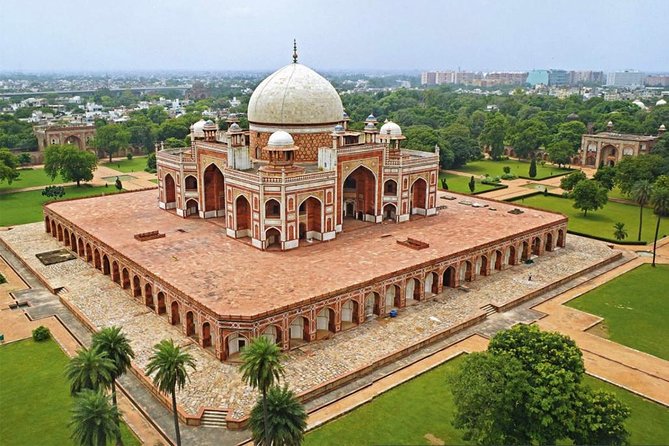
Day 1 is the “Delhi classics + big contrast” day. You start with Humayun’s Tomb, a UNESCO World Heritage site and the so-called first garden tomb of India. It’s one of those places where the layout helps you understand the design thinking before you even read the guide’s notes. You’ll get about an hour, which is enough to walk the key paths without feeling rushed.
Next comes Qutub Minar, described as the tallest minaret built using bricks in 1192. It’s part of the UNESCO Qutub complex, so you’re not just seeing a single tower—you’re in a whole historic area. Expect about an hour here too, ideal for photos and a grounding explanation of what you’re looking at.
Then the route swings into more modern scale with Swaminarayan Akshardham. It’s presented as a major Hindu temple complex built in 2005, but its architecture is meant to feel older than it is. You’re given about an hour, which works because the complex is visually dense—you need a guide’s route so you don’t drift.
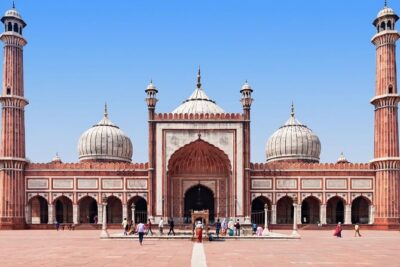
The day ends with energy and street-level immersion at Jama Masjid and Chandni Chowk. Jama Masjid is one of the world’s largest mosques, built in 1656 with help from 5,000 workers, and it sits right by the Red Fort area. After that, you head to Pasar Chandni Chowk, where the description calls it Asia’s biggest and oldest market from the 17th century. You’ll also get a tuk-tuk/rickshaw ride as part of the Chandni Chowk experience, plus the tour notes mention that Sunday has special flea bazaars.
For me, the best part of this section is the mix: tomb gardens, minaret scale, temple storytelling, then straight into market chaos on purpose.
Day 1 Delhi’s Hidden-Feeling Stops: Unknown Soldiers, Lutyens-Baker New Delhi, and Gandhi Smriti
After the major monuments and market time, the itinerary adds three stops that change the mood—quieter, reflective, and very “Delhi is layered” in feeling.
First is the 1921 Tomb of the Unknown Soldiers, where names of 13,300 Indian army servicemen are carved on the wall for those who died during the First World War. It’s not a “big photo moment” in the usual tourist sense, but it’s a meaningful pause that can make the rest of the day hit differently.
Then you pass through the planned centerpiece of British-era Delhi, described as a 330-acre architecture constructed in 1929 by Sir Edwin Lutyens and Herbert Baker, who were responsible for constructing almost the whole of New Delhi. If you like city planning as much as monuments, this stop helps you read Delhi’s layout instead of just walking past it.
Finally, you end day 1 at Gandhi Smriti, which marks the place where Gandhi spent most of his life and where he was assassinated. The information also notes it was the Birla family home before becoming a remembrance site. This stop tends to feel personal, even if you only get about an hour.
Altogether, day 1 gives you more than visuals. It gives you a sense of what Delhi asks you to remember.
Day 2 Agra’s Morning Magic: Taj Mahal Sunrise at 6 AM, Then Agra Fort
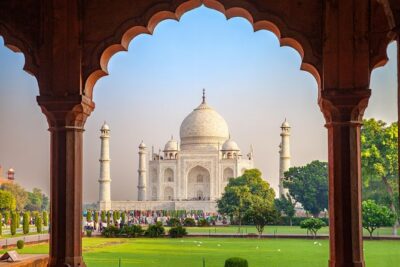
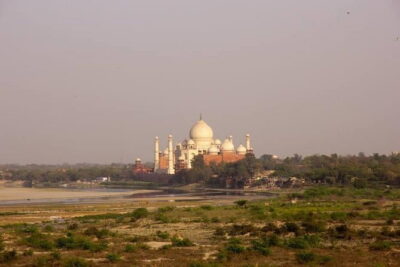
Day 2 is the classic Golden Triangle headline, but it’s done in a way that matters: you go for the Taj Mahal sunrise experience at 6 AM.
That early timing is the difference between seeing the Taj as a postcard and seeing it as a monument that changes with the light. The tour specifically notes that you’ll have help from your guide for getting photos clicked at the best possible spots. That’s a real value—getting the angles right in a crowd is hard, and guides who know where to stand can save your time and frustration.
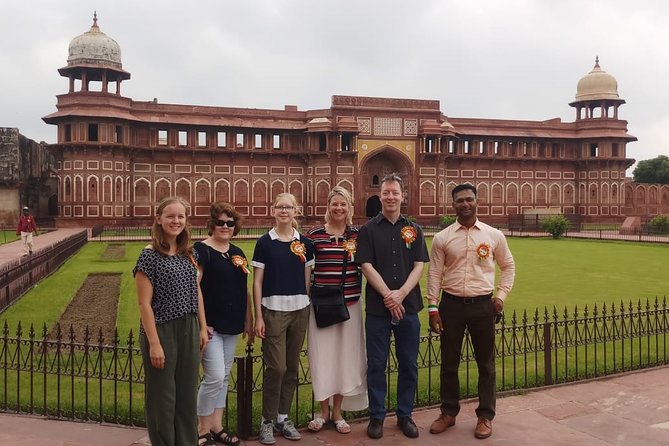
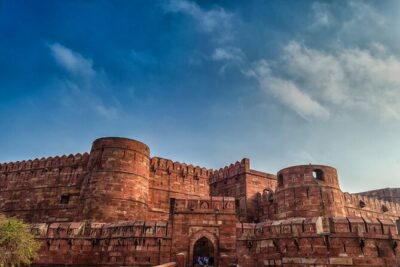
You’ll spend about 3 hours on the Taj Mahal portion, then move on. The next stop is Agra Fort, another UNESCO World Heritage site. The description highlights that it was the place where the early Mughal emperors lived until 1638, when the capital shifted to Delhi. It’s about an hour in this schedule, which is tight but workable if your guide helps you prioritize the parts that connect to what you just saw at the Taj.
I also like the flow of day 2 because it prevents Taj fatigue. You don’t just stare at one monument for hours. You return your eyes to a different kind of Mughal power: fortification and court life.
Fatehpur Sikri in the Middle of the Drive: A Long Stop That Feels Worth It
Between Agra and Jaipur, you take a 4-hour stop at Fatehpur Sikri, which the tour describes as a small city just west of Agra.
Fatehpur Sikri matters in this circuit because it’s tied to the Mughal Empire’s shift in ambition. The tour notes it was founded as the capital in 1571 by Emperor Akbar. You’ll see red sandstone buildings mentioned in the description, which gives you an instant visual theme to look for while you walk.
It’s also a smart scheduling choice. With only three days total, the itinerary still gives you enough time to feel like you actually visited a place, not just passed through. If you’re someone who likes architecture and city layouts, Fatehpur Sikri is one of the most satisfying uses of a long midday block.
Chasing the Pink City? More Jaipur day trips
Day 3 Jaipur: Amber Palace First, Then Jal Mahal Photo Angles
Day 3 starts in Jaipur with Amber Palace (Amber Fort) first. The tour frames it as the beginning of your Jaipur sightseeing and sets aside about 2 hours. Amber is one of those stops where the entire structure and approach matters. Going early in the day tends to help you move without the same crowd pressure you’d get later.
Then you add Jal Mahal, described as the palace on Lake Man Sagar. The important practical detail: entrance is prohibited, but you can still take great pictures from where you can view it. That’s exactly the kind of stop that helps a schedule like this stay efficient. You get the skyline view without spending time on tickets or waiting.
The itinerary keeps steering you toward viewpoints and major sights rather than long wandering blocks. For first-time Jaipur visitors, that’s a good match to a three-day pace.
Jantar Mantar and Hawa Mahal: Observational Science and Wind-Sculpted Views
After Amber and the lakeside photo stop, you go to Jantar Mantar, called an observatory. The description says it’s a collection of nineteen architectural astronomical instruments built by Rajput king Sawai Jai Singh II and completed in the 18th century (the exact final year is cut off in the notes, so stick to the “completed in the 1700s” level of detail).
This stop is valuable because it flips the usual Golden Triangle pattern. You’ve done tombs, forts, mosques, and temples. Now you’re looking at stone made for measurements—how people tried to understand sky and time using built instruments.
Next comes Hawa Mahal, the Palace of Winds. Here again, the tour notes entrance is prohibited, but you can take pictures of the building. It’s described as constructed of red and pink sandstone, which is why the exterior is so photogenic from the right angle.
This pairing works well: one stop teaches you to look like a scientist, the next makes you look like a photographer.
Price and What You’re Really Paying For
The listed price is $5.00 per person, which is surprisingly low for a private, multi-city itinerary. The only way this price makes sense is if the tour is being priced for its included basics—transport, guides, and tickets—rather than luxury extras.
Here’s what the package says is included:
- Hotel or airport pickup in Delhi
- Air conditioned transportation with a chauffeur
- Tuk-tuk/rickshaw ride at Chandni Chowk
- Live tour guides at the sites
- Water bottles and umbrellas
- Monument entrance fees (depending on the option selected)
What’s not included is also important:
- Accommodations
- Meals and additional services
- Tips and gratuities
For real-world value, I’d treat this as a tour for people who already have a place to sleep and don’t need help planning meals. If you need lodging built in, you’ll likely pay extra elsewhere anyway, so the $5 headline won’t tell the full story.
Also note the entry rules: some spots include tickets, some are listed as free, and some are explicitly “photo outside only.” That affects how satisfying the day feels if you expected to wander inside everywhere.
Who This 3-Day Golden Triangle Tour Fits Best
This tour is best for you if you want structure and you’re short on time. Three days is tight for Delhi, Agra, and Jaipur, and the private chauffeur setup keeps the pace workable.
It’s also a good choice if you like guides who give context. One of the standout positives from the experience is the attention to doing the monuments in a sensible order, with live guides at key stops. In Agra, I specifically see strong mentions of Ishaan as the guide and Amit as the driver, which signals that the guide-and-drive pairing is a real part of the quality.
If you hate rushing, you might find the schedule intense. You still get meaningful time at each stop, but you won’t be hanging out for half a day in one museum. This is more “see the big things fast” than “live slow.”
Should You Book This Golden Triangle Tour?
I’d book it if you want a private, guide-led Golden Triangle that prioritizes the signature monuments, includes on-the-ground time at the key sights, and provides AC transport to cut down travel stress. The sunrise Taj Mahal slot is a big reason to choose this kind of tour format instead of piecing it together yourself.
Skip it (or at least adjust your expectations) if your top goal is unrestricted, long interior exploring at every stop. With Jal Mahal and Hawa Mahal listed as photo-only, you’ll get visuals without full entry. Also, if you’re very firm about avoiding shopping stops, keep your focus on the sightseeing sequence and politely decline detours.
If you’re flexible, ready to rise early, and happy to let a strong driver-guide team handle the logistics, this is the kind of Golden Triangle tour that gives you more “wow time” and less time lost.
FAQ
What cities are included in the Golden Triangle tour?
The tour covers Delhi, Agra, and Jaipur, with sightseeing in each city across the 3 days.
How early is the Taj Mahal sunrise visit?
You’ll start around 6 AM for the sunrise experience at the Taj Mahal.
Are entrance fees included for monuments?
Monument entrance fees are included depending on the option selected. Many listed stops show admission tickets included, while a few stops are listed as free.
Will I be picked up from my location in the region?
Yes. Pickup is offered from anywhere in Delhi, Noida, Gurgaon, Ghaziabad, or Faridabad, and also from the hotel or airport in Delhi.
What rides and comfort items are included in the tour?
You get an AC chauffeur service, and a tuk-tuk/rickshaw ride at Chandni Chowk in Delhi. The tour also includes complimentary water bottles and umbrellas.
Does the tour include accommodation and meals?
No. Accommodations and meals are not included, and tips/gratuities are also not included.
How does day 3 handle a departure from Delhi?
On day 3, the itinerary finishes around 2 PM for Jaipur sightseeing, and if you have a departure in New Delhi, you’ll drive back to Delhi and arrive around 8 PM.
The Full Golden Triangle, More Options
- 3-Days Private Golden Triangle Tour: Delhi, Agra & Jaipur by Car
★ 5.0 · 1,107 reviews - 3-Days Private Golden Triangle Tour: Delhi, Agra & Jaipur by Car
★ 5.0 · 1,098 reviews - 3-Day Delhi, Agra and Jaipur Private Tour – India Golden Triangle
★ 5.0 · 812 reviews - Four-Day Private Luxury Golden Triangle Tour to Agra and Jaipur From New Delhi
★ 5.0 · 807 reviews - 5 Nights 6 Days Private Golden Triangle Tour – Delhi Agra Jaipur
★ 5.0 · 574 reviews
Onward to Jaipur: More Day Trips
- 3-Days Private Golden Triangle Tour: Delhi, Agra & Jaipur by Car
★ 5.0 · 1,107 reviews - 3-Days Private Golden Triangle Tour: Delhi, Agra & Jaipur by Car
★ 5.0 · 1,098 reviews - 3-Day Delhi, Agra and Jaipur Private Tour – India Golden Triangle
★ 5.0 · 812 reviews - Four-Day Private Luxury Golden Triangle Tour to Agra and Jaipur From New Delhi
★ 5.0 · 807 reviews - Jaipur Day Trip from Delhi by Car or Train – All Inclusive
★ 5.0 · 663 reviews
More Agra Day Trips out of Delhi
- Same Day Taj Mahal, Agra Fort & Baby Taj Tour from Delhi by Car
★ 5.0 · 4,304 reviews - Full Day Taj Mahal, Agra Fort & Baby Taj Tour from Delhi by Car
★ 5.0 · 3,647 reviews - From Delhi: Taj Mahal & Agra Private Day Trip with Transfers
★ 4.9 · 3,181 reviews - From Delhi: Taj Mahal and Agra Fort Private Sunrise Tour
★ 4.9 · 2,270 reviews - Sunrise Taj Mahal, Agra Fort & Baby Taj Tour from Delhi by Car
★ 5.0 · 2,243 reviews
Just added: more New Delhi reviews to browse
- 4 days Golden Triangle Tour★ 5.0 · 3 reviews
- Discover Old & New Delhi: Private Tour with Street Food★ 5.0 · 3 reviews
- Taj Mahal Tour From Delhi By Private Car★ 4.5 · 3 reviews
- Golden Triangle Tour 5 Days★ 5.0 · 3 reviews
- Taj Mahal: Express Entry Ticket For Sunset Tour with guide★ 5.0 · 3 reviews
- Agra Taj Mahal Sunrise & Sunset Tour from Delhi★ 5.0 · 3 reviews
Agra Day Trips from Delhi, compared.
 ★ 5.0Same Day Taj Mahal, Agra Fort & Baby Taj Tour from Delhi by CarFrom $624,304 reviews
 ★ 5.0Full Day Taj Mahal, Agra Fort & Baby Taj Tour from Delhi by CarFrom $623,647 reviews
 ★ 4.9From Delhi: Taj Mahal & Agra Private Day Trip with TransfersFrom $43,181 reviews
 ★ 4.9From Delhi: Taj Mahal and Agra Fort Private Sunrise TourFrom $592,270 reviews
 ★ 5.0Sunrise Taj Mahal, Agra Fort & Baby Taj Tour from Delhi by CarFrom $622,243 reviews
 ★ 5.0Taj Mahal and Agra Private Car Tour from Delhi with 5* LunchFrom $331,633 reviews
 ★ 4.9From Delhi: Private Taj Mahal and Agra Tour by Express TrainFrom $751,605 reviews
 ★ 5.0Taj Mahal, Agra Fort, Baby Taj Tour from Delhi by Superfast TrainFrom $751,494 reviews