

Reviewed · AGRA DAY TRIPS FROM DELHI
3-Day Private Ranthambhore Tiger Tour Including Delhi, Agra, Jaipur
That first early-morning drive changes everything. This private Golden Triangle run adds a real wildlife payoff with Ranthambhore tiger safaris, not just more sightseeing. I love the tight pacing—sunrise Taj Mahal, then Agra Fort, then straight into tiger-country—and I also like that the tour is structured around included guides, tickets, and safaris so you can spend less time planning. The main drawback: the schedule is aggressive (especially the 2:30am start), and the Taj Mahal sunrise visit depends on weather.
If you want the highlights of Delhi–Agra–Jaipur but also want a chance at a Bengal tiger in its natural habitat, this is a smart match. You also get flexibility: the package can be booked with or without accommodation, depending on your budget. Just note that you’ll be doing a lot of driving, and safari days can mean early mornings and waiting while jeeps or canters are organized.
In This Review
- Key highlights at a glance
- Golden Triangle, but with a tiger twist
- The 2:30am start and sunrise Taj Mahal timing
- Agra Fort: where the scale hits you
- Driving from Mughal monuments to Ranthambhore
- Morning safari in Ranthambore: the best odds
- Afternoon safari: second chance, different mood
- Jaipur after dusk: the Pink City switch-up
- Amber Palace: the Rajput architecture must-see
- Jal Mahal and Hawa Mahal: quick photo stops with purpose
- Jal Mahal (Water Palace)
- Hawa Mahal (Palace of Wind)
- City Palace and Jantar Mantar: two very different kinds of Jaipur
- City Palace of Jaipur
- Jantar Mantar Observatory
- The travel pace: what you’ll notice in real life
- Price and value: what you’re really paying for
- Who should book this 3-day Delhi–Agra–Jaipur plus Ranthambhore tour
- Final call: should you book it?
- FAQ
- What time is pickup, and where does the tour start?
- Are accommodations included in the price?
- How many tiger safaris are included in Ranthambhore?
- Is the Taj Mahal sunrise visit guaranteed?
- What meals are included?
- What should I wear for the safari?
- What documents do I need to provide before travel?
Key highlights at a glance
- Two tiger safaris in Ranthambore: morning and afternoon, both in shared jeep/canter with a naturalist
- Sunrise Taj Mahal: early pickup and a planned sunrise visit, weather permitting
- UNESCO hits in Agra and Jaipur: Taj Mahal, Agra Fort, and Jantar Mantar
- Private air-conditioned vehicle with local guides: less stress, clearer context at each stop
- In-house safari logistics: you’ll be shuttled back from Taj parking via battery bus/golf cart
- Color guidance for safari: wear khaki, brown, olive green to help animals stay calm
Golden Triangle, but with a tiger twist

Most Golden Triangle tours stick to temples, forts, and grand views. This one adds Ranthambhore Tiger Reserve, so your trip has two different moods: Mughal-era monuments on one side, and wild-country silence on the other.
That mix matters because it keeps the days from feeling repetitive. You’re not just collecting photos—you’re also getting a realistic shot at seeing wildlife, including tigers, in a reserve known for a high density of tigers in their natural habitat.
The value angle is practical too. With private transport, professional local guides, and safaris already built in, you’re not trying to coordinate tickets, guides, and safari availability by yourself across three cities.
Other Agra runs out of Delhi worth a look



The 2:30am start and sunrise Taj Mahal timing
The tour begins at 2:30am with pickup from Delhi. You’ll drive roughly 3 hours to Agra, then meet your guide at a local hotel so you can reset before heading out.
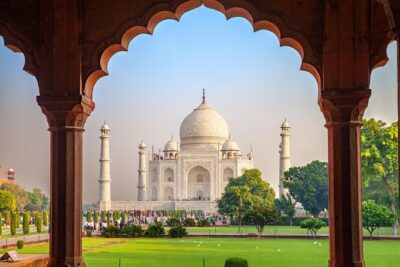
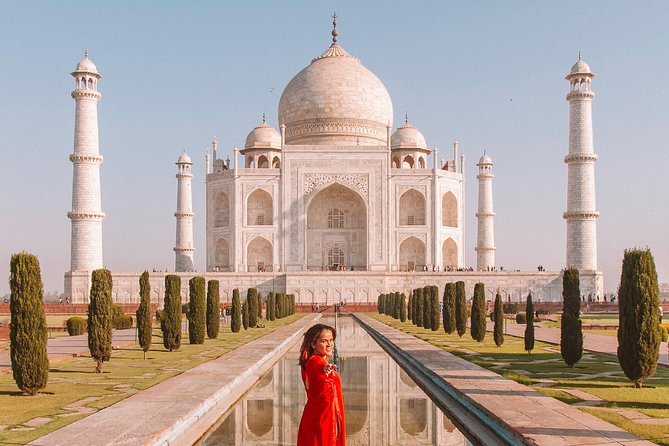
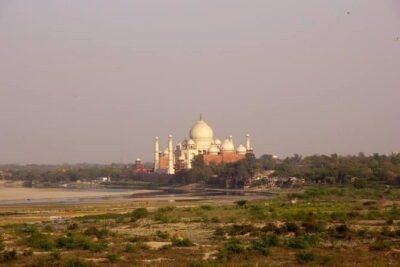
The core experience here is the Taj Mahal at sunrise. The plan is to see the World Heritage Site glow early, built in the 1600s by Mughal emperor Shah Jahan in memory of his wife, Mumtaz Mahal. Realistically, sunrise moments can be sensitive to conditions, and the tour notes that this visit is subject to weather—so you should be mentally ready for Plan B if visibility is limited.
One nice detail: after your Taj Mahal visit, there’s a battery bus/golf cart return ride from parking back to where you need to go. In a place like this, it can save time and energy, especially if you’re arriving early and moving fast.
Agra Fort: where the scale hits you
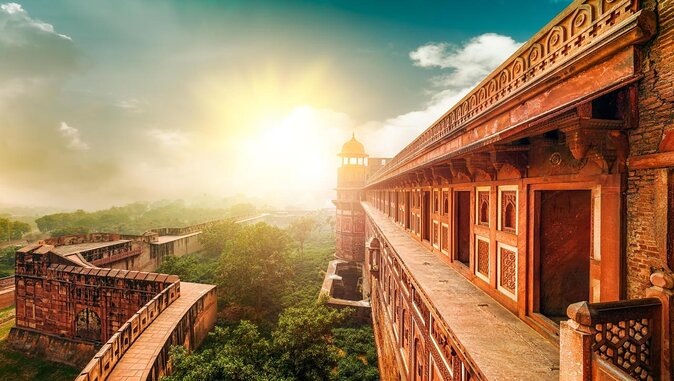
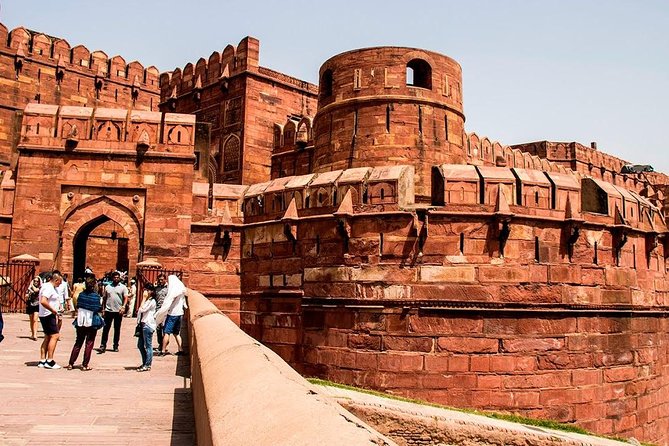
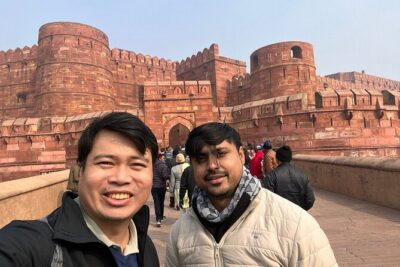
After breakfast, you’ll visit Agra Fort, another UNESCO site. This is a different kind of “wow” from the Taj: less about one perfect silhouette and more about walking through courtyards and ramparts that show how powerful the Mughal court was.
Agra Fort sits along the Yamuna River and was the main residence of Mughal emperors until 1638. The fort also mixes architectural influences, combining Hindu and Central Asian styles, which you can feel as you move through the complex—wide gateways, layered defenses, and the sense that this was built to impress and control.
Time-wise, you’re looking at about 1 hour here. For some people, that will feel short. For others, it’s just right because it keeps the day from dragging before you switch gears toward Ranthambhore.
Driving from Mughal monuments to Ranthambhore
After Agra sightseeing, you’ll drive about 5 hours to Ranthambhore Tiger Reserve. This long transfer is part of why the tour works: you aren’t scheduling a separate wildlife trip later. You’re moving directly from stone monuments to forest edges and keeping the momentum.
Once you arrive, you’ll check into a jungle resort (when you book with the accommodation option). Even if you don’t expect luxury, staying inside the general reserve area helps you be ready for safari logistics the next morning.
Ranthambhore is also a reserve with living history: it was once a royal hunting ground and today is known for tigers, leopards, and marsh crocodiles. That matters because it frames your safari expectations—this isn’t a zoo day, and sightings depend on the animals and the day.
Morning safari in Ranthambore: the best odds
Day 2 starts with a morning safari in the tiger reserve. You’ll go in a shared jeep/canter, and the tour includes an English-speaking naturalist plus an expert guide who knows the park and its big cats.
This is the moment wildlife fans wait for: driving through the reserve while your naturalist watches patterns and habitat cues. The tour positions Ranthambhore National Park as one of the best places for seeing Royal Bengal tigers, and while wildlife is never guaranteed, a morning run typically gives you a fresh start when animals are more active.
Logistically, you get about 3 hours for the safari, then return to the resort for breakfast and downtime. That return window is important. It’s easy to burn out if you try to sprint through safari days without a break.
Chasing the Pink City? More Jaipur day trips
Afternoon safari: second chance, different mood
Later, you head out for an afternoon safari—again in shared jeep/canter with the same safari support style. This is your second attempt at spotting tigers, but it also changes the feel of the reserve. Light and animal movement patterns shift through the day.
The included safari time is again about 3 hours. What you might notice beyond big cats: lakes, palace ruins, traditional chhatri structures, old fortifications, and even a 1,000-year-old fort within the park. Even if the tiger isn’t visible, the scenery and the history inside the reserve can still make the day feel meaningful.
One operational note: if shared jeep safari isn’t available, safaris will be provided in a shared canter (20-seater van). That’s useful to know because it can affect comfort and viewing angles, even though it still keeps the safari shared and included.
Jaipur after dusk: the Pink City switch-up
After the evening safari, you’ll drive about 3 hours to Jaipur, often called the Pink City. The color isn’t random; the story goes back to a 1876 visit from Queen Victoria, when the city painted many buildings pink as a sign of hospitality.
When you arrive, you check into your hotel. This is a good reset after safari days because Jaipur can feel like a different planet: more traffic energy, more crowds at viewpoints, and more street-level details.
The key is timing. You’re not doing a full “day in Jaipur” on arrival—you’re positioning yourself for the next morning’s forts and sights.
Amber Palace: the Rajput architecture must-see
Day 3 begins with Amber Palace. You’ll visit it after breakfast, about 11km northeast of Jaipur. Amber is famous for honey-hued sandstone and white marble, and for the way it rises from the hillside like it owns the view.
The palace complex is divided into four main sections, each with its own courtyards. That layout helps you move logically without getting lost, even when you’re walking at a brisk pace.
Important practical point: the tour data says elephant/jeep rides at hilltop Amber Fort are not included. So if you want that option, plan to pay extra on the ground. If you’d rather skip it, you can still enjoy Amber by focusing on architecture, courtyards, and the photo angles from the fort area.
The visit time is about 2 hours, which is usually enough to feel the place without turning the day into a marathon.
Jal Mahal and Hawa Mahal: quick photo stops with purpose
From Amber, you’ll make two short photo stops:
Jal Mahal (Water Palace)
You’ll stop at Jal Mahal, the Water Palace, near the cenotaphs of the maharanis of Jaipur in the Man Sagar water area. The origins aren’t certain, but it’s believed to have been restored extensively, and possibly connected to Jai Singh II (1734).
Your time is brief—about 15 minutes. Don’t treat this like a museum stop. It’s about capturing the watery palace from the right angle and keeping the schedule intact for the bigger interiors later.
Hawa Mahal (Palace of Wind)
Next is Hawa Mahal, the famous pink honeycombed facade with five storeys, built in 1799 so royal women could watch street life and processions. This is a standout Jaipur landmark, even if you only see the outside from viewpoints.
Again, it’s about 15 minutes, so you’re likely moving fast. If photos matter to you, arrive ready with your camera setup and pick your best viewpoint quickly.
City Palace and Jantar Mantar: two very different kinds of Jaipur
After the quick visual hits, you’ll spend real time at Jaipur’s core cultural spots.
City Palace of Jaipur
The City Palace is the royal family residence, a complex of courtyards, gardens, and buildings from different eras, including structures dating to the early 20th century. You get a blend of Rajasthani and Mughal architecture here, so it doesn’t feel like a single-style monument. It feels like a living timeline.
You’ll have about 1 hour. In that time, you can usually see the “big signature” areas and still leave space to appreciate the way courtyards and galleries open up.
Jantar Mantar Observatory
Then comes Jantar Mantar, a UNESCO World Heritage Site and a collection of geometric structures designed to monitor star and planet movement. This is one of the most rewarding stops on the whole route if you like science-with-spice: architecture used to measure the sky.
You’ll have about 1 hour. It’s enough time to understand what you’re looking at, especially when you have a guide explaining the purpose of the instruments.
The travel pace: what you’ll notice in real life
This tour is private and uses a private air-conditioned vehicle throughout. That helps a lot when you’re stacking long transfers—Delhi to Agra, Agra to Ranthambhore, Ranthambhore to Jaipur, and then back to Delhi or onward.
The tradeoff is the schedule intensity. You’re up early, moving between cities quickly, and spending time in cars you might not have chosen if you were traveling slowly. If you like relaxed travel, this can feel like a fast reel of highlights.
If you’re the kind of traveler who wants the major hits plus one big “wildlife day,” you’ll likely appreciate the structure. It’s built to reduce planning stress, not to maximize downtime.
Price and value: what you’re really paying for
At $515.50 per person, you should think of the cost in terms of included experiences rather than just transport.
When booked with the option including hotels, the price comes with:
- 2 nights accommodation on twin sharing with breakfast
- Meals as specified (breakfast included; plus lunch and dinner where noted)
- Private air-conditioned vehicle across the full circuit
- Professional local guides for sightseeing
- Entrance fees for the listed sights and the national park
- Two jungle safaris in a shared jeep/canter, with a naturalist
That’s where the value lives: safaris, guides, and entrance fees add up fast if you try to DIY it. The private vehicle also saves time and confusion compared with hopping between separate tour operators.
What to budget separately:
- Camera fees at monuments (not included)
- Any meals/drinks not specified
- Elephant/jeep rides at hilltop Amber Fort (explicitly not included)
- Optional extras like routes for onward travel drop-off, if you want something outside the default
Also, the tour data notes a Mandatory Gala Dinner on X-mas and New Year Eve isn’t included and is charged extra. If your dates fall around those holidays, check what that means for your total budget.
Who should book this 3-day Delhi–Agra–Jaipur plus Ranthambhore tour
This tour fits best if you:
- Want the Golden Triangle in a tight, efficient way
- Care about wildlife and want two Ranthambhore safaris, not just one
- Like having a guide to explain what you’re seeing—especially at Taj Mahal, Agra Fort, and Jantar Mantar
- Prefer a private experience with shared safaris (so you get structure, not a chaotic hunt)
It may be less ideal if you:
- Get cranky about very early starts (pickup at 2:30am)
- Want lots of free time in each city
- Expect guaranteed tiger sightings (the tour includes safaris, but wildlife is always conditional)
One more practical note: the tour suggests moderate physical fitness and advises wearing khaki, brown, and olive green (colors that blend in). That’s a smart idea on safari, because animals might react more to bright colors.
Final call: should you book it?
I’d book this if you want a one-shot itinerary that connects the Taj Mahal and Jaipur icons to a real shot at tiger country. It’s not just sightseeing—it’s built around two safari days, with guides and naturalist support, which is exactly what you want when you’re trying to see wildlife responsibly.
If you hate early mornings or you’re the type who wants slow travel and lots of downtime, consider a longer version or a different pace. But for a 3-day trip that hits the big UNESCO sites and adds Ranthambhore, this is a strong way to spend your limited time.
FAQ
What time is pickup, and where does the tour start?
Pickup starts at 2:30am from New Delhi. The itinerary also notes that you’ll be picked up from Delhi at 2:30am to drive to Agra.
Are accommodations included in the price?
The tour can be booked with or without accommodation. If you choose the option including hotels, you get 2 nights on twin sharing with breakfast.
How many tiger safaris are included in Ranthambhore?
You get two safaris at Ranthambore Tiger Reserve / Ranthambore National Park: a morning safari and an afternoon safari, both in a shared jeep/canter with an included naturalist.
Is the Taj Mahal sunrise visit guaranteed?
No. The Taj Mahal sunrise visit is subject to weather conditions.
What meals are included?
The tour includes dinner and lunch where specified, plus breakfast (3). If you book with the hotel option, meals as listed in the itinerary are included.
What should I wear for the safari?
You should wear colors that blend with the forest, with khaki, brown, and olive green recommended. Bright colors may make animals more cautious.
What documents do I need to provide before travel?
A current valid passport is required on the day of travel, and passport name, number, expiry, and country are required at the time of booking for all participants.
Tiger Country: More Ranthambore Trips
- Private 4-Day Golden Triangle Tour with Ranthambore Tiger Safari
★ 5.0 · 248 reviews - Golden Triangle & Ranthambore: 4-Day Private Tour from Delhi
★ 5.0 · 224 reviews - Private 5-Day Ranthambhore Tiger Tour from Delhi including the Taj Mahal, Agra and Jaipur
★ 5.0 · 197 reviews - From Delhi: 4-Day Golden Triangle & Ranthambore Guided Tour
★ 4.7 · 121 reviews - 4 Day Golden Triangle with Ranthambore Tiger Safari Tour from Delhi
★ 5.0 · 110 reviews
Onward to Jaipur: More Day Trips
- 3-Days Private Golden Triangle Tour: Delhi, Agra & Jaipur by Car
★ 5.0 · 1,107 reviews - 3-Days Private Golden Triangle Tour: Delhi, Agra & Jaipur by Car
★ 5.0 · 1,098 reviews - 3-Day Delhi, Agra and Jaipur Private Tour – India Golden Triangle
★ 5.0 · 812 reviews - Four-Day Private Luxury Golden Triangle Tour to Agra and Jaipur From New Delhi
★ 5.0 · 807 reviews - Jaipur Day Trip from Delhi by Car or Train – All Inclusive
★ 5.0 · 663 reviews
More Agra Day Trips out of Delhi
- Same Day Taj Mahal, Agra Fort & Baby Taj Tour from Delhi by Car
★ 5.0 · 4,304 reviews - Full Day Taj Mahal, Agra Fort & Baby Taj Tour from Delhi by Car
★ 5.0 · 3,647 reviews - From Delhi: Taj Mahal & Agra Private Day Trip with Transfers
★ 4.9 · 3,181 reviews - From Delhi: Taj Mahal and Agra Fort Private Sunrise Tour
★ 4.9 · 2,270 reviews - Sunrise Taj Mahal, Agra Fort & Baby Taj Tour from Delhi by Car
★ 5.0 · 2,243 reviews
Just added: more New Delhi reviews to browse
- 4 days Golden Triangle Tour★ 5.0 · 3 reviews
- Discover Old & New Delhi: Private Tour with Street Food★ 5.0 · 3 reviews
- Taj Mahal Tour From Delhi By Private Car★ 4.5 · 3 reviews
- Golden Triangle Tour 5 Days★ 5.0 · 3 reviews
- Taj Mahal: Express Entry Ticket For Sunset Tour with guide★ 5.0 · 3 reviews
- Agra Taj Mahal Sunrise & Sunset Tour from Delhi★ 5.0 · 3 reviews
Agra Day Trips from Delhi, compared.
 ★ 5.0Same Day Taj Mahal, Agra Fort & Baby Taj Tour from Delhi by CarFrom $624,304 reviews
 ★ 5.0Full Day Taj Mahal, Agra Fort & Baby Taj Tour from Delhi by CarFrom $623,647 reviews
 ★ 4.9From Delhi: Taj Mahal & Agra Private Day Trip with TransfersFrom $43,181 reviews
 ★ 4.9From Delhi: Taj Mahal and Agra Fort Private Sunrise TourFrom $592,270 reviews
 ★ 5.0Sunrise Taj Mahal, Agra Fort & Baby Taj Tour from Delhi by CarFrom $622,243 reviews
 ★ 5.0Taj Mahal and Agra Private Car Tour from Delhi with 5* LunchFrom $331,633 reviews
 ★ 4.9From Delhi: Private Taj Mahal and Agra Tour by Express TrainFrom $751,605 reviews
 ★ 5.0Taj Mahal, Agra Fort, Baby Taj Tour from Delhi by Superfast TrainFrom $751,494 reviews
Browse the lists this tour appears in