
Reviewed · AGRA DAY TRIPS FROM DELHI
3 Days Golden Triangle Tour- Delhi – Agra – Jaipur
Golden Triangle in three days, done right. You get a tight route across Delhi, Agra, and Jaipur with a dedicated guide and private transport, plus a schedule that hits the biggest landmarks without wasting half the day in transit. I like the hotel pickup/drop-off and the fact that this is set up as a private experience for your group, not a crowded bus free-for-all. The main drawback: monument entrance tickets aren’t included, so you’ll want to budget for them before you go.
What makes this kind of trip work is pacing. In 3 days, you’ll see major Delhi icons, spend time at the Taj Mahal and Agra Fort, then move through Jaipur’s forts and palaces in a way that stays realistic. I also like that bottled water is included, which sounds small until you’re walking in the sun and dust.
You also get a choice on lodging. Many options include two nights in a 4-star or 5-star hotel with breakfast, but you can select a package without accommodation if you already have a place to stay. If you’re coming from abroad, there’s one more thing to stay on top of: your passport details are required at booking.
In This Review
- Key highlights worth planning around
- How the Delhi–Agra–Jaipur route keeps the days sane
- Day 1 in Delhi: Jama Masjid, India Gate, Rashtrapati Bhawan, Lotus Temple
- Jama Masjid: a 17th-century scale model of devotion
- India Gate: war memorial, built with an architect’s flair
- Rashtrapati Bhawan: the President’s House, in numbers
- Lotus Temple: 27 marble petals and quiet geometry
- Day 2 in Agra: Taj Mahal time plus Agra Fort
- Taj Mahal: the 2-hour moment that defines the trip
- Agra Fort: UNESCO power in 1 hour
- Day 3 in Jaipur: Amber Palace, City Palace, Jantar Mantar, Hawa Mahal, Jal Mahal
- Amber Palace: halls, portals, and the Sheesh Mahal
- City Palace: Mughal and Rajput fusion in 90 minutes
- Jantar Mantar: the largest stone sundial and 1734 math
- Hawa Mahal: five stories of honeycomb windows
- Jal Mahal: the palace sitting on Man Sagar Lake
- Where the value shows up: private guides, AC rides, and extra costs
- Hotel options and breakfast: choosing your comfort level
- Making it feel personal: the guide factor (Asif, Mubin Shah, and more)
- Small practical tips that make the big difference
- Should you book this 3-day Golden Triangle tour?
- FAQ
- What cities does the 3-day Golden Triangle tour cover?
- How long is the tour?
- Where does the tour start?
- Is pickup and drop-off included?
- Do I need to pay for monument entrance tickets?
- Is accommodation included?
- What about meals and drinks?
- Is this a private tour or a group tour?
- Do I need a passport to book?
- Can I request vegetarian food?
- How does cancellation work?
- Is there a mobile ticket?
Key highlights worth planning around
- A true private setup: only your group participates, with private local guidance and a private AC vehicle
- Four Delhi stops in one day: Jama Masjid, India Gate, Rashtrapati Bhawan, Lotus Temple
- Agra Fort plus the Taj Mahal: you get more than one stop in Agra, not just a quick Taj photo stop
- Jaipur’s big hitters: Amber Palace, City Palace, Jantar Mantar, plus Hawa Mahal and Jal Mahal viewpoints
- Monument tickets are a separate budget item: the itinerary lists entry tickets as not included for key sights
- Passport details are required early: bring them exactly as shown on your passport
How the Delhi–Agra–Jaipur route keeps the days sane
This tour is built for people who want the Golden Triangle results without the “what time is it, and why are we still stuck in traffic?” feeling. The order matters: you start in Delhi, then go to Agra for the heavy hitter, and finish in Jaipur with forts and palaces that reward time on the ground.
The timing on the stops is also a big part of why it works. You’re not getting a 5-minute drive-by for everything. Delhi’s day is broken into real blocks (for example, 45 minutes at Jama Masjid and another 45 minutes at Lotus Temple). Agra gives you 2 hours at the Taj Mahal and 1 hour at Agra Fort. Jaipur gives you substantial time at Amber Palace and City Palace, and it still fits in Jantar Mantar plus the photo-friendly landmarks.
You’ll also appreciate the private logistics. With hotel pickup and drop-off, you’re not negotiating meeting points or standing around while everyone else figures out where the group is. Private transport in an AC vehicle helps too, especially when you’re hopping between cities.
One practical thought: because this is a short trip, it’s not a “walk slowly and linger forever” style of travel. You’ll get to enjoy places, but you’ll also need to stay flexible when the day moves.
Other Agra runs out of Delhi worth a look




Day 1 in Delhi: Jama Masjid, India Gate, Rashtrapati Bhawan, Lotus Temple
Delhi on day one is a smart blend of religious, memorial, civic, and architectural landmarks. You go from massive scale to surprising calm in just a few hours.
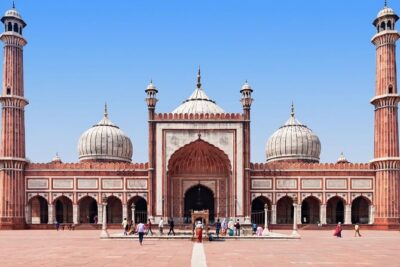
Jama Masjid: a 17th-century scale model of devotion
Jama Masjid is the kind of place where your brain finally understands why it’s famous. It’s described as the biggest mosque in Delhi, built by Shahjahan in the 17th century. You’ll have about 45 minutes here, which is enough to take in the courtyard and architecture without feeling rushed.
Practical tip: a mosque is one of those sights where dress rules can matter. Plan for covered shoulders and more modest clothing. If you want good photos, look for angles that show the building mass, not just close-ups.
India Gate: war memorial, built with an architect’s flair
India Gate is a war memorial, 42 meters tall, built under supervision of the British architect Edwin Lutyens. The stop is about 30 minutes. That’s a good amount of time to walk around, read the context, and then move on rather than getting stuck staring at stone for too long.
This is also a nice breather stop. After Jama Masjid’s intensity, you get open space and clearer sightlines.
Rashtrapati Bhawan: the President’s House, in numbers
You’ll spend about 20 minutes at Rashtrapati Bhawan, also known as the President’s House. It’s huge on paper: the main building covers around 5 acres and has 340 rooms spread over 4 floors. Even if you’re only seeing it from the outside during a short stop, those details help you understand why the building feels so commanding.
This is worth treating as a quick orientation moment for Delhi. The memorials and monuments start to make sense when you’ve got the civic context.
Chasing the Pink City? More Jaipur day trips
Lotus Temple: 27 marble petals and quiet geometry
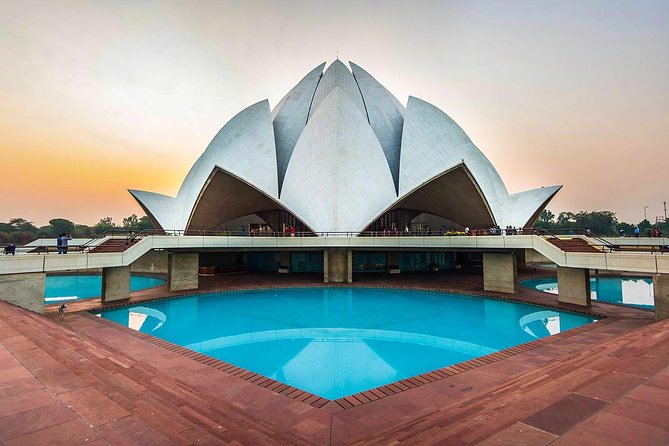
Lotus Temple (Bahai House of Worship) is a visual surprise. The building is made of 27 free-standing marble-clad petals, designed by Fariborz Shaba. You’ll get about 45 minutes, which is enough time to notice the shape from multiple angles.
If Delhi feels overwhelming, Lotus Temple can reset your senses. It’s open-feeling and calm compared to the louder monuments.
Day 2 in Agra: Taj Mahal time plus Agra Fort
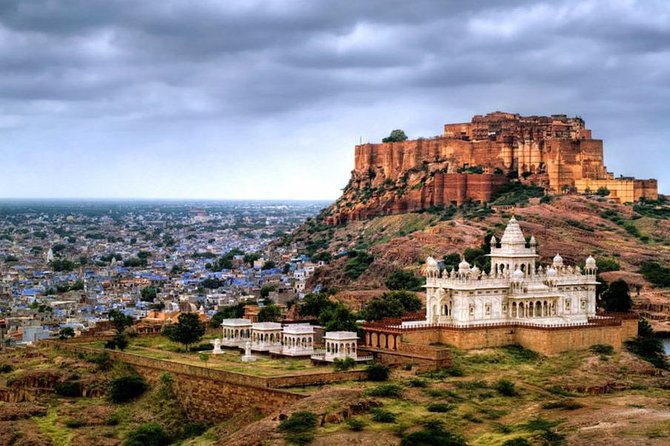
Agra is where the trip gets serious. The Taj Mahal is the emotional center, and Agra Fort adds the power-and-politics layer.
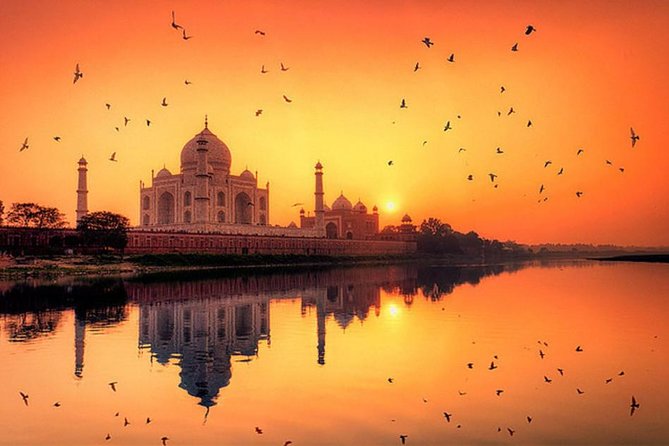
Taj Mahal: the 2-hour moment that defines the trip
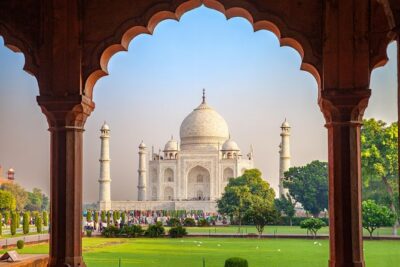
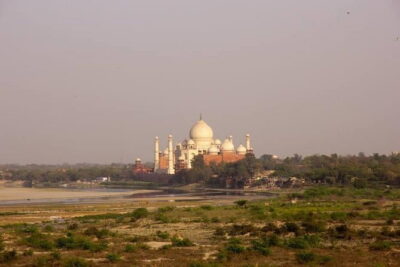
You’ll spend about 2 hours at the Taj Mahal. Entrance tickets aren’t included, so you’ll need to plan that extra cost. But you’re not just doing a “see it, snap it, leave” visit. Two hours is the difference between passing through and really understanding what you’re looking at.
The Taj is also one of those places where a guide matters. A good guide helps you slow down mentally, not just physically. You can focus on the way the complex is laid out, the symmetry cues, and the stories behind the monument instead of getting lost in photos.
Practical note: keep water handy and expect walking. Even with a set time, you’ll likely move between areas of the complex.
Agra Fort: UNESCO power in 1 hour
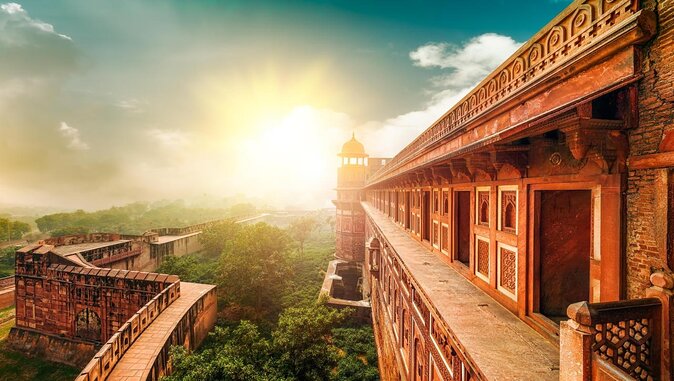
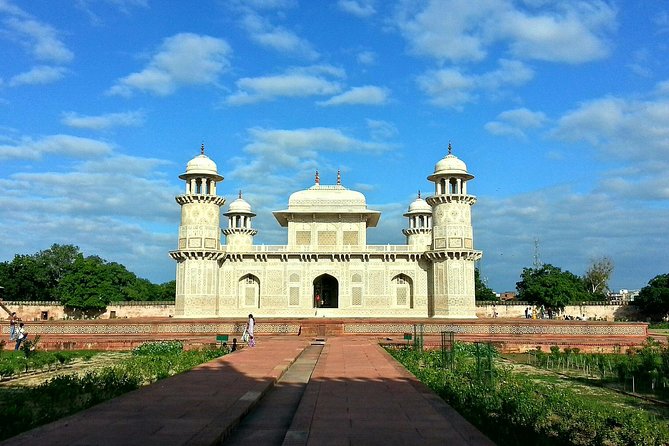
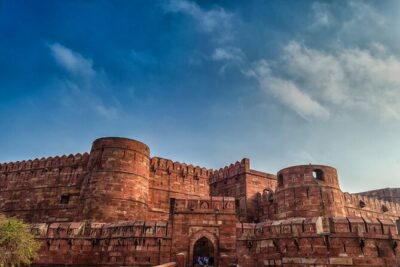
Next comes Agra Fort, with about 1 hour on the clock. It’s a UNESCO World Heritage site and once served as a living place for the royal family and even as the capital of India in the 16th century.
Agra Fort works well after the Taj because it changes the mood. The Taj is romance in stone; Agra Fort is authority in stone. If you want variety in one day, this pairing delivers.
Day 3 in Jaipur: Amber Palace, City Palace, Jantar Mantar, Hawa Mahal, Jal Mahal
Jaipur day is the “how did they build this?” day. You get forts, palace complexes, an astronomical observatory, and two landmarks that are famous for their distinctive look.
Amber Palace: halls, portals, and the Sheesh Mahal
You’ll spend around 2 hours at Amber Palace (also called Amer Fort). It was built by Raja Maan Singh and includes notable areas like the hall of public audience, Sukh Niwas, Ganesh Pole, and the Sheesh Mahal, among other palaces.
Amber is a great fit for a guided visit because it’s big, layered, and easy to feel overwhelmed without context. You’ll also be walking and climbing a bit, so wear comfortable shoes.
City Palace: Mughal and Rajput fusion in 90 minutes
City Palace takes about 1 hour 30 minutes. It was constructed by Maharaja Sawai Jai Singh II. The complex reflects a fusion of Mughal and Rajput architecture, and it spreads out with gardens, buildings, courtyards, temples, and a museum.
This stop is where you can slow down and pick what you want to focus on. If you like architecture, spend your time scanning details and transitions between spaces. If you like artifacts, the museum portion is a logical target.
Jantar Mantar: the largest stone sundial and 1734 math
Jantar Mantar, built by Sawai Jai Singh II in 1734, is an astronomical observatory and home to the world’s largest stone sundial. You’ll have about 1 hour here, which is enough to appreciate that this isn’t just old stuff on a platform—it’s designed measurement.
A guide can help you understand how the instruments work and why Rajput science here is still impressive. Don’t rush it. One hour can go by fast if you’re just taking photos and not looking at the instruments.
Hawa Mahal: five stories of honeycomb windows
Hawa Mahal is Jaipur’s most-distinctive landmark: the pink-painted, honeycombed hive rising five storeys. It was constructed in 1799 by Maharaja Sawai Pratap Singh so the royal ladies could watch street life and city processions.
You’ll likely enjoy this stop for its exterior look and photo angles. It’s one of those landmarks that makes you stop even if you’re tired.
Jal Mahal: the palace sitting on Man Sagar Lake
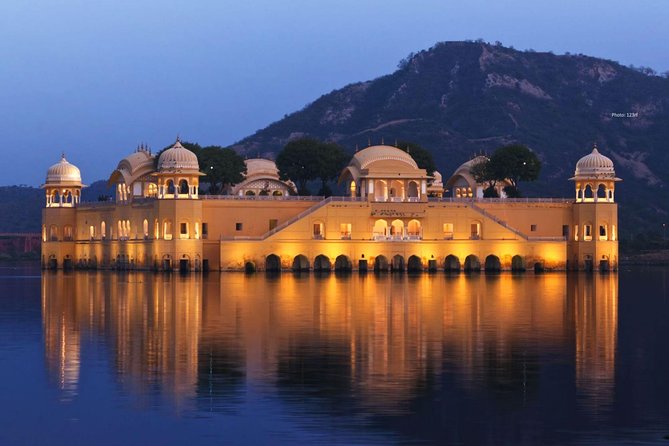
Jal Mahal, or Water Palace, is in the middle of Man Sagar Lake. Your timing here is less defined in the schedule you’re given, but it’s a strong visual pause between the larger fort and palace days.
It also gives you a break from dry walking—at least mentally. Looking at water in a day packed with stone can feel like a mini vacation inside your vacation.
Where the value shows up: private guides, AC rides, and extra costs
Let’s talk money in a practical way. The price you’ll see is about $154.67 per person, and the tour is commonly booked around 100 days in advance. For a 3-day plan that includes private transport, hotel pickup and drop-off, and a professional guide, that number can feel reasonable—especially if you’re traveling with a small group.
Here’s what you’re paying for:
- Private transportation by air-conditioned vehicle
- Hotel pickup and drop-off
- Professional guide
- Local taxes
- Private tour (only your group)
- Mobile ticket
- Bottled water is included per the overview
Here’s what you should budget separately:
- Monument entrance tickets are listed as not included for major stops like the Taj Mahal, Agra Fort, Amber Palace, and City Palace.
- Food and drinks aren’t included.
- Accommodation may or may not be included depending on which option you choose (many options include two nights with breakfast, but not all).
This is a tour where the “surprise cost” risk is the main one. If you plan ahead for entrance tickets, the pricing feels fair. If you don’t, you can end day three thinking, Wait, where did all the extra money go?
Hotel options and breakfast: choosing your comfort level
Two nights of lodging can be included at a 4-star or 5-star hotel with breakfast, depending on your package choice. That matters because it protects your energy for walking days in three big cities.
If you choose the package without accommodation, you’ll need to manage your own hotel and meals. That can still be fine if you prefer to pick your own place, but it reduces the “everything handled” benefit of a packaged tour.
Either way, the tour still handles what really matters day-to-day: getting you to the sights and back, with a guide in between.
Making it feel personal: the guide factor (Asif, Mubin Shah, and more)
A Golden Triangle can either feel like a checklist or like a story you’re living. The difference is your guide’s style.
Your tour includes a dedicated professional guide, and it may be multi-lingual. That matters because Jaipur and Agra have details that you’ll miss if you only have signs and random guessing.
Some guides associated with this kind of itinerary have earned standout praise. Asif is described as reliable and experienced, and credited with keeping things enjoyable while also helping people understand Indian culture. Mubin Shah is praised for passion and professionalism that made the Taj Mahal visit feel more educational and awe-inspiring.
Even if you don’t know who you’ll get, you can still make the most of the day by asking smart questions:
- What should I notice in the architecture?
- Where should I stand for the best perspective?
- What’s the story behind this building, in plain terms?
That turns a “you saw it” trip into a “you understood it” trip.
Small practical tips that make the big difference
A few details can make or break the flow of a short itinerary like this.
First: passport details are required at booking (name, number, expiry, and country). Have them ready and match your passport exactly. Don’t guess.
Second: you’ll want comfortable shoes. You’ll be spending hours at sites with uneven ground, courtyards, and stair steps. The itinerary gives time blocks (like 2 hours at the Taj Mahal and 2 hours at Amber Palace), which usually means real walking.
Third: plan for heat and sun. You’re visiting open-air viewpoints like Hawa Mahal and Jal Mahal, plus forts and observatories like Jantar Mantar. Bottled water is included, but you’ll still want to pace yourself.
Fourth: if you prefer vegetarian food, there’s a vegetarian option available—just advise at booking. Since meals aren’t included, that helps you avoid eating on the fly.
And finally: don’t treat this as a rest-and-relax schedule. It’s a highlight-driven tour, so build your energy like you’re training for a scenic hike.
Should you book this 3-day Golden Triangle tour?
I’d book this if you want a focused Golden Triangle route with private guidance, hotel pickup/drop-off, and enough time to actually see each city’s main landmarks. It’s especially a good fit if you’re short on days but long on curiosity—and if you’d rather pay for good logistics than spend time solving them yourself.
I’d think twice if you hate planning for entrance-ticket costs or you expect meals to be handled. Since food and monument tickets aren’t included for key sights, you’ll do better if you budget a little extra and keep your passport info ready.
If you like structure, this tour gives it. If you want freedom to wander for hours, you might feel boxed in. But for most people aiming to check the Golden Triangle the right way, this plan hits the sweet spot.
FAQ
What cities does the 3-day Golden Triangle tour cover?
It covers Delhi, Agra, and Jaipur.
How long is the tour?
The duration is approximately 3 days.
Where does the tour start?
The tour is based in New Delhi, India.
Is pickup and drop-off included?
Yes. Hotel pickup and hotel drop-off are included.
Do I need to pay for monument entrance tickets?
Yes. The itinerary notes list monument entrance tickets as not included for major stops like the Taj Mahal, Agra Fort, Amber Palace, and City Palace.
Is accommodation included?
It depends on the package option you choose. Two nights at a 4-star or 5-star hotel with breakfast is offered in many options, but you can also choose a package without accommodation.
What about meals and drinks?
Food and drinks are not included.
Is this a private tour or a group tour?
It’s private—only your group will participate. Group discounts are available.
Do I need a passport to book?
Yes. A current valid passport is required, and your passport details (name, number, expiry, and country) are needed at booking.
Can I request vegetarian food?
A vegetarian option is available. You’ll need to advise at the time of booking.
How does cancellation work?
You can cancel up to 24 hours in advance for a full refund.
Is there a mobile ticket?
Yes. Mobile ticket is listed as a feature.
The Full Golden Triangle, More Options
- 3-Days Private Golden Triangle Tour: Delhi, Agra & Jaipur by Car
★ 5.0 · 1,107 reviews - 3-Days Private Golden Triangle Tour: Delhi, Agra & Jaipur by Car
★ 5.0 · 1,098 reviews - 3-Day Delhi, Agra and Jaipur Private Tour – India Golden Triangle
★ 5.0 · 812 reviews - Four-Day Private Luxury Golden Triangle Tour to Agra and Jaipur From New Delhi
★ 5.0 · 807 reviews - 5 Nights 6 Days Private Golden Triangle Tour – Delhi Agra Jaipur
★ 5.0 · 574 reviews
Onward to Jaipur: More Day Trips
- 3-Days Private Golden Triangle Tour: Delhi, Agra & Jaipur by Car
★ 5.0 · 1,107 reviews - 3-Days Private Golden Triangle Tour: Delhi, Agra & Jaipur by Car
★ 5.0 · 1,098 reviews - 3-Day Delhi, Agra and Jaipur Private Tour – India Golden Triangle
★ 5.0 · 812 reviews - Four-Day Private Luxury Golden Triangle Tour to Agra and Jaipur From New Delhi
★ 5.0 · 807 reviews - Jaipur Day Trip from Delhi by Car or Train – All Inclusive
★ 5.0 · 663 reviews
More Agra Day Trips out of Delhi
- Same Day Taj Mahal, Agra Fort & Baby Taj Tour from Delhi by Car
★ 5.0 · 4,304 reviews - Full Day Taj Mahal, Agra Fort & Baby Taj Tour from Delhi by Car
★ 5.0 · 3,647 reviews - From Delhi: Taj Mahal & Agra Private Day Trip with Transfers
★ 4.9 · 3,181 reviews - From Delhi: Taj Mahal and Agra Fort Private Sunrise Tour
★ 4.9 · 2,270 reviews - Sunrise Taj Mahal, Agra Fort & Baby Taj Tour from Delhi by Car
★ 5.0 · 2,243 reviews
Just added: more New Delhi reviews to browse
- 4 days Golden Triangle Tour★ 5.0 · 3 reviews
- Discover Old & New Delhi: Private Tour with Street Food★ 5.0 · 3 reviews
- Taj Mahal Tour From Delhi By Private Car★ 4.5 · 3 reviews
- Golden Triangle Tour 5 Days★ 5.0 · 3 reviews
- Taj Mahal: Express Entry Ticket For Sunset Tour with guide★ 5.0 · 3 reviews
- Agra Taj Mahal Sunrise & Sunset Tour from Delhi★ 5.0 · 3 reviews
Agra Day Trips from Delhi, compared.
 ★ 5.0Same Day Taj Mahal, Agra Fort & Baby Taj Tour from Delhi by CarFrom $624,304 reviews
 ★ 5.0Full Day Taj Mahal, Agra Fort & Baby Taj Tour from Delhi by CarFrom $623,647 reviews
 ★ 4.9From Delhi: Taj Mahal & Agra Private Day Trip with TransfersFrom $43,181 reviews
 ★ 4.9From Delhi: Taj Mahal and Agra Fort Private Sunrise TourFrom $592,270 reviews
 ★ 5.0Sunrise Taj Mahal, Agra Fort & Baby Taj Tour from Delhi by CarFrom $622,243 reviews
 ★ 5.0Taj Mahal and Agra Private Car Tour from Delhi with 5* LunchFrom $331,633 reviews
 ★ 4.9From Delhi: Private Taj Mahal and Agra Tour by Express TrainFrom $751,605 reviews
 ★ 5.0Taj Mahal, Agra Fort, Baby Taj Tour from Delhi by Superfast TrainFrom $751,494 reviews