

Reviewed · AGRA DAY TRIPS FROM DELHI
3-Days Luxury Golden Triangle Tour to Agra and Jaipur from Delhi
Three days in Golden Triangle, no planning headache. I like the private A/C car and flexible pickup window that helps you move between cities without a stress spiral. I also love that local guides walk you through what you’re seeing, so the monuments make sense fast. The trade-off: it’s a packed pace, with early starts and plenty of driving.
This tour is sold as luxury, with hotel stays and meal coverage depending on the accommodation option you pick. In the inclusions list, meals are tied to the package (breakfast and dinner), and it also mentions bottled water and soft drinks during journeys. One small thing to clarify before you go: the overview talks about three nights in luxury 5-star accommodations, while the inclusions section specifies two nights.
On the Agra day, the highlight is sunrise at the Taj Mahal, and you’ll use a battery bus from the parking area up to the monument. It’s a smart convenience in the heat and dust. It does mean you’ll be up early and moving on a tight timetable.
In This Review
- Key things I’d circle before booking
- How the Delhi–Agra–Jaipur route fits into 3 days
- Old Delhi bazaars to major mosques: your first taste of Delhi
- New Delhi monuments: from India Gate to Qutub Minar
- Taj Mahal sunrise: worth the early alarm
- Fatehpur Sikri en route: the pink-city detour that saves boredom
- Jaipur’s top sights in one day: Amer, Hawa Mahal, City Palace, Jantar Mantar
- Jal Mahal calm moment, then back to Delhi (or Jaipur airport)
- Price and value: what you’re really paying for at about $206
- Should you book this Golden Triangle luxury tour?
- FAQ
- What pickup time window does the tour use in Delhi?
- Does the tour include private transportation?
- Will there be guides, and will they speak English?
- Is the Taj Mahal always open?
- Are there any closures that can change the Delhi sightseeing on Mondays?
- What’s included for the Taj Mahal area specifically?
- Is cancellation free if plans change?
Key things I’d circle before booking
- Pickup across Delhi NCR (9 AM–11 AM) so you can start without playing travel chess with timing.
- Private guides + private A/C car with city-by-city handoffs handled for your group.
- Sunrise Taj Mahal plus battery bus access to reduce the worst of walking and crowds.
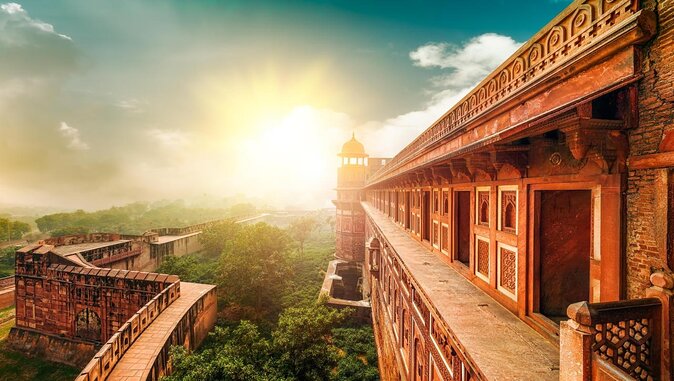
- UNESCO stops on both sides of the river: Humayun’s Tomb, Qutub Minar, Agra Fort, and more.
- Jaipur’s “big four” in one day: Amer, Hawa Mahal, City Palace, and Jantar Mantar.
- Fixed closure notes that matter: Taj is closed Fridays; Akshardham and Gandhi Smriti are closed Mondays.
How the Delhi–Agra–Jaipur route fits into 3 days
This is the classic Golden Triangle loop, but with enough structure that you’re not doing logistics on your own. You’ll be picked up in the Delhi area between 9:00 AM and 11:00 AM, then moved by private car and driver with local guides at key stops. It’s built for travelers who want the major sights without spending your vacation glued to Google Maps and ticket kiosks.
The private vehicle matters more than it sounds. In Delhi traffic, a “quick hop” can turn into a 45-minute detour. Having a driver and guide set the rhythm helps you keep momentum. The tour also runs as a private group experience, so you’re not waiting on strangers to finish a photo of the same wall.
The main consideration is how full the days are. Even with guides and transfers arranged, you’ll still be walking through courtyards, ticket areas, and viewpoints. This isn’t a slow “stroll and snack” kind of itinerary. If you like long breaks, this might feel like too many checkmarks.
Other Agra runs out of Delhi worth a look




Old Delhi bazaars to major mosques: your first taste of Delhi
Day 1 starts in New Delhi with an Old Delhi orientation that’s designed to get your bearings quickly. The stop at Chandni Chowk begins at Sunheri Masjid, then you ride through the market area by tuk-tuk while your guide points out what’s significant to locals. If you’re trying to understand Delhi as a living place (not just a museum), this is where you get it.
Chandni Chowk is also a lesson in pace. The streets can feel tight, busy, and loud. The tuk-tuk ride helps you see without constantly weaving through foot traffic. Still, you should plan to feel a little overwhelmed in the best way. Wear comfortable shoes and keep your water handy.
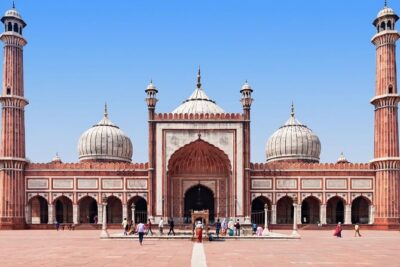
Next comes Jama Masjid, India’s largest mosque, with a big red-sandstone courtyard built in the 1600s. Your visit is timed as part of the Old Delhi core, and you’ll get about an hour there. Jama Masjid is impressive not because it’s perfect, but because it’s still part of daily religious life. Bring respectful clothing and expect security and crowding near entrances.
Then you shift from mosque to Sikh worship at Gurudwara Bangla Sahib. The tour includes the story of the tank inside the complex and the belief that its water has healing properties. You’ll get a shorter stop here (about 30 minutes), which is useful if you want the meaning without losing time before heading out for the larger New Delhi sights.
New Delhi monuments: from India Gate to Qutub Minar
After Old Delhi, the itinerary moves toward New Delhi’s colonial-era and modern icons. You’ll stop at India Gate, including the memorial concept of the Tomb of the Unknown Soldier and the names engraved on its walls. It’s a quick break from crowds—just enough to reset your brain and get a different view of the country’s story.
From there, the tour includes major architectural landmarks tied to planners like Sir Edwin Lutyens and Herbert Baker. The goal is to show you the planned layout of New Delhi and the grand scale of the city’s historic government zone. You don’t get all-day time here, so treat this as a “get it now” stop rather than a “read every plaque” stop.
One of the big choices on Day 1 is Swaminarayan Akshardham versus options involving nearby UNESCO heritage. The description specifically notes a choice between visiting Humayun Tomb or Akshardham Temple nearby. In your actual booking day, you’ll follow the route shown, with Humayun’s Tomb also included.
Humayun’s Tomb is UNESCO-listed and described as India’s first garden tomb. It’s a strong contrast to the more fortress-like energy of other stops. You’ll be walking in a designed landscape, and it’s a great place to slow down for a moment—even if the overall tour keeps you moving.
Then comes Qutub Minar, part of the Qutub Complex. You’ll get about 45 minutes, and the key detail is the height (72.5 meters) and the fact that it dates back to the late 1100s/early 1200s. This stop rewards you if you like structure and stonework details, but even if you don’t, it’s hard not to look up. It also gives you a clear “before-and-after” sense of how Delhi’s history layers over time.
Taj Mahal sunrise: worth the early alarm
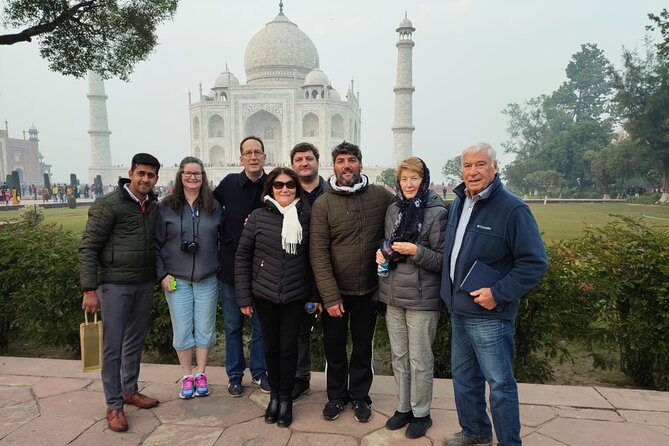
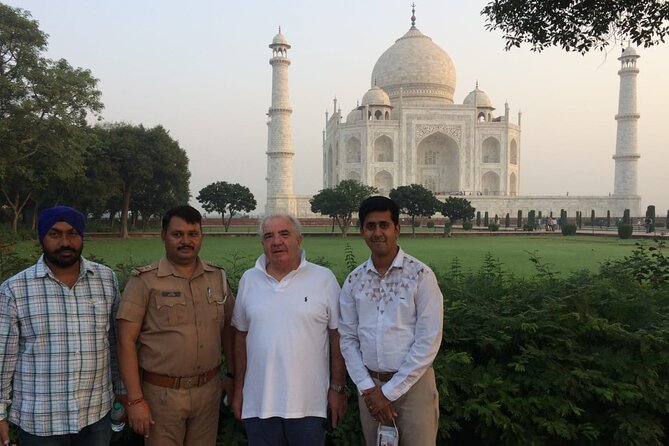
Agra is where the trip earns its name. Day 2 begins with sunrise at the Taj Mahal, described as the mausoleum built by Emperor Shah Jahan in the 1600s for his wife. You’ll have around three hours at this point in the morning, and then you return for breakfast.
Why sunrise matters here: the Taj is iconic in any light, but morning conditions tend to feel calmer and cooler. The tour’s structure is designed to get you there before the day gets heavy. If you’re the type who hates feeling rushed, this still feels busy, but it’s busy on a kinder schedule.
You’ll also have the practical advantage of the battery bus transfer from the parking lot up to the monument area. That doesn’t turn it into an easy day, but it saves you time and fatigue. In Agra heat, that can be the difference between enjoying the architecture and just thinking about shade.
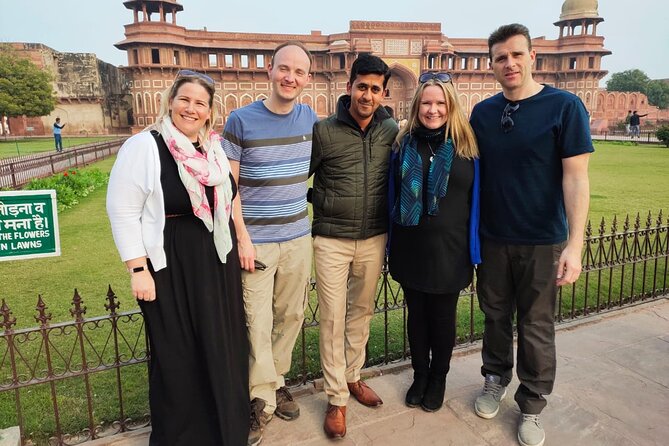
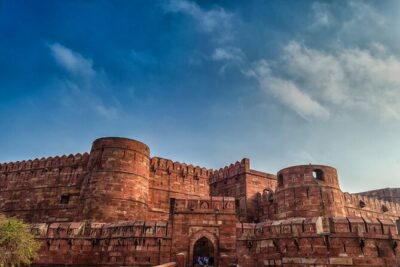
Next door, you’ll move to Agra Fort, another UNESCO site and a 17th-century powerhouse of Indian and Islamic architecture. You’ll have about an hour. This stop can be more satisfying than people expect because it helps you understand the Taj not as a standalone artwork, but as part of a bigger imperial setting.
Then you’ll visit Itmad-ud-Daula, described as a major early marble Mughal structure on the Yamuna and noted as the first Mughal structure built entirely from marble, with extensive pietra dura. It’s an hour-long stop. The reason I like adding this is simple: the Taj is the headline, but Itmad-ud-Daula gives you a different level of detail and a slower vibe without changing cities.
Fatehpur Sikri en route: the pink-city detour that saves boredom
After Agra, you’re traveling to Jaipur, but you’re not stuck with only highway scenery. The itinerary includes a stop at Fatehpur Sikri, about 40 km west of Agra, often called the pink city in its presentation here. You’ll have about an hour, and it’s framed as an ancient fortified city that served as a capital.
Even with limited time, Fatehpur Sikri works because it’s a “world” of structures rather than a single monument. You can look at courtyards and gates and start piecing together how power and religion were built into the city layout. It’s also a great reset after the density of Agra.
The only drawback is the time trade-off. When you add a stop like this, you compress the rest of the day. Your hotel drop in Jaipur is included after the Fatehpur Sikri visit, so the timing shifts toward arrival rather than wandering. If you’d rather arrive in Jaipur with energy for dinner and a light evening walk, plan that into your day choices.
Chasing the Pink City? More Jaipur day trips

Jaipur’s top sights in one day: Amer, Hawa Mahal, City Palace, Jantar Mantar
Day 3 is the Jaipur highlight circuit. It starts with Amer Fort, a site described as about 600 years old and known for Hindu-style architecture using marble and red sandstone. You’ll have around two hours. This is one of the best stops on the trip if you like visual scale. The architecture feels layered, and the fort setting makes it more than just a photo-op.
A practical note: forts often involve walking on uneven ground and steps. Even if you’re only there for two hours, pace yourself. I’d treat Amer as your “do the big climb” moment and save your highest-energy self for the next viewpoints.
After Amer, you head to Hawa Mahal, the Palace of Breeze, built in 1799 with 953 windows. The itinerary frames it as designed for royal ladies, and it’s placed at the edge of the City Palace. It’s quick (about an hour), but this stop gives you a recognizable Jaipur silhouette. You also get a feel for how window patterns weren’t just decoration—they were part of daily life.
Next is City Palace, with gardens and museum areas. You’ll have about two hours here. This is one of the better places to slow down a bit, because you’re not just looking at one structure; you’re moving through a complex that shows how the royal seat operated. Your guide helps make the museum sections and design choices easier to interpret.
Then comes Jantar Mantar, an 18th-century astronomical observatory. The core idea is that it uses architectural instruments to measure time and track celestial bodies. You’ll have about 30 minutes. Even if astronomy isn’t your hobby, the value here is that the “science” is built into stone and angles you can see. It’s a good counterweight to the forts and palaces.
Jal Mahal calm moment, then back to Delhi (or Jaipur airport)
The last Jaipur stop is Jal Mahal, described as a Rajput-style 17th-century structure in the middle of Man Sagar Lake. You’ll have about 30 minutes. This is your brief decompression moment before the long return leg.
Jal Mahal works best as a visual pause. You’re not spending hours here; you’re getting a quiet picture and a chance to breathe. If you’re sensitive to heat, think of this stop as the one where you slow your pace and drink water before the final drive.
After Jal Mahal, the tour returns you to Delhi. The itinerary indicates around four hours of transit time, with an option to be dropped at Jaipur airport instead. That’s helpful if you’ve got a flight plan already in place and don’t want to cross town at the last minute.
Price and value: what you’re really paying for at about $206
At $206 for a three-day luxury Golden Triangle package, the value depends on what you select for monument tickets and hotel tier. The inclusions list mentions private A/C transfers, local guides, bottled water, fuel surcharge, taxes, and hotel taxes. Those costs add up fast if you’re booking everything yourself.
Where the value is most obvious is in the structure:
- Private car and driver reduces the headache of multi-city logistics.
- Local guides keep you from standing in front of stonework with no context.
- The battery bus to the Taj is the kind of small convenience that can change how you feel at 8 AM.
- The tour bundles transport between major sights in Delhi, Agra, and Jaipur instead of forcing you to do it piece by piece.
One confusing point you should check carefully before you buy: the documentation includes both statements that monument tickets are handled as a selectable option and a separate note that monument entrance fees aren’t included. In plain terms, this means your exact inclusions depend on the package option you choose. I’d confirm whether monument entry is covered for the specific dates you want, especially for major sites like the Taj Mahal complex and UNESCO properties.
Another value lever is the hotel plan. The overview mentions luxury 5-star accommodations and “three nights,” while the inclusions section lists two nights with breakfast and dinner for both 3-star and 5-star options. That doesn’t automatically mean it’s wrong—it means the wording differs across parts of the offer. You’ll want to confirm your actual number of nights and meal schedule in your booking.
Finally, about the human factor: one detailed positive note includes a driver named Sanjiv who provided continuity between multiple city guides. That matters. When you change guides in different cities, a consistent driver helps time your transitions and keeps you from feeling like you’re starting over each day.
Should you book this Golden Triangle luxury tour?
I’d book this if you want the Golden Triangle highlights with private A/C comfort, guide context, and a schedule that gets you to the Taj at sunrise without you doing the planning work. It’s especially a good fit if you’re short on time, want a structured route, and don’t want to hunt for tickets, transfers, and “what should we see next” decisions.
I’d skip or at least rethink it if:
- You hate early wake-ups and want long, slow days.
- You’re very sensitive to crowding and walking (forts and major monuments add up).
- You’re traveling on a Friday (Taj Mahal closure is explicitly noted) or Monday (Akshardham and Gandhi Smriti closure triggers swaps).
- You need full clarity on whether monument entrance fees are included in your selected option.
If you do book, do one smart thing: confirm your exact hotel tier, your number of nights, and whether monument tickets are included for your date. Then show up with comfortable shoes, modest clothing, and a mindset that says: three days of India’s biggest hits, done efficiently.
FAQ
What pickup time window does the tour use in Delhi?
Pickup in Delhi NCR is offered between 9:00 AM and 11:00 AM, with the exact time based on your booking.
Does the tour include private transportation?
Yes. The tour includes all transfers and sightseeing by a private A/C car and driver, with transfers and travel times depending on traffic.
Will there be guides, and will they speak English?
Yes. You’ll get an English-speaking guide (and the tour notes you should request another language in special requirements if needed).
Is the Taj Mahal always open?
No. The tour notes that Taj Mahal is closed every Friday.
Are there any closures that can change the Delhi sightseeing on Mondays?
Yes. The tour notes that Akshardham and Gandhi Smriti are closed on Monday, and you’ll be taken to Gurudwara Bangla Sahib and Birla Temple instead.
What’s included for the Taj Mahal area specifically?
The tour includes a battery bus ride to and from the Taj Mahal parking lot up to the monument area.
Is cancellation free if plans change?
Yes. The tour offers free cancellation up to 24 hours in advance for a full refund, with later cancellations not refunded.
If you tell me your travel month and whether you prefer 3-star or 5-star hotels, I can help you sanity-check the date against the Friday/Monday closures and set expectations for how “luxury” the package will feel.
The Full Golden Triangle, More Options
- 3-Days Private Golden Triangle Tour: Delhi, Agra & Jaipur by Car
★ 5.0 · 1,107 reviews - 3-Days Private Golden Triangle Tour: Delhi, Agra & Jaipur by Car
★ 5.0 · 1,098 reviews - 3-Day Delhi, Agra and Jaipur Private Tour – India Golden Triangle
★ 5.0 · 812 reviews - Four-Day Private Luxury Golden Triangle Tour to Agra and Jaipur From New Delhi
★ 5.0 · 807 reviews - 5 Nights 6 Days Private Golden Triangle Tour – Delhi Agra Jaipur
★ 5.0 · 574 reviews
Onward to Jaipur: More Day Trips
- 3-Days Private Golden Triangle Tour: Delhi, Agra & Jaipur by Car
★ 5.0 · 1,107 reviews - 3-Days Private Golden Triangle Tour: Delhi, Agra & Jaipur by Car
★ 5.0 · 1,098 reviews - 3-Day Delhi, Agra and Jaipur Private Tour – India Golden Triangle
★ 5.0 · 812 reviews - Four-Day Private Luxury Golden Triangle Tour to Agra and Jaipur From New Delhi
★ 5.0 · 807 reviews - Jaipur Day Trip from Delhi by Car or Train – All Inclusive
★ 5.0 · 663 reviews
More Agra Day Trips out of Delhi
- Same Day Taj Mahal, Agra Fort & Baby Taj Tour from Delhi by Car
★ 5.0 · 4,304 reviews - Full Day Taj Mahal, Agra Fort & Baby Taj Tour from Delhi by Car
★ 5.0 · 3,647 reviews - From Delhi: Taj Mahal & Agra Private Day Trip with Transfers
★ 4.9 · 3,181 reviews - From Delhi: Taj Mahal and Agra Fort Private Sunrise Tour
★ 4.9 · 2,270 reviews - Sunrise Taj Mahal, Agra Fort & Baby Taj Tour from Delhi by Car
★ 5.0 · 2,243 reviews
Just added: more New Delhi reviews to browse
- 4 days Golden Triangle Tour★ 5.0 · 3 reviews
- Discover Old & New Delhi: Private Tour with Street Food★ 5.0 · 3 reviews
- Taj Mahal Tour From Delhi By Private Car★ 4.5 · 3 reviews
- Golden Triangle Tour 5 Days★ 5.0 · 3 reviews
- Taj Mahal: Express Entry Ticket For Sunset Tour with guide★ 5.0 · 3 reviews
- Agra Taj Mahal Sunrise & Sunset Tour from Delhi★ 5.0 · 3 reviews
Agra Day Trips from Delhi, compared.
 ★ 5.0Same Day Taj Mahal, Agra Fort & Baby Taj Tour from Delhi by CarFrom $624,304 reviews
 ★ 5.0Full Day Taj Mahal, Agra Fort & Baby Taj Tour from Delhi by CarFrom $623,647 reviews
 ★ 4.9From Delhi: Taj Mahal & Agra Private Day Trip with TransfersFrom $43,181 reviews
 ★ 4.9From Delhi: Taj Mahal and Agra Fort Private Sunrise TourFrom $592,270 reviews
 ★ 5.0Sunrise Taj Mahal, Agra Fort & Baby Taj Tour from Delhi by CarFrom $622,243 reviews
 ★ 5.0Taj Mahal and Agra Private Car Tour from Delhi with 5* LunchFrom $331,633 reviews
 ★ 4.9From Delhi: Private Taj Mahal and Agra Tour by Express TrainFrom $751,605 reviews
 ★ 5.0Taj Mahal, Agra Fort, Baby Taj Tour from Delhi by Superfast TrainFrom $751,494 reviews