
Reviewed · AGRA DAY TRIPS FROM DELHI
3 Days Private Luxury Golden Triangle Tour in Delhi, Agra, Jaipur
Old Delhi is loud, then history gets quiet fast. This private Golden Triangle keeps you moving with private A/C comfort and expert local guides across Delhi, Agra, and Jaipur. I especially like the way the plan mixes iconic sights (Taj Mahal, Qutub Minar, Hawa Mahal) with smaller, meaningful stops that help the cities make sense. One thing to consider: the schedule is tight, and you’ll be on the go for long stretches, including an early start for sunrise.
The best part is the level of personal attention. You’re not stuck on slow public transport, and your guide can tailor the pace inside each monument area. In my notes, guide names keep popping up in a good way, including Zaidy (great English and photo help) and Amir Khan (helpful, practical explanations), plus a driver like Sonu who keeps things on time. The only real drawback is that some stops are listed as options (like Akshardham vs. Humayun’s Tomb), so you may need to choose what you value most that day.
In This Review
- Quick hits before you go
- Why this 3-day Golden Triangle feels “private” instead of rushed
- Pickup in Delhi (9 to 11 AM) and the smart start through Old Delhi
- Chandni Chowk to Jama Masjid: history you can walk through
- New Delhi’s bigger monuments: Tomb of the Unknown Soldier, Lutyens-Baker planning, Akshardham, Humayun’s Tomb, Qutub Minar
- Agra: getting to the Taj Mahal before the day gets loud
- Fatehpur Sikri en route to Jaipur: a stop that changes the mood
- Jaipur Day 3: Hawa Mahal, City Palace, and a calm moment at Jal Mahal
- What’s included (and why that matters day to day)
- The guides and drivers: the real quality signal
- Price and value: is $120 per person a smart deal?
- Who should book, and who might want a different style
- Should you book this 3-day private Golden Triangle?
- FAQ
- What cities are covered on this 3-day tour?
- Does the tour include pickup in Delhi and nearby areas?
- Are monument tickets included?
- Do I get a private guide at each monument?
- Are meals included?
- What type of vehicle is used?
- Can I cancel for a full refund?
Quick hits before you go
- Private pickup window (9:00–11:00 AM) lets you start without rushing from home base.
- Tuk-tuk ride through Old Delhi gives you a quick, human look at Chandni Chowk without the hassle.
- Sunrise Taj Mahal is built into the itinerary, so you’re not fighting crowds later.
- Monument tickets are included and you’ll have a private live guide at the sites.
- Optional 3- or 5-star hotels means you control comfort without losing the core route.
- Group discounts + a mobile ticket can make this plan feel smoother than standard tours.
Why this 3-day Golden Triangle feels “private” instead of rushed
A Golden Triangle tour can go one of two ways: you either get the highlights in a blur, or you feel like you’re actually learning the place. This one aims for the middle ground. You get a private vehicle and live guides at the monuments, which matters because the sites are easier to follow when someone explains what you’re seeing in real time.
The itinerary is packed, yes, but the private setup helps. You’re not waiting for transfers, juggling trains, or spending mental energy figuring out routes. Instead, you can focus on timing at each stop: arriving early where it counts (like Taj Mahal sunrise), then moving efficiently between cities.
Luxury here isn’t about a fancy soundtrack. It’s about friction-free travel: pickup from Delhi/Noida/Gurugram/Ghaziabad/Faridabad, private A/C transport with a driver, and included monument tickets. That means your days are about the places—not logistics.
Other Agra runs out of Delhi worth a look




Pickup in Delhi (9 to 11 AM) and the smart start through Old Delhi
You can be picked up from anywhere in Delhi and several nearby cities, and you can choose a pickup time between 9 AM and 11 AM. That flexibility is underrated. It lets you sleep a bit more, handle breakfast, and still start sightseeing at a reasonable hour.
Once you’re in, the tour’s first big win is how it introduces Old Delhi. You meet your guide at Sunheri Masjid, then hop into a tuk-tuk to ride past the colorful, busy bazaars around Chandni Chowk. This is one of those moments where you get the feel of a place quickly—sounds, smells, crowds, the whole electric street energy—without turning it into a navigation problem.
From a value perspective, I like that this isn’t just driving past landmarks. You’re paired with a guide right at the start, so the markets aren’t random clutter. You learn what these bazaars do for locals, and that makes later stops click faster.
Chandni Chowk to Jama Masjid: history you can walk through
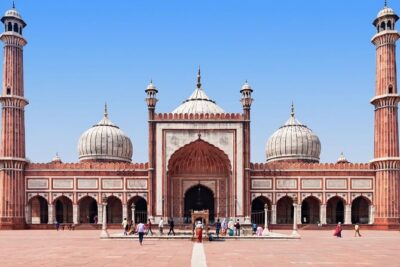
Chandni Chowk is the warm-up, but Jama Masjid is the heavyweight. This itinerary gives you time to walk through the red sandstone courtyard of India’s largest mosque, built in 1656 with help from thousands of workers.
Then there’s the benefit of having a guide inside. Mosque architecture can look similar at first glance, but an on-the-ground explanation turns it into something you can read. You’ll get a sense of the scale and why this mosque matters in the story of Delhi.
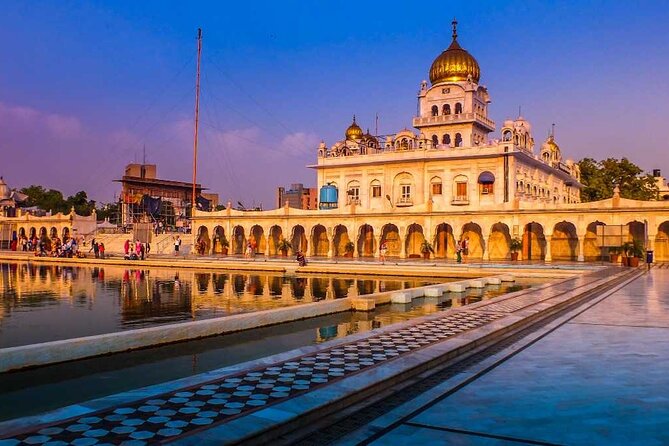
After that, you pivot to another major religious space: Gurudwara Bangla Sahib. The tour includes the origin story about water from the tank used during an era of illness, and it’s a reminder that Delhi isn’t only Mughal-era monuments. It’s also layered Sikh history and living community space.
New Delhi’s bigger monuments: Tomb of the Unknown Soldier, Lutyens-Baker planning, Akshardham, Humayun’s Tomb, Qutub Minar
Day 1 doesn’t just stack religious sites. It also includes major New Delhi landmarks tied to the modern capital’s design and memorial culture.
You’ll spend time at the 1921 Tomb of the Unknown Soldier, with names of 13,300 Indian army servicemen carved on the wall who died in the First World War. It’s quiet and heavy in the best way—this is the kind of stop that gives perspective when you’ve been chasing ornate buildings all day.
Then the route takes you through the broad planned architecture of New Delhi: an area described as 330 acres, constructed in 1929, shaped by Sir Edwin Lutyens and Herbert Baker, who influenced much of the capital’s look. Even without deep technical details, seeing the overall planning style helps you understand why New Delhi feels different from Old Delhi.
Next comes Swaminarayan Akshardham, a massive Hindu temple complex built in 2005 that still looks older because of its architectural storytelling. You can keep it quick here if you want, but it’s worth pacing yourself at least briefly.
There’s also a choice built into the plan: you can either visit Humayun’s Tomb or Akshardham Temple (the route lists either/or). If you’re the type who likes UNESCO-style garden layouts and Mughal burial architecture, Humayun’s Tomb is a great pick. If you want scale, spectacle, and a modern-feeling complex, Akshardham might win.
If you do Humayun’s Tomb, you get a UNESCO World Heritage Site and the note that it’s considered India’s first garden tomb. It was built after Humayun’s death, with the purpose tied to his wife’s role.
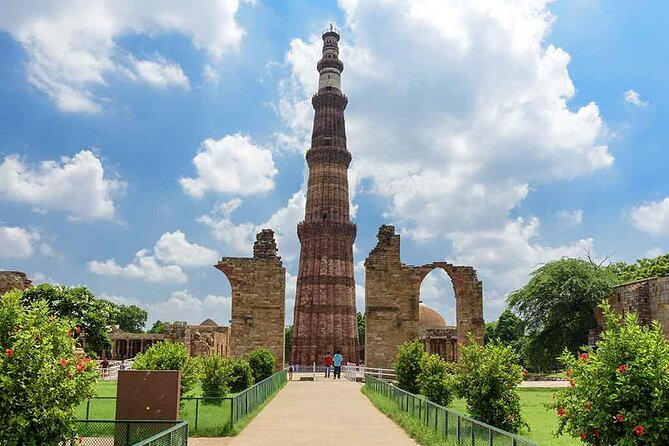
Finally, Qutub Minar rounds out Day 1. It’s listed as the tallest minaret built up in 1192 using bricks, part of the UNESCO Qutub complex. This stop works well at this point in the day because it ties together the idea of Delhi as a long timeline of power, construction, and artistic ambition.
Agra: getting to the Taj Mahal before the day gets loud
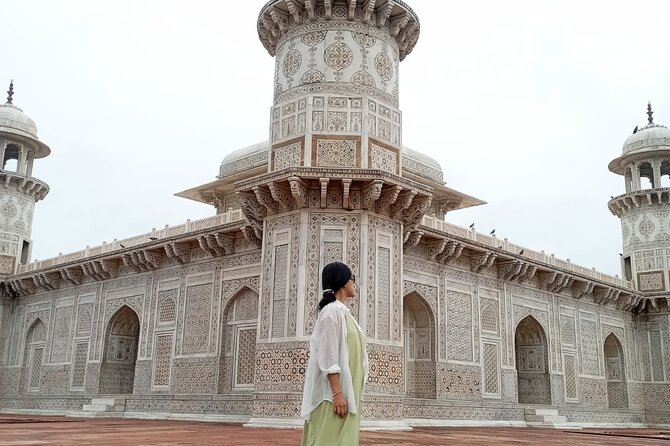
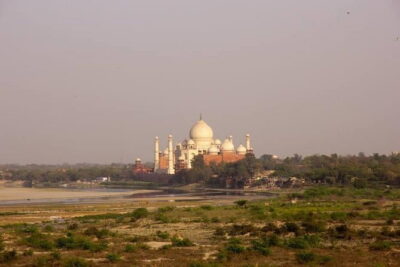
Day 2 is where the itinerary switches gears into sheer iconic power. After transferring from Agra’s direction, you start with Taj Mahal sunrise. The tour is designed around that early light over the marble mausoleum built by Emperor Shah Jahan in 1630 for his favorite wife. Even the provided summary leans into the tragic love story, and sunrise is the kind of moment where that story becomes easier to feel, not just read.
Why sunrise matters for your experience: the Taj is popular. Early timing usually means you can walk, pause, and absorb without constantly fighting for space. Also, the cooler light helps with photos, and the marble’s colors shift as the sun climbs.
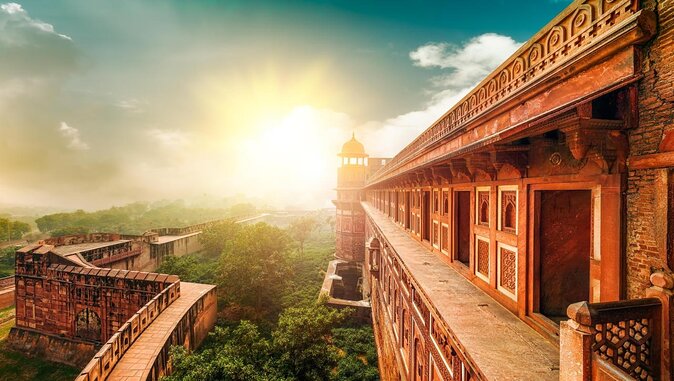
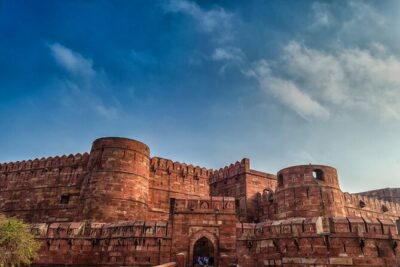
After the Taj, you move to Agra Fort, another UNESCO World Heritage Site. This one is described as a 17th-century blend of Indian and Islamic art and architecture. Forts can feel like big stone blocks until you understand the function behind the structure—defense, court life, royal movements. A guide helps you connect what you’re seeing to how power worked.
Then comes Itmad-ud-Daula, noted as a Mughal marble structure described as the first of its kind built completely from marble, with extensive pietra dura work, and described as the first tomb built on the Yamuna’s banks. Even if you don’t know pietra dura by name yet, it’s the kind of detail you notice more when someone points it out.
Chasing the Pink City? More Jaipur day trips

Fatehpur Sikri en route to Jaipur: a stop that changes the mood
The route to Jaipur isn’t just a transfer. You get a special chance to visit Fatehpur Sikri. It’s described as a fortified ancient city about 40 km west of Agra, and the quick framing you’re given is that it served as a short-lived Mughal capital.
One of the best ways to experience Fatehpur Sikri on this kind of trip is to treat it like a palate cleanser. After Taj Mahal’s intense emotional focus and Agra Fort’s power imagery, Fatehpur Sikri feels like a different kind of ambition—more spread out, more monumental, more about the idea of a capital built and used on a tight timeline.
The itinerary lists Panch Mahal – Fatehpur Sikri. When the tour hits a named viewpoint or stepped structure, you get a natural place to stop, look, and reset. Even with only an hour listed, you can still get the “oh, this is why people photograph this spot” payoff.
Then you drive to Jaipur and check in.
Jaipur Day 3: Hawa Mahal, City Palace, and a calm moment at Jal Mahal
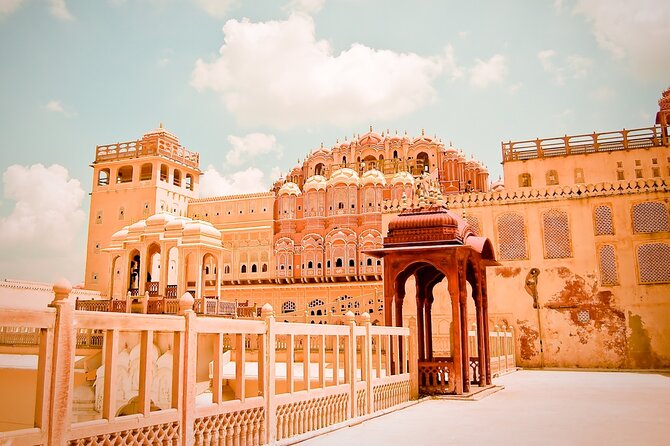
Jaipur is where the colors and details take over. You start with Hawa Mahal (Palace of Wind), famous for its 953 windows and its design tied to royal ladies. The tour notes it was constructed in 1799 and has ornate red-toned design. Standing in the right spot, you start seeing the palace as a ventilation and privacy solution, not just a pretty facade.
Next is City Palace of Jaipur, with its patterned gardens and central position in the city. It’s described as the Maharaja’s seat, with parts now reserved for a museum. This is one of those stops where it helps to have a guide because palace spaces can look like “rooms” until you understand what roles they played.
The plan then slows down for Jal Mahal, located in the middle of Man Sagar Lake with Rajput-style architecture. It’s described as a 17th-century beauty and a good spot for peace lovers. This is a smart inclusion. After heavy monument days, you get a breather—water views, a chance to stand back, and fewer “rush, move, next” moments.
Finally, you’re dropped back at your Jaipur hotel, and depending on what you want next, you can travel back to Delhi or choose a drop-off at Jaipur airport.
What’s included (and why that matters day to day)
You’re getting a fairly clear bundle of what makes a trip feel smoother:
- Private transfers and sightseeing by private A/C car + driver
- All monument tickets included
- Private live guides at the monuments
- Breakfast and dinner included depending on hotel choice
- Two nights’ stay included (either 3-star or 5-star accommodation options)
On paper, “private” can sound like a marketing word. In practice, it means your schedule is protected. Instead of spending time negotiating transport, you focus on the monuments themselves.
The included meals help too, because lunch is not listed as included. That’s a small planning point: you’ll want to keep some buffer for lunch, snacks, or drinks during the day.
The guides and drivers: the real quality signal
The experiences you’ll remember from this kind of tour usually depend on the people driving and guiding you.
From the feedback I’m seeing reflected in the tour’s reputation, names like Zaidy and Amir Khan stand out for explanation and practical support. Zaidy is highlighted for strong English, answers to questions, and even being good with photography—useful when you’re trying to frame big monuments without overthinking camera settings. Amir Khan is described as helpful and explanatory, with guidance that keeps the journey smooth.
On the driving side, Sonu is mentioned as on-time and careful, including daily drive times that can stretch to a few hours. That matters because with a 3-day plan, your comfort isn’t optional. You’re sitting a lot, and safe, steady driving makes the big sights feel more like a reward and less like an endurance test.
Also, one detail worth noting: if your group includes Japanese guests, the tour has been arranged with a Japanese guide in at least one case. That’s the kind of attention to language needs that can make monuments land faster.
Price and value: is $120 per person a smart deal?
At $120 per person, you’re paying for a bundle: private vehicle, monument tickets, and private guides across three cities. For India’s Golden Triangle, the cost can swing wildly depending on whether you get a true guide-and-ticket package or you’re piecing things together yourself.
What makes the price feel more reasonable here is that key costs are already included:
- Monument admissions
- Guides at monuments
- Two nights of hotel with breakfasts and dinners (if you pick the tour accommodation option)
Could you build something cheaper by going public transit? Possibly. But the time savings and the guidance inside each site can easily be the difference between seeing places and understanding them.
In short: if you want the big-name sights plus real explanations, this is priced like a practical luxury plan—not like a bare-bones backpack route.
Who should book, and who might want a different style
This tour fits best if you:
- want a 3-day sprint through Delhi, Agra, and Jaipur
- like learning as you walk, not just taking photos
- prefer private transport over navigating public systems
- care about Taj Mahal sunrise timing
You might want to think twice if you:
- hate early mornings (sunrise Taj is part of the plan)
- dislike long driving days (you’ll spend hours in the car)
- don’t like schedules with small choice points (like Akshardham vs. Humayun’s Tomb)
Should you book this 3-day private Golden Triangle?
If your priority is efficiency with genuine guidance, I’d say yes. The mix of sunrise Taj Mahal, Qutub Minar, major palace architecture, and one calm break at Jal Mahal gives you variety instead of a straight list of monuments. And because tickets and guides are included, you spend less time worrying and more time seeing.
If you’re planning your first India trip and want the most famous highlights without turning the trip into a logistics project, this tour is a strong match. If you prefer slow travel, deep time in fewer places, or you’re traveling purely on your own rhythm, you may feel the pace is too fast.
FAQ
What cities are covered on this 3-day tour?
The tour covers New Delhi, Agra, and Jaipur.
Does the tour include pickup in Delhi and nearby areas?
Yes. Pickup is offered from Delhi, Noida, Gurugram, Ghaziabad, and Faridabad, and you can choose a pickup time between 9 AM and 11 AM.
Are monument tickets included?
Yes. All monument tickets are included.
Do I get a private guide at each monument?
Yes. The tour includes a private live tour guide in all the monuments.
Are meals included?
Breakfast and dinner are included with the chosen accommodation option. The tour lists 2 breakfasts and 3 dinners, and includes meals tied to the two-night stay.
What type of vehicle is used?
All transfers and sightseeing are done by a private A/C car and driver.
Can I cancel for a full refund?
Yes. There is free cancellation, and you can cancel up to 24 hours in advance for a full refund.
The Full Golden Triangle, More Options
- 3-Days Private Golden Triangle Tour: Delhi, Agra & Jaipur by Car
★ 5.0 · 1,107 reviews - 3-Days Private Golden Triangle Tour: Delhi, Agra & Jaipur by Car
★ 5.0 · 1,098 reviews - 3-Day Delhi, Agra and Jaipur Private Tour – India Golden Triangle
★ 5.0 · 812 reviews - Four-Day Private Luxury Golden Triangle Tour to Agra and Jaipur From New Delhi
★ 5.0 · 807 reviews - 5 Nights 6 Days Private Golden Triangle Tour – Delhi Agra Jaipur
★ 5.0 · 574 reviews
Onward to Jaipur: More Day Trips
- 3-Days Private Golden Triangle Tour: Delhi, Agra & Jaipur by Car
★ 5.0 · 1,107 reviews - 3-Days Private Golden Triangle Tour: Delhi, Agra & Jaipur by Car
★ 5.0 · 1,098 reviews - 3-Day Delhi, Agra and Jaipur Private Tour – India Golden Triangle
★ 5.0 · 812 reviews - Four-Day Private Luxury Golden Triangle Tour to Agra and Jaipur From New Delhi
★ 5.0 · 807 reviews - Jaipur Day Trip from Delhi by Car or Train – All Inclusive
★ 5.0 · 663 reviews
More Agra Day Trips out of Delhi
- Same Day Taj Mahal, Agra Fort & Baby Taj Tour from Delhi by Car
★ 5.0 · 4,304 reviews - Full Day Taj Mahal, Agra Fort & Baby Taj Tour from Delhi by Car
★ 5.0 · 3,647 reviews - From Delhi: Taj Mahal & Agra Private Day Trip with Transfers
★ 4.9 · 3,181 reviews - From Delhi: Taj Mahal and Agra Fort Private Sunrise Tour
★ 4.9 · 2,270 reviews - Sunrise Taj Mahal, Agra Fort & Baby Taj Tour from Delhi by Car
★ 5.0 · 2,243 reviews
Just added: more New Delhi reviews to browse
- 4 days Golden Triangle Tour★ 5.0 · 3 reviews
- Discover Old & New Delhi: Private Tour with Street Food★ 5.0 · 3 reviews
- Taj Mahal Tour From Delhi By Private Car★ 4.5 · 3 reviews
- Golden Triangle Tour 5 Days★ 5.0 · 3 reviews
- Taj Mahal: Express Entry Ticket For Sunset Tour with guide★ 5.0 · 3 reviews
- Agra Taj Mahal Sunrise & Sunset Tour from Delhi★ 5.0 · 3 reviews
Agra Day Trips from Delhi, compared.
 ★ 5.0Same Day Taj Mahal, Agra Fort & Baby Taj Tour from Delhi by CarFrom $624,304 reviews
 ★ 5.0Full Day Taj Mahal, Agra Fort & Baby Taj Tour from Delhi by CarFrom $623,647 reviews
 ★ 4.9From Delhi: Taj Mahal & Agra Private Day Trip with TransfersFrom $43,181 reviews
 ★ 4.9From Delhi: Taj Mahal and Agra Fort Private Sunrise TourFrom $592,270 reviews
 ★ 5.0Sunrise Taj Mahal, Agra Fort & Baby Taj Tour from Delhi by CarFrom $622,243 reviews
 ★ 5.0Taj Mahal and Agra Private Car Tour from Delhi with 5* LunchFrom $331,633 reviews
 ★ 4.9From Delhi: Private Taj Mahal and Agra Tour by Express TrainFrom $751,605 reviews
 ★ 5.0Taj Mahal, Agra Fort, Baby Taj Tour from Delhi by Superfast TrainFrom $751,494 reviews