
Golden Triangle, but with less planning headache. I like that this 3-day tour ties together Delhi, Agra, and Jaipur with a private driver and a dedicated guide, so you spend less time figuring out logistics and more time actually seeing the sights.
Two things I really like: first, the plan is built around classic stopovers that match the big “first-timer” icons, including a dawn Taj Mahal visit. Second, you can choose the tour setup that fits your budget, since hotel options and monument entrance fees depend on the selected option. The only drawback to keep in mind is how tight the schedule can feel, with several quick stops and meals like lunch and dinner not included.
In This Review
- Key Things That Make This Golden Triangle Tour Work
- A “Private Guide” Golden Triangle That Keeps You Moving (Without Guessing)
- Day 1 in Delhi: Temples, Minarets, and Big-State Landmarks
- Lotus Temple: A calm start in a busy city
- Qutub Minar: Tall, dramatic, and historically significant
- India Gate, Parliament House, Rashtrapati Bhavan: The modern power axis
- Humayun’s Tomb: A Mughal-style highlight without rushing
- Old Delhi jump-in: Chandni Chowk and Jama Masjid
- Red Fort: A major Delhi anchor
- Lunch break and the Agra drive
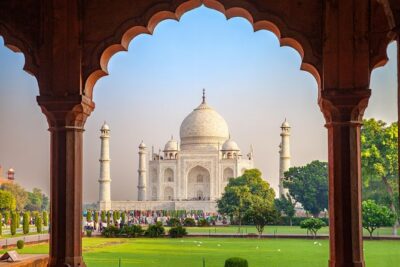
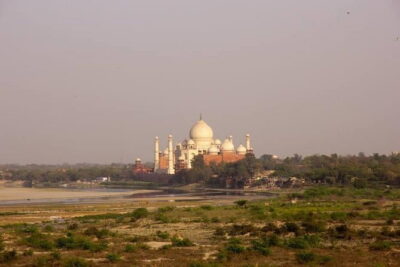
- The Taj Mahal Morning Plan: This Tour Is Built Around It
- Early morning sunrise view
- Taj Mahal entrance and the battery bus return ride
- How to use the guide’s photo skills
- Agra After the Main Event: Fort Views and Marble Details
- Agra Fort: Massive, layered, and easier than you think
- Itmad-ud-Daula: A shorter stop with big impact
- Jaipur Day: Jantar Mantar, City Palace, and the Facade That Steals Photos
- Jantar Mantar: Science meets sightseeing
- City Palace: Where the royal story stays in the buildings
- Hawa Mahal: The quick facade that makes the trip memorable
- Jal Mahal: Water-based views and a quieter rhythm
- Amber-Area Bonus: Panna Meena ka Kund and a Practical Timing Win
- Day 3 Finish: Heading Back Toward Delhi
- Price, Value, and What You Should Double-Check Before Paying
- Who This Golden Triangle Tour Fits Best
- Should You Book This 3-Day Golden Triangle Tour to Agra and Jaipur?
- FAQ
- How long is the Golden Triangle tour?
- Where do they meet you at the start of the tour?
- What major sights are included in Delhi?
- Is Taj Mahal included, and when do you visit it?
- Are monument entrance fees included?
- Is accommodation included?
- Is free cancellation available?
Key Things That Make This Golden Triangle Tour Work
- Dawn Taj Mahal timing to help you catch the softer light and a calmer start
- Private driver + air-conditioned vehicle for the long Delhi–Agra road days
- Battery bus/golf cart ride back from the Taj parking area
- Delhi highlights in one sweep, from Lotus Temple to Jama Masjid
- Jaipur classics like Hawa Mahal and City Palace without the navigation stress
- Photo-friendly guides, with guides such as Riyaz and Ali repeatedly praised for taking great pictures and videos
A “Private Guide” Golden Triangle That Keeps You Moving (Without Guessing)
The big value here is that you get a guide and a driver working as a team. In a region where you’ll constantly be negotiating traffic, ticket lines, and directions, having one plan you can follow is a relief. Your day starts when your representative meets you at Delhi Railway Station or the airport, and then the city sightseeing begins right away.
This is also set up as a private experience, meaning it’s only your group in the vehicle. That matters because you can ask questions, adjust a little, and keep the pace focused on what you want. It’s the opposite of hopping between half-planned buses where you’re always chasing the schedule.
One practical bonus: bottled water, parking fees, and taxes are listed as included. That’s not flashy, but it removes little costs that add up fast.
Other Agra runs out of Delhi worth a look




Day 1 in Delhi: Temples, Minarets, and Big-State Landmarks
Delhi can feel like a hundred moving parts at once. This day gives you a structured way to sample it, starting with the Lotus Temple.
Lotus Temple: A calm start in a busy city
You’ll visit the Lotus Temple, described as a world heritage visitor site. Even if you’re not a place-of-worship person, the design is a good way to reset your brain—clean geometry, peaceful vibe, and a break from the city noise.
What I like for your trip: it’s a smart opener because it’s photogenic and not exhausting. It also gives you a quick “sense of place” for Delhi before you head into more intense sights.
Qutub Minar: Tall, dramatic, and historically significant
Next is Qutub Minar. It’s framed as one of the best and tallest monuments in Delhi, and it’s the kind of stop where you’ll understand why people plan time here. The monument’s scale is hard to appreciate without being physically close.
India Gate, Parliament House, Rashtrapati Bhavan: The modern power axis
Then you move through the grand memorial and government-landmark zone: India Gate first, followed by Parliament House (Sansad Bhavan) and Rashtrapati Bhavan.
You’ll get a sense of how Delhi mixes old empires with modern state symbolism. Even if these stops are more about viewpoints and photos than deep time, they help round out the Delhi picture.
Chasing the Pink City? More Jaipur day trips
Humayun’s Tomb: A Mughal-style highlight without rushing
Humayun’s Tomb follows, and it’s included with about an hour. This is one of those places where the “tempo” changes. You can slow down, take in the gardens and architecture, and let the guide explain the story in a way that actually sticks.
Old Delhi jump-in: Chandni Chowk and Jama Masjid
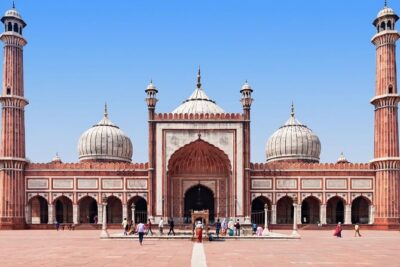
The tour then shifts into Old Delhi for Chandni Chowk and Jama Masjid.
- Chandni Chowk is listed as a busy shopping area with spices, dried fruit, silver jewelry, and saris. It’s also marked as admission free.
- Jama Masjid is one of the largest mosques in India, built between 1650 and 1656. You get about an hour here.
For your practical planning: Old Delhi streets can be crowded and narrow. Wear shoes you can walk in without thinking, and expect to move at “market pace,” not “museum pace.”
Red Fort: A major Delhi anchor
Red Fort is included as part of the day as well. Even when time is limited, it’s worth seeing at least from inside viewpoints and museum areas (depending on how the day flows).
Lunch break and the Agra drive
Toward the late day, you get a lunch window at a local restaurant (lunch itself is not included) and then you head toward Agra via an expressway route.
Agra check-in comes next with time for rest and leisure, plus an overnight stay at your hotel. Your tour notes also include a hotel option (4- or 5-star) with daily breakfast when booked with the accommodation option.
The Taj Mahal Morning Plan: This Tour Is Built Around It
If you only care about one place on the Golden Triangle, it’s still Taj Mahal. The key here is timing.
Early morning sunrise view
You’ll be picked up early by the visit agent and taken to catch the dawn view of the Taj Mahal. This is the one part of the trip that keeps getting praised in the kind of feedback that really matters: arriving early tends to mean softer light for photos and a calmer experience before the biggest crowds hit.
Taj Mahal entrance and the battery bus return ride
Taj Mahal entrance fees are included if you select the option that includes monuments. You’ll also get the battery bus/golf cart return ride from parking to the Taj Mahal area, which is a small thing until you’re standing there with tired legs.
How to use the guide’s photo skills
A recurring theme from the people who booked with this tour: guides like Riyaz and Ali are praised for taking fantastic pictures and videos, and for knowing good photo spots. Use that. Don’t just point your phone and hope.
Before you go into the main viewing area, ask your guide where they suggest you stand for the best angles, and whether they can guide you to calmer vantage points. If you’re hoping to skip hiring an expensive photographer, this is one of the ways the tour can offer real value beyond just transportation.
Agra After the Main Event: Fort Views and Marble Details
Once you’ve seen the Taj in the morning, Agra becomes about variety: forts, tombs, and the “why” behind the architecture.
Agra Fort: Massive, layered, and easier than you think
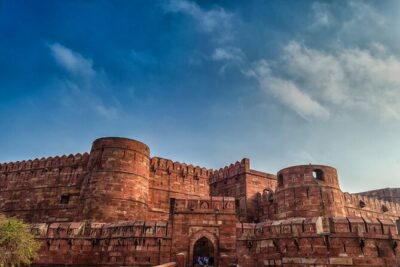
Agra Fort is next, included with about two hours. It’s described as built with red sandstone marble, and you’ll be shown important areas with some extra details about the site.
This is a great follow-up because it gives context. Taj Mahal is pure perfection—Agra Fort is the machinery that made it possible. You’ll see different styles, different levels, and more evidence of how Mughal power worked in real life.
Itmad-ud-Daula: A shorter stop with big impact
Then comes Itmad-ud-Daula, with about 30 minutes. Even in a short time, this place is worth it because it’s noted as the first Mughal structure built completely from marble, plus the first to make extensive use of pietra dura.
If you like close-up details and you want more “touchable” craft than big monuments, this is the kind of stop that pays off even when time is limited.
Jaipur Day: Jantar Mantar, City Palace, and the Facade That Steals Photos
After Agra, the tour shifts into Jaipur for the main Rajasthan sights. You’ll get breakfast and then spend the day in the Pink City with multiple iconic stops.
Jantar Mantar: Science meets sightseeing
Jantar Mantar is the first Jaipur stop listed. You’ll spend about two hours here, and it’s described as a pleasant attraction experience with impressive sights to see.
This is one of those places where the guide’s explanation can change how you experience it. If you’ve ever walked through a museum and felt lost, ask your guide to explain what you’re looking at before you move to the next section.
City Palace: Where the royal story stays in the buildings
City Palace is included next, with about two hours. It’s described as one of the grand attractions of Jaipur and now houses a museum.
Even if you’re not a history deep-dive person, the layout helps you understand why Jaipur feels different from Delhi and Agra. It’s more about sustained court culture, design choices, and the way a city built its identity.
Hawa Mahal: The quick facade that makes the trip memorable
Then comes Hawa Mahal (Palace of the Winds), about two hours. It’s presented as the most lovely landmark of Jaipur, and it’s known for its high screen wall design.
If you love photography, this stop is a must. If you don’t, it’s still worth it because it’s visually distinctive within seconds of your first look.
Jal Mahal: Water-based views and a quieter rhythm
Next is Jal Mahal, the water palace. You’ll spend around two hours here, and it’s noted as being situated in the middle of water.
This is a good pacing break. After forts and palaces, you get a different kind of scenery and a slower mood for photos.
Amber-Area Bonus: Panna Meena ka Kund and a Practical Timing Win
Near the end of the Jaipur segment, you’ll visit Panna Meena ka Kund, a step well near Amber Fort. It’s listed as about 15 minutes and admission free.
This is the kind of stop you might normally skip if you’re doing everything on your own. But at a short time cost, it adds a fun, unexpected texture to your Golden Triangle mix.
Day 3 Finish: Heading Back Toward Delhi
After Jaipur city tour, you’ll make the approximately five-hour journey back to Delhi, or you can be dropped off at Jaipur airport.
This is a good moment to think about your travel style. If you hate last-minute scrambling, this structured finish helps. If you were hoping to tack on extra days in Jaipur, you’ll want to plan that separately since the flow is designed for the classic Triangle loop.
Price, Value, and What You Should Double-Check Before Paying
Price is listed at $16 per person, and that number is the kind that makes you pause. Here’s the honest way to think about value using what’s actually included:
- Transportation and guides are included via a private driver with an air-conditioned vehicle and professional private tour guides.
- Accommodation is optional based on your booking choice: 2 nights in twin sharing with breakfast if you select the hotel-inclusive option.
- Entrance fees depend on selection: monument entrance fees for sights mentioned are included only if you select the option that covers them.
- Meals are not included beyond breakfast (breakfast is listed as included, while lunch and dinner are not).
So for value, this tour tends to make the most sense if you want a guided, private Golden Triangle with fewer planning headaches. If you’re the kind of traveler who hates guided time and wants total control, you might feel boxed in. But if you want a smooth route where someone else handles the timing, the early Taj Mahal plan, and the driving, it can be a solid bargain.
Also keep in mind: you’re comparing against the real costs of taxis, separate guide time, and multiple ticket purchases. The tour’s inclusion list shows it’s trying to reduce those add-ons.
Who This Golden Triangle Tour Fits Best
I’d point you toward this tour if:
- you want the big-name highlights without planning every move
- you like the idea of a guide who can help with photo opportunities (people mention guides like Riyaz and Ali taking great pictures and videos)
- you prefer private transport over crowded buses, especially for Delhi traffic and long drives
- you’re okay with a schedule that stays focused on “see the main things” rather than “linger for days”
I’d think twice if:
- you want maximum freedom and slow wandering in each city
- you dislike travel days where you have multiple stops in one day
- you’re counting on lunch and dinner being handled for you (it’s not listed as included)
Should You Book This 3-Day Golden Triangle Tour to Agra and Jaipur?
Yes, with two conditions.
Book it if you want a structured Golden Triangle with a private driver, a guide, and a meaningful early Taj Mahal plan. The added value is real: the early start, the battery bus ride, and guides who help with photos can turn Taj Mahal from a checklist item into an experience you can actually remember well.
Second, before you commit, make sure you understand what you selected for hotel inclusion and monument entrance fees. The best value shows up when the option you choose matches what you’re expecting to pay for on the spot.
If you want, tell me your travel month and whether you want 4- or 5-star hotel options, and I can help you sanity-check the schedule rhythm for your pace.
FAQ
How long is the Golden Triangle tour?
It runs for about 3 days.
Where do they meet you at the start of the tour?
They meet you at Delhi Railway Station or the airport, then you start with Delhi city sightseeing.
What major sights are included in Delhi?
Delhi includes stops such as Lotus Temple, Qutub Minar, India Gate, Parliament House, Rashtrapati Bhavan, Humayun’s Tomb, Chandni Chowk, Jama Masjid, and Red Fort.
Is Taj Mahal included, and when do you visit it?
Yes. You go early in the morning to catch the dawn view of the Taj Mahal.
Are monument entrance fees included?
Monument entrance fees are included only if you select the option that includes entrance fees for the listed sights.
Is accommodation included?
Accommodation is included only if you book the option that includes hotels. It includes 2 nights in twin sharing with breakfast.
Is free cancellation available?
Yes, you can cancel up to 24 hours in advance for a full refund. If you cancel within 24 hours of the start time, there is no refund.
The Full Golden Triangle, More Options
- 3-Days Private Golden Triangle Tour: Delhi, Agra & Jaipur by Car
★ 5.0 · 1,107 reviews - 3-Days Private Golden Triangle Tour: Delhi, Agra & Jaipur by Car
★ 5.0 · 1,098 reviews - 3-Day Delhi, Agra and Jaipur Private Tour – India Golden Triangle
★ 5.0 · 812 reviews - Four-Day Private Luxury Golden Triangle Tour to Agra and Jaipur From New Delhi
★ 5.0 · 807 reviews - 5 Nights 6 Days Private Golden Triangle Tour – Delhi Agra Jaipur
★ 5.0 · 574 reviews
Onward to Jaipur: More Day Trips
- 3-Days Private Golden Triangle Tour: Delhi, Agra & Jaipur by Car
★ 5.0 · 1,107 reviews - 3-Days Private Golden Triangle Tour: Delhi, Agra & Jaipur by Car
★ 5.0 · 1,098 reviews - 3-Day Delhi, Agra and Jaipur Private Tour – India Golden Triangle
★ 5.0 · 812 reviews - Four-Day Private Luxury Golden Triangle Tour to Agra and Jaipur From New Delhi
★ 5.0 · 807 reviews - Jaipur Day Trip from Delhi by Car or Train – All Inclusive
★ 5.0 · 663 reviews
More Agra Day Trips out of Delhi
- Same Day Taj Mahal, Agra Fort & Baby Taj Tour from Delhi by Car
★ 5.0 · 4,304 reviews - Full Day Taj Mahal, Agra Fort & Baby Taj Tour from Delhi by Car
★ 5.0 · 3,647 reviews - From Delhi: Taj Mahal & Agra Private Day Trip with Transfers
★ 4.9 · 3,181 reviews - From Delhi: Taj Mahal and Agra Fort Private Sunrise Tour
★ 4.9 · 2,270 reviews - Sunrise Taj Mahal, Agra Fort & Baby Taj Tour from Delhi by Car
★ 5.0 · 2,243 reviews
Just added: more New Delhi reviews to browse
- 4 days Golden Triangle Tour★ 5.0 · 3 reviews
- Discover Old & New Delhi: Private Tour with Street Food★ 5.0 · 3 reviews
- Taj Mahal Tour From Delhi By Private Car★ 4.5 · 3 reviews
- Golden Triangle Tour 5 Days★ 5.0 · 3 reviews
- Taj Mahal: Express Entry Ticket For Sunset Tour with guide★ 5.0 · 3 reviews
- Agra Taj Mahal Sunrise & Sunset Tour from Delhi★ 5.0 · 3 reviews
Agra Day Trips from Delhi, compared.
 ★ 5.0Same Day Taj Mahal, Agra Fort & Baby Taj Tour from Delhi by CarFrom $624,304 reviews
 ★ 5.0Full Day Taj Mahal, Agra Fort & Baby Taj Tour from Delhi by CarFrom $623,647 reviews
 ★ 4.9From Delhi: Taj Mahal & Agra Private Day Trip with TransfersFrom $43,181 reviews
 ★ 4.9From Delhi: Taj Mahal and Agra Fort Private Sunrise TourFrom $592,270 reviews
 ★ 5.0Sunrise Taj Mahal, Agra Fort & Baby Taj Tour from Delhi by CarFrom $622,243 reviews
 ★ 5.0Taj Mahal and Agra Private Car Tour from Delhi with 5* LunchFrom $331,633 reviews
 ★ 4.9From Delhi: Private Taj Mahal and Agra Tour by Express TrainFrom $751,605 reviews
 ★ 5.0Taj Mahal, Agra Fort, Baby Taj Tour from Delhi by Superfast TrainFrom $751,494 reviews