
Reviewed · AGRA DAY TRIPS FROM DELHI
4-Day Golden Triangle Tour: Delhi, Agra, Jaipur (Viator Awarded)
Four days, three cities, and big monuments. This private Golden Triangle plan links Delhi, Agra, and Jaipur with a guide, an air-conditioned car, and help lining up tickets so you can spend your time looking, not figuring.
I really like two things about the setup. First, you get an early Taj Mahal visit for sunrise timing. Second, your personal guide helps you buy monument tickets online to help you avoid the worst queue moments, plus you get an English-speaking guide if you request it.
One possible drawback: it’s a fast schedule with lots of stops, and meals are extra (so you’ll want to budget for lunch and dinner between sights).
In This Review
- Quick hits before you go
- Golden Triangle in four days: what you really get for $599
- Private pickup, AC car comfort, and guide ticket support
- Day 1 in Delhi: Jama Masjid to Qutub Minar without losing the plot
- Jama Masjid: scale first, details second
- Chandni Chowk: old Delhi market + street food break
- Red Fort: where Mughal power lived
- Raj Ghat and India Gate: memory and empire
- Humayun’s Tomb and the Lotus Temple: two very different UNESCO vibes
- Qutub Minar and Birla Mandir: finish with tower views and temple calm
- Day 2 Agra: sunrise Taj Mahal plus two Mughal stops
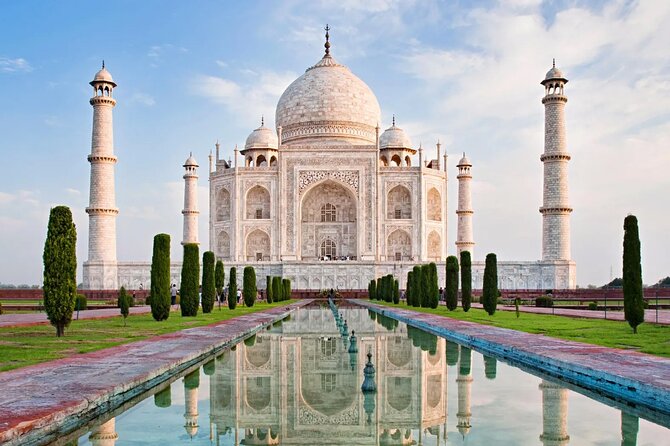
- Taj Mahal: the sunrise timing is the point
- Agra Fort: Akbar’s power in stone
- Itmad-ud-Daula: the so-called baby Taj
- Day 3 Jaipur: Amber Fort elephant ride, Jal Mahal, and Hawa Mahal’s angles
- Amber Fort early: Rajput architecture and an elephant ride
- Jal Mahal: pause by the water
- Jaigarh Fort: cannons on wheels and panoramas
- Jantar Mantar: the sky-measuring break
- Hawa Mahal: Jaipur’s windows and cool facade geometry
- Timing, walking, and why this itinerary feels like a sprint
- Your hotel nights: choosing 3-, 4-, or 5-star without surprises
- Who should book this private Golden Triangle tour (and who should skip it)
- Should you book this 4-day Golden Triangle tour?
- FAQ
- Where does the tour start?
- Is pickup included?
- Is this a private tour?
- What does the price include?
- Are meals included?
- Is the Taj Mahal included?
- Does the guide help with tickets?
- How does room sharing work?
- Can I request an English-speaking guide?
- What is the cancellation option?
Quick hits before you go
- Sunrise Taj Mahal timing: early departure is built into the Day 2 plan
- Ticket help to reduce waiting: your guide helps with online monument tickets
- Private, air-conditioned transport: you’ll travel in comfort between cities
- Delhi’s mix of monuments: forts, mosques, memorials, and UNESCO sites in one day
- Amber Fort + elephant ride: the Jaipur day includes this classic experience
- Route tweak for Fridays: Taj Mahal closure can shift the order to Delhi–Jaipur–Agra–Delhi
Golden Triangle in four days: what you really get for $599
For $599, you’re buying a practical sprint through North India’s top sights: Delhi, Agra, and Jaipur. The value is strongest when you want structure—someone handles the sequencing, you ride in a private AC car, and you’re not stuck hunting tickets.
A big part of the package is the 3-night lodging base. You choose the hotel class (3-, 4-, or 5-star), and rooms are generally set up on a twin-sharing basis for two people. If you’re traveling as a group of three or four, the room-sharing defaults to triple-sharing or family rooms, and you’ll want to clarify if you’re expecting two separate rooms.
One more value point: this is a private tour/activity. It’s just your group, not a mixed-bus free-for-all. That matters on a tight timeline, because you can ask your guide to slow down for photos, shopping breaks, or just standing and staring at the details.
Other Agra runs out of Delhi worth a look




Private pickup, AC car comfort, and guide ticket support
Getting around is where Golden Triangle plans can fall apart fast. This one keeps the “getting there” part simple: pickup is offered, and you move in a comfortable private car with air conditioning between stops.
Your guide also plays a major role beyond “point and talk.” They help you buy monument tickets online, which can save you time when lines are long. You also get English-speaking guidance, and if you need a specific language, you should request it earlier.
There’s also a useful detail about tickets and admissions: the plan mixes sights where admission is included with sights where the stop is listed as free. That means you’ll still have a lot of value from the itinerary, but it’s smart to keep a small “misc” budget for anything you decide to do outside what’s included.
Finally, the tour uses a mobile ticket. That’s handy on the ground, especially when you’re switching phones, SIMs, and maps through busy areas.
Day 1 in Delhi: Jama Masjid to Qutub Minar without losing the plot
Delhi Day 1 is packed, but it follows a logical feel: you start with Mughal-era religious grandeur, move through historic markets and power, then finish with UNESCO-era architecture and modern faith spaces.
Jama Masjid: scale first, details second
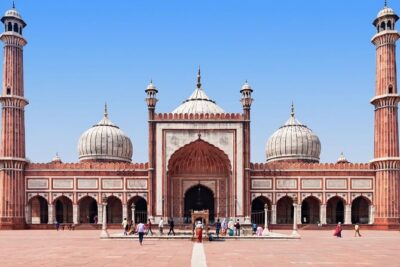
Your first major stop is Jama Masjid, described as India’s largest mosque, built by Shah Jahan in the 17th century. This is one of those places where size hits before you even process the design. Expect a serious “big space” experience, plus Persian and Indian architectural influences.
Tip for your visit: dress codes matter at mosques. Carry something easy to cover shoulders or legs, and try to bring a calm pace—this is a place where you’ll want to look up.
Chandni Chowk: old Delhi market + street food break
Next is Chandni Chowk, one of Delhi’s oldest and famous markets, tied to Shah Jahan’s era. The plan includes time to explore the area and enjoy street food, which is one of the best ways to feel the city’s rhythm quickly.
If you have a sensitive stomach, keep it simple: choose stalls that look busy and clean, and avoid taking risks with foods you’re not used to. This stop can be fun, but it’s also where you should manage your expectations for comfort.
Chasing the Pink City? More Jaipur day trips

Red Fort: where Mughal power lived
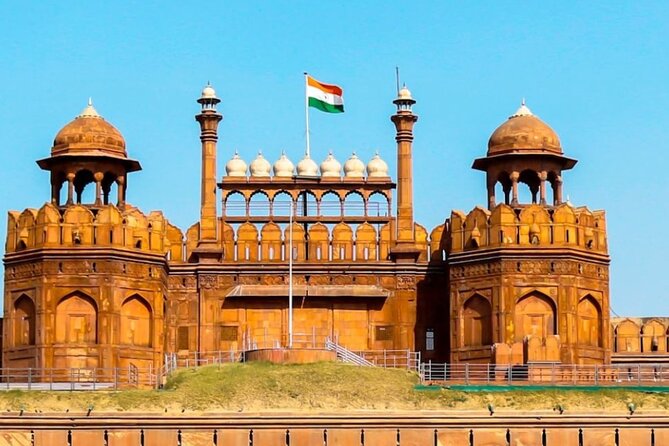
Then comes Red Fort, the Mughal seat for nearly 300 years, built from red sandstone with Persian and Mughal architectural elements. This is a top-tier Delhi experience because it connects directly to the city’s political story.
If you want the biggest impact with limited time, focus on key viewpoints and the fort’s massive scale. Don’t try to read every inscription—your guide can help you prioritize.
Raj Ghat and India Gate: memory and empire
You’ll also visit Raj Ghat, the memorial for Mahatma Gandhi on the Yamuna riverbanks after his assassination in 1948. It’s a quieter stop, emotionally heavier than the forts and monuments, and it balances the day.
After that, India Gate appears as a war memorial for Indian soldiers who died fighting for the British in World War I. It’s a straightforward “see it, understand it, move on” stop, and you’ll likely appreciate it more after the emotional weight of Raj Ghat.
Humayun’s Tomb and the Lotus Temple: two very different UNESCO vibes
Later, you reach Humayun’s Tomb, a UNESCO site built for Humayun by Bega Begum. This is a classic Mughal garden-tomb setting, and it’s a great “architecture reset” after the market noise.
Then you’ll hit the Lotus Temple, a Bahai house of worship designed to be open to all religions. Even if you’re not religious, it’s a clean, modern-feeling stop with garden surroundings that can help you slow down.
Qutub Minar and Birla Mandir: finish with tower views and temple calm
Your day wraps with Qutub Minar, a UNESCO World Heritage site described as the world’s tallest brick minaret, with Quran quote inscriptions. Your guide will help you time this stop for photos, and it’s one of the best places to stand back and absorb the vertical design.
Finally, there’s Birla Mandir (Laxminarayan Temple), a Hindu temple in Delhi built by J K Birla, mixing traditional and modern styles. It’s a calm note to end on before you sleep and reset for Agra.
Day 2 Agra: sunrise Taj Mahal plus two Mughal stops
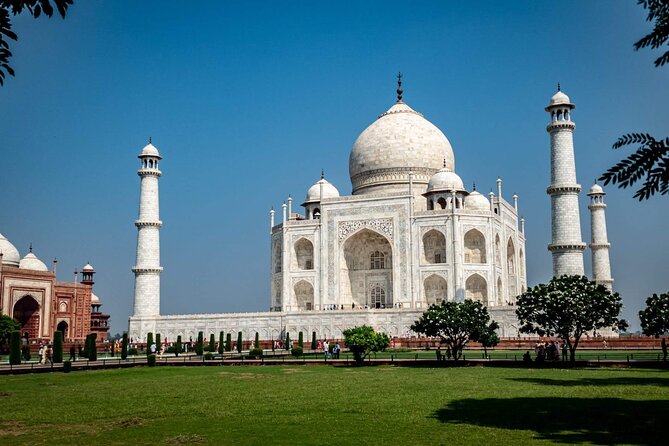
Day 2 is the one most people plan around: Taj Mahal at sunrise. The tour leaves early to catch the view when the light hits the marble. Even if you’ve seen photos before, sunrise viewing changes the feel—less crowd energy, more soft glow, and a better sense of scale.
Taj Mahal: the sunrise timing is the point
You’ll spend about 3 hours around Taj Mahal, with entry included. Your guide’s ticket help can matter here, because this is a “high-demand” site at popular times.
Practical advice: arrive with a jacket or layers. Early mornings in winter can feel cold; in hotter months you’ll appreciate water and a hat.
Agra Fort: Akbar’s power in stone
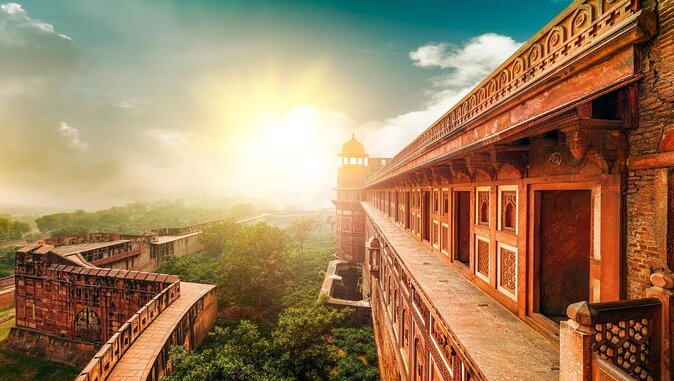
Next is Agra Fort, a UNESCO World Heritage site built by Akbar and used as a Mughal residence until 1638. You get about 2 hours here, and the value is the architectural mix—Islamic, Mughal, and Indian influences.
This is also where you’ll understand why Agra is more than a single building. If Taj Mahal is the symbol, Agra Fort is the system that supported that empire.
Itmad-ud-Daula: the so-called baby Taj
Finally on Day 2, you’ll visit Itmad-ud-Daula, often called the baby Taj, built by Nur Jahan in memory of Mirza Ghiyas Beg. You’ll have around 2 hours, and this stop helps balance the day’s intensity.
If you like smaller, detailed architecture, this is the stop where you can slow down and notice craftwork without feeling rushed.
Day 3 Jaipur: Amber Fort elephant ride, Jal Mahal, and Hawa Mahal’s angles
Jaipur Day 3 feels like the “palace and views” day. You start with Amber, then work through forts and observatories before ending with one of Jaipur’s most photographed facades.
Amber Fort early: Rajput architecture and an elephant ride
You’ll go to Amber Fort early in the morning, around 2 hours. It’s described as the most prominent palace showcasing Rajput architecture, and the plan includes an elephant ride.
If you’re unsure about elephant riding, ask your guide ahead of time what’s included versus optional. If you do ride, follow the on-site instructions and keep a steady mindset—this is a classic experience, but it’s also weather-dependent and can feel busy.
Jal Mahal: pause by the water
Next is Jal Mahal. You’ll spend about an hour and enjoy some street food in the area. The main value here is a short break between heavier forts—this is a “quality time” stop designed to break up the day.
If the heat is intense, plan shade breaks. This day has several outdoor segments.
Jaigarh Fort: cannons on wheels and panoramas
After that you go to Jaigarh Fort, about 1 hour. It’s known for the world’s largest cannons on wheels (as described in the plan), and it offers panoramic views of Amber Fort and Maota Lake.
This is a great “put it all together” viewpoint stop. You’ll see how these forts relate to each other across the Aravali hills.
Jantar Mantar: the sky-measuring break
Then it’s Jantar Mantar, about 1 hour. It’s described as one of the most famous and accurate planet observatories in the world. Even if you’re not a science nerd, it’s a satisfying change from forts and temples—you get to think about how people once measured the sky with stone instruments.
Ask your guide to point out a few key structures so you don’t just walk past labels.
Hawa Mahal: Jaipur’s windows and cool facade geometry
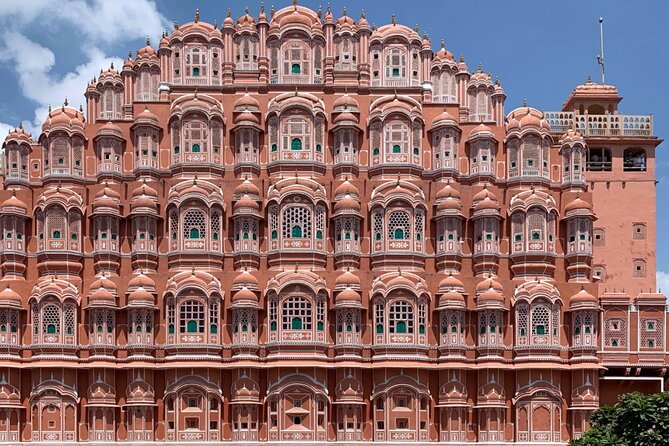
You’ll end with Hawa Mahal (Palace of Wind), around 1 hour. The plan calls out its pink and red sandstone, its triangular five-story shape, and the many windows designed to help keep the building cool during hot summers.
Hawa Mahal is as much about angles as it is about design. Stand in multiple spots so you catch how the facade changes as you move.
Timing, walking, and why this itinerary feels like a sprint
This tour’s strength is also its challenge: it compresses a huge amount into four days. Day 1 alone includes major sites across a wide area of Delhi, and Day 2 and Day 3 have early starts.
Here’s how to stay comfortable without losing the vibe:
- Wear shoes that handle uneven ground and long standing periods.
- Carry water and plan bathroom stops between sights.
- Take your photo breaks seriously. If you miss a view time, you can’t always “make it up” later.
The itinerary is designed for people who want a big-hit overview rather than slow wandering. If that’s you, you’ll appreciate the structure. If you prefer long museum hours and late lunches, this may feel like too much, too quickly.
Your hotel nights: choosing 3-, 4-, or 5-star without surprises
The package includes three nights of accommodation, and you choose the star level. Based on the plan details, rooms are usually double rooms on a twin-sharing basis for two people. For bookings of three or four individuals, the rooms shift to triple-sharing or family rooms.
One important consideration: if three or four guests want two separate rooms, there may be an additional charge. If you care about your exact room setup, tell your operator in advance so you don’t get hit with last-minute adjustments.
One more detail that helps: the meeting point listed for pickup is at Staybook Hotel Aira New Delhi in Paharganj. That gives you a concrete starting anchor if you’re arriving in the city independently.
Who should book this private Golden Triangle tour (and who should skip it)
This plan fits you best if you want:
- A structured first-time Golden Triangle experience
- An easier time with tickets, thanks to your guide’s online support
- Comfortable travel in a private air-conditioned car
- Sunrise Taj Mahal timing and a full Jaipur palace-and-fort day
You might skip it if you want:
- Lots of free, unplanned time for wandering or deep museum reading
- A slow pace with flexible meals built in
- To avoid early starts and multiple outdoor segments
Also, the tour is described as suitable for most travelers, and service animals are allowed. That said, the schedule is still active, so it helps to have decent walking stamina.
Should you book this 4-day Golden Triangle tour?
If you want a no-stress way to hit Delhi, Agra, and Jaipur highlights in four days, I’d consider booking. The biggest reasons are the sunrise Taj Mahal timing, the private AC car, and the guide support that includes ticket help to reduce waiting.
Make sure you’re comfortable with meals being extra and with the fast pacing. If you’d rather eat when you feel hungry and take long breaks between sights, you may feel rushed.
If your priority is seeing the best-known monuments with a plan that keeps logistics simple, this is the kind of tour that makes the Golden Triangle feel doable instead of overwhelming.
FAQ
Where does the tour start?
The meeting point listed is Staybook Hotel Aira New Delhi, located on Desh Bandhu Gupta Rd, opposite the police station, Motia Khan, Paharganj, New Delhi.
Is pickup included?
Yes, pickup is offered.
Is this a private tour?
Yes. It’s private, and only your group participates.
What does the price include?
The package includes three nights’ accommodation, private air-conditioned car transport, a personal guide, and monument admissions where listed as included. Meals are not included.
Are meals included?
No. The plan notes that accommodation is included, but meals are extra.
Is the Taj Mahal included?
Yes, the Taj Mahal visit is included, with an early departure for sunrise viewing. The plan also notes that the route can change due to Taj Mahal being closed on Fridays.
Does the guide help with tickets?
Yes. Your personal guide helps you buy monument tickets online to help you avoid queues.
How does room sharing work?
It’s typically double rooms on a twin-sharing basis. For bookings of three or four individuals, rooms are assigned on a triple-sharing basis or family rooms. If you want two separate rooms for three or four guests, an additional charge may apply.
Can I request an English-speaking guide?
Yes. The guide is English speaking if any special request is made regarding language; you should inform the provider earlier.
What is the cancellation option?
Free cancellation is offered. You can cancel up to 24 hours in advance for a full refund. If you cancel less than 24 hours before the start time, the amount paid is not refunded.
The Full Golden Triangle, More Options
- 3-Days Private Golden Triangle Tour: Delhi, Agra & Jaipur by Car
★ 5.0 · 1,107 reviews - 3-Days Private Golden Triangle Tour: Delhi, Agra & Jaipur by Car
★ 5.0 · 1,098 reviews - 3-Day Delhi, Agra and Jaipur Private Tour – India Golden Triangle
★ 5.0 · 812 reviews - Four-Day Private Luxury Golden Triangle Tour to Agra and Jaipur From New Delhi
★ 5.0 · 807 reviews - 5 Nights 6 Days Private Golden Triangle Tour – Delhi Agra Jaipur
★ 5.0 · 574 reviews
Onward to Jaipur: More Day Trips
- 3-Days Private Golden Triangle Tour: Delhi, Agra & Jaipur by Car
★ 5.0 · 1,107 reviews - 3-Days Private Golden Triangle Tour: Delhi, Agra & Jaipur by Car
★ 5.0 · 1,098 reviews - 3-Day Delhi, Agra and Jaipur Private Tour – India Golden Triangle
★ 5.0 · 812 reviews - Four-Day Private Luxury Golden Triangle Tour to Agra and Jaipur From New Delhi
★ 5.0 · 807 reviews - Jaipur Day Trip from Delhi by Car or Train – All Inclusive
★ 5.0 · 663 reviews
More Agra Day Trips out of Delhi
- Same Day Taj Mahal, Agra Fort & Baby Taj Tour from Delhi by Car
★ 5.0 · 4,304 reviews - Full Day Taj Mahal, Agra Fort & Baby Taj Tour from Delhi by Car
★ 5.0 · 3,647 reviews - From Delhi: Taj Mahal & Agra Private Day Trip with Transfers
★ 4.9 · 3,181 reviews - From Delhi: Taj Mahal and Agra Fort Private Sunrise Tour
★ 4.9 · 2,270 reviews - Sunrise Taj Mahal, Agra Fort & Baby Taj Tour from Delhi by Car
★ 5.0 · 2,243 reviews
Just added: more New Delhi reviews to browse
- 4 days Golden Triangle Tour★ 5.0 · 3 reviews
- Discover Old & New Delhi: Private Tour with Street Food★ 5.0 · 3 reviews
- Taj Mahal Tour From Delhi By Private Car★ 4.5 · 3 reviews
- Golden Triangle Tour 5 Days★ 5.0 · 3 reviews
- Taj Mahal: Express Entry Ticket For Sunset Tour with guide★ 5.0 · 3 reviews
- Agra Taj Mahal Sunrise & Sunset Tour from Delhi★ 5.0 · 3 reviews
Agra Day Trips from Delhi, compared.
 ★ 5.0Same Day Taj Mahal, Agra Fort & Baby Taj Tour from Delhi by CarFrom $624,304 reviews
 ★ 5.0Full Day Taj Mahal, Agra Fort & Baby Taj Tour from Delhi by CarFrom $623,647 reviews
 ★ 4.9From Delhi: Taj Mahal & Agra Private Day Trip with TransfersFrom $43,181 reviews
 ★ 4.9From Delhi: Taj Mahal and Agra Fort Private Sunrise TourFrom $592,270 reviews
 ★ 5.0Sunrise Taj Mahal, Agra Fort & Baby Taj Tour from Delhi by CarFrom $622,243 reviews
 ★ 5.0Taj Mahal and Agra Private Car Tour from Delhi with 5* LunchFrom $331,633 reviews
 ★ 4.9From Delhi: Private Taj Mahal and Agra Tour by Express TrainFrom $751,605 reviews
 ★ 5.0Taj Mahal, Agra Fort, Baby Taj Tour from Delhi by Superfast TrainFrom $751,494 reviews