
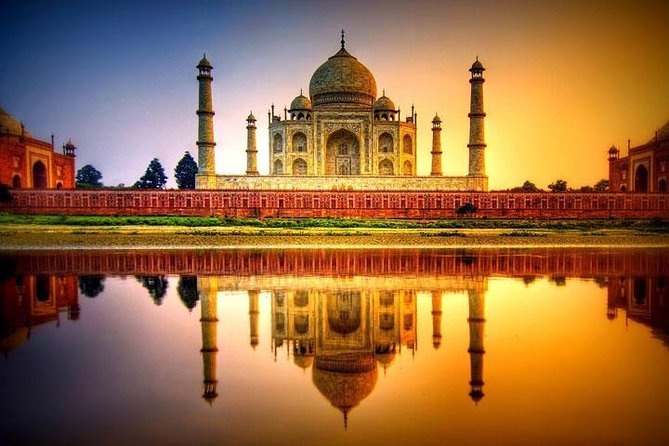
Reviewed · TAJ MAHAL TOURS FROM DELHI
4 Day Golden Triangle Tour(Taj Mahal at Sunset/Sunrise) – Delhi Agra Jaipur Tour
Golden Triangle hype is real, especially at dawn. This 4-day Delhi–Agra–Jaipur route is built to save your time with a private chauffeur and a full plan of highlights. I especially like the sunrise Taj Mahal setup (meet your guide early, then hit the gate for the best light) and the way the stops are linked so you’re not constantly re-planning. One thing to consider: the days are long, with big driving blocks between cities, so you’ll want to be okay with a packed schedule.
What makes this feel more comfortable than a DIY rush is the human factor: a professional guide to explain what you’re seeing, plus a car that gets you from point to point without the public-transport headaches. In the reviews, guides are praised for clear English and strong monument knowledge—plus one review specifically calls out Shilpi taking good care during the Taj visit and Mr. Mahinder for in-depth insight. The hotels also get thumbs-up, particularly the Agra stay and the Jaipur property choice.
My only caution is about expectations around add-ons. Monument and camera fees aren’t included, and not every stop is guaranteed to be a deep “wander on your own” moment—some are photo stops, some are structured viewing with the guide.
In This Review
- Key points worth knowing before you go
- Golden Triangle in four days with a private driver
- Starting at 9:00 AM: pickups and the private-vehicle advantage
- Delhi sights with Mughal power: Red Fort to Qutub Minar
- Sunrise Taj Mahal at 6 AM: the best way to see it
- Agra Fort and the UNESCO stop you’ll want to linger at
- Fatehpur Sikri on the way to Jaipur: Akbar’s city, then silence
- Jaipur’s Amber Fort: four sections, big views, real texture
- Jantar Mantar and Hawa Mahal: two very different kinds of icons
- Hotels and guides: what the inclusions really mean
- Price and logistics: is $299 good value?
- Who should book this Golden Triangle tour (and who should not)
- Before you go: practical tips for these stops
- Should you book? My straight answer
- FAQ
- What time does the tour start?
- What’s included in the tour price?
- Are monument and camera fees included?
- Does the tour include pickup and drop-off?
- Do I get to see the Taj Mahal at sunrise?
- Is free cancellation available?
Key points worth knowing before you go
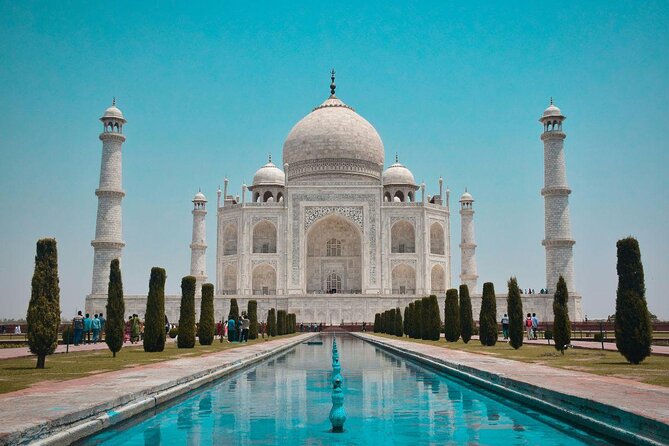
- Sunrise Taj Mahal timing: meet your guide early for the 6 AM visit and morning light
- Private transport between cities: less waiting, fewer crowd squeezes than group bus tours
- Mughal icons in Delhi: Red Fort photo stop, Jama Masjid, Humayun’s Tomb, Qutub Minar
- Agra Fort + Fatehpur Sikri in one flow: historical contrast before rolling into Jaipur
- Jaipur’s big three: Amber Fort, Jantar Mantar (UNESCO), and City Palace sights
- Hotel quality varies by option: 3-, 4-, or 5-star accommodations depending what you choose
Golden Triangle in four days with a private driver
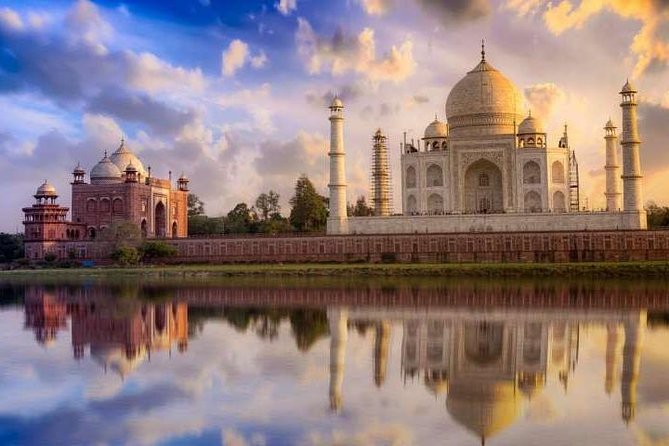
If you’re short on time but still want the real hits—Delhi, Agra, Jaipur—this format makes sense. You’re not spending your days comparing opening hours, figuring out routes, and hunting down tickets while the daylight leaks away. Instead, you’re dropped into each city with a guide and transported efficiently in an air-conditioned vehicle.
The route is classic Golden Triangle for a reason: it concentrates major UNESCO-level landmarks and Mughal-era power centers in a tight loop. The payoff is that you’ll come home with a clearer sense of how these places connect, not just a list of photos.
More ways to reach the Taj, weighed side by side




Starting at 9:00 AM: pickups and the private-vehicle advantage
The tour start time is 9:00 am, and pickup is included from your airport/railway station/hotel in Delhi–Gurgaon–Noida. That matters more than it sounds. Arrival days are when people lose the most time—waiting for a taxi, bargaining, and then still showing up late for their first “must-see.”
With a private chauffeur, you avoid the shoulder-to-shoulder chaos that often comes with crowded bus-style tours. In a review, one traveler even mentions sanitizers and face masks provided in the car—small detail, but it signals that the operator cares about comfort and cleanliness, not just motion.
Also, the tour uses mobile tickets. That helps if you’re trying to keep the whole trip organized and not juggle printed papers across three cities.
Delhi sights with Mughal power: Red Fort to Qutub Minar
Delhi on this tour is a highlight sampler with a Mughal focus. You start with a Red Fort stop that’s mainly a photo stop, then move into the older heart of the city.
Here’s what you can expect in a practical way:
- Red Fort (photo stop): quick exterior viewing to orient you before going deeper into the Mughal story.
- Jama Masjid: built under Mughal Emperor Shah Jahan, and it’s described as India’s largest mosque. Dress and behavior matter here; plan on covering appropriately and speaking softly inside.
- Raj Ghat: a memorial dedicated to Mahatma Gandhi. It’s calm and reflective—good contrast after big monuments.
- India Gate: built in memory of soldiers who laid down their lives in World War 1; it gives you a modern national context.
- Parliament House: you’ll see it as part of the New Delhi governmental core.
- Humayun’s Tomb: Mughal-era grandeur with strong historical weight—more than just a pretty tomb.
- Qutub Minar: connected to Qutub-Ud-Din-Aibak, with the minar surrounded by other historic structures.
A key advantage here is that you’re not just looking at buildings—you’re getting guide commentary to connect dates, rulers, and architectural choices. Reviews repeatedly praise guides for good English and knowledge, which is what you want if you care about meaning, not just snapshots.
Sunrise Taj Mahal at 6 AM: the best way to see it
This is the moment most people book for, and this tour builds it into the schedule in a way that’s actually useful: meet your guide at 6:00 am for the Taj Mahal at sunrise.
Why sunrise matters: fewer crowds, cooler temperatures, and the changing light on the marble. Even if you know the Taj is photogenic, seeing it in early morning conditions makes the experience feel more serene and less like a sightseeing checkpoint.
You’ll be visiting the Taj Mahal as the UNESCO World Heritage site it is, tied to Mughal Emperor Shah Jahan and the tomb of Mumtaz Mahal. A guide helps you understand what you’re seeing—why the symmetry is so deliberate, how the mausoleum fits into the larger complex, and what the story behind it is.
In one review, Shilpi is specifically mentioned for taking good care during the Taj visit, along with a driver who spoke good English and a clean car. That combination—guide + driver + comfort—often determines whether a sunrise trip feels like a win or a hassle.
Practical note: sunrise means you’ll want to be ready early. Wear comfortable shoes, bring sun protection, and avoid heavy bags that slow you down at entry. And if you care about photos, plan for patience while others get their angles.
Agra Fort and the UNESCO stop you’ll want to linger at
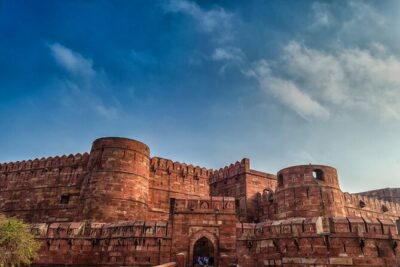
After Taj Mahal, the day doesn’t just coast. You return for breakfast, then head to Agra Fort, another UNESCO World Heritage site.
Agra Fort is described as a historical fort where early Mughal emperors lived, and it’s also traditionally known as Badalgarh. This is a great pairing with the Taj because the Taj tells the story of monumental love; Agra Fort adds the power-and-protection reality of empire.
Where you’ll feel the value of a guide here: forts aren’t always obvious from the outside. With explanation, you’ll start noticing why certain sections mattered and how the fort functioned as both residence and defense.
Then the route continues toward Jaipur, and along the way you visit Fatehpur Sikri.
Other Agra runs out of Delhi worth a look


Fatehpur Sikri on the way to Jaipur: Akbar’s city, then silence
Fatehpur Sikri often gets treated like a side stop. On this tour, it’s given real time because it’s a fascinating stop with a clear historical arc.
You’ll learn that the city was founded as the Mughal Empire capital in 1571 by Emperor Akbar, serving as the capital from 1571 to 1585. After that, it was abandoned when Akbar shifted campaigns in Punjab, and later it was completely abandoned around 1610.
That timeline gives the place an extra layer. It stops being just “cool ruins” and becomes a story about ambition, logistics, and political change. If you like history that has cause-and-effect, this stop can be one of the most satisfying portions of the trip—even if you’re not a diehard architecture person.
When you arrive in Jaipur, you check in for an overnight stay.
Jaipur’s Amber Fort: four sections, big views, real texture
Jaipur is where the trip turns from Mughal monuments into Rajput royal design. The day starts with sightseeing, and Amber Fort is the anchor.
Amber Fort is described as a palace complex built from pale yellow and pink sandstone with white marble, divided into four main sections with courtyards. That detail matters because it explains why you’ll likely feel like you’re moving through different “rooms of power” rather than walking one straight line.
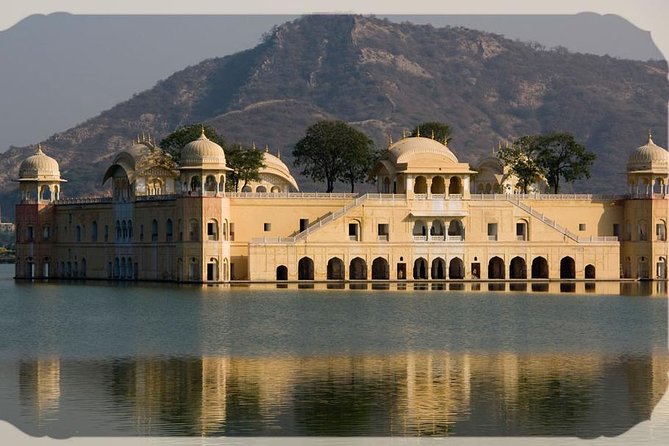
You’ll also get Jal Mahal, the palace in the middle of Man Sagar Lake. Even if you only view it from the right angles rather than inside (time varies), the setting is striking.
From there, you head to City Palace, including parts like Chandra Mahal and Mubarak Mahal. Since it was the seat of the Maharaja of Jaipur, it helps connect the architecture to lived authority, not just decoration.
Jantar Mantar and Hawa Mahal: two very different kinds of icons
Jaipur’s sightseeing continues with two landmarks that feel totally different from each other.
First is Jantar Mantar, described as a collection of nineteen architectural astronomical instruments built by Rajput king Sawai Jai Singh II. It includes the world’s largest stone sundial and is a UNESCO World Heritage site. If you enjoy clever design, this is one of those places where you realize math and measurement were built into everyday observation.
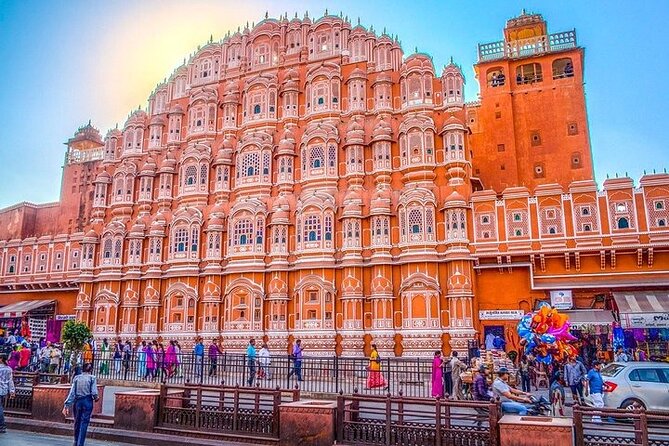
Then comes Hawa Mahal, the famous red and pink sandstone facade. It’s another Mughal-meets-Rajput-style statement piece—though here the focus is on the palace’s outward look and the idea of windows and airflow.
These two stops balance your day: Jantar Mantar feeds your curiosity; Hawa Mahal gives you the iconic Jaipur photo set.
Hotels and guides: what the inclusions really mean
The package includes accommodation in 3-, 4-, or 5-star hotels (based on the option you choose), with breakfast included three times. It also includes packaged drinking water, professional private tour guides, and all transfers/sightseeing by air-conditioned vehicle. Hotel airport pickup and drop are included too.
How to think about the hotel value: on a short 4-day loop, the hotel location and room quality affect your energy more than in longer trips. Reviews mention a superb Agra stay (Jaypee Palace is named) and praise the Jaipur hotel choice—specifically, one review calls out the Jaipur Palace as fantabulous. That’s a good sign you’re not being sent to a tired roadside property.
On the guide side, the repeated praise is about English and knowledge. You’ll get the most from this tour if you take the guide’s explanations seriously. If you’re the type who likes asking why something was built a certain way, bring questions. Guides are at their best when you engage.
Price and logistics: is $299 good value?
At $299 per person, this is positioned as a midrange shortcut: you pay for private transport, guide commentary, and hotel stays across the Golden Triangle loop.
What you’re buying for that money:
- A private chauffeur between cities (time saved vs DIY)
- Private guides for Delhi/Agra/Jaipur highlights
- Hotel airport pickup/drop
- Breakfast included three mornings
- Air-conditioned transportation
What’s not included:
- Monument/camera fees
- Lunch and dinner
So the real value question is this: if you tried to build this yourself—same sights, same sunrise timing, same guide help—you’d likely spend time and still not get the seamless pacing. The operator helps you avoid the “where do we go next” stress, which is honestly the most expensive part of travel when you’re on a tight schedule.
One more logistics note: the tour runs on a tight loop. Day 2 is described as an 8-hour block and includes Taj Mahal at sunrise, then Agra Fort, then the drive to Jaipur with a stop at Fatehpur Sikri. That can feel like a lot if you’re used to slow travel.
Who should book this Golden Triangle tour (and who should not)
This tour is a strong match if:
- You want Delhi, Agra, and Jaipur without spending days researching logistics
- You care about major sights like the Taj Mahal at sunrise, Amber Fort, and Jantar Mantar
- You’d rather pay for comfort and structure than manage tickets and timing yourself
- You like having a guide for context, not just a driver for movement
It might be less ideal if:
- You hate long driving days and early mornings
- You want lots of free time for slow wandering, shopping, and repeat visits
- You prefer a lighter schedule with fewer “big hits” packed into each day
The key difference is pace. This is efficient. If you want relaxed, you may wish for a longer trip.
Before you go: practical tips for these stops
A few things will make your Golden Triangle days smoother:
- Plan for early mornings. Sunrise Taj means your routine starts sooner than you’ll be used to.
- Bring cash or card for non-included fees. Monument and camera fees aren’t included, and those add up quickly in India.
- Dress thoughtfully for mosque visits like Jama Masjid. Comfortable, modest clothing helps.
- Wear shoes that handle lots of walking. Forts and historic sites involve uneven ground.
- Keep a water bottle ready, especially during sunlit stops. Packaged drinking water is included, but having your own habits helps.
- If you’re into shopping, there can be opportunities for local markets in Agra with guide help. One review mentions a market stop where they got an amazing deal, but don’t treat it as guaranteed downtime—ask your guide what’s realistic that day.
Also, don’t underestimate the power of good guidance. This tour is structured around explanation, and it’s what transforms a checklist into understanding.
Should you book? My straight answer
Book this tour if you want the Golden Triangle highlights with minimal friction—especially the 6:00 am sunrise Taj Mahal and the combination of forts and UNESCO sites across Delhi, Agra, and Jaipur. With private transport, private guides, and hotel support, you’re paying to trade planning time for sightseeing time.
Skip it or consider a different format if you’re sensitive to early wake-ups, long driving days, or you want lots of unscheduled free time. For that style of travel, you might feel rushed.
If your top priority is getting the big monuments done right, with context and comfort, this is a solid way to do it.
FAQ
What time does the tour start?
The tour start time is 9:00 am.
What’s included in the tour price?
Included items are accommodation in 3-, 4-, or 5-star hotels (based on the option chosen), packaged drinking water, professional private tour guides, air-conditioned vehicle for transfers and sightseeing, and hotel airport pickup and drop. Breakfast is included for 3 days.
Are monument and camera fees included?
No. Monument fees and camera fees are not included.
Does the tour include pickup and drop-off?
Yes. Hotel/airport/railway station pickup and drop-off in Delhi are included, including Delhi International Airport as a drop-off option at the end.
Do I get to see the Taj Mahal at sunrise?
Yes. On the Taj Mahal day, you meet your guide at 6:00 am for the sunrise visit.
Is free cancellation available?
Yes. You can cancel up to 24 hours in advance for a full refund. If you cancel less than 24 hours before the start time, the amount paid is not refunded.
Onward to Jaipur: More Day Trips
- 3-Days Private Golden Triangle Tour: Delhi, Agra & Jaipur by Car
★ 5.0 · 1,107 reviews - 3-Days Private Golden Triangle Tour: Delhi, Agra & Jaipur by Car
★ 5.0 · 1,098 reviews - 3-Day Delhi, Agra and Jaipur Private Tour – India Golden Triangle
★ 5.0 · 812 reviews - Four-Day Private Luxury Golden Triangle Tour to Agra and Jaipur From New Delhi
★ 5.0 · 807 reviews - Jaipur Day Trip from Delhi by Car or Train – All Inclusive
★ 5.0 · 663 reviews
More Agra Day Trips out of Delhi
- Same Day Taj Mahal, Agra Fort & Baby Taj Tour from Delhi by Car
★ 5.0 · 4,304 reviews - Full Day Taj Mahal, Agra Fort & Baby Taj Tour from Delhi by Car
★ 5.0 · 3,647 reviews - From Delhi: Taj Mahal & Agra Private Day Trip with Transfers
★ 4.9 · 3,181 reviews - From Delhi: Taj Mahal and Agra Fort Private Sunrise Tour
★ 4.9 · 2,270 reviews - Sunrise Taj Mahal, Agra Fort & Baby Taj Tour from Delhi by Car
★ 5.0 · 2,243 reviews
The Taj, Reached a Few More Ways
- Same Day Taj Mahal, Agra Fort & Baby Taj Tour from Delhi by Car
★ 5.0 · 4,304 reviews - Taj Mahal Day Tour from Delhi by Superfast Train – TOP RATED TOUR
★ 5.0 · 4,166 reviews - Full Day Taj Mahal, Agra Fort & Baby Taj Tour from Delhi by Car
★ 5.0 · 3,647 reviews - From Delhi: Taj Mahal & Agra Private Day Trip with Transfers
★ 4.9 · 3,181 reviews - Taj Mahal Tour from Delhi by Express Train (Viator Award Winner)
★ 5.0 · 2,849 reviews
Just added: more New Delhi reviews to browse
- 4 days Golden Triangle Tour★ 5.0 · 3 reviews
- Discover Old & New Delhi: Private Tour with Street Food★ 5.0 · 3 reviews
- Taj Mahal Tour From Delhi By Private Car★ 4.5 · 3 reviews
- Golden Triangle Tour 5 Days★ 5.0 · 3 reviews
- Taj Mahal: Express Entry Ticket For Sunset Tour with guide★ 5.0 · 3 reviews
- Agra Taj Mahal Sunrise & Sunset Tour from Delhi★ 5.0 · 3 reviews
Taj Mahal Tours from Delhi, compared.
 ★ 5.0Same Day Taj Mahal, Agra Fort & Baby Taj Tour from Delhi by CarFrom $624,304 reviews
 ★ 5.0Taj Mahal Day Tour from Delhi by Superfast Train – TOP RATED TOURFrom $1004,166 reviews
 ★ 5.0Full Day Taj Mahal, Agra Fort & Baby Taj Tour from Delhi by CarFrom $623,647 reviews
 ★ 4.9From Delhi: Taj Mahal & Agra Private Day Trip with TransfersFrom $43,181 reviews
 ★ 5.0Taj Mahal Tour from Delhi by Express Train (Viator Award Winner)From $752,849 reviews
 ★ 5.0All Inclusive Private Taj Mahal Luxury Tour from Delhi by CarFrom $622,564 reviews
 ★ 4.9Same Day Taj Mahal, Fort & Baby Taj Tour from Delhi by CarFrom $502,534 reviews
 ★ 4.9From Delhi: Taj Mahal and Agra Fort Private Sunrise TourFrom $592,270 reviews
Browse the lists this tour appears in