
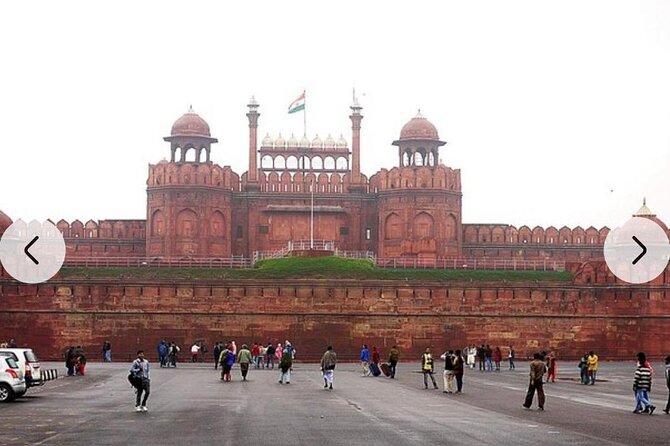
Reviewed · AGRA DAY TRIPS FROM DELHI
4-Day Luxury Golden Triangle Tour to Agra and Jaipur From Delhi
That first stretch out of Delhi sets the tone. This 4-day Golden Triangle tour pairs private luxury comfort with major sights like a sunrise Taj Mahal and Jaipur’s forts and palaces, all without you wrestling transport.
What I like most is the way it’s designed for your time: you get a private, air-conditioned vehicle with a personal driver and live tour guide in each city. You also get a simple rhythm of stops that makes the trip feel manageable, even when the famous places are crowded.
One thing to consider: monument entry tickets are not included, and that can add up depending on what you choose to enter at each stop. Also, the Taj Mahal at sunrise means an early start—worth it, but plan for it.
In This Review
- Key Things I’d Plan For on This Delhi–Agra–Jaipur Luxury Tour
- Getting Comfortable on a Private Luxury Golden Triangle Drive out of Delhi
- Delhi Day One: Qutub Minar, Humayun’s Tomb, Jama Masjid, and Chandni Chowk
- Agra Day Two: Sunrise Taj Mahal That Changes Color in Real Time
- Fatehpur Sikri Day Three: The Mughal Capital That Got Left Behind
- Jaipur Day Four: Amber Fort’s Mirror Palace and the City Palace Courtyards
- Hawa Mahal and Jantar Mantar: Jaipur’s Geometry and Window Views
- Price and Value: What $290 Covers (and Where You Spend Extra)
- What Makes the Tour Feel Like Luxury in Real Life
- Who Should Book This 4-Day Private Golden Triangle Tour
- Should You Book This Tour or DIY It?
- FAQ
- How long is the Golden Triangle tour from Delhi?
- Is this a private tour?
- What’s included in the price?
- Are monument entry tickets included?
- Are meals included during the tour?
- Do you travel by air-conditioned car?
- Is pickup available in Delhi?
- What is the cancellation policy?
Key Things I’d Plan For on This Delhi–Agra–Jaipur Luxury Tour
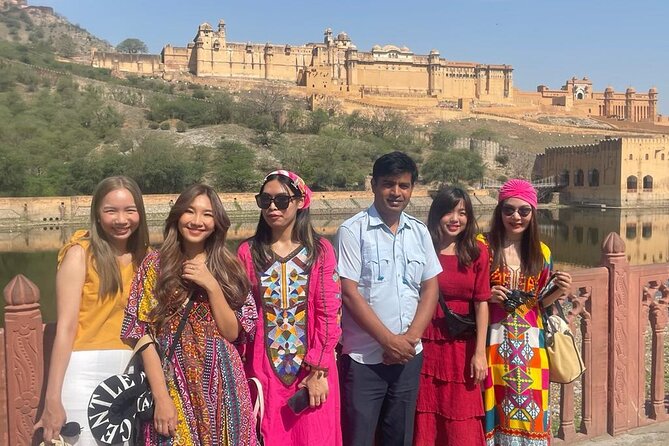
- Sunrise Taj Mahal: you’ll want to dress warmly early, even in warmer months, because mornings can feel cool.
- Private AC car end-to-end: this is where the luxury shows up—less waiting, less hassle, smoother day flow.
- Live guides in every city: expect better context at Qutub Minar, Humayun’s Tomb, Jama Masjid, Amber Fort, and the City Palace complex.
- Old Delhi market time in Chandni Chowk: you’ll see the energy up close; it’s not a sit-and-watch stop.
- Fatehpur Sikri with free admission (per the package): a rare value add on this kind of route.
- Comfort tradeoff: 3-star hotel with breakfast (if selected): you’re paying more for convenience than for a top-end hotel upgrade.
Getting Comfortable on a Private Luxury Golden Triangle Drive out of Delhi

This tour’s “luxury” isn’t about fancy flourishes. It’s practical stuff that changes your day: a private, air-conditioned vehicle for the entire experience, plus pickup and drop-off. That means you’re not coordinating multiple taxis, trying to read schedules on the fly, or getting stuck waiting while someone else sorts tickets and timing.
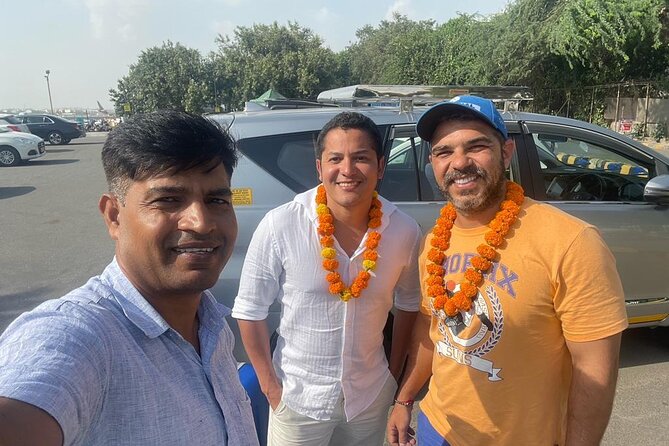
Your driver is part of the experience. In feedback tied to this operator, drivers are repeatedly described as friendly, punctual, and smooth behind the wheel. Names that pop up include Khan, Imran, Rajeev, Rajaeev, and Rajiv, and the common theme is a car that stays clean and a ride that feels safe and comfortable.
You’ll also have mineral water included, and tolls/parking are handled—small line items that quietly prevent headaches. It’s the kind of setup that helps you focus on the sights, not on logistics.
Other Agra runs out of Delhi worth a look




Delhi Day One: Qutub Minar, Humayun’s Tomb, Jama Masjid, and Chandni Chowk
Delhi on day one works because it mixes eras and styles fast. You start with Qutub Minar, then shift to Mughal funerary architecture at Humayun’s Tomb, then land in Old Delhi at Jama Masjid and finish with the commercial chaos of Chandni Chowk.
Qutub Minar (UNESCO) is a classic reason to visit: a 73-meter brick minaret with red sandstone and marble, built starting in 1193. The details matter here. You’ll see carved surfaces and Quranic inscriptions, plus the tower’s five distinct stories marked by projecting balconies. It’s the kind of monument where a guide helps you notice the “why” behind the design.
Next is Humayun’s Tomb (UNESCO), often explained as a key precursor to the later Mughal style you’ll see at the Taj Mahal. The charbagh garden plan—four-part layout with pathways and water channels—sets a calm contrast to the intensity of other Delhi stops. Even if you’re not a garden person, the layout gives you breathing room and helps you take better photos.
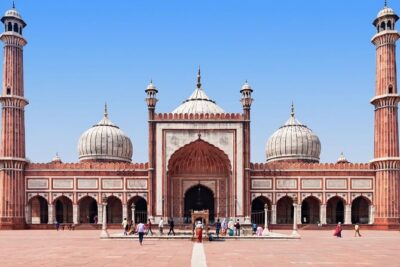
Then comes Jama Masjid, one of the largest mosques in India, built by Shah Jahan in the mid-1600s. The courtyard can hold up to 25,000 worshippers, but on your visit the real value is architectural scale: red sandstone with white marble, inscriptions, and a massive prayer hall. If you’re respectful about dress and behavior, this is an unforgettable stop.
Finally, you’ll hit Chandni Chowk, the Old Delhi market area built in the 17th century. The point isn’t shopping for the sake of shopping. It’s that you’re walking through a living system—textiles, spices, electronics, jewelry, street food, and narrow lanes where you feel how the city trades and moves. Bring your patience and expect it to be crowded.
Quick consideration: this day packs a lot into one slice. Comfortable shoes help, and you’ll probably want to pace your shopping impulses.
Agra Day Two: Sunrise Taj Mahal That Changes Color in Real Time
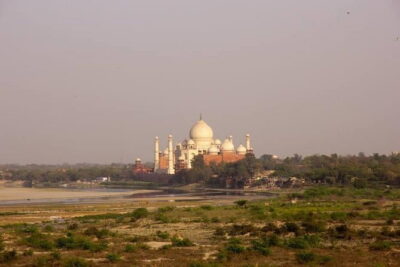
Agra is where this tour gets serious. The headline is Taj Mahal at sunrise. That timing is not a small detail—it’s the difference between seeing a famous building and actually experiencing why it’s famous. As the sun hits the white marble, the color shifts. Expect a milky, warm glow as light changes, with different tones at morning brightness.
You’ll spend about 3 hours on this stop. That’s enough time to take in the symmetry, the dome and surrounding smaller domes, and the inlay work and carvings without feeling like you’re being rushed out. The Taj Mahal sits in a Mughal garden setting with reflecting pools, and a good guide will help you understand the layout so your photos don’t look like random angles.
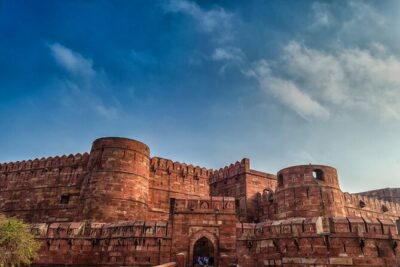
After that, you move to Agra Fort, sometimes called the Red Fort of Agra. It’s red sandstone and historically complex: built under Akbar in the late 1500s and used as a Mughal residence until the capital shifted. What you’re looking for is variety—palaces, halls, mosques, and spaces blending Hindu and Islamic architectural influences.
Two areas often get the most attention inside:
- Jahangir Palace (with marble inlays and carving work)
- Khas Mahal, a white marble palace area associated with views toward the Yamuna River
You’ll typically have around 2 hours here. That’s a good balance: enough to walk and absorb, not so long that you’re drained by the time you roll into the next day.
One more Agra note: the tour plan includes a stop at Tomb of Itimad-ud-Daulah as well. This is the kind of place that rewards slow looking, because the decoration and marble detailing can feel more intimate than the “big wow” monuments.
Fatehpur Sikri Day Three: The Mughal Capital That Got Left Behind
Day three takes you to Fatehpur Sikri, a former Mughal capital near Agra. It’s one of those sites where the scale surprises you: built in the 16th century, it served as the capital from 1571 to 1585, then was abandoned shortly afterward—often linked to water problems. The result is a city that still reads clearly in person.
The architecture blends Hindu, Persian, and Islamic styles, which is part of what makes the place feel coherent instead of random. Your anchor stop is Buland Darwaza, the Gate of Magnificence, described as the tallest gateway in the world. Even if you only get one big “wow” viewpoint in the day, this is a strong candidate.
The package lists admission as free for this stop, which makes it a smart value add. More value means you can spend your energy on exploring rather than calculating the cost of every ticket counter.
Time on-site is around 3 hours. That’s long enough to walk at a comfortable pace, take breaks, and still see the key buildings without feeling rushed.
Practical tip: bring a hat and plan for sun exposure. Fatehpur Sikri can feel open and exposed compared to more shaded tomb and fort interiors.
Jaipur Day Four: Amber Fort’s Mirror Palace and the City Palace Courtyards
Jaipur is where the tour leans into royal scale. The first major stop is Amber Fort (also called Amer Fort). It’s a hilltop fort built in the late 1500s by Raja Man Singh I and expanded/renovated by Raja Jai Singh I. The blend of red sandstone and marble, plus the Hindu and Mughal design elements, makes it feel grand without being one-note.
A big highlight here is the Sheesh Mahal, the Mirror Palace. If you’ve heard about mirror work, this is where it’s explained through what you see: mirror arrangements that reflect light across interior spaces. Even if light isn’t perfect at your exact moment, the concept lands because you can connect the mirrors to the overall “design for sparkle” idea.
You’ll have about 3 hours at Amber Fort. That’s enough time to explore gates, ramparts, and paths, and still have energy for the next stops.
Then it’s City Palace of Jaipur, a complex that blends Mughal and Rajput styles, built in the 18th century under Maharaja Sawai Jai Singh II. This place works well with a guide because it’s not just one building. It’s courtyards, gardens, and connected structures.
Inside, Chandra Mahal is the star for many visitors: a seven-story palace still associated with the royal family. Each floor has a distinct name, and you’ll see decorative work with mirrors and paintings. Even if you’re not the type to memorize palace sections, the guide helps you understand what you’re looking at.
You’ll likely spend around 2 hours here, which feels just right for Jaipur’s pace.
Chasing the Pink City? More Jaipur day trips

Hawa Mahal and Jantar Mantar: Jaipur’s Geometry and Window Views
After forts and palace courtyards, Jaipur shifts to signature landmarks. First up is Hawa Mahal (Palace of Winds), built in 1799. It’s the iconic five-story façade in red and pink sandstone, shaped like a honeycomb with 953 small windows (jharokhas).
This stop is about seeing the exterior design as a system, not just standing in front of a postcard wall. The latticework pattern is a visual story: lots of windows, lots of angles, and a building that feels designed for light and airflow. You’ll have about 1 hour here, so it’s smart to arrive with your camera ready and take a few minutes just to map viewpoints.
Then you’ll visit Jantar Mantar, Jaipur’s astronomical observatory built in the 18th century by Maharaja Jai Singh II. The key concept is that it’s an instrument for calculation—architecture as science. It includes 13 instruments, made for observing celestial bodies with the naked eye, measuring time, predicting eclipses, tracking star positions, and determining altitudes.
This site is a great “brain break” between fort walking and market wandering. You get visual variety and a different kind of wonder. Time here is around 1 hour, which should leave you satisfied without feeling like you need a physics exam to enjoy it.
Price and Value: What $290 Covers (and Where You Spend Extra)
At $290 per person, you’re paying for a few things that usually cost more when you do this trip on your own: a private AC vehicle with driver, guided interpretation at multiple major sites, and the effort-saving convenience of pickup and drop-off.
The package also includes a 3-star hotel with breakfast if you select that option. That matters because the Golden Triangle often turns into a scramble if your lodging timing is off. Here, you get a planned base and an included morning start.
Where you’ll likely add money:
- Monument entry tickets are not included. This is the most important line item to budget for. You can’t avoid paying if you want to enter and explore the interiors of major sites.
- Food isn’t included, so you’ll eat on your own during the day.
The overall value is strong if you want:
- a comfortable ride without negotiating routes daily
- guides so you don’t just see famous structures, but understand what you’re looking at
It’s less ideal if you already love organizing transport and tickets and prefer to travel without guided time at major monuments.
What Makes the Tour Feel Like Luxury in Real Life
This is one of those tours where “luxury” shows up in the small stuff:
- you’re not juggling multiple bookings
- you don’t worry about tolls and parking
- you have water and AC for long stretches
- you get someone handling the handoffs between cities
The reviews tied to this operator also point to a consistent strength: drivers who keep things smooth, plus guides who communicate in strong English and help with practical photo timing. Names that appear include Khan, Imran, Rajeev, and Rajaeev, with comments about safe driving, punctual pickups, and friendly service.
If you care about comfort but still want a real, on-the-ground sightseeing day, this setup is a good fit. You get the big hits—Taj Mahal, Agra Fort, Amber Fort, City Palace, Hawa Mahal—without the exhausting logistics that often come with doing them independently.
Who Should Book This 4-Day Private Golden Triangle Tour
This tour is best for you if:
- you want Delhi, Agra, and Jaipur in a short window
- you prefer private transport over hopping between options
- you like having a guide explain what you’re seeing
- you’d rather spend your energy on photos and walking than on route planning
It’s also a solid choice for first-time India visitors who want a clear structure and a driver they can rely on.
If you’re a hardcore budget traveler who enjoys independent planning and ticket-hunting, you might find a DIY version cheaper. But you’ll spend that savings in time and stress—especially with a sunrise Taj Mahal plan.
Should You Book This Tour or DIY It?
Book this tour if you want maximum “important sights, minimal friction.” The private AC car, the live guides, and the clean, comfortable ride factor make a big difference on a route that covers several major landmarks in a short time.
DIY can make sense if you’re traveling very flexibly, already know how you’ll get between Delhi, Agra, and Jaipur, and you’re comfortable managing sunrise logistics and entry tickets yourself. But sunrise Taj Mahal plus major fort-palace days is exactly where planning tends to break down.
My call: if you’re traveling for comfort, clarity, and a guided route that keeps things moving, this is a good purchase.
FAQ
How long is the Golden Triangle tour from Delhi?
It’s listed as 4 days (approx.).
Is this a private tour?
Yes. It’s described as a private tour/activity, meaning only your group participates.
What’s included in the price?
Pickup and drop-off, a private AC car for the entire tour activity, a live tour guide in each city, mineral water, toll taxes and parking, and 3-star hotel accommodation with breakfast if you select the option.
Are monument entry tickets included?
No. Monument entry tickets are not included.
Are meals included during the tour?
Food is not included.
Do you travel by air-conditioned car?
Yes. The tour includes a private AC car for the entire experience.
Is pickup available in Delhi?
The tour location is New Delhi, and pickup and drop-off are included.
What is the cancellation policy?
Free cancellation is available. You can cancel up to 24 hours in advance for a full refund. Changes made less than 24 hours before the start time aren’t accepted.
The Full Golden Triangle, More Options
- 3-Days Private Golden Triangle Tour: Delhi, Agra & Jaipur by Car
★ 5.0 · 1,107 reviews - 3-Days Private Golden Triangle Tour: Delhi, Agra & Jaipur by Car
★ 5.0 · 1,098 reviews - 3-Day Delhi, Agra and Jaipur Private Tour – India Golden Triangle
★ 5.0 · 812 reviews - Four-Day Private Luxury Golden Triangle Tour to Agra and Jaipur From New Delhi
★ 5.0 · 807 reviews - 5 Nights 6 Days Private Golden Triangle Tour – Delhi Agra Jaipur
★ 5.0 · 574 reviews
Onward to Jaipur: More Day Trips
- 3-Days Private Golden Triangle Tour: Delhi, Agra & Jaipur by Car
★ 5.0 · 1,107 reviews - 3-Days Private Golden Triangle Tour: Delhi, Agra & Jaipur by Car
★ 5.0 · 1,098 reviews - 3-Day Delhi, Agra and Jaipur Private Tour – India Golden Triangle
★ 5.0 · 812 reviews - Four-Day Private Luxury Golden Triangle Tour to Agra and Jaipur From New Delhi
★ 5.0 · 807 reviews - Jaipur Day Trip from Delhi by Car or Train – All Inclusive
★ 5.0 · 663 reviews
More Agra Day Trips out of Delhi
- Same Day Taj Mahal, Agra Fort & Baby Taj Tour from Delhi by Car
★ 5.0 · 4,304 reviews - Full Day Taj Mahal, Agra Fort & Baby Taj Tour from Delhi by Car
★ 5.0 · 3,647 reviews - From Delhi: Taj Mahal & Agra Private Day Trip with Transfers
★ 4.9 · 3,181 reviews - From Delhi: Taj Mahal and Agra Fort Private Sunrise Tour
★ 4.9 · 2,270 reviews - Sunrise Taj Mahal, Agra Fort & Baby Taj Tour from Delhi by Car
★ 5.0 · 2,243 reviews
Just added: more New Delhi reviews to browse
- 4 days Golden Triangle Tour★ 5.0 · 3 reviews
- Discover Old & New Delhi: Private Tour with Street Food★ 5.0 · 3 reviews
- Taj Mahal Tour From Delhi By Private Car★ 4.5 · 3 reviews
- Golden Triangle Tour 5 Days★ 5.0 · 3 reviews
- Taj Mahal: Express Entry Ticket For Sunset Tour with guide★ 5.0 · 3 reviews
- Agra Taj Mahal Sunrise & Sunset Tour from Delhi★ 5.0 · 3 reviews
Agra Day Trips from Delhi, compared.
 ★ 5.0Same Day Taj Mahal, Agra Fort & Baby Taj Tour from Delhi by CarFrom $624,304 reviews
 ★ 5.0Full Day Taj Mahal, Agra Fort & Baby Taj Tour from Delhi by CarFrom $623,647 reviews
 ★ 4.9From Delhi: Taj Mahal & Agra Private Day Trip with TransfersFrom $43,181 reviews
 ★ 4.9From Delhi: Taj Mahal and Agra Fort Private Sunrise TourFrom $592,270 reviews
 ★ 5.0Sunrise Taj Mahal, Agra Fort & Baby Taj Tour from Delhi by CarFrom $622,243 reviews
 ★ 5.0Taj Mahal and Agra Private Car Tour from Delhi with 5* LunchFrom $331,633 reviews
 ★ 4.9From Delhi: Private Taj Mahal and Agra Tour by Express TrainFrom $751,605 reviews
 ★ 5.0Taj Mahal, Agra Fort, Baby Taj Tour from Delhi by Superfast TrainFrom $751,494 reviews