
Reviewed · AGRA DAY TRIPS FROM DELHI
4 Day Private Golden Triangle Tour Dehli Agra Jaipur with guide
Delhi, Agra, Jaipur, then repeat the classics in comfort. This private Golden Triangle tour strings together the big-name sights with a real, in-the-moment guide, so you understand what you’re seeing instead of just ticking boxes. You’ll move through Old Delhi’s Mughal-era power centers, spend focused time in Agra’s monument zone, then shift to Jaipur’s royal architecture and planned city science.
I love the private, A/C vehicle with door-to-door pickup and drop. I also like the professional guide in each city, which makes stops like Humayun’s Tomb, Qutub Minar, and Jantar Mantar easier to grasp fast.
One consideration: monument entrance fees and meals are not included, so your day-to-day budget needs a little extra planning beyond the listed tour price.
In This Review
- Key highlights worth your attention
- Private Golden Triangle flow: how the logistics actually work
- Day 1 in Delhi: Old Delhi icons plus Mughal-and-beyond landmarks
- Red Fort: power first, pictures later
- Jama Masjid: scale and street views
- India Gate: a quick reset break
- Drive-by monuments: Rashtrapati Bhawan and Parliament House
- Humayun’s Tomb and Qutub Minar: two major UNESCO anchors
- Day 2 in Agra: Taj Mahal plus the forts that explain it
- Taj Mahal: planned time, not a rushed photo sprint
- Agra Fort: Mughal power with real framing for the Taj
- Itimad-ud-Daulah’s Tomb: the Baby Taj effect
- Day 3: Fatehpur Sikri’s scale, then Jaipur’s royal design systems
- Fatehpur Sikri: UNESCO day trip feel
- Hawa Mahal: Jaipur’s face of latticework
- City Palace: where style and museum logic meet
- Jantar Mantar: Jaipur’s street-level science
- Day 4 in Jaipur: Albert Hall, the Gaitor cenotaphs, Jal Mahal, and Amer
- Albert Hall Museum: museum in Indo-Saracenic style
- Royal Gaitor Tumbas: cenotaphs with an Aravalli backdrop
- Jal Mahal: quick water-palace photo moment
- Amer: the final big heritage stop
- Return to New Delhi and airport drop
- Price and value: what $150 covers, and what it doesn’t
- What to expect day-by-day in your real schedule
- Who this tour suits best
- Should you book this Golden Triangle tour?
- FAQ
- How many days is the Golden Triangle tour?
- What cities are included?
- What is the price per person?
- Is pickup and drop-off included?
- Do I get a driver and private vehicle?
- Are monument entrance fees included?
- Are meals included?
- Is hotel accommodation included?
- Is the tour private?
- Is free cancellation available, and for how long?
Key highlights worth your attention
- Private door-to-door comfort: A chauffeur-driven A/C car plus pickup and drop help you spend less time negotiating logistics.
- Guide-led sightseeing in each city: You get interpretation, not just transportation between sites.
- A packed, sensible route: Red Fort to Jama Masjid in Old Delhi, then Taj Mahal plus forts, then Fatehpur Sikri into Jaipur.
- UNESCO coverage across multiple days: Humayun’s Tomb, Qutub Minar, Fatehpur Sikri, plus more major heritage stops.
- More than the headlines: You’ll also see Agra’s Itimad-ud-Daulah (often called the Baby Taj) and Jaipur’s observatory, not only the famous facades.
Private Golden Triangle flow: how the logistics actually work
This tour is built for people who want the Golden Triangle without the usual chaos. You’ll base yourself in the cities you visit (hotel is not included), and the operator provides airport/railway station pickup and drop plus a chauffeur-driven A/C private vehicle. That matters because Delhi traffic can turn sightseeing days into endurance tests. Having a dedicated driver keeps the day moving.
Another big practical win: it’s a private tour/activity. Only your group participates, so your guide can set pace for your interests. If you’re the type who likes photos, quiet moments, or extra time at one site, you’re not stuck in a “everyone line up now” rhythm.
One more detail I appreciate: the tour lists mobile ticketing and group discounts. Even if you’re traveling solo or as a couple, this hints the operator runs a more organized setup than a purely ad-hoc ride.
Other Agra runs out of Delhi worth a look




Day 1 in Delhi: Old Delhi icons plus Mughal-and-beyond landmarks
Day 1 concentrates on Delhi’s layers, and it does it in a way that feels like a guided history walk rather than a random grab bag.
Red Fort: power first, pictures later
You’ll start with the Red Fort (Lal Qila), a Mughal fort built by Shah Jahan in the mid-17th century. It’s a UNESCO World Heritage Site, and the time budget is about 1 hour. Even if you’ve seen photos, standing in the fort zone helps you understand how this was a statement of rule and ceremony.
Notable reality check: admission isn’t included, so you’ll want to expect entrance fees and add them to your personal budget.
Jama Masjid: scale and street views
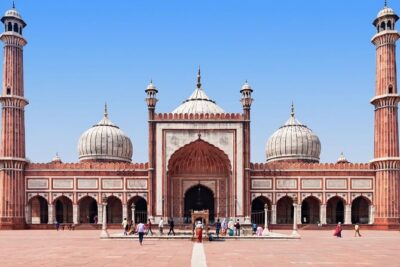
Next comes Jama Masjid, one of India’s largest mosques. It’s made of red sandstone and white marble, and it can accommodate up to 25,000 worshippers. The tour lists about 45 minutes, and admission is marked free. If you’re curious how religious architecture fits into a functioning city, the mosque and its surrounding streets give you that feeling fast.
The other bonus here is visibility. The minarets offer views over Delhi’s street life, and that’s exactly the kind of “you had to be there” moment that doesn’t need extra ticket time.
India Gate: a quick reset break
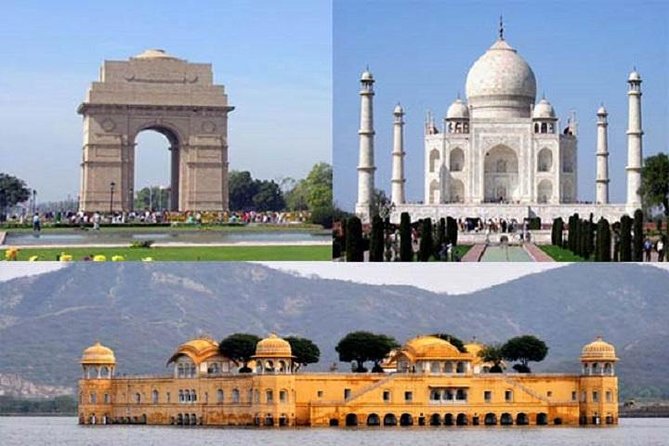
India Gate is a short stop (about 15 minutes) with no admission fee. It’s a World War I war memorial built in 1931, surrounded by lawns that locals also use. This is a good palate cleanser after heavier historical stops.
Chasing the Pink City? More Jaipur day trips
Drive-by monuments: Rashtrapati Bhawan and Parliament House
You’ll also do drive-through views of Rashtrapati Bhawan (the President of India’s residence) and pass by the Parliament House. These are “see it from the car” moments, not long visits. That’s not a flaw so much as a planning choice: on a 4-day schedule, you’d run out of time if every landmark demanded full entry.
Humayun’s Tomb and Qutub Minar: two major UNESCO anchors
The last stretch of Day 1 is where Delhi’s UNESCO credentials really show up.
- Humayun’s Tomb: about 1 hour. It’s a UNESCO site, built in 1569 for Humayun, with Persian-inspired architecture and garden-tomb design. Admission is listed as not included.
- Qutub Minar: about 1 hour. Also UNESCO, and listed as 73 meters tall. It’s described as the tallest brick minaret in the world, with Indo-Islamic design and detailed carvings and inscriptions. Admission is not included.
By the end of Day 1, you’ll feel the arc: Delhi as imperial seat, then Delhi as monumental legacy. It’s a lot of cement and symbolism, but the structure of the day keeps it from feeling random.
Day 2 in Agra: Taj Mahal plus the forts that explain it
Day 2 is the “wow” day, but it’s not just one monument. You’ll get Taj Mahal, plus two additional heritage sites that round out the Mughal picture.
Taj Mahal: planned time, not a rushed photo sprint
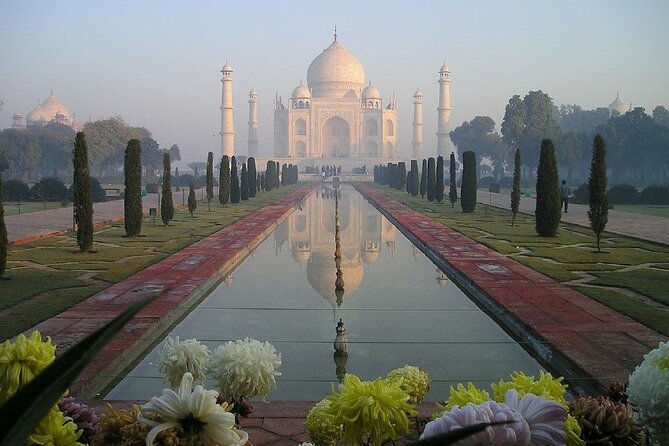
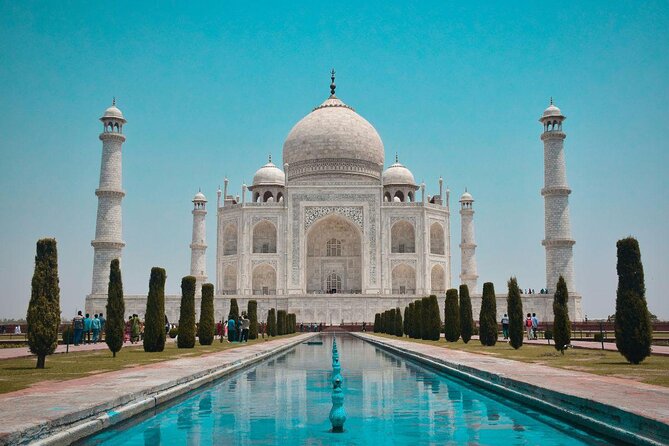
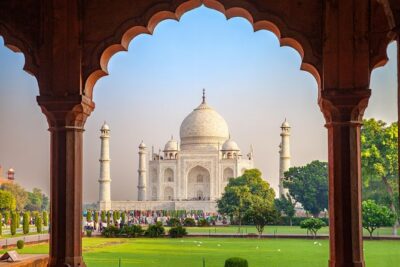
Taj Mahal is listed for about 2 hours, and admission isn’t included. The experience here is about more than the outside view. You’ll have time to take in the white marble, the gardens, and the reflecting pools approach.
What I like about having a dedicated time block is that you can settle into the atmosphere. The Taj doesn’t reward frantic movement. A guide also helps you interpret what you’re looking at, so the details land instead of floating by.
Agra Fort: Mughal power with real framing for the Taj
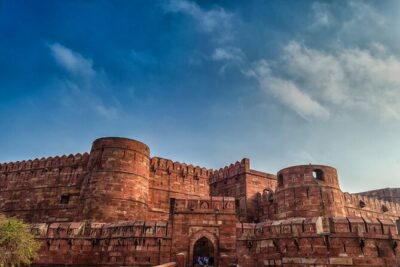
Next is Agra Fort (about 1 hour, admission not included). You’ll see a massive red sandstone fortress with halls and gardens, plus views that connect directly to the Taj Mahal idea. That “framing” is exactly why Agra Fort is worth including; it helps you understand the landscape logic behind Mughal choices.
Itimad-ud-Daulah’s Tomb: the Baby Taj effect
The final Agra stop is Tomb of Itimad-ud-Daulah (about 1 hour, admission not included), often called the Baby Taj. The tour highlights its intricate marble inlay work and gardens, and it’s built in the 17th century.
This is a great counterbalance if you’re Taj-saturated by the time you get here. It tends to feel more delicate and detailed, and it gives your eyes a different kind of “wow” than the main marble icon.
Day 3: Fatehpur Sikri’s scale, then Jaipur’s royal design systems
Day 3 is two worlds in one day: the Mughal capital-at-large energy of Fatehpur Sikri, then Jaipur’s palace and city-planning identity.
Fatehpur Sikri: UNESCO day trip feel
Fatehpur Sikri is a UNESCO World Heritage Site, and the tour lists about 1 hour with admission marked free. The site is described as a former Mughal capital built by Emperor Akbar in the 16th century, with red sandstone architecture and grand structures like Buland Darwaza.
Even with limited time, Fatehpur Sikri can feel huge. What’s helpful here is the guide context: you’re not just walking through courtyards; you’re seeing how power was staged in stone.
Hawa Mahal: Jaipur’s face of latticework
You’ll then reach Jaipur and visit Hawa Mahal (Palace of Wind) for about 30 minutes. The famous feature is its honeycomb-like design and the 953 small windows, built so royal women could observe street life without being seen. The tour notes the vibrant pink façade and intricate latticework.
Admission isn’t included, but the time box is short enough that you can enjoy the exterior design and grasp the purpose without getting stuck.
City Palace: where style and museum logic meet
Next is City Palace of Jaipur (about 1 hour 30 minutes, admission not included). The tour description points out the blend of Mughal and Rajput architecture, plus courtyards, gardens, and museums with royal artifacts. The palace is still described as the official residence of the Jaipur royal family.
This stop is often where people slow down. It’s a good place to ask questions and see how traditions turn into preserved spaces.
Jantar Mantar: Jaipur’s street-level science
You’ll end with Jantar Mantar (about 45 minutes, admission not included). It’s an astronomical observatory built in the 18th century by Maharaja Sawai Jai Singh II. The tour lists UNESCO status and highlights instruments including the world’s largest stone sundial.
If you like history but also like how things work, this is a standout. It turns “old” into “engineered,” and it gives you something to look at besides palace arches.
Day 4 in Jaipur: Albert Hall, the Gaitor cenotaphs, Jal Mahal, and Amer
Day 4 keeps Jaipur layered, mixing museum culture, royal memorial architecture, a lake-view stop, and then the big fort town.
Albert Hall Museum: museum in Indo-Saracenic style
Albert Hall Museum is listed for about 1 hour. It was inaugurated in 1887 and is described as Indo-Saracenic architecture. The collection includes art, textiles, artifacts, and even mentions a famous mummy of a 2,500-year-old Egyptian priest.
Admission isn’t included. Still, the building itself is part of the experience, and the gardens around the museum make it feel like a calmer, slower stop compared with palace-heavy days.
Royal Gaitor Tumbas: cenotaphs with an Aravalli backdrop
Next are the Royal Gaitor Tumbas for about 30 minutes. These are cenotaphs of the Kachwaha rulers, built in the 18th century, with intricate marble carvings and a backdrop described as the Aravalli hills. Admission isn’t included.
This is the kind of stop where a guide helps you notice details you’d otherwise miss, especially in marble carving patterns and layout.
Jal Mahal: quick water-palace photo moment
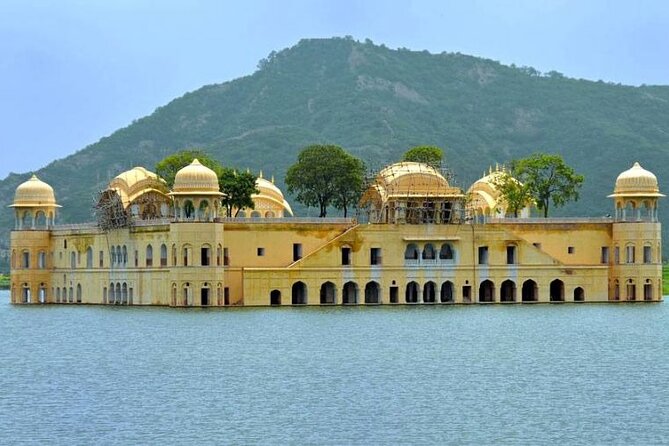
Then you’ll see Jal Mahal (Water Palace) for about 15 minutes. It’s located in the middle of Man Sagar Lake and is described as a Rajput-Mughal style blend with carved details. It’s a short stop, so treat it as a visual break rather than a full-on monument session.
Amer: the final big heritage stop
The biggest Day 4 capstone is Amer, about 2 hours (admission listed free in the itinerary). Amer is described as 11 km from Jaipur, known for palaces, forts, and cultural heritage.
If you’re looking for an ending with dramatic visuals and a sense of how Jaipur’s royal power played out on the ground, Amer delivers.
Return to New Delhi and airport drop
After Amer, you transfer back to New Delhi. The itinerary states a transfer of about 5 hours, and upon arrival you’ll be dropped at the airport for onward travel.
This is worth planning around. If your flight timing is flexible, you can breathe more. If it’s fixed, you’ll want to confirm your pickup/arrival schedule so the transfer doesn’t feel stressful.
Price and value: what $150 covers, and what it doesn’t
At $150 per person for a roughly 4-day private setup, the value depends on what you already have covered.
Here’s the math that matters:
- Included: pickup and drop (hotel/airport/railway station), chauffeur-driven A/C private vehicle, professional tour guide in each city, and sightseeing tours across Delhi, Agra, and Jaipur.
- Not included: hotel accommodation, monument entrance fees, and any meals or personal expenses.
So you’re paying for planning + transport + interpretation, not for all the on-site costs of entering monuments and eating. For many people, that’s a good deal because you can choose your hotel comfort level and eat at spots you actually want.
If you’re the type who hates negotiating drivers, waiting for public transport, or trying to “figure out” each site alone, this package structure is where you get your money’s worth. The private car and guide reduce friction fast.
One more value point: the tour is rated 5/5 with 5 reviews listed, and feedback snippets praise the team’s organization and safety mindset. I also saw mentions of a strong driver named Malik for route knowledge and safety, and a planner named Shakeer for attentive trip setup. Those details matter because Golden Triangle travel lives or dies on timing.
What to expect day-by-day in your real schedule
This is not a slow, lingering art crawl. It’s a focused monument-and-city-structure itinerary. The stops are timed (often around 30 minutes to 2 hours each), so you get substantial coverage without endless wandering.
A practical rhythm emerges:
- Delhi Day 1: Old Delhi religious and imperial sites, then UNESCO anchors.
- Agra Day 2: Taj first, then two forts/tombs that explain context and technique.
- Day 3: Fatehpur Sikri’s big imperial layout, then Jaipur palaces and observatory design.
- Jaipur Day 4: museum and memorial architecture, water-palace viewpoint, then Amer and back to Delhi.
If you’re traveling with someone who wants a little shopping time in Jaipur, the tour summary notes city tour and shopping in Jaipur plus a special Rajasthani lunch in Jaipur. That’s a real culture-and-break bonus compared to tours that only do monuments and vanish.
Who this tour suits best
This private Golden Triangle tour is a strong match if you:
- Want a guide-led experience across all three cities
- Prefer comfort and timing over public transport or DIY navigation
- Are okay budgeting separately for entrance fees and meals
- Like a structured route that hits the key monuments plus a few important extras (like Itimad-ud-Daulah and Jantar Mantar)
It may feel intense if you hate back-to-back heritage stops or if your travel style is mostly spontaneous.
Should you book this Golden Triangle tour?
Yes, I’d book it if you want the Golden Triangle without the hassle. The combination of private A/C vehicle, guides in each city, and a route that includes more than the headline monuments makes it feel built for real sightseeing time, not just movement.
I’d pause if you’re hoping for a package that automatically covers hotel, meals, and entrance fees, because those are explicitly not included. Also think carefully about Day 4’s return to Delhi if your onward flight is tight.
If you want a reliable, organized circuit through Delhi, Agra, and Jaipur, this one is easy to recommend.
FAQ
How many days is the Golden Triangle tour?
The tour is listed as 4 days (approx.).
What cities are included?
It includes New Delhi, Agra, and Jaipur.
What is the price per person?
The price is listed as $150.00 per person.
Is pickup and drop-off included?
Yes. Pickup and drop is included (hotel/airport/railway station).
Do I get a driver and private vehicle?
Yes. You get a chauffeur-driven A/C private vehicle for the Golden Triangle tour.
Are monument entrance fees included?
No. Monument entrance fees are not included.
Are meals included?
No. Any meal or personal expenses are not included.
Is hotel accommodation included?
No. Hotel accommodation is not included.
Is the tour private?
Yes. It’s described as a private tour/activity, and only your group participates.
Is free cancellation available, and for how long?
Free cancellation is available. You can cancel up to 24 hours in advance for a full refund. If you cancel less than 24 hours before the experience starts, there is no refund.
The Full Golden Triangle, More Options
- 3-Days Private Golden Triangle Tour: Delhi, Agra & Jaipur by Car
★ 5.0 · 1,107 reviews - 3-Days Private Golden Triangle Tour: Delhi, Agra & Jaipur by Car
★ 5.0 · 1,098 reviews - 3-Day Delhi, Agra and Jaipur Private Tour – India Golden Triangle
★ 5.0 · 812 reviews - Four-Day Private Luxury Golden Triangle Tour to Agra and Jaipur From New Delhi
★ 5.0 · 807 reviews - 5 Nights 6 Days Private Golden Triangle Tour – Delhi Agra Jaipur
★ 5.0 · 574 reviews
Onward to Jaipur: More Day Trips
- 3-Days Private Golden Triangle Tour: Delhi, Agra & Jaipur by Car
★ 5.0 · 1,107 reviews - 3-Days Private Golden Triangle Tour: Delhi, Agra & Jaipur by Car
★ 5.0 · 1,098 reviews - 3-Day Delhi, Agra and Jaipur Private Tour – India Golden Triangle
★ 5.0 · 812 reviews - Four-Day Private Luxury Golden Triangle Tour to Agra and Jaipur From New Delhi
★ 5.0 · 807 reviews - Jaipur Day Trip from Delhi by Car or Train – All Inclusive
★ 5.0 · 663 reviews
More Agra Day Trips out of Delhi
- Same Day Taj Mahal, Agra Fort & Baby Taj Tour from Delhi by Car
★ 5.0 · 4,304 reviews - Full Day Taj Mahal, Agra Fort & Baby Taj Tour from Delhi by Car
★ 5.0 · 3,647 reviews - From Delhi: Taj Mahal & Agra Private Day Trip with Transfers
★ 4.9 · 3,181 reviews - From Delhi: Taj Mahal and Agra Fort Private Sunrise Tour
★ 4.9 · 2,270 reviews - Sunrise Taj Mahal, Agra Fort & Baby Taj Tour from Delhi by Car
★ 5.0 · 2,243 reviews
Just added: more New Delhi reviews to browse
- 4 days Golden Triangle Tour★ 5.0 · 3 reviews
- Discover Old & New Delhi: Private Tour with Street Food★ 5.0 · 3 reviews
- Taj Mahal Tour From Delhi By Private Car★ 4.5 · 3 reviews
- Golden Triangle Tour 5 Days★ 5.0 · 3 reviews
- Taj Mahal: Express Entry Ticket For Sunset Tour with guide★ 5.0 · 3 reviews
- Agra Taj Mahal Sunrise & Sunset Tour from Delhi★ 5.0 · 3 reviews
Agra Day Trips from Delhi, compared.
 ★ 5.0Same Day Taj Mahal, Agra Fort & Baby Taj Tour from Delhi by CarFrom $624,304 reviews
 ★ 5.0Full Day Taj Mahal, Agra Fort & Baby Taj Tour from Delhi by CarFrom $623,647 reviews
 ★ 4.9From Delhi: Taj Mahal & Agra Private Day Trip with TransfersFrom $43,181 reviews
 ★ 4.9From Delhi: Taj Mahal and Agra Fort Private Sunrise TourFrom $592,270 reviews
 ★ 5.0Sunrise Taj Mahal, Agra Fort & Baby Taj Tour from Delhi by CarFrom $622,243 reviews
 ★ 5.0Taj Mahal and Agra Private Car Tour from Delhi with 5* LunchFrom $331,633 reviews
 ★ 4.9From Delhi: Private Taj Mahal and Agra Tour by Express TrainFrom $751,605 reviews
 ★ 5.0Taj Mahal, Agra Fort, Baby Taj Tour from Delhi by Superfast TrainFrom $751,494 reviews