
Reviewed · AGRA DAY TRIPS FROM DELHI
4 Days Delhi Agra Jaipur Private Tour From Delhi
Delhi is a loud warm-up for the Golden Triangle.
This 4-day private route from New Delhi strings together the big-hits—Taj Mahal, Agra Fort, and Jaipur’s royal sights—while keeping you comfortable in a private, air-conditioned car and guided at the major stops. It’s a smart way to see more without playing transportation Tetris every day.
What I like most is how much context you get as you go. You’ll have your driver guide and private guides at key monuments, which turns stone-and-stories sightseeing into something you can actually follow. And I also really appreciate the practical setup: hotel pickup and drop-off from New Delhi, daily breakfast, and water bottle support make the days easier to manage.
One consideration: monument entrance fees aren’t included, and tips aren’t included either. So your final total will be a bit higher than the headline price once you add tickets for places like the Taj Mahal, forts, and palaces.
In This Review
- Key things to know before you go
- Why this 4-day Golden Triangle route from Delhi works
- Day 1 Delhi airport transfer plus Qutub Minar, Lotus Temple, India Gate
- Qutub Minar: a towering UNESCO World Heritage icon
- Lotus Temple: modern faith architecture you can’t ignore
- India Gate: war memorial with a big-city feel
- Day 2 Old Delhi classics plus Humayun’s Tomb, Raj Ghat, then onward to Agra
- Jama Masjid: Mughal scale in the heart of Old Delhi
- Chandni Chowk rickshaw ride: fast way to see the street rhythm
- Red Fort: a Mughal power statement along the Yamuna
- Humayun’s Tomb: garden-tomb architecture with Persian influence
- Raj Ghat: a simple memorial with a quiet tone
- Drive to Agra and check in
- Day 3 Taj Mahal, Agra Fort, Fatehpur Sikri, then onward to Jaipur
- Taj Mahal: what to look for besides the obvious
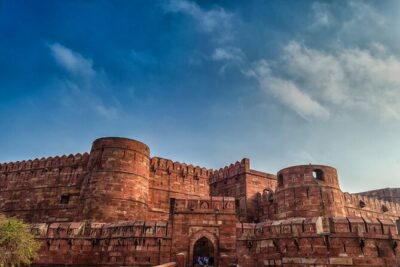
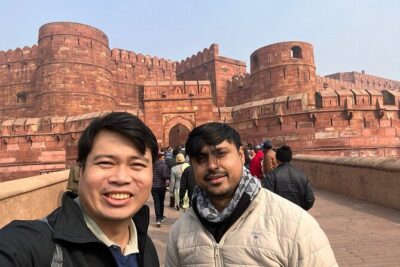
- Agra Fort: red sandstone power, built for Mughals
- Fatehpur Sikri: the red sandstone fortified city day-trip
- Drive to Jaipur and overnight
- Day 4 Jaipur palaces and the science-of-the-stars side of town
- Hawa Mahal: Palace of Wind and a latticework facade
- Jal Mahal: classic viewpoint palace-of-water
- City Palace: royal seat across the old city
- Jantar Mantar: UNESCO instruments that still work
- Return drive to Delhi
- Price and logistics: is $190 per person good value?
- What you’ll really be buying: guidance that connects the dots
- Who should book this Delhi–Agra–Jaipur private tour
- Quick planning tips so the days feel manageable
- Should you book this 4-Day Golden Triangle tour from Delhi?
- FAQ
- FAQ
- Is this a private tour or a shared group tour?
- How long is the tour?
- What’s included in the price?
- Are monument entrance fees included?
- Is pickup included from the Delhi airport?
- What should I budget for extra?
- Can I cancel if plans change?
- Is the tour suitable for most travelers?
Key things to know before you go
- Private, air-conditioned transport between Delhi, Agra, and Jaipur so you’re not stuck with cramped schedules
- Guides at the big monuments (not just a driver who points and shrugs)
- Hotel pickup and drop-off in New Delhi plus airport transfer on Day 1
- A tight 4-day pace: you’ll see famous sites, but plan for early days and travel time
- Jal Mahal is a photo stop; entry inside the fort is prohibited
Why this 4-day Golden Triangle route from Delhi works
The Delhi–Agra–Jaipur circuit is called India’s Golden Triangle for a reason. In just four days you hit the monuments people come halfway around the world for—then you still get enough time to understand what makes each city different.
Delhi is all about layers: Sultanate-era towers like Qutub Minar, religious architecture like the Lotus Temple, and Old Delhi’s Mughal monuments. Agra delivers the jaw-drop moment with the Taj Mahal and the fortified power vibe of Agra Fort. Jaipur then shifts the mood again—pink city splendor, astronomy in stone, and forts and palaces that feel designed for drama.
You also get real value in the way the tour is structured for people who want guidance but don’t want to over-plan. With a driver and organized visits, you’re spending your brainpower on enjoying the sights instead of figuring out logistics every time.
Other Agra runs out of Delhi worth a look




Day 1 Delhi airport transfer plus Qutub Minar, Lotus Temple, India Gate
Day 1 starts the easy way: pickup from the airport and a transfer to your hotel, with check-in listed for 14:00. After a fresh-up, you’re out for a half-day Delhi orientation. This is ideal if you arrive feeling jet-lagged. You’re not forced into a full-day sprint right out of the gate.
Qutub Minar: a towering UNESCO World Heritage icon
Qutub Minar is a 72.5-meter victory tower/minaret complex and part of a UNESCO World Heritage site in Delhi’s Mehrauli area. It’s built in phases—started in 1192 by Qutb Ud-Din-Aibak after defeating the last Hindu ruler of Delhi, later expanded by successors like Iltutmish and Firoz Shah Tughlaq. Even if you don’t memorize dates, you’ll notice the layered growth as you look up.
Practical note: tickets for Qutub Minar are not included, so expect an extra charge. Also, you’ll want comfortable shoes; you’ll likely do a fair amount of walking around the complex.
Lotus Temple: modern faith architecture you can’t ignore
The Lotus Temple is dedicated to the Baháʼí faith and designed to resemble a white lotus flower. It was conceptualized by Canadian architect Fariborz Sahba and completed in 1986. One thing I like about it is the message of openness: it’s open to all regardless of nationality, religion, race, or gender.
It’s also one of those places where the architecture does the talking. You’ll spend time appreciating the clean geometry, the calm feel, and the way it brightens the city with white petals.
Again, entrance tickets aren’t listed as included, so check the day-of cost.
India Gate: war memorial with a big-city feel
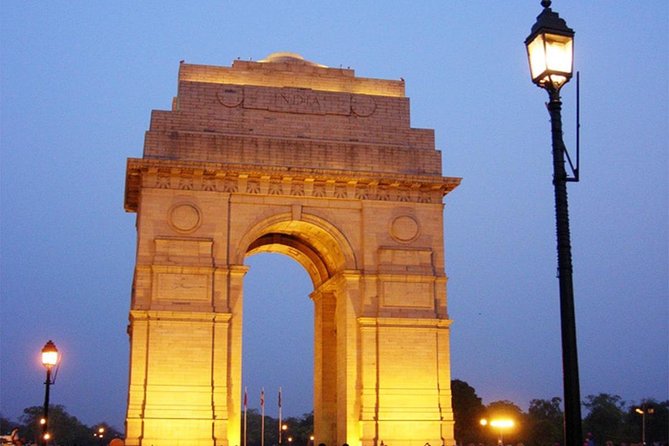
India Gate is the All India War Memorial on Rajpath. It’s about 42 meters tall, designed by Sir Edwin Lutyens, and often compared to famous triumphal arches around the world. It’s also known as the stage for the Republic Day Parade.
You don’t need a long visit here; 30 minutes works well if you’re moving on to dinner and rest. This stop is basically a skyline bookmark—something you see, understand, and file away as a key piece of Delhi’s modern national identity.
Chasing the Pink City? More Jaipur day trips
Day 2 Old Delhi classics plus Humayun’s Tomb, Raj Ghat, then onward to Agra
Day 2 is your Old Delhi deep breath. After breakfast and checkout, you’ll head into older parts of the city where Mughal-era grandeur and everyday street life overlap.
It’s also the day where having a guide matters most. Without one, Chandni Chowk can feel like sensory overload. With guidance, you know what you’re looking at and where to pause.
Jama Masjid: Mughal scale in the heart of Old Delhi
Jama Masjid sits in the older part of Delhi (Chandni Chowk area). It took huge resources for the period—construction cost of one million rupees at the time, 5,000 workers, and about six years (1650–1656). Even if you’re not a history nerd, that kind of scale makes the whole place feel heavyweight.
Tickets aren’t included here either, so add that to your mental budget.
Chandni Chowk rickshaw ride: fast way to see the street rhythm
You’ll get a rickshaw ride in Chandni Chowk, which is a practical shortcut through a dense area. It’s a smart choice: you get motion and a sense of the neighborhood without having to navigate every turn on foot.
Bring patience. This area moves the way markets do—crowds, traffic flow, and lots of people trying to do everyday things while tourists stare at everything.
Red Fort: a Mughal power statement along the Yamuna
Red Fort (Quila-e-Mubarak) is one of those monuments that instantly tells you you’re in the big leagues of Mughal architecture. It sits along the Yamuna and is part of Shahjahanabad—what we now call Old Delhi.
The fort’s UNESCO status also helps: it’s not just photogenic, it’s recognized for architecture. You’ll likely spend about an hour here—long enough to appreciate the complex, not so long that you’re done before you even start.
Humayun’s Tomb: garden-tomb architecture with Persian influence
Humayun’s Tomb is an important stop because it’s considered the first garden-tomb in the Indian subcontinent. Commissioned in 1569–70 by Empress Bega Begum, it uses red sandstone on a massive scale for that era. It also blends Mughal architecture with Persian influences.
This is a great “reset” after the more intense Old Delhi sites. Plan to slow down a bit and let the garden layout and symmetry pull you in. Tickets aren’t included, so keep that in mind.
Raj Ghat: a simple memorial with a quiet tone
Raj Ghat is the memorial where Mahatma Gandhi was cremated after his assassination in 1948. The cenotaph is a simple black marble structure amid a garden. You’ll get about 30 minutes—enough to understand the meaning without turning it into an endurance test.
Drive to Agra and check in
After Delhi sightseeing, you’ll drive to Agra and check into your hotel for the night. This is where the private car earns its keep: you’re not stuck with unpredictable transport times between cities. You’ll also have time to settle in rather than scrambling for dinner and directions.
Day 3 Taj Mahal, Agra Fort, Fatehpur Sikri, then onward to Jaipur
This is the day most people remember most clearly, because it includes the Taj Mahal and then keeps going. It’s a full day, and the value is in the sequencing: you see the main icon, then you see the fort that explains the broader Mughal world, and then you add Fatehpur Sikri’s red-sandstone city energy before reaching Jaipur.
Taj Mahal: what to look for besides the obvious
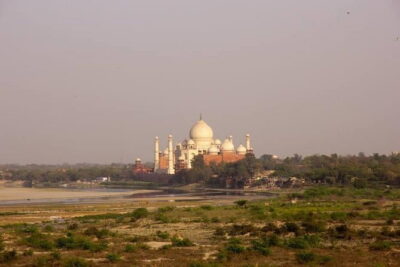
The Taj Mahal is a UNESCO World Heritage Site and often described as the Crown of Palaces in Persian. You’ll approach through a massive gateway, and you can notice water channels and fountains at the entrance area. The monument’s reflection in the Yamuna is mentioned often for a reason—standing in the right viewpoints gives you that iconic calm look.
Tickets aren’t included, so expect an extra cost. Also, build in time for crowd flow. Even with a guide, you’ll want to move at a sensible pace and not sprint from one photo angle to the next.
Agra Fort: red sandstone power, built for Mughals
Agra Fort is about 2.5 kilometers from the Taj Mahal and built entirely of red sandstone. It was built by Emperor Akbar and served as a Mughal residence until 1638. This is different from the Taj’s emotional romance. Agra Fort feels like administration, defense, and imperial control.
You’ll spend about one hour here—ideal for seeing key parts without fatigue. Tickets aren’t included, so plan your budget.
Fatehpur Sikri: the red sandstone fortified city day-trip
Then you’ll head to Panch Mahal / Fatehpur Sikri, about 40 km from Agra. Fatehpur Sikri was founded in 1571 under Akbar, once serving as the capital for about 15 years. It’s now another UNESCO World Heritage site and full of landmarks that make the place feel like a time capsule.
Key sights you’ll focus on include Jodha Bai’s Palace, the Jama Mosque, Buland Darwaza, and the Tomb of Salim Chisti. You’ll also likely notice the fortified city design—pavilions arranged in formal geometry.
This stop is excellent if you want more than one famous monument photo. It explains the Mughal era beyond a single landmark. Tickets aren’t included.
Drive to Jaipur and overnight
After Fatehpur Sikri, you’ll continue to Jaipur and check into your hotel. You’ll be tired, but in a good way: this day packs in big sights and gives you a night in the pink city to recharge.
Day 4 Jaipur palaces and the science-of-the-stars side of town
Day 4 is a “royal highlights” day, plus a fun left turn into astronomy via Jantar Mantar. It’s also the day where photo stops are useful. You’ll see a lot, but you’re not trapped inside every building for hours.
Hawa Mahal: Palace of Wind and a latticework facade
Hawa Mahal (built in 1799 by Maharaja Sawai Pratap Singh) is famous for its mesh of small windows. The idea was to let women of the royal house observe street festivities unseen from outside—so you get an architectural trick with a social purpose.
You’ll have about 30 minutes. It’s perfect for a quick look, a few photos, and appreciating the unique frontage. Tickets aren’t included.
Jal Mahal: classic viewpoint palace-of-water
Jal Mahal is known for combining Mughal and Rajput styles. You get a photo stop, and entry inside the fort is prohibited. That detail matters: you’re not planning a long visit here. Instead, you’re enjoying the view from a distance, including the way it looks from the surrounding area.
This is also a good break in the middle of a busy day—short, scenic, and low-effort.
City Palace: royal seat across the old city
City Palace was built between 1729 and 1732 under Maharaja Sawai Jai Singh. The palace complex once occupied one-seventh of the walled city and was the seat of the Maharajas of Jaipur.
You’ll spend about two hours, which gives you time to roam and understand how palace life worked here. Tickets aren’t included.
Jantar Mantar: UNESCO instruments that still work
Then you’ll go to Jantar Mantar, a UNESCO-listed site with nineteen instruments made from stone and brass, built in 1727–1733. The idea was to observe heavenly bodies with naked-eye tools.
This stop is surprisingly satisfying even if you aren’t into astronomy. It’s engineering you can see, and it helps you grasp that science in that era could be both practical and ceremonial.
You’ll have about two hours, and tickets aren’t included.
Return drive to Delhi
After Jaipur sightseeing, you’ll drive back to Delhi airport. That last stretch is why a private car is worth it—no last-minute guessing about routes.
Price and logistics: is $190 per person good value?
At $190 per person for four days, the headline price looks reasonable when you break it down against what’s included.
You’re getting:
- Private AC car with driver
- Live tour guide
- Hotel pickup & drop-off
- Daily breakfast in hotel
- Airport/other pickup and drop-off in New Delhi (as listed)
- Water bottle
- Mobile ticket and private-group format
That’s the core value: time saved and stress reduced. You’re not spending your day solving transport problems or negotiating entry logistics.
What’s not included (and where costs can jump):
- Monument entrance fees
- Tips for driver and guide
- Anything not listed in the inclusions
So my advice is simple: treat the price as covering the structure—transport, guidance, and stays—and then budget separately for entrance fees and tipping. If you like having the day planned and guided, the deal feels fair.
Also, the tour advertises group discounts, which can help if you’re traveling as a small group and want the same comfort level without paying full solo-per-person pricing.
What you’ll really be buying: guidance that connects the dots
The best part of this tour format is not the vehicle or the route name. It’s that you’re not just walking into big sights blind.
With driver guidance and private guides at stops, you get the why behind the what—how Qutub Minar grew over time, what Mughal-era architecture aimed to project at places like Red Fort and Humayun’s Tomb, and why Jantar Mantar’s instruments were built for observation.
This is also where I think the guides make a noticeable difference. In feedback tied to this operator, the same names show up with consistently high praise, including Mr Suraj Mani Sharma, with a focus on keeping schedules tight, offering photo help, and making the experience feel smooth. The driver side also gets credit for safe, polite driving and handling practical needs like luggage flow.
If you’re the type of traveler who enjoys monuments but hates feeling lost, this tour is built for you.
Who should book this Delhi–Agra–Jaipur private tour
This tour fits best if you:
- Want a private tour with guidance, not a do-it-yourself day
- Prefer air-conditioned transport between cities
- Like famous landmarks but also want explanations as you go
- Are okay paying entrance fees separately and budgeting for tips
You might reconsider if you:
- Want totally unplanned time with zero structure
- Don’t want to add entrance fees on top of the listed price
- Get overwhelmed by long sightseeing days (this route is packed)
Quick planning tips so the days feel manageable
A few practical moves will help a lot:
- Pack for walking at multiple monuments. Even when stops are listed as 30–120 minutes, you’ll move around.
- Keep cash or a way to pay for entrance fees since they’re not included.
- Wear breathable clothes and plan your water use; water bottle support is included, but Delhi/Agra/Jaipur can be warm.
- Don’t over-schedule the evening. The tour includes overnight stays, so use them for real rest, not one more late museum run.
Also, a small mindset shift helps: this itinerary is about hitting the icons plus key context. The goal is seeing and understanding, not collecting every corner of each site.
Should you book this 4-Day Golden Triangle tour from Delhi?
Yes—if you want an organized, guided Golden Triangle that covers Delhi, Agra, and Jaipur efficiently and comfortably, this is a strong choice. The value is in the combination of private AC transport, hotel pickup and drop-off, daily breakfast, and guided stops at the monuments that matter most.
I’d be cautious only if you dislike extra costs for entrances and tips, or if you prefer very slow travel. In that case, you might prefer a cheaper self-guided plan and accept more uncertainty.
If you’re aiming for the classic highlights—Taj Mahal, Agra Fort, Amber Fort area, City Palace, and Jantar Mantar—and you like the idea of not having to manage details all day, this is the kind of tour that makes the Golden Triangle feel doable.
FAQ
FAQ
Is this a private tour or a shared group tour?
It’s listed as a private tour/activity, meaning only your group will participate.
How long is the tour?
The duration is listed as 4 days (approx.).
What’s included in the price?
Inclusions listed are private AC car with driver, water bottle, live tour guide, hotel pickup and drop-off, accommodation or hotel if that option is selected, and daily breakfast in the hotel.
Are monument entrance fees included?
No. Monument entrance fees are not included.
Is pickup included from the Delhi airport?
Yes. The itinerary mentions pickup from the airport and transfer to the hotel on Day 1, and hotel pickup & drop-off is included.
What should I budget for extra?
You should plan for monument entrance fees and tips for the driver and guide, since both are listed as not included.
Can I cancel if plans change?
You can cancel up to 24 hours in advance for a full refund.
Is the tour suitable for most travelers?
The information says most travelers can participate, and it’s noted that it’s near public transportation.
More Tour Reviews in New Delhi
- Old & New Delhi City Tour – Half or Full Day Options Available
★ 5.0 · 4,811 reviews - Half Day Private Delhi City Tour
★ 5.0 · 4,474 reviews - Same Day Taj Mahal, Agra Fort & Baby Taj Tour from Delhi by Car
★ 5.0 · 4,304 reviews - Taj Mahal Day Tour from Delhi by Superfast Train – TOP RATED TOUR
★ 5.0 · 4,166 reviews - Delhi: Old and New Delhi Private Full or Half-Day Tour
★ 4.9 · 3,776 reviews
Onward to Jaipur: More Day Trips
- 3-Days Private Golden Triangle Tour: Delhi, Agra & Jaipur by Car
★ 5.0 · 1,107 reviews - 3-Days Private Golden Triangle Tour: Delhi, Agra & Jaipur by Car
★ 5.0 · 1,098 reviews - 3-Day Delhi, Agra and Jaipur Private Tour – India Golden Triangle
★ 5.0 · 812 reviews - Four-Day Private Luxury Golden Triangle Tour to Agra and Jaipur From New Delhi
★ 5.0 · 807 reviews - Jaipur Day Trip from Delhi by Car or Train – All Inclusive
★ 5.0 · 663 reviews
More Agra Day Trips out of Delhi
- Same Day Taj Mahal, Agra Fort & Baby Taj Tour from Delhi by Car
★ 5.0 · 4,304 reviews - Full Day Taj Mahal, Agra Fort & Baby Taj Tour from Delhi by Car
★ 5.0 · 3,647 reviews - From Delhi: Taj Mahal & Agra Private Day Trip with Transfers
★ 4.9 · 3,181 reviews - From Delhi: Taj Mahal and Agra Fort Private Sunrise Tour
★ 4.9 · 2,270 reviews - Sunrise Taj Mahal, Agra Fort & Baby Taj Tour from Delhi by Car
★ 5.0 · 2,243 reviews
Just added: more New Delhi reviews to browse
- 4 days Golden Triangle Tour★ 5.0 · 3 reviews
- Discover Old & New Delhi: Private Tour with Street Food★ 5.0 · 3 reviews
- Taj Mahal Tour From Delhi By Private Car★ 4.5 · 3 reviews
- Golden Triangle Tour 5 Days★ 5.0 · 3 reviews
- Taj Mahal: Express Entry Ticket For Sunset Tour with guide★ 5.0 · 3 reviews
- Agra Taj Mahal Sunrise & Sunset Tour from Delhi★ 5.0 · 3 reviews
Agra Day Trips from Delhi, compared.
 ★ 5.0Same Day Taj Mahal, Agra Fort & Baby Taj Tour from Delhi by CarFrom $624,304 reviews
 ★ 5.0Full Day Taj Mahal, Agra Fort & Baby Taj Tour from Delhi by CarFrom $623,647 reviews
 ★ 4.9From Delhi: Taj Mahal & Agra Private Day Trip with TransfersFrom $43,181 reviews
 ★ 4.9From Delhi: Taj Mahal and Agra Fort Private Sunrise TourFrom $592,270 reviews
 ★ 5.0Sunrise Taj Mahal, Agra Fort & Baby Taj Tour from Delhi by CarFrom $622,243 reviews
 ★ 5.0Taj Mahal and Agra Private Car Tour from Delhi with 5* LunchFrom $331,633 reviews
 ★ 4.9From Delhi: Private Taj Mahal and Agra Tour by Express TrainFrom $751,605 reviews
 ★ 5.0Taj Mahal, Agra Fort, Baby Taj Tour from Delhi by Superfast TrainFrom $751,494 reviews