
Reviewed · AGRA DAY TRIPS FROM DELHI
4 Days Golden Triangle Tour | 1N Delhi, 1N Agra, 1N Jaipur
Three cities, one classic route, and major marble. I love the private vehicle with hotel pickup and drop-off because it cuts out the daily hassle of figuring out how to get between Delhi, Agra, and Jaipur. I also love the local guide structure for the biggest sites, from Humayun’s Tomb and Qutub Minar to the Taj Mahal and Amber Palace. The one catch is simple: monument entrance tickets and food aren’t included, so your day-to-day budget needs a little extra.
For about $192.69 per person for four days, the value is in the coordination: you’re paying for guided time, driver-led transfers, and daily breakfast, not just a list of stops. And since it’s private, your group sets the pace, even when the cities themselves feel like they’re in full-speed mode.
In This Review
- The Golden Triangle Advantage: Why This Route Works So Well
- Inside the Day-by-Day Plan: What You’ll Actually Do
- Day 1 in Delhi: Humayun’s Tomb, Qutub Minar, Jama Masjid, and Old-Delhi Stops
- How Day 1 can feel
- The Best Delhi Morning-to-Evening Balance You’re Getting
- Day 2 to Agra: Itimad-ud-Daulah and Mehtab Bagh’s Back-Side Taj View
- The main benefit of this evening stop
- Day 3 in Agra: Taj Mahal First, Then Agra Fort
- What can be hard here
- Day 4 in Jaipur: Amber Palace, City Palace, Jantar Mantar, Hawa Mahal, and Jal Mahal
- Why this Jaipur mix works
- Price and Logistics: Is $192.69 Per Person Good Value?
- The Driver-and-Guide System: What People Most Appreciate
- Key Things to Know Before You Go
- Should You Book This 4-Day Golden Triangle Tour?
- FAQ
- FAQ
- How long is the Golden Triangle tour?
- What cities are included?
- What’s included in the price?
- Are monument entrance tickets included?
- Is hotel pickup and drop-off provided?
- Is the tour private or shared?
- Is an elephant ride included at Amer Fort?
- What are the operating hours?
- What is the cancellation policy?
The Golden Triangle Advantage: Why This Route Works So Well
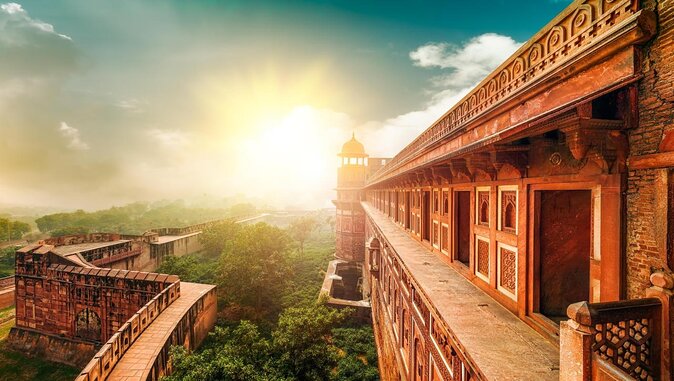
This 4-day loop hits the core “Mughals and Maharajas” circuit for a reason. Delhi gives you the early masterpieces—tombs and minarets that set the tone. Agra delivers the grand pay-off with the Taj Mahal plus the fortress that framed imperial power. Jaipur then swaps marble for sandstone drama, with fort palaces and the geometry of Jantar Mantar.
The format also helps you see more without making your schedule fragile. With a private car and an assigned guide for major stops, you avoid the common problem of spending your limited vacation hours on logistics, ticket lines, and confusion about where to go next. It’s the kind of structure that works well if it’s your first time in India or your first time hitting the Golden Triangle.
One note before you lock it in: the itinerary is packed with major sites, so you’ll want to keep expectations realistic. You’ll move a lot each day, and some stops are shorter than others.
Inside the Day-by-Day Plan: What You’ll Actually Do
Other Agra runs out of Delhi worth a look




Day 1 in Delhi: Humayun’s Tomb, Qutub Minar, Jama Masjid, and Old-Delhi Stops
Delhi Day 1 is built like a “greatest hits” walk-through of Mughal-era design plus a feel for modern Delhi’s layers.
Humayun’s Tomb is your opener. You’ll get a guided look at the Mughal emperor Humayun’s tomb, commissioned in 1569–70 by Empress Bega Begum and designed by Persian architects Mirak Mirza Ghiyas and his son, Sayyid Muhammad. The guided time is about 1 hour, which is usually enough to notice the details that most visitors miss when they rush through.
Next comes Qutub Minar, also guided, inside the UNESCO Qutb complex. This is a 73-meter tall tapering tower in five storeys. The tour runs around an hour, giving you time to absorb the size and the math of it—like how it narrows from a 14.3-meter base to 2.7 meters at the top.
After that, you’ll pass major landmarks along the ceremonial axis: India Gate, Rashtrapati Bhavan (the President of India’s official home), and Sansad Bhavan (Parliament House). These are mostly quick stops, so think of them as orientation markers—how the city is organized as well as how it looks.
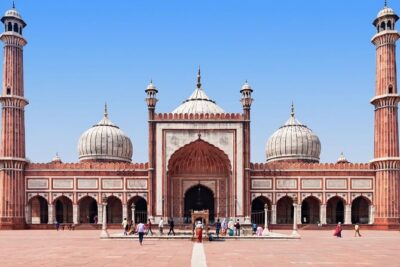
Then you shift into religious and civic Delhi with Jama Masjid. Built by Shah Jahan between 1650 and 1656, it’s one of the largest mosques in India. Your time is short—about 30 minutes—so this is more about first impressions and key architectural moments than a long sit-down.
Raj Ghat follows. This is Gandhi’s memorial, with about 1 hour set aside. It’s a slower pause in the middle of a heavy day.
Finally, you get two very Delhi-feeling breaks:
- Chandni Chowk, specifically the Pasar Chandni Chowk spice area (about 30 minutes), known for wholesale groceries and a massive spice market.
- Lotus Temple (about 1 hour), the Bahá’í House of Worship known for its flowerlike shape, dedicated in December 1986.
How Day 1 can feel
This day is full, but the pacing makes sense: tomb and minaret first, then grand civic buildings, then old-city spiritual spaces and markets. Your main consideration is timing. With so many stops, you’ll want to be ready for a day that’s more “see it and walk it” than “linger and relax.”
The Best Delhi Morning-to-Evening Balance You’re Getting
Delhi can overwhelm you if you try to plan everything yourself. This tour’s logic is to use a guided morning for the big monuments, then give you room to experience street-level Delhi before the day ends.
I like that it pairs “official Delhi” (India Gate, Rashtrapati Bhavan, Sansad Bhavan) with Jama Masjid and Raj Ghat. That contrast helps you understand that Delhi isn’t one story—it’s many. And the Lotus Temple adds something different again: a modern, calm design moment after the older stone and the market bustle.
If you want a practical tip, it’s this: don’t try to absorb everything at once. In Delhi, your job is to build a mental map—what the city feels like, what periods the buildings come from, and how the different areas connect.
Day 2 to Agra: Itimad-ud-Daulah and Mehtab Bagh’s Back-Side Taj View
Agra Day 2 starts with Itimad-ud-Daulah, often called the Baby Taj. You’ll spend about 30 minutes here, with guided context framing why people consider it a jewel-box draft of the Taj Mahal. Even with limited time, you can spot the kind of detailed marble work that makes later Mughal architecture look so smooth and intentional.
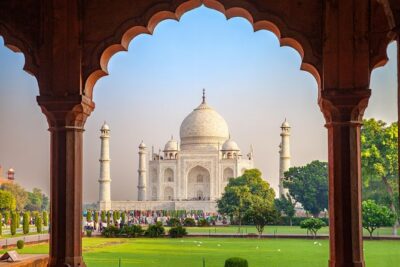
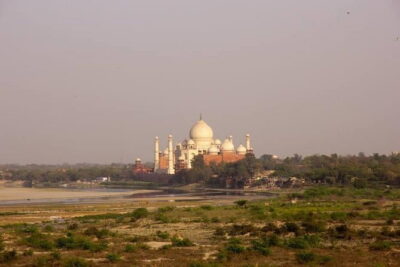
Then you shift to Mehtab Bagh, visited in the evening. This is your Taj Mahal-from-across-the-river moment, with about 1 hour set aside. The value here is light and perspective: you’re seeing the Taj from its back side, and that changes the mood. You also get the slow-sunset rhythm, watching the sun sink behind the river line.
Chasing the Pink City? More Jaipur day trips
The main benefit of this evening stop
If you only saw the Taj Mahal once, you’d miss how it changes. Mehtab Bagh gives you a second angle and a different way to read the building. It’s a smart use of time because you’re not just stacking sights—you’re getting variety.
Day 3 in Agra: Taj Mahal First, Then Agra Fort
Day 3 is the big one: the Taj Mahal and Agra Fort, in that order.
The Taj Mahal visit is about 2 hours, and you’ll get guided framing around how the mausoleum’s appearance shifts through the day. One of the neat ways the Taj is described is by color moods—pinkish in the morning, milky white in the evening, and golden when moonlight hits, with other tones in between through seasons and hours. Even if you don’t memorize the shade list, you’ll understand the idea: this building photographs differently because the light does.
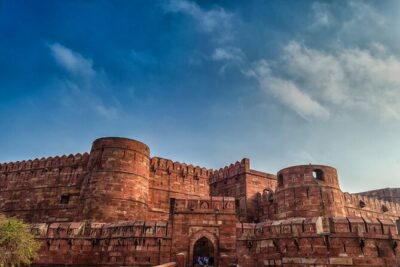
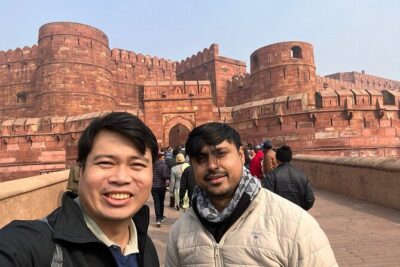
After the Taj, Agra Fort comes next, with about 1 hour 30 minutes. This fort served as the main residence of Mughal emperors until 1638, when the capital moved to Delhi. The practical takeaway: the Taj is the love story. Agra Fort is the power story behind it.
What can be hard here
Two things:
- Expect crowds and strong sunlight depending on timing.
- Don’t pack this day like it’s two separate trips. The best way to enjoy Taj Mahal day is to keep moving, take breaks when you need them, and let the guide’s explanations tie the sights together.
Day 4 in Jaipur: Amber Palace, City Palace, Jantar Mantar, Hawa Mahal, and Jal Mahal
Jaipur Day 4 is where the tour trades marble serenity for fort-palace drama and architectural geometry.
Amber Palace (about 2 hours) is the first stop. It’s described as “classic romantic” Rajasthan in style: construction began under Man Singh I in 1592 and was completed by Jai Singh I’s descendants. The exterior can look forbidding, but the inside is where you see the fusion of Mughal and Hindu styles.
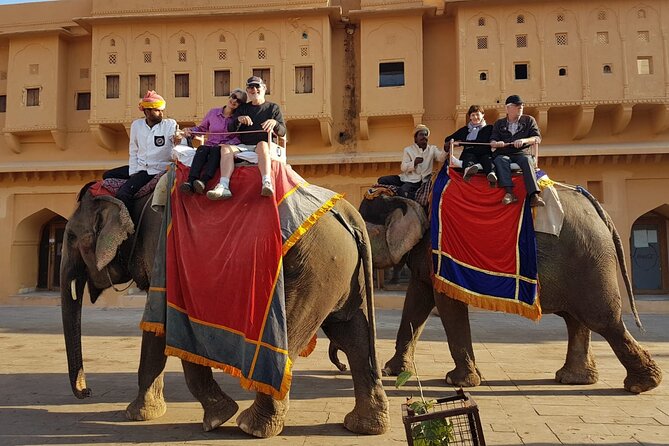
One key detail: the tour notes that an elephant ride at Amer Fort is not included. If that’s a must for your visit, you’ll need to plan it separately.
Next is City Palace of Jaipur (about 2 hours). This complex sprawls over one-seventh of the walled city and includes Chandra Mahal, the Shri Govind Dev Temple, and the City Palace Museum. The important thing is how it feels like a living palace compound instead of one single building.
Then comes Jantar Mantar (about 1 hour). This is the largest and best preserved of the observatories built by Jai Singh II. You’ll see outsized astronomical instruments that are still in use—an unusual mix of science and monumental design.
After that, you’ll see two iconic Jaipur landmarks as additional highlights:
- Hawa Mahal, the Palace of Winds. It’s a five-storey pink sandstone facade with 953 niches and windows, built in 1799 by Pratap Singh. It functioned as a royal grandstand for palace women.
- Jal Mahal, the Water Palace in the middle of Man Sagar Lake. The palace and lake were renovated and enlarged in the 18th century.
Why this Jaipur mix works
Amber and City Palace give you the fort-and-royalty feeling. Jantar Mantar adds a different kind of “wow,” because it’s not only about looks—it’s about measurement made physical. Then Hawa Mahal and Jal Mahal close the loop with instantly recognizable silhouettes.
Price and Logistics: Is $192.69 Per Person Good Value?
The price listed is $192.69 per person for roughly four days. The value question is always: what are you paying for, and what will cost extra?
Here’s what’s included:
- Private vehicle with driver
- Private tour guide (local guide)
- Hotel/port pickup and drop-off
- All fees and taxes
- Accommodation with daily breakfast
Here’s what’s not included:
- Food and drinks
- Monument entrance charges
- Elephant ride at Amer Fort, Jaipur (explicitly not included)
So you’re not just booking a bus-and-timetable style tour. You’re paying for transport plus guided time at major monuments, and you’re getting breakfast handled. That’s a meaningful benefit in India, where spending extra time on coordination can quietly eat your vacation.
Your main budget variable is monument entrance charges. Because those aren’t included, your total trip cost can rise depending on how many ticketed sites you enter (and whether you want any add-ons). If you like control over your own spending, that can be a good setup. If you want a single flat price with zero surprise, you’ll need to pencil in tickets and meals.
The Driver-and-Guide System: What People Most Appreciate
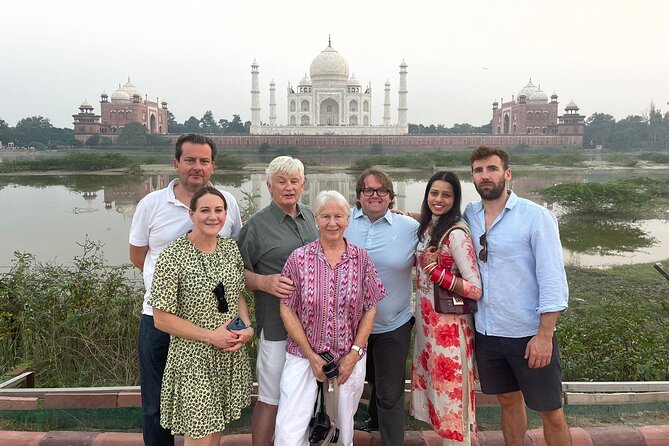
The tour is set up as private with guided stops, so it’s not just someone driving you from place to place. You’ll have local guiding during key monuments, and that matters because these sites are dense with meaning—architecture, dates, and why a building was designed the way it was.
From the feedback, several names show up around the experience quality. Sagar Arora is referenced as responsive during planning and flexible about requests. In Agra, guides such as Akil are called out for bringing context to stops like Itmad-ud-Daulah and the Taj Mahal. Drivers named Brijesh, Bintu, and Virendra appear in the same kind of praise—especially around punctual pickup, helpfulness in traffic, and professional handling once the day gets chaotic.
One practical upside of having a driver who knows the flow is timing. Delhi traffic can be unpredictable. When your driver is handling route decisions and your guide is ready at each stop, your schedule holds together better.
Key Things to Know Before You Go
- Entrance tickets are separate. Your tour price covers the guided structure, not the monument admission.
- Meals aren’t included. Plan on paying for lunch and dinner.
- This is a private tour. Only your group participates, which is great for pace and priorities.
- Evening has a purpose. Mehtab Bagh isn’t filler; it’s your Taj perspective shift.
- Jaipur includes major landmarks fast. Amber Palace and City Palace take time, while Hawa Mahal and Jal Mahal are highlight stops.
Should You Book This 4-Day Golden Triangle Tour?
Book it if you want a structured first pass through Delhi, Agra, and Jaipur without turning your trip into a logistics project. It’s ideal for:
- First-timers who want the classic route
- People who prefer private transport and guided time at the most important monuments
- Anyone who likes a mix of palace-and-minaret landmarks plus markets and memorials
I’d think twice if you’re the type who wants total independence and hates having a fixed sequence of stops. Also, if you’re counting every dollar and don’t want additional spending, the fact that monument entrance charges and food are not included will matter.
If you’re unsure, the biggest “try it” factor is that there’s free cancellation up to 24 hours in advance. That gives you room to decide confidently as your dates firm up.
FAQ
FAQ
How long is the Golden Triangle tour?
It runs for about 4 days, covering Delhi, Agra, and Jaipur with multiple guided stops each day.
What cities are included?
The tour includes New Delhi, Agra, and Jaipur with 1 night in Delhi, 1 night in Agra, and 1 night in Jaipur.
What’s included in the price?
The package includes a private vehicle with a driver, a private tour guide (local guide), hotel/port pickup and drop-off, all fees and taxes, and accommodation with daily breakfast.
Are monument entrance tickets included?
No. Monument entrance charges are not included, so you’ll need to budget extra for admissions.
Is hotel pickup and drop-off provided?
Yes. The tour includes hotel/port pickup and drop-off.
Is the tour private or shared?
This is a private tour/activity. Only your group will participate.
Is an elephant ride included at Amer Fort?
No. Elephant ride at Amer Fort, Jaipur is not included.
What are the operating hours?
The tour listing shows opening hours from 7:30 AM to 2:00 PM, Monday through Sunday.
What is the cancellation policy?
Cancellation is free. You can cancel up to 24 hours in advance for a full refund, and cancellations within 24 hours do not receive a refund.
The Full Golden Triangle, More Options
- 3-Days Private Golden Triangle Tour: Delhi, Agra & Jaipur by Car
★ 5.0 · 1,107 reviews - 3-Days Private Golden Triangle Tour: Delhi, Agra & Jaipur by Car
★ 5.0 · 1,098 reviews - 3-Day Delhi, Agra and Jaipur Private Tour – India Golden Triangle
★ 5.0 · 812 reviews - Four-Day Private Luxury Golden Triangle Tour to Agra and Jaipur From New Delhi
★ 5.0 · 807 reviews - 5 Nights 6 Days Private Golden Triangle Tour – Delhi Agra Jaipur
★ 5.0 · 574 reviews
Onward to Jaipur: More Day Trips
- 3-Days Private Golden Triangle Tour: Delhi, Agra & Jaipur by Car
★ 5.0 · 1,107 reviews - 3-Days Private Golden Triangle Tour: Delhi, Agra & Jaipur by Car
★ 5.0 · 1,098 reviews - 3-Day Delhi, Agra and Jaipur Private Tour – India Golden Triangle
★ 5.0 · 812 reviews - Four-Day Private Luxury Golden Triangle Tour to Agra and Jaipur From New Delhi
★ 5.0 · 807 reviews - Jaipur Day Trip from Delhi by Car or Train – All Inclusive
★ 5.0 · 663 reviews
More Agra Day Trips out of Delhi
- Same Day Taj Mahal, Agra Fort & Baby Taj Tour from Delhi by Car
★ 5.0 · 4,304 reviews - Full Day Taj Mahal, Agra Fort & Baby Taj Tour from Delhi by Car
★ 5.0 · 3,647 reviews - From Delhi: Taj Mahal & Agra Private Day Trip with Transfers
★ 4.9 · 3,181 reviews - From Delhi: Taj Mahal and Agra Fort Private Sunrise Tour
★ 4.9 · 2,270 reviews - Sunrise Taj Mahal, Agra Fort & Baby Taj Tour from Delhi by Car
★ 5.0 · 2,243 reviews
Just added: more New Delhi reviews to browse
- 4 days Golden Triangle Tour★ 5.0 · 3 reviews
- Discover Old & New Delhi: Private Tour with Street Food★ 5.0 · 3 reviews
- Taj Mahal Tour From Delhi By Private Car★ 4.5 · 3 reviews
- Golden Triangle Tour 5 Days★ 5.0 · 3 reviews
- Taj Mahal: Express Entry Ticket For Sunset Tour with guide★ 5.0 · 3 reviews
- Agra Taj Mahal Sunrise & Sunset Tour from Delhi★ 5.0 · 3 reviews
Agra Day Trips from Delhi, compared.
 ★ 5.0Same Day Taj Mahal, Agra Fort & Baby Taj Tour from Delhi by CarFrom $624,304 reviews
 ★ 5.0Full Day Taj Mahal, Agra Fort & Baby Taj Tour from Delhi by CarFrom $623,647 reviews
 ★ 4.9From Delhi: Taj Mahal & Agra Private Day Trip with TransfersFrom $43,181 reviews
 ★ 4.9From Delhi: Taj Mahal and Agra Fort Private Sunrise TourFrom $592,270 reviews
 ★ 5.0Sunrise Taj Mahal, Agra Fort & Baby Taj Tour from Delhi by CarFrom $622,243 reviews
 ★ 5.0Taj Mahal and Agra Private Car Tour from Delhi with 5* LunchFrom $331,633 reviews
 ★ 4.9From Delhi: Private Taj Mahal and Agra Tour by Express TrainFrom $751,605 reviews
 ★ 5.0Taj Mahal, Agra Fort, Baby Taj Tour from Delhi by Superfast TrainFrom $751,494 reviews