
Reviewed · AGRA DAY TRIPS FROM DELHI
4 Days Private Golden Triange Tour to Agra and Jaipur from Delhi
Sunrise timing makes this Golden Triangle feel like a trip, not a checklist. This private 4-day route strings together Delhi, Agra, and Jaipur with a licensed guide, a professional driver, and a plan that starts early—so you see the big sights when the light is right. I also like the private, air-conditioned car setup with bottled water and snack stops between cities, which keeps the pace lively without feeling chaotic.
My favorite part is the variety inside the same circuit: ancient towers and temples in Delhi, Mughal power in Agra, then Rajput-era drama in Jaipur. The only real drawback to pencil in is simple: entrance fees are not included (listed as about USD 45 per person for monuments), so your final spend is higher than the base price.
In This Review
- Key highlights you’ll care about
- Price and logistics: what $226.66 really buys you
- Day 1 in Delhi: India Gate, Qutub Minar, Lotus Temple, Akshardham, Raj Ghat
- India Gate and Rajpath area
- Qutub Minar (UNESCO) with its 1193 origins
- Lotus Temple (modern design, big pull)
- Sansad Bhawan area (Parliament House) and gardens
- Swaminarayan Akshardham (free admission stop)
- Raj Ghat for a quiet close
- Day 2 Agra: Taj Mahal at 05:00 am plus Fort, Baby Taj, and Fatehpur Sikri
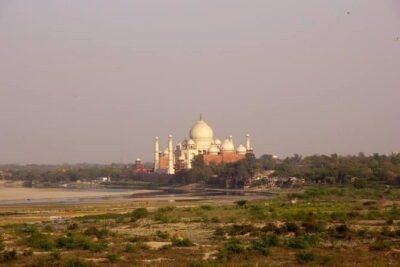
- Sunrise Taj Mahal: why the timing matters
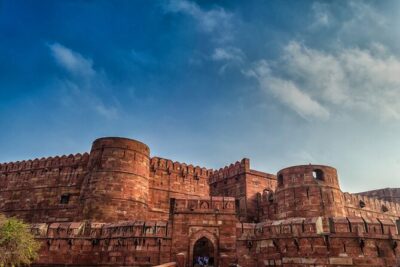
- Agra Fort: power in red stone
- Itmad-ud-Daula (Baby Taj): smaller, detailed, and worth it
- Fatehpur Sikri: the abandoned capital you can still feel
- Day 3 Jaipur: City Palace to Hawa Mahal to Jantar Mantar, then museum and photo stops
- City Palace: Mughal and Rajput mix
- Hawa Mahal: breeze palace with an 87-degree claim
- Jantar Mantar: “instruments for measuring the harmony of the heavens”
- Jal Mahal: water palace photo stop
- Albert Hall Museum: where the art collections show up
- Day 4 wrap-up: Delhi airport drop after breakfast
- How the included extras make the trip easier in real life
- A car that’s clean and set up for breaks
- Snacks, water, and small comforts
- Personal attention from an office rep
- Who should book this private Golden Triangle?
- Should you book this 4-day private Golden Triangle tour?
- FAQ
- How long is the Golden Triangle tour?
- What is the total price per person?
- Is the tour private?
- Are pickup and drop-offs included?
- Does the price include hotel nights?
- Are entrance fees included?
- What time does the Taj Mahal visit start?
- How many breakfasts are included?
- What’s included during intercity travel for comfort?
- What is the cancellation window?
Key highlights you’ll care about
- 05:00 am Taj Mahal meeting: the early start is built in, so you’re not wandering in daylight crowds at the wrong moment
- Licensed guide time at key monuments: you get context instead of just photos
- Private car sized to your group: sedan for 1–2, Innova for 3–4, larger van options for bigger groups
- UNESCO-heavy route: the itinerary hits several UNESCO sites (like Qutub Minar, Taj Mahal, Agra Fort, Fatehpur Sikri, Jantar Mantar) and is marketed as covering 8 UNESCO stops
- Clean travel comfort: cars are described as cleaned and sanitized after each travel stretch
Price and logistics: what $226.66 really buys you
The headline price is listed at $226.66 per person for roughly 4 days. For many Golden Triangle options, the “cheap” ones look attractive until you total up entry tickets, airport transfers, and the cost of hiring someone locally. Here, a lot of the friction is handled for you.
What’s included (and why it matters):
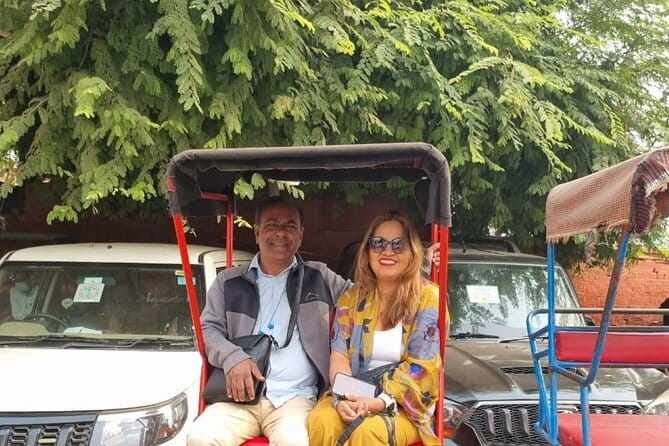
- Private air-conditioned car with a professional driver (you’re not sharing transport with strangers)
- Hotel or airport pickup and drop-off
- Parking fees, fuel surcharge, and GST
- Mineral water in the car plus seasonal fruits and biscuits/cookies during intercity travel
- Three breakfasts (labeled as Breakfast (3))
- Personal care from an office representative in Delhi, Agra, and Jaipur
- Hotel nights are only included if you book the option that includes hotels (the listing notes this explicitly)
What’s not included:
- Entrance fees, estimated at about USD 45 per person including all monuments
My practical take: if you already know you’ll pay for sites like Taj Mahal and the bigger-ticket monuments, this package can be good value because you’re buying coordination and comfort, not just transportation.
One more practical point: it’s labeled as a private tour/activity, meaning it’s only your group. That’s a big deal for flexibility—break times, photo stops, and staying with your guide’s pace.
Other Agra runs out of Delhi worth a look



Day 1 in Delhi: India Gate, Qutub Minar, Lotus Temple, Akshardham, Raj Ghat
Delhi day is where this tour earns its keep. You start with an iconic memorial, then move into UNESCO-era architecture, then flip into modern faith-and-forms at multiple sites.
India Gate and Rajpath area
You’ll spend about 30 minutes at India Gate, a war memorial near the Rajpath. It’s dedicated to soldiers of British India who were martyred fighting for India. Even if you’re not a flag-and-parade person, it’s a strong orientation point for the city layout. It’s also a good warm-up before the more intense monuments.
If you’re short on time that day, India Gate is the kind of stop you can do efficiently: see it, read the context, get your bearings fast, then move on.
Qutub Minar (UNESCO) with its 1193 origins
Next is Qutub Minar for about 1 hour. This is one of the clearest “time machine” monuments in Delhi: a 73-metre tall five-storey tower, constructed by Qutub-ud-din Aibak (founder of the Delhi Sultanate) in 1193.
The guide matters here because the tower isn’t just tall—it’s a visual record of early Sultanate ambition. Entrance fees are noted as not included, so you’ll want to keep some cash or card-ready budget.
Lotus Temple (modern design, big pull)
Then you’re at Lotus Temple for about 1 hour. It’s famous for its flower design and was built in 1986, winning architecture awards. This is where Delhi shifts from medieval stone to late-20th-century spiritual design.
The ticket is again listed as not included, so plan for that. Also, it’s a popular site—go in with a calm mindset and expect some crowds.
Chasing the Pink City? More Jaipur day trips
Sansad Bhawan area (Parliament House) and gardens
The itinerary includes Sansad Bhawan, built in 1927 and designed by British architects Sir Edwin Lutyens and Sir Herbert Baker. The listing describes it as surrounded by lush green gardens.
Because the details on entry aren’t provided, treat this more as a view-and-walk-photo moment than a long museum stop. Still, the building is part of Delhi’s modern story.
Swaminarayan Akshardham (free admission stop)
Swaminarayan Akshardham takes about 1 hour, and admission is listed as free. It’s described as a Hindu temple and spiritual-cultural campus, with displays of traditional and modern Hindu culture, spirituality, and architecture.
This is a place where you get a sense of scale and design discipline. If you enjoy architecture with strong visual themes, you’ll likely love this stop. If you’re burned out by too many major sites in one day, it can feel like a lot—but it’s spread out among other stops, so it usually balances.
Raj Ghat for a quiet close
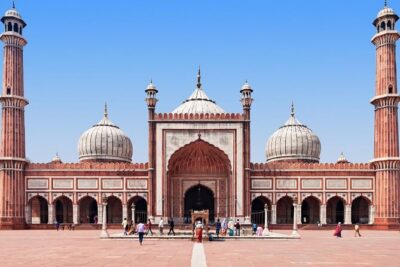
You finish Day 1 at Raj Ghat, a marble platform commemorating Mahatma Gandhi, where he was cremated on January 31, 1948. It’s about 30 minutes, and admission is listed as free.
This is a useful emotional counterweight after big structures. It also gives your legs a chance to slow down before the overnight push to Agra.
Day 2 Agra: Taj Mahal at 05:00 am plus Fort, Baby Taj, and Fatehpur Sikri
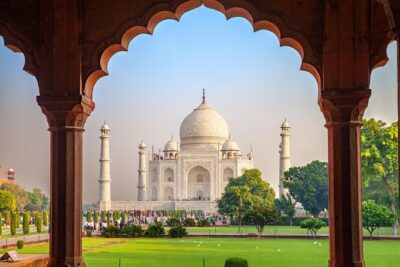
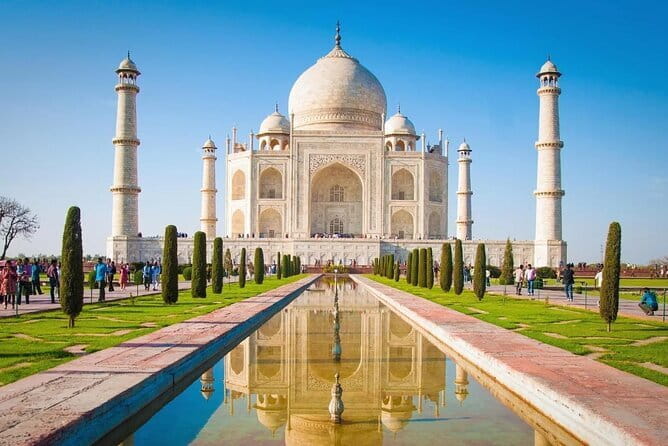
Agra day is built around one main event: Taj Mahal early morning. The driver takes you to the Taj Mahal at 05:00 am, and your guide meets you there for a guided tour of about 2 hours.
Sunrise Taj Mahal: why the timing matters
The listing is clear about the early plan, and that’s the smartest part of the schedule. Sunrise light makes the monument’s surfaces look more alive, and the experience is simply different than midday visits.
Also, since Taj Mahal entrance tickets are not included, the logistics are extra-important. The tour structure helps you avoid guesswork. You’re getting guided context while you’re standing in front of one of the world’s most photo-famous buildings—so the guide becomes more than a translator. They explain details and what you’re looking at.
Agra Fort: power in red stone
After Taj Mahal, you move to Agra Fort for about 2 hours. It’s described as a historical fort and also known as Agra’s Red Fort. The itinerary notes that Humayun was crowned at this fort and that it was later renovated by Mughal emperors.
Tickets are listed as not included, and this is where the “Mughal Empire” theme turns from romance into political muscle. Forts can be dry without context, so rely on the guide time here.
Itmad-ud-Daula (Baby Taj): smaller, detailed, and worth it
Next is Itmad-ud-Daula for about 1 hour. It’s a Mughal mausoleum often nicknamed Baby Taj, and it’s described as a “jewel box.” The listing also frames it as a draft or precursor to the Taj Mahal.
This stop is easy to underrate if you think you only want the main event. But in an itinerary like this, Baby Taj is where you catch the craftsmanship patterns that you’ll recognize later at the Taj.
Again: entrance fees are not included.
Fatehpur Sikri: the abandoned capital you can still feel
You finish with Fatehpur Sikri for about 1 hour 30 minutes. Admission is listed as free. The listing notes it was founded as the Mughal Empire capital in 1571 by Emperor Akbar, served from 1571 to 1585, then Akbar abandoned it due to campaigns, and it was later fully abandoned in 1610.
This is the stop that feels like history with an atmosphere. You’re walking among buildings tied to a grand plan that didn’t last. Even if you only give it the allotted time, it helps explain why Mughal rulers invested so hard in architecture.
Day 3 Jaipur: City Palace to Hawa Mahal to Jantar Mantar, then museum and photo stops
Jaipur day is all about geometry, royal showmanship, and science-meets-design.
City Palace: Mughal and Rajput mix
You start at City Palace for about 2 hours, described as a complex within the walled city. It was conceived and built by Maharaja Sawai Jai Singh II, who is also described as the founder of Jaipur. The architecture is presented as a fusion of Mughal and Rajput styles, and the palace is still home to parts of the royal legacy.
Admission is listed as not included, but the time is right. City Palaces can feel repetitive, yet the guide context helps you pick out what’s ornamental vs what’s symbolic.
Hawa Mahal: breeze palace with an 87-degree claim
Next is Hawa Mahal, the Palace of Breeze, for about 30 minutes. The listing calls it a five-storey building, also described as the tallest building built without a foundation, with a curved design leaning at an 87-degree angle, plus a pyramidal shape.
You don’t need a long visit to appreciate why it’s famous. It’s a perfect short stop: stand, look up, take photos, then move on before the crowd crush becomes annoying.
Admission is not included here.
Jantar Mantar: “instruments for measuring the harmony of the heavens”
For about 1 hour, you’ll visit Jantar Mantar. The listing notes its meaning as instruments for measuring the harmony of the heavens, and it says the site consists of 13 architectural astronomy instruments built by Maharaja Jai Singh II of Jaipur.
If you like the intersection of art and science, this is one of your most rewarding stops. Without guidance, it’s easy to see stones and miss the logic. With guidance, you get to understand why these instruments look the way they do.
Admission is listed as not included.
Jal Mahal: water palace photo stop
Then comes Jal Mahal, also called the water palace, for about 30 minutes. Admission is listed as free, and it’s described as a nice photography location.
This is mainly a visual break. Keep expectations flexible: you’ll get a beautiful view, not necessarily a long deep-dive into interiors since the itinerary frames it as a short stop.
Albert Hall Museum: where the art collections show up
Finally, you visit Albert Hall Museum for about 1 hour. The listing describes a rich collection of artifacts, including paintings, jewelry, carpets, ivory, stone and metal sculptures, and works in crystal. It also notes coins from the Gupta, Kushan, Delhi Sultanate, and Mughal periods.
Admission is not included. If you’re museum-minded, this is a strong way to finish Jaipur day instead of doing yet another palace exterior. If museums aren’t your thing, treat it as a quick, flexible cultural stop.
Day 4 wrap-up: Delhi airport drop after breakfast
Day 4 is straightforward. After breakfast, you depart to the Delhi international airport. The listing shows about 5 hours for the transfer.
This is the kind of day that’s good for avoiding stress. You get to finish with no pressure to cram one more monument, which helps if you’re flying the same day.
How the included extras make the trip easier in real life
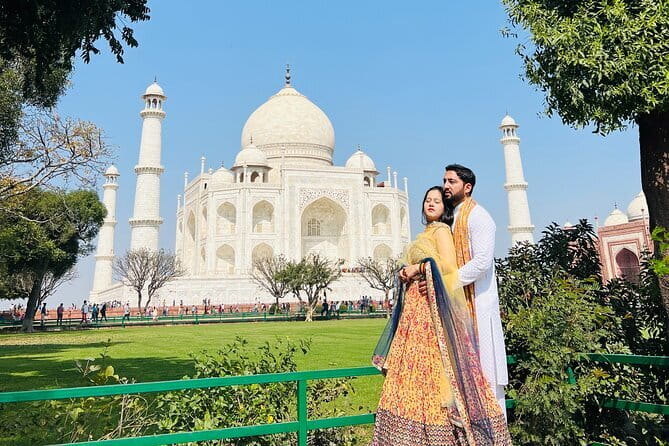
A lot of Golden Triangle tours say private car and guide. This one adds smaller details that can matter when you’re traveling across cities.
A car that’s clean and set up for breaks
The tour notes that the cars are cleaned and sanitized after each travel. That’s not glamorous, but it affects how comfortable you feel on long road stretches—especially in heat.
Snacks, water, and small comforts
You’re set up with mineral water in the car, plus seasonal fruits and biscuits/cookies during intercity travel. It’s a simple thing, but it reduces the hunt for food in transit and keeps energy stable until you reach the next stop.
Personal attention from an office rep
The inclusion list says personal care from an office representative in Delhi, Agra, and Jaipur. That kind of on-the-ground support can help if plans shift due to traffic, crowds, or timing around monument entry.
There’s also mention in the provided experience feedback that coordination felt agile and fast, including via the direction of Vibhuti Mishra Yatra, alongside Indo Routes. While that’s not a guarantee of anything, it signals that their team is attentive to how your day flows, not just where you go.
Who should book this private Golden Triangle?
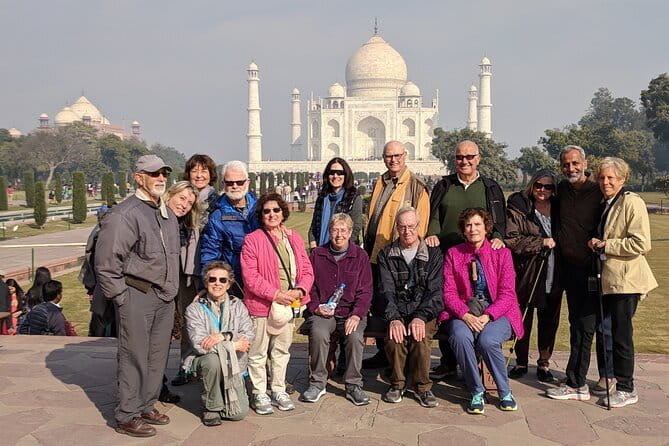
This tour fits best if you want:
- A guided, context-first sightseeing day at the big names, especially with the Taj Mahal meeting at 05:00 am
- Private transport with air-conditioning and professional driving
- A schedule that covers major landmarks in Delhi, Agra, and Jaipur in 4 days, without needing to plan transit between cities
It may feel rushed if you prefer slow travel and lots of free time. This route is designed for focus. If you like to take long breaks in cafés or wander without a timetable, you might want to add extra days.
Should you book this 4-day private Golden Triangle tour?
I’d book it if you like your sightseeing organized, your comfort handled, and your guide time spent on major monuments—not wasted on confusion. The early Taj Mahal plan, the private A/C car, and the mix of UNESCO-era Delhi plus Mughal Agra plus Rajput Jaipur make it a solid value for time.
I would not book it blindly if you hate spending extra money on entrance fees. Since monument tickets are not included and are listed at about USD 45 per person, I’d budget that in from the start.
One simple move: when you book, tell the operator what you care about most—architecture, photography, or historical context. Since the tour includes guided visits, your preferences can help you get more satisfaction out of each stop without adding extra days.
FAQ
How long is the Golden Triangle tour?
It’s listed as 4 days (approximately).
What is the total price per person?
The price is listed as $226.66 per person.
Is the tour private?
Yes. It’s described as a private tour/activity, with only your group participating.
Are pickup and drop-offs included?
Yes. It includes hotel or airport pick-up and drop-off.
Does the price include hotel nights?
It says 03 nights accommodation are included only if you book with the option including hotels.
Are entrance fees included?
No. Entrance fees are listed as not included, estimated at about USD 45 per person including all monuments.
What time does the Taj Mahal visit start?
You’re taken to the Taj Mahal at 05:00 am, and your guide meets you there.
How many breakfasts are included?
Breakfast is included 3 times (Breakfast (3)).
What’s included during intercity travel for comfort?
The tour includes mineral water in the car and seasonal fruits/biscuits/cookies during intercity travel.
What is the cancellation window?
You can cancel up to 6 days in advance for a full refund, with reduced refunds possible for cancellations made 2–6 days before the start time.
More Tour Reviews in New Delhi
- Old & New Delhi City Tour – Half or Full Day Options Available
★ 5.0 · 4,811 reviews - Half Day Private Delhi City Tour
★ 5.0 · 4,474 reviews - Same Day Taj Mahal, Agra Fort & Baby Taj Tour from Delhi by Car
★ 5.0 · 4,304 reviews - Taj Mahal Day Tour from Delhi by Superfast Train – TOP RATED TOUR
★ 5.0 · 4,166 reviews - Delhi: Old and New Delhi Private Full or Half-Day Tour
★ 4.9 · 3,776 reviews
Onward to Jaipur: More Day Trips
- 3-Days Private Golden Triangle Tour: Delhi, Agra & Jaipur by Car
★ 5.0 · 1,107 reviews - 3-Days Private Golden Triangle Tour: Delhi, Agra & Jaipur by Car
★ 5.0 · 1,098 reviews - 3-Day Delhi, Agra and Jaipur Private Tour – India Golden Triangle
★ 5.0 · 812 reviews - Four-Day Private Luxury Golden Triangle Tour to Agra and Jaipur From New Delhi
★ 5.0 · 807 reviews - Jaipur Day Trip from Delhi by Car or Train – All Inclusive
★ 5.0 · 663 reviews
More Agra Day Trips out of Delhi
- Same Day Taj Mahal, Agra Fort & Baby Taj Tour from Delhi by Car
★ 5.0 · 4,304 reviews - Full Day Taj Mahal, Agra Fort & Baby Taj Tour from Delhi by Car
★ 5.0 · 3,647 reviews - From Delhi: Taj Mahal & Agra Private Day Trip with Transfers
★ 4.9 · 3,181 reviews - From Delhi: Taj Mahal and Agra Fort Private Sunrise Tour
★ 4.9 · 2,270 reviews - Sunrise Taj Mahal, Agra Fort & Baby Taj Tour from Delhi by Car
★ 5.0 · 2,243 reviews
Just added: more New Delhi reviews to browse
- 4 days Golden Triangle Tour★ 5.0 · 3 reviews
- Discover Old & New Delhi: Private Tour with Street Food★ 5.0 · 3 reviews
- Taj Mahal Tour From Delhi By Private Car★ 4.5 · 3 reviews
- Golden Triangle Tour 5 Days★ 5.0 · 3 reviews
- Taj Mahal: Express Entry Ticket For Sunset Tour with guide★ 5.0 · 3 reviews
- Agra Taj Mahal Sunrise & Sunset Tour from Delhi★ 5.0 · 3 reviews
Agra Day Trips from Delhi, compared.
 ★ 5.0Same Day Taj Mahal, Agra Fort & Baby Taj Tour from Delhi by CarFrom $624,304 reviews
 ★ 5.0Full Day Taj Mahal, Agra Fort & Baby Taj Tour from Delhi by CarFrom $623,647 reviews
 ★ 4.9From Delhi: Taj Mahal & Agra Private Day Trip with TransfersFrom $43,181 reviews
 ★ 4.9From Delhi: Taj Mahal and Agra Fort Private Sunrise TourFrom $592,270 reviews
 ★ 5.0Sunrise Taj Mahal, Agra Fort & Baby Taj Tour from Delhi by CarFrom $622,243 reviews
 ★ 5.0Taj Mahal and Agra Private Car Tour from Delhi with 5* LunchFrom $331,633 reviews
 ★ 4.9From Delhi: Private Taj Mahal and Agra Tour by Express TrainFrom $751,605 reviews
 ★ 5.0Taj Mahal, Agra Fort, Baby Taj Tour from Delhi by Superfast TrainFrom $751,494 reviews