
Reviewed · AGRA DAY TRIPS FROM DELHI
4-Days Private Golden Triangle Tour: Delhi, Agra & Jaipur by Car
Delhi, Agra, Jaipur in four days is a lot. This tour is interesting because you get private transport and a full run at the big sights with professional local guidance. I also like that the plan builds in small extras like tuk-tuk time in Old Delhi and the battery van at the Taj. One possible drawback: the itinerary is packed, and monument entrance fees are an extra cost on top of the tour price.
You’ll start your Delhi day early (pickup can be between 7 AM and 11 AM), then it keeps moving through UNESCO sites, major Mughal landmarks, and Old Delhi markets. In Agra, the sunrise Taj Mahal start can be magical, and guides like Sadiq, Nasir, Aman, and Amaan are specifically praised for making the architecture and photo spots feel manageable. In Jaipur, guides such as Brajesh and Mahi often get high marks for turning the royal buildings into clear, human stories.
The big thing to consider is timing and tickets. Some stops are ticket-free, but major monuments like the Taj Mahal and Agra Fort are not included, so you should plan for extra spending and an early morning wake-up.
In This Review
- Golden Triangle in four days: what makes this plan work
- Private car and guide setup: what you really get
- Day 1 in Delhi: Qutub Minar, Lotus Temple, and Old Delhi markets
- A realistic heads-up on Delhi tickets
- Sunrise Taj Mahal and Agra Fort: Day 2 pacing that matters
- The main trade-off on Day 2
- Jaipur’s forts and royal geometry: Day 3 highlights you shouldn’t rush
- Ticket mix in Jaipur
- Where the value is: tickets, transport, and the “less hassle” stuff
- Who should book this Golden Triangle by car
- Should you book this 4-day private Golden Triangle tour?
- FAQ
- What areas offer pickup on this Delhi start day?
- Is this a private tour?
- Are monument entrance fees included in the price?
- What’s included for transportation during the tour?
- Does the tour include hotels and breakfast?
- Will I be able to visit the Taj Mahal on any day?
- Is sunrise included for the Taj Mahal visit?
- Do I get any included rides at specific sites?
- What ID do I need for monument entry?
- What are the December blackout dates for hotels?
Golden Triangle in four days: what makes this plan work
- Private car for your party: no waiting for other groups, and you can go at a pace that fits your day.
- Old Delhi add-ons included: a tuk-tuk ride helps you cover lanes that are slower by car.
- Taj Mahal sunrise logistics handled: you’ll get a battery van ride from parking to the gate for an easier start.
- Multiple local guides by city: the best setup for learning Delhi, Agra, and Jaipur without cramming everything into one person.
- Free stops mixed with paid monuments: you’ll spend time where entry is included, and you’ll still get the big-ticket sights (with an extra fee).
Private car and guide setup: what you really get
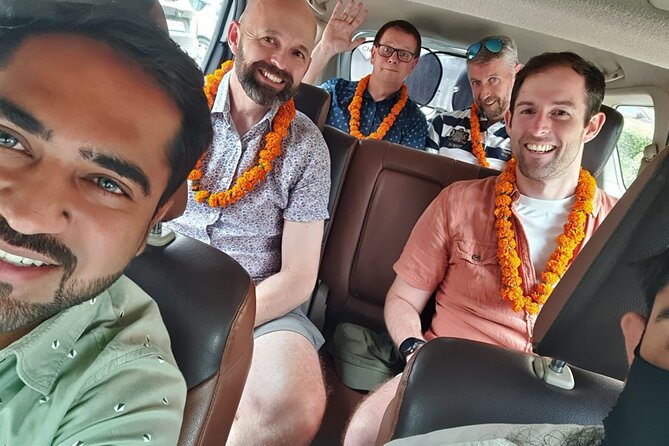
This is a private Golden Triangle, meaning your group stays together in one air-conditioned vehicle driven by a professional. That matters in India, where traffic and timing can turn a sightseeing plan into a stress test. With your own car, you avoid that worst kind of friction: arriving somewhere, then realizing you’re stuck waiting while someone else finishes shopping or photos.
The car type is based on group size. For one to two people it’s a four-seater sedan; for three to five, a six-seater wagon; and larger groups get bigger vans. So you’re not squeezed into something uncomfortable for long stretches between Delhi–Agra and Agra–Jaipur.
Guides are local, government-approved, and city-specific. That’s a smart way to travel: Delhi is a different world from Agra, and Jaipur’s forts and observatories need their own kind of explanation. In the feedback that stands out, guides are praised for clarity and for practical help like photography tips and staying ahead of the crowd flow.
Then there are the small included rides that make the day smoother. In Old Delhi, the tuk-tuk ride helps you move through narrow areas without doing the “walk, stop, walk again” routine too many times. At the Taj Mahal, the battery van ride from parking to the gate saves time and energy right when you’re likely to be up early.
Other Agra runs out of Delhi worth a look




Day 1 in Delhi: Qutub Minar, Lotus Temple, and Old Delhi markets
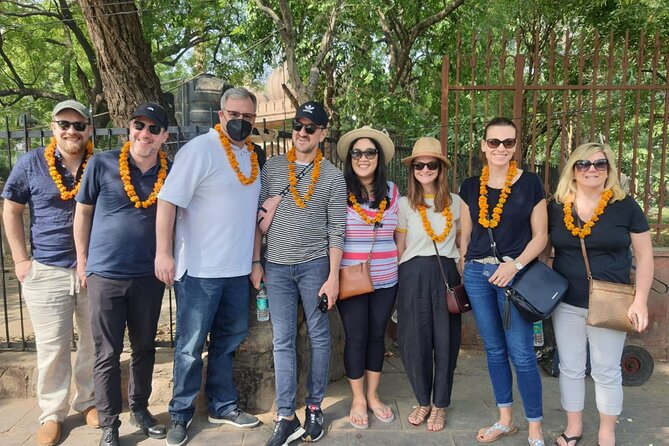
Your Delhi day can start anywhere between 7 AM and 11 AM, with pickup offered from Delhi, Noida, Gurugram, Ghaziabad, and Faridabad. If you’re trying to beat daytime heat and crowds, picking an earlier pickup time is a good move.
The route begins with Qutub Minar, a UNESCO World Heritage site built in 1193 by Qutub-ud-din Aibak. If you like architecture, take a few minutes just to look at the carvings and the shape of the minaret as it towers upward. It’s the kind of monument where a short, well-told guide explanation makes a big difference.
Next is the Lotus Temple. It’s a Baháʼí House of Worship completed in 1986, and its flower-like design is the point. This is a good contrast stop after the towering geometry of Qutub Minar, and it’s also a calm breather before the busier Old Delhi areas.
From there you pass major Mughal-era and government-era landmarks. You’ll go by the Red Fort (Shah Jahan’s build, 1639–1648) and the nearby Tomb of the Unknown Soldier, where names of 13,300 Indian army servicemen are carved to honor those who died in World War I. You’ll also pass by the grand Delhi administrative planning created by Sir Edwin Lutyens and Herbert Baker.
The day then slows down into a quieter, more atmospheric Delhi stop: Agrasen Ki Baoli, an ancient stepwell known for that slightly spooky urban legend vibe. You get a short visit window here, so it’s not the place for a long pause. But it’s one of those stops that makes the city feel older than the skyline.
Then you move to Humayun’s Tomb, another UNESCO World Heritage site and the first garden tomb of India. If you care about how Mughal architecture evolved, this is an important “before the Taj” step.
After that, you get a break window for lunch. Connaught Place is the designated pause point, and your guide can recommend local places to eat. If you’re hungry, don’t try to snack only. This day is long, and you’ll still be doing Old Delhi after lunch.
The heart of the day turns into Old Delhi. You’ll ride into Chandni Chowk, a dense market area known for spice stalls, dry fruits, silver jewelry, and colorful saris. This is where the included tuk-tuk ride can help you feel like you’re moving through the city, not stuck in it.
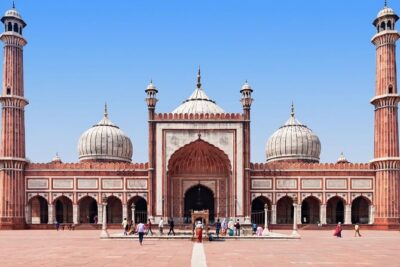
Then you’ll visit Jama Masjid, India’s largest mosque, built in 1656 with the help of 5,000 workers. It’s right opposite the Red Fort area and has a huge courtyard feel. After that, you’ll stop at Khari Baoli, Asia’s largest wholesale spice market. Even if you don’t plan to buy anything, the sensory blast of spices and dried goods is part of why Old Delhi is worth the effort.
You’ll finish the day by driving to Agra and dropping you at your hotel. Day 1 is front-loaded with motion, so this hotel stop is essential. Think of it as your reset.
A realistic heads-up on Delhi tickets
Some stops are listed as ticket-free, while others are not included. Plan around the idea that the paid monuments will be your main extra expense, not the smaller sites. You’ll feel less surprised if you mentally categorize your day into free entry areas and the ticketed highlights.
Sunrise Taj Mahal and Agra Fort: Day 2 pacing that matters
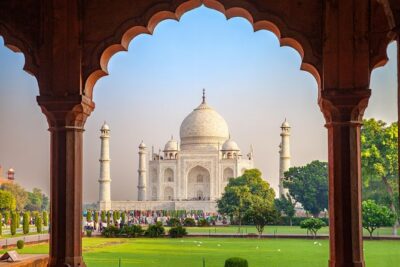
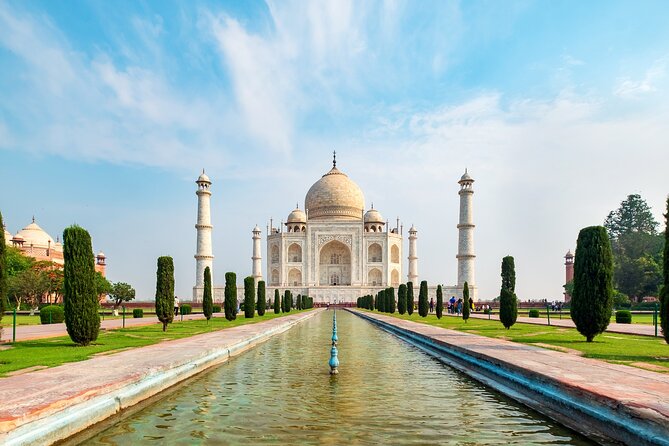
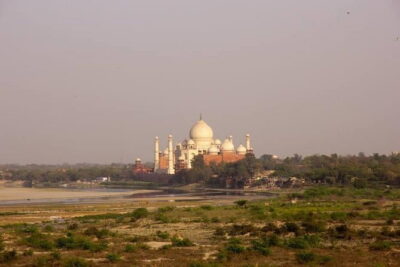
Agra starts early with the Taj Mahal at sunrise. The mausoleum is white marble, built by Shah Jahan in 1630 for Mumtaz Mahal. Sunrise timing is not just for romance. It also changes the quality of photos and helps reduce the feeling of being swallowed by the day’s heat.
You also get a battery van ride from parking to the gate. That’s a small included perk, but it saves you from extra walking while the day is still waking up.
Two practical notes:
- If you’re traveling on a Friday, the Taj Mahal is closed.
- Taj visits can be time-sensitive, so build in patience and don’t plan to “just run in for a quick look.”
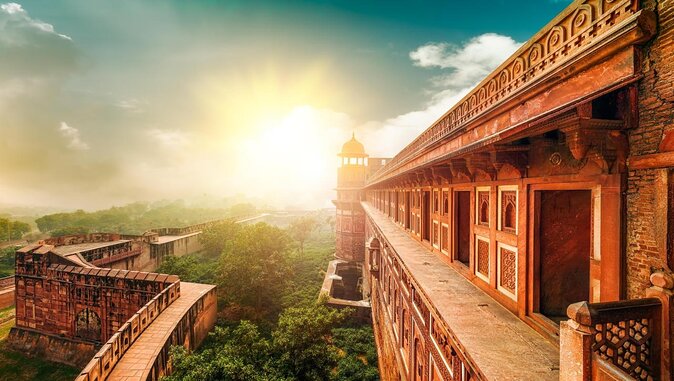
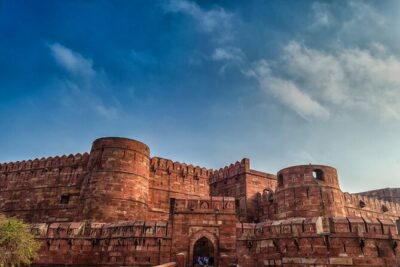
After the Taj, you’ll head to Agra Fort, a UNESCO World Heritage Site built in the 17th century. This is where you see the mix of Indian and Islamic architectural styles within the defensive walls of Mughal power. It’s not as instantly iconic as the Taj, but it’s the kind of place where a guide’s explanations make the layout feel logical instead of random.
Next comes Itmad-ud-Daulah, often called the Baby Taj. This monument is famous for being one of the first Mughal structures entirely in white marble, plus intricate pietra dura inlay work. If you liked the Taj for its surface details, you’ll likely enjoy this stop for the fine craftsmanship.
Then you get a break for Agra food, with your guide suggesting places nearby. After that, you drive to Jaipur and drop you at your pre-booked hotel for the night.
The main trade-off on Day 2
Your day is efficient, but it’s not leisurely. The reward is that you hit the big sights across two cities in one stretch. The downside is that you’ll want comfy shoes and a willingness to move.
Chasing the Pink City? More Jaipur day trips
Jaipur’s forts and royal geometry: Day 3 highlights you shouldn’t rush
Jaipur begins after breakfast. Then the day starts with Jaigarh Fort, built in 1726 by Maharaja Sawai Jai Singh II. It sits on the Aravalli hills, so this is a good stop if you like fort views and want context for how Jaipur’s rulers defended and controlled the region.
Next is the City Palace of Jaipur. This is the center of Jaipur’s royal story, with courtyards, gardens, and palace buildings that were once the seat of the Maharaja. Even if you’ve seen palace interiors elsewhere, City Palace has its own scale and feel because it’s still tied to the living city.
Then comes Jal Mahal, the palace located in the middle of Man Sagar Lake. The included time here is short, but it’s one of those “stop and look” moments. The setting alone does a lot of the work for you.
After that, you’ll visit Hawa Mahal (Palace of Wind). It’s a five-storey pyramid-shaped structure built in 1799 by Sawai Pratap Singh. This is one of Jaipur’s signature exteriors, with its facade designed for air flow and views. If you’re thinking about photos, this is the place where a guide can help you time your angles so you’re not just shooting the closest wall.
You’ll have another meal break, with guide suggestions for local Rajasthani food. Finally, you end with Jantar Mantar, a UNESCO World Heritage Site and one of India’s best-preserved ancient observatories.
Ticket mix in Jaipur
Like the other days, some stops are listed as ticket-free while others are not included. Jantar Mantar is marked as not included in the entry fee list, so it fits the pattern: your biggest paid items are the headline monuments.
Where the value is: tickets, transport, and the “less hassle” stuff
At the price point listed ($171 per person), the key value is not just the car. It’s the way the plan removes the hardest parts of Golden Triangle travel.
Here’s what you’re getting without extra legwork:
- Private air-conditioned vehicle with chauffeur across all transfers
- Hotel/airport pickup and drop-off in Delhi, Agra, and Jaipur
- Sightseeing with private local guides
- Included rides that smooth the days: tuk-tuk in Old Delhi and the battery van at the Taj
- Bottled mineral water during journeys
The big extra cost to plan for is monument entry. The tour listing shows entrance fees to monuments at $70 per person as not included. That includes the big-ticket places like the Taj Mahal. So when you budget, treat the total cost as the tour price plus roughly $70 for monument entry.
Also note: gratuities/tips for guides and the driver are not included. In India, tipping is common, and if you want a smooth experience, set aside a little extra for that.
If you upgrade to hotels, you’ll choose 3-, 4-, or 5-star with breakfast included. Rooms are generally twin-sharing. If you’re booking as three people, triple-sharing is default unless you pay extra for two rooms.
One more timing note: Taj Mahal is closed every Friday. If you’re set on a Friday visit, the schedule may not deliver the Taj the way you expect, so align your dates carefully.
Who should book this Golden Triangle by car
This tour is a strong fit if you want:
- A first-time Golden Triangle experience without wrestling trains, taxis, and ticket lines all day
- More comfort and fewer decision points, especially for Delhi’s complicated streets
- A guide-led experience where photography and site context are part of the plan
- Private pacing, since you travel only as your party
It’s also a good option if you appreciate the included practical stuff. The tuk-tuk in Old Delhi is genuinely useful. The battery van at the Taj is a small thing you notice when you see how much walking you’d otherwise do.
You might want a different style of trip if you:
- Are on a very tight budget for monument entry and food
- Hate early mornings, since Agra starts with sunrise timing
- Prefer to roam slowly without a structured flow between cities
Should you book this 4-day private Golden Triangle tour?
If you want the Golden Triangle highlights with fewer headaches, this is an easy yes. The private vehicle, city guides, and included transport extras are exactly what turn a multi-city route into something you can actually enjoy.
Before you book, do three quick checks:
- Confirm your day-of-week for the Taj Mahal, since it’s closed on Fridays.
- Budget for monument entrance fees ($70 per person) plus meals and tips.
- Pick hotel options carefully if you’re upgrading, since breakfast is included and the rooms are typically twin-sharing.
If those boxes work for you, you’ll likely love how efficiently this plan links Delhi’s big monuments, Agra’s world-famous centerpiece, and Jaipur’s royal geometry in just four days—without requiring you to figure out the logistics on the fly.
FAQ
What areas offer pickup on this Delhi start day?
Pickup is offered from anywhere in Delhi, Noida, Gurugram, Ghaziabad, and Faridabad, with pickup times you can choose between 7 AM to 11 AM.
Is this a private tour?
Yes. It’s listed as a private tour/activity, so only your group participates.
Are monument entrance fees included in the price?
No. Entrance fees to monuments are listed as not included, with an additional cost of $70 per person.
What’s included for transportation during the tour?
You get a private air-conditioned car with a professional chauffeur, plus hotel/airport pickup and drop-off in Delhi, Agra, and Jaipur.
Does the tour include hotels and breakfast?
Accommodation is included only if you book the hotel option. If you do, you get three nights in 3-, 4-, or 5-star hotels with breakfast included.
Will I be able to visit the Taj Mahal on any day?
No. The Taj Mahal is closed every Friday.
Is sunrise included for the Taj Mahal visit?
The tour day in Agra includes an early morning Taj Mahal visit for sunrise.
Do I get any included rides at specific sites?
Yes. The tour includes a tuk-tuk ride in Old Delhi and a battery van ride at the Taj Mahal from parking to the gate.
What ID do I need for monument entry?
You should carry all travelers valid photo ID (in your mobile) for monument entry.
What are the December blackout dates for hotels?
On December 24th and 31st, these are considered Hotel Blackout Dates, and a mandatory Gala Dinner is required with an additional cost of USD 99 per person if you choose accommodations during that time.
The Full Golden Triangle, More Options
- 3-Days Private Golden Triangle Tour: Delhi, Agra & Jaipur by Car
★ 5.0 · 1,107 reviews - 3-Days Private Golden Triangle Tour: Delhi, Agra & Jaipur by Car
★ 5.0 · 1,098 reviews - 3-Day Delhi, Agra and Jaipur Private Tour – India Golden Triangle
★ 5.0 · 812 reviews - Four-Day Private Luxury Golden Triangle Tour to Agra and Jaipur From New Delhi
★ 5.0 · 807 reviews - 5 Nights 6 Days Private Golden Triangle Tour – Delhi Agra Jaipur
★ 5.0 · 574 reviews
Onward to Jaipur: More Day Trips
- 3-Days Private Golden Triangle Tour: Delhi, Agra & Jaipur by Car
★ 5.0 · 1,107 reviews - 3-Days Private Golden Triangle Tour: Delhi, Agra & Jaipur by Car
★ 5.0 · 1,098 reviews - 3-Day Delhi, Agra and Jaipur Private Tour – India Golden Triangle
★ 5.0 · 812 reviews - Four-Day Private Luxury Golden Triangle Tour to Agra and Jaipur From New Delhi
★ 5.0 · 807 reviews - Jaipur Day Trip from Delhi by Car or Train – All Inclusive
★ 5.0 · 663 reviews
More Agra Day Trips out of Delhi
- Same Day Taj Mahal, Agra Fort & Baby Taj Tour from Delhi by Car
★ 5.0 · 4,304 reviews - Full Day Taj Mahal, Agra Fort & Baby Taj Tour from Delhi by Car
★ 5.0 · 3,647 reviews - From Delhi: Taj Mahal & Agra Private Day Trip with Transfers
★ 4.9 · 3,181 reviews - From Delhi: Taj Mahal and Agra Fort Private Sunrise Tour
★ 4.9 · 2,270 reviews - Sunrise Taj Mahal, Agra Fort & Baby Taj Tour from Delhi by Car
★ 5.0 · 2,243 reviews
Just added: more New Delhi reviews to browse
- 4 days Golden Triangle Tour★ 5.0 · 3 reviews
- Discover Old & New Delhi: Private Tour with Street Food★ 5.0 · 3 reviews
- Taj Mahal Tour From Delhi By Private Car★ 4.5 · 3 reviews
- Golden Triangle Tour 5 Days★ 5.0 · 3 reviews
- Taj Mahal: Express Entry Ticket For Sunset Tour with guide★ 5.0 · 3 reviews
- Agra Taj Mahal Sunrise & Sunset Tour from Delhi★ 5.0 · 3 reviews
Agra Day Trips from Delhi, compared.
 ★ 5.0Same Day Taj Mahal, Agra Fort & Baby Taj Tour from Delhi by CarFrom $624,304 reviews
 ★ 5.0Full Day Taj Mahal, Agra Fort & Baby Taj Tour from Delhi by CarFrom $623,647 reviews
 ★ 4.9From Delhi: Taj Mahal & Agra Private Day Trip with TransfersFrom $43,181 reviews
 ★ 4.9From Delhi: Taj Mahal and Agra Fort Private Sunrise TourFrom $592,270 reviews
 ★ 5.0Sunrise Taj Mahal, Agra Fort & Baby Taj Tour from Delhi by CarFrom $622,243 reviews
 ★ 5.0Taj Mahal and Agra Private Car Tour from Delhi with 5* LunchFrom $331,633 reviews
 ★ 4.9From Delhi: Private Taj Mahal and Agra Tour by Express TrainFrom $751,605 reviews
 ★ 5.0Taj Mahal, Agra Fort, Baby Taj Tour from Delhi by Superfast TrainFrom $751,494 reviews