
Reviewed · AGRA DAY TRIPS FROM DELHI
4-Days Private Luxury Golden Triangle Tour Agra Jaipur New Delhi
On this 4-day Golden Triangle loop, you get a plan that actually helps you keep your sanity. You’ll cover big hitters in Delhi, Agra, and Jaipur with door-to-door, air-conditioned car transfers and an English-speaking guide to translate the sights into something you can follow. And since it’s private, you’re not stuck waiting on the slowest person in the group.
Two things I really like about this tour. First, the practical pacing: guided stops in the morning and key monuments spaced out with real transit time (including a drive via Yamuna Expressway). Second, the day-of details that reduce hassle—your guide helps you get tickets so you’re not stuck hunting down entrances or queuing in a hot sun.
One possible drawback: monument entrance fees are not included (listed at about $90 per person), and the itinerary packs in a lot of sights—some stops are short, so you’ll want to be comfortable moving quickly and taking photos on a schedule.
In This Review
- Golden Triangle Basics: What This 4-Day Plan Covers
- The Best Parts: What You’ll Feel the Most
- What You Really Pay for: $173.07 plus Tickets and Meals
- Day 1 in Delhi: Qutub Minar to Chandni Chowk
- Qutub Minar: A 1193-era icon you can’t ignore
- Lotus Temple: Modern and open to everyone
- India Gate and Parliament House: The city’s big memorial lines
- Jama Masjid and Humayun’s Tomb: Mughal scale, different moods
- Agrasen Ki Baoli: The stepwell break
- Chandni Chowk: Where the city becomes a market
- Transit to Agra: Yamuna Expressway and a hotel night
- Day 2 Agra: Sunrise Taj Mahal and the Fort Quartet
- Taj Mahal: Guided inside, with a sunrise start
- Agra Fort: Palaces, balconies, and gardens
- Itmad-ud-Daula (Baby Taj): smaller, sweeter, detailed
- Chand Baori: the stepwell with 3,500 steps
- Drive to Jaipur and check in
- Day 3 Jaipur: Amber Fort, City Palace, Jantar Mantar, and Photo Stops
- Panna Meena ka Kund: Stepwell near Amber
- Amber Fort: the big fort day with palaces and squares
- Jal Mahal: the lake palace photo pause
- City Palace: ceremonial seat turned museum space
- Jantar Mantar: UNESCO astronomy in stone
- Hawa Mahal: Palace of Breeze from the outside
- Albert Hall Museum and quick city gates
- Day 4 Jaipur: Birla Mandir and Galtaji Temple
- Birla Mandir Temple: white marble lattice and Vishnu dedication
- Galtaji Temple: the monkey temple by the sacred pools
- How the Private Format Changes Your Experience
- Who This Tour Fits Best (and Who Should Think Twice)
- Should You Book This 4-Day Golden Triangle?
- FAQ
- Is this tour private?
- Where does the tour start and end?
- What’s included in the transport?
- Does the tour include hotel accommodation?
- Are breakfast and meals included?
- Are entrance tickets included?
- How are entrance fees handled for the monuments?
- Does the Taj Mahal visit include special access transportation?
- What language will the guide speak?
- What’s the cancellation policy?
Golden Triangle Basics: What This 4-Day Plan Covers
This is a classic Golden Triangle route, but with the “make it easy” emphasis turned on. You start in New Delhi (pickup point: Indira Gandhi International Airport), then you move to Agra for the Taj Mahal, and finish in Jaipur with a mix of major forts, palace architecture, and a couple of standout temples and photo stops.
If you book with the hotel option, you’re also covered for 3 nights of accommodation and breakfast each day. Either way, you get private, air-conditioned transport with a driver, bottled water on the journeys, and parking/fuel/taxes handled in the tour cost.
The tour’s private format matters more than you might expect. In India, even “nearby” places can be slower than the map suggests. With a driver and a guide holding the day together, you waste less time bargaining, navigating, and recalculating.
The Best Parts: What You’ll Feel the Most
Private guides for all the major stops. You’re not just seeing monuments—you’re getting context while you’re standing in front of them, which makes the same photos look different the next day.
Battery bus convenience at the Taj Mahal. The tour includes the battery bus ride between the Taj parking area and the monument area, which cuts down walking and makes the early-morning start more tolerable.
Breakfast and hotel support if you choose lodging. You won’t spend your first hour after check-in trying to find food or figuring out where you’ll stay.
Door-to-door air-conditioned transfers. Your pickup is from airport/railway station/hotel or other Delhi pickup locations, and each day’s movement is handled by a private driver.
Customer service that fixes problems fast. One past booking issue (a wrong date) was caught immediately by the owner, and another review highlights excellent drivers and world-class guides—so this isn’t just a generic ticket.
Other Agra runs out of Delhi worth a look




What You Really Pay for: $173.07 plus Tickets and Meals
The listed price is $173.07 per person. That figure is attractive, but the fine print matters because it changes your total travel budget.
Here’s the key cost reality:
- Included: private air-conditioned transport, private local guides, bottled water, parking/fuel/taxes, pickup/drop, and 3 breakfasts. If you choose the hotel option, you also get 3 nights accommodation.
- Not included: entrance fees for monuments (listed at about $90 per person), plus lunch and dinner.
So, a realistic ballpark for total mandatory add-ons is about:
- Base price ($173.07) + monument tickets (~$90) = roughly $263 per person, before meals.
If you like to plan ahead, that’s good news: you can budget meals separately and stop worrying about surprise ticket totals mid-trip.
Also note: your guide helps you buy entrance fees so you’re not stuck waiting in long lines for tickets. That doesn’t make tickets free, but it makes the day smoother.
Day 1 in Delhi: Qutub Minar to Chandni Chowk
Day 1 is a strong mix of Delhi’s power-era monuments and modern-city landmarks, then ends with a drive to Agra and a hotel night.
Qutub Minar: A 1193-era icon you can’t ignore
You’ll start with Qutub Minar, the UNESCO site with a towering 73-metre height and a five-storey form. It’s tied to early Delhi Sultanate history, built in 1193 under Qutub-ud-din Aibak. Even if you only know it from photos, seeing it in person helps you understand why it became such a reference point for minaret design.
Tip: this is one of those places where the best photos include the base and the vertical lines. Moving around for angles is worth it.
Lotus Temple: Modern and open to everyone
Next is the Lotus Temple, known for its flower-like layout and for being open to people of all religions. It was built in 1986, and it’s one of those Delhi stops that feels calmer than the surrounding traffic energy.
The vibe shift is useful. After Qutub Minar’s stone grandeur, Lotus Temple gives you a visual reset.
Chasing the Pink City? More Jaipur day trips
India Gate and Parliament House: The city’s big memorial lines
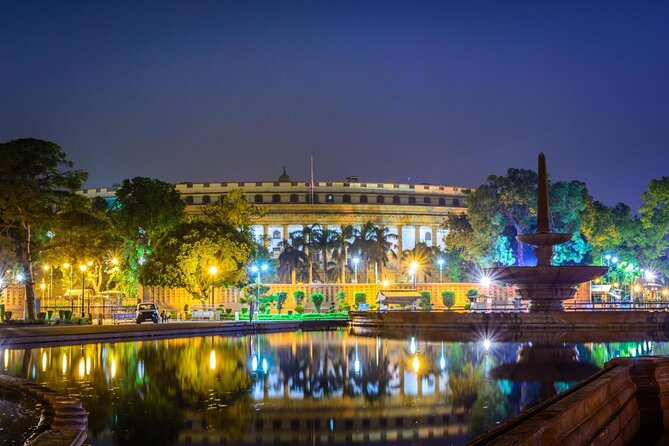
You’ll pass India Gate, a war memorial that’s also a popular picnic spot. Nearby, you’ll see Parliament House (Sansad Bhavan), including its circular design reference to the Ashoka Chakra.
These are quick moments on the route, but they help you understand Delhi as a living political capital, not just an ancient postcard.
Jama Masjid and Humayun’s Tomb: Mughal scale, different moods
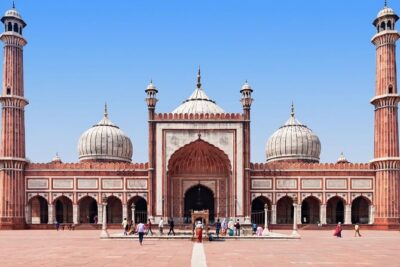
Jama Masjid is a major Mughal-era mosque built 1650–1656 under Shah Jahan. It’s one of the biggest mosques in India, and it tends to feel expansive rather than ornate-in-a-quiet-way.
Then you’ll visit Humayun’s Tomb, commissioned in 1558 by Humayun’s chief consort, Empress Bega Begum. If you’re curious about how Mughal garden-tomb design evolved, this is a key stop because it shows the architecture at an earlier stage than later masterpieces.
Agrasen Ki Baoli: The stepwell break
You’ll pause at Agrasen Ki Baoli, a protected monument and a 60-metre long stepwell. Even when you’re rushing, this is one of the “slow down for a photo” stops. Stepwells have a special feel in person: cool air, hard stone, and people catching up while water history does the talking.
Chandni Chowk: Where the city becomes a market
You’ll finish Delhi with Chandni Chowk, Old Delhi’s famous market area—spices, dried fruit, jewelry, saris, and narrow lanes. This is one of those stops where your guide helps you avoid the most touristy traps and points you toward what’s worth seeing.
Transit to Agra: Yamuna Expressway and a hotel night
After time for lunch at a local restaurant (included in the flow as a lunch stop), you’ll drive toward Agra via Yamuna Expressway, then check in and rest.
A practical note: Day 1 ends with leisure time only after you arrive. If you hate rushing, you’ll feel it less here because you get to rest in Agra.
Day 2 Agra: Sunrise Taj Mahal and the Fort Quartet
Day 2 is built around one star attraction: the Taj Mahal. But the real value is how the second half keeps you moving through Agra’s layers of Mughal craftsmanship.
Taj Mahal: Guided inside, with a sunrise start
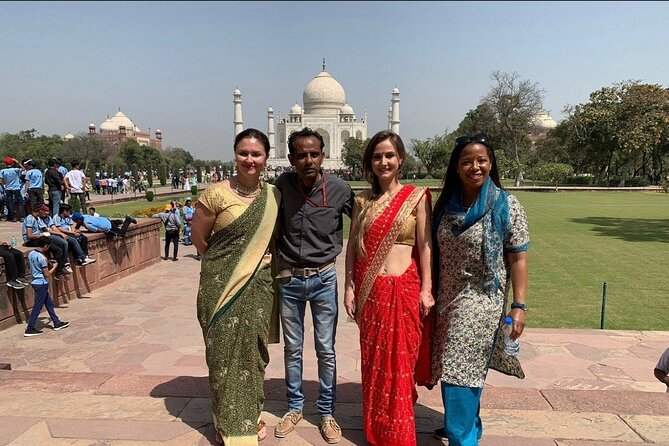
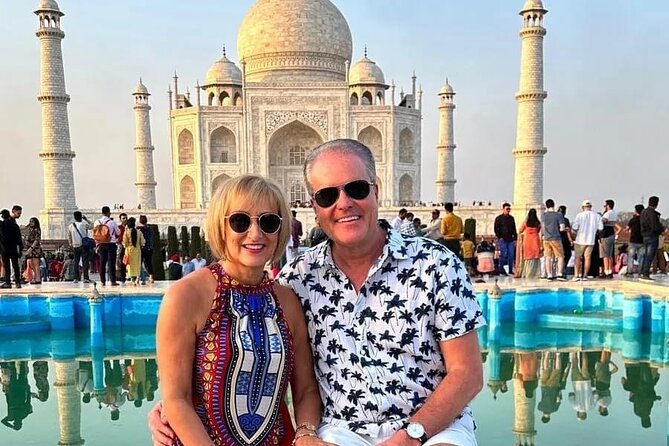
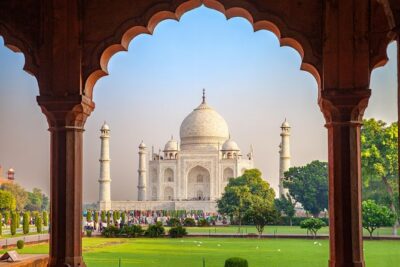
You’ll see the Taj Mahal at sunrise, then get a guided tour inside for about two hours. The tour frames it as Shah Jahan’s 1630s tomb project, designed to enshrine his wife, and your guide connects the architecture choices to what the builders wanted you to feel.
Worth knowing: sunrise Taj Mahal is spectacular, but it also means early mornings. If you’re traveling with anyone who dislikes early starts, this is the day to keep expectations realistic.
Agra Fort: Palaces, balconies, and gardens
After that, Agra Fort gives you the defensive-and-royal side of the Mughal world. You’ll spend about one hour with your guide, looking at palaces, balconies, and gardens.
This is a good contrast to the Taj’s pure, iconic symmetry—fort architecture shows power and function, not just romance.
Itmad-ud-Daula (Baby Taj): smaller, sweeter, detailed
Itmad-ud-Daula is often called Baby Taj, but the point here is that it offers fine detail without needing Taj-size ticket energy. You’ll have about 30 minutes, enough to notice the building rhythm and decorative choices.
Chand Baori: the stepwell with 3,500 steps
Then comes Chand Baori, with its famous 3,500 steps. You’ll have about 30 minutes here. Even if you’ve seen stepwells in photos, this one is a big “stand and look” stop—geometry and repetition do the work.
Drive to Jaipur and check in
Finally, you’ll head to Jaipur, with a travel window of about five hours, then check in for an overnight stay.
Day 3 Jaipur: Amber Fort, City Palace, Jantar Mantar, and Photo Stops
Day 3 is where Jaipur’s variety shows up. You’ll cover a major fort, palace space, and a UNESCO science landmark—plus a few short stops that help you catch different sides of the city.
Panna Meena ka Kund: Stepwell near Amber
You start with Panna Meena ka Kund, a stepwell near Amber Fort. It’s brief (around 15 minutes), but it’s a useful warm-up for the fort day. Stepwells teach you how water shaped architecture here—this is more than a pretty pit-stop.
Amber Fort: the big fort day with palaces and squares
Next is the fort everyone builds their itinerary around: Amber Fort, with about two hours of guided time. The tour focuses on palaces, squares, and monuments—so you’re not just walking ramps and stairs without meaning.
If you’re the type who enjoys architecture and layout, this is the moment to stay alert.
Jal Mahal: the lake palace photo pause
You’ll get a short stop at Jal Mahal, a palace-like structure associated with Man Sagar Lake. It’s mainly a photo opportunity (around 15 minutes). The value here is pacing: it breaks up the fort intensity with water and open views.
City Palace: ceremonial seat turned museum space
You’ll spend about one hour at City Palace, described as the administrative and ceremonial seat of the Maharaja. The date range and function help you understand why the palace area feels different from a pure fortress. It’s about governance and ritual as much as it is about rooms.
Jantar Mantar: UNESCO astronomy in stone
Then you’ll visit Jantar Mantar (UNESCO), a collection of nineteen astronomical instruments built in 1734 by Sawai Jai Singh II. This is the kind of stop that feels more fun when your guide explains what you’re looking at.
It’s a great break from “only temples and forts.” Here, Jaipur flexes its science side.
Hawa Mahal: Palace of Breeze from the outside
Hawa Mahal is next, with about 15 minutes. It’s a five-storey pyramidal façade built with red and pink sandstone. If you want the iconic window rhythm shots, this is timed well.
Albert Hall Museum and quick city gates
You’ll also see:
- Albert Hall Museum (about 15 minutes)
- Patrika Gate (about 15 minutes) at Jawahar Circle’s entrance, popular for photos
- Royal Gaitor Tumbas (about one hour), with carved walls and a complex of temples from the 18th century
The trick here is not to expect every stop to be equally deep. The value is in variety: fort + palace + science + architecture + a few cinematic photo angles.
Day 4 Jaipur: Birla Mandir and Galtaji Temple
Day 4 is more spiritual and local-feeling, with shorter visits and less museum-to-museum pressure.
Birla Mandir Temple: white marble lattice and Vishnu dedication
You’ll visit Birla Mandir, known for intricate white marble latticework and dedicated to Lord Vishnu. It’s about 30 minutes. Even if you’re not religious, marble lattice creates a light effect that feels different from dark sandstone monuments.
Galtaji Temple: the monkey temple by the sacred pools
Next is Galtaji Temple, also known as the monkey temple, with a layout involving three sacred pools. It’s around 30 minutes.
This is a good closing day choice because it slows your pace and gives you a more everyday temple atmosphere before heading back to your meeting point.
How the Private Format Changes Your Experience
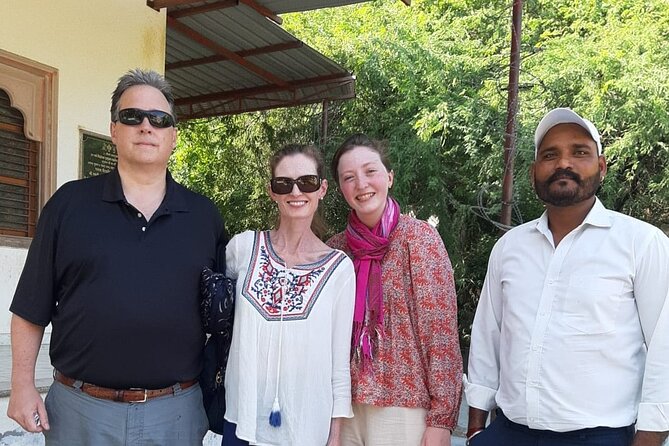
This tour is private, which changes three big things for you:
- Timing feels intentional. Pickup from your location, air-conditioned travel, scheduled guided time, and included bottled water all reduce decision fatigue.
- You get explanation during the walk. In the Golden Triangle, monuments can blur together unless someone tells you what you’re looking for. Your guide does that.
- You can match your comfort level. If you need a bathroom stop or want to linger at a viewpoint for photos, you’re not tied to a group timeline.
There’s also a modern-day safety detail included: fully vaccinated private driver and private guides. It’s not a sightseeing feature, but it matters for peace of mind.
Who This Tour Fits Best (and Who Should Think Twice)
This is a strong fit if:
- You’re visiting India for the first time and want a plan that reduces confusion.
- You want a smooth transfer experience in a private car rather than relying on local transport.
- You like guides who explain what you’re seeing, not just pointing and moving.
- You can handle early starts on Taj Mahal day.
You might want to think twice if:
- You hate tight schedules. The itinerary hits a lot of stops, and some are short.
- You don’t want to deal with extra budgeting for entrance tickets and meals.
- Your group expects lots of free time every day. Day 1 ends with leisure in Agra, but other days are actively scheduled.
Should You Book This 4-Day Golden Triangle?
I think you should book if you want the Golden Triangle without the chaos. The value comes from the combination: private air-conditioned transport, door-to-door pickup/drop, private local guides, breakfasts, and Taj Mahal battery-bus convenience. And the customer service record—especially the owner catching a booking date mistake quickly—signals they handle real-life problems, not just checklists.
Before you book, do two quick budget checks:
- Add the ~$90 per person monument tickets to the listed price.
- Plan for lunch and dinner separately.
If those fit your comfort level, this tour is a practical way to see the big icons and understand what you’re looking at, in the time you have.
FAQ
Is this tour private?
Yes. It’s a private tour/activity, and only your group will participate.
Where does the tour start and end?
The tour starts at Indira Gandhi International Airport in New Delhi and ends back at the meeting point.
What’s included in the transport?
Transport is by a private, air-conditioned car with a driver, including parking, fuel surcharge, taxes, and bottled mineral water during journeys.
Does the tour include hotel accommodation?
It depends on the option you choose. The tour can include 3 nights accommodation, and the included list confirms hotel nights are included only if you book with the hotel option.
Are breakfast and meals included?
Breakfast is included for 3 days. Lunch and dinner are not included.
Are entrance tickets included?
No. Entrance fees for monuments are not included and are listed at about $90 per person.
How are entrance fees handled for the monuments?
Your guide will help you buy entrance fees so you do not have to wait in line to buy them.
Does the Taj Mahal visit include special access transportation?
Yes. The tour includes a battery bus ride to and from the Taj Mahal parking lot up to the Taj Mahal monument.
What language will the guide speak?
You’ll get an English-speaking guide. If you need another language, you must inform the provider in special requirements upon booking.
What’s the cancellation policy?
Free cancellation is available if you cancel at least 24 hours in advance for a full refund.
The Full Golden Triangle, More Options
- 3-Days Private Golden Triangle Tour: Delhi, Agra & Jaipur by Car
★ 5.0 · 1,107 reviews - 3-Days Private Golden Triangle Tour: Delhi, Agra & Jaipur by Car
★ 5.0 · 1,098 reviews - 3-Day Delhi, Agra and Jaipur Private Tour – India Golden Triangle
★ 5.0 · 812 reviews - Four-Day Private Luxury Golden Triangle Tour to Agra and Jaipur From New Delhi
★ 5.0 · 807 reviews - 5 Nights 6 Days Private Golden Triangle Tour – Delhi Agra Jaipur
★ 5.0 · 574 reviews
Onward to Jaipur: More Day Trips
- 3-Days Private Golden Triangle Tour: Delhi, Agra & Jaipur by Car
★ 5.0 · 1,107 reviews - 3-Days Private Golden Triangle Tour: Delhi, Agra & Jaipur by Car
★ 5.0 · 1,098 reviews - 3-Day Delhi, Agra and Jaipur Private Tour – India Golden Triangle
★ 5.0 · 812 reviews - Four-Day Private Luxury Golden Triangle Tour to Agra and Jaipur From New Delhi
★ 5.0 · 807 reviews - Jaipur Day Trip from Delhi by Car or Train – All Inclusive
★ 5.0 · 663 reviews
More Agra Day Trips out of Delhi
- Same Day Taj Mahal, Agra Fort & Baby Taj Tour from Delhi by Car
★ 5.0 · 4,304 reviews - Full Day Taj Mahal, Agra Fort & Baby Taj Tour from Delhi by Car
★ 5.0 · 3,647 reviews - From Delhi: Taj Mahal & Agra Private Day Trip with Transfers
★ 4.9 · 3,181 reviews - From Delhi: Taj Mahal and Agra Fort Private Sunrise Tour
★ 4.9 · 2,270 reviews - Sunrise Taj Mahal, Agra Fort & Baby Taj Tour from Delhi by Car
★ 5.0 · 2,243 reviews
Just added: more New Delhi reviews to browse
- 4 days Golden Triangle Tour★ 5.0 · 3 reviews
- Discover Old & New Delhi: Private Tour with Street Food★ 5.0 · 3 reviews
- Taj Mahal Tour From Delhi By Private Car★ 4.5 · 3 reviews
- Golden Triangle Tour 5 Days★ 5.0 · 3 reviews
- Taj Mahal: Express Entry Ticket For Sunset Tour with guide★ 5.0 · 3 reviews
- Agra Taj Mahal Sunrise & Sunset Tour from Delhi★ 5.0 · 3 reviews
Agra Day Trips from Delhi, compared.
 ★ 5.0Same Day Taj Mahal, Agra Fort & Baby Taj Tour from Delhi by CarFrom $624,304 reviews
 ★ 5.0Full Day Taj Mahal, Agra Fort & Baby Taj Tour from Delhi by CarFrom $623,647 reviews
 ★ 4.9From Delhi: Taj Mahal & Agra Private Day Trip with TransfersFrom $43,181 reviews
 ★ 4.9From Delhi: Taj Mahal and Agra Fort Private Sunrise TourFrom $592,270 reviews
 ★ 5.0Sunrise Taj Mahal, Agra Fort & Baby Taj Tour from Delhi by CarFrom $622,243 reviews
 ★ 5.0Taj Mahal and Agra Private Car Tour from Delhi with 5* LunchFrom $331,633 reviews
 ★ 4.9From Delhi: Private Taj Mahal and Agra Tour by Express TrainFrom $751,605 reviews
 ★ 5.0Taj Mahal, Agra Fort, Baby Taj Tour from Delhi by Superfast TrainFrom $751,494 reviews