
Reviewed · AGRA DAY TRIPS FROM DELHI
5-Day Golden Triangle Tour: Explore Delhi, Agra, and Jaipur
A five-day loop of Delhi, Agra, and Jaipur moves fast. What makes this one work is the mix of major UNESCO hits plus smaller stops, all run with an A/C private driver and a guide. I especially like how the days are built around efficient road time—so you’re not wasting your vacation on transit chaos. The standout parts for me are the Taj Mahal logistics (including the battery bus) and the Old Delhi add-ons like the rickshaw ride. One thing to think about: entrance fees and camera fees aren’t included, and the itinerary includes many paid sights—so budget time for that.
The experience is also built for comfort, not just sightseeing. You get hotel or station pickup and drop, mineral water during drives, and a private vehicle that keeps you moving across cities without dealing with public transport. In the reviews, I kept seeing the same theme: strong planning and very safe, calm driving—drivers like Ashok Yadav, Arjun, Dinesh Chauhan, Lucky, and Nawal all came up by name. The only drawback I’d flag is pacing. This is a lot of monuments in a short span, so you’ll want comfy shoes and a low-friction mindset.
Key things to know up front: it’s private (just your group), it uses mobile tickets, and it’s set up around a live guide for context at the sites. If you hate crowds and long walks, you might still love the tour, but you’ll need to choose your pace and prioritize the stops that matter most to you.
In This Review
- Golden Triangle in 5 Days: What You’ll Really Get
- Price and Logistics: Is $16.86 per Person Good Value?
- Day 1 in Delhi: Old Delhi to Qutub Minar Without the Guesswork
- Jama Masjid and the Old Delhi rickshaw loop
- Chandni Chowk and Khari Baoli spice market time
- Agrasen Ki Baoli and Bangla Sahib for contrast
- India Gate, Parliament/Rashtrapati views, and a museum break
- Gandhi Smriti and Lotus Temple
- Qutub Minar closes the loop
- Day 2 to Agra: The Road Leg and First Taj Views
- Private pickup and the Delhi-to-Agra transfer
- Taj Mahal View Point and then the Baby Taj
- Day 3 in Agra and Beyond: Taj Mahal, Agra Fort, and Chand Baori
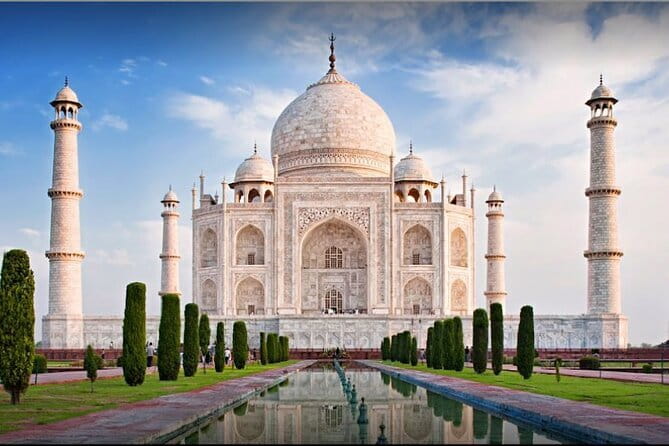
- Taj Mahal with the included battery bus
- Agra Fort: the tougher, stronger sibling
- Chand Baori in Abhaneri: stepwell time
- The road to Jaipur
- Day 4 in Jaipur: Hawa Mahal to Jantar Mantar
- Hawa Mahal first: 953 small windows
- Amer Palace on the hill
- Panna Meena ka Kund and Jal Mahal
- Gaitore Ki Chhatriyan: softer pace
- City Palace and Jaipur’s living royal center
- Jantar Mantar closes the day
- Day 5 Back to Delhi or a Jaipur Drop
- The Drivers and Guides That Make or Break the Trip
- Who This Tour Fits Best (and Who Might Want to Skip It)
- Should You Book It?
- FAQ
- What cities are included in the 5-day Golden Triangle tour?
- Is hotel or station pickup and drop included?
- Do I get private transportation during sightseeing?
- Are entrances to monuments included in the price?
- Is the Taj Mahal battery bus included?
- Which hotel standard is included?
- Is there a rickshaw ride in Delhi?
- Can I cancel for a full refund?
Golden Triangle in 5 Days: What You’ll Really Get
- A/C private vehicle with a dedicated driver for the road legs between Delhi–Agra–Jaipur, so you’re not wrestling with buses or taxis.
- Old Delhi by rickshaw right after Jama Masjid, plus food-and-spice market time at Khari Baoli.
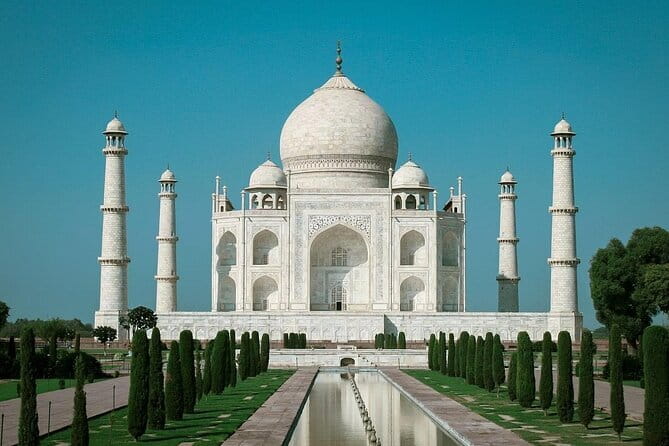
- Taj Mahal battery bus included from the parking area up to the monument zone, which saves time and foot pain.
- UNESCO-focused monuments across the three cities, including Qutub Minar, Taj Mahal area sites, and Jantar Mantar in Jaipur.
- A live tour guide during the sightseeing blocks, so you get the why behind the what.
- Hotels with breakfast included (at least in the standard option), plus an option for higher-star properties.
Price and Logistics: Is $16.86 per Person Good Value?
This tour lists at $16.86 per person, which is strikingly low for a multi-city, multi-day package. The practical way to judge value is to compare what’s included versus what you’ll still pay later.
Here’s the deal: you’re getting private A/C transport, pickup and drop, and four nights of hotel accommodation with breakfast (in the included package setup). That’s usually where most Golden Triangle costs disappear. You’re also getting small but useful extras like bottled mineral water during car rides, and the battery bus tied to the Taj Mahal zone.
What you should not ignore: monument entrance fees and camera fees are not included, and the estimate provided is about $60 per person. That cost can rise fast when a day includes multiple paid sites (City Palace in Jaipur is one example where fees aren’t included). So yes, the base price looks like a bargain, but you should plan your budget to cover entrances.
If you want my rule of thumb: treat this as a transport-and-guiding package with hotels, then add entrance fees on top. You’ll end up with a clearer total—and fewer surprises.
Other Agra runs out of Delhi worth a look




Day 1 in Delhi: Old Delhi to Qutub Minar Without the Guesswork
Day 1 is a packed Delhi sampler, designed to show you the “real Delhi” layers: Mughal-era monuments, busy market streets, calm religious spaces, and then the grand government-city landmarks.
Jama Masjid and the Old Delhi rickshaw loop
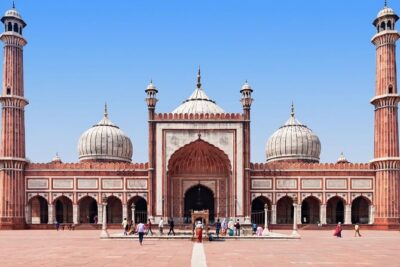
You start at Jama Masjid, and it’s a strong anchor. The architecture is Mughal-era and the space helps you understand how Old Delhi was built around major congregations. After that, you get a rickshaw tour experience through the area around Jama Masjid. This is one of the best “effort-to-reward” add-ons on the itinerary because it adds movement and street-level texture without you getting lost.
Chandni Chowk and Khari Baoli spice market time
Next comes Chandni Chowk, with time in the narrow shopping corridors. The important practical point: some of these areas can be crowded and shop-heavy, so keep your pacing steady and don’t plan to do serious shopping while you’re tired. Then you head to Khari Baoli, where the vibe shifts to spices, nuts, herbs, and packaged food ingredients. If you enjoy senses (smell, taste, color), this stop is one of those quick wins.
Agrasen Ki Baoli and Bangla Sahib for contrast
Delhi isn’t only forts and towers. You also visit Agrasen Ki Baoli, a centuries-old stepwell that feels like a quiet pocket compared with the street activity earlier. Then there’s Gurudwara Bangla Sahib, where you get the calm of the Sikh devotional space and a view of the big sarovar (pond). It’s a nice palate cleanser before you head back into major landmarks.
Chasing the Pink City? More Jaipur day trips
India Gate, Parliament/Rashtrapati views, and a museum break
You’ll pass India Gate and then see major government sites from outside: Rashtrapati Bhavan and Parliament House. You can’t go inside based on the itinerary, but you still get the architecture and photo moments. After that, you stop at the National Museum area (entrance not included), and the guide can help you connect the dots between objects and India’s larger story.
Gandhi Smriti and Lotus Temple
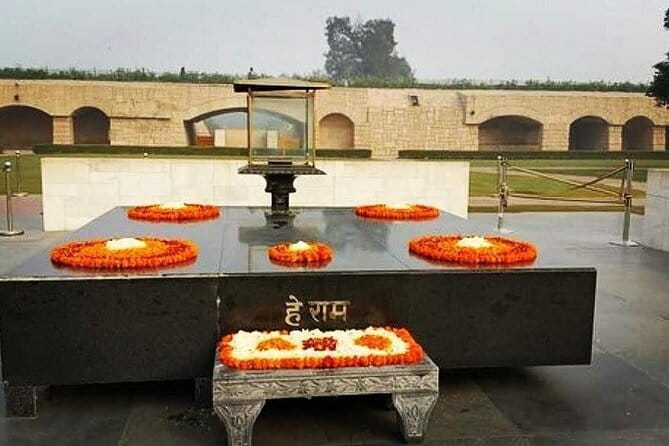
You’ll also visit Gandhi Smriti, which is focused on Gandhi’s last days in the house setting. Then the day ends with Lotus Temple, known for its lotus-like design and peaceful Bahá’í House of Worship. This is a good time to slow down, sit for a moment, and reset before the road days.
Qutub Minar closes the loop
Finally: Qutub Minar. It’s UNESCO-listed and visually dominant—about 73 meters tall—and the surrounding Qutub complex makes the whole area feel like one big museum of early Indian architecture. The day ends with drop-off at your Delhi hotel or another destination in Delhi/NCR.
My practical take: if Delhi feels overwhelming, Day 1 is built to keep you oriented. You get Old Delhi energy first, then you expand outward into monuments and calmer cultural stops.
Day 2 to Agra: The Road Leg and First Taj Views
Day 2 is all about travel time plus an Agra introduction that doesn’t waste daylight.
Private pickup and the Delhi-to-Agra transfer
You’re picked up from your location by the private vehicle and driven toward Agra. The itinerary frames it as about 4 hours of road time. In a place like India, this matters. A controlled transfer reduces stress, and you arrive with enough energy to see something meaningful.
Taj Mahal View Point and then the Baby Taj
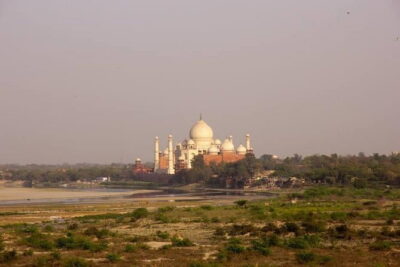
You start with a Taj Mahal View Point, aimed at enjoying the view without heavy crowds. You get a long stretch—about 3 hours—which is ideal if you want photos from a calmer vantage and time to adjust to the heat. After that, you visit Itimad-ud-Daulah, often called the Baby Taj. It’s smaller than the main monument but rich in detail, and it pairs well with the bigger Taj Mahal experience so you can notice what changes and what repeats in Mughal design.
You finish with a drop so you can rest in Agra for the night.
Watch-out for planning: This day includes a view-focused stop where entrance isn’t listed as included, so keep entrance fees and on-site costs in mind.
Day 3 in Agra and Beyond: Taj Mahal, Agra Fort, and Chand Baori
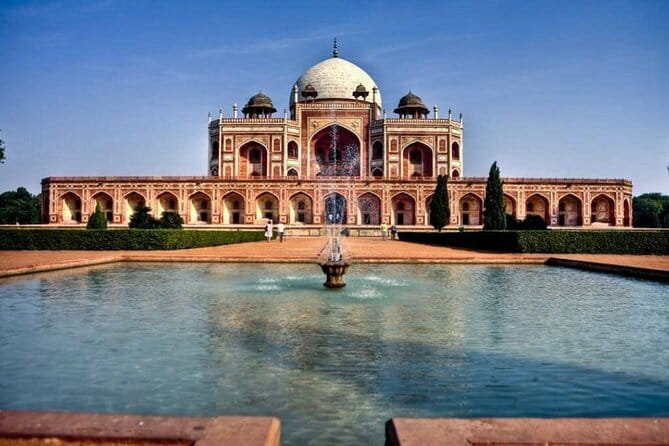
Day 3 is your “big monuments” day, starting with the Taj Mahal early in the morning.
Taj Mahal with the included battery bus
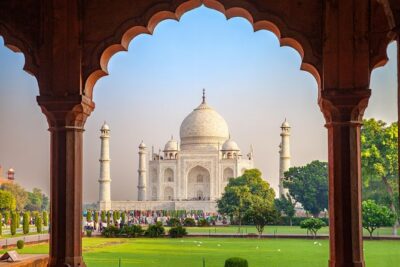
You’re picked up and taken to the main highlight: Taj Mahal, with about 3 hours set aside. The tour includes a battery bus ride from the Taj Mahal parking up to the monument area, then back again. That’s a real practical advantage. You spend less time walking and more time enjoying the site, especially if you’re visiting in hotter hours or you’re traveling with anyone who doesn’t want long treks.
Agra Fort: the tougher, stronger sibling
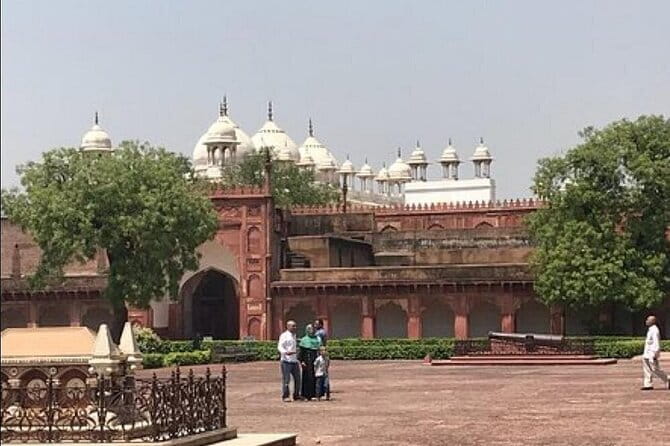
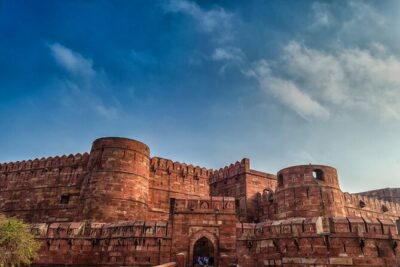
After Taj, you visit Agra Fort, described as an Akbar-era Mughal landmark with red stone architecture. It’s given about 3 hours, which suggests time to look beyond the main structures and notice how the fort setting changes your view of history.
Chand Baori in Abhaneri: stepwell time
Then you head to Chand Baori in Abhaneri. This is a very old stepwell, built to store water for hot, dry seasons. The itinerary sets aside about 1 hour, and entrance isn’t included. If you like photography, geometry, and the feeling of going down into an architectural “corridor,” this stop is a fun break from big-palace fatigue.
The road to Jaipur
After Agra and Chand Baori, you transition toward Jaipur with a long drive leg of about 6 hours of road time. The goal is to drop you at your chosen accommodation so you can rest.
My practical take: Day 3 gives you variety—marble elegance at Taj, military-grandeur at Agra Fort, then a utilitarian water structure that’s somehow still beautiful.
Day 4 in Jaipur: Hawa Mahal to Jantar Mantar
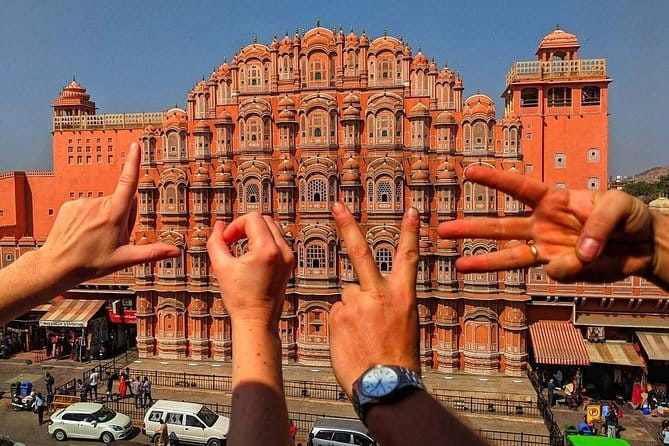
Jaipur day is the most “postcard but still real” schedule on the trip: wind-themed palace facades, hill forts, stepwells, a water palace view, and then the astronomy site.
Hawa Mahal first: 953 small windows
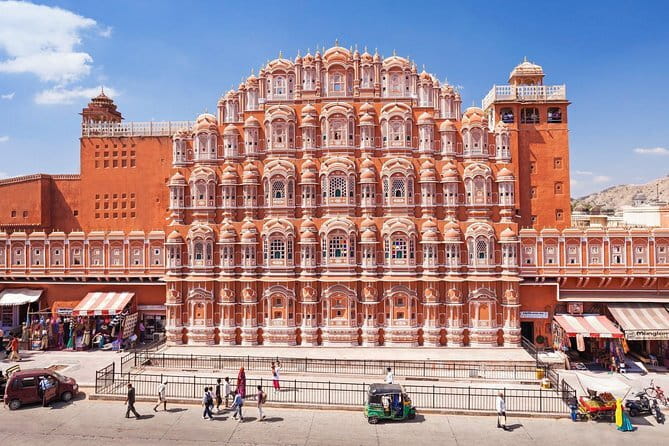
You begin at Hawa Mahal (Palace of Wind) for about 30 minutes. It’s famous for its five-story design and the idea of those small windows. Even if you don’t go deep inside, the structure makes it easy to imagine how the palace worked socially and visually.
Amer Palace on the hill
Next is Amer (Amer Palace) for about 2 hours, described as Rajput with Hindu-Mughal influences. This is one of those stops that helps you understand Jaipur’s power: not just wealth, but control of geography. Give yourself time to wander calmly and don’t rush the photo parts.
Panna Meena ka Kund and Jal Mahal
You visit Panna Meena ka Kund, a stepwell with a crisscross staircase design and symmetry—set for about 15 minutes. Then there’s Jal Mahal, the so-called water palace. It’s listed for about 30 minutes, and it’s a visual contrast to the fort energy: more skyline reflections, more quiet water-side mood.
Gaitore Ki Chhatriyan: softer pace
Then you head to Gaitore Ki Chhatriyan, Jaipur’s royal cremation ground, known for carved stone memorials. This is a quieter stop at about 30 minutes, which helps balance the more famous, more tourist-heavy sites.
City Palace and Jaipur’s living royal center
You move to City Palace in the center of Jaipur. The complex is about 2 hours, and entrance isn’t included. The tour notes it’s still home to the royal family, which is important context: this isn’t just a set piece. It’s an active heritage site.
Jantar Mantar closes the day
Finally, Jantar Mantar, UNESCO-listed, with about 30 minutes. It’s known for large sundials and astronomical instruments. If you like science history, it’s a great way to end. If not, it still works because the geometry is eye candy and the site is straightforward to enjoy.
My practical take: Jaipur day is structured so you get at least one “high spectacle” stop (Hawa Mahal/Amer) plus one “quiet brain” stop (Jantar Mantar/Gaitore).
Day 5 Back to Delhi or a Jaipur Drop
Your last day is lighter: after breakfast, you either take the road trip back to Delhi (about 5 hours) or you can be dropped at another desired location in Jaipur.
This flexibility is useful if you’re continuing your trip in India. Just keep in mind that transport time can feel longer than expected depending on traffic and road conditions, even with a private car.
The Drivers and Guides That Make or Break the Trip

The tour design is solid on paper: private car, planned sequencing, and a live guide. But the reviews put the human factor front and center. Names that came up include Mr Raj (planning and coordination), Ashok Yadav (safe and relaxed driving), Arjun (excellent, extremely safe driving in traffic), Dinesh Chauhan (punctual, polite), Lucky (local knowledge and food/market/site recommendations), and Nawal (punctuality and careful attention).
What I like about this pattern: it suggests you’re not just buying rides between monuments. You’re getting someone who can handle timing, traffic stress, and on-the-ground decisions so you don’t waste energy on logistics.
If you value calm logistics and good explanations at historic sites, this is exactly the kind of tour setup that tends to feel worth it.
Who This Tour Fits Best (and Who Might Want to Skip It)
This works best if you want:
- A structured Golden Triangle with minimal logistics work
- Comfort-first travel (A/C private vehicle, pickup/drop)
- A guide to connect the monuments to their historical meaning
- A schedule that covers many major sites in a short time
It may not be ideal if you:
- Want lots of free wandering time in each city
- Hate fast pacing between stops
- Don’t want to budget for entrance fees (roughly $60 per person plus camera fees)
Should You Book It?
I’d book this tour if your goal is to see Delhi, Agra, and Jaipur efficiently, with a guide and private transport doing the heavy lifting. The inclusion of the Taj Mahal battery bus and the Old Delhi rickshaw ride are small details that add up in comfort and time. And if you’ve ever struggled with safety and traffic anxiety, the consistent mention of careful driving names is a strong signal.
Just do two things before you go:
1) budget for entrance and camera fees, and
2) pick your priorities (Taj Mahal, Qutub Minar, Amer, City Palace, Jantar Mantar) so the packed days feel exciting rather than frantic.
FAQ
What cities are included in the 5-day Golden Triangle tour?
The tour covers Delhi, Agra, and Jaipur.
Is hotel or station pickup and drop included?
Yes. Hotel/Airport/Railway Station pickup and drop are included.
Do I get private transportation during sightseeing?
Yes. You get a chauffeur-driven A/C private vehicle with a driver for sightseeing.
Are entrances to monuments included in the price?
No. Monuments entrance fees and camera fees are not included, with an approximate estimate of $60 per person.
Is the Taj Mahal battery bus included?
Yes. There is a battery bus ride to and from the Taj Mahal parking lot up to the Taj Mahal monument.
Which hotel standard is included?
The tour includes 3-star hotel accommodation with breakfast, and there are options for 4-star or 5-star hotels if selected (when available).
Is there a rickshaw ride in Delhi?
Yes. There’s a tuk-tuk ride in Old Delhi during the Delhi sightseeing.
Can I cancel for a full refund?
You can cancel for a full refund if you cancel at least 24 hours in advance of the experience start time.
The Full Golden Triangle, More Options
- 3-Days Private Golden Triangle Tour: Delhi, Agra & Jaipur by Car
★ 5.0 · 1,107 reviews - 3-Days Private Golden Triangle Tour: Delhi, Agra & Jaipur by Car
★ 5.0 · 1,098 reviews - 3-Day Delhi, Agra and Jaipur Private Tour – India Golden Triangle
★ 5.0 · 812 reviews - Four-Day Private Luxury Golden Triangle Tour to Agra and Jaipur From New Delhi
★ 5.0 · 807 reviews - 5 Nights 6 Days Private Golden Triangle Tour – Delhi Agra Jaipur
★ 5.0 · 574 reviews
Onward to Jaipur: More Day Trips
- 3-Days Private Golden Triangle Tour: Delhi, Agra & Jaipur by Car
★ 5.0 · 1,107 reviews - 3-Days Private Golden Triangle Tour: Delhi, Agra & Jaipur by Car
★ 5.0 · 1,098 reviews - 3-Day Delhi, Agra and Jaipur Private Tour – India Golden Triangle
★ 5.0 · 812 reviews - Four-Day Private Luxury Golden Triangle Tour to Agra and Jaipur From New Delhi
★ 5.0 · 807 reviews - Jaipur Day Trip from Delhi by Car or Train – All Inclusive
★ 5.0 · 663 reviews
More Agra Day Trips out of Delhi
- Same Day Taj Mahal, Agra Fort & Baby Taj Tour from Delhi by Car
★ 5.0 · 4,304 reviews - Full Day Taj Mahal, Agra Fort & Baby Taj Tour from Delhi by Car
★ 5.0 · 3,647 reviews - From Delhi: Taj Mahal & Agra Private Day Trip with Transfers
★ 4.9 · 3,181 reviews - From Delhi: Taj Mahal and Agra Fort Private Sunrise Tour
★ 4.9 · 2,270 reviews - Sunrise Taj Mahal, Agra Fort & Baby Taj Tour from Delhi by Car
★ 5.0 · 2,243 reviews
Just added: more New Delhi reviews to browse
- 4 days Golden Triangle Tour★ 5.0 · 3 reviews
- Discover Old & New Delhi: Private Tour with Street Food★ 5.0 · 3 reviews
- Taj Mahal Tour From Delhi By Private Car★ 4.5 · 3 reviews
- Golden Triangle Tour 5 Days★ 5.0 · 3 reviews
- Taj Mahal: Express Entry Ticket For Sunset Tour with guide★ 5.0 · 3 reviews
- Agra Taj Mahal Sunrise & Sunset Tour from Delhi★ 5.0 · 3 reviews
Agra Day Trips from Delhi, compared.
 ★ 5.0Same Day Taj Mahal, Agra Fort & Baby Taj Tour from Delhi by CarFrom $624,304 reviews
 ★ 5.0Full Day Taj Mahal, Agra Fort & Baby Taj Tour from Delhi by CarFrom $623,647 reviews
 ★ 4.9From Delhi: Taj Mahal & Agra Private Day Trip with TransfersFrom $43,181 reviews
 ★ 4.9From Delhi: Taj Mahal and Agra Fort Private Sunrise TourFrom $592,270 reviews
 ★ 5.0Sunrise Taj Mahal, Agra Fort & Baby Taj Tour from Delhi by CarFrom $622,243 reviews
 ★ 5.0Taj Mahal and Agra Private Car Tour from Delhi with 5* LunchFrom $331,633 reviews
 ★ 4.9From Delhi: Private Taj Mahal and Agra Tour by Express TrainFrom $751,605 reviews
 ★ 5.0Taj Mahal, Agra Fort, Baby Taj Tour from Delhi by Superfast TrainFrom $751,494 reviews