
Reviewed · AGRA DAY TRIPS FROM DELHI
6-Day Private Golden Triangle Tour – Explore Delhi, Agra & Jaipur
A 6-day Golden Triangle can feel like a blur. This one is built for comfort and clean logistics, with private city-to-city transport and local guides so you spend less time figuring things out and more time seeing the big moments. I like the easy pickup/drop-off across Delhi, Noida, and Gurugram, and I especially like the way the schedule clusters landmarks to cut down wasted transit. One thing to watch: entrance fees are not included for many key sights, so your total cost can rise once you get to the gate.
What makes this tour work well is the way the day keeps moving. With private transport and a dedicated guide/driver pairing, you can adjust pace when traffic slows down, instead of being stuck behind someone else’s timetable. The tour’s top-scoring theme is clear guidance that helps you see what matters, even on congested afternoons—and that same efficiency is exactly what you want on a tight 6-day route.
In This Review
- Key things you get (and why they matter)
- Private Golden Triangle: the real value is less stress
- Day 1 in Delhi: easy arrival, then a flexible rest day
- Day 2 in Old Delhi + New Delhi: temples, markets, and the Mughal layer cake
- Jama Masjid
- Old Delhi rickshaw ride through Chandni Chowk
- Khari Baoli spice market
- Agrasen Ki Baoli (stepwell) and Gurudwara Bangla Sahib
- India Gate, Humayun’s Tomb, Gandhi Smriti, Lotus Temple, Qutub Minar
- Day 3: fast drive to Agra and the sunset view strategy
- Taj Mahal view point and Baby Taj (Itmad-ud-Daula)
- Day 4: full Taj Mahal morning (yes, it really is that big)
- Taj Mahal at first rays of sunlight
- Agra Fort (UNESCO)
- Day 5 in Jaipur: forts, observatory, markets, and a classic wind façade
- Amber Palace and the mirror-focused rooms
- Panna Meena ka Kund and Jal Mahal photo break
- Royal cremation grounds: Gaitore Ki Chhatriyan
- City Palace, Jantar Mantar, and Hawa Mahal
- Day 6: Jaipur to Delhi with a flexible end point
- What I’d watch for: entrance fees and ticket rhythm
- Who this tour fits best
- Value check: what you pay for at about $236.70 per person
- A note on service quality (and why it shows up in the rating)
- Should you book it?
- FAQ
- FAQ
- What cities does this Golden Triangle tour cover?
- Do you get pickup and drop-off?
- Is this tour fully private?
- What’s included in the price?
- Are entrance fees included?
- What’s the cancellation window?
Key things you get (and why they matter)
- Private guides in Delhi, Agra, and Jaipur: you’re not relying on random audio apps for the story.
- Vehicle matched to your group size: sedan for 1–2, MPV for 3–4, van for 5–10, all private and air-conditioned.
- Taj Mahal area battery shuttle included: you don’t have to stress about the parking-to-gate slog.
- Old Delhi rickshaw ride is included: a short, local-feeling break inside a busy market maze.
- Optional 4- or 5-star hotels with breakfast: five nights’ stays (if you choose the hotel option), so mornings start easy.
Private Golden Triangle: the real value is less stress
The Golden Triangle is famous for a reason: Delhi, Agra, and Jaipur are the big magnets of northern India. The trick is timing. On most do-it-yourself trips, you end up with long drives, confusing meeting points, and unclear ticket rules for major sites. This private tour is designed to take those headaches out of your hands.
You’re paying for three practical advantages: transport between cities, daily sightseeing coordination, and local guiding. That combination matters because Delhi alone can chew up hours with traffic and tight lanes. Having a driver who’s built for that reality—and a guide who knows how to plan a route—helps you get more done without turning the whole trip into a sprint.
The itinerary here also leans into “you’ll want a guide” places: Mughal-era monuments, UNESCO sites, and the kinds of buildings where the details change how you see them. Without guidance, you can walk through and still miss the point.
And yes, you’ll still need to budget time for lines and travel. But the pace is set with the assumption that you want to see major highlights without micromanaging the day.
Other Agra runs out of Delhi worth a look




Day 1 in Delhi: easy arrival, then a flexible rest day
Day 1 starts with pickup from your airport, railway station, hotel, or any selected location in Delhi, Noida, or Gurugram. That matters more than it sounds. Delhi has multiple airports and tons of hotel zones; private pickup prevents that first-day scramble.
After the transfer and check-in, you’re free for the rest of the day. That’s a smart move. The Golden Triangle can be relentless later. A low-pressure arrival gives you room to eat, adjust to heat and time, and handle any small hiccups without rushing.
If you prefer an immediate start, you can explore nearby after you settle. The tour is private, so your guide/team can generally adapt the flow to what you want—within reason.
Day 2 in Old Delhi + New Delhi: temples, markets, and the Mughal layer cake
Day 2 is a full Delhi mix, starting with Mughal power, moving into Old Delhi chaos, then shifting back toward New Delhi landmarks. It’s the best “first real day” in Delhi because it gives you contrast: spice stalls and narrow lanes, then grand monuments and memorials.
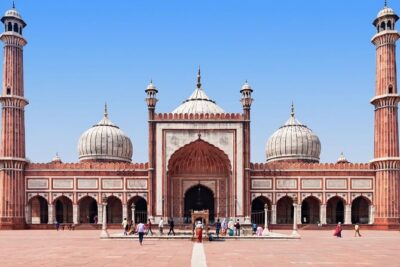
Jama Masjid
You’ll visit Jama Masjid, built by Mughal emperor Shah Jahan in 1656. Even without going inside, getting oriented around the scale is useful. Views from the minarets are part of the experience here, and a guide can help you understand what you’re seeing so it doesn’t just feel like a big mosque in passing.
Old Delhi rickshaw ride through Chandni Chowk
Next comes a rickshaw ride through Chandni Chowk, a 17th-century market still known for its narrow, energetic lanes. This is one of the included moments that feels authentically “Delhi.” It’s also short enough that you don’t lose the whole day sitting still.
Chasing the Pink City? More Jaipur day trips
Khari Baoli spice market
Then there’s Khari Baoli, described as Asia’s largest spice market. This stop is visually loud: stacks, powders, and dry fruits everywhere. A guide helps you make sense of what you’re looking at so it doesn’t become just a shopping photo walk.
Agrasen Ki Baoli (stepwell) and Gurudwara Bangla Sahib
The tour includes Agrasen Ki Baoli, an ancient stepwell with arched niches. Stepwells are more than pretty stairs; they’re part of how communities managed water and built cooling spaces in hot weather.
After that, you’ll visit Gurudwara Bangla Sahib, known for its serene sarovar (holy water pond) and the community kitchen (langar). This is a good reset in the middle of a busy day.
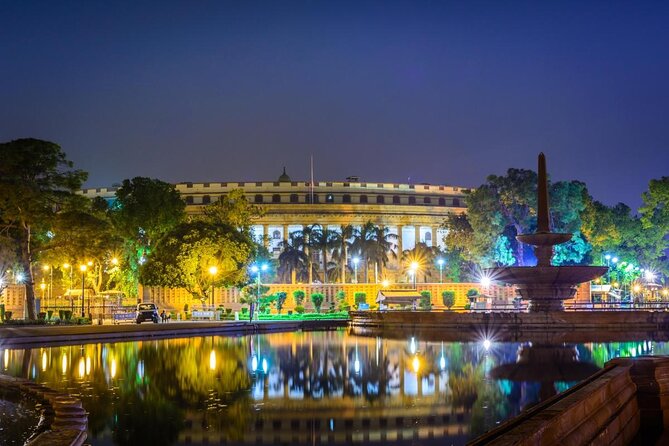
India Gate, Humayun’s Tomb, Gandhi Smriti, Lotus Temple, Qutub Minar
The second half of Day 2 is a parade of Delhi icons:
- India Gate for a quick war memorial stop
- Humayun’s Tomb (UNESCO), noted as the first garden tomb in India
- Gandhi Smriti, Gandhi’s final-days house turned memorial
- Lotus Temple, a Bahá’í House of Worship with a peaceful setting
- Qutub Minar for UNESCO-listed history and scale
A practical tip: plan on some time spent just looking. These places are visually different from each other, but they also share a theme: how power and faith shaped architecture.
Possible drawback: this is a long day with many stops. Some monuments have entrance fees not included, so you’ll need to decide on the spot what you want to pay for. If you hate ticket decisions mid-trip, budget for it before you go.
Day 3: fast drive to Agra and the sunset view strategy

On Day 3 you drive from Delhi to Agra via the Yamuna Expressway, typically around 3.5–4 hours. This is exactly the kind of highway leg that feels easier when it’s handled for you. Private transport helps you focus on the trip instead of navigation.
Taj Mahal view point and Baby Taj (Itmad-ud-Daula)
Agra’s sightseeing here is smartly split:
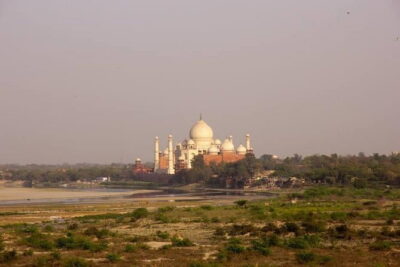
- A Taj Mahal view point for a calmer sunset moment across the river
- Itmad-ud-Daula, often called the Baby Taj, famous for intricate marble work
This pairing does two things for you. First, it lets you see the Taj in a less crowded light. Second, it gives you a “detail practice run” before the main Taj visit the next day, so you’ll spot the craft instead of just the postcard.
If you’re someone who likes photography, sunset planning is a real upgrade. If you’re not, it still helps because it breaks up the monotony of driving plus intense main sights.
Day 4: full Taj Mahal morning (yes, it really is that big)
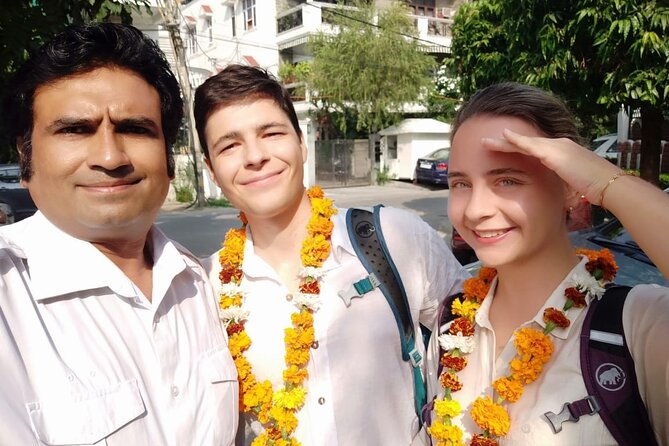
Day 4 is the main event: Taj Mahal plus Agra Fort.
Taj Mahal at first rays of sunlight
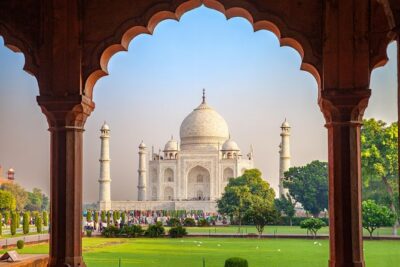
The itinerary frames your Taj visit as the moment when sunlight hits the marble. Whether you’re chasing the exact lighting or not, I like this structure because it turns the Taj into an experience rather than a box-check. A guide also helps you understand why the design works—how symmetry and materials create that glowing effect people talk about.
Agra Fort (UNESCO)
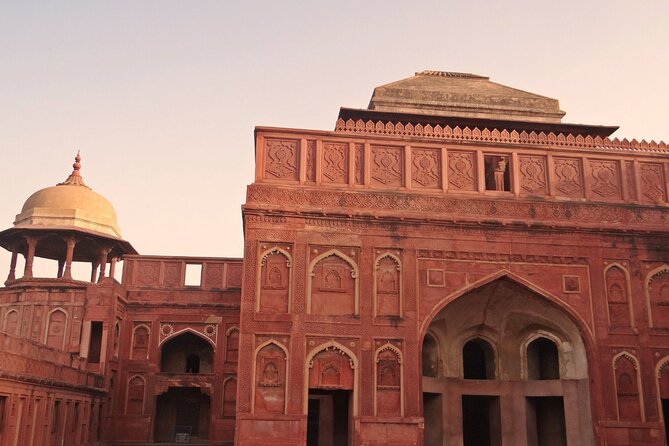
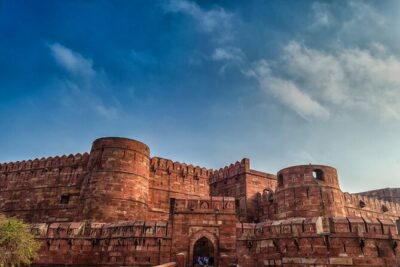
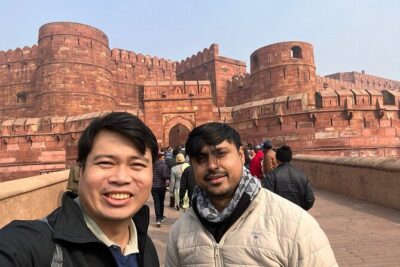
After the Taj, you’ll explore Agra Fort, a UNESCO World Heritage site linked to Mughal emperors. This fort is more than a big stone wall; it’s a complex with palaces, audience halls, and Mughal gardens. It gives the Taj story a wider context: not just a monument, but the court world around it.
Practical note: Taj Mahal entrance fees are not included in the base listing here, so this day is where you should be mentally ready to pay at the gate.
Then you travel onward to Jaipur and check in for the night. The transfer time listed is about five hours.
Day 5 in Jaipur: forts, observatory, markets, and a classic wind façade
Jaipur is where the Golden Triangle shifts into more vivid Rajasthan vibes. Day 5 is packed with major sights, but the order keeps things logical: start with the fort area, then move through town landmarks and UNESCO astronomy.
Amber Palace and the mirror-focused rooms
You’ll visit Amber Palace, including stops like Sheesh Mahal (Mirror Palace) and Diwan-i-Aam. Amber is a hilltop fort where the architecture changes as you move. It’s also a strong contrast to Agra’s marble aesthetic: here you get a more Rajput–Mughal blend feel.
Panna Meena ka Kund and Jal Mahal photo break
Then the itinerary adds:
- Panna Meena ka Kund, a symmetrical stepwell with striking stair patterns
- Jal Mahal, the water palace in Man Sagar Lake, mostly as a photo stop
This is a good mix of “you can understand it” monuments and “you can enjoy the view” moments. Just keep expectations realistic: Jal Mahal is famously pretty, but you’re not spending hours exploring an indoor palace.
Royal cremation grounds: Gaitore Ki Chhatriyan
You’ll also see Gaitore Ki Chhatriyan, royal cremation grounds with intricately carved cenotaphs. This isn’t a mainstream postcard stop, but it adds texture to the story of Jaipur’s rulers.
City Palace, Jantar Mantar, and Hawa Mahal
The day continues with:
- City Palace of Jaipur, a royal residence with courtyards, museums, and continued ties to the royal family
- Jantar Mantar, a UNESCO-listed astronomical observatory, including the world’s largest stone sundial and other instruments
- Hawa Mahal, the Palace of Wind with its five-story façade and 953 windows designed for royal women to watch street life and festivals
Hawa Mahal is short on time in the plan, but it’s one of the most iconic outlines in the city. If you only had one quick façade stop in Jaipur, this is the one.
Possible consideration: Day 5 is dense. If you get tired easily, you’ll want to manage your energy early, and rely on the guide to keep you moving at the right pace.
Day 6: Jaipur to Delhi with a flexible end point
Day 6 is mostly return time. You drive back to Delhi (about five hours after breakfast). The itinerary also gives you flexibility: you can be dropped off at your preferred location in Jaipur if you’re continuing your journey elsewhere.
That’s a quiet but important feature. Many fixed tours end in a way that forces you into awkward last-day logistics. Here, you get a cleaner exit.
What I’d watch for: entrance fees and ticket rhythm
The listing notes entrance fees are not included for many monuments, and it also states an entrance fee total of ₹6,000 per person. That suggests a bundle-style expectation for sites. Still, your exact gate list can vary by what you choose to enter versus view from outside.
So here’s the practical mindset: plan to pay at least some fees during the trip. If you’re traveling with kids or you’re less interested in certain palaces, you might want to align with your guide early so the money you spend matches your priorities.
Also, lunch and dinner are not included. That’s not bad; it’s usually better because it gives you control over what you eat and where. Just remember: midday hunger can slow a packed itinerary.
Who this tour fits best
This private 6-day Golden Triangle works especially well if:
- you want Delhi, Agra, and Jaipur without wrestling with buses, trains, or meeting points
- you prefer guided explanations at major sites
- you’re traveling with family, seniors, or anyone who doesn’t enjoy long days of transit stress
- you’d rather pay for organization than trade money for time on the road
If you love wandering completely on your own with no structure, a private tour might feel “too planned.” But if your ideal India trip includes big monuments plus smart logistics, this format is a solid match.
Value check: what you pay for at about $236.70 per person
At $236.70 per person, this tour’s biggest value driver is what you’re not paying yourself: private transport plus daily guidance plus hotels (if you select that option). Golden Triangle self-guided costs can look cheaper at first, then balloon once you add drivers, taxis between cities, and paid guides at each stop.
The price is also complemented by inclusions that reduce friction:
- daily breakfast for five nights (with hotel option)
- private vehicle matched to group size
- battery-powered bus ride to and from Taj Mahal parking
- bottled mineral water during car journeys
- a traditional Old Delhi rickshaw ride
- taxes and service charges included, so you’re not hit with random add-ons midstream
The main “gotcha” is entrance fees and meals. If you handle those calmly in advance, the cost-to-comfort ratio feels fair for a private setup.
A note on service quality (and why it shows up in the rating)
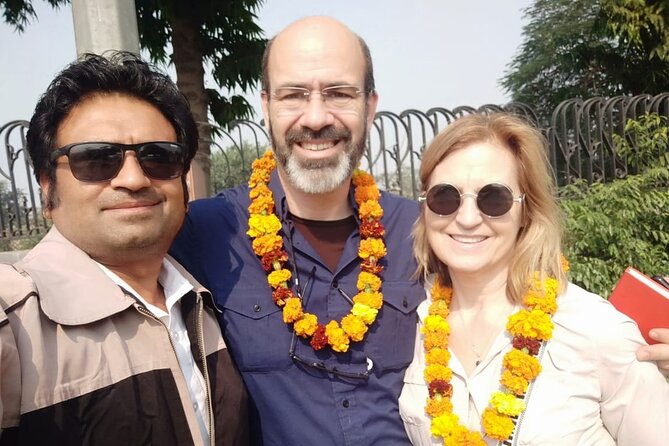
This tour is rated 4.9 with 7 reviews. The recurring praise centers on how well the guide and driver keep the day running. In particular, the positive feedback highlights that the guide explained history and sites clearly, and that they still helped you see as much as possible even when afternoon traffic got heavy.
One detail I’d take seriously from that: this itinerary depends on timing. Private transport plus a guide who manages the flow can mean the difference between a rushed list and a smoother day.
If your trip matters to you—like first time in India or a limited vacation—this is the kind of planning that pays off.
Should you book it?
I’d book this tour if you want the Golden Triangle highlights with private movement, local guiding, and hotel comfort during a short window. The structure is tight but not chaotic, and the inclusions around Taj logistics and Old Delhi give you authentic moments without turning your trip into a transportation puzzle.
I wouldn’t book it if:
- you hate paying entrance fees on top of the package price
- you want lots of unscheduled free wandering with zero itinerary pressure
- you’re hoping the exact schedule will include optional stops not shown in the day-by-day details
If you’re somewhere in the middle, talk to the team about pacing preferences before you go. With a private format, you can often adjust your day-to-day priorities, as long as you stay within the overall time blocks.
FAQ
FAQ
What cities does this Golden Triangle tour cover?
It covers Delhi, Agra, and Jaipur over about 6 days, with private transportation between cities.
Do you get pickup and drop-off?
Yes. Pickup is offered from your airport, railway station, hotel, or a desired location in Delhi, Noida, or Gurugram, and drop-off is also available at your chosen end location.
Is this tour fully private?
Yes. It is described as a fully private tour, with your own vehicle, driver, and local guides in each city, and no shared transport with other groups.
What’s included in the price?
Included items list private guided sightseeing, private air-conditioned transportation, daily hotel breakfast if you choose the hotel option, a Taj Mahal parking battery shuttle, bottled water during car journeys, and an Old Delhi rickshaw ride.
Are entrance fees included?
No. Entrance fees for monuments are listed as not included, and there is also a total entrance fee amount provided in the tour information.
What’s the cancellation window?
The tour offers free cancellation if you cancel up to 24 hours in advance for a full refund.
The Full Golden Triangle, More Options
- 3-Days Private Golden Triangle Tour: Delhi, Agra & Jaipur by Car
★ 5.0 · 1,107 reviews - 3-Days Private Golden Triangle Tour: Delhi, Agra & Jaipur by Car
★ 5.0 · 1,098 reviews - 3-Day Delhi, Agra and Jaipur Private Tour – India Golden Triangle
★ 5.0 · 812 reviews - Four-Day Private Luxury Golden Triangle Tour to Agra and Jaipur From New Delhi
★ 5.0 · 807 reviews - 5 Nights 6 Days Private Golden Triangle Tour – Delhi Agra Jaipur
★ 5.0 · 574 reviews
Onward to Jaipur: More Day Trips
- 3-Days Private Golden Triangle Tour: Delhi, Agra & Jaipur by Car
★ 5.0 · 1,107 reviews - 3-Days Private Golden Triangle Tour: Delhi, Agra & Jaipur by Car
★ 5.0 · 1,098 reviews - 3-Day Delhi, Agra and Jaipur Private Tour – India Golden Triangle
★ 5.0 · 812 reviews - Four-Day Private Luxury Golden Triangle Tour to Agra and Jaipur From New Delhi
★ 5.0 · 807 reviews - Jaipur Day Trip from Delhi by Car or Train – All Inclusive
★ 5.0 · 663 reviews
More Agra Day Trips out of Delhi
- Same Day Taj Mahal, Agra Fort & Baby Taj Tour from Delhi by Car
★ 5.0 · 4,304 reviews - Full Day Taj Mahal, Agra Fort & Baby Taj Tour from Delhi by Car
★ 5.0 · 3,647 reviews - From Delhi: Taj Mahal & Agra Private Day Trip with Transfers
★ 4.9 · 3,181 reviews - From Delhi: Taj Mahal and Agra Fort Private Sunrise Tour
★ 4.9 · 2,270 reviews - Sunrise Taj Mahal, Agra Fort & Baby Taj Tour from Delhi by Car
★ 5.0 · 2,243 reviews
Just added: more New Delhi reviews to browse
- 4 days Golden Triangle Tour★ 5.0 · 3 reviews
- Discover Old & New Delhi: Private Tour with Street Food★ 5.0 · 3 reviews
- Taj Mahal Tour From Delhi By Private Car★ 4.5 · 3 reviews
- Golden Triangle Tour 5 Days★ 5.0 · 3 reviews
- Taj Mahal: Express Entry Ticket For Sunset Tour with guide★ 5.0 · 3 reviews
- Agra Taj Mahal Sunrise & Sunset Tour from Delhi★ 5.0 · 3 reviews
Agra Day Trips from Delhi, compared.
 ★ 5.0Same Day Taj Mahal, Agra Fort & Baby Taj Tour from Delhi by CarFrom $624,304 reviews
 ★ 5.0Full Day Taj Mahal, Agra Fort & Baby Taj Tour from Delhi by CarFrom $623,647 reviews
 ★ 4.9From Delhi: Taj Mahal & Agra Private Day Trip with TransfersFrom $43,181 reviews
 ★ 4.9From Delhi: Taj Mahal and Agra Fort Private Sunrise TourFrom $592,270 reviews
 ★ 5.0Sunrise Taj Mahal, Agra Fort & Baby Taj Tour from Delhi by CarFrom $622,243 reviews
 ★ 5.0Taj Mahal and Agra Private Car Tour from Delhi with 5* LunchFrom $331,633 reviews
 ★ 4.9From Delhi: Private Taj Mahal and Agra Tour by Express TrainFrom $751,605 reviews
 ★ 5.0Taj Mahal, Agra Fort, Baby Taj Tour from Delhi by Superfast TrainFrom $751,494 reviews