
Reviewed · TAJ MAHAL TOURS FROM DELHI
7 Day Golden Triangle Tour with Wildlife-Taj Mahal Tigers & Birds
Sunrise Taj Mahal meets tiger country. This 7-day Golden Triangle tour pairs India’s headline heritage with wildlife time in Bharatpur and Ranthambore. You start and end in New Delhi, with guided city sights in Delhi, Agra, and Jaipur.
I especially like how the schedule gets the Taj Mahal at sunrise and then keeps going to wildlife the same day you leave Agra. Second, I like the mix of guided stops and free-picture photo breaks, so the trip feels active without being nonstop.
One possible drawback: you’ll have early starts for both the Taj and the Ranthambore safaris, and monument entrance fees are not included in the package price.
In This Review
- Key highlights to watch for
- Golden Triangle plus wildlife: the practical reason it feels balanced
- Day 1 in New Delhi: Old Delhi by rickshaw, Qutub Minar at the end of the day
- Day 2 in Agra: Agra Fort and Mehtab Bagh before the Taj morning
- Day 3: Taj Mahal sunrise plus the transfer toward Bharatpur bird time
- Bharatpur and Keoladeo National Park: birding with a rickshaw ride
- Day 4 and the Ranthambore switch: arrival, rest, and the afternoon tiger safari
- Day 5: 5:30 AM in Ranthambore, then straight to Jaipur
- Jaipur day by day: forts, palaces, and the cool geometry of Jantar Mantar
- Getting around: private AC car, shared safaris, and why driver quality matters
- Hotels and what’s actually included (and what isn’t)
- Price and value: is $899 fair for this mix?
- Practical timing and packing tips for this exact schedule
- Should you book this 7-day Golden Triangle with Tigers and Birds?
- FAQ
- How long is the Golden Triangle tour with wildlife?
- Where does the tour start and end?
- Is pickup from the airport or hotel included?
- What wildlife experiences are included?
- Do you visit the Taj Mahal at sunrise?
- Are entrance fees for monuments included?
- How many Ranthambore safaris do you get?
- What kind of transport do you use between cities?
- What hotel standard is included?
Key highlights to watch for
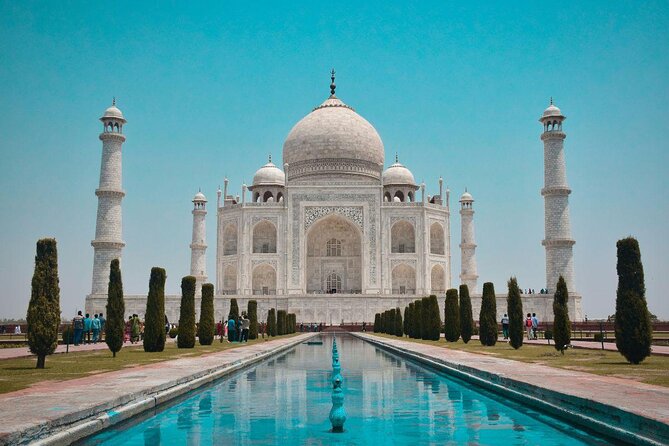
- Taj Mahal at sunrise: a specific early slot with the Taj Mahal’s changing colors in mind
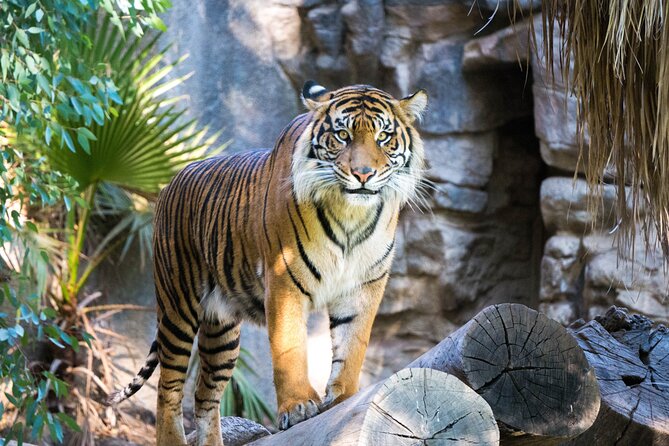
- Two Ranthambore game drives: one afternoon safari and one morning safari in tiger-rich country
- Keoladeo National Park rickshaw ride: bird-watching with a vehicle in the sanctuary at Bharatpur
- Delhi by rickshaw and monuments: Old Delhi sights plus New Delhi landmarks for contrast
- Jaipur’s big architecture hits: Fort, City Palace, Hawa Mahal photo stop, and Jantar Mantar
Golden Triangle plus wildlife: the practical reason it feels balanced
This tour works because it doesn’t treat wildlife like an afterthought. You get proper time in Bharatpur’s bird sanctuary and then real safari sessions in Ranthambore, while still hitting the Golden Triangle must-sees: Delhi, Agra, and Jaipur.
It also helps that the tour is designed as one flowing route, not a bunch of separate day trips. You’ll move by private air-conditioned car between cities, and you’ll spend nights in each region instead of rushing through everything in one long day.
If you like a trip with built-in structure, this one fits. If you prefer total freedom to wander at your own pace, you might find the guided timing a bit firm, especially around early mornings.
More ways to reach the Taj, weighed side by side



Day 1 in New Delhi: Old Delhi by rickshaw, Qutub Minar at the end of the day

Delhi day one mixes Mughal-era icons with New Delhi viewpoints, so your brain gets an easy “two-Delhi” comparison. You start with a pickup from Delhi Airport, hotel, or rail station, then head into Old Delhi.
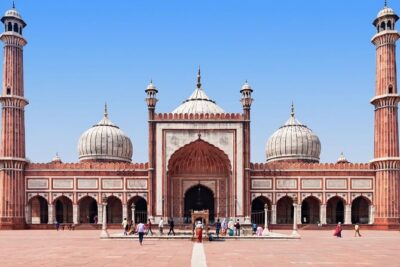
The day’s core Old Delhi sequence is Jama Masjid, then a rickshaw ride through Chandni Chowk. That rickshaw part matters because it slows your pace just enough to notice street life while still covering ground in a chaotic city.
From there you’ll drive by Red Fort from the outside. A key practical note: the tour notes most of the fort is occupied by the Indian Army, which is why you don’t get a full inside visit here, just the best outside photo angle.
Later you’ll hit Raj Ghat (Gandhi’s memorial), India Gate, and quick photo stops for Parliament House and Rashtrapati Bhavan. Then you finish with Qutub Minar, including an hour on site.
What to watch: entrance tickets for some monuments are listed as not included. So you’ll want either cash/card readiness or a plan to pay those separately if you decide to enter everything fully.
Day 2 in Agra: Agra Fort and Mehtab Bagh before the Taj morning
You leave Delhi after breakfast and drive to Agra, then check into your pre-booked hotel. This is one of the better pacing choices on a Golden Triangle trip: you’re not trying to see Agra at night after a long travel day.
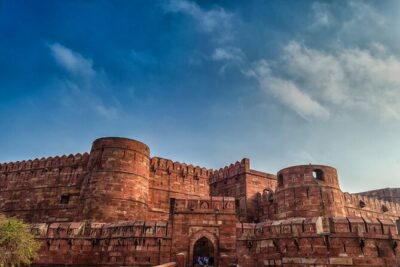
Once you freshen up and meet your guide, you visit Agra Fort. It’s described as a UNESCO site and linked to Akbar’s 16th-century Mughal era, and it’s also treated as a walled city feel, made of red sandstone.
You also get Mehtab Bagh, the Moonlight Garden across from the Taj Mahal on the Yamuna river. Even if you only have a short time there, it sets up your mindset for the next day’s sunrise viewing by putting the Taj’s setting into context.
Practical consideration: you’re told Agra Fort entrance isn’t included, while some other items are free. That means your actual “what you pay” list can vary based on what you choose to enter.
Day 3: Taj Mahal sunrise plus the transfer toward Bharatpur bird time
This is the day that separates “nice highlights” from the kind of memory you keep. You meet early (about 5:45 AM) for a sunrise Taj Mahal visit, with a stated emphasis on color shifts at different times of day.
Sunrise matters here because the light tends to flatter marble surfaces and the crowds are usually less punishing than later. The tour time is built for that effect, and you get around two hours at the Taj Mahal.
After the sunrise visit, you return to the hotel, have breakfast, and then check out. Then you start your drive to Bharatpur, which is where the trip pivots from Mughal heritage into wildlife watching.
By late afternoon, you head to Keoladeo National Park (Bharatpur Bird Sanctuary). The plan includes bird-watching inside the sanctuary and a rickshaw ride, with the time framed around the park’s known seasonal bird activity.
A small timing note: Keoladeo is the kind of place where you’ll want to keep your eyes up and scan slowly. If you’re the type who likes photographing everything, plan for more “stop-and-look” time than you might think.
Bharatpur and Keoladeo National Park: birding with a rickshaw ride

Bharatpur is famous for serious birdwatching, and this tour gives you more than a quick stop. Keoladeo is described as hosting over 230 bird species, and it’s treated as one of the world’s best-known bird-watching destinations.
The schedule gives you two hours for bird-watching inside the sanctuary, including the rickshaw ride. That ride isn’t just a fun add-on; it’s a practical way to move through the area while still being able to watch birds.
You’ll also learn the park’s conservation story in the way the tour frames it: declared a protected sanctuary in 1971 and later named a World Heritage Site. That adds weight to why the birds thrive here, rather than it feeling like a random animal exhibit.
What can be a challenge: wildlife days can be weather-dependent. You’re not getting control over that, but going in with patience helps. If the morning light and bird movement don’t match your expectations, it usually still pays off if you stay focused on the long scans.
Delhi, Agra and Jaipur: more full circuits

Day 4 and the Ranthambore switch: arrival, rest, and the afternoon tiger safari
Today you drive from Bharatpur to Ranthambore (via Sawai Madhopur), then check into your hotel. The tour notes this reserve as a superior example of a tiger reserve in India, and the whole point here is your time on safari.
After lunch and some freshening up, you go out for an afternoon safari in the park. The schedule lists 2:30 PM departure for the afternoon safari, then a return around early evening.
This afternoon slot is useful because it often captures tiger activity that isn’t limited to early morning. It’s also a nice way to get your “feel” for safari driving before you do the more demanding early morning run the next day.
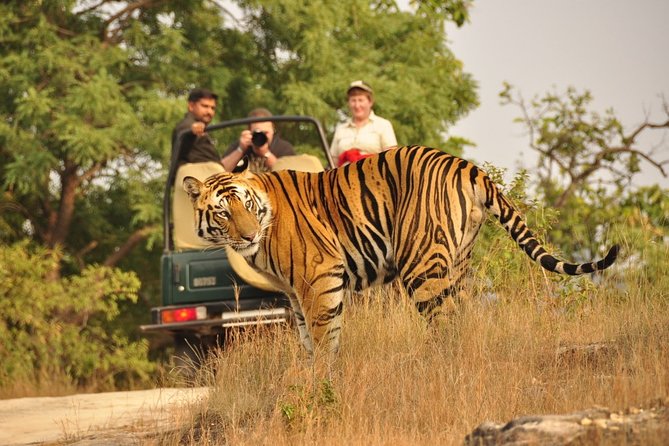
Important practical detail: safaris are in shared jeep or canter. That means you’ll share viewing space, and your exact vantage depends on where your vehicle places you. The good news is that the driver and guide team are part of what you’re paying for, and the park runs on a controlled system.
Day 5: 5:30 AM in Ranthambore, then straight to Jaipur
Your day starts with pickup for the morning safari. The plan sets the morning safari as 6:00 AM, following an early pickup window around 5:30 to 6:00.
If you can handle early starts, this morning drive is often the most rewarding because it’s prime time for animal movement. The tour doesn’t promise sightings, but it does give you the structure that maximizes your odds: a real safari session rather than a quick peek.
After the morning game drive, you return to your hotel for breakfast and relaxation. Then you check out and drive to Jaipur, arriving later in the day.
This is where the tour keeps your momentum. Jaipur is big, and if you wait too long you’ll end up trading sleep for rushed sightseeing. Here you get a hotel-based reset, then a full city day tomorrow.
Jaipur day by day: forts, palaces, and the cool geometry of Jantar Mantar
Jaipur is the Golden Triangle’s “showpiece” city, and day one in Jaipur focuses on the old city sights.
You meet your guide after breakfast and start with Jaipur Fort. The tour describes it as an ethereal example of Rajput architecture rising from a rocky mountainside, with an extensive palace complex built from sandstone and white marble. That description matters because it hints at why this visit feels worth the time even when you’re not a “fort person.”
Next you get a photo stop at Jal Mahal (Water Palace). You don’t get long here, but it’s a classic viewpoint you’ll recognize from countless travel photos.
Then you visit City Palace, the residence of the royal family area inside the Old City. It’s described as a complex of courtyards and buildings, with a blend of Rajasthani and Mughal architecture.
You also stop at Hawa Mahal for a photo moment, described as the Palace of Wind with a five-story honeycombed look. Even if you don’t spend ages inside, seeing it from outside helps you understand why it’s such a signature Jaipur landmark.
Then comes Jantar Mantar, a UNESCO site. The tour frames it as a collection of curving geometric structures used to monitor the movement of stars and planets. This is a great “brain break” after fort and palace visuals.
What to watch: several Jaipur monuments are marked as admission not included. So your personal “value” from this day will depend on which stops you decide to go into fully versus treat as photo stops.
Getting around: private AC car, shared safaris, and why driver quality matters
Your transportation is private air-conditioned car, which is a big quality-of-life upgrade when you’re moving across Delhi–Agra–Bharatpur–Ranthambore–Jaipur. It reduces the stress of coordinating yourself through traffic and intercity transit.
The tour also includes bottled drinking water in the car, plus pickup and transfers within the route. In a trip like this, that small comfort detail adds up fast.
Ranthambore safaris are shared jeep/canter. Jaipur and Delhi sightseeing are guided, with a mix of time spent at sights and photo stops.
One more value signal: this operator is connected to drivers who are praised for being safe and reliable, including names like Gulab, Ajay Kushwah, Rampal, and Shiva. Some reports also mention clean cars and even small extras like snacks stocked in the vehicle, which can be surprisingly helpful on long driving days.
Hotels and what’s actually included (and what isn’t)
You’re told accommodations are 3, 4, or 5-star depending on your option selection. You also get breakfast (6), plus the Ranthambore entrance fees and the Keoladeo rickshaw ride.
Ranthambore includes two game drives (safaris) and entrance fees to Ranthambore National Park are included. That means you’re not juggling ticket purchases for the single most expensive-to-plan part of the trip.
What isn’t included is also clearly stated: entrance fees to monuments and anything not listed in the inclusions. In practice, that affects Delhi, Agra, and Jaipur where some sights may be marked as not included.
So I recommend budgeting for monument entrances separately. It keeps your spending predictable and avoids surprise decisions on site.
Price and value: is $899 fair for this mix?
At $899 per person for 7 days, you’re paying for three things at once: Golden Triangle heritage time, guided city sights, and two meaningful wildlife safari sessions.
The wildlife portion is the big cost driver in this kind of itinerary. You’re also not just doing one safari day; you’re doing one afternoon and one morning in Ranthambore, plus Keoladeo bird time with a rickshaw ride.
That said, your final value can shift based on your monument entrance choices in Delhi/Agra/Jaipur since those fees aren’t included. If you plan to go inside major monuments at each stop, your total spend will be higher than someone who sticks to photo stops where offered.
Still, for many people this price feels fair because it bundles logistics, guides, and wildlife access instead of making you organize everything on your own.
Practical timing and packing tips for this exact schedule
Because sunrise and safaris are fixed, plan around early mornings. You’ll start with a sunrise Taj Mahal visit and then face another early wake-up for Ranthambore around 6:00 AM. Bring a light layer for mornings, plus sunscreen for midday.
For safaris, comfort matters. You’ll be in a vehicle for game drives (shared jeep/canter), and you’ll want shoes that work well for uneven ground around the park areas.
You’ll have bottled water in the car, which helps. Still, I like having a personal water bottle too, since you can refill as needed depending on what’s available day to day.
If you’re a photo person, remember that some stops are explicitly short photo breaks. Set your expectations accordingly so you don’t feel rushed at Hawa Mahal or Parliament House-style viewpoint moments.
Should you book this 7-day Golden Triangle with Tigers and Birds?
Book it if you want a classic India first-time route that still includes serious wildlife time. This is a strong match for heritage-and-wildlife lovers who don’t want to sacrifice the big names (Delhi, Agra, Jaipur) or the safari experience (Bharatpur and Ranthambore).
I’d skip or adjust if you hate early mornings or prefer fully independent travel. The schedule has fixed sunrise and safari timing, and some monument entrances require additional payment.
If your goal is to see the Taj Mahal in the best light window, spend a focused day on birdwatching at Keoladeo, and then take two Ranthambore safari shots from a shared vehicle, this itinerary is built for exactly that.
FAQ
How long is the Golden Triangle tour with wildlife?
The tour lasts about 7 days.
Where does the tour start and end?
It starts in New Delhi and ends back in New Delhi.
Is pickup from the airport or hotel included?
Yes. Pickup is offered from Delhi Airport/Hotel/Railway station or your desired location in Delhi/Noida/Gurgaon.
What wildlife experiences are included?
You’ll visit Keoladeo National Park in Bharatpur with bird-watching and a rickshaw ride, and you’ll do two game drives in Ranthambore National Park.
Do you visit the Taj Mahal at sunrise?
Yes. The tour includes a Taj Mahal sunrise visit around 5:45 AM.
Are entrance fees for monuments included?
No. Entrance fees to monuments are listed as not included.
How many Ranthambore safaris do you get?
Two safaris (game drives) are included in Ranthambore.
What kind of transport do you use between cities?
You travel by private air-conditioned car with an experienced licensed driver.
What hotel standard is included?
Accommodation is available on an option selection of 3, 4, or 5-star hotels, and breakfast is included for 6 days.
More Tour Reviews in New Delhi
- Old & New Delhi City Tour – Half or Full Day Options Available
★ 5.0 · 4,811 reviews - Half Day Private Delhi City Tour
★ 5.0 · 4,474 reviews - Same Day Taj Mahal, Agra Fort & Baby Taj Tour from Delhi by Car
★ 5.0 · 4,304 reviews - Taj Mahal Day Tour from Delhi by Superfast Train – TOP RATED TOUR
★ 5.0 · 4,166 reviews - Delhi: Old and New Delhi Private Full or Half-Day Tour
★ 4.9 · 3,776 reviews
The Full Golden Triangle, More Options
- 3-Days Private Golden Triangle Tour: Delhi, Agra & Jaipur by Car
★ 5.0 · 1,107 reviews - 3-Days Private Golden Triangle Tour: Delhi, Agra & Jaipur by Car
★ 5.0 · 1,098 reviews - 3-Day Delhi, Agra and Jaipur Private Tour – India Golden Triangle
★ 5.0 · 812 reviews - Four-Day Private Luxury Golden Triangle Tour to Agra and Jaipur From New Delhi
★ 5.0 · 807 reviews - 5 Nights 6 Days Private Golden Triangle Tour – Delhi Agra Jaipur
★ 5.0 · 574 reviews
The Taj, Reached a Few More Ways
- Same Day Taj Mahal, Agra Fort & Baby Taj Tour from Delhi by Car
★ 5.0 · 4,304 reviews - Taj Mahal Day Tour from Delhi by Superfast Train – TOP RATED TOUR
★ 5.0 · 4,166 reviews - Full Day Taj Mahal, Agra Fort & Baby Taj Tour from Delhi by Car
★ 5.0 · 3,647 reviews - From Delhi: Taj Mahal & Agra Private Day Trip with Transfers
★ 4.9 · 3,181 reviews - Taj Mahal Tour from Delhi by Express Train (Viator Award Winner)
★ 5.0 · 2,849 reviews
Just added: more New Delhi reviews to browse
- 4 days Golden Triangle Tour★ 5.0 · 3 reviews
- Discover Old & New Delhi: Private Tour with Street Food★ 5.0 · 3 reviews
- Taj Mahal Tour From Delhi By Private Car★ 4.5 · 3 reviews
- Golden Triangle Tour 5 Days★ 5.0 · 3 reviews
- Taj Mahal: Express Entry Ticket For Sunset Tour with guide★ 5.0 · 3 reviews
- Agra Taj Mahal Sunrise & Sunset Tour from Delhi★ 5.0 · 3 reviews
Taj Mahal Tours from Delhi, compared.
 ★ 5.0Same Day Taj Mahal, Agra Fort & Baby Taj Tour from Delhi by CarFrom $624,304 reviews
 ★ 5.0Taj Mahal Day Tour from Delhi by Superfast Train – TOP RATED TOURFrom $1004,166 reviews
 ★ 5.0Full Day Taj Mahal, Agra Fort & Baby Taj Tour from Delhi by CarFrom $623,647 reviews
 ★ 4.9From Delhi: Taj Mahal & Agra Private Day Trip with TransfersFrom $43,181 reviews
 ★ 5.0Taj Mahal Tour from Delhi by Express Train (Viator Award Winner)From $752,849 reviews
 ★ 5.0All Inclusive Private Taj Mahal Luxury Tour from Delhi by CarFrom $622,564 reviews
 ★ 4.9Same Day Taj Mahal, Fort & Baby Taj Tour from Delhi by CarFrom $502,534 reviews
 ★ 4.9From Delhi: Taj Mahal and Agra Fort Private Sunrise TourFrom $592,270 reviews
Browse the lists this tour appears in