
Reviewed · AGRA DAY TRIPS FROM DELHI
7 Day Golden Triangle with Udaipur-Delhi Agra Jaipur Udaipur Tour
Golden Triangle with a lake-city finale can feel like whiplash—in a good way. This 7-day route links big UNESCO icons with classic Rajasthan and then slows things down in Udaipur. I especially like that the itinerary builds in the sunrise Taj Mahal moment and still gives you room for Old Delhi streets like the rickshaw ride.
The main thing to clock upfront: monument entries aren’t included, and several days are built around long car rides plus early starts (including a very early Taj Mahal meeting). Also, one “major” stop in Delhi is mostly a drive-by: you see the Red Fort from the outside since much of it is under the Indian Army.
In This Review
- Key things I’d watch for before you go
- The 7-day route: how Delhi to Udaipur pacing really works
- Day 1 in Delhi: Jama Masjid, a rickshaw through Old Delhi, and photo stops
- Day 2 to Agra: Agra Fort and the Moonlight Garden viewpoint
- Day 3: sunrise Taj Mahal and Fatehpur Sikri on the way to Jaipur
- Day 4 Jaipur: Pink City forts, palaces, and the geometry of Jantar Mantar
- Day 5: the 5-hour transfer to Udaipur and why the lake city matters
- Day 6 Udaipur: Jagdish Temple, City Palace views, and Lake Pichola boat time
- Day 7: leaving Udaipur without the last-minute stress
- Price and value: what $649 covers and what costs extra
- Guides, comfort, and the human side (Sonia Handa’s impact)
- Who should book this Golden Triangle with Udaipur (and who might not)
- Should you book this 7-day Delhi–Agra–Jaipur–Udaipur tour?
- FAQ
- What cities are included on this 7-day Golden Triangle with Udaipur tour?
- Does the tour include pickup from the airport or hotel?
- Are monument entrance fees included in the price?
- What’s included in the tour price besides sightseeing?
- Is Wi‑Fi provided during the drive days?
- How far in advance do you need to cancel for a full refund?
Key things I’d watch for before you go
- Sunrise timing at the Taj Mahal gives you softer light on the white marble before the crowds build.
- Old Delhi by foot-and-rickshaw mixes a big mosque visit with market energy in a short, focused block.
- UNESCO World Heritage stops are packed in, but plan for entry fees to be separate.
- A/C private vehicle with Wi‑Fi and bottled water helps make the long transfers more tolerable.
- Udaipur day is the calm payoff: City Palace views, temples, and a Lake Pichola boat ride.
The 7-day route: how Delhi to Udaipur pacing really works
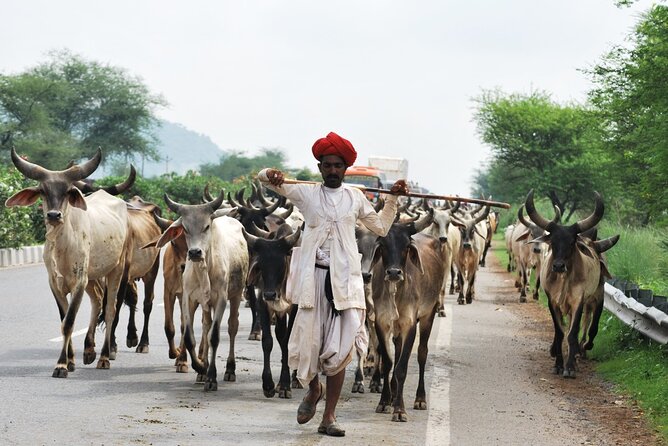
This is a classic Golden Triangle structure—Delhi to Agra to Jaipur—then it adds the lakeside close: Udaipur. The big advantage is you’re not changing trains or figuring out intercity logistics. You’re on an air-conditioned private vehicle with packaged drinking water, plus Wi‑Fi in the car, which makes the travel days easier on your phone battery and sanity.
The pacing is tight but not chaotic. You’ll usually have a morning or late-morning sightseeing block, then you’re back at the hotel. That matters in North India, where heat, crowds, and travel time can drag your energy fast. The schedule also tries to avoid total cram by spreading the major monuments across multiple days rather than stacking them all in one.
Your two practical considerations are timing and entry costs. First, the Taj Mahal is scheduled for sunrise on Day 3, with a very early meet time. Second, while the itinerary lists visit lengths and sometimes notes tickets as not included, the overall tour inclusion clearly says monument entrances are not included. So budget extra for paid sites, and keep some flexibility if weather or timing shifts on the day.
Other Agra runs out of Delhi worth a look




Day 1 in Delhi: Jama Masjid, a rickshaw through Old Delhi, and photo stops
Day 1 is about contrast: the monumental Mughal side of Delhi, then the busy market side, then large imperial-era landmarks you mainly photograph.
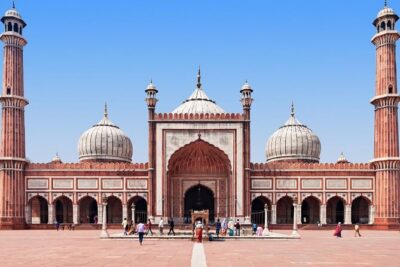
Jama Masjid is the anchor. It’s one of India’s best-known mosques and a striking slab of red sandstone and marble. If you’ve never visited a major mosque in action, you’ll notice how the scale and courtyard layout pull your attention outward. Plan for modest clothing and be ready to slow down; this is a place where people are moving in patterns, and you’ll want to keep it respectful.
Then comes the rickshaw ride through Chandni Chowk markets. Even if you’re not a shopping person, this ride is useful: it gives you a feel for how Old Delhi “works” without you needing to navigate every turn. It’s also a good way to avoid over-planning. You get the energy, but the itinerary keeps the time tight—about 30 minutes.
After that, the tour shifts to outside views and quick stops:
- Red Fort (drive-by): you won’t do a deep interior visit here. The plan is mostly to see it from outside and take photos, because a large part is currently used by the Indian Army.
- Raj Ghat: a black marble memorial space for Mahatma Gandhi, open to the sky with an eternal flame.
- India Gate and major government buildings: these are short photo stops, including Parliament House and Rashtrapati Bhavan (the President’s residence).
The day ends with Qutub Minar. Even if your time inside is limited by entry rules, it’s still a must-see landmark for Indo-Islamic architecture. If you’re someone who likes architecture more than crowds, Qutub Minar is a nice payoff after the market energy.
My practical tip for Day 1: Delhi can feel overwhelming. This day is set up to give you bearings fast—mosque, market, memorial, monument—so you can understand the city’s layers without burning a full day on travel again.
Day 2 to Agra: Agra Fort and the Moonlight Garden viewpoint
You leave Delhi for Agra via express highway—about 200 km and roughly 3 to 4 hours on the schedule. This is the kind of transfer that can either drain you or reset your day. Because the vehicle is air-conditioned and includes bottled water, you’ll likely arrive with enough energy to do the first sightseeing block.
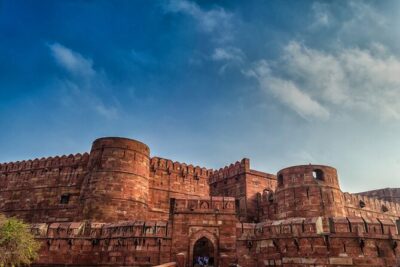
In Agra, you check in, freshen up, and meet a guide for a city tour segment. Then you go straight to Agra Fort. It’s described as a UNESCO site built by Emperor Akbar in the 1500s, with red sandstone and its role as a Mughal “walled city.” This stop works well if you like forts: Agra Fort isn’t only about one photo spot. It’s a whole fortified complex that helps explain how power was organized around the river and palace systems.
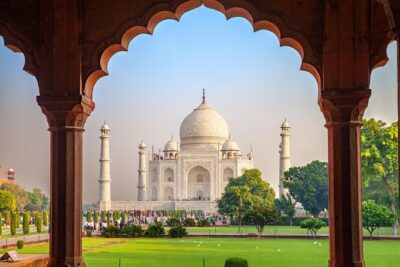
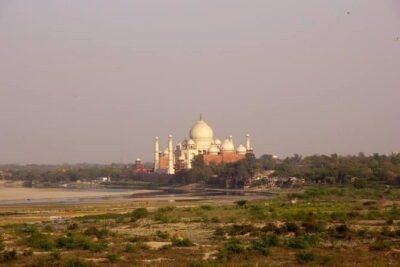
Next is Mehtab Bagh, the “Moonlight Garden” viewpoint on the Yamuna’s bank, opposite the Taj Mahal. Even if you don’t catch the exact sunset moment everyone dreams about, this garden is valuable because it gives you a different angle on the Taj Mahal than you’ll have the next morning. The schedule gives you about 40 minutes, which is enough to walk a bit, orient yourself, and then get ready for the next day’s big event.
Potential drawback here: you’ll likely carry some fatigue from the drive. If you can, keep your first evening easy—hydrate, eat early, and try to sleep. It sets you up for sunrise on Day 3.
Day 3: sunrise Taj Mahal and Fatehpur Sikri on the way to Jaipur
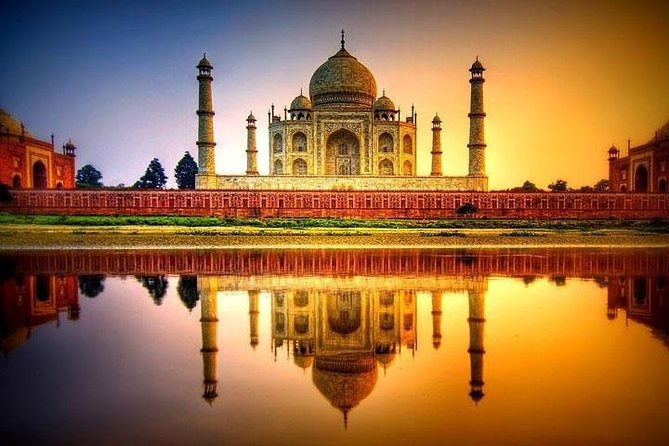
Day 3 is the reason many people book this style of trip: the Taj Mahal at sunrise. You’re scheduled to meet your guide in the hotel lobby at 5:45 AM, then head out. The schedule sets Taj Mahal time for about 30 minutes at the sunrise experience and adds around 2 hours at the site itself.
That early start matters. The white marble looks different in morning light, and sunrise usually means fewer photo barriers and less shoulder-to-shoulder congestion. You get that classic moment—the one where the architecture seems to breathe under a soft glow—without waiting as long as you would during peak daytime hours.
After the Taj Mahal, you return to the hotel for breakfast. Then you do the transfer to Jaipur with a stop at Fatehpur Sikri (scheduled about 1 hour). Fatehpur Sikri is the historic Mughal city built by Emperor Akbar in the late 1500s, serving as the capital for around 15 years before abandonment due to water shortages. Even within a short visit, you’ll feel the “ghost city” logic: you’re looking at the bones of a planned capital rather than a living modern town.
By late day, you continue to Jaipur and check in. This is also where the itinerary becomes practical rather than just sightseeing. You have time to regroup, shower, and reset. Then Day 4 is the full Jaipur city day.
Day 4 Jaipur: Pink City forts, palaces, and the geometry of Jantar Mantar
Jaipur is scheduled as a guided day in the “Pink City,” and it’s built around three kinds of stops:
1) big forts/palaces
2) iconic photo architecture
3) an observatory that makes you think
Start with Jaipur Fort, a major Rajput architecture complex rising from a rocky mountainside. The schedule allows about 2 hours, so you’re not just passing through a gate. You can see why this region became a power center: forts like this aren’t tiny sightseeing detours—they’re designed to control routes and people.
Then there’s Jal Mahal, the Water Palace. It’s listed as a photo stop. Even as a quick glance, it’s a strong visual: the palace sitting over the Man Sagar water surface is one of those images that feels like it belongs on a postcard and a history book at the same time.
Next comes City Palace of Jaipur, where the royal family resided. The itinerary gives you about 1 hour. What makes it worth your time is the mix: courtyards, gardens, and buildings combining Rajasthani and Mughal architecture styles.
Hawa Mahal is another short photo stop. It’s the Palace of Wind: a honeycombed pink facade with multiple stories designed so royal ladies could observe city life and processions. You won’t get a long interior break here, but you’ll leave with a clear understanding of why it became an identity marker for the city.
Finally, you do Jantar Mantar, an observatory made of geometric structures tuned to track stars and planets. The schedule includes about 45 minutes, and it’s one of the few spots on this route where you shift from “look at power” to “look at measurement.” It’s a smart change of pace.
My tip for Jaipur: you’ll likely be walking and stopping often. Wear shoes you can manage on uneven ground, and don’t overpack your day with extra plans outside the itinerary. The timing already hits the major highlights with enough breathing room.
Chasing the Pink City? More Jaipur day trips
Day 5: the 5-hour transfer to Udaipur and why the lake city matters
Day 5 is a travel day that pays off with atmosphere. You check out after breakfast, then head to Udaipur, with a scheduled drive of about 5 hours. This is a long enough ride that you’ll feel the transition from the Golden Triangle’s high-volume sightseeing into something calmer.
Once you arrive, you transfer to your hotel and check in, then you have the rest of the day free at the schedule level (overnight in Udaipur). That “free” time is valuable even if you don’t spend it doing something big. You can eat at your own pace, walk nearby streets, or just rest before the city tour on Day 6.
Udaipur is described as the city of lakes and associated with the former princely state of Mewar. You’ll also feel the landscape shift to the Aravallis region described in the itinerary. Even if you don’t go beyond the core viewpoints, that change in scenery and slower tempo is part of why people like ending here.
Day 6 Udaipur: Jagdish Temple, City Palace views, and Lake Pichola boat time
Udaipur day is structured like a classic highlights loop, but with a softer rhythm than Delhi or Agra.
You start with Jagdish Temple, dedicated to Lord Vishnu. It’s listed as about 30 minutes, and it’s one of the oldest temples in the city. If you like religious architecture and the everyday feel of ongoing worship, this stop gives you that grounded texture that palaces sometimes lack.
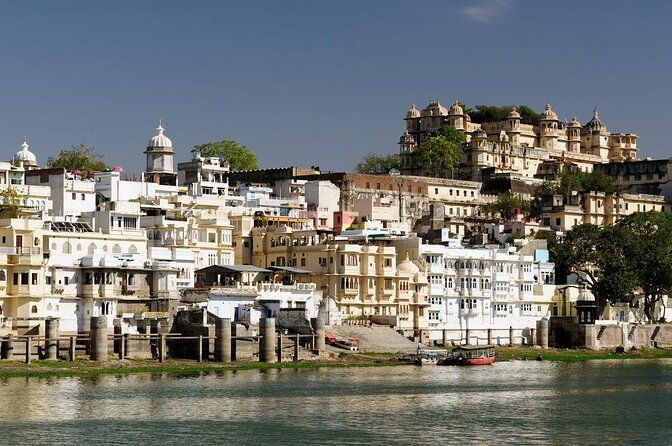
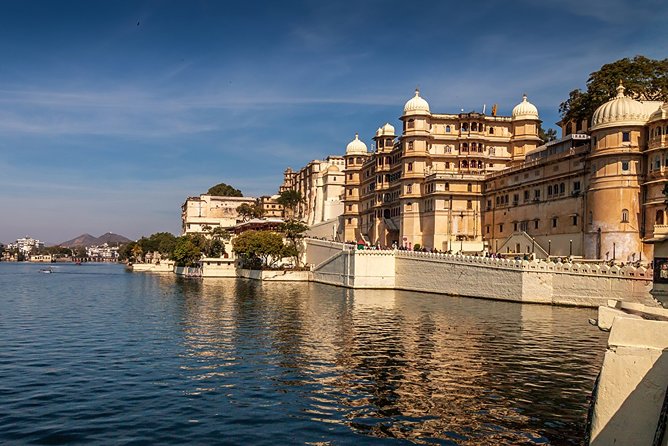
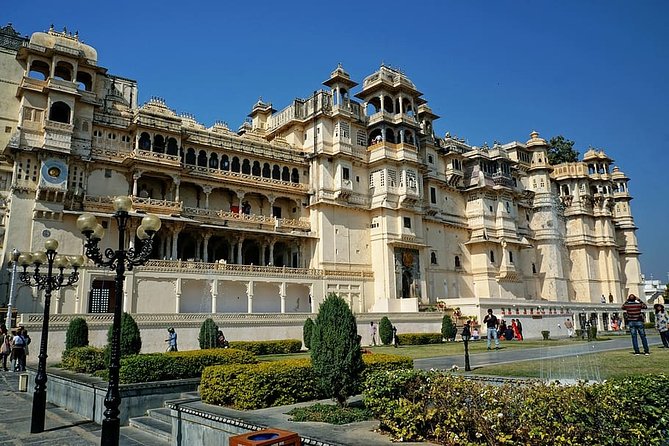
Next is City Palace of Udaipur, with about 2 hours on the schedule and a view overlooking Lake Pichola. The palace complex is built over nearly 400 years with contributions from several rulers. Even in a shorter visit window, the scale and layered style help you understand how the city’s power system evolved over time.
Then you do the star activity: Lake Pichola boat ride (scheduled about 30 minutes). This is where Udaipur earns its reputation. From the water, you’re seeing the city as it was planned—palaces, shorelines, and the lake’s role as a central stage. It also gives you photos that feel different from the fort and street angles.
After the boat, the itinerary includes Saheliyon ki Bari, a garden built for the queen and her maids. You’ll spend about 45 minutes here. The garden has fountains, pools, pavilions, and marble elephants, which makes it a nice contrast to the more serious palace/temple stops.
Day 7: leaving Udaipur without the last-minute stress
Day 7 is straightforward: after breakfast, you’re driven to Udaipur Airport or Railway Station or to your desired location in Udaipur. The tour ends with you taking home memories rather than rushing to cram one more monument.
This last-day simplicity is a real quality-of-life feature. After multiple long days of sights, it’s nice when the schedule doesn’t act like you’re supposed to “win” the day with one final big highlight. Here, the emphasis is on a clean ending.
Price and value: what $649 covers and what costs extra
At $649 per person for a roughly 7-day, multi-city route, the value comes from the parts that are normally hard to manage yourself: door-to-door pickup coordination, private air-conditioned transfers, and professional local guides for the city sightseeing.
Your inclusions are:
- Professional city tour guides
- Transfers/sightseeing by air-conditioned private vehicle
- Hotel accommodations in 3, 4, or 5 stars depending on your option
- Packaged drinking water in the car
- Breakfast (6) mornings
What’s not included is also clear:
- Monument entrances
- Lunch and dinner (anything not listed as included)
So how do you decide if it’s a good deal for you? If you’d otherwise be hiring a driver between Delhi, Agra, Jaipur, and Udaipur while also booking separate guides and admission fees, this package model can actually simplify budgeting. But don’t assume the ticket prices are wrapped into the quote—build in extra money for sites like the Taj Mahal, forts, observatories, and the palace/garden entries. The itinerary gives you enough detail to plan those costs in advance.
Guides, comfort, and the human side (Sonia Handa’s impact)
A tour like this lives or dies on coordination. Your route crosses big cities with intense traffic, and you’re doing scheduled timed stops (especially that sunrise Taj Mahal). That’s where having reliable communication helps.
In the feedback, the coordinator Sonia Handa shows up again and again. People highlight how she organized the trip even when plans were made about two weeks before departure, and how she stayed connected throughout. One review also mentions that the itinerary could be modified to match what the group wanted. That flexibility matters because Golden Triangle tours often feel rigid unless someone is willing to adjust.
On the comfort side, the vehicle setup matters too. Wi‑Fi in the car plus bottled water doesn’t sound glamorous, but it helps on long transfer days between Delhi–Agra and Jaipur–Udaipur. And the reviews also describe the experience as safe and well paced, with guides and a driver that didn’t make you feel rushed at attractions.
Who should book this Golden Triangle with Udaipur (and who might not)
This tour is a strong fit if:
- you want a guided, private setup across four major cities
- you want the Taj Mahal at sunrise without handling transport on your own
- you prefer the trip to feel organized rather than you building the route step by step
- you like a balance of Delhi heritage, Mughal monuments, Rajasthan architecture, and then a calmer Udaipur finish
You might look at another option if:
- you dislike early mornings (Day 3 starts very early)
- you hate paying separate monument entry fees
- you want maximum time inside every major site (some Delhi landmarks are photo/exterior stops, and several stops are shorter blocks by design)
Should you book this 7-day Delhi–Agra–Jaipur–Udaipur tour?
Yes, if you want an efficient route that hits the big names and still ends in a place with mood. The combo of sunrise Taj Mahal plus a proper Udaipur day with City Palace views and Lake Pichola boat time is a winning pairing.
Before you say yes, do two quick checks:
- Make sure you’re budgeting for monument entrances on top of the tour price.
- Decide if you’re comfortable with a schedule that includes long drives and a very early morning.
If those two points don’t bother you, this tour is likely to feel like a clean, well-run version of the classic Golden Triangle—with the “lakes” payoff you’ll remember.
FAQ
What cities are included on this 7-day Golden Triangle with Udaipur tour?
The route is New Delhi, Agra, Jaipur, and ending in Udaipur.
Does the tour include pickup from the airport or hotel?
Yes. Pickup is offered from the airport or your desired location/hotel between 0700 to 1000 hrs.
Are monument entrance fees included in the price?
No. Monument entrances are listed as not included, along with lunch and dinner.
What’s included in the tour price besides sightseeing?
You get professional city tour guides, transfers/sightseeing by an air-conditioned private vehicle, packaged drinking water in the car, and breakfast (6). Hotel accommodations are included based on the selected 3, 4, or 5-star option.
Is Wi‑Fi provided during the drive days?
Yes. The car includes Wi‑Fi for your comfort.
How far in advance do you need to cancel for a full refund?
You can cancel up to 3 days in advance of the experience start time for a full refund.
The Full Golden Triangle, More Options
- 3-Days Private Golden Triangle Tour: Delhi, Agra & Jaipur by Car
★ 5.0 · 1,107 reviews - 3-Days Private Golden Triangle Tour: Delhi, Agra & Jaipur by Car
★ 5.0 · 1,098 reviews - 3-Day Delhi, Agra and Jaipur Private Tour – India Golden Triangle
★ 5.0 · 812 reviews - Four-Day Private Luxury Golden Triangle Tour to Agra and Jaipur From New Delhi
★ 5.0 · 807 reviews - 5 Nights 6 Days Private Golden Triangle Tour – Delhi Agra Jaipur
★ 5.0 · 574 reviews
Onward to Jaipur: More Day Trips
- 3-Days Private Golden Triangle Tour: Delhi, Agra & Jaipur by Car
★ 5.0 · 1,107 reviews - 3-Days Private Golden Triangle Tour: Delhi, Agra & Jaipur by Car
★ 5.0 · 1,098 reviews - 3-Day Delhi, Agra and Jaipur Private Tour – India Golden Triangle
★ 5.0 · 812 reviews - Four-Day Private Luxury Golden Triangle Tour to Agra and Jaipur From New Delhi
★ 5.0 · 807 reviews - Jaipur Day Trip from Delhi by Car or Train – All Inclusive
★ 5.0 · 663 reviews
More Agra Day Trips out of Delhi
- Same Day Taj Mahal, Agra Fort & Baby Taj Tour from Delhi by Car
★ 5.0 · 4,304 reviews - Full Day Taj Mahal, Agra Fort & Baby Taj Tour from Delhi by Car
★ 5.0 · 3,647 reviews - From Delhi: Taj Mahal & Agra Private Day Trip with Transfers
★ 4.9 · 3,181 reviews - From Delhi: Taj Mahal and Agra Fort Private Sunrise Tour
★ 4.9 · 2,270 reviews - Sunrise Taj Mahal, Agra Fort & Baby Taj Tour from Delhi by Car
★ 5.0 · 2,243 reviews
Just added: more New Delhi reviews to browse
- 4 days Golden Triangle Tour★ 5.0 · 3 reviews
- Discover Old & New Delhi: Private Tour with Street Food★ 5.0 · 3 reviews
- Taj Mahal Tour From Delhi By Private Car★ 4.5 · 3 reviews
- Golden Triangle Tour 5 Days★ 5.0 · 3 reviews
- Taj Mahal: Express Entry Ticket For Sunset Tour with guide★ 5.0 · 3 reviews
- Agra Taj Mahal Sunrise & Sunset Tour from Delhi★ 5.0 · 3 reviews
Agra Day Trips from Delhi, compared.
 ★ 5.0Same Day Taj Mahal, Agra Fort & Baby Taj Tour from Delhi by CarFrom $624,304 reviews
 ★ 5.0Full Day Taj Mahal, Agra Fort & Baby Taj Tour from Delhi by CarFrom $623,647 reviews
 ★ 4.9From Delhi: Taj Mahal & Agra Private Day Trip with TransfersFrom $43,181 reviews
 ★ 4.9From Delhi: Taj Mahal and Agra Fort Private Sunrise TourFrom $592,270 reviews
 ★ 5.0Sunrise Taj Mahal, Agra Fort & Baby Taj Tour from Delhi by CarFrom $622,243 reviews
 ★ 5.0Taj Mahal and Agra Private Car Tour from Delhi with 5* LunchFrom $331,633 reviews
 ★ 4.9From Delhi: Private Taj Mahal and Agra Tour by Express TrainFrom $751,605 reviews
 ★ 5.0Taj Mahal, Agra Fort, Baby Taj Tour from Delhi by Superfast TrainFrom $751,494 reviews
Browse the lists this tour appears in