
Reviewed · AGRA DAY TRIPS FROM DELHI
7 Days Delhi Agra Jaipur Private Golden Triangle Tour
Golden Triangle in seven days, if you pace right. This private circuit strings together Delhi, Agra, and Jaipur with a smart sequence of highlights, including eight UNESCO World Heritage sites. I like that the day plan is built around big, recognizable monuments while still giving you real local moments, like a rickshaw ride through Chandni Chowk. I also like the practical touches: private transportation with Wi-Fi, plus mineral water and snacks in the car.
The main trade-off is the schedule is full. You’re moving between cities and stacking major sights, so you’ll want comfortable shoes and a flexible mindset when it comes to crowds and timing.
In This Review
- Key highlights at a glance
- Private Golden Triangle: what you’re really buying
- Day 1 in New Delhi: landing, settling in, then easing into old Delhi
- Day 2 in Delhi: Red Fort, rickshaw lanes, Jama Masjid, and Gandhi’s end point
- Red Fort complex
- Chandni Chowk by rickshaw
- Jama Masjid
- Raj Ghat and a welcome dinner
- Day 3 in Delhi and the route toward Agra: Qutub Minar, Humayun’s Tomb, and iconic New Delhi lines
- Qutub Minar
- Humayun’s Tomb
- Gandhi Smriti and India Gate
- Day 4 in Agra: Taj Mahal at sunrise, Agra Fort, and Fatehpur Sikri
- Sunrise Taj Mahal
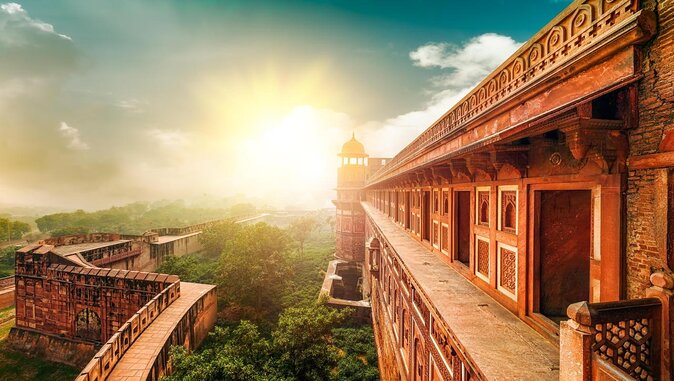
- Agra Fort
- Fatehpur Sikri
- Day 5: drive to Jaipur via Abhaneri’s step walls, then Rajasthan dance and dinner
- Why Abhaneri is worth the stop
- Evening performance value
- Day 6 in Jaipur: Amber Fort views, City Palace courtyards, Jantar Mantar science, and Hawa Mahal
- Amber Fort
- City Palace of Jaipur
- Jantar Mantar
- Hawa Mahal
- Day 7: Jaigarh’s artillery story, Monkey Temple, Jal Mahal photos, then back to Delhi
- Jaigarh Fort
- Monkey Temple
- Jal Mahal for photography
- Back to New Delhi for your departure
- What’s included (and what that means for your comfort)
- Guide quality and real-world organization: what the reviews suggest
- Who this tour fits best (and who should think twice)
- Price check: is $479.95 per person good value?
- Packing and pacing tips that actually help
- Should you book this Golden Triangle private tour?
- FAQ
- How many days is the Golden Triangle tour?
- Where does the tour start?
- Is pickup included?
- What’s the guide language and group size setup?
- Does the tour include entrance fees?
- What’s not included in the price?
- Is the tour refundable if weather is bad?
Key highlights at a glance
- Private transport with Wi-Fi keeps the long stretches between Delhi, Agra, and Jaipur easier
- Eight UNESCO sites spread across the three cities, so you get more “big impact” per day
- Sunrise Taj Mahal timing helps you avoid the worst late-morning crush
- Chandni Chowk by rickshaw gives you a fast hit of real street-life energy
- Jaipur forts and observatories include both the Instagram-famous and the surprisingly technical
Private Golden Triangle: what you’re really buying
A Golden Triangle tour is a simple idea: three cities shaped by three major eras. Delhi covers layers of Islamic rule and British-era memory. Agra zooms in on the Mughal Empire. Jaipur is the Rajputana story, with forts, palaces, and a strong design sense that still feels modern today.
What makes this particular 7-day version stand out is that it’s built as a private experience with all your sightseeing and transfers handled. That matters because the real friction in India isn’t the monuments—it’s logistics. When you’re stuck coordinating transport, paying different drivers, and hunting for tickets on your own, the trip gets stressful fast. Here, you get a pre-set rhythm: pick up at the airport area, guided stops, and private rides between cities.
The price is $479.95 per person for the full 7 days (about). That isn’t a “budget backpacker” figure, but it does cover a lot of what usually costs extra on your own: private transportation, entrance fees for the listed monuments and museums, and local English-speaking guiding for small groups (up to 5). If you’re traveling with a group, it often starts to feel like good value because the fixed costs (driver, car, guide time) get shared.
Other Agra runs out of Delhi worth a look




Day 1 in New Delhi: landing, settling in, then easing into old Delhi
After you arrive at Indira Gandhi International Airport, you’re welcomed and transferred to your hotel. Day 1 is mostly about getting oriented and resting just enough to enjoy the first proper evening.
Even though it’s not packed with monuments that day, the structure is smart. It sets you up for a heavier Day 2 in Old Delhi, where things move quickly and crowds show up early. You also get an included overnight in Delhi, so you don’t scramble right away to “fit in” a full city day after long travel.
Practical tip: on arrival day, keep your day bag simple. You’ll be using it for temple-style entries and quick exits later in the week.
Day 2 in Delhi: Red Fort, rickshaw lanes, Jama Masjid, and Gandhi’s end point
Day 2 is the Old Delhi power day: history you can feel in the walls, plus street energy you can’t really stage.
Red Fort complex
You start with the Red Fort—massive red sandstone walls that define Delhi’s Mughal-era presence. It’s an essential stop because it’s not just one building. It’s a whole complex, and the scale helps you understand why this part of the city mattered.
One drawback: this is a popular place. Even with a guide, you’ll want patience and a ready plan for moving through groups.
Chandni Chowk by rickshaw
Then comes a favorite: a rickshaw ride through Chandni Chowk. This is where the tour becomes more than sightseeing. You get a moving window into narrow lanes, shopfront life, and that “you’re inside the city” feeling.
If you’re sensitive to tight spaces or traffic fumes, choose your comfort over bravery. A short rickshaw ride is fun; forcing it for too long stops being fun.
Chasing the Pink City? More Jaipur day trips
Jama Masjid
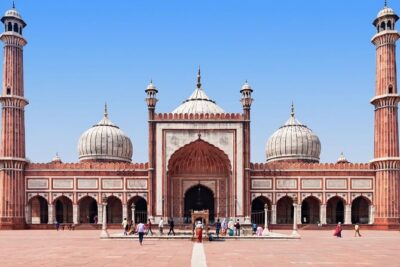
Next is Jama Masjid, described as India’s largest mosque in the tour plan. You’ll see why it’s a major spiritual landmark. It’s also a good contrast to the Red Fort—different religious focus, similar grand scale, and a shared message of power.
Raj Ghat and a welcome dinner
You end with Raj Ghat, Gandhi’s resting place. It’s a quieter moment after the intensity of Old Delhi. Then you enjoy a welcome dinner at your hotel.
Why that matters: Day 2 hits several heavy “big history” stops back to back. Dinner gives you a proper landing point instead of tossing you back into the evening streets.
Day 3 in Delhi and the route toward Agra: Qutub Minar, Humayun’s Tomb, and iconic New Delhi lines
Day 3 balances two worlds: modern New Delhi landmarks and older Mughal-era architecture—then it continues to Agra.
You visit a set of major sights including Birla House (Gandhi Smriti Museum), India Gate, Humayun’s Tomb, and Qutub Minar. Then you continue onward to Agra for the overnight.
Qutub Minar
Qutub Minar is one of the headline UNESCO sites. The tour notes it’s 73 metres high and one of the highest minarets in India, and it’s also described as the tallest brick minaret in the world. You’ll also hear about its 12th-century roots and the Arabic and Brahmi inscriptions—these details are part of what makes it more than a tall tower.
Humayun’s Tomb
Humayun’s Tomb is included as well, and it’s significant because it was the first garden-tomb on the Indian subcontinent. That garden-tomb idea is important. It helps explain why later Mughal architecture often mixed monumentality with landscape planning.
Gandhi Smriti and India Gate
Gandhi Smriti is where Gandhi spent his last 144 days before his death, and India Gate acts as a war memorial dedicated to troops of British India who died in World War I.
This mix is useful if you want Delhi to feel like it has layers—not just one “theme.”
Practical note: by the end of the day you’re moving to Agra, so wear something that handles heat and walking. You’ll likely rack up steps even when your schedule lists shorter time blocks.
Day 4 in Agra: Taj Mahal at sunrise, Agra Fort, and Fatehpur Sikri
Day 4 is one of the biggest payoff days of the entire trip.
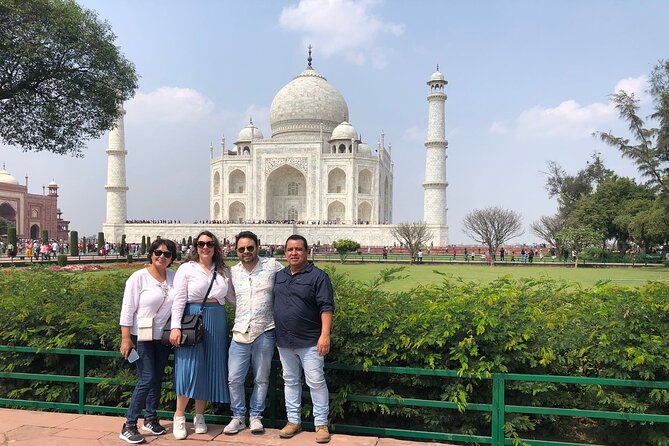
Sunrise Taj Mahal
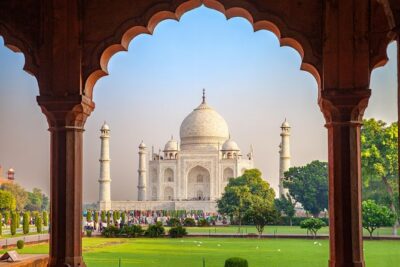
You visit the Taj Mahal at sunrise. That timing isn’t just marketing—it changes your experience. Morning light makes the marble look different, and you get more breathing room than the midday rush.
The tour plan places the construction between 1631 and 1648, and it’s hard to miss how carefully the building is proportioned. It’s a monument that rewards slow looking.
Agra Fort
After the Taj, you move to Agra Fort. The tour notes it was the main residence of Mughal emperors until 1638, when the capital shifted from Agra to Delhi. This is a key point. It reframes Agra from a “single building town” into a political power center.
Fatehpur Sikri
Then you head to Fatehpur Sikri, described as the first planned Mughal city, with administrative, residential, and religious buildings. You’ll get a feel for how Mughal rulers projected order through city design.
One consideration: Fatehpur Sikri can involve more walking than you expect, and the day is already loaded. If your feet are complaining by midday, ask your guide for the best routes to keep your energy steady.
Day 5: drive to Jaipur via Abhaneri’s step walls, then Rajasthan dance and dinner
Now you shift from the Mughal story to the Rajputana one.
You travel from Agra to Jaipur, the Rose capital of Rajasthan (as the tour calls it). On the way you stop in Abhaneri, famous for its step walls, then continue to Jaipur and check into your pre-booked hotel.
In the evening, there’s a Rajasthan dance performance with dinner.
Why Abhaneri is worth the stop
Abhaneri gives you a different kind of “wow.” It’s not a palace or a tomb. It’s a structure built for practical water use and impressive scale. A good step-wall stop can make you appreciate how engineering shaped daily life.
Evening performance value
The dance show and dinner are a good pacing tool. After full-on sightseeing days, this is a low-effort way to add culture without extra planning.
If you hate performances that feel too touristy, you can still treat this as an optional cultural moment. But within the structure of a packed week, it helps.
Day 6 in Jaipur: Amber Fort views, City Palace courtyards, Jantar Mantar science, and Hawa Mahal
Day 6 is a full Jaipur day—forts, palaces, and a surprising side trip into old-school astronomy.
Amber Fort
You start with Amber Fort, including the hilltop views from Amber Palace. The tour also lists the Palace of Winds area and the Jantar Mantar complex (though later in the day you also visit Jantar Mantar as its own stop). Amber Fort is the kind of place where you feel how the landscape worked as defense.
This is a major walking day. Bring water habits and don’t rush. The best experience comes when you pause and look back at the fort from different angles.
City Palace of Jaipur
Next is City Palace of Jaipur, described as a complex of courtyards, buildings, pavilions, gardens, and temples. It highlights the Chandra Mahal, Mubarak Mahal, Shri Govind Dev Temple, and the City Palace Museum.
What I like about this stop is the layout. It’s not just a single museum hall. It’s a functioning-style complex that lets you see how spaces were layered for court life and ceremony.
Jantar Mantar
Then comes Jantar Mantar, the Jaipur astronomical observatory. The tour notes it was built by Sawai Jai Singh II in 1729 and is one of the world’s most accurate pre-modern observatories.
If you usually skip “science” stops, don’t. Even without technical explanations, it’s visually satisfying: the instruments feel like serious tools, not decoration.
Hawa Mahal
Finally, you visit Hawa Mahal (Palace of Winds)—pink sandstone, built in 1799, with five storeys and small latticed windows called jharokhas. The blend of Hindu and Islamic architecture is part of why it’s so recognizable.
Tip: take photos from a viewpoint where you can see the façade pattern clearly. The quick lattice shots don’t always capture the full effect.
Day 7: Jaigarh’s artillery story, Monkey Temple, Jal Mahal photos, then back to Delhi
Your last day in the region keeps Jaipur’s theme of forts and architecture, then ends by returning to Delhi for your flight.
Jaigarh Fort
You visit Jaigarh Fort, which the tour describes as a centre of artillery production for the Rajputs. It’s also home to Jaivana, described as the world’s largest cannon on wheels at the time of manufacture in 1720.
This stop is a nice change of pace because it feels less like a royal showroom and more like a military workshop turned heritage site.
Monkey Temple
Then there’s Monkey Temple, a 15th-century temple where you’ll see macaque and langoor monkeys.
Practical note: you’ll want to keep distance and avoid sudden movements near animals. The point isn’t to “hang out” with monkeys; it’s to see the temple setting and move on.
Jal Mahal for photography
Next is Jal Mahal, built in 1799. The tour describes it as a five-storey building that looks like it’s floating when the lake is full: four storeys dip under the water, leaving only the top visible.
Even if you’re not a serious photographer, it’s worth stopping because the visual effect gives you a different angle on Jaipur architecture—more reflective and calm than the fort walls.
Back to New Delhi for your departure
After your Golden Triangle wrap-up, you’re driven to Delhi International Airport for your flight back home.
What’s included (and what that means for your comfort)
This tour includes a lot of the stuff that usually creates hidden costs and stress:
- All sightseeing and transfers by private transportation
- Entrance fees for the monuments and museums listed in the itinerary
- Local English-speaking guide for groups up to 05 persons, and a Tour Escort for 06 persons and above
- Rickshaw ride in Delhi
- Mineral water bottles throughout the tour
- Seasonal fruits/biscuits/snacks in the car
- Wi-Fi enabled private car
- Breakfast (6), meaning you’ll have most mornings handled, but not necessarily every single morning of the trip
From a practical viewpoint, this is the right blend for people who want culture but don’t want to micromanage details.
Guide quality and real-world organization: what the reviews suggest
The overall feedback pattern for Indo Routes points to strong organization and good guiding. Several reviews mention excellent guides and smooth planning, plus high-quality accommodations and drivers. One review even describes a situation where a phone was lost at an airport and the team helped get it back via hotels along the way.
I can’t promise every small incident will match that exact story on your dates, but it does suggest the company takes service seriously when something goes wrong.
Also, one review mentions the general director Mr. Rayu greeting them warmly. That doesn’t directly tell you what your guide will say on Day 2, but it does fit the broader theme: a company that tries to make you feel looked after, not dumped into a foreign city.
Who this tour fits best (and who should think twice)
This is a strong match if you want:
- A private plan with less daily decision-making
- Major monument coverage across Delhi, Agra, and Jaipur
- A mix of historic sites and photo-stops
- A schedule that’s mostly handled from pick-up to transfer
It’s also a good fit for first-timers who want structure and English-speaking guidance.
You might think twice if:
- You dislike full-day schedules or tight touring windows
- You’re extremely sensitive to crowds in popular sites like Red Fort and Jama Masjid areas
- You want a slower travel pace with fewer “big-ticket” stops per day
Price check: is $479.95 per person good value?
At face value, $479.95 per person can look “mid-range.” But the value depends on what’s included.
Because this price covers private transportation, entrance fees for the listed sites, guiding, and multiple city transfers, you’re paying for convenience and time saved. For many people, that’s worth it—especially on a route like the Golden Triangle where distances add up and simple logistics can eat your day.
The biggest financial add-ons you should plan for are clearly not included: international airfares, insurance/visas, and tips/gratuities. If you don’t already have those handled, your final trip cost will be higher.
Also keep in mind that private pricing can feel more attractive when shared among a group. If you’re going solo, you may want to confirm how the per-person price behaves for your group size.
Packing and pacing tips that actually help
A few practical ideas based on the type of itinerary you’re doing:
- Wear shoes that handle uneven stone and stairs. Amber Fort and the forts are not flat strolls.
- Bring sunscreen and a hat. Even when your guide is moving the group, you still spend time outdoors at several stops.
- Carry a light layer. Sunrise Taj Mahal mornings can feel cooler, depending on season.
- Keep your schedule expectations realistic. You’ll see a lot, but you won’t have hours of solitude in every place.
The tour is designed for momentum. If you go in expecting a slow retreat, it’ll feel intense. If you go in expecting a focused route, it feels efficient.
Should you book this Golden Triangle private tour?
Book it if you want a guided, mostly turnkey way to see Delhi, Agra, and Jaipur with eight UNESCO sites and a plan that includes both sunrise Taj Mahal and iconic Jaipur architecture. The private transport, included entrances, and small-group guiding make it practical for first-timers and for anyone who hates logistics.
Skip or rethink if you want a relaxed pace, extra free time, or a trip that’s less monument-heavy. This itinerary is built for seeing the big names, not for wandering for hours without a structure.
FAQ
How many days is the Golden Triangle tour?
It’s listed as 7 days (approx.).
Where does the tour start?
The meeting point/start is Indira Gandhi International Airport in New Delhi.
Is pickup included?
Yes. Pickup is offered, and you’ll be welcomed at the airport and transferred to your hotel.
What’s the guide language and group size setup?
The tour includes a local English-speaking guide for groups up to 05 persons. For 06 persons and above, a Tour Escort is provided.
Does the tour include entrance fees?
Entrance fees are included for the monuments and museums mentioned in the itinerary.
What’s not included in the price?
International airfares, insurance/visas, and tips/gratuities are not included.
Is the tour refundable if weather is bad?
The experience requires good weather. If it’s canceled due to poor weather, you’ll be offered a different date or a full refund. You can also cancel up to 24 hours in advance for a full refund.
The Full Golden Triangle, More Options
- 3-Days Private Golden Triangle Tour: Delhi, Agra & Jaipur by Car
★ 5.0 · 1,107 reviews - 3-Days Private Golden Triangle Tour: Delhi, Agra & Jaipur by Car
★ 5.0 · 1,098 reviews - 3-Day Delhi, Agra and Jaipur Private Tour – India Golden Triangle
★ 5.0 · 812 reviews - Four-Day Private Luxury Golden Triangle Tour to Agra and Jaipur From New Delhi
★ 5.0 · 807 reviews - 5 Nights 6 Days Private Golden Triangle Tour – Delhi Agra Jaipur
★ 5.0 · 574 reviews
Onward to Jaipur: More Day Trips
- 3-Days Private Golden Triangle Tour: Delhi, Agra & Jaipur by Car
★ 5.0 · 1,107 reviews - 3-Days Private Golden Triangle Tour: Delhi, Agra & Jaipur by Car
★ 5.0 · 1,098 reviews - 3-Day Delhi, Agra and Jaipur Private Tour – India Golden Triangle
★ 5.0 · 812 reviews - Four-Day Private Luxury Golden Triangle Tour to Agra and Jaipur From New Delhi
★ 5.0 · 807 reviews - Jaipur Day Trip from Delhi by Car or Train – All Inclusive
★ 5.0 · 663 reviews
More Agra Day Trips out of Delhi
- Same Day Taj Mahal, Agra Fort & Baby Taj Tour from Delhi by Car
★ 5.0 · 4,304 reviews - Full Day Taj Mahal, Agra Fort & Baby Taj Tour from Delhi by Car
★ 5.0 · 3,647 reviews - From Delhi: Taj Mahal & Agra Private Day Trip with Transfers
★ 4.9 · 3,181 reviews - From Delhi: Taj Mahal and Agra Fort Private Sunrise Tour
★ 4.9 · 2,270 reviews - Sunrise Taj Mahal, Agra Fort & Baby Taj Tour from Delhi by Car
★ 5.0 · 2,243 reviews
Just added: more New Delhi reviews to browse
- 4 days Golden Triangle Tour★ 5.0 · 3 reviews
- Discover Old & New Delhi: Private Tour with Street Food★ 5.0 · 3 reviews
- Taj Mahal Tour From Delhi By Private Car★ 4.5 · 3 reviews
- Golden Triangle Tour 5 Days★ 5.0 · 3 reviews
- Taj Mahal: Express Entry Ticket For Sunset Tour with guide★ 5.0 · 3 reviews
- Agra Taj Mahal Sunrise & Sunset Tour from Delhi★ 5.0 · 3 reviews
Agra Day Trips from Delhi, compared.
 ★ 5.0Same Day Taj Mahal, Agra Fort & Baby Taj Tour from Delhi by CarFrom $624,304 reviews
 ★ 5.0Full Day Taj Mahal, Agra Fort & Baby Taj Tour from Delhi by CarFrom $623,647 reviews
 ★ 4.9From Delhi: Taj Mahal & Agra Private Day Trip with TransfersFrom $43,181 reviews
 ★ 4.9From Delhi: Taj Mahal and Agra Fort Private Sunrise TourFrom $592,270 reviews
 ★ 5.0Sunrise Taj Mahal, Agra Fort & Baby Taj Tour from Delhi by CarFrom $622,243 reviews
 ★ 5.0Taj Mahal and Agra Private Car Tour from Delhi with 5* LunchFrom $331,633 reviews
 ★ 4.9From Delhi: Private Taj Mahal and Agra Tour by Express TrainFrom $751,605 reviews
 ★ 5.0Taj Mahal, Agra Fort, Baby Taj Tour from Delhi by Superfast TrainFrom $751,494 reviews
Browse the lists this tour appears in