
Reviewed · CITY TOURS
Best Delhi City Tour with Tour Guide
Delhi in a single guided day? Yes.
This private Delhi city tour strings together Old Delhi and New Delhi with a licensed driver and an on-hand guide who can help you move through key stops efficiently. I like the practical mix here: big Mughal landmarks, Sikh places of worship, Gandhi memorials, and major government-era monuments, all in one route.
The part I really appreciate is the texture of Old Delhi. You’ll ride through Chandni Chowk and Khari Baoli by cycle rickshaw (or tuk-tuk), then pause at Agrasen Ki Baoli’s stepwell and end with Qutub Minar’s iconic minaret.
One consideration: not every site’s entry fee is included in the base setup. Jama Masjid and Qutub Minar list admission as not included, and the schedule is packed enough that you’ll want comfortable shoes and patience.
In This Review
- What makes this Delhi guided route click
- Why this 7–8 hour Delhi route feels efficient
- Entering Old Delhi with Jama Masjid and the Friday Mosque scale
- Chandni Chowk by cycle rickshaw: spices, Khari Baoli, and local rhythm
- A quick stepwell stop at Agrasen Ki Baoli
- Bangla Sahib Sikh temple: langar, head covering rules, and real participation
- Gandhi, India Gate, and the shift from sacred to civic Delhi
- Raj Ghat (Gandhi’s memorial)
- India Gate
- Photo stops for Rashtrapati Bhawan and Parliament House
- Rashtrapati Bhawan
- Parliament House
- Qutub Minar to close the day with a world heritage payoff
- Price and what you actually get for $79
- Should you book this Delhi city tour with a guide?
- FAQ
- How long is the Delhi city tour?
- Do you get pickup in Delhi, Gurgaon, or Noida?
- Is this tour private?
- What’s included in the price?
- Are entry tickets included for Jama Masjid and Qutub Minar?
- What will I do in Old Delhi?
- Is lunch provided?
- Can I cancel and get a full refund?
What makes this Delhi guided route click

- Private guide flexibility, including choosing what you want within the time window
- Old Delhi by cycle rickshaw, with a focused look at Chandni Chowk and Khari Baoli spice market
- Bangla Sahib’s langar experience, including the kitchen concept where everyone eats together
- A logical best-of mix, from Jama Masjid and stepwell to Raj Ghat, India Gate, and Qutub Minar
- Air-conditioned comfort all day, with pickup, bottled water, and an experienced driver
Why this 7–8 hour Delhi route feels efficient
This tour is built for people who want a lot of Delhi without spending the day figuring out transport, entrances, and what’s worth your time. You start with a private, Govt. approved guide who meets you at your hotel, airport, or railway station in Delhi, Gurgaon, or Noida, and then you confirm the plan together.
The itinerary is long enough to cover major highlights, but it’s not just a long car ride between stops. It’s structured so you get:
- major landmarks with context (what you’re looking at and why it matters)
- a genuine Old Delhi street-market segment
- a couple of religious sites where etiquette and meaning are part of the experience
It also includes AC car transportation and bottled water, which matters in Delhi’s heat and when you’re walking between stops.
The one trade-off is simple: you’re moving. If you like slow museum-style pacing, you’ll need to be picky about what you linger on—and you may want to ask your guide to slow down at your top 1–2 priorities.
More guided days, made simple




Entering Old Delhi with Jama Masjid and the Friday Mosque scale
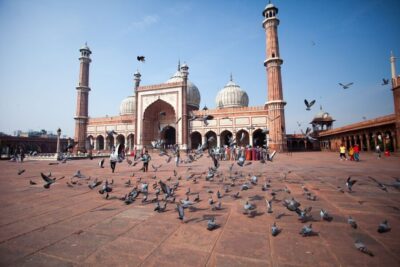
You begin at Jama Masjid, also called the Friday Mosque. It was commissioned by Shah Jahan, the Mughal ruler closely linked to Islamic architecture (and yes, the same patron associated with the Taj Mahal). The guide’s job here is more than pointing out walls—it’s helping you understand the scale and why it’s considered the apotheosis of Indian mosque design.
Expect about 30 minutes at the mosque. Admission is listed as not included, so it’s worth planning to pay the entry fee if your package doesn’t cover monuments. (And if you choose an all-inclusive option, entrance fees may be covered depending on what’s selected.)
Why this stop is worth your time:
- Jama Masjid is the kind of place where the details are easier to notice once someone explains what you’re seeing.
- It sets the tone for Old Delhi—everything afterward feels like it belongs to a larger story.
Practical note: religious sites typically come with rules about footwear and dress. The tour explicitly asks visitors to cover their head at Bangla Sahib later, but it’s smart to show up ready for modest, comfortable clothing throughout the day.
Chandni Chowk by cycle rickshaw: spices, Khari Baoli, and local rhythm
Next you head into the street-level heart of Old Delhi via cycle rickshaw or tuk-tuk. The ride matters because it changes how you experience the area. You’re not stuck in traffic; you’re moving with the flow while your guide points out what makes these bazaars important for locals.
This segment is centered on Chandni Chowk and the famous Khari Baoli spice market, described as Asia’s largest spice market and dating back to the 17th century. The guide also shares hands-on information about spices and their medicinal and health benefits, which is a fun twist—less souvenir shopping, more learning what you’re actually smelling and seeing.
Time here is about 1 hour. It’s also listed with admission free for this stop.
What to keep in mind:
- Old Delhi street scenes can feel intense. Your best move is to let the guide do the navigating and focus on the sights up close.
- If you want photos, pay attention early. Narrow streets can make perfect angles happen fast.
If you’re traveling with someone who gets impatient in crowds, this is still a good choice because the guide’s pacing helps you stay oriented without stopping every five minutes.
A quick stepwell stop at Agrasen Ki Baoli
After the market energy, you get a breather at Agrasen Ki Baoli. This stepwell dates to the 8th century and is known for its striking stepped design. It’s listed for 15 minutes with admission free.
Why I like this stop in the middle of a packed day: stepwells are a Delhi character feature that many first-time visitors miss. They’re not just pretty for photos—they hint at how people managed water and lived with seasonal change.
Since this is short, don’t expect a long explanation session. Instead, use the time to look upward, count the steps, and notice the architecture’s repetition. A guide helps here by pointing out what to focus on so you don’t leave with only a vague sense of cool stairs.
Bangla Sahib Sikh temple: langar, head covering rules, and real participation
Gurudwara Bangla Sahib is one of the most important Sikh shrines in Delhi, and the tour gives you a solid 1-hour window. The temple is easy to recognize with its golden dome and tall flagpole.
Here’s what makes this stop feel meaningful instead of just scenic:
- The grounds include a kitchen, a large holy pond, and an art gallery.
- The Sikh concept of langar (the community kitchen) is practiced: people of all backgrounds can eat together.
- Visitors are requested to cover their head and remove shoes.
- Anyone can volunteer in the Gurudwara, if you want to take part beyond watching.
Admission is listed as free.
A practical tip: bring something simple for head covering (or expect to use whatever the site provides). Also, expect a calmer pace than Old Delhi. You’ll likely find this stop resets your head—especially if the day started with busy streets.
Bigger loops around the capital
Gandhi, India Gate, and the shift from sacred to civic Delhi

After the temples and stepwell, the tour shifts into memorial and government landmarks. This is where Delhi changes mood.
Raj Ghat (Gandhi’s memorial)
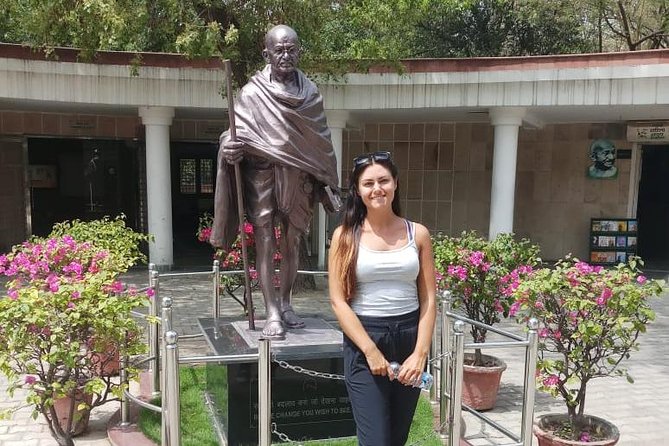
Raj Ghat is the memorial to Mahatma Gandhi. It’s described as an elementary square platform of black marble, marking the spot where Gandhi was cremated after his assassination in 1948. There’s also mention of a dedicatory ritual each Friday.
Time: 30 minutes, admission free.
What’s valuable here is the simple clarity: this is not a big building to wander. It’s a place to pause and understand one point in modern Indian history.
India Gate
Then you roll over to India Gate, a war memorial that’s described as Arc-de-Triomphe-like and about 140 feet high. It remembers 70,000 soldiers of the British Indian Army who lost their lives during the First World War. An eternal flame burns day and night to commemorate the brave soldiers of the 1971 India-Pakistan War.
Time: 15 minutes, admission free.
This is fast, but it’s still worth it. Even at a short stop, you can appreciate how the monument shapes the city’s main avenue and how the eternal flame brings a living element to the memorial.
Photo stops for Rashtrapati Bhawan and Parliament House
Two parts of this tour focus on New Delhi’s power and architecture. You don’t spend long walking inside—this is mostly a drive-by with photo opportunities.
Rashtrapati Bhawan
You’ll drive past Rashtrapati Bhawan, originally the Viceroy’s House before independence. The description emphasizes the building’s scale and architecture, and the tour gives you about 15 minutes for photos. Admission is listed as free for this stop.
Parliament House
You’ll also drive around the Parliament House area for photos. The tour description notes it was designed by British architect Edwin Lutyens and Herbert Baker, and it houses the Lok Sabha, Rajya Sabha, and a library hall.
Time isn’t specified in the itinerary text for this exact stop, but it’s presented as another quick photo segment.
Why this works: first-time visitors often want to see these icons without turning the day into a bureaucratic maze. For an efficient city highlights day, driving and photographing is the practical compromise.
The drawback is also obvious: if you want deep access or long interior time, this route won’t satisfy that. Think of it as a guided orientation to New Delhi’s official face.
Qutub Minar to close the day with a world heritage payoff
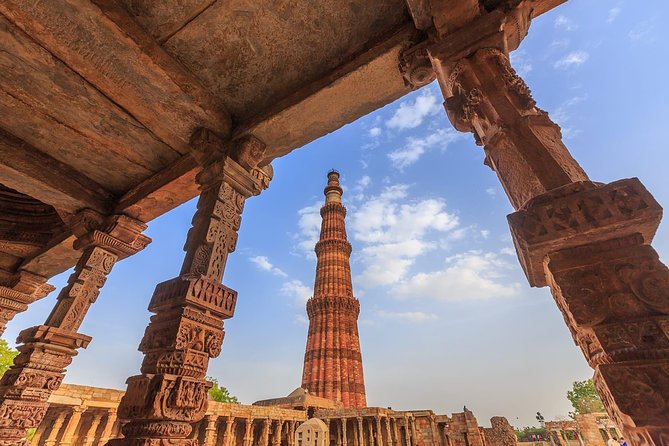
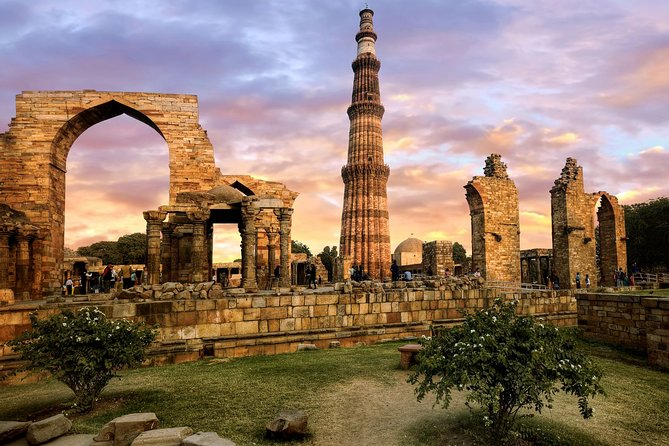
Your last major stop is Qutub Minar, listed as a World Heritage site. The minaret is described as having been constructed in 1192 by Qutab-ud-din Aibak. It’s an important example of Indo-Islamic Afghan architecture and, according to the description, has survived remarkably well.
You’ll spend about 1 hour here. Admission is listed as not included.
What to look for during your hour:
- the minaret’s form and how it towers over the grounds
- the surrounding gardens, since the site is described as being set amid green spaces
- the overall feeling of age—this is the kind of monument where the details make more sense once you understand what era it represents
If you want photos, treat this as your main photo stop. Most people are ready to slow down here, and Qutub’s setting gives you multiple angles without needing to force it.
Price and what you actually get for $79
At $79 per person for a 7 to 8 hour day, this is best viewed as a cost for time-saving and guidance, not just transportation. The included basics are strong:
- AC car transportation with an experienced licenced driver
- professional tour guide services
- packaged drinking water bottles
- pickup offered
- mobile ticket
- Entrance fees and lunch only if you pick an all-inclusive option
The value hinges on how you book:
- If you choose all-inclusive, you may also get a delicious buffet lunch and entrance fees to monuments as part of the package.
- If you don’t pick all-inclusive, you’ll likely pay entry for sites that list admission not included, like Jama Masjid and Qutub Minar.
For a first trip to Delhi, the guide element can pay off fast. You’re not just seeing places—you’re saving time on navigation and figuring out what to pay attention to.
One thing I’d watch: the schedule includes multiple stops with free entry listed (Chandni Chowk segment, stepwell, Gurudwara, Raj Ghat, India Gate, and the photo drives), so you can compare your likely paid entry fees against whether all-inclusive makes sense for your group.
Should you book this Delhi city tour with a guide?
Book it if you want a first-timer route that covers Old Delhi to New Delhi in one day, with a guide who can keep you moving and make landmarks easier to understand. This is especially a good fit if:
- you care about getting the story behind Jama Masjid, stepwell architecture, Sikh worship, Gandhi’s memorial, and Qutub Minar
- you want a mix of walking and street-level sightseeing (plus rickshaw time) without stress
- you’d rather pay for structure than spend your vacation planning every turn
Skip it (or adjust your expectations) if you need lots of interior time in museums or buildings. This itinerary is about high-impact highlights, with some stops designed mainly for photos.
If you decide to go, I’d suggest you tell your guide your top 2 priorities up front. Guides on this route have been praised for being flexible, clear about explanations, and comfortable in English, and that matters when you’re trying to hit everything without feeling rushed.
FAQ
How long is the Delhi city tour?
The tour runs 7 to 8 hours (morning to evening), or as per your convenience.
Do you get pickup in Delhi, Gurgaon, or Noida?
Yes. The guide meets you at your desired location such as hotel, airport, or railway station in Delhi, Gurgaon, or Noida.
Is this tour private?
Yes. It’s described as a private tour/activity, with only your group participating.
What’s included in the price?
Included are AC car transportation, an experienced licenced driver, professional tour guide services, packaged drinking water, and (if you select all-inclusive) a buffet lunch and entrance fees to monuments.
Are entry tickets included for Jama Masjid and Qutub Minar?
Jama Masjid and Qutub Minar list admission ticket not included in the itinerary. Entrance fees may be included if you select the all-inclusive option.
What will I do in Old Delhi?
You’ll visit Jama Masjid, then ride by cycle rickshaw/tuk-tuk through the Chandni Chowk and Khari Baoli spice market area, with your guide explaining the area’s role for locals.
Is lunch provided?
Lunch is included only if you choose the all-inclusive option, which specifies a delicious buffet lunch.
Can I cancel and get a full refund?
Yes. Free cancellation is available up to 24 hours in advance for a full refund.
Easier Alongside a Guide
- Delhi: Private Old & New Delhi Guided Half- or Full-Day Tour
★ 4.9 · 2,309 reviews - Delhi: Old and New Delhi Guided Full or Half-Day Tour
★ 5.0 · 976 reviews - Private Delhi Day Tour with Tour Guide
★ 5.0 · 284 reviews - From Delhi: Jaipur Private Tour with Guide & Hotel Pickup
★ 4.9 · 257 reviews - Taj Mahal skip the line luxury tour with guide
★ 5.0 · 241 reviews
More Tours in New Delhi
- Old & New Delhi City Tour – Half or Full Day Options Available
★ 5.0 · 4,811 reviews - Half Day Private Delhi City Tour
★ 5.0 · 4,474 reviews - Same Day Taj Mahal, Agra Fort & Baby Taj Tour from Delhi by Car
★ 5.0 · 4,304 reviews - Taj Mahal Day Tour from Delhi by Superfast Train – TOP RATED TOUR
★ 5.0 · 4,166 reviews - Delhi: Old and New Delhi Private Full or Half-Day Tour
★ 4.9 · 3,776 reviews
More Tour Reviews in New Delhi
- Old & New Delhi City Tour – Half or Full Day Options Available
★ 5.0 · 4,811 reviews - Half Day Private Delhi City Tour
★ 5.0 · 4,474 reviews - Same Day Taj Mahal, Agra Fort & Baby Taj Tour from Delhi by Car
★ 5.0 · 4,304 reviews - Taj Mahal Day Tour from Delhi by Superfast Train – TOP RATED TOUR
★ 5.0 · 4,166 reviews - Delhi: Old and New Delhi Private Full or Half-Day Tour
★ 4.9 · 3,776 reviews
Just added: more New Delhi reviews to browse
- 4 days Golden Triangle Tour★ 5.0 · 3 reviews
- Discover Old & New Delhi: Private Tour with Street Food★ 5.0 · 3 reviews
- Taj Mahal Tour From Delhi By Private Car★ 4.5 · 3 reviews
- Golden Triangle Tour 5 Days★ 5.0 · 3 reviews
- Taj Mahal: Express Entry Ticket For Sunset Tour with guide★ 5.0 · 3 reviews
- Agra Taj Mahal Sunrise & Sunset Tour from Delhi★ 5.0 · 3 reviews
City Tours, compared.
 ★ 5.0Old & New Delhi City Tour – Half or Full Day Options AvailableFrom $384,811 reviews
 ★ 5.0Half Day Private Delhi City TourFrom $374,474 reviews
 ★ 4.9Private Full-Day City Tour of Old and New DelhiFrom $221,722 reviews
Top Highlights of Delhi: All-Inclusive Private City TourFrom $371,104 reviews
★ 4.9Private Full-Day City Tour of Old and New DelhiFrom $221,722 reviews
Top Highlights of Delhi: All-Inclusive Private City TourFrom $371,104 reviews
 ★ 5.0Private Half Day Delhi City TourFrom $28802 reviews
 ★ 4.9Old & New Delhi City Tour – Half or Full Day OptionsFrom $38758 reviews
 ★ 5.0Old & New Delhi Private City Tour – Traveler’s Choice (Top Rated)From $13746 reviews
 ★ 5.0Jaipur City Private Day Tour from Delhi by Car – All InclusiveFrom $10589 reviews
Browse the lists this tour appears in