
Reviewed · NEW DELHI
Classic India & Varanasi 11 Days
A trip like this is made of big names and early mornings. What makes it interesting is the mix: UNESCO sights in Delhi and Agra, wildlife time in Ranthambore, then the spiritual gravity of Varanasi. You also get a smooth rhythm of guided stops with pre-paid entrances and an air-conditioned car.
Two parts I especially like are the packed-but-manageable UNESCO sequence (Jama Masjid, Qutub Minar, Humayun’s Tomb, Taj Mahal, Agra Fort) and the way the schedule gives you wildlife work twice in Ranthambore, not just a single look. The trip also leans on English-speaking drivers and guides, which matters when your days are busy.
One real consideration: schedules can change if a major site is closed on your date (like Taj Mahal), and hotel grading is worth confirming. The tour lists 3-star or 4-star options, so if your expectation is higher, check that detail before you book.
In This Review
- Key highlights worth knowing
- The Big Picture: A Classic India Route That Actually Has Breathing Room
- Day One in Delhi: Arrival Transfer Plus a Real Free Afternoon
- Old Delhi to Qutub Minar: Mosques, Rickshaws, and UNESCO Timing
- Agra Day: Agra Fort and Taj Mahal at Sunset
- Road to Ranthambore: Fatehpur Sikri Stop Plus a Wildlife-First Mindset
- Ranthambore Wildlife Days: Two Safaris and a Fort Visit
- Jaipur: Amber Fort, City Palace, Jantar Mantar, and Hawa Mahal Views
- The Flight to Varanasi: Fast Transfer Into a Different Planet
- Sunrise on the Ganges and Sarnath’s Buddha Trail
- Returning Home the Easy Way: Varanasi to Delhi, Then Onward
- Price and Value: What $1,640 Buys You (and What It Doesn’t)
- Logistics You Should Watch: Site Closures and Weather Dependence
- Who This Tour Suits Best (and Who Might Want Another Plan)
- Final Call: Should You Book Classic India & Varanasi 11 Days?
- FAQ
- What cities are covered in the 11-day Classic India & Varanasi tour?
- Are monument entrance fees included?
- Is airfare included?
- What kind of vehicle and driver do you get?
- How are the Ranthambore safaris handled?
- Does the tour include breakfast?
- Is the Sarnath Museum always open?
- Does the tour include the sunrise boat cruise and the Aarti ceremony?
- What happens if weather is poor?
- What is the cancellation and change policy?
Key highlights worth knowing
- Old Delhi by foot and rickshaw: Jama Masjid plus market time, with a classic rickshaw ride
- Taj Mahal at sunset: timed for atmosphere, after Agra Fort in the same day
- Ranthambore twice: two shared safari slots plus a Ranthambore Fort visit
- Jaipur’s biggest hits in one day: Amber Fort, City Palace, Jantar Mantar, and Hawa Mahal from the road
- Varanasi in two modes: Ganges sunrise boat time and an evening Aarti ceremony by the water
- Flight included only for the internal hop: Delhi to Varanasi is planned, but airfare is not included
The Big Picture: A Classic India Route That Actually Has Breathing Room
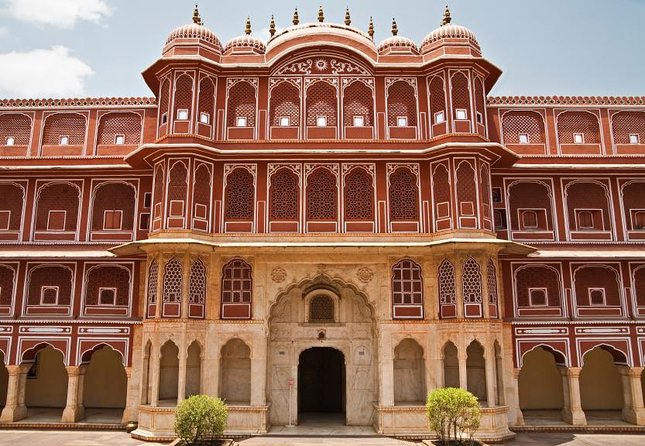
This 11-day run connects five high-demand destinations: New Delhi, Agra, Ranthambore, Jaipur, and Varanasi. The trick is pacing. You’re not bouncing every hour, but you are moving often enough that you’ll feel like you toured a whole circuit, not just one city.
What you’re buying for the $1,640 per person is less about luxury and more about friction reduction. You get an air-conditioned vehicle with a professional chauffeur, private English-speaking guiding for the sights, and paid entrances for the monuments. When you do India on your own, those pieces add up fast in both time and stress.
Also, the trip uses a realistic flow: Delhi sightseeing first, then the Taj region, then wildlife, then the Rajasthan classics, then the spiritual capital of the Ganges. It’s a good arc—palaces and tombs, then animals, then fort-and-temple Jaipur, then Varanasi’s ritual world.
Still deciding? Here is how it stacks up against other Delhi picks we have written up.



Day One in Delhi: Arrival Transfer Plus a Real Free Afternoon
On arrival, you get a transfer from Indira Gandhi International Airport to your hotel. After check-in, you have the rest of the day at leisure. That matters more than it sounds, especially after an international flight.
Delhi can be a sensory shock. A free afternoon lets you handle basic needs—money exchange, water, a first street-level look—without fighting a schedule. You’ll also be in a location that’s noted as near public transportation, so you’re not trapped if you decide to step out on your own.
Old Delhi to Qutub Minar: Mosques, Rickshaws, and UNESCO Timing
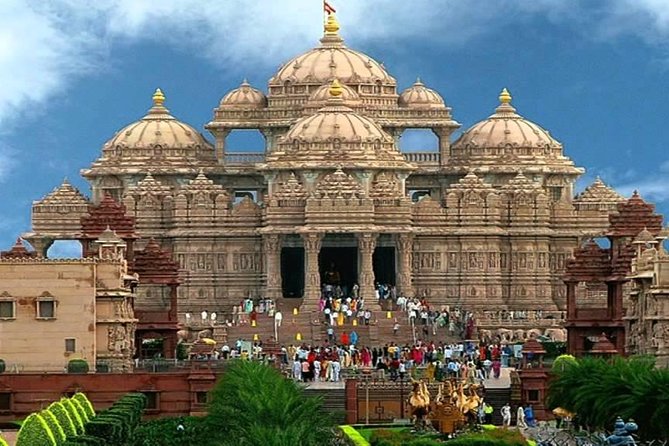
Day two is built around the Delhi “greatest hits,” but in a way that feels like it has a point. You start with Jama Masjid, one of India’s largest mosques. It’s not just a pretty stop; it gives you a direct look at how monumental religious architecture anchors daily life.
Next comes a rickshaw ride through Chandni Chowk / Old Delhi market areas—30 minutes of moving through dense streets where sights, vendors, and people all stack together. If you’ve never ridden in Old Delhi before, this is the best kind of intro: short enough to be fun, long enough to feel real.
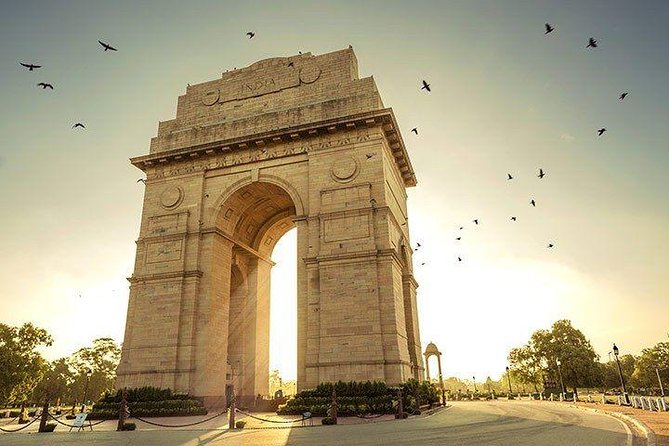
After that, the tour includes passing by major landmarks like India Gate and the secretariat buildings, then drives to the UNESCO pair:
- Qutub Minar
- Humayun’s Tomb
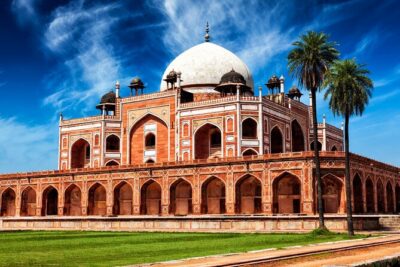
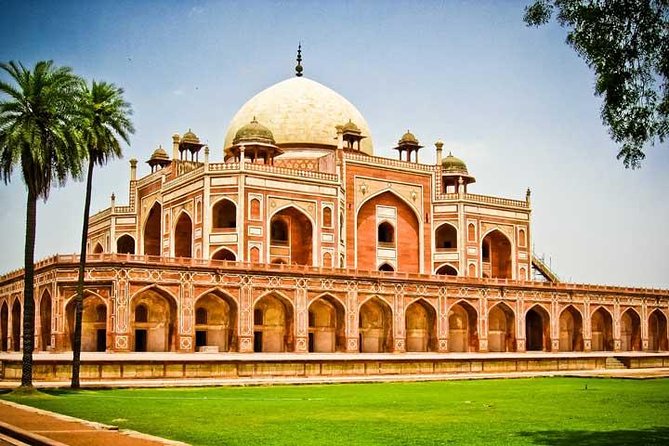
Both are included with tickets, and both are worth your attention for different reasons. Qutub Minar gives you the tower and the sense of scale you don’t fully get in photos. Humayun’s Tomb helps you understand the Mughal influence as something designed, not accidental.
Practical note: this day is walking-heavy in parts and involves riding. Wear comfortable shoes and plan to take breaks as needed.
Agra Day: Agra Fort and Taj Mahal at Sunset
You travel from Delhi to Agra by road after breakfast. The day is focused and dramatic. First you visit Agra Fort (UNESCO), which adds context around the Taj Mahal era. It’s the kind of site that helps you see the big story behind a single masterpiece.
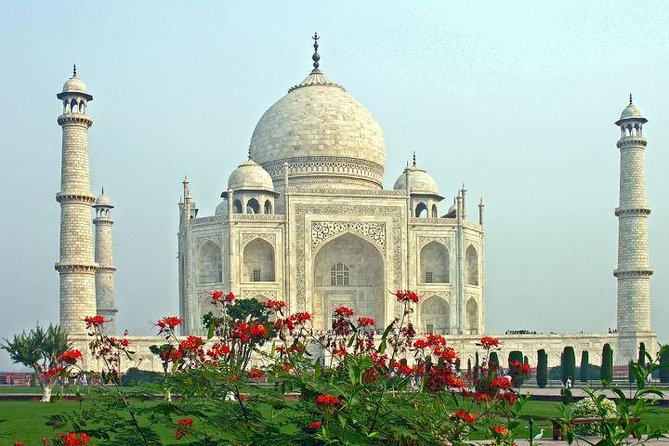
Then comes the star: Taj Mahal, visited with entry included and also timed for sunset. Sunset changes everything. You get more forgiving light for photos, and the whole experience tends to feel less like a daytime checklist.
If you’re the type who hates waiting in lines, plan for some of it anyway. This is a top destination. The good news is the time blocks are clear—about an hour for Agra Fort, then roughly two hours for the Taj.
One heads-up from a real-world risk: if Taj Mahal is closed on your date, the day can shift hard. That happened on at least one departure, and it forced a schedule swap that cut into Delhi sightseeing time. So keep a little flexibility in your expectations.
Road to Ranthambore: Fatehpur Sikri Stop Plus a Wildlife-First Mindset
After Agra, you go toward Ranthambore National Park with about a five-hour drive. On the way, there’s a stop at Fatehpur Sikri in the evening, then you check in to your hotel.
This “on the road” pacing is a smart setup for wildlife time. By the time you wake up the next morning, you’re already in the right region—no extra day of travel, no wasted transit hours.


Ranthambore Wildlife Days: Two Safaris and a Fort Visit
Ranthambore is where this tour earns its name as a classic India combo: monuments plus animals.
You get:
- A morning safari of about 3 hours
- An afternoon safari again
- A Ranthambore Fort visit in the middle of the day
Safaris are listed as shared, so you’ll be in a vehicle with other participants. Shared safari doesn’t mean worse viewing—it usually means you’re paying less and still getting the main experience. The key is to show up ready for wildlife unpredictability: you might see more activity at certain times than others, and you follow the guide and driver’s instincts.
Also, this is a long-ish day (around 6 hours total for the day’s program). Bring patience. Wildlife days reward calm behavior more than frantic photo attempts.
Jaipur: Amber Fort, City Palace, Jantar Mantar, and Hawa Mahal Views
Jaipur comes next after breakfast. You check in and then the main sights land on the next day.
The big morning is Amber Fort, paired with visits to:
- City Palace
- Jantar Mantar (the astronomical site)
- Hawa Mahal (Wind Palace) shown from the road
The value here is that you don’t just “see Jaipur,” you see it in categories. Amber Fort is fort + style + defensive cleverness. City Palace gives you the royal center. Jantar Mantar is science-as-landmark, and it’s included as an actual visit with a ticket.
Evening time is kept free for shopping in Jaipur Bazaar. That’s a nice balance. After temple-tower-and-fort days, shopping time lets you trade sightseeing fatigue for something practical: textiles, spices, small crafts.
The Flight to Varanasi: Fast Transfer Into a Different Planet
After breakfast, you fly from Delhi to Varanasi. Once you arrive, a representative meets you at the airport and helps you settle into your hotel.
The pace change is real. Delhi to Varanasi isn’t just geographic—it’s emotional. Varanasi is a city that organizes time around the river. Even before you start the major rituals, you’ll feel that shift.
Sunrise on the Ganges and Sarnath’s Buddha Trail
Day nine is the heart of Varanasi. You start early with a boat cruise on the Ganges at sunrise from the Manikarnika Ghat area. The tour describes vivid morning scenes—people bathing and offering prayers—and that early light makes it easier to understand what draws people here year after year.
After the boat time, you return for breakfast, then you have a brief city tour including:
- Banaras Hindu University
- Golden Temple
- Bharat Mata Temple (dedicated to Mother India)
In the afternoon you go to Sarnath, known as the deer park where the Buddha delivered his first sermon. You also visit Sarnath Museum, with one important note: it’s listed as closed on Fridays. If your dates land on a Friday, you might need to adjust expectations for that part.
The day ends with a thousand-year-old Aarti ceremony, with worshippers praying near the water using candles and lanterns. This is the part that feels most “alive.” You aren’t just looking at a place—you’re watching a ritual with real participants, not staged performances.
Returning Home the Easy Way: Varanasi to Delhi, Then Onward
After breakfast, you transfer from Varanasi to the airport, fly back to New Delhi, and then transfer to your hotel. On the final day, you head back to the Delhi airport for your departure home.
These end days matter because long trips often stumble at the finish line. Having planned airport transfers and a clear chain of movement helps you avoid the last-minute scramble.
Price and Value: What $1,640 Buys You (and What It Doesn’t)
At $1,640 per person for an 11-day circuit, the value comes from three things:
1) Guided access + entrance fees. Monument tickets are included for the scheduled sights, which is a big cost saver in India. It also reduces the “paperwork and lines” burden.
2) Transportation that matches your days. You get an air-conditioned vehicle with a professional chauffeur. For a route with multiple cities and timed visits, that’s not a small detail.
3) Two safaris and breakfast. The tour includes 2 shared safaris and breakfast for 10 days.
What’s not included is also important. International or domestic airfare is not included, and the tour doesn’t mention any gala dinners on Christmas or New Year’s Eve. If your travel dates overlap, plan to handle those meals yourself.
One more value detail: the operator lists accommodation as 3-star or 4-star hotel options. That’s good because you can usually choose what fits your budget. But it also means you should verify exactly what “star level” you’re paying for. In one real case, someone expected a higher category based on price and ended up at a lower grade. Don’t rely on assumptions—confirm your exact hotel tier before you go.
Logistics You Should Watch: Site Closures and Weather Dependence
India travel runs on weather and timing. This experience notes it requires good weather. If weather causes cancellation, you’re offered another date or a full refund (depending on the situation).
The other risk is site closures. If a major monument is closed on your date, your day can be rerouted. Taj Mahal closure is one example that has caused schedule changes—forcing earlier departure and swapping sightseeing time. That’s not something you can control, so I’d recommend staying flexible and keeping your “must-see” mindset focused on the big picture.
Who This Tour Suits Best (and Who Might Want Another Plan)
This works well if:
- You’re doing India for the first time and want a guided “greatest hits” circuit
- You like having your logistics handled: car, chauffeur, entrances, and English-speaking guides
- You want both culture and wildlife, not just one
It may be less ideal if you:
- Prefer total freedom over a structured schedule
- Want lots of quiet time in each city
- Are very sensitive to early mornings (sunrise boat plus Aarti means mornings start early)
Final Call: Should You Book Classic India & Varanasi 11 Days?
I’d book this if you want a strong first-timer route with good planning. The combo of Delhi monuments, Agra sunset, two Ranthambore safaris, and Varanasi rituals gives you variety without feeling chaotic.
Before you confirm, do two quick checks that matter:
- Hotel category: make sure you’re paying for the exact star level you’ll get (3-star vs 4-star).
- Your date flexibility: because weather and potential closures can shift the day.
If those two are aligned, this is a smart way to see a lot of India with less hassle and more meaning per day.
FAQ
What cities are covered in the 11-day Classic India & Varanasi tour?
The tour includes New Delhi, Agra, Ranthambore, Jaipur, and Varanasi. You travel between them by road for some legs and by flight for the Delhi to Varanasi transfer.
Are monument entrance fees included?
Yes. The tour includes entrance fees for the monuments listed in the program, including sites like Jama Masjid, Qutub Minar, Humayun’s Tomb, Agra Fort, Taj Mahal, and the scheduled Jaipur and Varanasi attractions.
Is airfare included?
No. Any airfare (international or domestic) is not included. The program does include an internal flight from Delhi to Varanasi and back to Delhi.
What kind of vehicle and driver do you get?
You get an air-conditioned vehicle with a professional chauffeur for the tour program, including a private professional English-speaking chauffeur.
How are the Ranthambore safaris handled?
The tour includes 2 shared safari experiences. The schedule includes a morning safari of about 3 hours and another safari in the same day in the afternoon.
Does the tour include breakfast?
Yes. Breakfast is included for 10 days.
Is the Sarnath Museum always open?
No. The program notes that the Sarnath Museum is closed on Fridays, so it may not be available depending on your travel date.
Does the tour include the sunrise boat cruise and the Aarti ceremony?
Yes. The Varanasi day includes a sunrise boat cruise and an Aarti ceremony in the evening, both listed with admission included.
What happens if weather is poor?
This experience requires good weather. If it’s canceled due to poor weather, you’ll be offered a different date or a full refund.
What is the cancellation and change policy?
This experience is non-refundable and cannot be changed for any reason. If you cancel or request an amendment, the amount paid is not refunded.
More Tour Reviews in New Delhi
- Old & New Delhi City Tour – Half or Full Day Options Available
★ 5.0 · 4,811 reviews - Half Day Private Delhi City Tour
★ 5.0 · 4,474 reviews - Same Day Taj Mahal, Agra Fort & Baby Taj Tour from Delhi by Car
★ 5.0 · 4,304 reviews - Taj Mahal Day Tour from Delhi by Superfast Train – TOP RATED TOUR
★ 5.0 · 4,166 reviews - Delhi: Old and New Delhi Private Full or Half-Day Tour
★ 4.9 · 3,776 reviews
Just added: more New Delhi reviews to browse
- 4 days Golden Triangle Tour★ 5.0 · 3 reviews
- Discover Old & New Delhi: Private Tour with Street Food★ 5.0 · 3 reviews
- Taj Mahal Tour From Delhi By Private Car★ 4.5 · 3 reviews
- Golden Triangle Tour 5 Days★ 5.0 · 3 reviews
- Taj Mahal: Express Entry Ticket For Sunset Tour with guide★ 5.0 · 3 reviews
- Agra Taj Mahal Sunrise & Sunset Tour from Delhi★ 5.0 · 3 reviews