
Reviewed · AGRA DAY TRIPS FROM DELHI
Delhi Agra Jaipur 3 Days Golden Triangle Tour
Sunrise sets the tone in the Golden Triangle. I like the tight plan built around the sunrise Taj Mahal and the fun cycle rickshaw ride through Old Delhi. The trade-off: you choose your own hotel, and monument entrance fees depend on the option you pick.
What makes it feel smooth is the chauffeur-driven route and the on-site guides who explain what you’re looking at. The reviews also single out drivers like Mr. Gulbir Singh, described as punctual, patient, and focused on safe driving in heavy traffic. It’s a private setup for just your group, with hotel and airport drop-offs handled for you.
In This Review
- Key things that make this tour worth your time
- Delhi, then Agra, then Jaipur: a simple plan that actually works
- Lotus Temple and Humayun’s Tomb: Delhi’s calmer start
- A small timing note that can save you
- Jama Masjid and Red Fort, plus Chandni Chowk in one day
- Sunrise Taj Mahal: the early slot is the whole game
- Quick sanity check: Taj closure day
- Agra Fort and Baby Taj: Mughal power and the softer side
- The Fatehpur Sikri stop on the way to Jaipur
- Jaipur’s palace and observatory combo: Hawa Mahal to Jantar Mantar
- What to expect on a tight schedule
- Jal Mahal and Panna Meena ka Kund: Jaipur’s water story
- Price and logistics: how the math really works
- What you’re paying for (and what you’re not)
- Is it good value?
- Guides and driving: the part you’ll feel every day
- Who should book this 3-day Golden Triangle plan?
- Should you book this Delhi–Agra–Jaipur 3-day tour?
- FAQ
- What is the duration of this Delhi–Agra–Jaipur tour?
- Where does pickup and drop-off happen?
- Does the price include monument entrance fees?
- Are meals included?
- Is a hotel included in the tour price?
- What are the key included travel and service items?
- Is there a cycle rickshaw ride?
- Are there closures I should know about?
- What tickets do you get?
- Do I need passport details?
Key things that make this tour worth your time
- Sunrise timing for the Taj Mahal keeps crowds and heat a bit more under control
- Old Delhi cycle rickshaw is the right kind of chaotic, with a guide and a plan
- Skip-the-line for tickets saves time at busy monuments
- Live government-approved guides in each city help you connect the dots
- Fort-and-palace day in Jaipur is packed, but it hits the big-ticket sights
- A/C vehicle with chauffeur means you’re not wrestling with traffic stress
Delhi, then Agra, then Jaipur: a simple plan that actually works
This is the classic Golden Triangle loop, but compressed into a realistic 3 days. The value is in the structure: you’re not “figuring it out” between cities, and you’re not stuck waiting around for guides or transport.
You’ll start in New Delhi with a morning of grand landmarks (Lotus Temple and Humayun’s Tomb), then shift into Old Delhi for the more sensory stuff (Jama Masjid, Red Fort, and Chandni Chowk). Next comes the main show in Agra: the Taj Mahal at sunrise, plus Agra Fort and Itmad-ud-Daula (Baby Taj). Finally, Jaipur gives you forts, palaces, and the UNESCO-listed astronomical wonder of Jantar Mantar.
One practical detail I appreciate: hotel drop-off and pickup are built in. That matters because Delhi traffic can turn “a short hop” into a long, unhappy wait.
Other Agra runs out of Delhi worth a look



Lotus Temple and Humayun’s Tomb: Delhi’s calmer start
Day 1 begins after breakfast with a hotel pickup at 9:00am. The first stop is Lotus Temple, a Baháʼí House of Worship. It’s listed as free and lasts about an hour—enough time to walk around, take photos, and enjoy the quiet vibe before the day turns more crowded.
Next is Humayun’s Tomb, the Mughal Emperor Humayun’s final resting place. You get roughly two hours here, and the admission is included. If you like architecture, this stop is worth it just for the layout and the feel of a planned Mughal garden tomb complex. It’s also a great visual warm-up for what you’ll see later in Agra.
Then you move toward central Delhi landmarks around India Gate:
- Gandhi Smriti (about 30 minutes, free) marks the area connected to Gandhi’s later life and assassination
- India Gate (about 20 minutes, free) is where you’ll see the names of many Indian Army servicemen carved on the wall
The itinerary then includes quick photo stops at:
- Rashtrapati Bhavan (described as a huge 330-acre complex built in 1929 by Lutyens and Baker)
- Parliament House (short stop for pictures)
These stops are brief by design. The point is to get the highlights without losing your whole afternoon before Old Delhi.
A small timing note that can save you
Lotus Temple is closed every Monday. If your date lands on a Monday, you’ll want to take advantage of the suggested alternative: Birla Temple is mentioned as the swap.
Jama Masjid and Red Fort, plus Chandni Chowk in one day
After the central Delhi landmarks, the day shifts into Old Delhi. The most fun element here is the included cycle rickshaw ride in Old Delhi. This is one of those “you can’t recreate it later” moments. You’ll feel the old-city lanes, the dense street energy, and the contrast from the open grounds of the tombs.
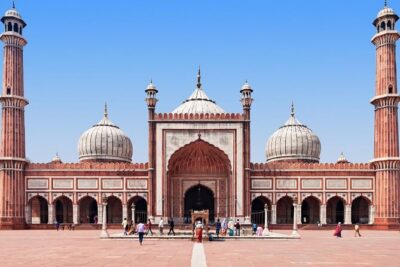
From there, you hit Jama Masjid, described as a 17th-century UNESCO World Heritage Site and listed with admission included (about an hour). This is a major place of worship and a major landmark—plan for a bit of crowd flow and expect locals using the space normally, not like a theme park.
Then comes Red Fort (about an hour). It’s free and described as the Mughal Dynasty’s main residence for the emperors. Even if you don’t go deep into every historical detail, it works because the fort reads clearly as power and scale.
Finally, you end around Chandni Chowk (about 30 minutes), labeled as a major 17th-century market. It’s not a “slow wander forever” stop in this itinerary, but it’s long enough to grab your bearings and understand why this area is known for shopping and everyday goods.
After that, you drive to Agra and sleep there for the next day’s early start.
Sunrise Taj Mahal: the early slot is the whole game
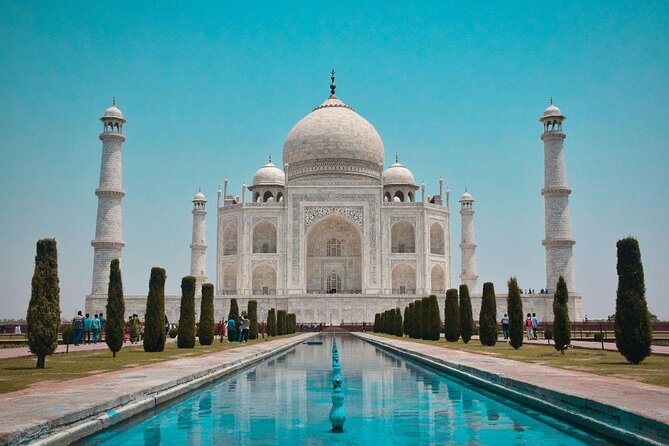
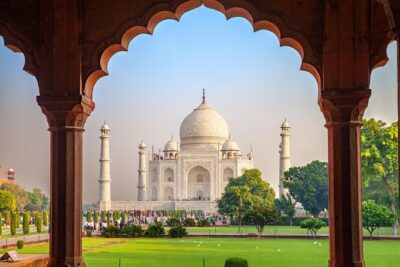
Day 2 starts before the crowd wave, with the Taj Mahal scheduled in sunrise hours. The itinerary calls out that sunrise is the best time to visit. In real life, that usually means softer light for photos, cooler morning temperatures, and a smoother entry compared with later hours.
You get about 3 hours here, with admission included. The Taj Mahal itself is the headline, but I also like that the plan doesn’t treat it like a 20-minute checkbox. You’re given enough time to see it from key angles and not feel rushed.
After the Taj Mahal, you return for breakfast, then you check out of your Agra hotel. Next up are two more “wow” sights that help you understand why Agra mattered so much during the Mughal era.
Chasing the Pink City? More Jaipur day trips
Quick sanity check: Taj closure day
The Taj Mahal is closed every Friday. If your trip lands on Friday, you’ll need to confirm how the operator adjusts the schedule because this plan is built around a sunrise visit.
Agra Fort and Baby Taj: Mughal power and the softer side
Once you’re out of the hotel, you go to Agra Fort. It’s described as built in 1565 by Emperor Akbar, with about an hour and admission included. The fort gives you a different Taj-adjacent perspective: more military, more architecture, more “this was a seat of rule,” not just a love story monument.
Then you visit Itmad-ud-Daula—often called Baby Taj. You get about 30 minutes, and admission is included. This stop is shorter than the Taj but it’s memorable because it’s often less exhausting than the main attraction and still shows off intricate Mughal artistry.
You’ll also have a choice around this stop: the plan notes you can visit inside or take photos outside. If you’re sensitive to indoor crowds or want more time for your overall schedule, that flexibility helps.
The Fatehpur Sikri stop on the way to Jaipur
Before Jaipur, you make a route stop at Fatehpur Sikri, about an hour. It’s described as a Mughal-founded city just west of Agra, built around red sandstone buildings, with a standout called out as Buland Darwaza (a famous gateway).
This is the kind of stop that works well when you’re doing the Golden Triangle fast. It adds another flavor—different from Taj-white marble and different from Jaipur’s palace look—so you don’t leave feeling like you only saw one style of monument.
After Fatehpur Sikri, it’s on to Jaipur and your third-day sightseeing.
Jaipur’s palace and observatory combo: Hawa Mahal to Jantar Mantar
Day 3 is the most concentrated day. After breakfast and check-out, you get a driver pickup for a guided Jaipur loop.
It starts at Hawa Mahal (Palace of Breeze). You then visit:
- Jal Mahal (Water Palace) at Man Sagar Lake (30 minutes noted for this one)
- Amber Fort (listed in the day’s sequence)
- City Palace (about 1 hour, admission included)
- Hawa Mahal, Jantar Mantar, and Water Palace are all named as part of the guided list
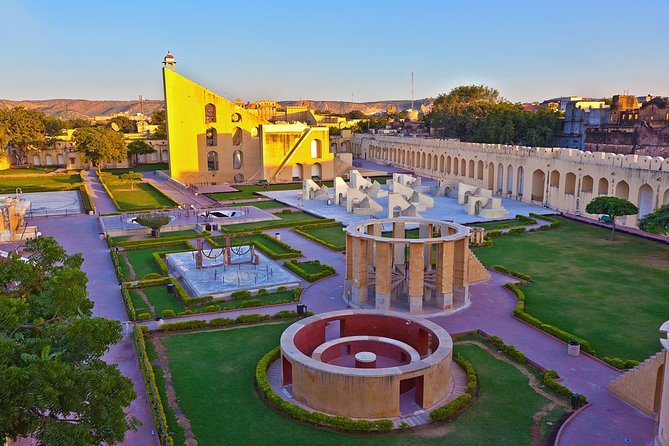
You also get Jantar Mantar, about an hour. This UNESCO-listed complex is described as a set of nineteen architectural astronomical instruments built by Rajput King Sawai Jai Singh, including the world’s largest stone sundial. If you’ve ever wondered how serious people were about time and the sky before modern tech, this is a satisfying place to see it in stone.
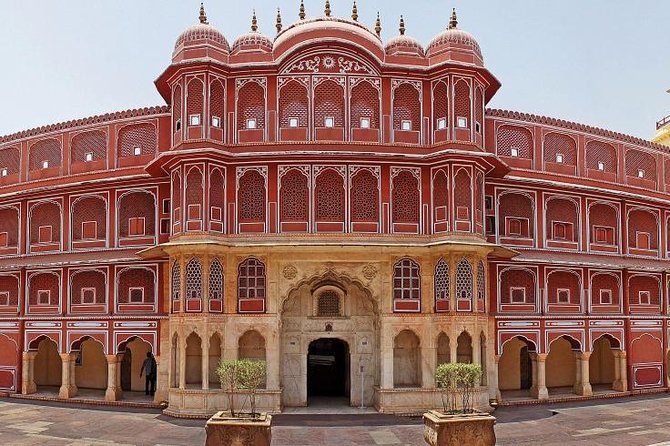
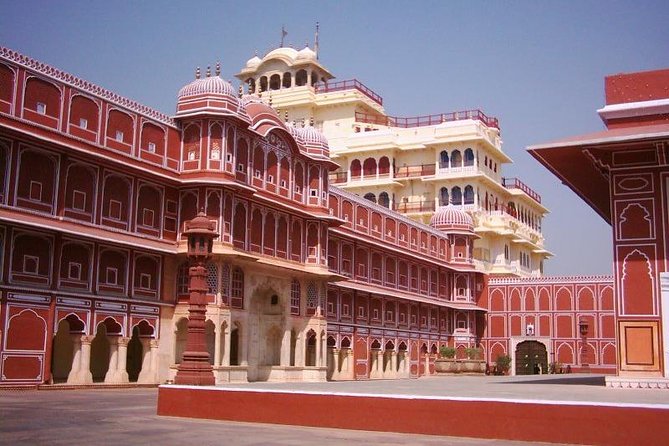
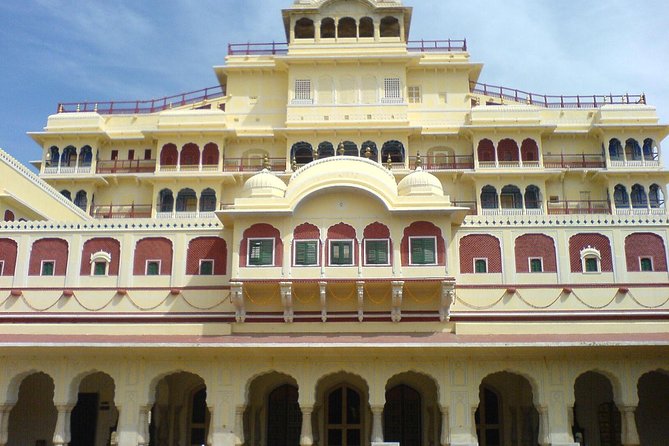
City Palace is next. You’ll spend about an hour at the Maharaja’s City Palace, which includes the home of the former royal family. Even if you skip heavy museum reading, the palace spaces and scale help you understand why Jaipur’s rulers cared so much about design and visibility.
What to expect on a tight schedule
This day is packed, so wear comfortable shoes. Fort areas and big complexes can mean lots of walking even when the scheduled times look reasonable. With an A/C vehicle waiting between sites, you’ll get breaks, but the sightseeing is still full-speed.
Jal Mahal and Panna Meena ka Kund: Jaipur’s water story
A standout part of the Jaipur plan is that it doesn’t treat Jaipur as only forts and pink facades. You also see water engineering and water-linked sights.
After City Palace, you’ll stop again for Jal Mahal—the Water Palace in the lake. Even though the time is listed as short, it’s a good pause because the scene is different from forts: it’s a calmer visual reset.
Then you visit Panna Meena ka Kund, a three-step stepwell near Amber Fort. It’s described as a heritage water harvesting structure. This is exactly the kind of detail that makes a tour feel more “local” and less like a monument stamp collection. You get a glimpse of how water management shaped daily life.
Finally, you drive back to Delhi for your drop-off at the Delhi airport, railway station, or your hotel area in Delhi, Gurgram, or Noida.
Price and logistics: how the math really works
The tour price shown is $30.00 per person, with pickup offered and a “private tour/activity” format for just your group. What you’ll want to check is what’s included and what isn’t, because the total cost in this kind of tour often depends on entrance fees and where you stay.
What you’re paying for (and what you’re not)
Included:
- A/C vehicle with chauffeur
- Live government-approved city guide in each city
- Hotel/New Delhi airport pickup and drop-off
- Monument entrance fees if you chose the option that includes them
- Skip-the-line for tickets
- Complimentary bottled mineral water
- Tolls, state taxes, fuel, and parking
Not included:
- Hotel stay cost (you pick your own accommodation)
- Meals and drinks (breakfast, lunch, dinner aren’t included)
- Monument entrance fees if you chose the option without entrance fees: listed as $70.00 per person
Is it good value?
For a first-time Golden Triangle trip, value comes from three places:
- You get transport and guide coverage across three cities
- You get sunrise Taj scheduling and ticket-skip help
- You avoid the planning headache of connecting sites day-to-day
The biggest “cost surprise” risk is entrance fees plus your hotel choice. If you choose an option without entrance fees, that $70 per person add-on can quickly reshape the total. If you’re booking soon, you’ll want to compare hotel rates in Delhi/Agra and see how much you’ll spend overall on lodging for two nights.
One more logistic note: you’ll need a passport photo copy for travel days, and you’ll get mobile tickets plus group discounts are mentioned.
Guides and driving: the part you’ll feel every day
This itinerary lives or dies by smooth driving and clear guidance. You’ll be sitting in a car a lot, and Delhi/Agra/Jaipur roads can be intense.
The feedback specifically highlights Mr. Gulbir Singh as a professional, patient driver who supports safety even in heavy traffic. I also like that the tour includes live city guides, not just a driver. That means you’ll have someone to interpret what you’re seeing—whether it’s Mughal architecture at Humayun’s Tomb or the astronomical logic behind Jantar Mantar.
Some guidance is noted for language skill as well (one comment mentions very good German language skills). Even if you don’t speak German, the broader point stands: the guides are there to explain, and that changes your experience.
Who should book this 3-day Golden Triangle plan?
This is a strong fit if:
- You’re on a tight schedule and want the big hits in three days
- You’d rather ride in comfort than negotiate city-to-city logistics
- You want guided context for major monuments, not just photos
- You’re okay choosing your own hotel and paying for meals separately
It may be less ideal if:
- You hate packed days (Jaipur Day 3 is full)
- You’re traveling on a date that includes Friday (Taj closure) or Monday (Lotus Temple closure) and you don’t want any adjustments
- You’re trying to keep costs super tight without budgeting for hotel nights and meals
Should you book this Delhi–Agra–Jaipur 3-day tour?
If you want a straightforward Golden Triangle circuit with minimal stress, this is a sensible booking. The sunrise Taj Mahal timing, the included Old Delhi cycle rickshaw, and the guided stops across all three cities are the big reasons it works.
Just do two checks before you pay:
- Confirm which entrance-fee option you’re choosing so you don’t get surprised by the $70 per person figure
- Pick your hotels early for Delhi and Agra, since the tour price doesn’t include lodging
If you get those parts right, you’ll come away with a full Golden Triangle story: Mughal grandeur, Mughal craft, and Jaipur’s palace-and-science side—all in one trip.
FAQ
What is the duration of this Delhi–Agra–Jaipur tour?
It’s listed as 3 days (approx.).
Where does pickup and drop-off happen?
The tour includes hotel/New Delhi airport pick up and drop off, and on the final day you’ll be dropped at the Delhi airport/railway station or your hotel area in Delhi, Gurgram, or Noida.
Does the price include monument entrance fees?
Entrance fees are included only if you booked the option with entrance fees. If you booked without entrance fees, it’s listed as $70 per person.
Are meals included?
No. Meals, food, and breakfast/lunch/dinner are not included.
Is a hotel included in the tour price?
No. Accommodation/hotels are not included. You choose your own lodging.
What are the key included travel and service items?
It includes an A/C vehicle with chauffeur, live government-approved city guide, skip-the-line entrance tickets (when applicable), complimentary bottled mineral water, and coverage of tolls/state tax/fuel/parking.
Is there a cycle rickshaw ride?
Yes. A cycle rickshaw ride is included in Old Delhi.
Are there closures I should know about?
Yes. Taj Mahal is closed every Friday, and Lotus Temple is closed every Monday (with Birla Temple suggested on Mondays).
What tickets do you get?
The tour includes mobile tickets.
Do I need passport details?
The tour notes that a valid passport photo copy is required for traveling on the days.
The Full Golden Triangle, More Options
- 3-Days Private Golden Triangle Tour: Delhi, Agra & Jaipur by Car
★ 5.0 · 1,107 reviews - 3-Days Private Golden Triangle Tour: Delhi, Agra & Jaipur by Car
★ 5.0 · 1,098 reviews - 3-Day Delhi, Agra and Jaipur Private Tour – India Golden Triangle
★ 5.0 · 812 reviews - Four-Day Private Luxury Golden Triangle Tour to Agra and Jaipur From New Delhi
★ 5.0 · 807 reviews - 5 Nights 6 Days Private Golden Triangle Tour – Delhi Agra Jaipur
★ 5.0 · 574 reviews
Onward to Jaipur: More Day Trips
- 3-Days Private Golden Triangle Tour: Delhi, Agra & Jaipur by Car
★ 5.0 · 1,107 reviews - 3-Days Private Golden Triangle Tour: Delhi, Agra & Jaipur by Car
★ 5.0 · 1,098 reviews - 3-Day Delhi, Agra and Jaipur Private Tour – India Golden Triangle
★ 5.0 · 812 reviews - Four-Day Private Luxury Golden Triangle Tour to Agra and Jaipur From New Delhi
★ 5.0 · 807 reviews - Jaipur Day Trip from Delhi by Car or Train – All Inclusive
★ 5.0 · 663 reviews
More Agra Day Trips out of Delhi
- Same Day Taj Mahal, Agra Fort & Baby Taj Tour from Delhi by Car
★ 5.0 · 4,304 reviews - Full Day Taj Mahal, Agra Fort & Baby Taj Tour from Delhi by Car
★ 5.0 · 3,647 reviews - From Delhi: Taj Mahal & Agra Private Day Trip with Transfers
★ 4.9 · 3,181 reviews - From Delhi: Taj Mahal and Agra Fort Private Sunrise Tour
★ 4.9 · 2,270 reviews - Sunrise Taj Mahal, Agra Fort & Baby Taj Tour from Delhi by Car
★ 5.0 · 2,243 reviews
Just added: more New Delhi reviews to browse
- 4 days Golden Triangle Tour★ 5.0 · 3 reviews
- Discover Old & New Delhi: Private Tour with Street Food★ 5.0 · 3 reviews
- Taj Mahal Tour From Delhi By Private Car★ 4.5 · 3 reviews
- Golden Triangle Tour 5 Days★ 5.0 · 3 reviews
- Taj Mahal: Express Entry Ticket For Sunset Tour with guide★ 5.0 · 3 reviews
- Agra Taj Mahal Sunrise & Sunset Tour from Delhi★ 5.0 · 3 reviews
Agra Day Trips from Delhi, compared.
 ★ 5.0Same Day Taj Mahal, Agra Fort & Baby Taj Tour from Delhi by CarFrom $624,304 reviews
 ★ 5.0Full Day Taj Mahal, Agra Fort & Baby Taj Tour from Delhi by CarFrom $623,647 reviews
 ★ 4.9From Delhi: Taj Mahal & Agra Private Day Trip with TransfersFrom $43,181 reviews
 ★ 4.9From Delhi: Taj Mahal and Agra Fort Private Sunrise TourFrom $592,270 reviews
 ★ 5.0Sunrise Taj Mahal, Agra Fort & Baby Taj Tour from Delhi by CarFrom $622,243 reviews
 ★ 5.0Taj Mahal and Agra Private Car Tour from Delhi with 5* LunchFrom $331,633 reviews
 ★ 4.9From Delhi: Private Taj Mahal and Agra Tour by Express TrainFrom $751,605 reviews
 ★ 5.0Taj Mahal, Agra Fort, Baby Taj Tour from Delhi by Superfast TrainFrom $751,494 reviews