

Reviewed · AGRA DAY TRIPS FROM DELHI
Delhi Agra Jaipur 4 Days Tour – Golden Triangle India
Delhi, Agra, Jaipur in four days is the kind of travel plan that feels like a cheat code. You get the big icons of the Golden Triangle, including the Taj Mahal experience at sunrise, plus major stops across Delhi and Jaipur. It’s a tight loop, but it’s built around efficient timing and a guide who keeps you moving.
Two things I really like: the private air-conditioned car with a licensed driver, and the way the itinerary hits the most recognizable sights without turning the trip into a bus tour blur. Also, people on the route have mentioned guides such as Amir Khan, along with Amet and Ahmed, as being friendly and attentive, which matters a lot on days that run early and late.
One drawback to consider: lunch and dinner are not included, and there’s some confusion in the provided details about monument entrance tickets (the day-by-day notes list some sites as free or included, while the package text flags entrance tickets as not included). I’d confirm this before you go so you don’t get a surprise on arrival.
In This Review
- Key highlights you’ll notice right away
- Is This 4-Day Golden Triangle Tour Good Value at $170?
- Private transport and guide quality: why it matters on this route
- Day 1 in Delhi: Rashtrapati Bhavan, India Gate, Humayun’s Tomb, Qutub Minar
- Rashtrapati Bhavan (30 minutes, admission ticket free)
- India Gate (30 minutes, admission ticket free)
- Humayun’s Tomb (1 hour, admission ticket included)
- Qutub Minar (1 hour, admission ticket included)
- Day 2 in Jaipur: Amber Fort, Hawa Mahal, Jantar Mantar, City Palace
- Amber Fort (2 hours, admission ticket included)
- Hawa Mahal, Palace of Wind (15 minutes, admission ticket free)
- Jantar Mantar, Jaipur (30 minutes, admission ticket included)
- City Palace of Jaipur (45 minutes, admission ticket included)
- Day 3 in Rajasthan: Chand Baori stepwell and Fatehpur Sikri
- Chand Baori, Abhaneri (30 minutes, admission ticket included)
- Fatehpur Sikri (1 hour 9 minutes, admission ticket included)
- Day 4 in Agra: Taj Mahal at sunrise, Agra Fort, and the Baby Taj
- Taj Mahal (2 hours, admission ticket included)
- Agra Fort (1 hour, admission ticket included)
- Itmad-ud-Daula, the Baby Taj (39 minutes, admission ticket included)
- Price, time, and what you should watch for
- Entrance tickets: confirm before you go
- Lunch and dinner are on your own
- Comfort beats speed
- Who this tour fits best
- Should you book this Delhi–Agra–Jaipur 4-day tour?
- FAQ
- FAQ
- What is the duration of the Delhi Agra Jaipur Golden Triangle tour?
- What’s included in the tour price besides transportation?
- Are monument entrance tickets included?
- Is lunch and dinner included?
- Does the tour offer accommodation?
- What is the cancellation policy?
Key highlights you’ll notice right away

- Sunrise Taj Mahal timing built into the Day 4 plan, so you’re not stuck at the end of the day crowd rush
- Private A/C transport across Delhi–Jaipur–Agra, which saves real time and energy
- Packed-in Delhi landmarks: Humayun’s Tomb and Qutub Minar with included admission notes, plus quick stops for India Gate and Rashtrapati Bhavan
- Jaipur’s must-sees in a logical order: Amber Fort first, then Hawa Mahal views, plus Jantar Mantar and City Palace
- A structured Day 3 outside the big-city feel with Chand Baori and Fatehpur Sikri
- Unlimited bottled water during travel and sightseeing, which is practical in India heat
Is This 4-Day Golden Triangle Tour Good Value at $170?

At about $170.21 per person for four days, the value comes from what you avoid: multiple long-distance transfers by yourself, confusing public transport, and the mental load of figuring out routes between Delhi, Jaipur, and Agra.
This package is built around three big components that cost money when you book separately:
- Private A/C car + licensed driver (comfort and time)
- A professional live guide (so you’re not reading plaques while standing in the sun)
- Admission timing across key landmarks (most of the heavy hitters are included in the plan)
Where value can get tricky is entrances. The itinerary notes say some admissions are free and others are included, but the separate package notes list entrance tickets for all mentioned monuments under not included. That doesn’t mean the tour is bad—it just means you should confirm what you’ll actually pay on-site. When you do that, the trip usually makes sense financially because you’re covering major sites across three cities in one go.
Other Agra runs out of Delhi worth a look




Private transport and guide quality: why it matters on this route
The Golden Triangle distances are manageable, but the logistics are what usually drain people. With this tour, you’re not negotiating rides between cities, and you’re not relying on schedules that don’t match your sight time.
You also get:
- Experienced licensed driver: you spend less time stuck in traffic guesswork
- Unlimited water bottles during travel and sightseeing: small detail, big help
- Group discounts plus a private tour feel (only your group participates)
Most importantly: on high-demand sights, the guide helps you get oriented fast. People have specifically praised guides like Amir Khan for being friendly, fun, and problem-solving, and that kind of energy matters when plans shift due to timing, crowds, or basic on-the-ground needs. You want someone who keeps the day moving without acting rushed.
Day 1 in Delhi: Rashtrapati Bhavan, India Gate, Humayun’s Tomb, Qutub Minar
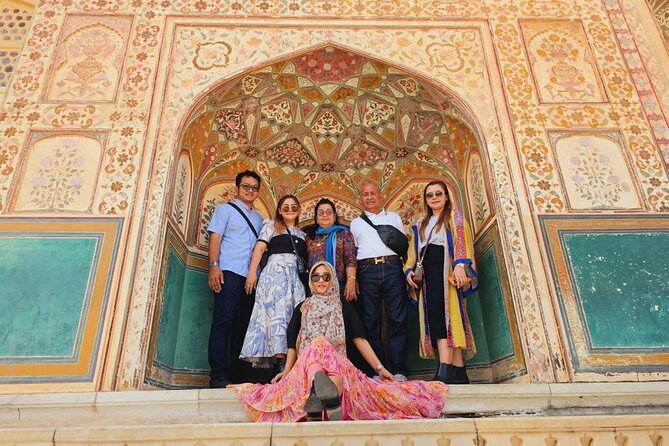
Day 1 is classic Delhi: government-era landmarks, memorial symbolism, and Mughal-era architecture. It’s also a smart warm-up day because you’re not starting with the single hardest mega-site.
Rashtrapati Bhavan (30 minutes, admission ticket free)
This is the kind of landmark you can appreciate even if you don’t love politics. It was completed in 1929 and originally served as the Viceroy’s House, later becoming the President’s residence after independence. With a short visit, you mainly get exterior context and a sense of how British-era planning shaped the central city.
Practical tip: keep this one quick. Delhi’s best in-the-moment experience usually comes after you’re done with the first photo round.
India Gate (30 minutes, admission ticket free)
India Gate is a war memorial built in 1931, honoring Indian soldiers who died during World War I. The design by Sir Edwin Lutyens is part of the appeal—this isn’t just a monument, it’s a visible piece of the city’s architectural language.
If you like walking, you can use this stop to stretch your legs. If you don’t, just enjoy it from a calm viewing spot and move on.
Chasing the Pink City? More Jaipur day trips
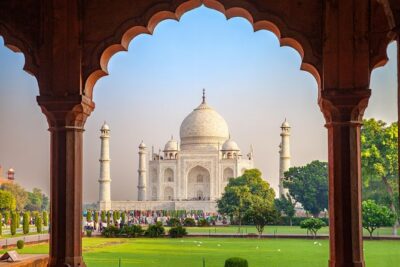
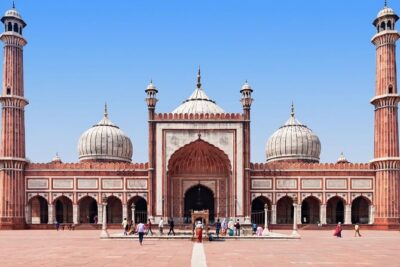
Humayun’s Tomb (1 hour, admission ticket included)
Humayun’s Tomb dates to 1570 and is a UNESCO site. It was commissioned by Empress Bega Begum in memory of her husband, Mughal Emperor Humayun. This is one of those sights where a guide pays off: you start noticing layout details and how the architecture signals importance.
This is a strong mid-day pick because the area around tomb complexes often feels cooler and slower than the surrounding streets.
Qutub Minar (1 hour, admission ticket included)
Qutub Minar rises to 73 meters and was built in 1193 by Qutb-ud-Din Aibak. It’s known as the tallest brick minaret in the world, and you’ll see decorative detail that rewards looking up as much as looking around.
Consideration: it’s easy to overpack your day with photos. If you want the carvings to land, give yourself time to actually study them rather than racing to the next spot.
Day 2 in Jaipur: Amber Fort, Hawa Mahal, Jantar Mantar, City Palace
Jaipur Day 2 is the “big visuals” day. The plan mixes a fort, a windowed façade icon, an astronomy site, and a palace complex. That variety is good. If it were only forts, you’d get numb. If it were only shopping corners, you’d miss the architecture.
Amber Fort (2 hours, admission ticket included)
Amber Fort is the star: it’s tied to Rajput architecture and was built in the 16th century by Maharaja Man Singh. The link to Emperor Akbar through alliance connections is part of the story you’ll hear from a guide.
Why this stop works: it’s not just a building. It’s a whole setting—courtyards, viewpoints, and the feeling of stepping into a lived-in power center.
Practical reality: expect stairs and uneven surfaces in places. Bring shoes you can walk in comfortably.
Hawa Mahal, Palace of Wind (15 minutes, admission ticket free)
Hawa Mahal is the iconic five-story façade built in 1799 by Maharaja Sawai Pratap Singh, famous for its 953 windows designed for air flow and viewing. The visit here is short on purpose: you’re mainly soaking in the look from the outside and getting a few quick perspectives.
Drawback: if you were hoping for a long palace interior experience, this isn’t the stop for that. Think of it as a photo-and-façade moment.
Jantar Mantar, Jaipur (30 minutes, admission ticket included)
This is an observatory built in 1734 by Maharaja Jai Singh II. You’ll see massive instruments like the Samrat Yantra (a giant sundial). Even if you’re not an astronomy person, the scale is impressive.
This is a good break from forts because it shifts your attention from power and defense to measurement and science.
City Palace of Jaipur (45 minutes, admission ticket included)
The City Palace blends Rajput, Mughal, and European architectural styles and sits in the city center. With 45 minutes, you’re given enough time to see the main areas without feeling dragged.
If you like museums, you’ll appreciate the mix of styles and objects. If you don’t, treat it as a pattern-matching stop: you’re looking for how different influences show up in one complex.
Day 3 in Rajasthan: Chand Baori stepwell and Fatehpur Sikri
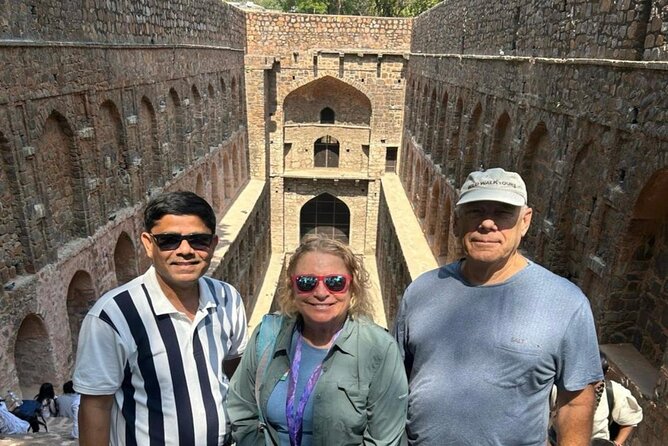
Day 3 is where the trip gets more interesting because it slows down a little and moves beyond the city highlights. You go to two sites with strong architectural identities.
Chand Baori, Abhaneri (30 minutes, admission ticket included)
Chand Baori is one of the deepest and largest stepwells in India, built around the 9th century by King Chanda. It features about 3,500 narrow steps arranged in a pattern that’s visually striking even before you fully understand it.
Practical note: stepwell sites can be hot and echo-y. Bring water in your day bag mindset even though the tour includes bottles for travel and sightseeing.
Fatehpur Sikri (1 hour 9 minutes, admission ticket included)
Fatehpur Sikri was built by Emperor Akbar in the 16th century and was once a vibrant capital. The plan highlights key architecture like the Buland Darwaza and the Jama Masjid. There’s also mention of Akbar’s vision, which helps you interpret why the site looks the way it does.
This stop is a great payoff after stepwell visuals because it takes you into a whole imperial layout. The time is long enough for meaning, not just stamping a checklist.
Potential consideration: Fatehpur Sikri can feel like a lot of walking across a large complex. If you tire easily, pace yourself and don’t try to speed-run the photo spots.
Day 4 in Agra: Taj Mahal at sunrise, Agra Fort, and the Baby Taj

Day 4 is the emotional climax. And it’s not just because the Taj Mahal is famous. It’s because the plan includes the sunrise angle and still protects time for Agra’s other major architecture.
Taj Mahal (2 hours, admission ticket included)
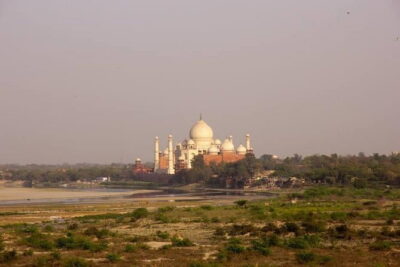
The Taj Mahal, built in the 17th century by Shah Jahan in memory of Mumtaz Mahal, is the obvious highlight. But the real value of a structured tour here is the timing. Sunrise light changes the mood fast, and you’re less likely to feel like you’re just stuck behind other people’s camera positions.
Give yourself space to look slowly. The building is all symmetry and detail, and if you rush, you miss half the experience.
Agra Fort (1 hour, admission ticket included)
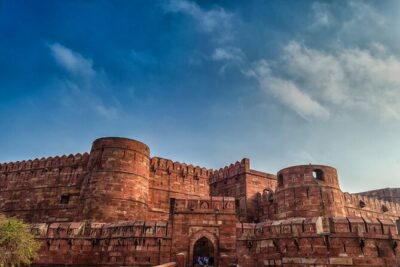
Agra Fort is about 2.5 km from the Taj Mahal and was built in 1565 by Akbar. It’s made of red sandstone and started as a military stronghold before becoming the center of Mughal power.
Why you’ll like it: it adds context. The Taj is a love story in stone, but the fort reminds you of the political and military framework that made Mughal-era patronage possible.
Itmad-ud-Daula, the Baby Taj (39 minutes, admission ticket included)
Itmad-ud-Daula was built in the 1620s by Empress Noor Jahan for her father, Mirza Ghiyas Beg, and it’s often called the Baby Taj. It’s a quieter visit than the Taj itself, which is exactly why it works. You can slow down here and focus on the marble details without the constant spotlight pressure.
That shorter time is also a kindness: by the end of Day 4, you don’t need a marathon. You need a final architectural note that feels complete.
Price, time, and what you should watch for

A 4-day Golden Triangle is a “see a lot” format. That can be great if you want highlights and don’t want to plan anything. It can feel rushed if you prefer long, lazy afternoons.
Entrance tickets: confirm before you go
Based on the provided details, some monuments are listed with admission free and others with admission ticket included, but the package text also says entrance tickets for all mentioned monuments are not included. That contradiction is worth clearing up now.
What to do: ask the operator which specific sites you’ll need to pay for on arrival, and whether your tickets are handled in advance or on-site.
Lunch and dinner are on your own
Lunch & dinner aren’t included. That affects cost, too. Even if you eat cheaply, it’s still a daily expense.
My practical advice: plan for at least one sit-down meal or one food break per day where you can recharge. Don’t treat every meal as a grab-and-go race.
Comfort beats speed
The tour includes A/C transport and bottled water, which is smart. Still, you’ll be walking in sun and heat at multiple sites. Comfortable shoes and a light hat aren’t optional here.
Who this tour fits best
This tour is best if you:
- Want major sights in Delhi, Jaipur, and Agra without self-planning
- Like having a guide to explain what you’re seeing
- Prefer the comfort of private A/C transport over long public-transport days
- Are okay with shorter visits at certain stops (like Hawa Mahal) to keep the schedule balanced
It might be a less perfect match if you:
- Want lots of free time in each city
- Plan to spend hours deep in museums or markets every day
- Hate uncertainty around entrance costs and would rather fully control every on-site ticket
Should you book this Delhi–Agra–Jaipur 4-day tour?
I’d book it if your goal is a high-impact Golden Triangle with guided structure. The biggest win is the combination of private comfort (A/C car, licensed driver, water) and sight coverage that hits the core landmarks: Humayun’s Tomb, Qutub Minar, Amber Fort, Jantar Mantar, Fatehpur Sikri, the Taj Mahal at sunrise, Agra Fort, and Itmad-ud-Daula.
Before you say yes, do one smart thing: confirm entrance ticket handling in writing. If the cost works out and you’re comfortable with a packed schedule, this is a solid way to see India’s signature architecture without turning the trip into logistics homework.
FAQ
FAQ
What is the duration of the Delhi Agra Jaipur Golden Triangle tour?
The tour runs for 4 days (approx.).
What’s included in the tour price besides transportation?
Included items listed are pickup offered, private air-conditioned car, an experienced licensed driver, a professional live tour guide, and unlimited water bottles during traveling & sightseeing. Accommodation in 3/4/5-star hotels is included if you select that option.
Are monument entrance tickets included?
The details provided are mixed: the itinerary notes list some sites as admission ticket free and others as admission ticket included, but the package information also lists entrance ticket of all mentioned monuments under not included. You should confirm which tickets you’ll need to pay for before departure.
Is lunch and dinner included?
No. Lunch & dinner are not included.
Does the tour offer accommodation?
Yes, accommodation is available in 3/4/5-star hotels if you choose the option.
What is the cancellation policy?
You can cancel for a full refund up to 24 hours in advance of the experience start time. If you cancel less than 24 hours before, the amount paid is not refunded.
The Full Golden Triangle, More Options
- 3-Days Private Golden Triangle Tour: Delhi, Agra & Jaipur by Car
★ 5.0 · 1,107 reviews - 3-Days Private Golden Triangle Tour: Delhi, Agra & Jaipur by Car
★ 5.0 · 1,098 reviews - 3-Day Delhi, Agra and Jaipur Private Tour – India Golden Triangle
★ 5.0 · 812 reviews - Four-Day Private Luxury Golden Triangle Tour to Agra and Jaipur From New Delhi
★ 5.0 · 807 reviews - 5 Nights 6 Days Private Golden Triangle Tour – Delhi Agra Jaipur
★ 5.0 · 574 reviews
Onward to Jaipur: More Day Trips
- 3-Days Private Golden Triangle Tour: Delhi, Agra & Jaipur by Car
★ 5.0 · 1,107 reviews - 3-Days Private Golden Triangle Tour: Delhi, Agra & Jaipur by Car
★ 5.0 · 1,098 reviews - 3-Day Delhi, Agra and Jaipur Private Tour – India Golden Triangle
★ 5.0 · 812 reviews - Four-Day Private Luxury Golden Triangle Tour to Agra and Jaipur From New Delhi
★ 5.0 · 807 reviews - Jaipur Day Trip from Delhi by Car or Train – All Inclusive
★ 5.0 · 663 reviews
More Agra Day Trips out of Delhi
- Same Day Taj Mahal, Agra Fort & Baby Taj Tour from Delhi by Car
★ 5.0 · 4,304 reviews - Full Day Taj Mahal, Agra Fort & Baby Taj Tour from Delhi by Car
★ 5.0 · 3,647 reviews - From Delhi: Taj Mahal & Agra Private Day Trip with Transfers
★ 4.9 · 3,181 reviews - From Delhi: Taj Mahal and Agra Fort Private Sunrise Tour
★ 4.9 · 2,270 reviews - Sunrise Taj Mahal, Agra Fort & Baby Taj Tour from Delhi by Car
★ 5.0 · 2,243 reviews
Just added: more New Delhi reviews to browse
- 4 days Golden Triangle Tour★ 5.0 · 3 reviews
- Discover Old & New Delhi: Private Tour with Street Food★ 5.0 · 3 reviews
- Taj Mahal Tour From Delhi By Private Car★ 4.5 · 3 reviews
- Golden Triangle Tour 5 Days★ 5.0 · 3 reviews
- Taj Mahal: Express Entry Ticket For Sunset Tour with guide★ 5.0 · 3 reviews
- Agra Taj Mahal Sunrise & Sunset Tour from Delhi★ 5.0 · 3 reviews
Agra Day Trips from Delhi, compared.
 ★ 5.0Same Day Taj Mahal, Agra Fort & Baby Taj Tour from Delhi by CarFrom $624,304 reviews
 ★ 5.0Full Day Taj Mahal, Agra Fort & Baby Taj Tour from Delhi by CarFrom $623,647 reviews
 ★ 4.9From Delhi: Taj Mahal & Agra Private Day Trip with TransfersFrom $43,181 reviews
 ★ 4.9From Delhi: Taj Mahal and Agra Fort Private Sunrise TourFrom $592,270 reviews
 ★ 5.0Sunrise Taj Mahal, Agra Fort & Baby Taj Tour from Delhi by CarFrom $622,243 reviews
 ★ 5.0Taj Mahal and Agra Private Car Tour from Delhi with 5* LunchFrom $331,633 reviews
 ★ 4.9From Delhi: Private Taj Mahal and Agra Tour by Express TrainFrom $751,605 reviews
 ★ 5.0Taj Mahal, Agra Fort, Baby Taj Tour from Delhi by Superfast TrainFrom $751,494 reviews