
Reviewed · AGRA DAY TRIPS FROM DELHI
Delhi-Agra-Jaipur:- Privately Guided Golden Triangle Trip ( 5 Days/4 Nights )
Sunrise Taj, then street food chaos. This privately guided Golden Triangle trip runs 5 days through Delhi, Agra, and Jaipur with a professional guide and driver, starting with pickup and ending with drop-off. If you want the headline sights without the usual free-for-all, this plan is built for getting you in and moving on.
My favorite part is the mix of big monuments and real daily life. You’ll do Old Delhi the local way through Chandni Chowk (by cycle rickshaw), hit Khari Baoli’s spice hustle, and step into Majnu Ka Tilla’s Tibetan refugee community instead of only ticking off buildings.
One consideration: the itinerary is full, with early starts (especially for Taj Mahal at sunrise) and lots of city-to-city driving. If you’re hoping for a slow, relaxed vacation pace, you may find the schedule tight.
In This Review
- Key highlights you’ll actually feel
- Golden Triangle, private and practical: what you’re really paying for
- Delhi Day 1: Jama Masjid to Akshardham evening lights (with markets in the middle)
- Delhi Day 2: Qutub Minar, Gandhi Smriti, Humayun’s Tomb, Lotus Temple
- Sunrise Taj Mahal and Agra Fort: the morning that sets the trip tone
- Jaipur Day 4: Amber Palace, Jaigarh cannon, City Palace, Jantar Mantar, then Hawa Mahal by bike
- Jaipur Day 5: Albert Hall, textile and jewelry markets, and back to Delhi
- Price and value: what’s included, what’s not, and where surprises could happen
- Who this tour is perfect for (and who should reconsider)
- Should you book this Golden Triangle trip?
- FAQ
- How many people can join this private Golden Triangle trip?
- Does the tour include pickup from the airport or hotel in Delhi?
- Is this a private tour or shared with other travelers?
- Is a guide provided for the full trip?
- Is the Taj Mahal visit at sunrise?
- Are monument entry tickets included for all stops?
- Is the cycle rickshaw ride included?
- What food is included during the tour?
- FAQ
- Question goes here
Key highlights you’ll actually feel
- Private guide + private driver from arrival to departure
- Sunrise Taj Mahal timing with pre-dawn pickup from your hotel lobby
- Time-saving entry-pass help so you’re not stuck in long lines
- Old Delhi street experience via cycle rickshaw and food alleys
- Local-life stops beyond the postcard sites (spice market, Tibetan colony, stepwell village walk)
- A no-shopping, no-scam approach aimed at keeping the trip focused on sights and people
Golden Triangle, private and practical: what you’re really paying for
This is a classic Delhi–Agra–Jaipur route, but the private format changes the experience. You get an air-conditioned vehicle with onboard WiFi, plus a guide who sets the day’s pace and keeps you from wandering in circles when you’re tired, jet-lagged, or just new to the city.
At a price of about $958.57 per group (up to 4), you’re mostly paying for convenience and a smoother flow: pickup and drop-off, driver time across multiple days, guide fees, and the ability to move between sights without waiting around. You’re also not stuck in the awkward dance of matching multiple group members’ interests—if you want more time for photos, you can usually ask for it.
One more “value” detail: the plan explicitly mentions help with entry passes in advance to save time at monuments. That’s not just nice to have in India; it can be the difference between a relaxed visit and a stressful one.
Other Agra runs out of Delhi worth a look



Delhi Day 1: Jama Masjid to Akshardham evening lights (with markets in the middle)
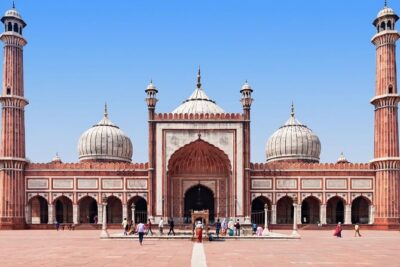
Delhi can feel like sensory overload in a good way—this itinerary uses that energy instead of fighting it. You start at Jama Masjid, the city’s biggest mosque, built by Emperor Shahjahan. Entry is free, but there’s a camera fee (300 INR per camera) listed for the site, so budget for that if you’re shooting a lot.
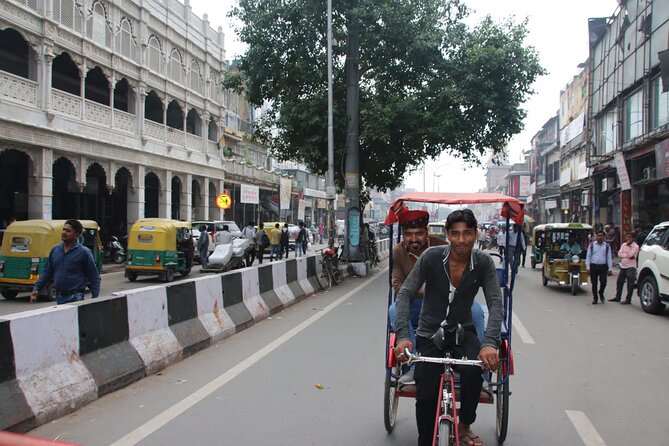
Then you swing into Old Delhi’s market world. You’ll ride through Chandni Chowk by cycle rickshaw, exploring narrow lanes that feel like they were built for wandering rather than browsing. A planned food stop is Parantha Wali Gali, where you can try parantha if you’re in the mood for a snack and a break from all the walking.
Next comes Khari Baoli, one of northern India’s major spice markets. This is less about shopping and more about experience: you’ll smell spices, see the volume of goods, and get a feel for the daily rhythm of the trade. It’s the kind of stop that makes the guide’s job obvious—without context, it’s just “lots of shops.” With context, it clicks.
After the markets, you’ll visit the Red Fort area (UNESCO). It’s a big Mughal centerpiece, later impacted by the British era, and it’s worth seeing on foot. Majnu Ka Tilla follows, and this is a smart “daylight break” from the usual temple-and-fort rhythm. You’ll learn about the Tibetan refugee community tied to the Dalai Lama’s disciples and also see monasteries—plus you get a sense of day-to-day life, not just a staged attraction.
The day continues with a quick stop at Ashokan Pillar, then the wide-open space of India Gate and its nearby war memorial areas. Rashtrapati Bhavan and Sansad Bhawan are mainly exterior/drive-by photo stops, so don’t expect interior access here—think pictures and architecture rather than a tour inside.
Later, you’ll shift into quieter spiritual spaces. Agrasen Ki Baoli is a stepwell from the 8th century, with about 100 steps down to the water level. If walking is too much, you can take photos from the top—this one works either way. Gurudwara Bangla Sahib comes next, where you can watch live prayer and see the massive kitchen process that serves over 30,000 people daily. If you want to help, the plan even suggests volunteering for a few minutes.
The day ends with Swaminarayan Akshardham. You’ll tour the temple first, then catch the evening prayer and the light/music/fountain show. It’s a big “finish” that helps Delhi feel complete, even if you’re already ready to fall asleep.
Delhi Day 2: Qutub Minar, Gandhi Smriti, Humayun’s Tomb, Lotus Temple
Day 2 is about layering Delhi through different eras of architecture and ideology. You start at Qutub Minar, a UNESCO site and one of India’s most famous ancient monuments. You’re not just seeing a tower—you’ll explore the broader complex: Qutub Minar, Alai Minar, tombs, an early mosque, the Iron Pillar, Alai Darvaza, and more.
This stop is a good example of why a guide matters. The complex can feel like “more stone.” With explanation, it becomes a timeline—different rulers, different styles, and a clearer sense of how the site evolved.
Then it’s Gandhi Smriti, tied directly to Mahatma Gandhi’s final days. You’ll visit the space marking his martyrdom area and learn about his last stretch of time, including where he spent the final days referenced in the plan.
After that, Lodhi Garden gives you breathing room. You’ll see tombs tied to Lodhi dynasty and enjoy the fact that locals use the space for picnics. It’s an easy change of pace between major monuments.
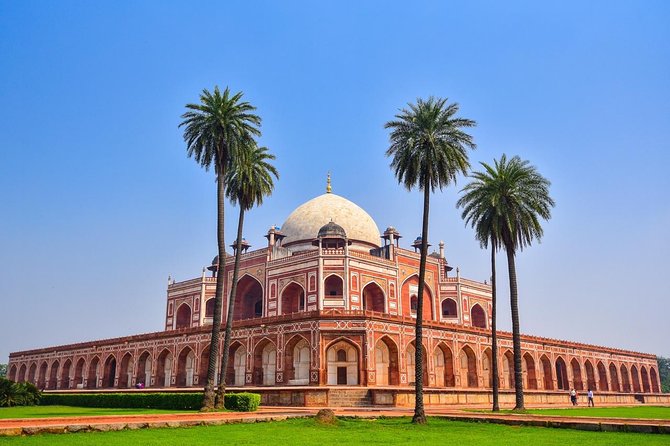
Humayun’s Tomb follows, another UNESCO site connected to Mughal power and Persian-influenced design. The plan points out that Taj Mahal is often compared to it, and you’ll get the chance to appreciate the similarities in layout and aesthetics rather than just being told “it inspired it.”
You wrap Delhi with Lotus Temple, a Baha’i house of worship. The plan notes the temple’s inspiration (Sydney Opera House is mentioned), and you’ll go inside to explore the space and learn about the faith’s presence in India. It’s also the last Delhi monument stop before the Agra drive.
Then you head to Agra via Yamuna expressway (about 3.15 hours) and check into your hotel. Evening time is free, so you can eat something local at your own pace or just rest.
Sunrise Taj Mahal and Agra Fort: the morning that sets the trip tone
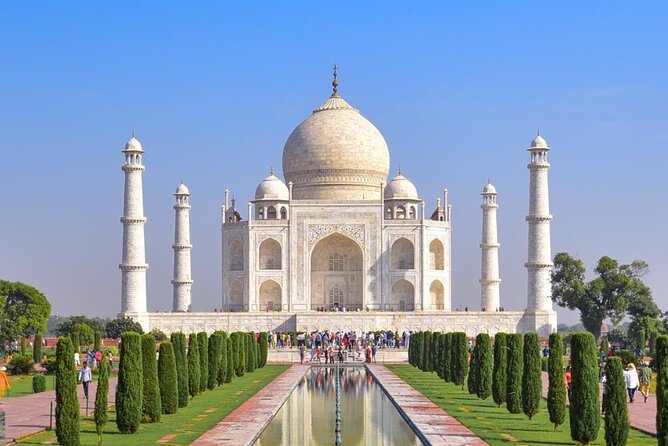
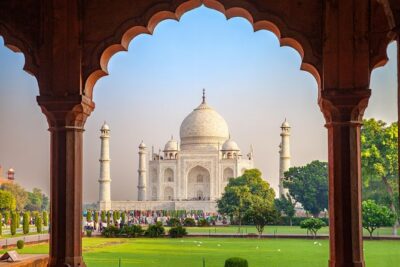
Day 3 is where the Golden Triangle earns its name. Taj Mahal is visited at sunrise, with pickup about 30 minutes before sunrise from the hotel lobby. That early start isn’t a minor detail—it’s the entire point. You’re aiming for calmer light, fewer crowds, and a cleaner experience for photos.
The plan notes the guide will also help as a kind of on-the-ground photographer during the Taj visit. If you’re the kind of person who cares about getting good angles (and not just standing in the obvious spot), that’s a real benefit. If you want, there’s also an option to hire a professional photographer, but you don’t have to.
After Taj Mahal, you return to the hotel for breakfast, then check out and move toward Jaipur. Along the way you’ll hit two Mughal-era power stories.
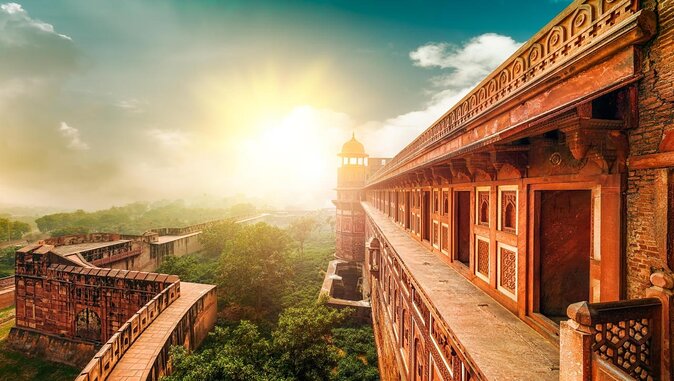
Agra Fort is next: it served as a center of Mughal power, with palaces inside and a focus on royal life. The tour plan specifically calls out viewing the royal palace areas connected to Shahjahan and Mumtaz Mahal, which is exactly what you want to understand here—this isn’t just walls; it’s rulership made visible.
Then comes Itimad-ud-Daulah’s tomb, often called Baby Taj because of the resemblance to Taj Mahal. The plan describes it as an ornate, jewel-box-like site, and it’s a nice counterpoint after Taj’s scale.
From there, you continue toward Jaipur, with a stop at Fatehpur Sikri (UNESCO). It’s about an hour from Agra on the way to Jaipur. The plan includes parking and a local bus to reach the fort, then ticket purchase and guided exploration. Fatehpur Sikri is tied to Akbar’s era and the Din-i-ilahi idea, and it’s known as the Mughal ghost capital because the royal family stayed there only about 12 years.
Later, you detour to Abhanery/Chand Baori, the famous stepwell area. The plan notes the stepwell has 3,500+ steps and that there’s a temple of Goddess Harsit Mata nearby. After the stepwell, you also get a short village and temple experience—this is one of the “rural life while driving city to city” moments that makes the trip feel more grounded.
You finish the day by reaching Jaipur and checking into your hotel, with evening time for yourself.
Jaipur Day 4: Amber Palace, Jaigarh cannon, City Palace, Jantar Mantar, then Hawa Mahal by bike
Jaipur is built for photo stops, but this plan avoids the typical scattershot approach. You begin at Amber Palace (UNESCO). On the way, there’s a stop at Panna Meena Kund. Then you reach Amber and focus on the standout areas like Shish Mahal, the mirror palace. This is a strong “first Jaipur palace” pick because the design details reward slow attention.
Next is Jaigarh Fort, where you’ll see Jaiban, described as the world’s largest cannon. The plan even notes it can fire a cannon ball up to 42 km, which gives you scale for why this place mattered strategically. The visit here is shorter, but it’s worth it if you like forts that feel practical, not just decorative.
Jal Mahal is a quick photo stop. You’ll stop at the landmark but tourists are not allowed to visit from inside, so treat it as a viewpoint moment rather than a full attraction.
Then you go into the City Palace of Jaipur. The plan says the current royal family still lives there and that many parts are open to tourists. Inside, you’ll see paintings, ornate doors, and multiple galleries, including a textile gallery and even weapon collections. This is one of the better spots in Jaipur to understand how the city transitioned into a major state—less touristy, more explanatory.
After City Palace, it’s Jantar Mantar, the astronomical instrument site built in the early 18th century. You’ll see nineteen instruments, with fourteen still working, and the plan points out the largest sundial that’s accurate to about 2 seconds. If you’re even a little curious about how people measured time before digital tech, this makes sense quickly.
Hawa Mahal becomes the day’s visual payoff. The plan includes a cycle rickshaw ride through Pink City historical streets, ending at Hawa Mahal, followed by a photo stop. One important detail: the inclusions list says the cycle rickshaw ride isn’t included, even though it’s part of the experience. So if you want that ride, plan for an extra cost.
After that, you’ll have lunch at a local restaurant (lunch is included). Then you shift to Galta Ji, also known as the monkey temple. The plan emphasizes watching monkeys without making contact, and it mentions leopards in the area—though sightings aren’t guaranteed, so treat that as a “maybe” rather than a promise.
The day finishes with Birla Mandir Temple for evening prayer, a calm close after a strong day of forts and palace interiors.
Chasing the Pink City? More Jaipur day trips
Jaipur Day 5: Albert Hall, textile and jewelry markets, and back to Delhi
Your final day is a mix of culture and shopping streets. Albert Hall Museum is first, the Rajasthan state museum. The building was built for the prince of Wales, and the plan highlights Egyptian artifacts as a key draw.
Then it’s market time. Bapu Bazar focuses on textiles, while Johri Bazaar is the jewelry and gemstone corridor—everything from costume jewelry to more serious pieces. The plan is clear that this is a free day for browsing and color-filled market walking, so don’t schedule anything heavy after this if you can help it.
Once the market time is done, you drive back to Delhi. Your departure is arranged at the place of your choice in Delhi—hotel or airport—so you’re not forced into some awkward mid-day relocation.
Price and value: what’s included, what’s not, and where surprises could happen
For up to 4 people in a private setup, the price looks reasonable once you compare it to the real costs of: paying for a driver for multiple days, paying for a guide every day, arranging airport pickup/drop-off, and booking transport through three cities.
What’s included:
- An air-conditioned vehicle, private transportation, and WiFi on board
- Guide fees and driver fees/allowances
- Pickup and drop-off within Delhi
- Lunch (4 lunches)
- Parking fees, fuel surcharge, GST, and certain taxes listed as airport/departure tax
- Sanitizer and mask items
- Mobile ticket
What’s not included (and can affect your total):
- Many monument entry tickets are listed as not included for key sights
- Camera fees at specific places (Jama Masjid lists a camera fee)
- The cycle rickshaw ride is specifically listed as not included
- Lunch isn’t listed as all meals; dinner time is on your own during free evenings
The smart part is that the plan claims advance help with entry passes to reduce time lost at monuments. That’s where the private guide’s value really shows, because you’re not trying to figure out tickets and lines while coordinating with traffic and timing.
Who this tour is perfect for (and who should reconsider)
This Golden Triangle works best if you:
- Want a first-timer-friendly India trip without constantly figuring out logistics
- Prefer a structured plan with room for a few photo moments and meaningful explanations
- Like local food and market experiences, not only grand monuments
- Travel as a small group of up to 4 and want private pacing
You might rethink booking if you:
- Want a slower schedule with lots of downtime
- Struggle with early mornings (sunrise Taj Mahal is a non-negotiable anchor here)
- Don’t like paying extra for monument entry fees and site camera fees when they apply
Should you book this Golden Triangle trip?
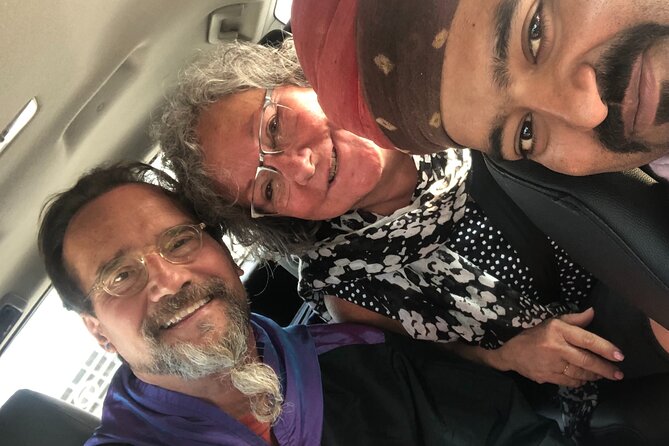
If you want the classic Delhi–Agra–Jaipur story told in a way that saves you time and keeps you from feeling lost, I’d book it. The combination of sunrise Taj Mahal, a private guide (Vishnu Singh) and driver, plus day balance between monuments and real neighborhoods makes this feel like more than a checklist tour.
If your priority is maximum leisure and minimal driving, you’ll probably feel the pace. But if you’re okay with a full itinerary for a big payoff, this one is a solid choice—especially for travelers who want a plan that feels safe, organized, and focused on the real India, not just the Instagram angles.
FAQ
How many people can join this private Golden Triangle trip?
The tour is for a group of up to 4 people.
Does the tour include pickup from the airport or hotel in Delhi?
Yes. The plan includes pickup from the airport or your hotel in Delhi, and it also includes drop-off back to your hotel or the airport in Delhi at the end.
Is this a private tour or shared with other travelers?
It’s private. Only your group participates.
Is a guide provided for the full trip?
Yes. The experience includes a professional tour guide for the duration, along with a driver.
Is the Taj Mahal visit at sunrise?
Yes. Taj Mahal is visited at sunrise, with pickup about 30 minutes before sunrise from your hotel lobby.
Are monument entry tickets included for all stops?
No. Many major monuments list admission tickets as not included, while several stops are marked free. The guide also helps with buying entry passes in advance to save time.
Is the cycle rickshaw ride included?
The cycle rickshaw ride is part of the planned experience, but it is listed as not included in the package.
What food is included during the tour?
Lunch is included (4 lunches). Other meals depend on your free time in the evenings and your own plans.
FAQ
Question goes here
Answer paragraph
The Full Golden Triangle, More Options
- 3-Days Private Golden Triangle Tour: Delhi, Agra & Jaipur by Car
★ 5.0 · 1,107 reviews - 3-Days Private Golden Triangle Tour: Delhi, Agra & Jaipur by Car
★ 5.0 · 1,098 reviews - 3-Day Delhi, Agra and Jaipur Private Tour – India Golden Triangle
★ 5.0 · 812 reviews - Four-Day Private Luxury Golden Triangle Tour to Agra and Jaipur From New Delhi
★ 5.0 · 807 reviews - 5 Nights 6 Days Private Golden Triangle Tour – Delhi Agra Jaipur
★ 5.0 · 574 reviews
Onward to Jaipur: More Day Trips
- 3-Days Private Golden Triangle Tour: Delhi, Agra & Jaipur by Car
★ 5.0 · 1,107 reviews - 3-Days Private Golden Triangle Tour: Delhi, Agra & Jaipur by Car
★ 5.0 · 1,098 reviews - 3-Day Delhi, Agra and Jaipur Private Tour – India Golden Triangle
★ 5.0 · 812 reviews - Four-Day Private Luxury Golden Triangle Tour to Agra and Jaipur From New Delhi
★ 5.0 · 807 reviews - Jaipur Day Trip from Delhi by Car or Train – All Inclusive
★ 5.0 · 663 reviews
More Agra Day Trips out of Delhi
- Same Day Taj Mahal, Agra Fort & Baby Taj Tour from Delhi by Car
★ 5.0 · 4,304 reviews - Full Day Taj Mahal, Agra Fort & Baby Taj Tour from Delhi by Car
★ 5.0 · 3,647 reviews - From Delhi: Taj Mahal & Agra Private Day Trip with Transfers
★ 4.9 · 3,181 reviews - From Delhi: Taj Mahal and Agra Fort Private Sunrise Tour
★ 4.9 · 2,270 reviews - Sunrise Taj Mahal, Agra Fort & Baby Taj Tour from Delhi by Car
★ 5.0 · 2,243 reviews
Just added: more New Delhi reviews to browse
- 4 days Golden Triangle Tour★ 5.0 · 3 reviews
- Discover Old & New Delhi: Private Tour with Street Food★ 5.0 · 3 reviews
- Taj Mahal Tour From Delhi By Private Car★ 4.5 · 3 reviews
- Golden Triangle Tour 5 Days★ 5.0 · 3 reviews
- Taj Mahal: Express Entry Ticket For Sunset Tour with guide★ 5.0 · 3 reviews
- Agra Taj Mahal Sunrise & Sunset Tour from Delhi★ 5.0 · 3 reviews
Agra Day Trips from Delhi, compared.
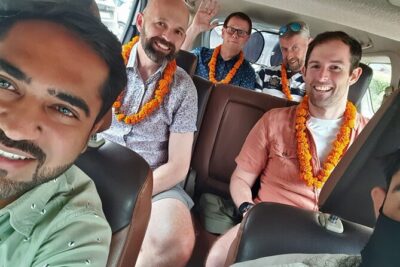 ★ 5.0Same Day Taj Mahal, Agra Fort & Baby Taj Tour from Delhi by CarFrom $624,304 reviews
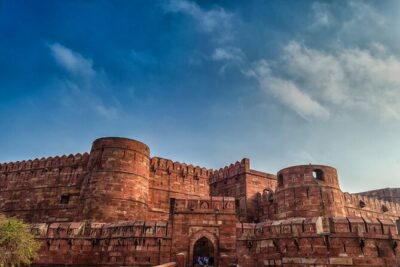 ★ 5.0Full Day Taj Mahal, Agra Fort & Baby Taj Tour from Delhi by CarFrom $623,647 reviews
 ★ 4.9From Delhi: Taj Mahal & Agra Private Day Trip with TransfersFrom $43,181 reviews
 ★ 4.9From Delhi: Taj Mahal and Agra Fort Private Sunrise TourFrom $592,270 reviews
 ★ 5.0Sunrise Taj Mahal, Agra Fort & Baby Taj Tour from Delhi by CarFrom $622,243 reviews
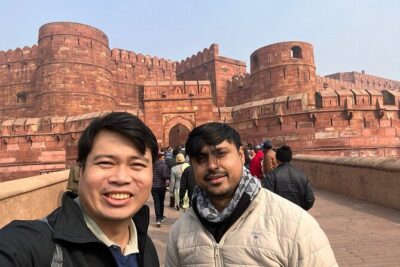 ★ 5.0Taj Mahal and Agra Private Car Tour from Delhi with 5* LunchFrom $331,633 reviews
 ★ 4.9From Delhi: Private Taj Mahal and Agra Tour by Express TrainFrom $751,605 reviews
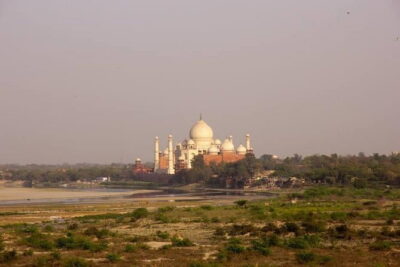 ★ 5.0Taj Mahal, Agra Fort, Baby Taj Tour from Delhi by Superfast TrainFrom $751,494 reviews