
Reviewed · AGRA DAY TRIPS FROM DELHI
Delhi Agra Jaipur Tour 4 Nights 5 Days
Golden Triangle tours are a lot of movement. This one strings together Delhi, Agra, and Jaipur with private car comfort and an efficient sightseeing rhythm. You start early at 6:30 am from Rajpath area and spend each day hitting big landmarks without the stress of figuring out transport.
What I really like is the focus on safe, accurate driving through traffic (especially important when you’re crossing town fast). The other strong point is the mix of headline stops and smart add-ons, like Lotus Temple in Delhi and the calmer marble details at Itimad-ud-Daulah in Agra.
One consideration: monument entrances and meals are not included, so you’ll want to budget extra for tickets, lunch, and snacks. Also, this is a packed 5-day circuit, so long days are part of the deal.
In This Review
- Key highlights worth your attention
- Golden Triangle in 5 days: how the pace really works
- Delhi’s Mughal-and-modern blend: Qutub Minar to India Gate
- Delhi day two: Presidential scale, Akshardham, Old Delhi, and Raj Ghat
- Agra’s big moments: Taj Mahal, Agra Fort, and Itimad-ud-Daulah
- Fatehpur Sikri and Jal Mahal: a day trip with two different moods
- Jaipur icons in one sweep: City Palace, Jantar Mantar, Amer Fort, Hawa Mahal, Birla Mandir
- Price and what it really costs you in practice
- Getting around with Freddy (Surendra): safety, timing, and fewer hassles
- Where this tour is strongest (and who should choose it)
- Should you book this Delhi Agra Jaipur 4 Nights 5 Days tour?
- FAQ
- What is the meeting point and start time for this tour?
- Is this tour private, and how many people are included?
- What is included in the price?
- Are monument entrance fees included?
- Are meals included?
- Do I need a printed ticket?
- What is the cancellation policy?
Key highlights worth your attention
- Surendra (also called Freddy) drives with a safety-first approach, and he’s praised for being punctual and practical in hectic traffic.
- Private car, all tolls/parking, fuel surcharge included, which usually saves time and avoids surprise costs.
- Mobile ticket, so you’re not scrambling for printed papers at the start.
- Delhi Old City + memorials on the same day, including Jama Masjid and Raj Ghat.
- Taj Mahal plus Agra’s “supporting cast”, including Agra Fort and the “Baby Taj” Itimad-ud-Daulah.
- Jaipur built-in variety from City Palace and Jantar Mantar to Amer Fort and Hawa Mahal.
Golden Triangle in 5 days: how the pace really works
This is a 4 nights / 5 days Golden Triangle route, designed to keep the “big three” efficient: Delhi, Agra, Jaipur. The structure is simple—start early, do a cluster of sights each morning/afternoon, then drive to the next city.
The start time matters. A 6:30 am departure gives you a better shot at smoother travel and fewer issues with queues later in the day. Expect days that feel full, not leisurely. If you like long museum breaks or slow café afternoons, you may feel rushed.
A big practical advantage: everything is handled by private car with a professional tour guide. That means you’re not trying to coordinate rickshaws, buses, or multiple drivers between sites. You also get mineral water and coverage for tolls and parking, which sounds small until you’re actually paying city-by-city.
Other Agra runs out of Delhi worth a look




Delhi’s Mughal-and-modern blend: Qutub Minar to India Gate
Delhi day one is a strong opening because it mixes eras and styles. You begin at Qutub Minar, a tapering minaret within the Qutb complex that was built in stages from the 12th through the 14th centuries. It’s the kind of sight that rewards close looking—tower details, the way the complex is laid out, and how it fits into the broader monument area.
Next comes Lotus Temple, famous for its lotus-shaped architecture. It’s described as modern and non-religion oriented, which can make it a refreshing break from the older Mughal monuments in the same city. Plan to slow down here and just watch how the space works; it’s not just a photo stop.
Then you head to Humayun’s Tomb, the resting place of Mughal emperor Humayun. What’s special is the garden-tomb layout—this complex is more than one building, so you get room to wander and take your time.
You end day one at India Gate, a war memorial connected to the All India War Memorial concept. It’s quick (about 30 minutes), so I’d treat it as a stretch-and-orient moment more than a long visit.
Practical note: most Delhi sites here list admission ticket not included, so you’ll want cash or payment ready for entrances. The tour covers the guide and the route, not the tickets.
Delhi day two: Presidential scale, Akshardham, Old Delhi, and Raj Ghat
Day two starts with Rashtrapati Bhavan, described as one of the world’s largest residential head-of-state buildings. Even if you only spend an hour, you’ll come away with a sense of the scale—its mix of Mughal and European architectural influence is part of the appeal.
Next is Swaminarayan Akshardham, a Hindu temple and spiritual campus built in 2005. The tour includes it as a full hour, and it’s worth noting the context: it’s a major visitor draw in Delhi, and it’s located on the banks of the Yamuna River region mentioned in the tour description.
Then comes Red Fort, famous for red sandstone and for being central to royal ceremonial life. The fort is more than walls; there are palaces, halls, museums, and other indoor areas, so an hour gives you enough time to see the main structure and key parts.
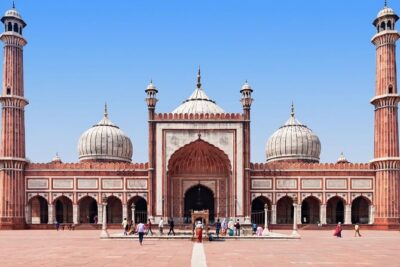
After that, you go into Old Delhi at Jama Masjid, a stop that’s all about atmosphere. This is the walled city of Shahjahanabad, with alleyways and long-running trader areas. The value here isn’t just architecture; it’s the chance to see how the city still functions around the monument.
Finally, you close day two at Raj Ghat, a memorial dedicated to Mahatma Gandhi at the Yamuna. It’s listed as admission free, and it’s set up as a quiet pause after the louder Old City energy. The tour also notes other memorials along the area, so you’ll see the broader “peace and remembrance” zone.
Agra’s big moments: Taj Mahal, Agra Fort, and Itimad-ud-Daulah
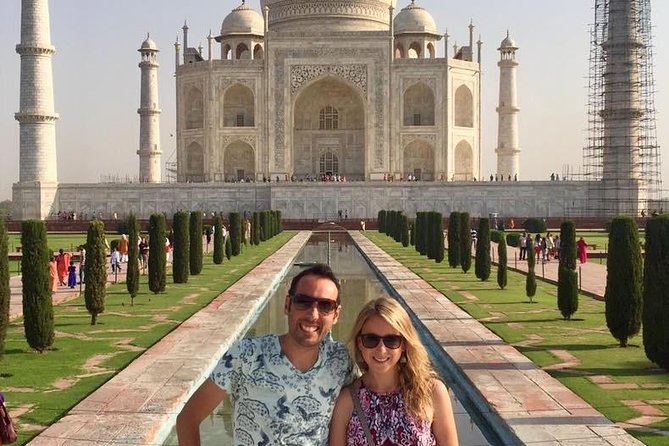
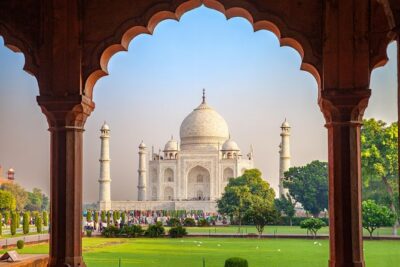
Agra day three is built around the obvious headline: Taj Mahal. It’s described as a UNESCO World Heritage site and one of the most frequented monuments in India. You’re given a longer block here (around 2 hours), which matters because Taj visuals change with light, and you’ll want time to take it in slowly rather than rushing across gates.
If Taj is the main “wow,” Agra Fort is the context. It’s a Mughal fortress made from sandstone and marble palaces wrapped into one structure. Even though Taj often steals attention, Agra Fort helps you understand how power and defense worked here.
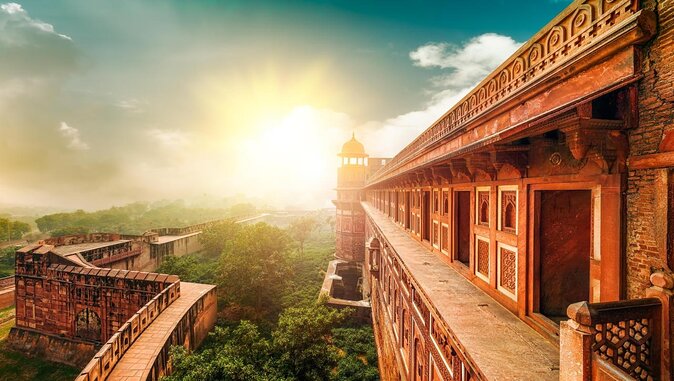
Then there’s Itimad-ud-Daulah, the so-called “Baby Taj.” The tour highlights delicate marble lattice screens and fine carvings, plus the idea that it influenced later marble tomb styles. This is a great relief stop if you want something less monumental than Taj but still highly detailed.
Same pattern as Delhi: these sights list admission ticket not included, so your budget needs to cover entrances. The time blocks (2 hours, 1 hour, 45 minutes) are also a hint: you’ll be moving but not sprinting.
Fatehpur Sikri and Jal Mahal: a day trip with two different moods
Day four starts with Fatehpur Sikri, described as an important Akbar-era town that was later abandoned and is now a major monument destination. It’s listed as admission free in the tour details, and the value is historical layout—you can see how a once-thriving city looked in its time.
The next stop, Jal Mahal, is a palace built in the middle of Man Sagar Lake. The description notes that it has five floors, with four remaining under water. In other words, this is not about museum-style facts; it’s about the visual trick of the palace-on-the-lake idea. Plan it as a short but memorable pause between bigger forts and tombs.
This day is also a reminder that the tour isn’t only about “must-see big names.” It gives you different visual experiences—fort-town scale, then reflected palace calm.
Chasing the Pink City? More Jaipur day trips
Jaipur icons in one sweep: City Palace, Jantar Mantar, Amer Fort, Hawa Mahal, Birla Mandir
Jaipur is where the route turns into a real color-and-detail marathon. You start at City Palace, described as the royal palace at the center of the planned city divided into nine blocks. The tour notes the shift from Amer to Jaipur in the 1700s, and it frames the city layout through Vastu-style architecture principles. Even with an hour, the palace setting gives you a sense of how the city was engineered around royal space.
Next is Jantar Mantar, Jaipur’s astronomical observatory. The tour calls out that it has 19 large instruments and highlights the Samrat Yantra as the largest sundial in the country. This is a rare stop where you’ll look at something practical and scientific, not just decorative—so it’s a good change of pace from palace facades.
Then you go to Amer Fort, located a little away from Jaipur city. The tour ties it to Akbar’s trusted general Maan Singh and the Amer state, with the fort now bearing the Amer name. It’s a full “fort visit” kind of stop (about an hour in the tour flow), so keep your energy for walking and viewing from different angles.
After Amer, the pace shifts again with Hawa Mahal (Palace of Wind) in the heart of the city. The tour describes the five-story structure, the red and pink sandstone with white accents, and—most importantly—the many jharokha balconies designed for ventilation. It’s a short stop, but it’s one of those landmarks that people remember because it looks like it was built for both beauty and function.
The final stop is Birla Mandir (Laxmi Narayan Temple). The tour notes it’s very famous for architecture and serene atmosphere, even if not old in the way Taj or forts are. The description also points to the Birla family’s role in commissioning similar modern temples.
Price and what it really costs you in practice
The listed price is $128 per group (up to 5). For a private car route across three cities with a professional guide, that can be solid value—especially because the tour includes tolls/parking and a fuel surcharge, plus mineral water.
But here’s the budget reality check: monument entrance fees are not included, and breakfast and lunch are not included. Since you’ll visit major-ticket sites like Taj Mahal and Red Fort (both commonly ticketed), your all-in cost can rise fast. The tour does mark a few as admission free (like Raj Ghat and Fatehpur Sikri), which helps, but don’t assume the rest are free.
So I’d treat the $128 as the “transport + guide + execution” price, then add:
- ticket budgets for each charged site,
- lunch and snacks across days,
- and a gratuity plan if you want to tip (gratuities are not included).
The upside is you’re not wasting time negotiating transport or paying separate local guides at each stop. With a private setup, you buy coordination more than just sightseeing.
Getting around with Freddy (Surendra): safety, timing, and fewer hassles
A standout theme connected to this tour is the driver. The service is run by Freddy Driver India Tour, and the name Surendra (also called Freddy) shows up in feedback as punctual, professional, and focused on safety in traffic.
This matters on the Golden Triangle because driving through Delhi and between cities can be stressful even for confident travelers. With a private car and an experienced driver, you avoid the worst kind of delays—wrong turns, unclear pickup spots, and random detours that eat your limited sightseeing hours.
There’s also a practical strength: the driver is praised for helping people avoid tourist-trap situations tied to information booths. Whether you’re arriving with a plan or making decisions on the fly, having someone who knows what to trust saves real time.
I’d still keep a realistic mindset: traffic and crowds happen. But when the driver is described as accurate in driving and attentive to comfort, the day feels easier.
Where this tour is strongest (and who should choose it)
This tour fits best if you want:
- major sights without transportation headaches,
- a guided route that hits Delhi, Agra, and Jaipur in one go,
- and a private-car setup that keeps your group together.
If you love comfort and prefer not to figure out logistics between cities, this makes a lot of sense. The itinerary is also built for first-timers: it mixes “big icons” (Taj, forts, Hawa Mahal) with a couple of calmer, detail-heavy stops (Humayun’s Tomb, Itimad-ud-Daulah, Raj Ghat).
If you’re the type who hates crowds at famous monuments, you’ll still have to deal with busy places—Taj Mahal and Old Delhi areas are simply popular. This tour can reduce friction, but it can’t erase crowds. Also, it’s a packed route. If you want lots of free time, you might feel you’re rushing.
Should you book this Delhi Agra Jaipur 4 Nights 5 Days tour?
I’d book it if you value private car convenience, want a clear plan for all three cities, and are okay budgeting extra for entrance fees and meals. The included pieces (guide, water, tolls/parking, fuel surcharge) make it easier to manage your day without constant add-on decisions.
I’d skip it if you’re traveling with a tight budget that can’t handle ticket costs at major sites, or if you want a slow pace with long breaks. Also consider your tolerance for early starts and a full schedule.
If your goal is to see the heart of the Golden Triangle efficiently—and do it with a driver like Surendra/Freddy described as safe and punctual—this is a sensible way to go.
FAQ
What is the meeting point and start time for this tour?
The meeting point is 1956 Rajpath Area, Malka Ganj, New Delhi 110011, India, and the tour starts at 6:30 am.
Is this tour private, and how many people are included?
It’s a private tour/activity, and pricing is per group (up to 5).
What is included in the price?
Included are all sightseeing with private car, a professional tour guide, mineral water, all toll tax and parking fees, and fuel surcharge.
Are monument entrance fees included?
No. The tour lists monument entrance fees as not included.
Are meals included?
No. Breakfast and lunch are not included.
Do I need a printed ticket?
No. The tour includes a mobile ticket.
What is the cancellation policy?
You can cancel for a full refund if you cancel at least 24 hours in advance of the experience’s start time.
More Tour Reviews in New Delhi
- Old & New Delhi City Tour – Half or Full Day Options Available
★ 5.0 · 4,811 reviews - Half Day Private Delhi City Tour
★ 5.0 · 4,474 reviews - Same Day Taj Mahal, Agra Fort & Baby Taj Tour from Delhi by Car
★ 5.0 · 4,304 reviews - Taj Mahal Day Tour from Delhi by Superfast Train – TOP RATED TOUR
★ 5.0 · 4,166 reviews - Delhi: Old and New Delhi Private Full or Half-Day Tour
★ 4.9 · 3,776 reviews
Onward to Jaipur: More Day Trips
- 3-Days Private Golden Triangle Tour: Delhi, Agra & Jaipur by Car
★ 5.0 · 1,107 reviews - 3-Days Private Golden Triangle Tour: Delhi, Agra & Jaipur by Car
★ 5.0 · 1,098 reviews - 3-Day Delhi, Agra and Jaipur Private Tour – India Golden Triangle
★ 5.0 · 812 reviews - Four-Day Private Luxury Golden Triangle Tour to Agra and Jaipur From New Delhi
★ 5.0 · 807 reviews - Jaipur Day Trip from Delhi by Car or Train – All Inclusive
★ 5.0 · 663 reviews
More Agra Day Trips out of Delhi
- Same Day Taj Mahal, Agra Fort & Baby Taj Tour from Delhi by Car
★ 5.0 · 4,304 reviews - Full Day Taj Mahal, Agra Fort & Baby Taj Tour from Delhi by Car
★ 5.0 · 3,647 reviews - From Delhi: Taj Mahal & Agra Private Day Trip with Transfers
★ 4.9 · 3,181 reviews - From Delhi: Taj Mahal and Agra Fort Private Sunrise Tour
★ 4.9 · 2,270 reviews - Sunrise Taj Mahal, Agra Fort & Baby Taj Tour from Delhi by Car
★ 5.0 · 2,243 reviews
Just added: more New Delhi reviews to browse
- 4 days Golden Triangle Tour★ 5.0 · 3 reviews
- Discover Old & New Delhi: Private Tour with Street Food★ 5.0 · 3 reviews
- Taj Mahal Tour From Delhi By Private Car★ 4.5 · 3 reviews
- Golden Triangle Tour 5 Days★ 5.0 · 3 reviews
- Taj Mahal: Express Entry Ticket For Sunset Tour with guide★ 5.0 · 3 reviews
- Agra Taj Mahal Sunrise & Sunset Tour from Delhi★ 5.0 · 3 reviews
Agra Day Trips from Delhi, compared.
 ★ 5.0Same Day Taj Mahal, Agra Fort & Baby Taj Tour from Delhi by CarFrom $624,304 reviews
 ★ 5.0Full Day Taj Mahal, Agra Fort & Baby Taj Tour from Delhi by CarFrom $623,647 reviews
 ★ 4.9From Delhi: Taj Mahal & Agra Private Day Trip with TransfersFrom $43,181 reviews
 ★ 4.9From Delhi: Taj Mahal and Agra Fort Private Sunrise TourFrom $592,270 reviews
 ★ 5.0Sunrise Taj Mahal, Agra Fort & Baby Taj Tour from Delhi by CarFrom $622,243 reviews
 ★ 5.0Taj Mahal and Agra Private Car Tour from Delhi with 5* LunchFrom $331,633 reviews
 ★ 4.9From Delhi: Private Taj Mahal and Agra Tour by Express TrainFrom $751,605 reviews
 ★ 5.0Taj Mahal, Agra Fort, Baby Taj Tour from Delhi by Superfast TrainFrom $751,494 reviews