

Reviewed · TAJ MAHAL TOURS FROM DELHI
Delhi & Taj Mahal Private Day Tour with Lunch and Tickets
Two cities. One smooth plan. You’re set up for big sights without the usual Delhi-to-Agra chaos. The appeal here is simple: you get a private driver handle the logistics while you focus on monuments like the Red Fort and the Taj Mahal.
What I like most is the pacing across two full days—so you’re not sprinting through history in a blur—and the fact that your guide/driver names show up in feedback for being punctual and organized (people call out guides like Akil, Rahul, Shiraz, and drivers like Haroon, Vicky, Naresh, and Rajan). One thing to keep in mind: entrance fees are listed both ways in the provided details (some sites show admission included, but there’s also a note that attraction fees aren’t included), so it’s smart to confirm what’s covered for your dates.
In This Review
- Key Things I’d Pay Attention To
- Private Driver to the Taj: The Value of This Two-Day Combo
- Day 1 in Delhi: How the Stops Build a Mughal-and-War-Memorial Story
- Red Fort: The Shah Jahan Story You Can Actually Feel
- Raj Ghat and India Gate: Where Delhi’s Modern Memory Lives
- Humayun’s Tomb: Mughal Gardens and the Big Architectural First Step
- Rashtrapati Bhavan and Rajpath: The Official End of a Grand Avenue
- Lotus Temple: Free Entry, Open Door Philosophy, and Quiet Architecture
- Qutub Minar: UNESCO Scale With Specific Numbers
- Day 2 in Agra: Taj Mahal Time Use That Actually Works
- Agra Fort: The Mughal Power Center That Complements the Taj
- Transportation, Tickets, and Lunches: What Should Be Easy
- Pickup Point and Private Setup: Where You Actually Meet
- The Human Part: Named Drivers and Guides Make This Feel Like a Real Service
- Price Check: When $250 Per Group Makes Sense
- Who This Tour Fits Best (and Who Might Want Another Plan)
- Should You Book This Delhi and Taj Mahal Combo Tour?
- FAQ
- Is this tour private?
- How many people are in a group?
- What time does the tour start?
- Where does the tour meet?
- Is hotel pickup included?
- What transport do you use?
- Are attraction tickets included?
- Are lunches included?
- How long is the tour?
- What is the cancellation policy?
- What happens if weather is poor?
Key Things I’d Pay Attention To
- Private driver + AC vehicle: you’re not sharing transfers with strangers.
- Two lunches included: less hunting for food between major stops.
- Start time at 6:30 am: early energy helps with a long day.
- Ticketed highlights: major monuments are marked with admission included, while others are free.
- Frequent praised staff: people specifically thank named guides and drivers for timing and explanations.
- Crowd reality at the Taj: your time slot matters, and you’ll want a plan for photos.
Private Driver to the Taj: The Value of This Two-Day Combo
This is the kind of trip that works when you want the headline sights but hate the admin work. Two days lets you spread out the must-sees in Delhi and Agra instead of turning everything into a one-day endurance test. And because it’s private, your driver can shape the flow around your pace, not around a bus schedule.
Price-wise, it’s listed at $250 per group (up to 2). That can feel steep until you price out the combo of (1) private, air-conditioned transport for two days, (2) two included lunches, and (3) major monument entry where the plan marks admission ticket included. If you’re splitting it with a partner or friend, the math improves fast.
The “gotcha” is the fees language. Some stops explicitly note admission ticket included, while the “not included” section says attraction fees aren’t included. So treat that as a confirmation item: message the provider before you go and ask, clearly, whether the entry tickets for the paid sites are covered for your chosen date.
More ways to reach the Taj, weighed side by side




Day 1 in Delhi: How the Stops Build a Mughal-and-War-Memorial Story
Day 1 is built like a route through layers of Delhi. You start in old Delhi with the Red Fort, then shift into memorial spaces and Mughal architecture, then end with landmarks that cover India’s modern story and religious/cultural variety.
The tour runs early, with a 6:30 am start time listed. That matters because Delhi traffic and timing around large attractions can change how much time you truly get inside each place. Starting early also makes the day feel more relaxed, even when your schedule is packed.
Also notice the mix of short stops and longer ones. You’ll get time for the big sites, but you’re not stuck for hours in every location. That’s a good fit if you like seeing a place fully without turning the day into a marathon.
Red Fort: The Shah Jahan Story You Can Actually Feel

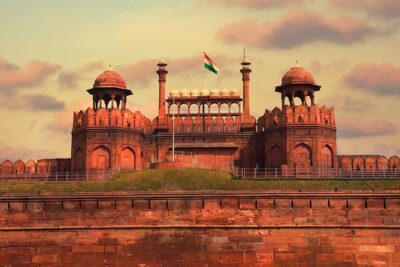
The Red Fort is the headline of old Delhi, and the plan gives it 2 hours. What makes this stop more than a pretty fortress is the specific Mughal backstory you’re given: in 1638, Emperor Shah Jahan moved his capital from Agra to a newly constructed city in Delhi called Shahjahanabad, and the Red Fort’s palace foundations were laid alongside that move.
That context helps you look up instead of just walking through. You’re not viewing a random wall—you’re viewing a capital project, a political statement, and a centerpiece of a city that was built to be the heart of the empire.
Practical note: the fort is a major attraction, so your best use of time is to slow down for the first stretch. Once you get your bearings, the rest of your hour and a half to two hours becomes more meaningful.
Raj Ghat and India Gate: Where Delhi’s Modern Memory Lives
After the fort, the plan shifts to Raj Ghat, with 30 minutes. Raj Ghat is the memorial to Mahatma Gandhi and it sits not far from the Yamuna. The background is especially useful: the area was originally named after a historic ghat, and it was also linked to the old city’s Raj Ghat Gate.
The most powerful detail in the description is the date: Gandhi’s last rites took place here on January 31, 1948, a day after his death. Even if you already know Gandhi’s story, having the exact “what happened when” makes the visit feel more grounded.
Next is India Gate—a war memorial on Rajpath. The plan gives 30 minutes here, which is usually enough to walk the space, read what you can, and get the overall mood. It’s one of those stops where you can do it quickly, but you’ll get more out of it if you take a few minutes to notice what the memorial is trying to communicate.
Humayun’s Tomb: Mughal Gardens and the Big Architectural First Step
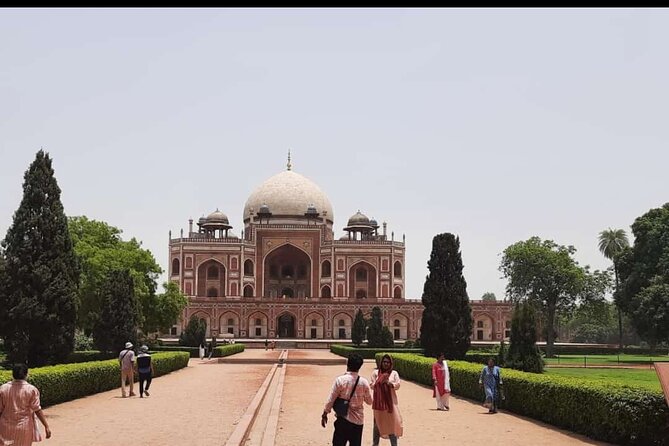
Humayun’s Tomb gets 1 hour, and it’s a strong choice for anyone who likes Mughal architecture. The key idea is right in the description: this is presented as the first of the grand dynastic mausoleums that later became closely associated with Mughal architecture—style that reaches its zenith about 80 years later at the Taj Mahal.
You’re also told it’s not a solo tomb. The complex covers 27.04 hectares and includes other 16th-century Mughal garden-tombs like Nila Gumbad, Isa Khan, Bu Halima, Afsarwala, and Barber’s Tomb, plus an area connected to the craftsmen who built it (Arab Serai).
And the timing: Humayun’s Tomb was built in the 1560s, under the patronage of Humayun’s son, described here as the great Emperor Akbar. With that context, the visit becomes less about checking a box and more about understanding why this place matters structurally.
More entry tickets sorted ahead of time


Rashtrapati Bhavan and Rajpath: The Official End of a Grand Avenue

The plan includes Rashtrapati Bhavan, the official home of the President of India, located at the western end of Rajpath. You don’t get a long “inside visit” moment described here—this is more about seeing it as part of the Rajpath axis.
Why it’s worth including: Rajpath is a visual statement about how modern India organizes its public space, and tying it into your Delhi day makes the city feel like more than just monuments. It’s a perspective shift from Mughal-era storytelling to a different kind of national identity.
Lotus Temple: Free Entry, Open Door Philosophy, and Quiet Architecture

Then you move to the Lotus Temple, with admission free listed. The temple is a Bahá’í House of Worship, dedicated in December 1986, and recognized for its flowerlike shape.
What I appreciate about this stop is the practical message in the description: it’s open to all, regardless of religion or qualification. That makes it a refresh break after the heavier historical sites. Even if you’re not religious, it’s a calm pause that doesn’t feel like a detour.
Because the plan flags free admission, it’s also a budget-friendly inclusion—especially when other major monuments usually cost money to enter.
Qutub Minar: UNESCO Scale With Specific Numbers
The day ends with Qutub Minar (Qutb Minar), marked as a UNESCO World Heritage Site. The plan gives 1 hour, which is a comfortable amount of time for getting the overview and then slowing down for details.
The description gives very concrete scale: Qutub Minar is a 73-metre tapering tower with five storeys, a 14.3 metres base diameter, reducing to 2.7 metres at the top. Those numbers matter. They help you “read” the monument instead of just staring at a tall object.
If you like landmarks with measurable impact—height, shape, scale—this is one of the easiest places in Delhi to appreciate quickly and fully.
Day 2 in Agra: Taj Mahal Time Use That Actually Works
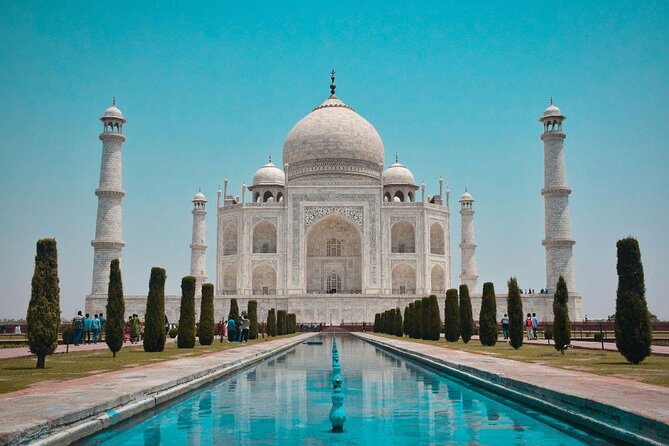
Day 2 is all about the big one: the Taj Mahal, listed with 2 hours. The description frames it clearly: an ivory-white marble mausoleum on the south bank of the Yamuna, commissioned in 1632 by Shah Jahan to house the tomb of his favourite wife, Mumtaz Mahal. It also houses Shah Jahan’s own tomb.
That two-hour window is the make-or-break piece. If you spend the time only taking photos, you can miss the way the place changes as light shifts across the day. If you pace it—walk, look, take a few key photos, then step back to absorb the overall proportions—you’ll get more out of those 120 minutes.
A useful real-world tip pulled from guide experience: when the crowds feel intense, one guide’s approach (noted with Shiraz) was to redirect to a photography option known as the Princess Diana Bench. It’s a reminder that your guide can help you keep momentum without feeling trapped in a crush.
Agra Fort: The Mughal Power Center That Complements the Taj
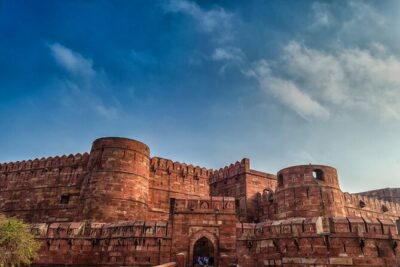
After the Taj, you head to Agra Fort, with 1 hour. The description ties it directly to the Mughal shift: it was the main residence of the Mughal emperors until 1638, when the capital shifted from Agra to Delhi. It also notes that before British capture, the last Indian rulers to occupy it were the Marathas.
Why this pairs well with the Taj Mahal: the Taj is a love story made of marble. Agra Fort is power made of stone. Together, they show you different sides of the same era—emotion versus administration, monument versus control.
With only one hour, your best move is to choose a simple goal: walk enough to understand the fort’s role in the Mughal timeline, then spend your last few minutes on any vantage points that give you perspective back toward the city mood.
Transportation, Tickets, and Lunches: What Should Be Easy
This is set up with an air-conditioned vehicle and mobile ticket support is listed. You also get two lunches included across the two days. That’s more valuable than it sounds. When you’re moving between major sites, lunch plans can become a time thief. Having it covered keeps your schedule more predictable.
Just double-check the ticket confusion. The plan includes admission ticket language for many monuments (Red Fort, Humayun’s Tomb, India Gate, Qutub Minar, Taj Mahal, and Agra Fort), and free admission is mentioned for Raj Ghat and Lotus Temple. But it also says attraction fees aren’t included. So confirm which items are definitely paid in your package. It’s a five-minute message that can save you a lot of stress.
Pickup Point and Private Setup: Where You Actually Meet
Your meeting point is listed as Metro Station Mandi House in New Delhi, with the activity ending back at the same meeting point. At the same time, the overview says hotel pickup and drop-off in Delhi is offered.
So here’s the practical way to think about it: you’ll want clarity on whether your day starts at Mandi House or at your hotel lobby. Either can work. The key is that you shouldn’t arrive hungry and confused at the wrong place. Send a quick note after booking and get a clear instruction for where the driver meets you.
The Human Part: Named Drivers and Guides Make This Feel Like a Real Service
The strongest praise pattern in the details you were given isn’t the monuments—it’s the people. Drivers and guides show up by name with consistent praise for timing, friendliness, and explaining what you’re seeing.
For example, guides named Akil and Rahul are described as helpful and welcoming, especially at the Taj Mahal stage. Guides like Shiraz are also connected to memorable photo moments. On the driver side, names like Haroon, Vicky, Rajan, Naresh, and Rajah come up with notes about arriving on time and offering a safe, comfortable ride.
That matters because Delhi and Agra aren’t just about looking. They’re about navigating. When a driver is punctual and a guide can explain the meaning behind the place, you spend less time wondering what matters and more time enjoying it.
One other small but real benefit mentioned: guides can suggest practical extras like good food spots and shopping places for handicrafts (example: Imperial Spices and handicraft shopping were referenced). That’s optional, but it can make downtime more productive if you want it.
Price Check: When $250 Per Group Makes Sense
At $250 per group up to 2, value comes from bundling. You’re not just paying for sight-seeing. You’re paying for two days of transport, included lunches, and major monument tickets depending on confirmation.
This is especially worth it if:
- You hate the hassle of coordinating Delhi sights and an Agra day trip separately.
- You want privacy rather than sharing a crowded group schedule.
- You’re pairing Taj Mahal with Delhi’s major monuments, not just doing one city.
It’s less ideal if you’re the type who loves researching, booking your own tickets, and building your own route. In that case, you may be able to spend less. But if your priority is reducing friction, this package-style setup usually hits the sweet spot.
Who This Tour Fits Best (and Who Might Want Another Plan)
This fits best if you:
- Want a private structure with comfortable transport.
- Like history and architecture, especially Mughal-era sites.
- Prefer a guided experience that can help with timing and photo strategy.
You might consider another option if you:
- Are comfortable self-planning every ticket and transfer between Delhi and Agra.
- Only want one city’s main sights and don’t care about the full two-day spread.
Should You Book This Delhi and Taj Mahal Combo Tour?
If you want the Taj Mahal plus a serious Delhi sampler, and you’d rather spend your energy looking than organizing, I’d say this is a solid choice. The biggest upsides are the private comfort (AC vehicle), the two full days, and the presence of named staff praised for punctuality and help on the ground.
Just do one quick sanity check before you commit: confirm exactly which monument entry fees are included for your date, since the provided details show both admission included language and a note that attraction fees aren’t included. Once that’s clear, you’ll be free to focus on the real star of the show—the Taj Mahal—and the supporting cast in Delhi that makes the whole trip feel like one story instead of two random stops.
FAQ
Is this tour private?
Yes. It’s listed as a private tour/activity, meaning only your group participates.
How many people are in a group?
The price is listed per group for up to 2 people.
What time does the tour start?
The start time is listed as 6:30 am.
Where does the tour meet?
The meeting point is listed as Metro Station Mandi House, Mandi House, New Delhi, Delhi 110001, India.
Is hotel pickup included?
Hotel pickup and drop-off at your Delhi hotel is mentioned in the overview, but the meeting point is also listed at Mandi House metro. Confirm how pickup works for your specific booking.
What transport do you use?
An air-conditioned vehicle is included, and a private driver is part of the setup.
Are attraction tickets included?
The details specify admission ticket included for several sites (like Red Fort, Humayun’s Tomb, India Gate, Qutub Minar, Taj Mahal, and Agra Fort) and free admission for others (Raj Ghat and Lotus Temple). There’s also a note that attraction fees are not included, so confirm what’s covered for your dates.
Are lunches included?
Yes. Two lunches are included.
How long is the tour?
It’s listed as approximately 2 days.
What is the cancellation policy?
Free cancellation is available up to 24 hours in advance for a full refund. Changes within 24 hours aren’t accepted.
What happens if weather is poor?
The experience requires good weather. If it’s canceled due to poor weather, you’ll be offered a different date or a full refund.
More Tours in New Delhi
- Old & New Delhi City Tour – Half or Full Day Options Available
★ 5.0 · 4,811 reviews - Half Day Private Delhi City Tour
★ 5.0 · 4,474 reviews - Same Day Taj Mahal, Agra Fort & Baby Taj Tour from Delhi by Car
★ 5.0 · 4,304 reviews - Taj Mahal Day Tour from Delhi by Superfast Train – TOP RATED TOUR
★ 5.0 · 4,166 reviews - Delhi: Old and New Delhi Private Full or Half-Day Tour
★ 4.9 · 3,776 reviews
More Tour Reviews in New Delhi
- Old & New Delhi City Tour – Half or Full Day Options Available
★ 5.0 · 4,811 reviews - Half Day Private Delhi City Tour
★ 5.0 · 4,474 reviews - Same Day Taj Mahal, Agra Fort & Baby Taj Tour from Delhi by Car
★ 5.0 · 4,304 reviews - Taj Mahal Day Tour from Delhi by Superfast Train – TOP RATED TOUR
★ 5.0 · 4,166 reviews - Delhi: Old and New Delhi Private Full or Half-Day Tour
★ 4.9 · 3,776 reviews
The Taj, Reached a Few More Ways
- Same Day Taj Mahal, Agra Fort & Baby Taj Tour from Delhi by Car
★ 5.0 · 4,304 reviews - Taj Mahal Day Tour from Delhi by Superfast Train – TOP RATED TOUR
★ 5.0 · 4,166 reviews - Full Day Taj Mahal, Agra Fort & Baby Taj Tour from Delhi by Car
★ 5.0 · 3,647 reviews - From Delhi: Taj Mahal & Agra Private Day Trip with Transfers
★ 4.9 · 3,181 reviews - Taj Mahal Tour from Delhi by Express Train (Viator Award Winner)
★ 5.0 · 2,849 reviews
Just added: more New Delhi reviews to browse
- 4 days Golden Triangle Tour★ 5.0 · 3 reviews
- Discover Old & New Delhi: Private Tour with Street Food★ 5.0 · 3 reviews
- Taj Mahal Tour From Delhi By Private Car★ 4.5 · 3 reviews
- Golden Triangle Tour 5 Days★ 5.0 · 3 reviews
- Taj Mahal: Express Entry Ticket For Sunset Tour with guide★ 5.0 · 3 reviews
- Agra Taj Mahal Sunrise & Sunset Tour from Delhi★ 5.0 · 3 reviews
Taj Mahal Tours from Delhi, compared.
 ★ 5.0Same Day Taj Mahal, Agra Fort & Baby Taj Tour from Delhi by CarFrom $624,304 reviews
 ★ 5.0Taj Mahal Day Tour from Delhi by Superfast Train – TOP RATED TOURFrom $1004,166 reviews
 ★ 5.0Full Day Taj Mahal, Agra Fort & Baby Taj Tour from Delhi by CarFrom $623,647 reviews
 ★ 4.9From Delhi: Taj Mahal & Agra Private Day Trip with TransfersFrom $43,181 reviews
 ★ 5.0Taj Mahal Tour from Delhi by Express Train (Viator Award Winner)From $752,849 reviews
 ★ 5.0All Inclusive Private Taj Mahal Luxury Tour from Delhi by CarFrom $622,564 reviews
 ★ 4.9Same Day Taj Mahal, Fort & Baby Taj Tour from Delhi by CarFrom $502,534 reviews
 ★ 4.9From Delhi: Taj Mahal and Agra Fort Private Sunrise TourFrom $592,270 reviews