
Reviewed · TOURS
Delhi: Textile Trail Tour with Artisan Interaction
Threads are the fastest way to learn Delhi. This tour lines up textile workshops and fabric markets across Old and central Delhi, so you see how weaving, block printing, embroidery, and dyeing connect to everyday shopping. If you like craft, design, or just understanding where things come from, it’s a very hands-on way to spend a half day to a full day.
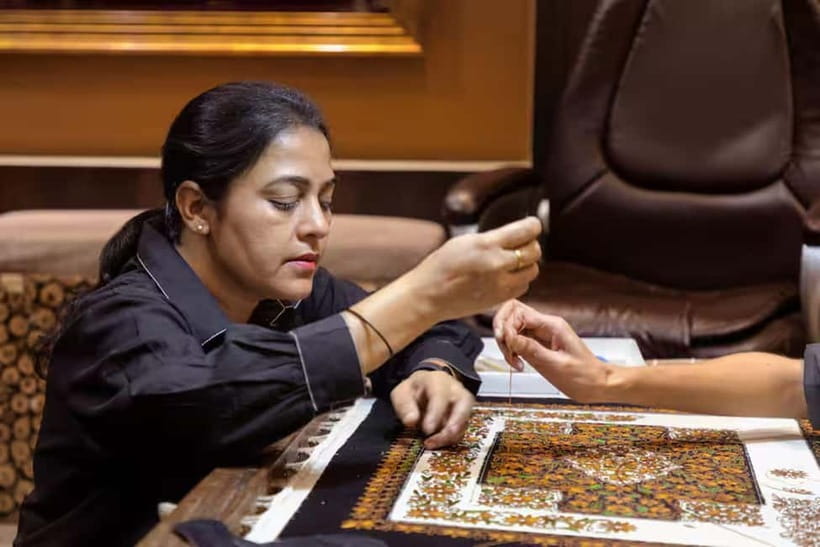
I especially like the live artisan interaction: you’ll watch techniques such as rug and carpet weaving, Pashmina scarf making, block printing, handloom weaving, zari embroidery, and natural dyeing. I also like that you get real market time to spot the difference between fabrics, trims, and finished goods, plus the chance to add custom tailoring with hotel delivery.
One thing to plan around: you’re walking through crowded market areas and dealing with Delhi traffic and weather. The tour is not built for wheelchair users or mobility impairments, and you’ll want comfortable shoes and a camera (but no flash).
In This Review
- Key moments you’ll care about most
- How Delhi’s textile trail works (and why it’s worth your time)
- Pickup points and getting around without losing your mind
- Chandni Chowk: the Old Delhi fabric lesson begins
- Shankar Market: fabrics and accessories with quicker momentum
- Dilli Haat: where craft meets shopping reality
- INA Market: a second shopping window for matching and comparison
- Shahpur Jat and Hauz Khas: where commission clothing becomes practical
- The artisan interaction: what you’re actually learning
- Shopping smart: ethical buying without losing the fun
- What the cycle rickshaw adds (and why it’s included)
- Price and value: is $53 a fair deal?
- Who should book this textile trail tour
- Should you book it? My quick decision guide
- FAQ
- How long is the Delhi Textile Trail Tour?
- Where can you be picked up and dropped off?
- What’s included in the price?
- Are meals included?
- Can I take photos, and is flash allowed?
- Is tailoring/custom clothing available, and how fast is it?
- Is the tour wheelchair-friendly or suitable for mobility impairments?
Key moments you’ll care about most
- Old Delhi market focus with guided help when streets get chaotic
- Artisan demos you can ask questions about, from dyeing to zari embroidery
- A serious fabric-and-trim shopping route across several well-known markets
- Optional tailoring for business suits or formal wear, with hotel delivery in about 4 to 6 hours
- Cycle rickshaw ride included for getting around Old Delhi market areas
How Delhi’s textile trail works (and why it’s worth your time)
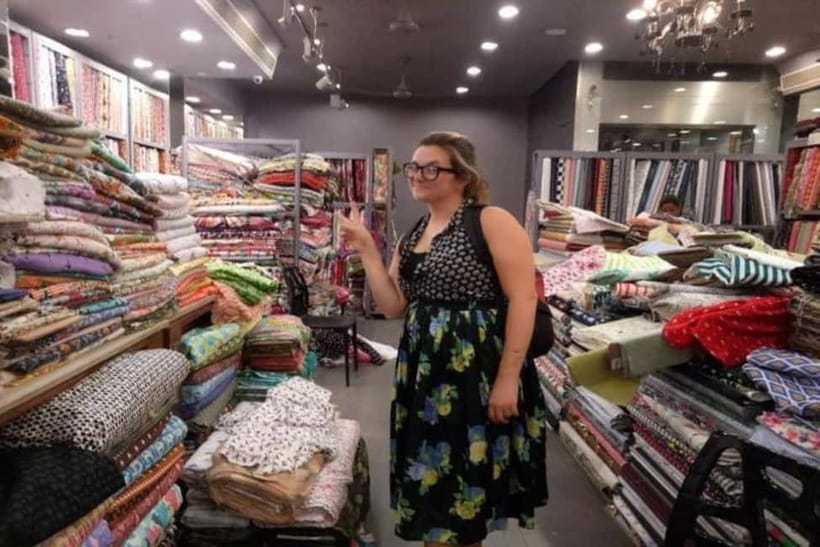
Delhi’s textile story isn’t just about pretty scarves and carpets. It’s also about labor, technology, trade routes, and how skills survive when tastes change. This tour is built around that idea: you move from craft practice to shopping streets, then back to craft again, so the items you see in shops make sense in your head.
The length is flexible, listed at 4 to 8 hours, and that matters. If you’re there mostly for browsing and learning, you’ll likely enjoy the shorter end. If you want time to compare fabrics closely and possibly commission clothing, you’ll want the longer end.
A private group also helps. Market shopping can be slow if you’re with a crowd, because you spend more time waiting than looking. Here, you can keep up with the pace and ask questions without feeling rushed.
Still deciding? Here is how it stacks up against other Delhi picks we have written up.



Pickup points and getting around without losing your mind
You can be picked up from several places: Aerocity, Delhi, Faridabad, Noida, and Gurugram, with drop-off in the same set of cities. Pickup is included from any hotel in Delhi, Gurugram, Noida, and Faridabad, and you’re asked to wait in the lobby about 10 minutes before the scheduled time.
Transport is part of the value. You’re using private air-conditioned transport, which is a real relief when weather swings from hot to monsoon rain, or when traffic slows you down. You’ll still do walking—especially in Old Delhi markets—but you’re not trying to figure out local directions while juggling crowds.
In one booking experience, guide RK was particularly good at keeping the group close in a very busy Old Delhi market area, so people didn’t get separated by traffic and narrow lanes. That’s the kind of practical advantage you only notice once you’re there.
Chandni Chowk: the Old Delhi fabric lesson begins
Chandni Chowk is your first major market stop, with about 2 hours set aside. This is where the tour’s “why” clicks. You’ll see how textiles function as everyday items—clothing, trims, and accessories—rather than just museum pieces.
What makes Chandni Chowk special on this route is that you’re not just shopping blind. Your guide keeps you oriented in a place where it’s easy to lose your bearings. One helpful detail: some people also want to see spice-related rows while they’re in the area, and guides can steer you toward relevant stalls.
You’ll likely spot a mix of open-air or market-style selling and small shops with concentrated inventory. Expect to compare cloth types and workmanship: you’re looking for differences in weave, finish, and how trims and embroidery are applied.
The potential drawback here is obvious: it’s busy, and the streets can be tight. If you hate crowds, try to treat this as a “slow and focused” browsing session rather than a sweep-and-grab shopping spree.
Shankar Market: fabrics and accessories with quicker momentum
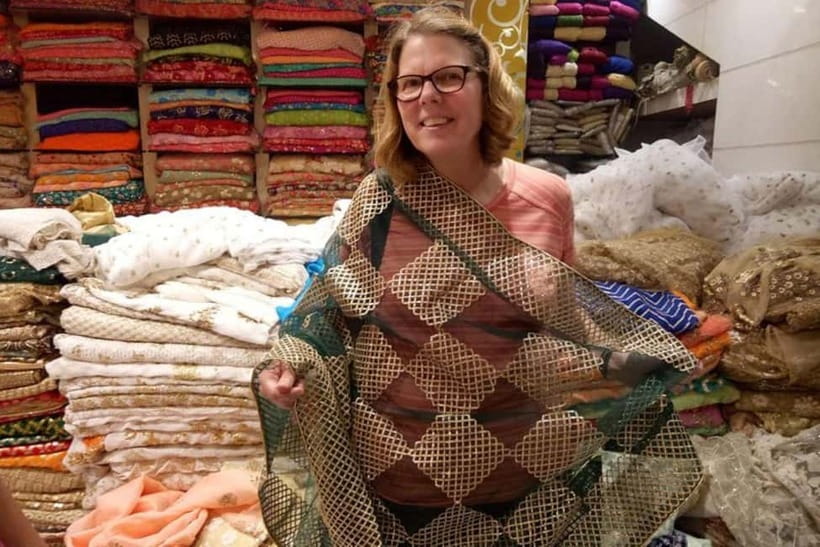
After Chandni Chowk, you move to Shankar Market for about 1 hour. This portion is shorter by design, and it works if you already know what you’re hunting for—or if you want to collect ideas before committing money.
In markets like this, the win is in small details. You’ll be looking at raw fabrics and finished accessories, plus things like trims and embroidered items. It’s a good place to check how materials look under different lighting and to learn how similar-looking fabrics can feel very different.
This stop is also a good moment to ask practical questions: what’s suited for hot weather, what’s better for drape, and what tends to wear well.
Dilli Haat: where craft meets shopping reality
Dilli Haat gets about 2 hours. This is the part of the day where you can slow down and look at crafts and finished products in a more structured market setting.
Here, you’ll likely see handmade items tied to traditional techniques. That’s helpful because you can take what you learn from artisan demos—like block printing or embroidery—and then connect it to what you see in shops.
It’s also one of the better places to pick up a souvenir that feels linked to technique. A printed or embroidered item isn’t just decorative; it’s a record of how someone’s hands work.
The watch-out: you can still spend more than you meant to. Keep your goals clear. If you want fabric, focus on fabric. If you want a wearable item, set a budget before you fall in love with the first stall.
INA Market: a second shopping window for matching and comparison

INA Market is on the list for about 2 hours. Think of it as your “compare and confirm” segment. By this point, you’ve already seen enough textiles to tell the difference between cheap look-alikes and items with real craft work behind them.
This is also where it helps to keep your notes in your head. For example, you might remember a specific fabric type you liked earlier—linen, silk, cotton, denim, velvet, crepe, georgette, wool—and compare it against what’s available now.
If tailoring is on your plan, this market time can help you bring ideas to a tailor later. You’re better prepared when you can point to fabrics, not just describe what you want.
Shahpur Jat and Hauz Khas: where commission clothing becomes practical
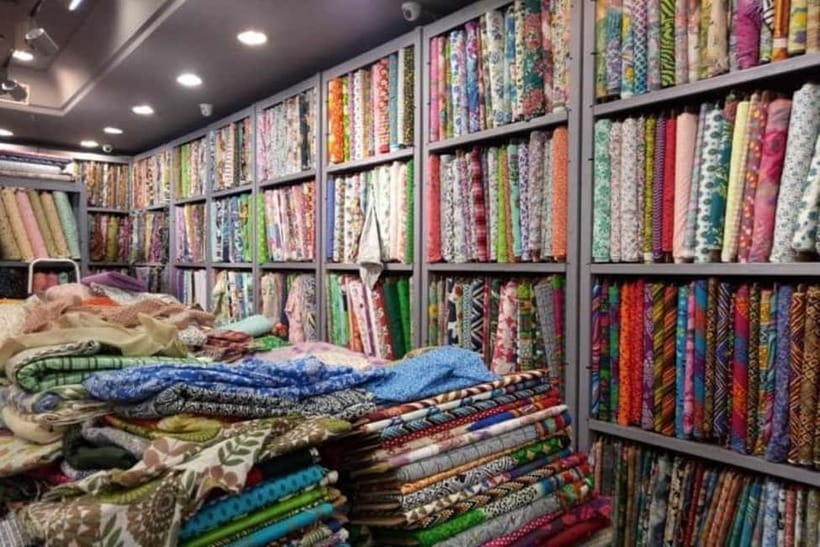
Shahpur Jat gets about 2 hours, and Hauz Khas gets about 1 hour. Together, they’re a strong pairing for anyone who wants to go beyond browsing.
The key attraction here is the tour’s customization option. You can get stitching / tailoring of men’s business suits and women’s formal wear delivered to your hotel within 4 to 6 hours. That time window is the reason this tour can work for people who want something ready fast—sometimes even the next day, depending on your schedule and the tailor’s workflow.
Even if you don’t plan to buy a full outfit, I’d treat this section as your “learn and measure” time. You’ll see what kinds of tailoring jobs are common, and you’ll understand how quickly Delhi tailors can turn around formalwear if you’re organized.
Hauz Khas gives you one more short look at craft-related shopping and style choices without taking over your whole day.
The artisan interaction: what you’re actually learning
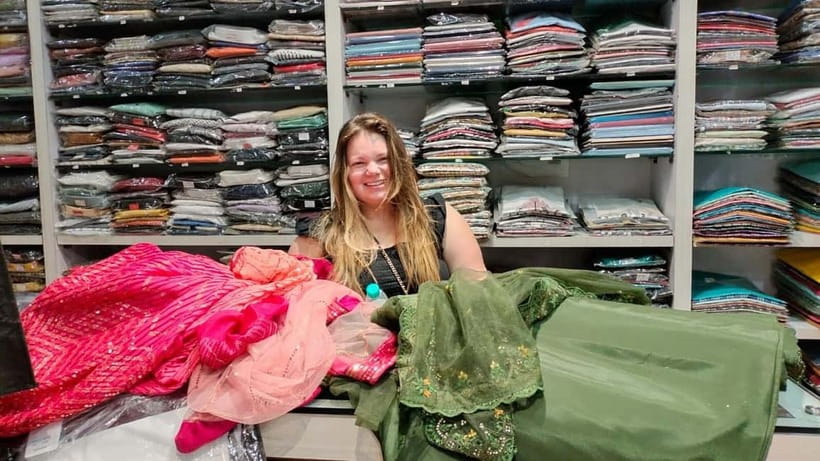
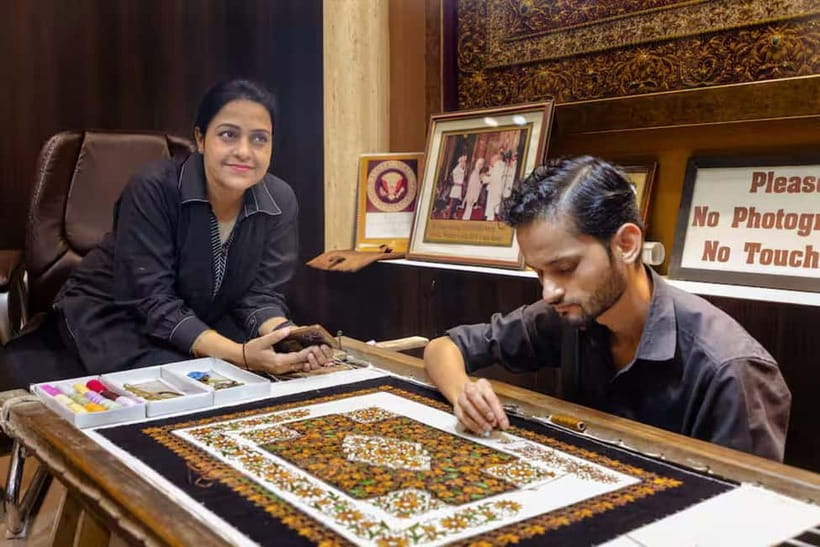
The tour promises more than market walking. You’ll visit family-run workshops, heritage craft centers, design collectives, and places that support artisan work—often described as NGO-supported craft centers, boutique studios, and artisan cooperatives.
What matters is that you’re not only looking at finished items. You’re watching the process step by step, including parts like spinning and dyeing, printing, stitching, and finishing.
Here’s what you’ll likely connect to in the real world as you go:
- Weaving and carpeting: seeing how rug and carpet weaving begins is a huge eye-opener compared to just shopping for a final product.
- Pashmina scarf making: you’ll understand why “soft” can mean different things, and how pashmina production differs from other scarf fibers.
- Block printing: you’ll see how patterns are formed using carved blocks, which makes prints feel intentional rather than random.
- Handloom weaving: it helps you notice variations that mass production typically smooths out.
- Zari embroidery: this is where you learn how metallic thread work creates detail and weight.
- Natural dyeing: you’ll pick up an understanding of why colors can look different from one batch to another.
If you get a guide like Shehla, the experience can feel extra smooth. In one case, Shehla was described as friendly and knowledgeable, and her colleague Sahil shared extra context about landmarks and Indian history while keeping things relevant to what you were seeing. That kind of layered explanation turns shopping into learning.
Shopping smart: ethical buying without losing the fun
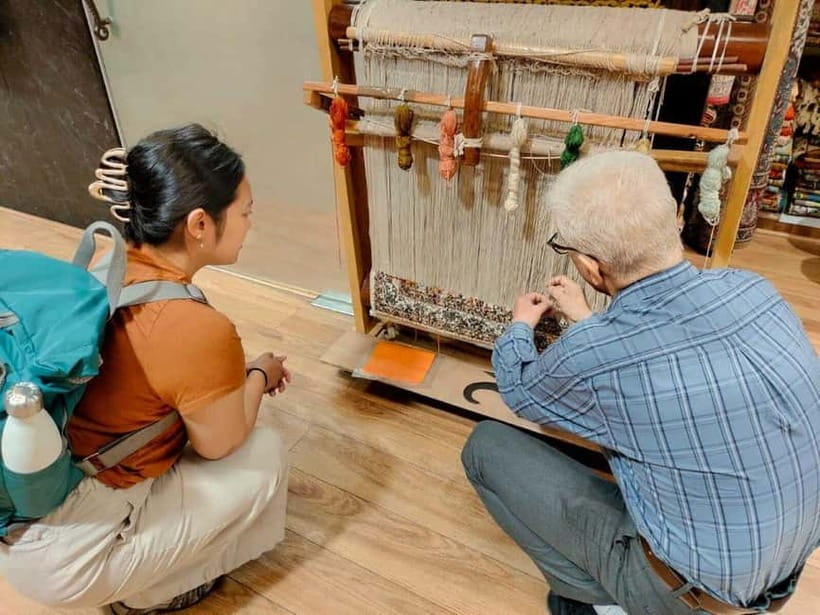
This tour encourages shopping directly from makers and supports fair-trade style approaches in craft centers. But you still need to shop like a wise traveler, not like a dreamer with a credit card.
A few practical rules that help:
- Decide what you want before you walk in. Fabric, a finished item, or tailoring? Pick one first.
- Compare quality in person. Look at stitching, finishing edges, and how designs repeat or vary.
- Negotiate in a friendly way if you’re buying. One booking experience specifically reminded to negotiate, especially in market situations where pricing is flexible.
- Consider timing if you’re ordering tailoring. The tour’s tailoring delivery window is 4 to 6 hours, so ask what’s realistic for your exact request.
Also remember: personal shopping expenses aren’t included. Your guide can help you shop, but your budget is your responsibility.
What the cycle rickshaw adds (and why it’s included)
Old Delhi market navigation can be slow and chaotic. That’s where the included tuk tuk (cycle rickshaw) ride cost comes in. It’s not just a fun perk; it can save time and reduce walking fatigue in the tight-lane sections.
If you’re hoping to cover a lot of ground in a limited time window, that ride is part of why this tour feels efficient rather than exhausting.
Price and value: is $53 a fair deal?
At $53 per person, this tour is positioned as an affordable way to get guided market time, artisan interactions, private transport, and a cultural education component.
Here’s what you’re getting for the money, based on the tour’s included items:
- English guided textile trail
- Artisan interactions
- Visits to multiple textile markets
- Hotel/airport pickup and drop-off within the listed cities
- Private transportation to move between stops
- Mineral water
- Included cycle-rickshaw ride cost for Old Delhi market areas
The biggest “value driver” is the combination of markets plus real craft demos. A lot of tours either do craft or do shopping. This one tries to connect both, and it gives you the guide brain so you don’t waste time googling what you’re looking at.
The main cost you’ll add on top is optional: meals (not included) and personal shopping. If you buy fabric or commissioned clothing, your total can climb fast.
Who should book this textile trail tour
Book it if you want any of these:
- You like craft and want to see processes like block printing and weaving, not just finished products.
- You want help navigating markets like Chandni Chowk without getting overwhelmed.
- You’re interested in materials—raw fabrics, trims, embroidery details—and you like comparing quality.
- You want the chance to commission formalwear with hotel delivery in about 4 to 6 hours.
Be cautious if:
- You use a wheelchair or have mobility impairment. The tour explicitly says it’s not suitable for mobility impairments or wheelchair users.
- You dislike walking through crowded market areas. Even with transport, you’ll spend time on your feet.
One note from a real experience: RK was described as hiring a pedal cab so someone with balance issues could still shop narrow streets. That doesn’t change the tour’s general suitability rules, but it does suggest that a good guide can sometimes reduce strain in practical ways. If this affects you, contact the operator and ask what adjustments are possible for your needs.
Should you book it? My quick decision guide
If your goal is to understand Delhi textiles while also having time to shop, this tour is a solid choice. The route gives you enough stops—Chandni Chowk, Shankar Market, Dilli Haat, INA Market, Shahpur Jat, and Hauz Khas—that you can go from learning to buying without feeling like you missed the important parts.
If you’re mainly shopping for one perfect item, you might also do fine on your own. But you’ll get better at judging fabric and technique when someone explains what you’re seeing and keeps you from getting lost in the chaos.
Book it if you like questions, fabric details, and guided market breathing room. Skip it if you want a slow, sit-down museum day, or if mobility is a concern.
FAQ
How long is the Delhi Textile Trail Tour?
The duration is listed as 4 to 8 hours, and you can check availability for starting times.
Where can you be picked up and dropped off?
Pickup is offered from Aerocity, Delhi, Faridabad, Noida, and Gurugram, and drop-off is available in the same locations.
What’s included in the price?
The tour includes a guided textile trail, artisan interactions, visits to textile markets, hotel/airport pickup and drop-off, transportation between sites, mineral water, and the cost for a tuk tuk (cycle rickshaw) ride for Old Delhi markets.
Are meals included?
No. Meals and beverages are not included.
Can I take photos, and is flash allowed?
You can bring a camera, but flash photography is not allowed.
Is tailoring/custom clothing available, and how fast is it?
Yes. Stitching/tailoring of men’s business suits and women’s formal wear is available, with delivery to your hotel in about 4 to 6 hours.
Is the tour wheelchair-friendly or suitable for mobility impairments?
No. The tour is not suitable for people with mobility impairments and it’s not for wheelchair users.
More Tours in New Delhi
- Old & New Delhi City Tour – Half or Full Day Options Available
★ 5.0 · 4,811 reviews - Half Day Private Delhi City Tour
★ 5.0 · 4,474 reviews - Same Day Taj Mahal, Agra Fort & Baby Taj Tour from Delhi by Car
★ 5.0 · 4,304 reviews - Taj Mahal Day Tour from Delhi by Superfast Train – TOP RATED TOUR
★ 5.0 · 4,166 reviews - Delhi: Old and New Delhi Private Full or Half-Day Tour
★ 4.9 · 3,776 reviews
More Tour Reviews in New Delhi
- Old & New Delhi City Tour – Half or Full Day Options Available
★ 5.0 · 4,811 reviews - Half Day Private Delhi City Tour
★ 5.0 · 4,474 reviews - Same Day Taj Mahal, Agra Fort & Baby Taj Tour from Delhi by Car
★ 5.0 · 4,304 reviews - Taj Mahal Day Tour from Delhi by Superfast Train – TOP RATED TOUR
★ 5.0 · 4,166 reviews - Delhi: Old and New Delhi Private Full or Half-Day Tour
★ 4.9 · 3,776 reviews
Just added: more New Delhi reviews to browse
- 4 days Golden Triangle Tour★ 5.0 · 3 reviews
- Discover Old & New Delhi: Private Tour with Street Food★ 5.0 · 3 reviews
- Taj Mahal Tour From Delhi By Private Car★ 4.5 · 3 reviews
- Golden Triangle Tour 5 Days★ 5.0 · 3 reviews
- Taj Mahal: Express Entry Ticket For Sunset Tour with guide★ 5.0 · 3 reviews
- Agra Taj Mahal Sunrise & Sunset Tour from Delhi★ 5.0 · 3 reviews
Tours, compared.
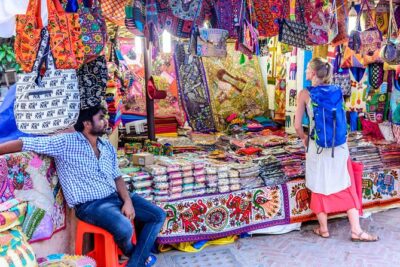 ★ 5.0Old & New Delhi City Tour – Half or Full Day Options AvailableFrom $384,811 reviews
 ★ 5.0Half Day Private Delhi City TourFrom $374,474 reviews
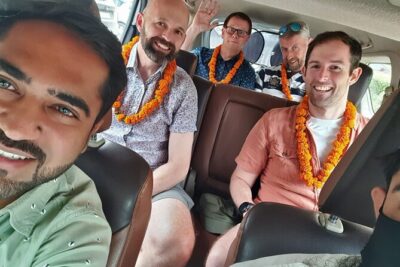 ★ 5.0Same Day Taj Mahal, Agra Fort & Baby Taj Tour from Delhi by CarFrom $624,304 reviews
 ★ 5.0Taj Mahal Day Tour from Delhi by Superfast Train – TOP RATED TOURFrom $1004,166 reviews
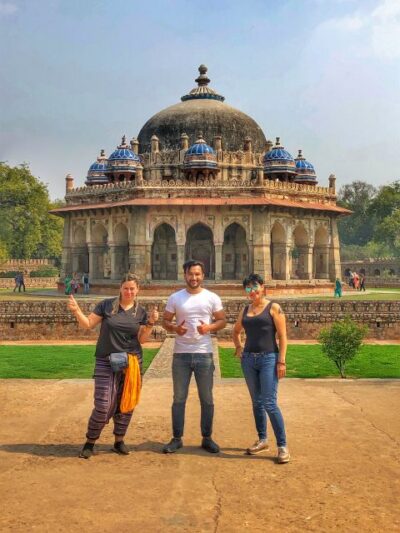 ★ 4.9Old and New Delhi Private Full or Half-Day TourFrom $23,776 reviews
 ★ 5.0Full Day Taj Mahal, Agra Fort & Baby Taj Tour from Delhi by CarFrom $623,647 reviews
 ★ 5.0Taj Mahal Tour from Delhi by Express Train (Viator Award Winner)From $752,849 reviews
 ★ 5.0All Inclusive Private Taj Mahal Luxury Tour from Delhi by CarFrom $622,564 reviews