
Reviewed · GOLDEN TRIANGLE TOURS
Essence of Royal India: Golden Triangle in Four Days
Old-school meets royal marble.
This four-day Golden Triangle tour strings together New Delhi, Agra, and Jaipur with a private live guide and pickup across the Delhi region, so you get less guessing and more seeing.
I especially liked how the itinerary pairs major monuments with practical breaks for food stops and hotel time, and I also love the planned sunrise Taj Mahal moment in Agra, which is the kind of timing that actually pays off.
One consideration: entrance fees are not included (about USD 90 per person for monument access), so you’ll want to budget for tickets even though some stops note free admission.
In This Review
- Key highlights worth planning for
- The Golden Triangle, built for first-timers and time-crunchers
- What the price covers, and what it doesn’t
- Day 1 in Delhi: Qutub Minar, Lotus Temple, and the city’s power axis
- Qutub Minar: the stone story of the Delhi Sultanate
- Lotus Temple: a calm shape in a busy city
- Agrasen Ki Baoli: the urban legend stop
- India Gate and the ceremonial axis: monuments that mark conflict and governance
- Parliament House and a food break
- Day 2: Agra sunrise Taj Mahal, then Fort and marble tombs
- The sunrise Taj Mahal plan
- Agra Fort: Mughal power with a defensive edge
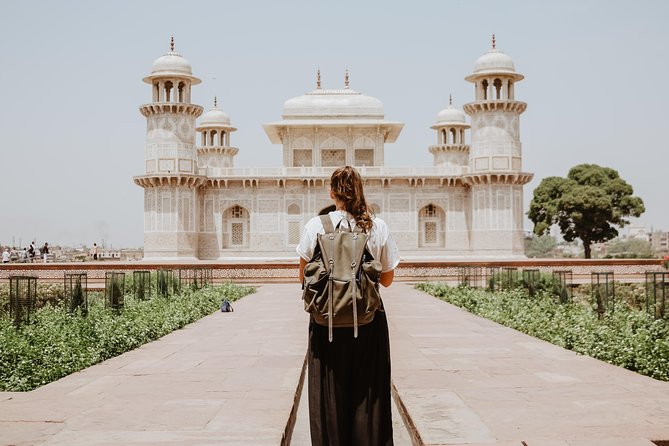
- Itmad-ud-Daula: the marble masterwork that often gets overlooked
- Drive to Jaipur the same day
- Day 3 in Jaipur: Amber Fort, Jal Mahal photos, and the science of Jantar Mantar
- Amber Fort: forts are history you can walk through
- Panna Meena ka Kund: stepwell textures and quiet corners
- Jal Mahal: that floating palace photo
- City Palace: where the royals ran ceremonial life
- Jantar Mantar: astronomy you can see
- Hawa Mahal: the face of Jaipur
- Rooftop Jaipur food break
- Day 4: checkout, then back to Delhi for flights
- What I think works best about this specific tour
- Who should book this tour
- Should you book Royal India: Golden Triangle in Four Days?
- FAQ
- What’s the duration of the Golden Triangle tour?
- Where does pickup and drop-off happen?
- Is this tour private?
- Are entrance fees included in the price?
- Does the tour include the Taj Mahal sunrise?
- How many hotel nights are included, and is breakfast included?
- Is lunch or dinner included?
- What monuments and major sights are included?
- Do I get a guide during the visits?
- What’s the cancellation policy?
Key highlights worth planning for
- Private guide at the monuments so you’re not stuck reading alone through crowds
- Sunrise Taj Mahal in Agra, then you move on quickly to the next UNESCO sights
- Old Delhi tuk-tuk ride included, a fun way to feel the city without a long detour
- Amber Fort plus Jantar Mantar in Jaipur—fort + science + views in one day
- Central hotel stay in Delhi for easier morning starts and smoother connections
The Golden Triangle, built for first-timers and time-crunchers
If you’re trying to understand India fast, the Golden Triangle is a smart shortcut: Delhi for power and old empires, Agra for Mughal grandeur, and Jaipur for royal Rajput design and daily life built around it. This version keeps things efficient by using an air-conditioned vehicle and a private guide who stays with you through the monument stops.
The best part is that it’s not just a checklist. The plan includes built-in rhythm: site time, photo breaks, and local-food recommendations from your guide. That matters because Golden Triangle tours can easily turn into a blur. Here, you still see the big targets—Qutub Minar, Taj Mahal, Amber Fort—but you also get breathing room to make the day feel human.
Also, the tour offers pickup and drop-off not only in Delhi but in nearby areas like Noida, Gurugram, Faridabad, and Ghaziabad. That removes a lot of daily friction if you’re staying outside central Delhi.
Delhi, Agra and Jaipur: more full circuits



What the price covers, and what it doesn’t
At USD 280 per person for four days, the value depends on two things: your hotel level and your entrance-fee budget.
Included costs are the big operational stuff—private transportation, the live guide, parking/tolls/fuel/taxes/service charges, and (if you choose it) three nights with breakfast in a 4-star or 5-star hotel. Entrance tickets are not included, and the estimate is about USD 90 per person for monument access across the trip. Lunch and dinner are also not included.
In other words: you’re paying for the logistics and interpretation, not for the attractions themselves. If you’re the type who hates adding up surprises on the road, budget that entrance amount early and you’ll feel in control.
Day 1 in Delhi: Qutub Minar, Lotus Temple, and the city’s power axis
Delhi is a layering game: sultanate-era architecture beside modern institutions, spiritual spaces tucked into plain sight, and huge monuments aligned with the city’s political center. Day 1 starts by getting you moving quickly with hotel/airport pickup and drop-off, then it builds your day around iconic stops you can actually place on a map.
Qutub Minar: the stone story of the Delhi Sultanate
You begin with Qutub Minar, a UNESCO site and a 73-metre tall tower associated with the Delhi Sultanate era. The key value here is scale and origin. Even without deep background, you can grasp that this is not a decorative monument—it’s a statement of authority from the 1100s.
Ticket note: entrance is listed as not included, so this is one of the places you’ll likely pay.
Lotus Temple: a calm shape in a busy city
Next comes Lotus Temple, a Bahá’í House of Worship dedicated in December 1986. Its flower-like form is the hook, but the practical value is the mood shift: after tower-and-empire history, you get a space designed for quiet and reflection. It’s also a good mid-day stop if you want photos that don’t feel like you’re fighting crowds around a single structure.
Worth putting side by side with this New Delhi pick:

Agrasen Ki Baoli: the urban legend stop
Then you’ll visit Agrasen Ki Baoli, known for legends involving hauntings and paranormal stories. The tour framing here is more than just spooky curiosity—you’ll see how historical ruins get folded into modern city storytelling. The stop is short, and that’s good because it lets you take in the atmosphere without burning your day.
Ticket note: entrance is listed as not included.
India Gate and the ceremonial axis: monuments that mark conflict and governance
You finish Delhi with India Gate, a war memorial on Rajpath (officially Kartavya Path). This stop is useful because it teaches you how the city visually organizes memory and national identity.
From there, you’ll also see the planned civic architecture associated with New Delhi’s design—an impressive 330-acre plan from 1929 credited to Sir Edwin Lutyens and Herbert Baker. The point is to understand that New Delhi isn’t accidental. It was designed, measured, and built as a seat of government.
Parliament House and a food break
The itinerary includes a stop at Parliament House (home of the Lok Sabha and Rajya Sabha). You may not be entering for a full tour here, but it helps you connect the monumental axis you’ve been walking toward.
Then you get a practical break: your guide suggests local restaurants for lunch or other city food options, and you return to a centrally located hotel for the night. That central location matters—Delhi mornings and evening traffic can turn any plan into a slow-motion stress test.
Day 2: Agra sunrise Taj Mahal, then Fort and marble tombs
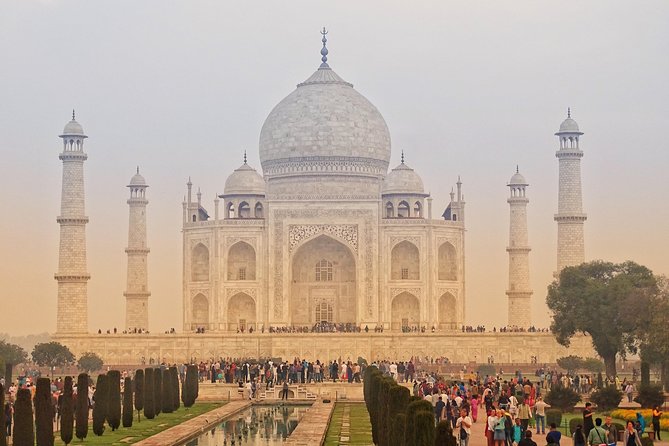
Day 2 is where the Golden Triangle earns its reputation. You drive about 250 km to Agra (around 3.5 hours), and you’re rewarded immediately with a key experience: early morning Taj Mahal sunrise.
The sunrise Taj Mahal plan
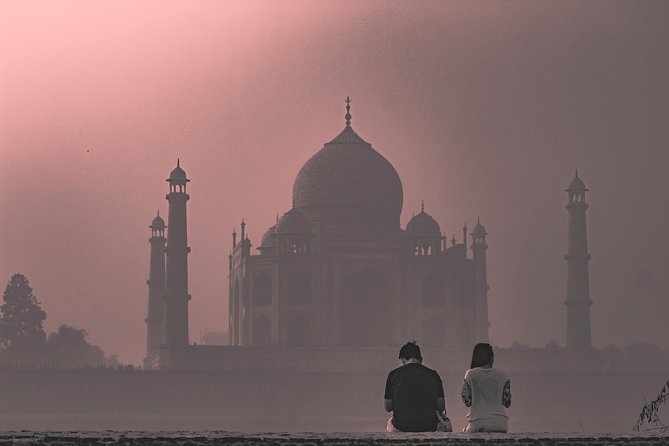
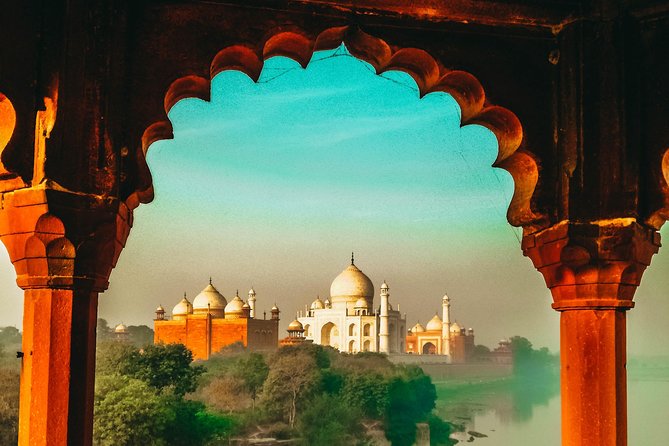
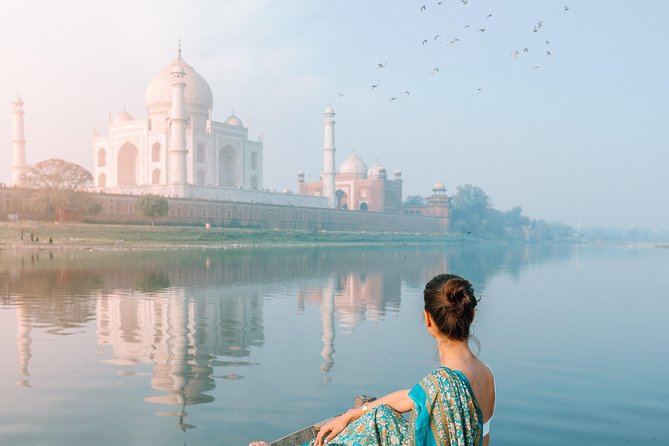
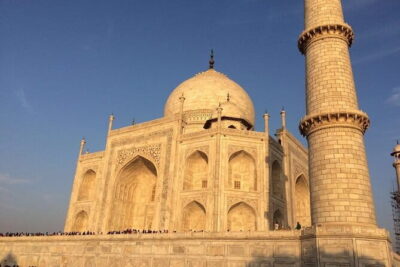
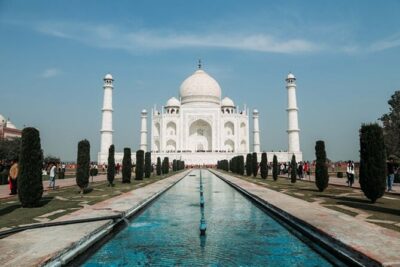
Starting early for the Taj Mahal is a smart move. The monument is famous any time, but sunrise gives you better light and a different feel—less midday glare, more soft marble tones. You’ll also learn the story of Emperor Shah Jahan building the mausoleum in 1630 for his wife.
Ticket note: Taj Mahal entrance is listed as not included, so this is another key ticket budgeting moment.
After the Taj Mahal, you head back for breakfast at the hotel. That’s practical. It means you can enjoy the early start without needing to immediately power through the rest of the day on fumes.
Agra Fort: Mughal power with a defensive edge
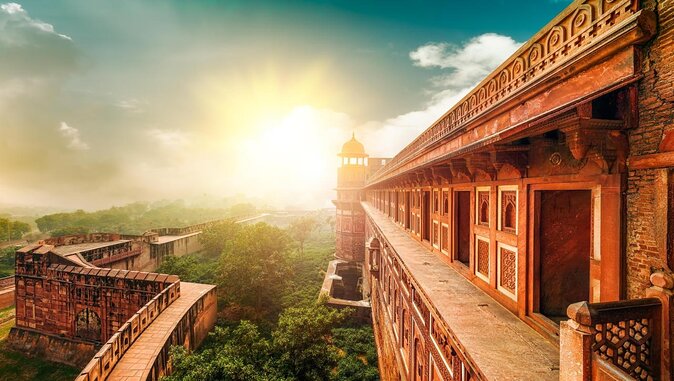
Next is Agra Fort, another UNESCO World Heritage site with construction in the 17th century. The value here is architectural variety: a mix of Indian and Islamic art and design, and a sense of what this empire actually looked like when it needed to defend itself.
Ticket note: entrance is listed as not included.
Itmad-ud-Daula: the marble masterwork that often gets overlooked
Then you’ll visit Itmad-ud-Daula, described as the first Mughal structure built completely from marble. It’s also noted for extensive use of pietra dura and as a tomb built on the banks of the Yamuna. This stop is a great counterweight to Taj Mahal: smaller in scale, but heavy on craft details.
And because it’s tied to the river setting, it helps you understand why these Mughal builders obsessed over water and garden space.
Ticket note: entrance is listed as not included.
Drive to Jaipur the same day
After Agra’s sights and a food pause, you travel to Jaipur about 250 km (around 3 hours) and check in. That’s a long day, but the payoff is that you maximize sight time in three cities within four days.
Day 3 in Jaipur: Amber Fort, Jal Mahal photos, and the science of Jantar Mantar
Jaipur is where the Golden Triangle shifts from empires to a working royal city. Day 3 mixes forts, palaces, and the city’s signature planned geometry—plus a sunset-ish photo stop at the end.
Amber Fort: forts are history you can walk through
You visit Amber Fort first. The scheduled time is about 2 hours, which is enough to get a sense of layout and defensive design without rushing through every corner. This is also one of the best places to understand how power worked in Jaipur: visually impressive, strategically placed, and built to impress both residents and visitors.
Ticket note: entrance is listed as not included.
Panna Meena ka Kund: stepwell textures and quiet corners
Next is Panna Meena ka Kund, a short stop (about 30 minutes). The tour frame doesn’t emphasize legends here; instead, it’s more about seeing another type of Jaipur engineering. Stepwells have a way of turning a quick stop into a memorable one because you can look up, down, and around and actually understand the structure.
Ticket note: entrance is listed as not included.
Jal Mahal: that floating palace photo
Then comes Jal Mahal, a palace on Man Sagar Lake. It’s planned as a photo stop with about 30 minutes, and it makes sense: the value is in the silhouette and the lake setting. It’s also noted as being renovated and expanded in the 18th century by Maharaja Jai Singh II.
Ticket note: entrance is listed as not included.
City Palace: where the royals ran ceremonial life
Next you explore the City Palace of Jaipur for about 1 hour. It was built in 1721 as the administrative and ceremonial center, and part of it still functions as a residence of the Jaipur royal family. This is a strong stop for context. You’ll see how governance and culture were tied together in daily life.
Ticket note: entrance is listed as not included.
Jantar Mantar: astronomy you can see
Then you visit Jantar Mantar, a UNESCO site built in 1734 by Rajput King Sawai Jai Singh II. The tour describes nineteen astronomical instruments designed to observe celestial bodies without telescopes. Even if you’re not a science person, you’ll likely enjoy this because the instruments are physical. They’re not diagrams. They’re built.
Ticket note: entrance is listed as not included.
Hawa Mahal: the face of Jaipur
After that, you end with Hawa Mahal (Palace of Wind) for about 30 minutes. It’s a five-storey, pyramid-shaped structure made from red and pink sandstone, built in 1799 by Sawai Pratap Singh. The main value is architectural identity: this is the city’s most recognizable façade style, and it’s easy to tie it back to how Jaipur’s royal society looked at public space.
Ticket note: entrance is listed as not included.
Rooftop Jaipur food break
Finally, there’s Dagla – The Rooftop Jaipur, a local cuisine stop (about 2 hours). This is the kind of end-of-day plan that makes sense: after walking forts and palaces, you sit, eat, and let the city settle into the background. Your guide recommends where to eat, and this rooftop format also helps you enjoy evening light for photos.
Ticket note: the stop is listed with admission free on the schedule.
Day 4: checkout, then back to Delhi for flights
Day 4 is the simplest: checkout, then travel back to New Delhi and drop-off aligned to your flight details. This is a good structure if you don’t want an awkward last-minute scramble. It also means you don’t feel locked into a late-day city tour after a long week of monuments.
What I think works best about this specific tour
The big strengths are practical, not just aesthetic:
- Private guide with the monuments. That’s huge in a place where signage and context can make or break your experience. A live guide helps you connect what you’re seeing to why it matters, and you don’t have to translate the experience yourself.
- Comfort-focused transport. Long drives between Delhi, Agra, and Jaipur can be tiring. Using an air-conditioned car and handling tolls/parking removes stress and keeps you on schedule.
- Early Taj Mahal timing. If you only get one sunrise-level moment in the Golden Triangle, this plan gives it to you.
- Old Delhi tuk-tuk ride. It’s short, but it adds character. It also helps you feel the neighborhood texture without spending all day in traffic.
- Good-value feedback from past customers. The reviews highlight affordability, service quality, and the comfort of having a private car and guide—things you’ll feel on every single day of the trip, not just at the monuments.
Who should book this tour
This fits best if:
- you want a structured four-day circuit across Delhi, Agra, and Jaipur
- you prefer private guidance over group chaos
- you want a mix of big-ticket monuments and a couple of practical breaks for food
- you’d rather pay for smoother logistics than spend your time arranging transport and timing on your own
It might be less ideal if:
- you hate early mornings (sunrise Taj Mahal needs commitment)
- you budget tightly for ticket costs (entrance fees are estimated around USD 90 per person)
- you dislike long days (Agra is packed, and you also drive to Jaipur the same day)
Should you book Royal India: Golden Triangle in Four Days?
If you want the Golden Triangle with fewer decisions and better pacing, this is a solid pick. The combination of private transport, a live guide at key monuments, and the planned sunrise Taj Mahal experience makes it easier to get meaningful photos and real understanding without turning the trip into a logistics project.
I’d book it if you’re comfortable budgeting for entrance fees and you want a smooth, guided loop through three of India’s most famous cities. If you’re the type who thrives on last-minute independence, you might still enjoy the route—but you’ll likely spend your time managing what this tour already handles.
FAQ
What’s the duration of the Golden Triangle tour?
It runs for about 4 days.
Where does pickup and drop-off happen?
Pickup and drop-off are offered to hotels and airports in Delhi, Noida, Gurugram, Faridabad, and Ghaziabad.
Is this tour private?
Yes. It’s listed as a private tour/activity, and only your group participates.
Are entrance fees included in the price?
No. Entrance fees are not included, and they’re estimated at about USD 90 per person for monument access.
Does the tour include the Taj Mahal sunrise?
Yes. Day 2 starts early for a sunrise view of the Taj Mahal.
How many hotel nights are included, and is breakfast included?
There are three nights’ stay with breakfast if you choose a tour that includes a 4-star or 5-star hotel.
Is lunch or dinner included?
No. Lunch and dinner are not included, though your guide recommends restaurants.
What monuments and major sights are included?
The schedule covers Qutub Minar, Lotus Temple, Agrasen Ki Baoli, India Gate, the Taj Mahal, Agra Fort, Itmad-ud-Daula, Amber Fort, Panna Meena ka Kund, Jal Mahal, City Palace, Jantar Mantar, and Hawa Mahal.
Do I get a guide during the visits?
Yes. A private live tour guide is included for the monuments.
What’s the cancellation policy?
Free cancellation is available. You can cancel up to 24 hours in advance for a full refund. If you cancel less than 24 hours before the start time, the amount paid is not refunded.
More 4-Day Experiences in New Delhi
- 4 Days Golden Triangle Tour
★ 5.0 · 499 reviews - Private Luxury Delhi – Agra – Jaipur Golden Triangle Tour – 3 Nights 4 Days
★ 5.0 · 306 reviews - Private 4-Day Golden Triangle Tour with Ranthambore Tiger Safari
★ 5.0 · 248 reviews - From Delhi: Private 4-Day Golden Triangle Luxury Tour
★ 4.8 · 226 reviews - Golden Triangle & Ranthambore: 4-Day Private Tour from Delhi
★ 5.0 · 224 reviews
More Tour Reviews in New Delhi
- Old & New Delhi City Tour – Half or Full Day Options Available
★ 5.0 · 4,811 reviews - Half Day Private Delhi City Tour
★ 5.0 · 4,474 reviews - Same Day Taj Mahal, Agra Fort & Baby Taj Tour from Delhi by Car
★ 5.0 · 4,304 reviews - Taj Mahal Day Tour from Delhi by Superfast Train – TOP RATED TOUR
★ 5.0 · 4,166 reviews - Delhi: Old and New Delhi Private Full or Half-Day Tour
★ 4.9 · 3,776 reviews
The Full Golden Triangle, More Options
- 3-Days Private Golden Triangle Tour: Delhi, Agra & Jaipur by Car
★ 5.0 · 1,107 reviews - 3-Days Private Golden Triangle Tour: Delhi, Agra & Jaipur by Car
★ 5.0 · 1,098 reviews - 3-Day Delhi, Agra and Jaipur Private Tour – India Golden Triangle
★ 5.0 · 812 reviews - Four-Day Private Luxury Golden Triangle Tour to Agra and Jaipur From New Delhi
★ 5.0 · 807 reviews - 5 Nights 6 Days Private Golden Triangle Tour – Delhi Agra Jaipur
★ 5.0 · 574 reviews
Just added: more New Delhi reviews to browse
- 7 Days Golden Triangle Private Tour – Delhi Agra Jaipur Tour from Delhi★ 5.0 · 5 reviews
- 5-Day Private Luxury Golden Triangle Tour to Agra and Jaipur★ 5.0 · 5 reviews
- Agra: Taj Mahal Vip tickets with Professional Photographer★ 3.6 · 5 reviews
- Taj Mahal Tour By Superfast Train From Delhi★ 5.0 · 5 reviews
- Private Night View of Delhi Tour 4 Hours★ 5.0 · 5 reviews
- From Delhi: Same Day Taj Mahal, Agra Day Tour By Car★ 5.0 · 5 reviews
Golden Triangle Tours, compared.
 ★ 5.03-Days Private Golden Triangle Tour: Delhi, Agra & Jaipur by CarFrom $1271,107 reviews
★ 5.03-Days Private Golden Triangle Tour: Delhi, Agra & Jaipur by CarFrom $1271,098 reviews
★ 5.03-Days Private Golden Triangle Tour: Delhi, Agra & Jaipur by CarFrom $1271,107 reviews
★ 5.03-Days Private Golden Triangle Tour: Delhi, Agra & Jaipur by CarFrom $1271,098 reviews
 ★ 5.03-Day Delhi, Agra and Jaipur Private Tour – India Golden TriangleFrom $110812 reviews
 ★ 5.0Four-Day Private Luxury Golden Triangle Tour to Agra and Jaipur From New DelhiFrom $160807 reviews
 ★ 5.05 Nights 6 Days Private Golden Triangle Tour – Delhi Agra JaipurFrom $240574 reviews
 ★ 5.04 Days Golden Triangle TourFrom $146499 reviews
 ★ 5.0Private Car and Drive for Golden Triangle (4N/5D)From $167451 reviews
 ★ 5.0Private Golden Triangle Tour Delhi Agra Jaipur ( Top Rated )From $148436 reviews