
Reviewed · NEW DELHI
Expeditions India & Bhutan 12 Days
Taj Mahal meets Bhutan’s monasteries in one trip. What makes this itinerary fun is the contrast: you go from Mughal-era grandeur in India to Bhutan’s calm, religious sites, with everything handled in a private, English-speaking setup. I especially like how the plan stitches major sights together with enough downtime to keep the days from feeling like nonstop sightseeing marathons.
I also love that so many of the annoying-for-you costs are handled upfront: monument entry fees in India and Bhutan, Bhutan tourism fees, and Bhutan meals are included. One consideration: the route clearly expects a flight from New Delhi to Bhutan on Day 7, but airfares are not listed as included—so you’ll need to line up those tickets yourself.
In This Review
- Key highlights I’d plan around
- Why this India-and-Bhutan combo actually works
- Day 1 arrival: landing in Delhi and getting oriented
- Day 2 in Delhi: Jama Masjid, Old Delhi markets, Humayun’s Tomb, and Qutub Minar
- Day 3 Agra: Taj Mahal morning energy, Agra Fort later
- Day 4 Fatehpur Sikri en route to Jaipur: Akbar’s abandoned imperial stage
- Day 5 Jaipur’s key sights: Amber Fort, City Palace, Jantar Mantar, Hawa Mahal
- Day 6 back to Delhi: a smart reset before Bhutan
- Day 7 Day of transit to Thimphu: flying to Bhutan and starting the Bhutan portion
- Thimphu Day 8: Memorial Chorten, Tango hike, Buddha Dordenma, takin, and the folk museum
- Day 9 to Punakha: Dochula Pass viewpoints and Punakha Dzong at the river junction
- Day 10 Paro arrival day: Rinpung Dzong and Bhutan’s fortress feel
- Day 11 Paro finale: Tiger’s Nest early hike and Kyichu Lhakhang’s deep roots
- Day 12 departure: Paro Airport transfer and a clean ending
- Price and what you really get for $4,245 per person
- Comfort, transport style, and pacing (the stuff that affects your mood)
- Who should book this tour, and who should pass
- Should you book this India & Bhutan Expeditions 12-day tour?
- FAQ
- What’s included in the tour price?
- Are airfare tickets included?
- Do I need to pay for the Bhutan visa?
- What hotel level do you use in India and Bhutan?
- How many meals are included in Bhutan?
- Is pickup and drop-off included?
- Is this tour private or shared with other groups?
Key highlights I’d plan around
- Private driver and guide in an air-conditioned car, so you’re not stuck in crowded shuttles.
- Most major entrance fees included across India and Bhutan, which saves you time and decision fatigue.
- Delhi to Bhutan to Paro routing that minimizes backtracking.
- Thimphu to Punakha to Paro with big scenic moments like Dochula Pass.
- Tiger’s Nest morning hike plus an added temple stop at Kyichu Lhakhang.
- Three meals per day during your stay in Bhutan, which helps budgeting and makes days easier.
Why this India-and-Bhutan combo actually works
If you’re trying to do India and Bhutan but don’t want to juggle guides, entry tickets, and separate reservations, this kind of packaged ground program is practical. You get a classic India first half (Delhi, Agra, Jaipur), then a Bhutan second half built around temples, dzongs, and mountain viewpoints.
The big value is not just the list of sites. It’s the way the logistics are stitched together: private transport, a professional English-speaking guide, and included entry fees for the key stops. That matters because India and Bhutan both have plenty of small, time-draining friction—ticket lines, route decisions, and confusing timing. Here, you’ll still make choices, but someone else handles the structure.
You also get a trip rhythm that makes sense for a 12-day window: do the heavy icon stops first (Taj Mahal, Amber Fort), then slow down with Bhutan’s shorter daily lists—still meaningful, just less exhausting.
Still deciding? Here is how it stacks up against other Delhi picks we have written up.



Day 1 arrival: landing in Delhi and getting oriented
After you arrive in New Delhi, you meet the tour representative and head to your pre-decided hotel. This matters more than it sounds. Delhi arrival days can be chaos—customs, getting a SIM, figuring out transport, and finding your bearings. Starting with a planned escort helps you settle fast.
You’ll spend the night in Delhi, which positions you well for the full sightseeing day that follows. It also means you’re not trying to do serious monuments on the same day you land.
Day 2 in Delhi: Jama Masjid, Old Delhi markets, Humayun’s Tomb, and Qutub Minar
Delhi on this schedule is built for variety. You start with Jama Masjid, described as India’s largest mosque, and you’ll have an entry-ticket stop time of about an hour. From there, you head into Chandni Chowk, Old Delhi’s famous market area. The best part here is the chance to walk narrow lanes and see local shoppers and stall life up close. The program even builds in time for local food tasting in the area—perfect for something quick and informal, if you’re game.
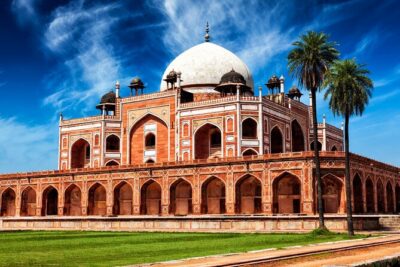
Next you’ll go to Rajghat, Gandhi’s cremation memorial, where you can see the eternal flame. Then it’s Humayun’s Tomb, known for its garden-style layout and Persian-inspired design elements. The sightseeing finish includes Qutub Minar, another major UNESCO-linked landmark, with an entry stop of about an hour.
Practical tip: This is a day where you’ll feel the pace in your legs more than your mind. You’ll enjoy it most if you wear comfortable walking shoes and accept that Old Delhi footwork involves dodging crowds, carts, and sudden lane turns.
Day 3 Agra: Taj Mahal morning energy, Agra Fort later
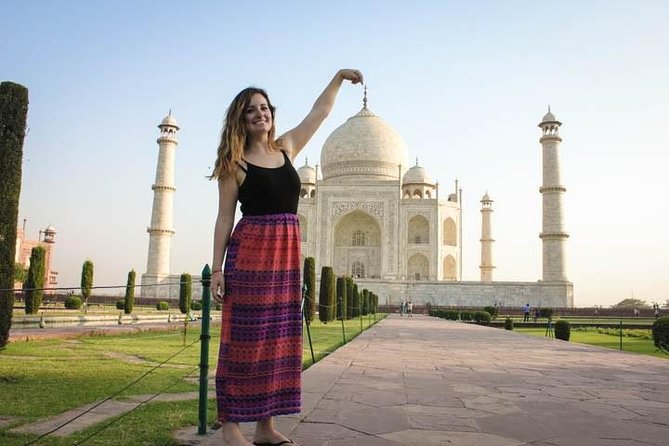
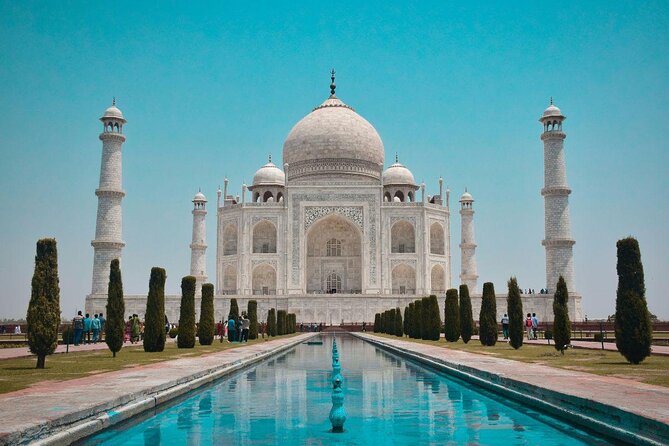
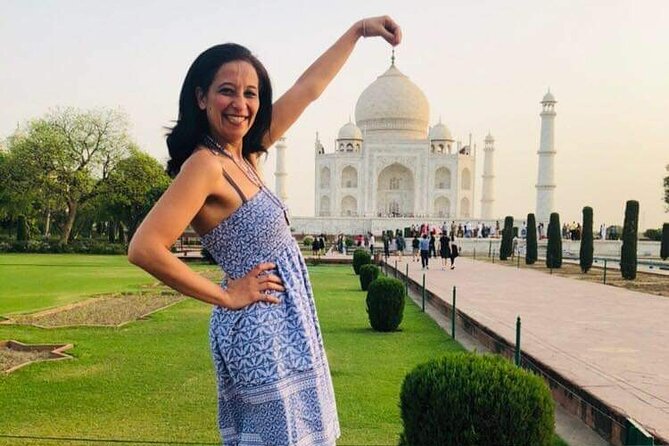
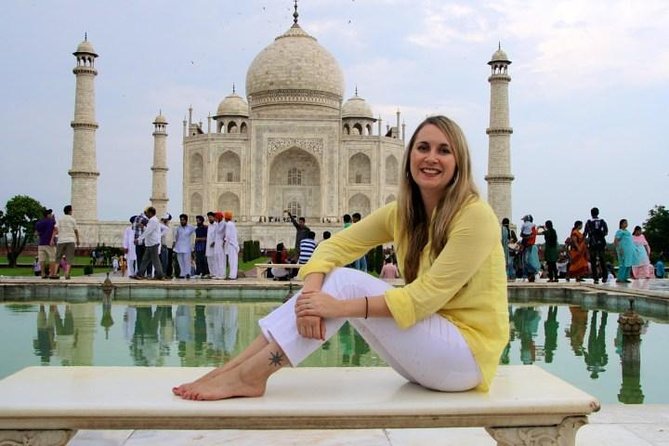
Agra is the classic next step, and the schedule is direct: after breakfast, you drive to Agra, check in, then visit the Taj Mahal. The visit is allocated about two hours. You’ll get the essentials—the marble monument, the Mughal link to Shahjahan and Mumtaz Mahal, and the way the light changes through the day (the description here is that it can look pinkish in the morning, milky white in the evening, and golden under moonlight).
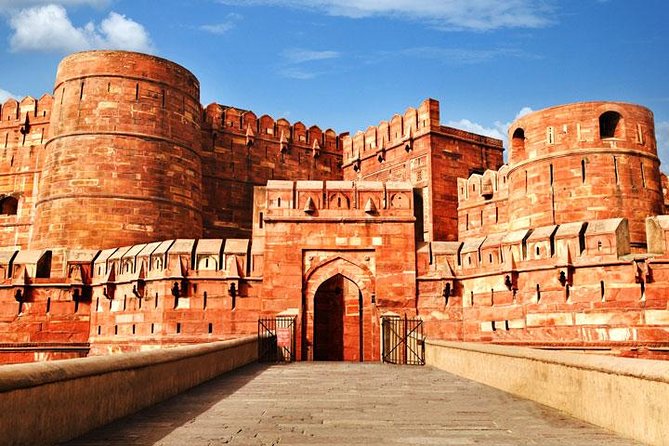
After the Taj, you’ll go to Agra Fort, with about an hour allotted. The fort is a strong pairing because it adds a different mood than the Taj: more fortification, more stone layers, more atmosphere.
Worth considering: If the day runs a bit cloudy, you may not get the same color-shift effect the Taj is known for. Still, it’s one of the few places where you’ll likely find yourself slowing down just to take in details, even when you’re tired.
Day 4 Fatehpur Sikri en route to Jaipur: Akbar’s abandoned imperial stage
On the way to Jaipur, you stop at Fatehpur Sikri, a UNESCO site tied to the Mughal Empire and Emperor Akbar. The program frames it as an abandoned city from Akbar’s era, and it’s a fascinating kind of stop: less crowded than the super-icons, but full of architectural ambition.
The highlight details include structures like Jama Masjid, and the itinerary specifically mentions Buland Darwaza—Akbar’s 1601 gateway noted for being the highest in the world at the time of its completion. You’ll spend about two hours here.
This is also a good “thinking stop.” In India, you can rush from photo to photo. Fatehpur Sikri’s layout invites longer looks, which you’ll appreciate before Jaipur’s busier sightseeing.

Day 5 Jaipur’s key sights: Amber Fort, City Palace, Jantar Mantar, Hawa Mahal
Jaipur is the “Pink City” phase, and the day is packed with recognizable stops:
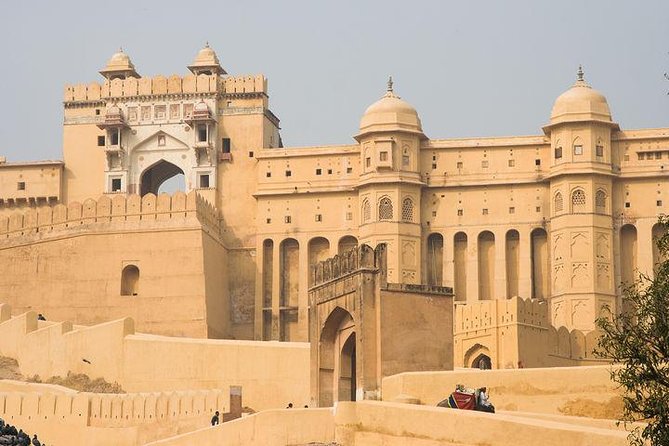
- Amber Fort (about two hours), a must-do for its scale and fort-city feeling.
- City Palace of Jaipur (about two hours), which gives context to the royal setup.
- Jantar Mantar (about an hour), the astronomical site—this is where you get a break from purely decorative architecture and see practical science design.
- Hawa Mahal (Wind Palace), with a shorter drive-past segment (about 25 minutes).
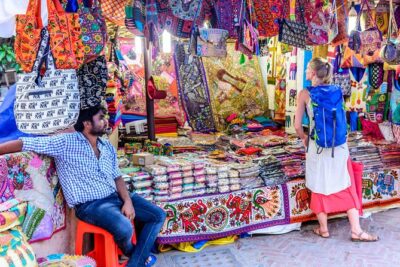
The day ends with free time for shopping in the Jaipur bazaar, which is where you can hunt for souvenirs, textiles, and small gifts without feeling like you’re timing every purchase around the guide.
Simple advice: Jaipur is one of those cities where “free time” can eat the day if you don’t set a loose plan. If you want shopping, decide what you’re shopping for before you go. Otherwise you’ll spend energy bargaining instead of enjoying the sights.
Day 6 back to Delhi: a smart reset before Bhutan
After breakfast, you drive back to New Delhi and check into your hotel. This might feel like a travel detour, but it’s actually useful. Bhutan logistics work best when you reduce moving parts right before you fly.
Consider this your buffer day: rest, sort documents, and recharge. You’ll likely want your energy for Thimphu and beyond.
Day 7 Day of transit to Thimphu: flying to Bhutan and starting the Bhutan portion
This day includes getting to New Delhi airport and taking a flight to Bhutan, then transferring to Thimphu and checking into your hotel.
Important reality check: while the itinerary clearly expects that flight, airfare is not included in the package. So you’ll need to plan and book that flight on your own. The good news is your ground transport and transfers are handled as part of the program.
If you want to travel smoothly, double-check your Bhutan arrival time against your first Bhutan schedule day. Early or late landings can affect how restful your Thimphu start feels.
Thimphu Day 8: Memorial Chorten, Tango hike, Buddha Dordenma, takin, and the folk museum
Thimphu gets a curated mix of faith, culture, and a few signature Bhutan experiences.
You start at Thimphu Chorten (Memorial Chorten), then head to Tango Buddhist Institute. This stop is described as a serene site about 14 kilometers away, with a hike of about one hour through mountain and alpine woods to reach the monastery. If you like light hiking without it being a full expedition, this is one of the better-balanced Bhutan activities.
Next is Buddha Dordenma, followed by the Motithang Takin Preserve, and then the National Folk Heritage Museum. The program gives about an hour for the takin preserve and about an hour for the museum.
Practical consideration: This is a day where you’ll use both your legs and your eyes. Wear layers. Bhutan weather can change, and hiking sections benefit from simple comfort planning.
Day 9 to Punakha: Dochula Pass viewpoints and Punakha Dzong at the river junction
The day begins early with the drive to Dochula Pass, described at 3,100 meters. On a clear day, you’ll get views of the Himalayan ranges, and the pass is highlighted as one of the best-known in Bhutan.
After the viewpoints, you visit Chimi Lhakhang, a temple built in 1499 by a follower of Drukpa Kinley. The description here includes the idea of Drukpa Kinley being known as the divine mad man, with teachings linked to sex. That context is useful because it explains why Chimi Lhakhang is culturally significant, not just visually interesting.
Then comes the big emotional center: Punakha Dzong, located at the confluence of the Mo Chhu and Po Chhu rivers. The program frames their union into the Puna Tsang Chu, a tributary of the Brahmaputra. That river geometry matters because it’s the reason Punakha feels dramatic and important even when you’re simply standing and looking.
Expect a tonal shift here: Thimphu is more city-like and museum-ready. Punakha feels more connected to landscape and river life.
Day 10 Paro arrival day: Rinpung Dzong and Bhutan’s fortress feel
After breakfast, you drive to Paro and visit Rinpung Dzong. It’s described as Bhutan’s most iconic dzong, and the name meaning, Fortress on a heap of Jewels, adds a poetic layer to what you’re actually seeing.
You’ll spend about an hour there, then overnight in Paro. This is a good setup for the next morning’s hike, because you’re already in the right base location.
Day 11 Paro finale: Tiger’s Nest early hike and Kyichu Lhakhang’s deep roots
This is the day people plan around: Tiger’s Nest Monastery (Taktsang Monastery). The program calls for early morning, after breakfast, and a morning hike. It describes the monastery as hanging from a steep cliff, and that it’s a site of national pride for Bhutan.
Then you shift to Kyichu Lhakhang, including details that it’s one of Bhutan’s oldest temples, built by Tibetan King Songtsen Gampo in the 7th century AD. The explanation also includes that it was part of 108 temples built to subdue a demon terrorizing the people of the Himalayas. Even if you only catch part of the story, it adds real meaning to the photos.
In the evening, there’s time to explore the local market of Paro. That’s a smart close: you end on everyday life instead of only grand monuments.
Physical reality note: If you don’t love steep hiking, you’ll want to think carefully. The itinerary says this is a morning hike, and the site is famously perched on a cliff. Bring realistic expectations and take breaks without guilt.
Day 12 departure: Paro Airport transfer and a clean ending
After early breakfast, you’re taken to Paro Airport for your onward destination. The timing is intentionally simple—no last-minute scramble to see one more temple. That’s a relief, especially after a hike-heavy Bhutan day.
Price and what you really get for $4,245 per person
At $4,245 per person, this isn’t a budget “grab a bus and hope for the best” kind of trip. But it also isn’t just paying for sightseeing. You’re paying for structure.
Here’s what supports the value:
- Private professional English-speaking guide and driver, plus a private air-conditioned vehicle.
- Hotel accommodation included, with a choice between 3-star or 4-star hotels.
- All fuel and interstate tax included, plus parking fees at monuments and airports.
- Entrances fees for monuments in both India and Bhutan included in the program.
- Bhutan tourism development fees and Bhutan visa fee included.
- Three meals per day during your stay in Bhutan.
Where costs you should expect separately:
- Airfare (international or domestic) is not included. The itinerary still uses flights for the India-to-Bhutan move.
- Any optional items not listed under inclusions.
- Any mandatory gala dinners on New Year’s Eve or Christmas Eve are not included.
If you price this out yourself, the entry fees and the “someone else handles the schedule” value are often where packaged trips start to make sense. The private format is especially valuable if you’d otherwise hire a driver and guide separately and still end up negotiating entry ticket timing.
Comfort, transport style, and pacing (the stuff that affects your mood)
This is described as a private tour, meaning only your group participates. That’s a practical win because you’re not stuck waiting on strangers during tight transitions. The plan also includes hotel pickup and drop as part of the routing.
You’ll likely spend a lot of time in the car across India segments—Delhi to Agra, Agra to Jaipur, and then back to Delhi. That can be fine if you treat transit as travel time, not wasted time. Bring water, keep a small snack plan for road days, and avoid scheduling anything exhausting right after long drives.
In Bhutan, the pace shifts. Some stops are short and focused, while others involve hiking or museum time. The plan uses that mix intentionally: you’ll get viewpoints and spiritual sites without trying to cram every day into a full-day trek.
Who should book this tour, and who should pass
This tour is a strong fit if you:
- Want a guided, private experience across both India and Bhutan.
- Like the big icons in India (Taj Mahal, Amber Fort) but also want Bhutan’s dzongs and monasteries.
- Prefer knowing entry fees and key services are handled, instead of planning every ticket.
You should think twice if you:
- Don’t want to handle your own flights (because airfare is not included).
- Have mobility limits for the Tiger’s Nest hike and the Tango Buddhist Institute hike portion.
- Hate long drives. There are multiple car days built into the route.
Also, if you’re traveling solo and want professional ground support (hotels, driver, guide), this style is often exactly what makes the trip feel manageable. In past booking feedback for this provider, I saw praise for smooth care from representatives and strong driver support—one name that came up was Deepak, highlighted as helpful and caring.
Should you book this India & Bhutan Expeditions 12-day tour?
If your goal is to see the classic India highlights and then experience Bhutan’s most famous spiritual stops without juggling day-by-day logistics, I think this is a solid pick. The package is strongest where you’ll feel it most: private guiding, included entry fees, Bhutan visa/tourism fees, and meals in Bhutan.
Just do one piece of homework: plan your flights carefully for the Day 7 transition into Bhutan, since airfare isn’t included. If you handle that and you’re okay with a couple of hike-style days, you’ll likely feel like the itinerary is doing its job—moving you through great places without wasting your energy.
FAQ
What’s included in the tour price?
The package includes hotel accommodation (with a 3-star or 4-star option), a private English-speaking guide and driver, an air-conditioned private vehicle, fuel and interstate taxes, parking fees for monuments and airports, monument entrance fees in India and Bhutan, Bhutan tourism development fees, and the Bhutan visa fee. It also includes three meals per day during your stay in Bhutan.
Are airfare tickets included?
No. Any airfare (international or domestic) is not included. The route does include a flight from New Delhi to Bhutan, but you’ll need to arrange and book flights yourself.
Do I need to pay for the Bhutan visa?
No. The Bhutan visa fee is listed as included in the tour package.
What hotel level do you use in India and Bhutan?
The tour offers accommodation options in 3-star or 4-star hotels, and you select the option when booking.
How many meals are included in Bhutan?
During your stay in Bhutan, the tour includes three meals per day.
Is pickup and drop-off included?
Yes. The program includes hotel pickup and drop as per the tour plan in both countries, with the start in New Delhi and the end at Paro International Airport.
Is this tour private or shared with other groups?
This is a private tour/activity. Only your group participates.
More Tour Reviews in New Delhi
- Old & New Delhi City Tour – Half or Full Day Options Available
★ 5.0 · 4,811 reviews - Half Day Private Delhi City Tour
★ 5.0 · 4,474 reviews - Same Day Taj Mahal, Agra Fort & Baby Taj Tour from Delhi by Car
★ 5.0 · 4,304 reviews - Taj Mahal Day Tour from Delhi by Superfast Train – TOP RATED TOUR
★ 5.0 · 4,166 reviews - Delhi: Old and New Delhi Private Full or Half-Day Tour
★ 4.9 · 3,776 reviews
Just added: more New Delhi reviews to browse
- 4 days Golden Triangle Tour★ 5.0 · 3 reviews
- Discover Old & New Delhi: Private Tour with Street Food★ 5.0 · 3 reviews
- Taj Mahal Tour From Delhi By Private Car★ 4.5 · 3 reviews
- Golden Triangle Tour 5 Days★ 5.0 · 3 reviews
- Taj Mahal: Express Entry Ticket For Sunset Tour with guide★ 5.0 · 3 reviews
- Agra Taj Mahal Sunrise & Sunset Tour from Delhi★ 5.0 · 3 reviews