
Reviewed · NEW DELHI
Facets of Archaeology and Mehrauli, Mehrauli Archaeological Park
Mehrauli Archaeological Park feels like time travel on foot. It sits right beside Qutub Minar, but it’s the quieter, everyday side of Delhi where history keeps running under regular life. This 200-acre park is packed with more than 100 monuments, from early fort ruins to Sultanate, Mughal, and even British-era traces, all in one place.
I especially love the way the walk turns scattered ruins into a clear story of Delhi’s timeline. I also like the storytelling style of the walk leaders, with lucid historical explanations and even moments of shayari-style narration from guides such as Tushar and Amir.
One consideration: you’ll still likely pay extra for specific monuments on the spot (fees vary by nationality), and the route involves moderate walking for about two hours.
In This Review
- Key highlights to look forward to
- Mehrauli Archaeological Park and Qutub Minar: The Quick Context You’ll Want
- The 2-Hour Walk Plan: Why a Short Tour Can Still Feel Complete
- Stop: Lal Kot and the Tomar Rajputs—Reading the Ground Like a Timeline
- Tomb of Balban (1287 CE): When Architecture Gets Specific
- Jamali and Kamali Mosque: Djinn Lore You Can Treat Like Culture, Not Fear
- Quli Khan’s Tomb and the British Summer Retreat Twist
- Why the Guides Matter Here: Clear History, Strong Storytelling
- Price and Tickets: Is $60 Good Value?
- Who This Tour Fits Best (and Who Should Consider Another Option)
- Practical Notes Before You Go
- Should You Book This Mehrauli Archaeology Walk?
- FAQ
- How long is the Mehrauli Archaeological Park walk?
- Where does the tour start?
- What is the price and what’s included?
- Are monument tickets included in the tour price?
- How much are monument tickets for nationals and foreigners?
- Is this a private tour?
- What if I need to cancel?
Key highlights to look forward to
- A lesser-visited archaeology park right next to Qutub Minar
- More than 100 notable monuments inside 200 acres
- Lal Kot ruins, linked to the Tomar Rajputs in the 11th century
- Tomb of Balban (1287 CE) and its early arch and true dome story
- Jamali and Kamali Mosque, tied to Djinn lore
- A British-era summer-retreat connection at Quli Khan’s tomb
Mehrauli Archaeological Park and Qutub Minar: The Quick Context You’ll Want
If you’re planning Delhi around the big names, you’ll probably hear nonstop about Qutub Minar. That’s fair. But what makes Mehrauli Archaeological Park such a smart add-on is simple: it lets you understand what was happening around Qutub Minar, not just at it.
This park covers about 200 acres in South Delhi and sits next to Qutub Minar, a World Heritage Site. The area is also unusual for Delhi because it’s not just a museum-like open space. It remains continuously inhabited in contemporary times, so you’re watching history and present-day life overlap, sometimes just a few steps apart.
Inside the park you’ll find more than 100 notable monuments, including architectural remnants from multiple eras of rule in North India: the Delhi Sultanate dynasties (including Khalji, Tughlaq, and Lodhi), the Mughal Empire, and the British Raj period. If you like your history connected instead of chopped into separate stops, this setup is a big part of why the walk works.
Still deciding? Here is how it stacks up against other Delhi picks we have written up.




The 2-Hour Walk Plan: Why a Short Tour Can Still Feel Complete
This experience is about two hours and designed as a walking tour. With a timebox like that, you don’t get every ruin in the park, and you shouldn’t try to. What you do get is the key “spine” of Mehrauli’s story—enough context to make the place feel coherent when you’re done.
You’ll start at the Mehrauli Archaeological Park Walk near Walk Anuvrat Marg, opposite Qutab Minar Metro Station, Christian Colony, Mehrauli. The tour ends back at the same meeting point, which is handy in a city where you don’t want to guess how far you are from transit.
One more practical point: this is a private tour/activity, so it’s only your group. That usually means the guide can keep the pace and focus where you want it, instead of constantly juggling a large crowd.
Stop: Lal Kot and the Tomar Rajputs—Reading the Ground Like a Timeline
Early ruins are where Mehrauli starts to feel magical, even before you get to the famous tombs. A major thread here is the ruins of Lal Kot, described as the oldest existing fort in Delhi. These fort remains are tied to the Tomar Rajputs and date to the 11th century.
Here’s the value for you: instead of treating “old fort” as a generic label, the walk helps you see why it matters that this was Delhi’s early power center. When you’re standing in the park, it can be easy to think of the monuments as isolated points. The guide helps connect them into a broader map of how power and architecture shifted across centuries.
A drawback, though: if you expect fully restored walls and smooth visitor paths everywhere, you might find the early sites feel more like ruins than finished sights. That’s not a problem—ruins are the point here—but it does affect how visually “complete” everything feels.
Tomb of Balban (1287 CE): When Architecture Gets Specific
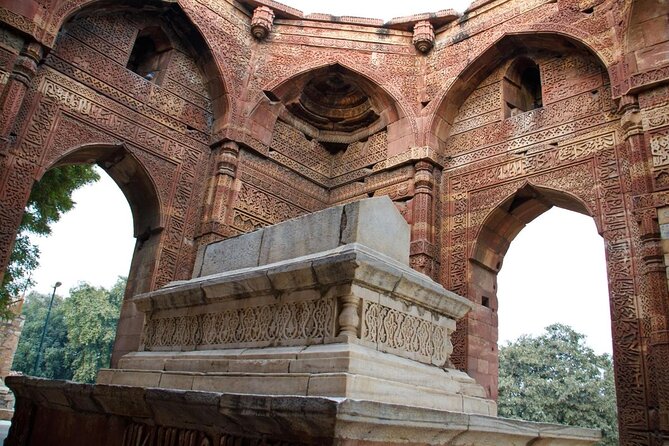
One monument that anchors the Sultanate-era story is the Tomb of Balban, established in 1287 CE. It’s tied to a fascinating architectural detail: it’s known for the creation of India’s first real arch and a true dome.
This is where I find the guided format especially useful. Without context, those terms can sound like trivia. With a guide, you start to connect the architectural ideas to what you’re actually seeing, and why they mark a turning point in design.
It also adds a layer beyond dates. The walk helps you understand that architecture is basically an engineering language. When a place is described as having an early real arch and true dome, you can appreciate it as more than a monument—it’s a snapshot of what builders could do at that time, and how they tried to create space and presence.
If you’re the kind of visitor who likes to leave with at least a few “I can explain this” facts, you’ll probably remember the Tomb of Balban connection.
Jamali and Kamali Mosque: Djinn Lore You Can Treat Like Culture, Not Fear
Another stop that makes Mehrauli feel alive is the Jamali and Kamali Mosque complex. It’s believed to be the abode for Djinns, and that belief ties the site into the larger culture of haunting stories you find across India.
I like that the guide doesn’t treat this as pure fear. Instead, it works as cultural context—how people attach meaning to places, especially older religious spaces. Even if you’re not a believer, you can still appreciate why the story lasts. Old architecture + spiritual reputation + local tradition = a powerful combination.
The other benefit: these mosque stops break up the heavier fort-and-tomb rhythm. You get an atmosphere shift, and the narration helps you understand why these religious sites are still discussed as part of Mehrauli’s identity.
One consideration: if you’re expecting a strictly academic lecture only, this part may feel more story-driven. But in my view, that’s part of the charm of Mehrauli—you don’t just look at stones. You hear what people associate with those stones.



Quli Khan’s Tomb and the British Summer Retreat Twist
Mehrauli doesn’t stop at medieval eras. It carries on into the British Raj period too. A key example is the early 17th-century Quli Khan’s tomb, which was refurbished by a British resident in Delhi and used as a summer retreat palace.
This “afterlife” of a monument is one reason I like bringing a guide to Mehrauli. Otherwise, you might see architectural changes as random visual mismatches. With the story explained, the British-era refurbishment becomes a meaningful chapter, not just a strange add-on.
From your perspective, this is valuable because it gives you a full-Delhi view. Delhi history isn’t a straight line ending with one dynasty. It’s layered, reused, repurposed, and reinterpreted over time.
Why the Guides Matter Here: Clear History, Strong Storytelling
A walk through ruins can easily turn into a shuffle if the guide isn’t good. Fortunately, this experience is led by guides known for clear, interesting narration. Tushar is highlighted for explaining historical aspects in a lucid and engaging way. Amir is also praised for weaving historical facts with storytelling and shayari.
Even Nidhi appears in accounts connected to India City Walks and facilitated heritage walks. Across these different mentions, the common thread is communication: the history lands in your brain as something you can remember, not just something you hear.
What you’ll likely notice on the ground is that the guide keeps your attention moving between eras without making you feel lost. In a park with more than 100 monuments, that pacing is not a small thing.
Price and Tickets: Is $60 Good Value?
The listed price is $60.00 per person for an approx. 2-hour private walk with a guide. You also get a mobile ticket.
What’s included: the guide and the tour itself. What’s not included: monument tickets that come with on-the-spot cost charges. The fees listed are INR 30 for National and INR 500 for foreign nationals.
So how do you judge value? For me, it comes down to how many paid monuments you want to actually enter during the walk. If you’re fine with focusing on narration plus what you can see without paying for every individual entry, you may keep costs manageable. If you plan to access several ticketed monument sites, the extra fees will matter more.
Either way, the base price feels like it’s paying for something Delhi tours often underdeliver on: guided clarity. In places like Mehrauli, the guide helps you get meaning out of scattered remains. That’s hard to replicate with a map and good intentions.
Who This Tour Fits Best (and Who Should Consider Another Option)
I’d say this works best if you want:
- A guided walk that connects multiple eras of Delhi in one area
- History that feels personal and local, not just textbook
- Stories tied to specific spots, like Balban’s tomb and Djinn lore at Jamali and Kamali
It’s also a solid choice if you’re already in South Delhi for Qutub Minar. Adding Mehrauli gives you a bigger picture without eating a whole day.
If you’re someone who needs fully restored sites, bright signage, and minimal walking, you might find the “archaeological park” format less comfortable. The tour also calls for moderate physical fitness, so plan on being able to walk at a reasonable pace for the duration.
Practical Notes Before You Go
Start at the Mehrauli Archeological Park Walk on Walk Anuvrat Marg, opposite Qutab Minar Metro Station. Ending back at the meeting point is convenient, so you don’t have to reorganize your plan mid-walk.
Because this is a live guided walk, health matters too. The experience notes that customers are responsible for assessing their own fitness and should notify the tour operator of medical conditions or special requirements. If you have anything like mobility limits or specific needs, it’s worth flagging early.
Should You Book This Mehrauli Archaeology Walk?
Yes—if you want Delhi history that feels grounded and specific. Mehrauli Archaeological Park is right beside Qutub Minar, but it gives you something different: a continuously inhabited area where you can read Delhi’s layers across forts, Sultanate architecture, mosque legends, and even a British-era refurbishment story.
I’d book it especially if you enjoy guided storytelling and want more than dates. The strong points here are the guide-led explanations and the way the walk turns the park’s scale—100+ monuments in 200 acres—into a clear experience you can actually follow.
Skip it only if you’re after fully polished, modern attraction-style stops, or if extra monument entry fees would stress your budget too much. For most people doing a Delhi itinerary with a history bent, this is a smart use of a couple of hours.
FAQ
How long is the Mehrauli Archaeological Park walk?
It’s approximately 2 hours.
Where does the tour start?
You meet at Mehrauli Archeological Park Walk, Walk Anuvrat Marg, opposite Qutab Minar Metro Station, Christian Colony, Mehrauli, New Delhi.
What is the price and what’s included?
The price is $60.00 per person and the tour includes a tour guide. Mobile tickets are used. Monument ticket fees are not included.
Are monument tickets included in the tour price?
No. Monument tickets have an on-the-spot cost charge.
How much are monument tickets for nationals and foreigners?
The monument ticket fees listed are INR 30 for National and INR 500 for foreign nationals.
Is this a private tour?
Yes. It’s private, meaning only your group participates.
What if I need to cancel?
Cancellation is free. You can cancel up to 24 hours in advance for a full refund; if you cancel less than 24 hours before the start time, the amount paid is not refunded.
More Tour Reviews in New Delhi
- Old & New Delhi City Tour – Half or Full Day Options Available
★ 5.0 · 4,811 reviews - Half Day Private Delhi City Tour
★ 5.0 · 4,474 reviews - Same Day Taj Mahal, Agra Fort & Baby Taj Tour from Delhi by Car
★ 5.0 · 4,304 reviews - Taj Mahal Day Tour from Delhi by Superfast Train – TOP RATED TOUR
★ 5.0 · 4,166 reviews - Delhi: Old and New Delhi Private Full or Half-Day Tour
★ 4.9 · 3,776 reviews
Just added: more New Delhi reviews to browse
- 4 days Golden Triangle Tour★ 5.0 · 3 reviews
- Discover Old & New Delhi: Private Tour with Street Food★ 5.0 · 3 reviews
- Taj Mahal Tour From Delhi By Private Car★ 4.5 · 3 reviews
- Golden Triangle Tour 5 Days★ 5.0 · 3 reviews
- Taj Mahal: Express Entry Ticket For Sunset Tour with guide★ 5.0 · 3 reviews
- Agra Taj Mahal Sunrise & Sunset Tour from Delhi★ 5.0 · 3 reviews