
Reviewed · AGRA DAY TRIPS FROM DELHI
From Delhi: 2 Nights 3 Days Golden Triangle Delhi, Agra, Jaipur Tour
Three days of Indian monuments, neatly handled. This Golden Triangle loop strings together Jama Masjid, Humayun’s Tomb, Qutub Minar, the Taj Mahal, and Jaipur’s royal sights with a guide who helps you connect the dots fast. I especially like how the day-to-day pacing keeps the highlights moving without feeling like you’re just checking boxes.
I also love that the route isn’t only about palaces and forts. Gurudwara Bangla Sahib adds a powerful, everyday side of India with its free kitchen service, and the Lotus Temple gives you a calm visual break after crowded streets. One possible drawback: it’s an efficient 3 days, so a couple of stops are short, and you’ll want to plan your energy for lots of walking and early starts.
Because the tour runs with an air-conditioned vehicle and includes a tour guide, you spend less time figuring out logistics and more time looking closely. You’ll also notice the practical value in the inclusions, like parking and fuel surcharges, plus mobile tickets for smoother day-of logistics.
In This Review
- Key highlights to look for in this Golden Triangle tour
- Why this Delhi–Agra–Jaipur loop works for first-timers
- Day 1 in Delhi: Mughal monuments, Old Delhi markets, and places of worship
- Agra’s big three: Taj Mahal, Agra Fort, and the Baby Taj
- Jaipur: Amber Fort views, City Palace rooms, and Hawa Mahal’s story
- Is $280.86 per person good value for 3 days and 2 nights?
- Guide names matter: Javed Khan, Shaan, Basudev, and more
- Timing reality check: short stops, big sights
- Who should book this Golden Triangle tour?
- Should you book this Golden Triangle tour from Delhi?
- FAQ
- How long is the Golden Triangle tour from Delhi?
- Does the tour include pickup and drop-off in Delhi?
- What are the main places you visit in this trip?
- Are monument entry tickets included?
- Is hotel accommodation included?
- Are lunch and dinner included?
- Are there any optional gala-night costs?
- Is this a private tour?
- What is the cancellation refund window?
Key highlights to look for in this Golden Triangle tour
- A guided whirlwind of Delhi, Agra, and Jaipur that fits in about 2 nights and 3 days
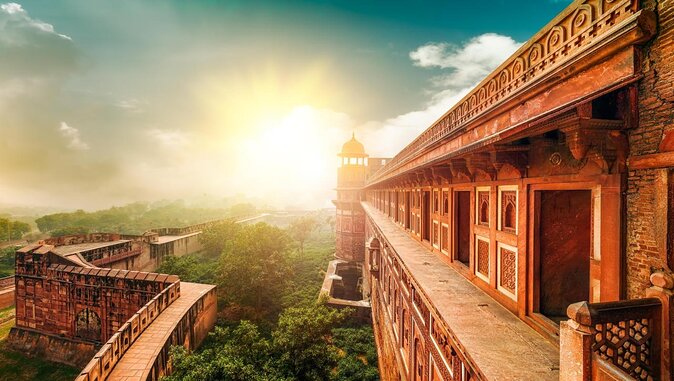
- Taj Mahal plus two supporting Agra stops (Agra Fort and Itmad-ud-Daula) so the day feels complete
- Religious variety in Delhi with Jama Masjid, Gurudwara Bangla Sahib, and the Lotus Temple
- Short, focused time at the iconic photo targets like Hawa Mahal and Jal Mahal
- Guide quality is a big deal here, with names like Javed Khan, Shaan, Basudev, Dilip Kumar, Naresh, and Kaif showing up in feedback
- Transport and tickets can be bundled, including monument entry tickets and hotel breakfast if your option includes them
Why this Delhi–Agra–Jaipur loop works for first-timers
A Golden Triangle tour works best when it does two things well: it saves you decision time, and it helps you read what you’re seeing. This one does both. You get a structured sequence of major landmarks across Mughal-era Delhi, Mughal Agra, and Rajput Jaipur, all tied together by an air-conditioned vehicle and a guide.
I like that the experience is built around variety. Delhi isn’t just one era or one religion. You pass through the grand scale of Mughal architecture, then you shift to Sikh and Baha’i landmarks, and you end the day with India Gate before heading to Agra. That mix makes it feel like a real introduction to the country rather than a single-style museum trip.
You should also know the trade-off. Because everything is packed into a tight schedule, you won’t have the freedom to linger forever at each site. You’ll want to show up ready to move and to accept that some stops are timed for the group’s flow.
Other Agra runs out of Delhi worth a look




Day 1 in Delhi: Mughal monuments, Old Delhi markets, and places of worship
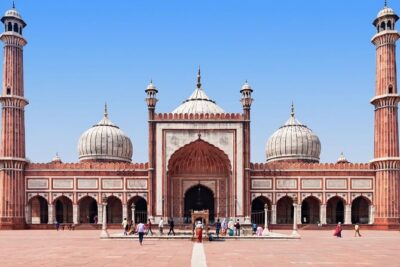
Your day begins with Jama Masjid, one of the largest mosques in India, built by Mughal Emperor Shah Jahan between 1650 and 1656 at a cost of one million rupees. You’ll spend about an hour here, which is enough time to take in the scale without turning it into a marathon.
From there you move into Old Delhi’s market energy with Chandni Chowk area, described as Moonlight Square and known as one of the oldest and busiest markets. It’s a solid change of pace: monuments let you look up and imagine history; markets pull you into street-level India. You’ll have about an hour there, and you’ll be close to Old Delhi Railway Station, so it’s easy to understand why this is such a long-standing hub.
Next is Humayun’s Tomb, a Mughal tomb commissioned by Empress Bega Begum, Humayun’s first wife and chief consort. You’ll get about an hour here too. This stop helps you connect the Mughal story—Humayun’s era sits close to the aesthetic world that later becomes the Taj Mahal’s signature style.
After that comes Qutub Minar, noted as the tallest monument in Delhi for many centuries and one of the most visited sites in the city. The time set aside is about an hour, which is a good window to notice the details and not just snap one quick photo.
Then the tour shifts to Gurudwara Bangla Sahib, a Sikh place of worship. The headline here is the free kitchen service, which provides meals daily to a huge number of people—about 50,000 meals a day is mentioned. It’s not flashy, but it’s unforgettable because it’s practical compassion in motion. It’s also a free entry stop, which helps stretch your budget on a day packed with sights.
If you want a more quiet, modern-feeling contrast, the Lotus Temple is next. It’s a Baha’i temple shaped like a flower, built from clusters of marble-clad “petals” arranged in patterns that form sides of the structure. You’ll usually have about an hour for this, and it’s a nice mental reset after the older monuments and busy streets.
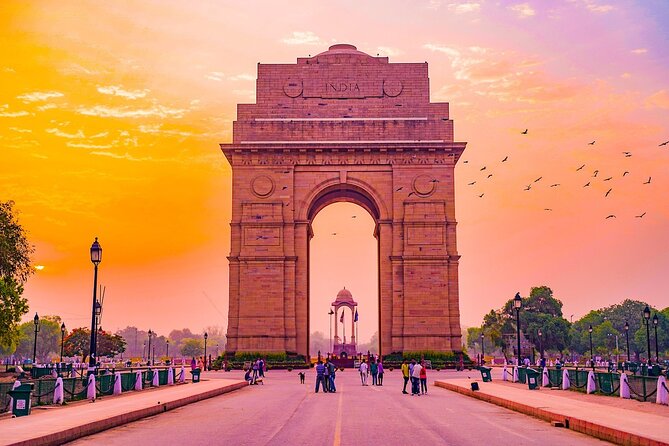
The day also includes India Gate, a memorial for 84,000 soldiers of the British Indian Army who lost their lives between 1914 and 1921 in France during World War I. Even if you’re not a memorial person, it’s a useful reminder of the 20th-century world that sits alongside the older empires.
Finally, the tour transfers you by car to Agra for your first night. The driving time listed is about 4 hours. This is where your “travel brain” should switch modes: keep water handy, expect a long seat day, and don’t plan on sightseeing in Agra immediately after arrival. You’re meant to settle in and get ready for the big one.
Agra’s big three: Taj Mahal, Agra Fort, and the Baby Taj
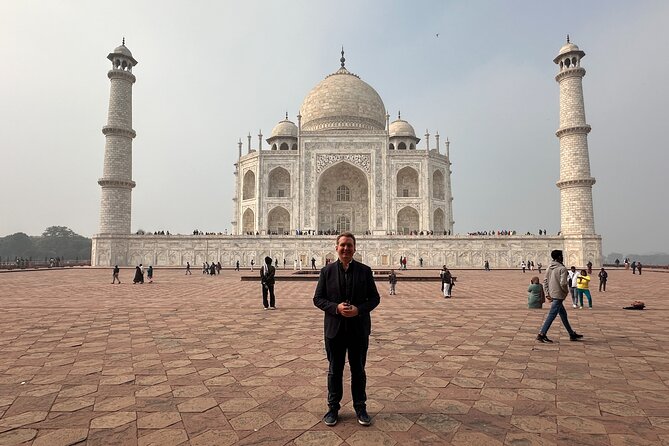
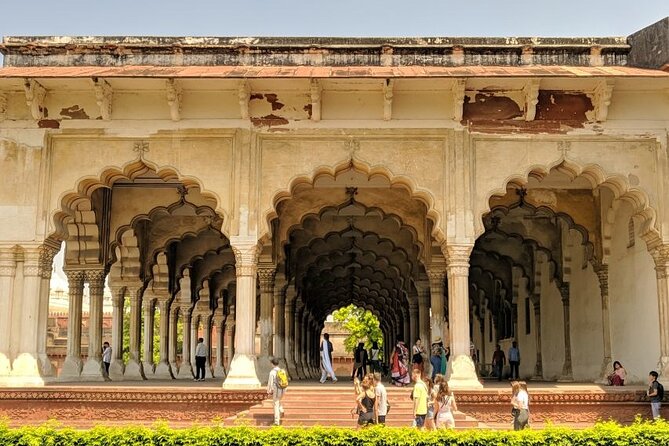
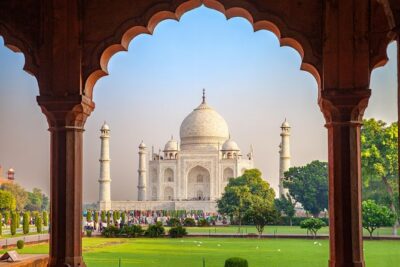
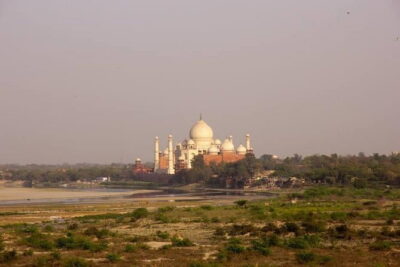
Agra is where the itinerary earns its reputation. The centerpiece is Taj Mahal, described as an ivory-white marble tomb on the south bank of the Yamuna River in Agra. It was established from 1631 to 1653 by Shah Jahan. You’ll have about 2 hours here, which is a sweet spot: enough time to appreciate the architecture from different angles and to step back and soak in the overall look, not just the main view.
What I appreciate about pairing the Taj Mahal with the next stops is that it prevents the day from becoming one-note. After you’ve seen the iconic exterior, Agra Fort helps you switch from pure beauty to power and function. The fort is described as the main residence of Mughal emperors until 1638, before the capital moved from Agra to Delhi. The time allowed is about an hour, so you’ll get a sense of scale and purpose without feeling rushed at every corner.
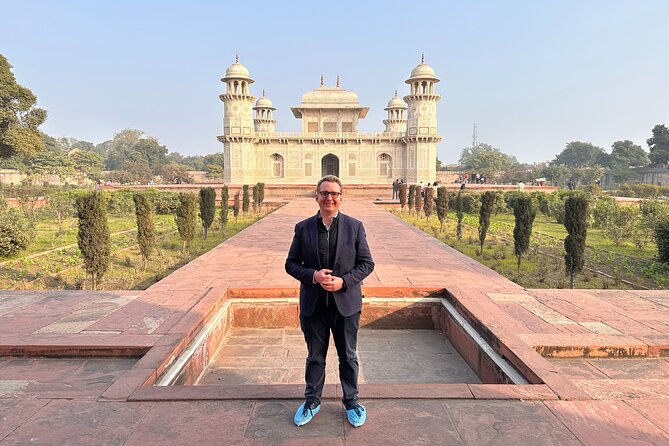
Then comes Itmad-ud-Daula, often nicknamed the Baby Taj and described as a jewel-box style mausoleum. It’s a shorter visit at about 45 minutes, but it fills a key role: it gives you a chance to see the “in-between” world of Mughal tomb design—more intimate than a mega monument, but still deeply detailed.
This combo is one of the smartest ways to spend a day in Agra on a schedule this length. You get the headline (Taj Mahal), the context of rule and residence (Agra Fort), and a refined tomb experience (Itmad-ud-Daula).
Jaipur: Amber Fort views, City Palace rooms, and Hawa Mahal’s story
The Jaipur portion starts with Amber Fort (also called Amer Fort). Amber is about 11 kilometers from Jaipur city, and the tour allots about 2 hours at the fort. Amber Fort is a big enough site that you’ll feel the Rajput power theme quickly—this is less about one perfect photo and more about walking through the fort’s mood and structure.
Next is Jal Mahal, the palace in the middle of Man Sagar Lake. You’ll have about 15 minutes here, which is brief on purpose: it’s a stop that’s about the look and the setting, not deep exploration. If you’re the kind of traveler who wants to linger, you’ll likely wish that time were longer, but it still works as a palette cleanser between major forts and palace interiors.
City Palace of Jaipur is where Jaipur becomes administrative and cultural. The palace was established by Maharaja Sawai Jai Singh II, who moved his court to Jaipur from Amber in 1727. You’ll spend about 2 hours here. I like this stop because it’s a bridge between architecture and lived royal life. You’re not only seeing structures—you’re seeing how Jaipur was set up as a capital.
From there, the tour moves to Jantar Mantar, Jaipur’s astronomical instrument complex. The site is described as a collection of nineteen architectural astronomy instruments built by Sawai Jai Singh, and it was completed in 1734. The time is about 45 minutes, and it’s a great counterbalance to the visual drama of palaces and forts. You get to think in measurements and observation instead of only ornament.
Then the day finishes with Hawa Mahal, or Palace of Wind. It’s known for its beehive design and is described as being built to let royal ladies observe street life below. The visit time is about 30 minutes, and it’s exactly the kind of short stop that still feels meaningful because the exterior tells its own story fast.
After Jaipur sightseeing, you return to New Delhi for drop-off. The listed drive time is about 5 hours, which means you’ll want to keep your last-day energy practical. This is not a day for heavy side trips.
Is $280.86 per person good value for 3 days and 2 nights?
At $280.86 per person, the value depends on what you select and how you travel. The inclusions listed are strong for a short trip: all fees and taxes, an air-conditioned vehicle, and a tour guide. You also get hotel accommodation with breakfast if that option is selected.
Monument entry tickets are another key factor. The tour notes that all monument entry tickets are included only if your option selected includes them. If you’re booking this thinking you’ll definitely cover every paid admission, double-check that option at checkout. It can make the difference between feeling like a bargain and feeling like you underestimated your costs.
Also included are all parkings and fuel surcharges, which is great because these are the kind of small add-ons that often sneak into real total cost.
Not included are lunch and dinner, plus tips and gratuities. There’s also a note about gala nights not being included; if there’s a gala night at your hotel, it lists a cost of ₹6,000 per person. That’s the kind of extra that only matters if you want to attend, but it’s worth knowing it exists.
So who gets the best deal? You do if you want a guided, transport-supported loop with major sights checked off. If you prefer total independence and you already know how to move around cities without a guide, you might find better value elsewhere. But for a first-time Golden Triangle, this pricing structure is usually fair.
Chasing the Pink City? More Jaipur day trips
Guide names matter: Javed Khan, Shaan, Basudev, and more
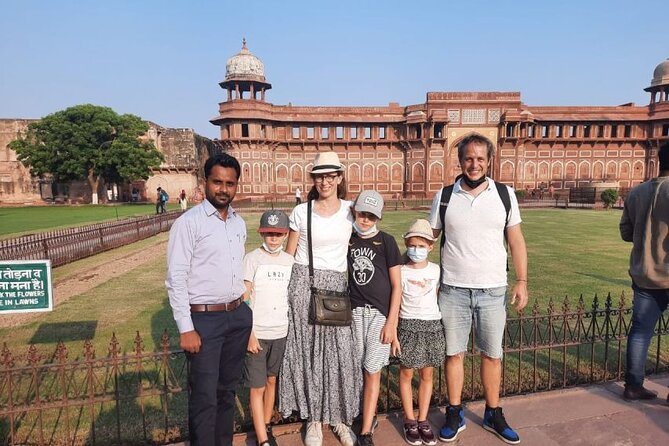
One thing I really take seriously on tours like this is whether the guide simply recites facts or actually helps you understand what you’re seeing. The feedback here highlights guides who are careful, attentive, and focused on explanations that land.
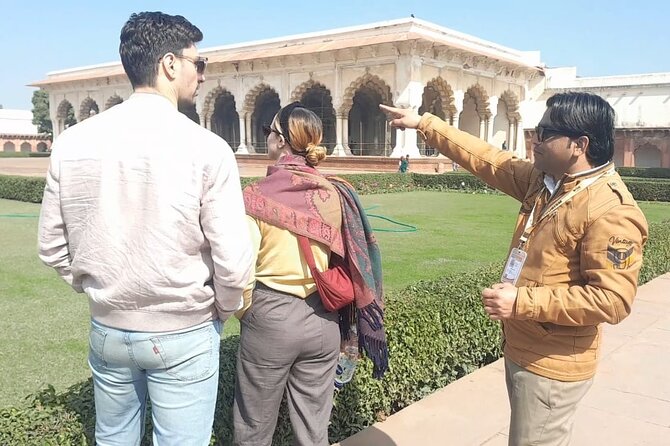
You’ll see names like Javed Khan connected with the Taj Mahal experience, including caring guidance and an overall smooth day. Shaan is also named in connection with a great day in Agra and photo help. Other guides named include Basudev, Dilip Kumar, Naresh, and Kaif, with praise tied to careful explanations and helping people get great pictures.
There’s also a mention that guides spoke Japanese well for at least one group, and explained things carefully. That matters because it affects how much you actually absorb. Even if your language isn’t listed, you should ask the provider what languages are available for guides before you book, especially if you want deeper interpretation.
A small practical takeaway: since the tour includes a guide and a vehicle, ask your guide what order or pacing they recommend for photos and viewing. When guides know you’re trying to capture meaningful shots, the day feels less chaotic.
Timing reality check: short stops, big sights
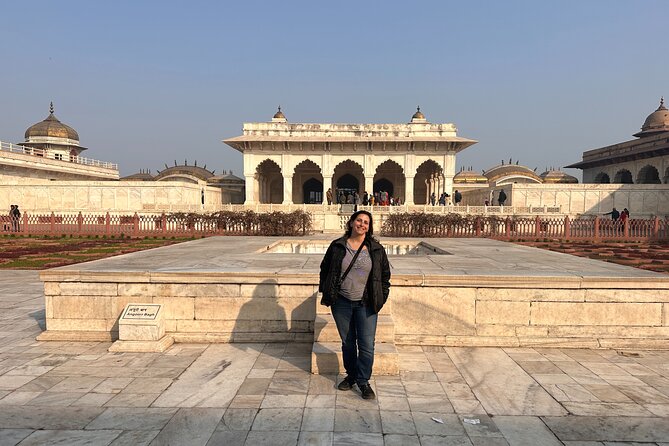
This tour is built for momentum. Some stops are clearly longer (Taj Mahal is about 2 hours, and Amber Fort and City Palace are also about 2 hours). Others are deliberately short, like Jal Mahal (about 15 minutes) and Hawa Mahal (about 30 minutes).
That pacing is why the trip works for most people. You see the key icons, you don’t get stuck waiting around, and you’re not trapped in one site all day. The trade-off is that if you’re the type who wants to sit quietly for 90 minutes in every courtyard, you may wish you had more time.
Also remember: lunch and dinner aren’t included. On a route this packed, you’ll want to keep meal timing practical and be okay with eating wherever the plan allows rather than hunting for a specific restaurant.
Who should book this Golden Triangle tour?
This is a good match if:
- you want a guided introduction to Delhi, Agra, and Jaipur in a tight timeframe
- you like classic monuments but also want a wider Delhi mix that includes Sikh and Baha’i sites
- you value air-conditioned transport and someone else handling the flow
It might not be ideal if:
- you prefer slow travel and want lots of free time at each site
- you don’t like group pacing
- you’re hoping to avoid any optional charges completely (since lunch/dinner, tips, and gala-night extras aren’t included)
Should you book this Golden Triangle tour from Delhi?
If you’re booking your first Golden Triangle and you want a plan that covers the big landmarks without turning your trip into a logistics project, I think this tour makes sense. The combination of Delhi’s Mughal-and-religious variety, Agra’s Taj Mahal plus two strong supporting stops, and Jaipur’s fort-and-palace lineup is a smart way to use 3 days.
My advice for a confident booking: confirm whether hotel breakfast and monument entry tickets are included in your selected option. Then plan your daily budget for lunch and dinner, and decide how you’ll handle tips.
If you like guided days with clear explanations and photo-friendly help, you’ll probably feel at home with this style. Just treat the schedule as what it is: a highlight reel that moves on purpose.
FAQ
How long is the Golden Triangle tour from Delhi?
It runs for about 3 days (with 2 nights) based on the scheduled sightseeing and transfers.
Does the tour include pickup and drop-off in Delhi?
Pickup is offered, and the tour returns you to New Delhi for drop-off after Jaipur sightseeing.
What are the main places you visit in this trip?
You’ll see major Delhi landmarks (including Jama Masjid, Humayun’s Tomb, and Qutub Minar), Agra highlights (including the Taj Mahal), and Jaipur attractions (including Amber Fort and City Palace).
Are monument entry tickets included?
All monument entry tickets are included only if the option selected includes them.
Is hotel accommodation included?
Hotel accommodation with breakfast is included if the option is selected.
Are lunch and dinner included?
No. Lunch and dinner are not included.
Are there any optional gala-night costs?
Gala nights are not included in the hotel cost, and the tour info lists ₹6,000.00 per person for gala nights if applicable.
Is this a private tour?
Yes. It’s described as private, meaning only your group participates.
What is the cancellation refund window?
You can cancel up to 24 hours in advance for a full refund, based on the experience’s local time.
The Full Golden Triangle, More Options
- 3-Days Private Golden Triangle Tour: Delhi, Agra & Jaipur by Car
★ 5.0 · 1,107 reviews - 3-Days Private Golden Triangle Tour: Delhi, Agra & Jaipur by Car
★ 5.0 · 1,098 reviews - 3-Day Delhi, Agra and Jaipur Private Tour – India Golden Triangle
★ 5.0 · 812 reviews - Four-Day Private Luxury Golden Triangle Tour to Agra and Jaipur From New Delhi
★ 5.0 · 807 reviews - 5 Nights 6 Days Private Golden Triangle Tour – Delhi Agra Jaipur
★ 5.0 · 574 reviews
Onward to Jaipur: More Day Trips
- 3-Days Private Golden Triangle Tour: Delhi, Agra & Jaipur by Car
★ 5.0 · 1,107 reviews - 3-Days Private Golden Triangle Tour: Delhi, Agra & Jaipur by Car
★ 5.0 · 1,098 reviews - 3-Day Delhi, Agra and Jaipur Private Tour – India Golden Triangle
★ 5.0 · 812 reviews - Four-Day Private Luxury Golden Triangle Tour to Agra and Jaipur From New Delhi
★ 5.0 · 807 reviews - Jaipur Day Trip from Delhi by Car or Train – All Inclusive
★ 5.0 · 663 reviews
More Agra Day Trips out of Delhi
- Same Day Taj Mahal, Agra Fort & Baby Taj Tour from Delhi by Car
★ 5.0 · 4,304 reviews - Full Day Taj Mahal, Agra Fort & Baby Taj Tour from Delhi by Car
★ 5.0 · 3,647 reviews - From Delhi: Taj Mahal & Agra Private Day Trip with Transfers
★ 4.9 · 3,181 reviews - From Delhi: Taj Mahal and Agra Fort Private Sunrise Tour
★ 4.9 · 2,270 reviews - Sunrise Taj Mahal, Agra Fort & Baby Taj Tour from Delhi by Car
★ 5.0 · 2,243 reviews
Just added: more New Delhi reviews to browse
- 4 days Golden Triangle Tour★ 5.0 · 3 reviews
- Discover Old & New Delhi: Private Tour with Street Food★ 5.0 · 3 reviews
- Taj Mahal Tour From Delhi By Private Car★ 4.5 · 3 reviews
- Golden Triangle Tour 5 Days★ 5.0 · 3 reviews
- Taj Mahal: Express Entry Ticket For Sunset Tour with guide★ 5.0 · 3 reviews
- Agra Taj Mahal Sunrise & Sunset Tour from Delhi★ 5.0 · 3 reviews
Agra Day Trips from Delhi, compared.
 ★ 5.0Same Day Taj Mahal, Agra Fort & Baby Taj Tour from Delhi by CarFrom $624,304 reviews
 ★ 5.0Full Day Taj Mahal, Agra Fort & Baby Taj Tour from Delhi by CarFrom $623,647 reviews
 ★ 4.9From Delhi: Taj Mahal & Agra Private Day Trip with TransfersFrom $43,181 reviews
 ★ 4.9From Delhi: Taj Mahal and Agra Fort Private Sunrise TourFrom $592,270 reviews
 ★ 5.0Sunrise Taj Mahal, Agra Fort & Baby Taj Tour from Delhi by CarFrom $622,243 reviews
 ★ 5.0Taj Mahal and Agra Private Car Tour from Delhi with 5* LunchFrom $331,633 reviews
 ★ 4.9From Delhi: Private Taj Mahal and Agra Tour by Express TrainFrom $751,605 reviews
 ★ 5.0Taj Mahal, Agra Fort, Baby Taj Tour from Delhi by Superfast TrainFrom $751,494 reviews