
Reviewed · AGRA DAY TRIPS FROM DELHI
From Delhi 2 Nights 3 Days Golden Triangle Tour Delhi Agra Jaipur
Golden Triangle, three cities, zero guesswork. This Delhi–Agra–Jaipur route is designed to stack the big sights in a smart order, from Mughal Delhi to the Taj Mahal in Agra and royal Jaipur highlights.
I especially like the mix of landmarks and real local texture. You’ll see monumental architecture like Jama Masjid and Humayun’s Tomb, then step into the everyday rhythm around Chandni Chowk. I also like the pacing: most stops are given about an hour (with shorter add-ons), so you’re not trapped in one place all day.
One consideration: lunch and dinner aren’t included, so you’ll need to budget time and money for meals on your own. And you should expect long driving blocks between cities—about four hours to Agra and about five hours back to Delhi—so plan for comfort and patience.
In This Review
- Key Things That Make This Tour Worth Your Time
- How the Golden Triangle Fits Into 3 Days
- Delhi Day: From Jama Masjid to India Gate
- Jama Masjid: Scale and Mughal authority
- Chandni Chowk area: Pasar Chandni Chowk and Old Delhi energy
- Humayun’s Tomb: A calmer Mughal reset
- Qutub Minar: The Delhi skyline icon
- Gurudwara Bangla Sahib: The free kitchen that feeds crowds
- Lotus Temple: Quiet geometry
- India Gate: A short pause with memorial meaning
- Transfer to Agra: the 4-hour reality check
- Agra Day 2: Taj Mahal Time, Then Fort and Itmad-ud-Daula
- Taj Mahal: How to use your two hours well
- Agra Fort: Power center after the romantic icon
- Itmad-ud-Daula: A smaller stop with big charm
- Jaipur transfer: another overnight reset
- Jaipur Day 3: Jal Mahal Quick Glance, Then Royal Monuments
- Jal Mahal: 15 minutes by the water
- City Palace: Where power lived and rituals played out
- Jantar Mantar: Rajput-built instruments and sky math
- Hawa Mahal: The beehive facade and window lore
- Return to New Delhi: the 5-hour finish
- Price and What You Actually Get for $186.14
- What’s included
- What’s not included
- When this price feels like a good deal
- Guides Are the Difference: Patient, Humorous, and Photo-Aware
- Practical Tips to Make the Trip Feel Less Like a Sprint
- Should You Book This Delhi–Agra–Jaipur Tour?
- FAQ
- What is the duration of the Delhi–Agra–Jaipur tour?
- What does the price include?
- Are lunch and dinner included?
- Does the tour include hotel stays?
- Does the tour include pickup and tickets?
- What is the cancellation policy?
Key Things That Make This Tour Worth Your Time
- Major Delhi highlights in one tight day, from Jama Masjid to Qutub Minar and Gurudwara Bangla Sahib
- A full Taj Mahal visit window (about two hours) with a guide who keeps the day flexible
- Agra Fort + Itmad-ud-Daula on the same day, not as an afterthought
- Jaipur’s most iconic stops packed into Day 3: City Palace, Jantar Mantar, and Hawa Mahal
- Guide-led navigation that makes the route easier, especially when you’re moving quickly
How the Golden Triangle Fits Into 3 Days
This is a classic Golden Triangle loop, but the key is how it’s timed. You start in New Delhi, spend a full day seeing Delhi’s headline sites, then transfer to Agra overnight. The next day is built around the Taj Mahal and two major Agra monuments, followed by an overnight stop in Jaipur. On the final day, you squeeze in Jaipur’s top landmarks and then return to New Delhi.
The structure matters because Golden Triangle tours can feel rushed or chaotic if you DIY them. Here, the big moves are already handled with an air-conditioned vehicle and a guide, and you get a predictable rhythm: sight time, then the next sight, then the next city.
Also, you’re not stuck with only one kind of experience. This route blends religious monuments, imperial architecture, markets, and public memorial space. That variety is a big part of why the itinerary works so well in just 3 days.
Other Agra runs out of Delhi worth a look




Delhi Day: From Jama Masjid to India Gate
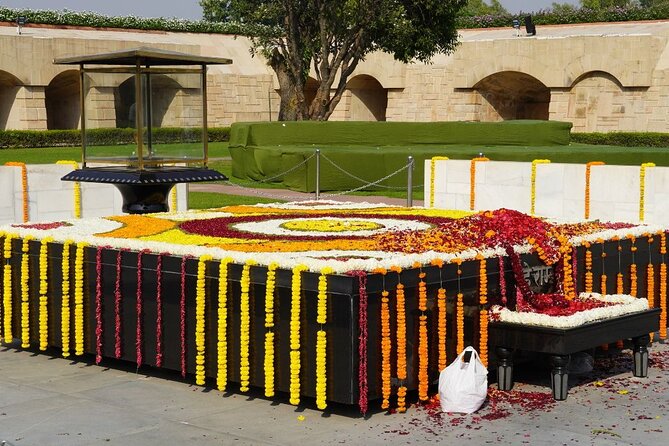
Delhi on this tour is packed, but it’s not random. It’s built to show you the city’s power centers—Mughal-era sites, Sikh and Baha’i landmarks, and the memorial geography of modern India—then transitions you toward the Agra leg.
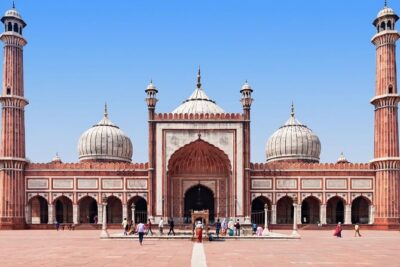
Jama Masjid: Scale and Mughal authority
Jama Masjid is one of the largest mosques in India, built under Emperor Shah Jahan between 1650 and 1656, with the note that it cost one million rupees. If you only know Delhi from office towers and shopping malls, this stop changes the picture fast. You’ll be in the presence of monumental design, and it’s the kind of place where you start noticing symmetry and sightlines.
Your time here is about an hour, with admission included (based on the tour’s entry-ticket setting). That’s enough time to orient yourself, walk the main areas, and get photos without feeling like you’re sprinting.
Chandni Chowk area: Pasar Chandni Chowk and Old Delhi energy
After the grandeur, you shift into the street-level world around Chandni Chowk. Pasar Chandni Chowk is described as one of the oldest and busiest markets in Old Delhi and it’s near the Old Delhi Railway Station.
This is the stop where you’ll feel the city’s everyday pulse—snacks, shopping, narrow streets, and constant motion. If you’re the type who likes to see how a place functions, not only how it looks, this market moment is a real highlight.
Just be ready for crowds and busy sidewalks. One hour is usually plenty to browse, snack if you want, and keep the momentum.
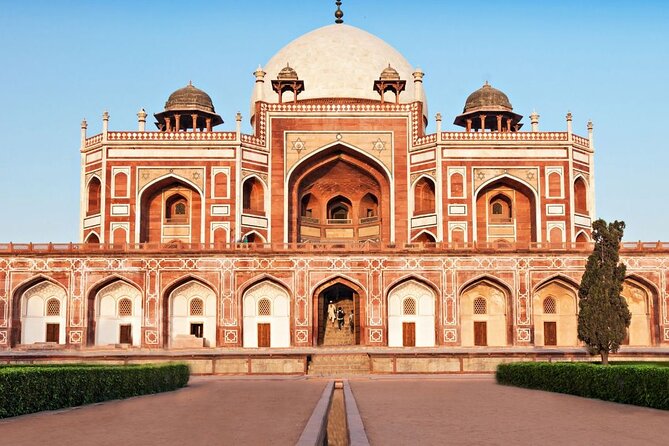
Humayun’s Tomb: A calmer Mughal reset
Humayun’s Tomb shifts you from marketplace energy to a more reflective setting. It’s the tomb of Mughal Emperor Humayun, commissioned by his first wife and chief consort, Empress Bega Begum (also known as Haji Begum).
This stop is listed for about an hour with admission included. I like using a site like this mid-day because it gives your brain a break. You’ll slow down, appreciate the layout, and then you’re ready to move again for Qutub Minar.
Chasing the Pink City? More Jaipur day trips
Qutub Minar: The Delhi skyline icon
Qutub Minar is called the tallest monument in Delhi for many centuries and one of the most visited sites in the city. It’s the kind of landmark that doesn’t need a guide to impress you, but it helps to have context.
You get about an hour here, admission included. In practical terms, it’s a good place to take photos from different angles, because people naturally spread out around it and you can keep your pacing under control.
Gurudwara Bangla Sahib: The free kitchen that feeds crowds
Gurudwara Bangla Sahib is a Sikh holy temple, and the standout detail is the free kitchen that serves meals daily to around 50,000 people. It’s listed as an hour with admission free.
Even if you’re not religiously connected, this is one of those experiences that changes how you think about hospitality and community. It’s also a nice contrast to the “ticketed landmark” sites, because it feels less like a museum and more like a living place.
Lotus Temple: Quiet geometry
The Lotus Temple is a Baha’i place of worship, known for its flowerlike shape. The building is made of 27 free-standing marble-clad “pedals” arranged in clusters of three to form nine sides.
It’s on the itinerary as free admission, about an hour. This stop works well when you need calm after busy streets. It also gives you something visually different from the stone and arch-heavy Mughal sites.
India Gate: A short pause with memorial meaning
India Gate is the memorial to 84,000 soldiers of the British Indian Army who lost their lives between 1914 and 1921 in the first world war in France. Here, you get around 30 minutes and free admission.
It’s brief on purpose. After all the walking, it’s a good moment to sit, orient, and then mentally shift into the travel mode: you still have the Agra transfer coming.
Transfer to Agra: the 4-hour reality check
Once Delhi sightseeing is done, you transfer to Agra by car for the first night halt. The listed driving time is about four hours.
That’s not a “nap” time if you’re trying to see everything out the window. It’s simply the part of the trip you should treat as travel days do: hydrate, keep your essentials close, and save energy for tomorrow.
Agra Day 2: Taj Mahal Time, Then Fort and Itmad-ud-Daula
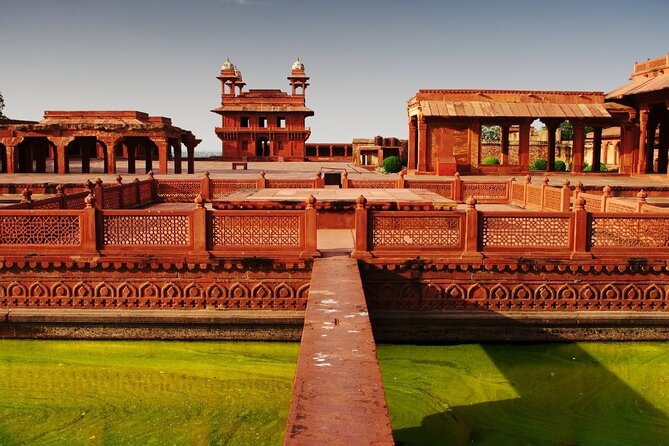
Agra is the star of the second day, and the order helps. You start with the Taj Mahal, then you move to Agra Fort, and you finish with Itmad-ud-Daula—often nicknamed the Baby Taj.
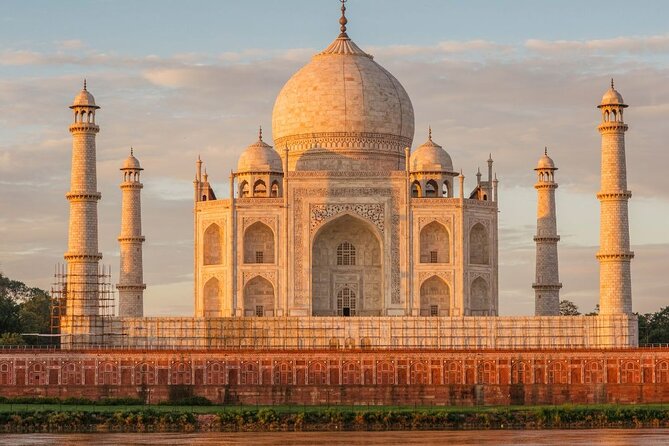
Taj Mahal: How to use your two hours well
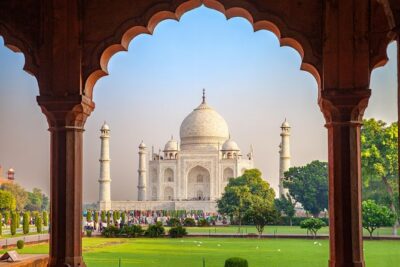
The Taj Mahal is an ivory-white marble tomb on the south bank of the Yamuna waterway. It was built between 1631 and 1653 under Shah Jahan, with the help of 20,000 workers (as noted in the tour summary).
You get about two hours, admission included (if entry tickets are selected). That’s a good window because you can do more than one thing:
- You can walk the main areas and not feel frantic.
- You can take time with close-up details on the marble and symmetry.
- You can adjust if conditions change.
One practical point: a guide who stays patient matters here. In the feedback you provided, Faizan was praised for waiting at the Taj Mahal while fog lifted, helping with photos and explaining things clearly. That tells you what kind of guiding style this tour can deliver: flexible, photo-aware, and not rushing you out the door.
Agra Fort: Power center after the romantic icon
Agra Fort is described as the main residence of Mughal Dynasty emperors until 1638, when the capital shifted from Agra to Delhi, before the British captured it. It’s about one hour with admission included.
This stop helps balance the Taj Mahal. The Taj often gets treated as one emotional picture. Agra Fort brings you back to rule, defense, and governance. If you like your monuments to explain how empires worked, Agra Fort is worth giving your full attention.
Itmad-ud-Daula: A smaller stop with big charm
Itmad-ud-Daula is a Mughal mausoleum in Agra and is sometimes described as a “jewel box.” It’s listed for about an hour with admission included.
This is the kind of location where details matter. If your feet are tired from the Taj, this one-hour block can feel easier because it’s more controlled and less overwhelming.
Jaipur transfer: another overnight reset
After Agra sightseeing, you head to Jaipur, with the tour listing around four hours of travel. You rest overnight at the hotel in Jaipur.
This is where the hotel night matters. The itinerary assumes you’ll recharge, shower, and reset for Day 3.
Jaipur Day 3: Jal Mahal Quick Glance, Then Royal Monuments
Jaipur day is the “greatest hits” approach. You start with a lakeside view, then move into royal architecture and science/astronomy instruments, and finish with Hawa Mahal before returning to Delhi.
Jal Mahal: 15 minutes by the water
Jal Mahal is a palace in the middle of Man Sagar Lake. It was originally constructed in 1699, with later renovations mentioned in the tour description. Your time is short—about 15 minutes—and admission is free.
This isn’t meant to be your longest stop. Use it as a quick palate cleanser: get the lake-and-palace view, snap a few photos, and be ready to shift to the heavier architecture stops.
City Palace: Where power lived and rituals played out
The City Palace of Jaipur was established when Jaipur was founded, by Maharaja Sawai Jai Singh II, who moved his court to Jaipur in 1727. You get about two hours, admission included.
City Palace works because it gives you more than one angle of royal life. It’s also a practical pacing choice. Two hours gives you time to see the main parts without turning it into an endless walk.
Jantar Mantar: Rajput-built instruments and sky math
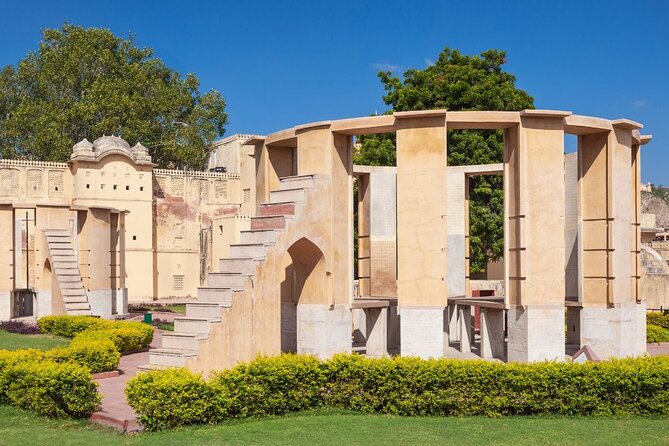
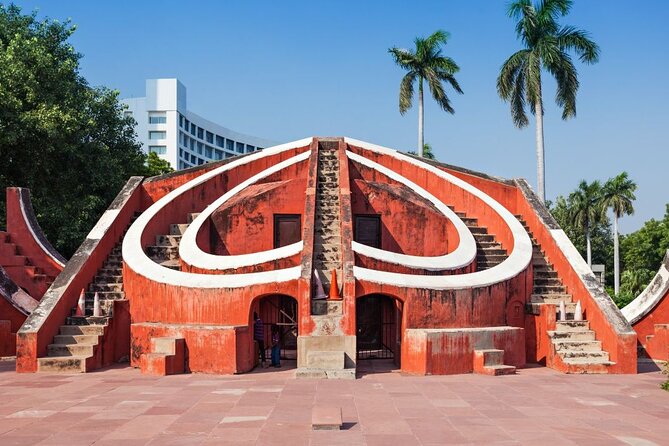
Jantar Mantar is a collection of nineteen architectural and astronomical instruments built by Sawai Jai Singh, completed in 1734. Your time here is about 45 minutes, admission included.
If you enjoy “how did they measure the sky?” moments, this stop hits a sweet spot. It’s not just stonework—it’s engineering. And because you only have 45 minutes, you won’t get stuck feeling bored.
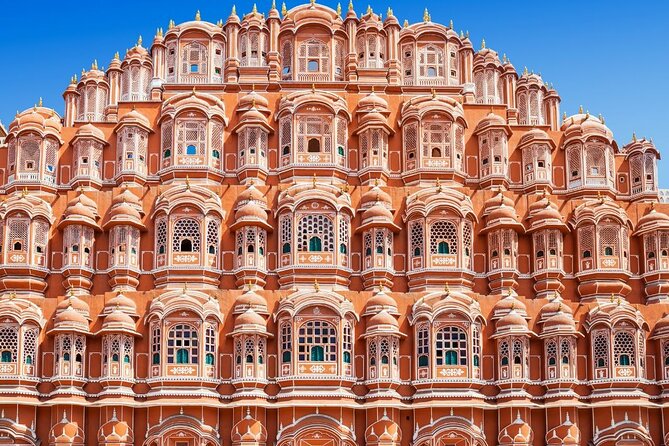
Hawa Mahal: The beehive facade and window lore
Hawa Mahal, the Palace of Wind, has the famous beehive design. It was made to help royal ladies observe daily life on the streets. Your time is about 30 minutes, admission free.
This is a quick photo stop, but it also rewards you for slowing down. Look at the façade pattern and imagine movement inside. It’s the kind of structure that makes you want to walk around and view it from different directions.
Return to New Delhi: the 5-hour finish
After finishing Jaipur sightseeing, you return to New Delhi for drop-off, with the tour listing about five hours of driving.
This is the final time block. If you’re planning an evening flight or night plans, you’ll want to build in breathing room after drop-off, since traffic can always change the real timing.
Price and What You Actually Get for $186.14
At $186.14 per person, this tour isn’t a splurge, but it’s not a “barebones ticket” either. The value depends on which options you select, because several items are conditional.
What’s included
From the provided inclusions, you get:
- All fees and taxes
- Air-conditioned vehicle
- Tour guide
- Hotel accommodation if you choose the option
- Breakfast at hotels
- Monument entry tickets if the option is selected
- Fuel surcharges
That’s a lot of the stuff people usually end up paying for separately when they DIY. A big chunk of the budget goes to transport, guide time, and site entries.
What’s not included
Lunch and dinner are not included, and tips/gratuities aren’t included either. That’s a straightforward trade-off. In practice, it means you control what you eat and where you pause—but you should budget accordingly.
When this price feels like a good deal
This price starts to feel smart if you want:
- a guided route across three cities,
- a packed itinerary that still includes admission tickets (if selected),
- hotel nights plus breakfast (if selected).
If you already have your own driver and you’re only buying monument tickets, you might find cheaper. But once you factor in guide time and the logistics of moving between cities, the value tends to make sense for most first-timers.
Guides Are the Difference: Patient, Humorous, and Photo-Aware
The most praised part of your provided feedback isn’t the monuments. It’s the way the day is handled by the guide.
You’ve got multiple guide names showing up with similar themes:
- Faizan was praised for patience at the Taj Mahal, including waiting while fog lifted, and for thorough explanations plus a relaxed pace at Agra Fort.
- Akash was praised for being attentive and taking requests into account, with good English and German skills.
- Arif Khan was described as proactive, arranging wonderful guides at throughaway price and acting almost like a local guardian.
- Hemant and Zeeshan were praised together, with dedication to showing everything and strong transportation/friend support.
- Vipinn was praised as funny and professional.
Even without reading between the lines, you can use this as a decision tool. When guides are doing the job well, you lose less time asking for directions, negotiating confusion, or scrambling for the next stop. You also get better context at the major sites, which is what turns photos into memories.
Practical Tips to Make the Trip Feel Less Like a Sprint
A short Golden Triangle tour can still feel relaxed if you act like it’s a tour, not a checklist.
First, wear comfortable shoes. Delhi sidewalks, market zones, and fort/monument paths can add up fast. Second, keep water handy for the drive segments, especially between Delhi and Agra and again from Jaipur back to Delhi.
Third, plan your meal timing. Because lunch and dinner aren’t included, you’ll want to be ready to eat when the day gives you an opening rather than waiting until you’re starving. If you like local food, ask your guide what to try around the next area—just don’t expect the tour schedule to pause for long sit-down meals.
Finally, be flexible about photos and conditions. The Taj Mahal example from the feedback is a good reminder: light and weather can shift. A guide who stays calm and adapts makes a real difference in what you get out of the two hours you have.
Should You Book This Delhi–Agra–Jaipur Tour?
I’d book it if you want a guided, efficient Golden Triangle with major stops in Delhi, Agra, and Jaipur, and you like the idea of having monument entries handled (when you choose that option). At around $186.14 per person, the package can feel like good value because you’re paying for transport, a guide, and most of the friction of planning.
Skip it—or adjust expectations—if you hate driving days. This route includes long transfers (about four hours and five hours), and lunch/dinner are on you. If you want a slower trip, you may prefer adding extra days so each city gets more breathing room.
If you’re a first-timer, this itinerary is a strong way to get your bearings fast: big architecture, iconic monuments, and a real slice of daily life in Old Delhi, all wrapped into 3 days.
FAQ
What is the duration of the Delhi–Agra–Jaipur tour?
The tour runs for about 3 days and 2 nights.
What does the price include?
The package includes all fees and taxes, an air-conditioned vehicle, a tour guide, and fuel surcharges. Hotel accommodation and breakfast are included if you choose the option, and monument entry tickets are included if that option is selected.
Are lunch and dinner included?
No. Lunch and dinner are not included.
Does the tour include hotel stays?
Yes, hotel accommodation is included if you select the accommodation option. Breakfast at the hotel is included as well.
Does the tour include pickup and tickets?
Pickup is offered. It also includes monument entry tickets if the option is selected, and you receive mobile tickets.
What is the cancellation policy?
You can cancel for a full refund up to 24 hours in advance of the experience start time. If you cancel less than 24 hours before, the amount paid isn’t refunded.
The Full Golden Triangle, More Options
- 3-Days Private Golden Triangle Tour: Delhi, Agra & Jaipur by Car
★ 5.0 · 1,107 reviews - 3-Days Private Golden Triangle Tour: Delhi, Agra & Jaipur by Car
★ 5.0 · 1,098 reviews - 3-Day Delhi, Agra and Jaipur Private Tour – India Golden Triangle
★ 5.0 · 812 reviews - Four-Day Private Luxury Golden Triangle Tour to Agra and Jaipur From New Delhi
★ 5.0 · 807 reviews - 5 Nights 6 Days Private Golden Triangle Tour – Delhi Agra Jaipur
★ 5.0 · 574 reviews
Onward to Jaipur: More Day Trips
- 3-Days Private Golden Triangle Tour: Delhi, Agra & Jaipur by Car
★ 5.0 · 1,107 reviews - 3-Days Private Golden Triangle Tour: Delhi, Agra & Jaipur by Car
★ 5.0 · 1,098 reviews - 3-Day Delhi, Agra and Jaipur Private Tour – India Golden Triangle
★ 5.0 · 812 reviews - Four-Day Private Luxury Golden Triangle Tour to Agra and Jaipur From New Delhi
★ 5.0 · 807 reviews - Jaipur Day Trip from Delhi by Car or Train – All Inclusive
★ 5.0 · 663 reviews
More Agra Day Trips out of Delhi
- Same Day Taj Mahal, Agra Fort & Baby Taj Tour from Delhi by Car
★ 5.0 · 4,304 reviews - Full Day Taj Mahal, Agra Fort & Baby Taj Tour from Delhi by Car
★ 5.0 · 3,647 reviews - From Delhi: Taj Mahal & Agra Private Day Trip with Transfers
★ 4.9 · 3,181 reviews - From Delhi: Taj Mahal and Agra Fort Private Sunrise Tour
★ 4.9 · 2,270 reviews - Sunrise Taj Mahal, Agra Fort & Baby Taj Tour from Delhi by Car
★ 5.0 · 2,243 reviews
Just added: more New Delhi reviews to browse
- 4 days Golden Triangle Tour★ 5.0 · 3 reviews
- Discover Old & New Delhi: Private Tour with Street Food★ 5.0 · 3 reviews
- Taj Mahal Tour From Delhi By Private Car★ 4.5 · 3 reviews
- Golden Triangle Tour 5 Days★ 5.0 · 3 reviews
- Taj Mahal: Express Entry Ticket For Sunset Tour with guide★ 5.0 · 3 reviews
- Agra Taj Mahal Sunrise & Sunset Tour from Delhi★ 5.0 · 3 reviews
Agra Day Trips from Delhi, compared.
 ★ 5.0Same Day Taj Mahal, Agra Fort & Baby Taj Tour from Delhi by CarFrom $624,304 reviews
 ★ 5.0Full Day Taj Mahal, Agra Fort & Baby Taj Tour from Delhi by CarFrom $623,647 reviews
 ★ 4.9From Delhi: Taj Mahal & Agra Private Day Trip with TransfersFrom $43,181 reviews
 ★ 4.9From Delhi: Taj Mahal and Agra Fort Private Sunrise TourFrom $592,270 reviews
 ★ 5.0Sunrise Taj Mahal, Agra Fort & Baby Taj Tour from Delhi by CarFrom $622,243 reviews
 ★ 5.0Taj Mahal and Agra Private Car Tour from Delhi with 5* LunchFrom $331,633 reviews
 ★ 4.9From Delhi: Private Taj Mahal and Agra Tour by Express TrainFrom $751,605 reviews
 ★ 5.0Taj Mahal, Agra Fort, Baby Taj Tour from Delhi by Superfast TrainFrom $751,494 reviews