
Reviewed · AGRA DAY TRIPS FROM DELHI
From Delhi: Delhi, Agra and Jaipur 5-Days Golden Triangle Tour
Golden Triangle tours can feel like a blur. This one keeps the pace human by pairing a private car with a guide at every major stop.
I like that the day plan is tight enough to hit the big names, but it also leaves room for the smaller moments like stepping into Old Delhi with a rickshaw ride.
The second thing I appreciate is how they reduce friction at the Taj Mahal. You get shoe covers and a golf cart ride to and from the entrance area, which saves time when crowds are thick.
The third plus is the overall comfort: unlimited bottled water and a driver who’s used to getting through traffic without turning your day into a stress test.
One thing to plan for: monument entry tickets are not included, so your final cost will depend on how many paid sites you add or how your schedule lands (the Taj Mahal is closed on Fridays).
In This Review
- Key highlights worth caring about
- Golden Triangle in 5 days: the pace (and why it works)
- Pickup, private transport, and a guide for every stop
- Day 1: Agra transfer and the Taj Mahal day that actually flows
- Taj Mahal: what you should expect
- Agra Fort right after the Taj
- Day 2: Fatehpur Sikri’s red sandstone stops your story cold
- Day 3 Jaipur monuments: Amber Fort and the palace-and-fort mix
- Amber Fort: the big gate, the courtyards, and the views
- City Palace: museums inside a functioning royal complex
- Jal Mahal, Hawa Mahal, and Jantar Mantar: iconic sights with different moods
- Day 4: the Delhi arrival day that prevents your trip from collapsing
- Day 5 Delhi highlights: Old Delhi by rickshaw, then Mughal and modern landmarks
- Jama Masjid: scale and court space
- Chandni Chowk: the market energy you can’t replicate in a photo
- Lotus Temple: calm architecture break
- Humayun’s Tomb: Mughal elegance in a garden setting
- Agrasen Ki Baoli: stepwell silence in the middle of the city
- Gurudwara Bangla Sahib: a peaceful temple with a sacred tank
- India Gate and Raj Ghat: memorials that change the mood
- Price and value: why $118.81 can be a good deal
- What you’re getting for that price
- What’s not included (and affects your final budget)
- One more budget note people forget
- Small print that can change your day: tickets, cash, and timing
- Who this tour suits best (and who should look elsewhere)
- Should you book this Delhi-Agra-Jaipur tour?
- FAQ
- Is hotel accommodation included?
- Are monument entry tickets included?
- Does the tour include pickup and drop-off?
- Do I need cash for tickets?
- Is the Taj Mahal open every day?
- What vehicle will I travel in?
- Are meals included?
- Is this a private tour?
Key highlights worth caring about
- Private vehicle sized to your group (sedan for 1–2, Innova for 3–5, Tempo Traveler for 6–10)
- Guide included at all sites, so you’re not just looking at buildings, you’re understanding them
- Taj Mahal setup makes it easier: shoe covers plus a golf cart to/from the entrance
- Old Delhi experience gets a rickshaw ride, not just a drive-by photo stop
- UNESCO-focused days with Agra Fort, Fatehpur Sikri, and Humayun’s Tomb on the route
- Optional hotel stay with breakfast for 4 nights, if you choose that package
Golden Triangle in 5 days: the pace (and why it works)
This tour is built for first-timers who want the headline sights of North India without hiring separate guides or making a spreadsheet of train times. In five days, you’ll cover Delhi, Agra, and Jaipur, with enough time at each stop to actually see what you came for.
The trade-off is that it’s not slow travel. You’ll move between cities by car and you’ll walk at the sites. Think of this as a “see it all once” trip, not a “linger for days” trip. If you’re okay with that, the structure is very efficient.
Other Agra runs out of Delhi worth a look




Pickup, private transport, and a guide for every stop
The biggest value here is control. You’re not sharing a ride with strangers or waiting around for a random bus schedule. Your group travels in an air-conditioned vehicle, and the provider keeps logistics simple with hotel/airport pickup and drop-off.
Group size matters. For 1–2 people you’ll typically use a 3-seater sedan (Toyota Etios or similar). For 3–5 people, expect a 6-seater wagon (Toyota Innova or similar). For 6–10, it’s a 10-seater van (Tempo Traveler or similar). That keeps everyone together and helps on tight roads.
You’ll also have a tour guide at the sites. For places like the Taj Mahal, Agra Fort, Amber Fort, and the major Delhi monuments, a guide can turn “wow, architecture” into “I get why it’s here and what each part means.” It saves you from guessing, especially when the monuments are surrounded by vendors, side entrances, and confusing signage.
Small comfort perks help too. There’s unlimited bottled water, and you’ll get help with tickets where needed. In hot months, that water bottle detail stops being “nice to have” and starts being the difference between enjoying the day and feeling drained.
Day 1: Agra transfer and the Taj Mahal day that actually flows
Day 1 starts with pickup from Delhi-area locations and a drive to Agra. The ride is about 3 hours along the expressway, which is a solid start because you’re not losing the entire morning to transit.
Then comes the Taj Mahal, and this is where the tour really earns its keep. You’ll check into your hotel in Agra before heading out, so you’re not trying to see one of the world’s most famous sights while still running on suitcase fumes.
Taj Mahal: what you should expect
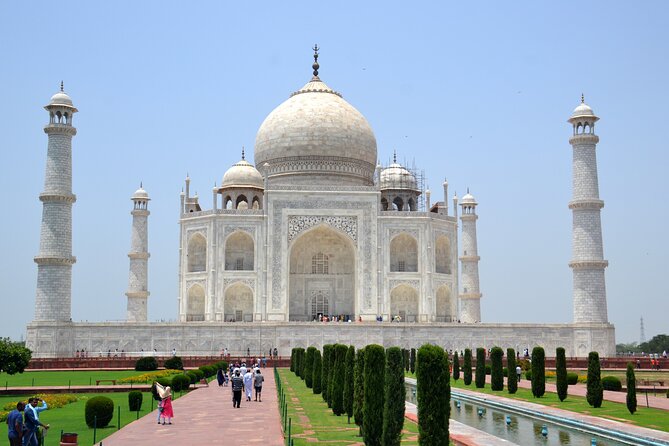
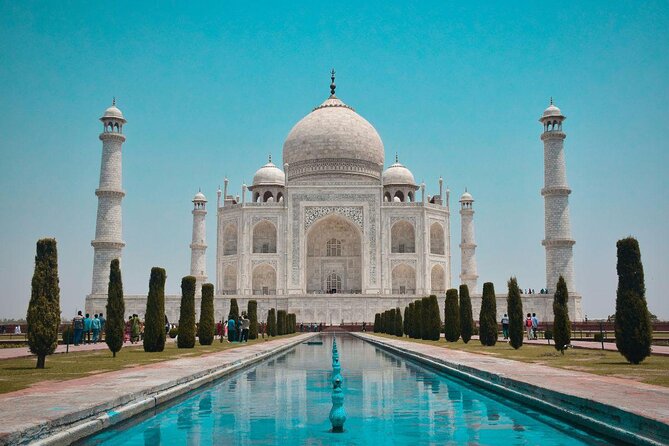
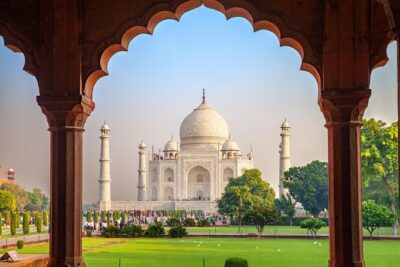
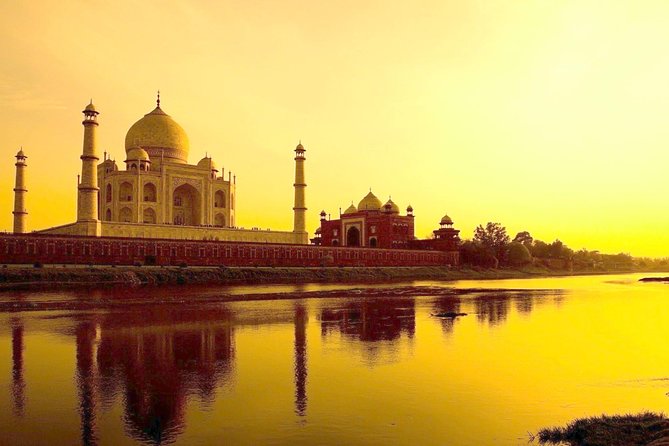
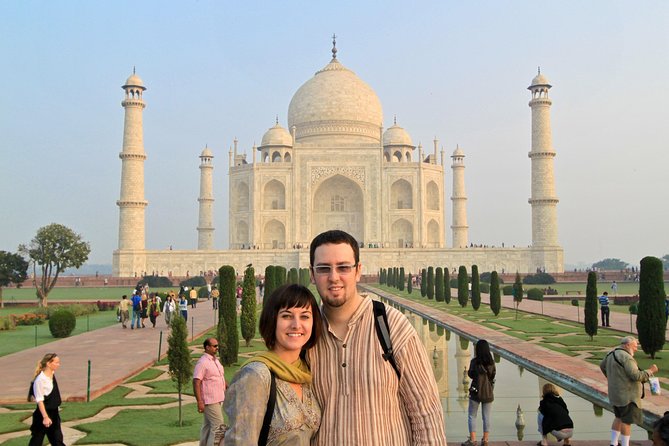
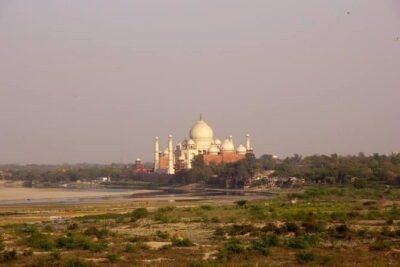
This is an ivory-white marble mausoleum on the south bank of the Yamuna River. It was built in 1632 by Mughal Emperor Shah Jahan to house the tomb of his wife, Mumtaz Mahal. Even if you’ve seen photos before, the scale hits differently in person.
What I like about this plan is the “smooth entry” touches:
- Shoe covers are provided, so you don’t have to buy or improvise.
- A golf cart ride gets you to and from the Taj Mahal entrance area, which reduces walking time for the first big sight of the trip.
Admission is not included, so you should budget for the paid ticket. Also note that the Taj Mahal is closed on Fridays, so if your dates land there, you’ll want to double-check how your schedule adapts.
Agra Fort right after the Taj
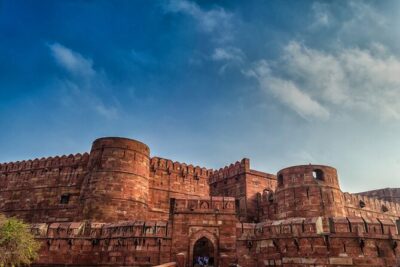
After Taj Mahal, you’ll visit Agra Fort, another UNESCO World Heritage site. The fort sits in the heart of Agra and gives you a different angle on the same Mughal era. If Taj Mahal is all about beauty and devotion, Agra Fort is about power—walls, gates, and the sense of a fortified empire.
The tour gives about 2 hours for Agra Fort. That’s enough time to see the key sections without rushing.
If you want a simple strategy: do Taj Mahal early enough to get the best light, then let Agra Fort be the “walk and reset” portion of your day.
Chasing the Pink City? More Jaipur day trips
Day 2: Fatehpur Sikri’s red sandstone stops your story cold
Morning begins with breakfast, then it’s off to Jaipur with a major stop along the way: Fatehpur Sikri. The schedule sets aside about 3 hours for it.
Fatehpur Sikri is known for its red sandstone structures and big, symbolic buildings. If you like seeing how religious, political, and architectural ideas overlap, this place does that well. Key sights you’ll likely cover include:
- Buland Darwaza
- Jama Masjid
- Salim Chishti’s Tomb
- Diwan-E-Khas Hall
Some monuments on this day are listed as admission free in the plan, which can reduce your paid-ticket load. Still, entry rules can vary by day and policy, so it’s smart to keep some cash on you in INR.
Once you finish Fatehpur Sikri, you continue to Jaipur and check into your hotel. The day gives you time to breathe, which matters because Jaipur’s forts and palaces are the kind of places where you’ll want decent energy.
Day 3 Jaipur monuments: Amber Fort and the palace-and-fort mix
Jaipur is where the Golden Triangle stops being “just famous” and turns into “okay, I see the design logic.” The tour hits a classic combo: fortress views, royal museums, and iconic facades.
Amber Fort: the big gate, the courtyards, and the views
In the morning, you’ll go from your Jaipur hotel to Amber Fort (UNESCO). The schedule allows about 2 hours here.
Amber Fort is made of sandstone and marble, and it’s famous for Hindu architectural elements. You’ll also see grand gates and four distinct courtyards. That structure helps you understand the fort as a designed world, not just walls you walk through.
Drawback to be aware of: if you’re sensitive to crowds, Amber Fort can feel busy. Go at a steady pace and use your guide to keep moving between the most important areas.
City Palace: museums inside a functioning royal complex
Next up is the City Palace of Jaipur, also scheduled for about 2 hours. This is a historic complex with museums displaying art, textiles, and weapons. It was originally built by Jai Singh II and expanded across time, so you’re looking at layers rather than a single “finished” moment.
I like this stop because it slows the pace. Amber Fort is fort-defense thinking; City Palace is collecting and display.
Jal Mahal, Hawa Mahal, and Jantar Mantar: iconic sights with different moods
After City Palace, you’ll visit:
- Jal Mahal, the water palace sitting gracefully on shallow water (about 30 minutes)
- Hawa Mahal (Palace of Wind), known for its façade and history (about 30 minutes)
- Jantar Mantar, Jaipur’s famous astronomical observatory (about 2 hours)
Jal Mahal is short but memorable if you catch it at the right time of day for light on the water. Hawa Mahal is mostly about the façade and the idea behind it—windows and ventilation logic wrapped into a visually striking form.
Then Jantar Mantar shifts you into a different mindset: timekeeping, astronomy, measurements. Even if you don’t nerd out on instruments, your guide can help you “read” the structures as a working system, not just stone props.
Day 4: the Delhi arrival day that prevents your trip from collapsing
On Day 4, you check out after breakfast and drive back to New Delhi. The route time is about 6 hours, which can be long if you’re used to shorter city hops.
The good part is that the day is set up as a transition. You arrive, check in, and have time to relax. That downshift matters because Delhi day is the biggest walking and sightseeing day on the plan.
If you’re someone who gets cranky when you’re tired, treat this as your recovery day: hydrate, eat something simple, and don’t schedule anything extra.
Day 5 Delhi highlights: Old Delhi by rickshaw, then Mughal and modern landmarks
Day 5 is where you feel Delhi’s layers. You’ll go from grand Mughal architecture to classic market streets to a calm memorial garden.
Jama Masjid: scale and court space
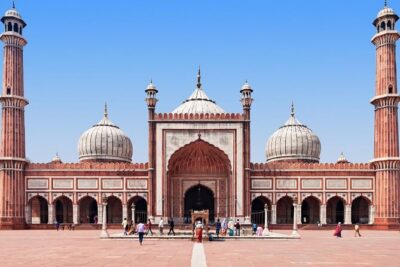
You start at Jama Masjid, one of India’s largest mosques, built by Shah Jahan. The plan allows about 2 hours. Expect massive courtyards and great viewing points from the minarets if you’re able to climb.
Chandni Chowk: the market energy you can’t replicate in a photo
Next is Chandni Chowk, about 1 hour. This is Delhi’s historic market heart—shops, street food, and the kind of street life you can only experience on foot.
I recommend a slow, curious pace. Buy nothing at first. Walk in, get your bearings, then decide. With a guide, it’s easier to avoid getting pulled in every direction.
Lotus Temple: calm architecture break
Then comes the Lotus Temple, a Bahá’í House of Worship famous for its lotus-shaped design. You’ll have about 1 hour here.
This stop works as a mental reset. Markets can rev you up. Lotus Temple gives you quieter space to breathe.
Humayun’s Tomb: Mughal elegance in a garden setting
You’ll also see Humayun’s Tomb (UNESCO), scheduled for about 1 hour. This is a stunning example of Mughal architecture with elegant design and gardens.
If you enjoy photo composition, it’s a strong stop. If you’re more into understanding context, your guide will help connect the tomb’s role to the broader Mughal world.
Agrasen Ki Baoli: stepwell silence in the middle of the city
Next is Agra Sen Ki Baoli, a historic stepwell. The plan allows 30 minutes. It’s known for ancient architecture and a serene vibe, which feels almost unreal compared to the surrounding streets.
Gurudwara Bangla Sahib: a peaceful temple with a sacred tank
After that, you’ll visit Gurudwara Bangla Sahib, about 30 minutes. This Sikh temple is known for its calm atmosphere and the sacred water tank (Sarovar).
Even if you don’t have deep knowledge of the tradition, the atmosphere is easy to respect. Keep your voice down and take your time.
India Gate and Raj Ghat: memorials that change the mood
You’ll then visit India Gate (about 30 minutes) and later Raj Ghat, the serene memorial where Mahatma Gandhi was cremated (also about 30 minutes).
Between these stops, the day shifts from architecture and markets to reflection. It’s a good way to end a Golden Triangle sprint.
You’ll also drive past the President’s House for an external look.
Price and value: why $118.81 can be a good deal
At $118.81 per person, the headline price looks bargain-level for a five-day Golden Triangle. But you need to understand what’s included versus what’s not.
What you’re getting for that price
Included items that add real value:
- Hotel/airport pickup and drop-off
- Private air-conditioned vehicle for sightseeing
- Rickshaw ride through Old Delhi
- Golf cart ride to/from the Taj Mahal entrance
- Shoe covers for the Taj Mahal
- Tour guide at all sites
- Unlimited bottled water
- 4-night hotel accommodation (if you choose the hotel option)
- Breakfast at the hotel (if the hotel option is chosen)
That combo matters. A private guide alone can be a chunk of cost in India. A private driver and car for intercity transfers can be another chunk. Add in the Taj logistics (golf cart and shoe covers), and you start to see why the rate can work.
What’s not included (and affects your final budget)
Not included:
- Meals and beverages
- Entry tickets to monuments
- Tips
So, your total cost depends on your ticket spending. The schedule includes some stops listed as admission free (for example Lotus Temple, Chandni Chowk, and several Delhi memorials), but major paid monuments like Taj Mahal and several forts/palaces are not included.
One more budget note people forget
There’s a compulsory Gala dinner fee for New Year’s Eve, Christmas, and from December 24 to January 4 annually. If your dates fall in that window, your “simple” trip budget can suddenly grow.
Small print that can change your day: tickets, cash, and timing
A few practical notes can save you headaches.
- Taj Mahal is closed on Fridays. If you’re booking for a Friday, double-check your schedule adjustment.
- Comfortable footwear matters. This plan has walking built in across forts and monuments.
- Carry cash in INR. Some monuments might not accept credit cards, and it helps to have money ready or ask the driver for ATM assistance.
- Transfer times are approximate and can shift with traffic and the time of day. Delhi in particular can make “quick rides” feel like marathons.
Also keep in mind the tour is private, meaning only your group participates. That can be a comfort boost, but it also means if your group size is off-booked or you change plans, you’ll want to coordinate quickly.
If you’re thinking of modifying the sights, the tour can be customized—you can add, change, or remove monuments after booking. Just don’t wait until the last minute if you care about exact timing.
Finally, the tour is non-refundable and cannot be changed for any reason. So book only when your dates are firm.
Who this tour suits best (and who should look elsewhere)
This fits well if you:
- Want a first-timer Golden Triangle with minimal planning
- Prefer a private car + guide over self-guided days
- Want a mix of UNESCO sites and city landmarks in a short trip
- Like the “efficient but not chaotic” feel of structured sightseeing
It might not fit you if:
- You hate long car days (Agra and Jaipur connections are real road time)
- You plan to skip most entrance-ticket sites (because tickets are a major add-on)
- You want lots of free time to wander without a schedule (this route is planned and guided)
Should you book this Delhi-Agra-Jaipur tour?
I’d book it if you want your Golden Triangle trip to feel organized, with the right people talking you through what you’re seeing, and with logistics handled from pickup to drop-off. The value looks strongest when you choose the hotel option because that’s when the included breakfast and multi-night stay balance the paid components.
I’d pause before booking if you’re traveling on a Friday (Taj closure) or if your dates fall during late-December holiday periods with the gala dinner fee. And be honest about your ticket budget—entry fees are the piece that can surprise people.
If your travel style is “show me the highlights, then I’ll explore a bit,” this tour gives you a solid base. It’s not a slow roam. It’s a well-run sprint with the details that make the sprint enjoyable.
FAQ
Is hotel accommodation included?
Hotel accommodation is included for 4 nights only if you choose the hotel option. Breakfast is also included only if the hotel option is selected.
Are monument entry tickets included?
No. Entry tickets to monuments are not included. The schedule shows some stops as admission free, but paid sites like the Taj Mahal are not included.
Does the tour include pickup and drop-off?
Yes. You can get pickup from the Delhi airport or hotels in Delhi, Gurugram, Aerocity, Noida, Ghaziabad, or Faridabad, and you’re dropped off back in the same areas.
Do I need cash for tickets?
Some monuments may not accept credit cards. The plan advises carrying cash in INR or asking the driver for ATM assistance.
Is the Taj Mahal open every day?
No. The Taj Mahal is closed on Fridays.
What vehicle will I travel in?
It depends on group size: 3-seater sedan for 1–2 people, 6-seater wagon for 3–5 people, and 10-seater van for 6–10 people.
Are meals included?
No. Meals and beverages are not included. The tour provides unlimited bottled water.
Is this a private tour?
Yes. It’s a private tour/activity and only your group will participate.
The Full Golden Triangle, More Options
- 3-Days Private Golden Triangle Tour: Delhi, Agra & Jaipur by Car
★ 5.0 · 1,107 reviews - 3-Days Private Golden Triangle Tour: Delhi, Agra & Jaipur by Car
★ 5.0 · 1,098 reviews - 3-Day Delhi, Agra and Jaipur Private Tour – India Golden Triangle
★ 5.0 · 812 reviews - Four-Day Private Luxury Golden Triangle Tour to Agra and Jaipur From New Delhi
★ 5.0 · 807 reviews - 5 Nights 6 Days Private Golden Triangle Tour – Delhi Agra Jaipur
★ 5.0 · 574 reviews
Onward to Jaipur: More Day Trips
- 3-Days Private Golden Triangle Tour: Delhi, Agra & Jaipur by Car
★ 5.0 · 1,107 reviews - 3-Days Private Golden Triangle Tour: Delhi, Agra & Jaipur by Car
★ 5.0 · 1,098 reviews - 3-Day Delhi, Agra and Jaipur Private Tour – India Golden Triangle
★ 5.0 · 812 reviews - Four-Day Private Luxury Golden Triangle Tour to Agra and Jaipur From New Delhi
★ 5.0 · 807 reviews - Jaipur Day Trip from Delhi by Car or Train – All Inclusive
★ 5.0 · 663 reviews
More Agra Day Trips out of Delhi
- Same Day Taj Mahal, Agra Fort & Baby Taj Tour from Delhi by Car
★ 5.0 · 4,304 reviews - Full Day Taj Mahal, Agra Fort & Baby Taj Tour from Delhi by Car
★ 5.0 · 3,647 reviews - From Delhi: Taj Mahal & Agra Private Day Trip with Transfers
★ 4.9 · 3,181 reviews - From Delhi: Taj Mahal and Agra Fort Private Sunrise Tour
★ 4.9 · 2,270 reviews - Sunrise Taj Mahal, Agra Fort & Baby Taj Tour from Delhi by Car
★ 5.0 · 2,243 reviews
Just added: more New Delhi reviews to browse
- 4 days Golden Triangle Tour★ 5.0 · 3 reviews
- Discover Old & New Delhi: Private Tour with Street Food★ 5.0 · 3 reviews
- Taj Mahal Tour From Delhi By Private Car★ 4.5 · 3 reviews
- Golden Triangle Tour 5 Days★ 5.0 · 3 reviews
- Taj Mahal: Express Entry Ticket For Sunset Tour with guide★ 5.0 · 3 reviews
- Agra Taj Mahal Sunrise & Sunset Tour from Delhi★ 5.0 · 3 reviews
Agra Day Trips from Delhi, compared.
 ★ 5.0Same Day Taj Mahal, Agra Fort & Baby Taj Tour from Delhi by CarFrom $624,304 reviews
 ★ 5.0Full Day Taj Mahal, Agra Fort & Baby Taj Tour from Delhi by CarFrom $623,647 reviews
 ★ 4.9From Delhi: Taj Mahal & Agra Private Day Trip with TransfersFrom $43,181 reviews
 ★ 4.9From Delhi: Taj Mahal and Agra Fort Private Sunrise TourFrom $592,270 reviews
 ★ 5.0Sunrise Taj Mahal, Agra Fort & Baby Taj Tour from Delhi by CarFrom $622,243 reviews
 ★ 5.0Taj Mahal and Agra Private Car Tour from Delhi with 5* LunchFrom $331,633 reviews
 ★ 4.9From Delhi: Private Taj Mahal and Agra Tour by Express TrainFrom $751,605 reviews
 ★ 5.0Taj Mahal, Agra Fort, Baby Taj Tour from Delhi by Superfast TrainFrom $751,494 reviews