
Reviewed · AGRA DAY TRIPS FROM DELHI
From Delhi: Private Delhi, Agra & Jaipur Golden Triangle Tour
Zero-stress Golden Triangle logistics. This private 5-day route strings together Delhi, Agra, and Jaipur with an expert guide and door-to-door pickup, so you spend more time seeing and less time negotiating. Two things I especially like: the smooth transport in a private air-conditioned vehicle and the Taj Mahal day setup, including golf-cart rides and shoe covers so you can focus on the views.
One possible drawback: many of the biggest sights have separate entry fees, so the listed price is best viewed as the cost of planning, guiding, and transportation—not a full ticket bundle. Add in a fair amount of walking and driving time, and you’ll want comfortable shoes and a relaxed pace.
In This Review
- Key things that make this tour work
- How the private logistics keep you on schedule
- Day 1: Delhi to Agra, then the Taj Mahal experience that’s set up for comfort
- Agra Fort right after the Taj Mahal: what to expect
- Day 2: Fatehpur Sikri first, then the Chand Baori stepwell on the road to Jaipur
- Day 3: Jaipur’s big circuit—Amber Fort, City Palace, Jal Mahal, then the iconic facades
- Day 4: Back to Delhi, and why the reset matters
- Day 5: Old Delhi to New Delhi—Red Fort, Jama Masjid, Qutub Minar, and Humayun’s Tomb
- Timing tips: walking, traffic, and how to make the days feel doable
- Tickets, Friday closures, and how to avoid surprises
- Price and value: what $184.09 per person is really buying
- Who should book this Golden Triangle private tour
- Should you book it?
- FAQ
- What’s included in the tour price?
- Are monument entry tickets included?
- Is the Taj Mahal included, and is it ever closed?
- Is this tour private or shared?
- Will there be a driver and guide the whole time?
- What if I need airport transfers or my hotel isn’t listed?
- Can I cancel or change the tour?
Key things that make this tour work
- Private pickup and drop-off from your Delhi-area location (airport, station, hotel) helps you start calm and end easy.
- Taj Mahal support details like shoe covers and golf carts reduce hassles at the busiest stop.
- Old Delhi rickshaw ride adds a real-feeling contrast to the modern city drives.
- UNESCO-heavy days in Agra and Jaipur keep the itinerary focused on big-ticket monuments.
- A guide at every major site means you’re not just looking, you’re getting context fast.
How the private logistics keep you on schedule
This is a true private tour—just your group—with a driver and an expert guide that stay with you through the main stops. You’ll use a private air-conditioned vehicle for sightseeing, which matters in India because weather and traffic can turn a “quick trip” into a long one.
The vehicle choice is based on group size: a Toyota Etios or similar for 1–2 people, a Toyota Innova or similar for 3–5, and a Tempo Traveler van style for 6–10. That’s helpful because you’re not squeezing into the wrong car for your group, and you won’t be fighting for legroom after a day of walking.
Another small thing I appreciate: unlimited bottled water. In this heat, it’s not fancy, but it’s practical—and you’ll thank yourself by mid-day.
Other Agra runs out of Delhi worth a look




Day 1: Delhi to Agra, then the Taj Mahal experience that’s set up for comfort
Your day begins with pickup from wherever you’re staying in the wider Delhi area—airports, railway stations, hotels, and key satellite cities are included. Then you’ll head to Agra via a modern high-speed expressway, with an estimated 3 hours of drive time.
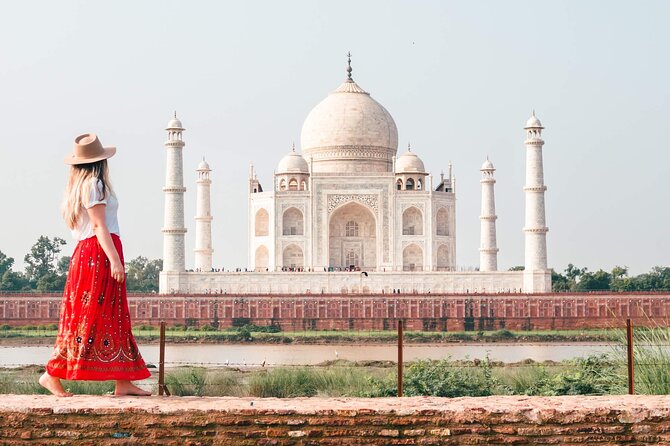
Once you arrive, you check into your hotel, refresh, and then go straight into the main event: the Taj Mahal. The itinerary gives you about 2 hours there, which is the right amount of time if you want more than one look—one for wide views and another for details.
This is where the tour’s included extras really pay off. You’ll get shoe covers and a golf cart ride to and from the Taj Mahal entrance area. That helps when the site is crowded and the pathways can feel like a workout. It also keeps you from losing time to small friction like managing shoe rules while everyone else rushes.
A few basics that make the Taj Mahal visit click:
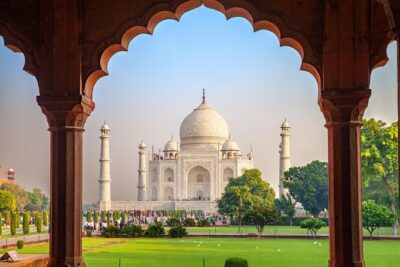
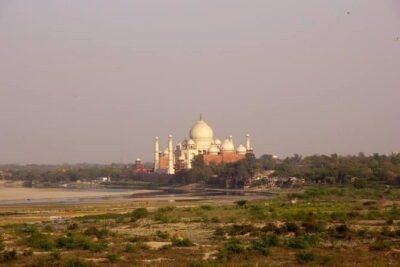
- It’s a Mughal mausoleum built under Shah Jahan in 1632 for Mumtaz Mahal.
- The marble is famous for how it changes with light, so even within the same visit you’ll see different moods.
Two practical notes: the Taj Mahal’s entry ticket is not included, and it’s closed on Fridays. If your travel dates fall on a Friday, the tour guide should help you adjust your plan so you’re not stuck staring at a closed gate.
Agra Fort right after the Taj Mahal: what to expect
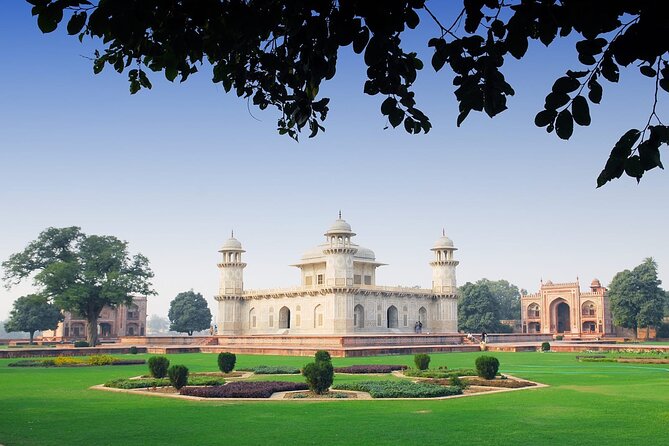
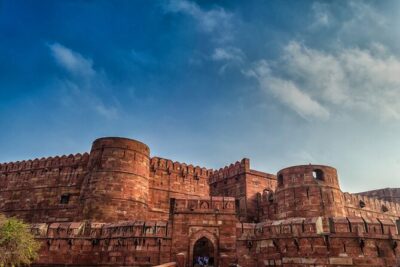
After the Taj Mahal, you’ll visit Agra Fort, a UNESCO World Heritage site with about 2 hours allotted. The tour keeps you moving, but not so fast that you’ll feel like you’re sprinting from stop to stop.
Agra Fort is different from the Taj Mahal. If the Taj is about white marble and romance, the fort is about power, defense, and city-scale history. You’ll see it as a “fortress in the middle of life,” not as a standalone monument on an empty island.
Here’s the catch: the Agra Fort entry ticket isn’t included. Budget for it so you don’t feel surprised at the gate.
Day 2: Fatehpur Sikri first, then the Chand Baori stepwell on the road to Jaipur
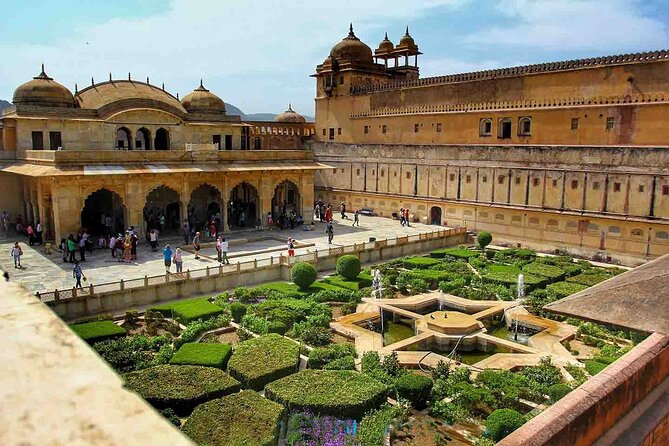
Day two starts with breakfast and a checkout, then a drive to Fatehpur Sikri. You’ll get around 2 hours here, focused on Mughal-era architecture. The plan calls out key sights like Buland Darwaza and Jama Masjid.
One plus: the itinerary marks Fatehpur Sikri admission as free on this plan. Still, I recommend confirming at the time of entry, because rules can vary by season and event days. Either way, this stop is a strong “culture shock” after the Taj Mahal because it shifts into massive stone complexes rather than a single iconic building.
After Fatehpur Sikri, you head toward Jaipur with an important detour: Chand Baori (Abhaneri Stepwell). This is a very different kind of wonder—one of the deepest stepwells, known for its intricate symmetry. The itinerary gives a long stop, around 5 hours total time including the travel and stepwell visit window.
The stepwell part is marked as not included for entry tickets, so again, bring cash and plan for monument fees.
Why this stop is worth the time: stepwells aren’t just pretty photos. They’re engineering and social history in one place. You’ll notice the design wasn’t random—water storage and community life were built into the architecture.
Then you drive to Jaipur and check in overnight. The itinerary keeps this day realistic: you’re not trying to cram all of Jaipur on day two. You get time to arrive, settle, and reset.
Day 3: Jaipur’s big circuit—Amber Fort, City Palace, Jal Mahal, then the iconic facades
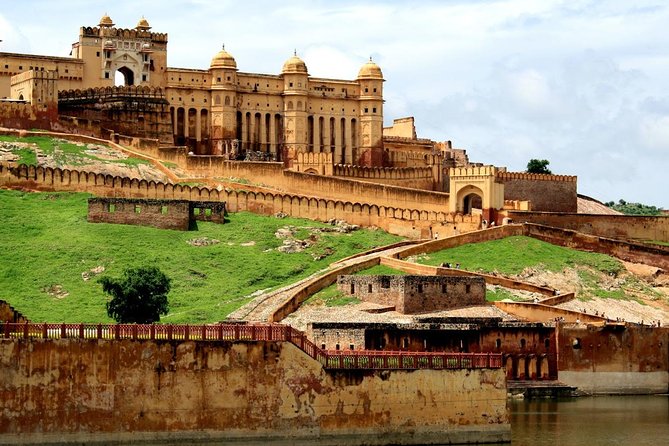
Day three is where Jaipur fans start smiling. You’ll begin with hotel pickup and head to Amber Fort (about 2 hours). Amber Fort is UNESCO-linked and known for grand architecture, plus it has a “journey up” feel that makes you slow down and look as you go in.
Amber Fort entry isn’t included in the plan, so your ticket budget should account for it.
Next is City Palace of Jaipur, around 1 hour. This complex includes museums with textiles, costumes, weapons, and paintings. The important part for you: you’re not only looking at palace walls. You’re also seeing the objects that explain how royalty lived and how power was displayed.
Then you visit Jal Mahal, the palace set within Man Sagar Lake. You’ll have a short window—about 30 minutes—but it’s a great contrast stop. You’ll see it as a dreamlike structure that feels like it’s floating, even though it’s part of the broader lake-and-cenotaph landscape near Jaipur’s maharanis.
After that, you get the day’s most photo-friendly facades:
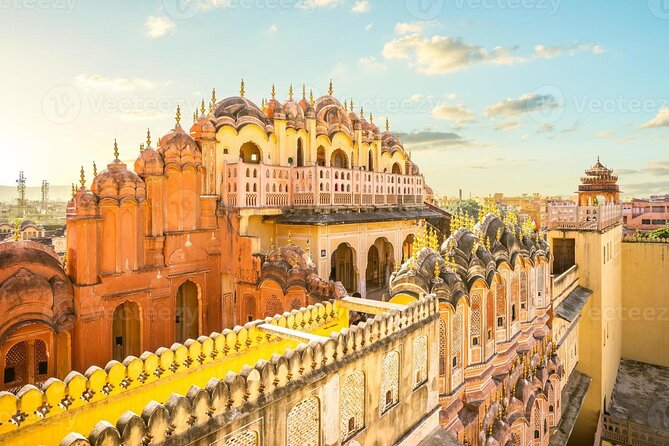
- Hawa Mahal (Palace of Winds), about 30 minutes, with the famous beehive shape and 953 windows designed for royal women to observe street life discreetly.
- Panna Meena ka Kund, another stepwell stop, about 30 minutes, valued for its symmetrical stairways and historic function as water storage.
Finally, you end at Jantar Mantar (Jaipur), around 1.5 hours. This UNESCO-listed observatory was built by Jai Singh II in 1728 and is known for massive astronomical instruments. If you like “science with style,” this stop is a satisfying way to cap your Jaipur day: it’s not just palaces and views, it’s measurement and design.
Most of these sites have entry tickets not included, so you’ll want cash and patience at ticket counters. The guide helps with ticket purchase, but the plan notes that some monuments may not accept credit cards. An ATM might be needed, so having INR on hand reduces stress.
Chasing the Pink City? More Jaipur day trips
Day 4: Back to Delhi, and why the reset matters
Day four is travel back to Delhi. After breakfast, you check out and drive back—about 5 hours is the estimate. Then you check into a Delhi hotel for an overnight stay.
This “reset” day is quietly important. Golden Triangle tours can feel like a constant sprint, especially after Amber Fort and the Jaipur fort-palace loop. Having an overnight in Delhi keeps day five from turning into an exhausting blur.
The plan marks the Delhi return hotel step as no specific ticketed monument, which makes this day easier on your feet.
Day 5: Old Delhi to New Delhi—Red Fort, Jama Masjid, Qutub Minar, and Humayun’s Tomb
Your final day is a full-day Delhi sightseeing run, starting with a pickup from your hotel and covering both Old Delhi and New Delhi highlights.
You’ll begin at Red Fort (around 1 hour). It’s a major Mughal fortress built under Shah Jahan, known as Lal Qila. Entry isn’t included, so treat it like a ticketed stop when budgeting.
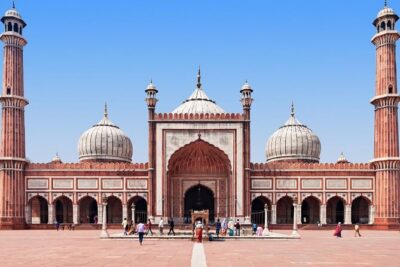
Next is Jama Masjid, India’s largest mosque, built between 1644 and 1658. The itinerary gives 2 hours, and the plan notes it can hold up to 25,000 worshippers. Entry isn’t included, so plan ahead.
Then you visit Raj Ghat, the memorial site where Mahatma Gandhi was cremated (about 30 minutes). This stop is marked as free.
After Old Delhi, you shift gears to New Delhi:
- Qutub Minar (about 1.5 hours), UNESCO-linked and known for its towering minaret (entry not included).
- Humayun’s Tomb (about 1 hour), also UNESCO-listed mausoleum architecture (entry not included).
- Gurudwara Bangla Sahib for a quick stop (about 30 minutes; marked free). The sacred water tank is part of what makes it memorable.
- Rashtrapati Bhawan (around 20 minutes; marked free on this plan). You’re seeing the grand Lutyens-and-Baker style influence from a distance viewpoint perspective.
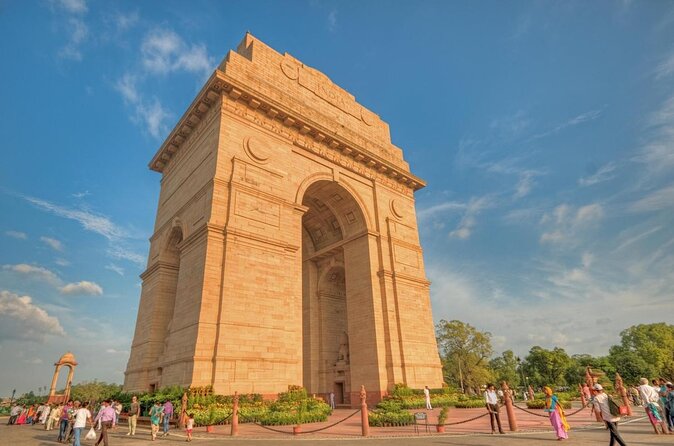
- India Gate (about 30 minutes; marked free). It’s a classic final-photo stop and a good way to end your day feeling grounded in modern Delhi.
Most monument entries here are not included, so your “day five ticket budget” can be meaningful.
Timing tips: walking, traffic, and how to make the days feel doable
Even with a private driver and a guide, this tour includes a lot of walking inside complex sites. I’d treat comfortable footwear as non-negotiable.
A couple of scheduling realities based on the plan:
- Your transfer times are approximate and can shift with traffic.
- Some stops are short by design (30 minutes at Jal Mahal, Hawa Mahal, and Panna Meena ka Kund). That can feel fine if your goal is “see the highlights, learn the story,” not “linger for hours.”
Also, keep cash ready in INR. The plan says credit cards may not be accepted at some monuments, and the guide will assist, but you don’t want to be the person searching for an ATM while the group waits.
Tickets, Friday closures, and how to avoid surprises
Here’s the big practical point: this tour includes guides, transport, and certain convenience items, but monument entry tickets are not included for many stops.
Some sites are marked free on the plan (for example, Fatehpur Sikri, Raj Ghat, Gurudwara Bangla Sahib, Rashtrapati Bhawan, and India Gate). Others are clearly ticketed (Taj Mahal, Agra Fort, Amber Fort, City Palace, Hawa Mahal, Jantar Mantar, Qutub Minar, Humayun’s Tomb, and Red Fort and Jama Masjid).
Then there’s the Taj Mahal rule: it’s closed on Fridays. If your schedule hits a Friday, your guide will help you adjust, but you should know in advance that the Taj may not be possible on that day.
Price and value: what $184.09 per person is really buying
At about $184.09 per person, the value depends on how you think about what’s included. You’re not paying just for a car. You’re paying for:
- Private air-conditioned transport across three cities
- Hotel or airport pickup and drop-off
- Expert guide at all sites
- Unlimited bottled water
- Rickshaw ride through Old Delhi
- Golf cart rides to/from the Taj entrance plus shoe covers
Those add up fast if you tried to stitch the trip together yourself—especially the guidance and the “friction reducers” at the Taj Mahal.
What you still need to plan for: monument entry tickets, meals, and tips. The plan also notes a compulsory Gala Dinner fee on New Year’s Eve, Christmas, and between Dec 24 and Jan 4 each year. So if you’re traveling in that window, your all-in budget will be higher than the base rate.
For the kind of traveler who likes structure—someone who wants the famous stops with less stress—this can be a strong deal. For the budget-only traveler who refuses any guided stops and wants to wander freely, you might find cheaper DIY options. But you’ll trade away time, context, and convenience.
Who should book this Golden Triangle private tour
This tour fits best if you want:
- A guided, curated route across Delhi, Agra, and Jaipur without map stress
- A comfortable pace with an AC vehicle between destinations
- Big monuments handled in the right order, with real context from the guide
It’s also a good match for families, since the pickup/drop-off system and private vehicle help keep kids calmer than public transport would.
If you’re a hardcore history geek who wants extra time in museums and wants to skip some stops, you might want to customize. The plan says you can modify the itinerary after booking, which helps.
Should you book it?
I’d book this if you want the Golden Triangle classics with strong planning and minimal hassle. The standout value is the combo of private transport, an expert guide at every major site, and the small Taj Mahal logistics that keep you from wasting energy on avoidable annoyances.
I’d think twice if your budget is tight on monument fees, because many major sights require separate tickets. Also, if you hate walking and hate crowds, you’ll want to manage expectations on the short stops—they’re built for seeing the highlights, not slow wandering.
If your priority is an efficient, guided route that helps you get more meaning from each place, this is a sensible way to do it.
FAQ
What’s included in the tour price?
The tour includes hotel or airport pickup and drop-off, a private air-conditioned vehicle for sightseeing, an Old Delhi rickshaw ride, golf cart rides to/from the Taj Mahal entrance, shoe covers for the Taj Mahal, an expert tour guide at all sites, unlimited bottled water, and 4-night hotel accommodation and breakfast if you choose the hotel option.
Are monument entry tickets included?
No. Entry tickets are not included for many monuments on the route, though some stops are marked as free on the plan.
Is the Taj Mahal included, and is it ever closed?
The Taj Mahal visit is part of the itinerary, but its entry ticket is not included, and the Taj Mahal is closed on Fridays.
Is this tour private or shared?
It’s private. Only your group participates.
Will there be a driver and guide the whole time?
You’ll have a chauffeur/driver for transport between stops and an expert tour guide at all sites.
What if I need airport transfers or my hotel isn’t listed?
You can arrange airport pickup and drop-off by providing your flight details, and if your hotel isn’t listed you can select My Hotel Is Not Listed and enter your hotel name.
Can I cancel or change the tour?
This experience is non-refundable and cannot be changed for any reason.
The Full Golden Triangle, More Options
- 3-Days Private Golden Triangle Tour: Delhi, Agra & Jaipur by Car
★ 5.0 · 1,107 reviews - 3-Days Private Golden Triangle Tour: Delhi, Agra & Jaipur by Car
★ 5.0 · 1,098 reviews - 3-Day Delhi, Agra and Jaipur Private Tour – India Golden Triangle
★ 5.0 · 812 reviews - Four-Day Private Luxury Golden Triangle Tour to Agra and Jaipur From New Delhi
★ 5.0 · 807 reviews - 5 Nights 6 Days Private Golden Triangle Tour – Delhi Agra Jaipur
★ 5.0 · 574 reviews
Onward to Jaipur: More Day Trips
- 3-Days Private Golden Triangle Tour: Delhi, Agra & Jaipur by Car
★ 5.0 · 1,107 reviews - 3-Days Private Golden Triangle Tour: Delhi, Agra & Jaipur by Car
★ 5.0 · 1,098 reviews - 3-Day Delhi, Agra and Jaipur Private Tour – India Golden Triangle
★ 5.0 · 812 reviews - Four-Day Private Luxury Golden Triangle Tour to Agra and Jaipur From New Delhi
★ 5.0 · 807 reviews - Jaipur Day Trip from Delhi by Car or Train – All Inclusive
★ 5.0 · 663 reviews
More Agra Day Trips out of Delhi
- Same Day Taj Mahal, Agra Fort & Baby Taj Tour from Delhi by Car
★ 5.0 · 4,304 reviews - Full Day Taj Mahal, Agra Fort & Baby Taj Tour from Delhi by Car
★ 5.0 · 3,647 reviews - From Delhi: Taj Mahal & Agra Private Day Trip with Transfers
★ 4.9 · 3,181 reviews - From Delhi: Taj Mahal and Agra Fort Private Sunrise Tour
★ 4.9 · 2,270 reviews - Sunrise Taj Mahal, Agra Fort & Baby Taj Tour from Delhi by Car
★ 5.0 · 2,243 reviews
Just added: more New Delhi reviews to browse
- 4 days Golden Triangle Tour★ 5.0 · 3 reviews
- Discover Old & New Delhi: Private Tour with Street Food★ 5.0 · 3 reviews
- Taj Mahal Tour From Delhi By Private Car★ 4.5 · 3 reviews
- Golden Triangle Tour 5 Days★ 5.0 · 3 reviews
- Taj Mahal: Express Entry Ticket For Sunset Tour with guide★ 5.0 · 3 reviews
- Agra Taj Mahal Sunrise & Sunset Tour from Delhi★ 5.0 · 3 reviews
Agra Day Trips from Delhi, compared.
 ★ 5.0Same Day Taj Mahal, Agra Fort & Baby Taj Tour from Delhi by CarFrom $624,304 reviews
 ★ 5.0Full Day Taj Mahal, Agra Fort & Baby Taj Tour from Delhi by CarFrom $623,647 reviews
 ★ 4.9From Delhi: Taj Mahal & Agra Private Day Trip with TransfersFrom $43,181 reviews
 ★ 4.9From Delhi: Taj Mahal and Agra Fort Private Sunrise TourFrom $592,270 reviews
 ★ 5.0Sunrise Taj Mahal, Agra Fort & Baby Taj Tour from Delhi by CarFrom $622,243 reviews
 ★ 5.0Taj Mahal and Agra Private Car Tour from Delhi with 5* LunchFrom $331,633 reviews
 ★ 4.9From Delhi: Private Taj Mahal and Agra Tour by Express TrainFrom $751,605 reviews
 ★ 5.0Taj Mahal, Agra Fort, Baby Taj Tour from Delhi by Superfast TrainFrom $751,494 reviews