
Reviewed · OLD & NEW DELHI CITY TOURS
Full Day Old & New Delhi City Tour
Mughal monuments and markets, all in one day. This 8-hour guided route strings together Qutub Minar and Humayun’s Tomb in south New Delhi, then shifts to Old Delhi for Jama Masjid, Chandni Chowk, and the Red Fort, with hotel or airport pickup in an air-conditioned private car.
I especially like the value: most entrance fees and camera fees are handled, and you get bottled water plus masala tea during the route. The guide makes a big difference too; Anil’s calm, organized explanations helped the sites click fast.
One drawback to plan for: the schedule is tight, lunch is not included, and you’ll be walking in between drives. Also, the Gurudwara Sis Ganj Sahib stop depends on opening times, so the exact flow may shift.
In This Review
- Key highlights you’ll feel in your day
- Why this New + Old Delhi route is such good value
- Getting picked up, starting fast, and staying sane for 8 hours
- Qutub Minar: Delhi’s 73-meter brick landmark
- Lotus Temple: the calm reset between old and newer Delhi icons
- Humayun’s Tomb: Mughal garden design you can actually see
- Raj Ghat: a quiet stop with a clear meaning
- Jama Masjid and Chandni Chowk: Old Delhi at full volume
- Khari Baoli spice market: your nose takes notes
- Gurudwara Sis Ganj Sahib: the Sikh stop that depends on the clock
- Red Fort and India Gate: the day’s big-photo ending
- Price and logistics: what you’re really paying for
- Who this tour fits best (and who might want a different plan)
- Quick booking call: should you book this one?
- FAQ
- How long is the full day Old & New Delhi city tour?
- Is pickup and drop-off included?
- What’s included in the ticket price?
- Is lunch included?
- What are the main places you’ll see?
- Where does the tour start?
- Is there a limit on group size?
- What is the cancellation policy?
Key highlights you’ll feel in your day

- A jump across centuries without changing cities: from early Mughal landmarks to Old Delhi religious and market streets
- Comfort-first logistics: pickup/drop-off plus a private air-conditioned car so you’re not stuck in street traffic for hours
- Photo-friendly planning: monument entrance and camera fees are included (and rickshaw ride fees are covered with the all-inclusive option)
- Real Old Delhi textures: Jama Masjid courtyard time, a Chandni Chowk rickshaw ride, then the spice streets of Khari Baoli
- Big-name landmarks in one sweep: Red Fort and India Gate fit into the same day, not as separate trips
Why this New + Old Delhi route is such good value
Delhi can be confusing in one simple way: the city doesn’t really have one “center.” It has several. This tour solves that by moving you in a logical arc—first to the Mughal-era sights in south New Delhi, then into Old Delhi for the grand mosque, bazaars, and the Red Fort.
At $11.19 per person for an ~8-hour day, the price is low enough that you should ask one question: what’s actually included? Here, the essentials are bundled—hotel/airport pickup and drop-off, a private car with a driver, the tour guide, bottled water, and even masala tea. On top of that, monument entrance and camera fees are included, and the rickshaw ride can be covered with the all-inclusive option. That combination matters because it cuts down on small “add-on” costs that usually creep in when you DIY.
You also get a group size cap of up to 50 people. That’s big enough to keep the schedule moving, but not so huge that it becomes chaotic. If you want a guide to connect the dots between buildings—why they were built, who built them, and how the city evolved—this route is built for that.
The old and the new, covered a few more ways




Getting picked up, starting fast, and staying sane for 8 hours
The day starts near the Qutub Minar ticket area (Seth Sarai, Mehrauli). From there, you’ll keep moving in a loop, ending near the last site visited (the stated end point includes Shani mandir gate no 01 at the Lal Quila metro station area).
A few practical thoughts that will help you enjoy this more:
- Wear shoes you can walk in. The time inside monuments is manageable, but you still shift between sites and courtyards.
- Expect a packed agenda. There’s time built in for key stops, plus a lunch break (but see the next section).
- Use the car time strategically. Treat rides as your reset. Bring a layer because you may get AC in the car, then warmer outdoor weather between stops.
This is also a mobile ticket style tour. That’s handy if you don’t want to chase paper tickets, but it does mean your phone battery matters. Bring a charger or a power bank if you’re prone to low battery days.
Qutub Minar: Delhi’s 73-meter brick landmark
Qutub Minar is the kind of sight that makes everyone look up right away. You’ll visit Qutab Minar, described here as about 73 meters tall—the tallest brick minaret in the world.
What I like about starting with it is the instant “anchor.” You get one dramatic landmark, and then the guide can place it in time right away. The monument is connected to the early Delhi Sultanate era, including its 1193 construction after the defeat of Delhi’s last Hindu kingdom, linked to Qutub-ud-din Aibak. Even if you know only a little history, the structure itself gives you something concrete: height, scale, and a clear moment in Delhi’s building story.
Time on site is about 1 hour, and admission is included. A practical note: because it’s tall and visually busy, it helps to walk around rather than only looking from one angle. The guide can also point out which parts to focus on so you don’t miss the details you’d otherwise overlook.
Potential drawback: it can be a lot of “first-stop energy.” If you’re jet-lagged, this is still doable, but keep your expectations realistic. Don’t try to memorize everything at once.
Lotus Temple: the calm reset between old and newer Delhi icons
Next comes the Lotus Temple, the white marble structure shaped like petals. The description provided for this stop calls it a last-of-seven Bahai temples, and that’s a useful way to frame it: it’s a modern religious landmark, but it still feels deeply tied to place.
You get about 45 minutes, and admission is free. This shorter slot makes sense. Lotus Temple is more about atmosphere and visual focus than long museum-style wandering. If you’re feeling “Delhi overload” by this point, this is where your body gets a break—quiet time, open space, and a chance to slow down before you plunge into Old Delhi crowds and big courtyard architecture.
Tip: plan your photos early. People tend to gather around the best angles, and the temple experience feels smoother if you’re not rushing your camera work at the end.
Humayun’s Tomb: Mughal garden design you can actually see
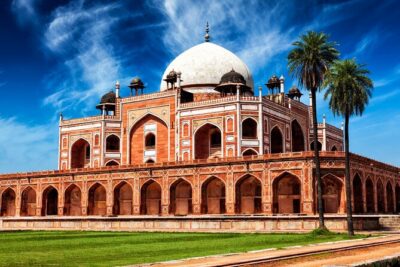
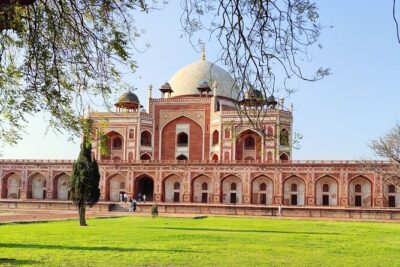
Then you move to Humayun’s Tomb, a UNESCO World Heritage Site. It’s noted as the Mughal monument that inspired the Taj Mahal, and it was declared UNESCO-listed in 1993. The site is also described as the first garden-tomb on the Indian subcontinent, which matters because the design isn’t random.
You’ll get about 1 hour, and admission is included. This stop often works best when you pay attention to layout. A garden-tomb concept means you’re not just looking at a structure—you’re seeing how architecture and landscape create a visual experience. That’s one reason it’s such a strong counterpart to Qutub Minar: one is dramatic vertical emphasis, the other is planned space and symmetry.
Practical consideration: Humayun’s Tomb is outdoors-heavy. Bring a hat or use sun protection if you’re visiting in hotter months. You’ll be grateful you did once you’re outside again after the car ride.
Bigger loops around the capital
Raj Ghat: a quiet stop with a clear meaning
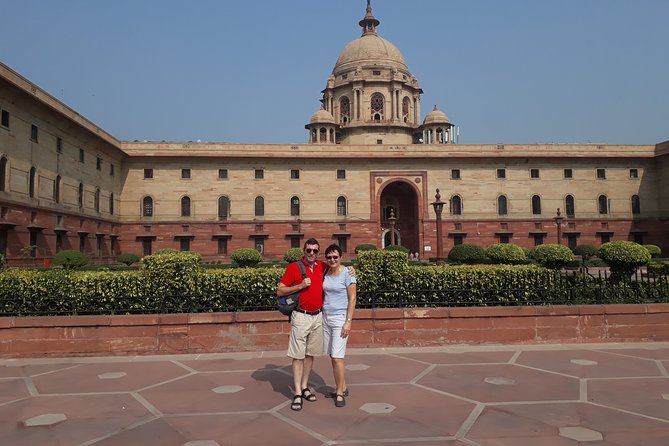
From there, you pause at Raj Ghat, the cremation site of Mahatma Gandhi. The information given here is specific: it was on 31 January 1948, after his assassination, and his ashes were buried—so it serves as his final resting place beside the sanctity of the Yamuna River.
This stop is about 30 minutes and is admission free. I like this moment because the tour already has grand monuments and large crowds. Raj Ghat is a different kind of Delhi stop: simple, reflective, and grounded in modern history rather than Mughal building ambition.
If you want this part to land emotionally, don’t treat it like a photo-only checkpoint. Take your time walking slowly. Even when the schedule is tight, that pause can reset how you experience the rest of the day.
Jama Masjid and Chandni Chowk: Old Delhi at full volume
After the reflective break, the day turns into Old Delhi energy.
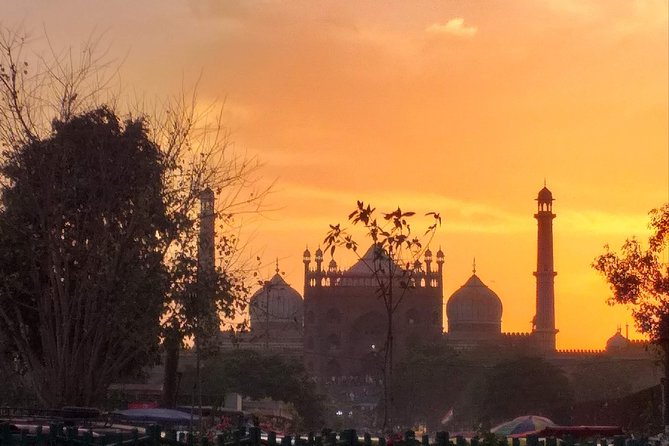
First up is Jama Masjid, described as India’s largest mosque. You’ll spend around 30 minutes and the admission is free. It’s built in 1656 with the help of 5000 workers, and it sits in the middle of Chandni Chowk, with the Red Fort nearby. That placement is part of why this stop hits hard: you’re seeing a massive religious space connected to the city’s daily life.
You’ll walk around the red sandstone courtyard. That’s the kind of detail that’s easy to miss if you rush. Courtyards are where you get scale. Inside, the buildings feel tall and monumental, but outdoors is where you see how people move and gather.
Then the tour goes straight into Chandni Chowk, with another 30 minutes stop. The description focuses on what makes the area practical for visitors: it’s one of Delhi’s oldest, busiest street markets, known for electronics, jewellery, textiles, wedding items, home decoration, and shoes. This is where you can shop with less stress because you’re with a guide and your car is nearby for easy regrouping.
You’ll also have a rickshaw ride during this part (rickshaw fees are included with the all-inclusive option). That’s one of the best ways to get from point A to point B in Old Delhi without spending the whole day navigating on foot.
Small caution: this area is active. If you’re uncomfortable with crowds, keep your phone secure and move at a steady pace rather than stopping suddenly.
Khari Baoli spice market: your nose takes notes
Right after Chandni Chowk, you’ll head to Khari Baoli, described as Asia’s biggest spice market. You’re given about 30 minutes, and it’s free to visit.
This is the kind of stop that can be more memorable than it sounds—because you’re not only seeing spices, you’re smelling them. The description notes spices, dried fruits, nuts, and herbs lined up along the street. If you like food culture, this is where you can spot how ingredients are stored, packaged, and sold at scale.
Practical tip: if you plan to buy spices or snack items, check packaging and confirm freshness. You’ll be carrying things later in the day, so keep purchases manageable.
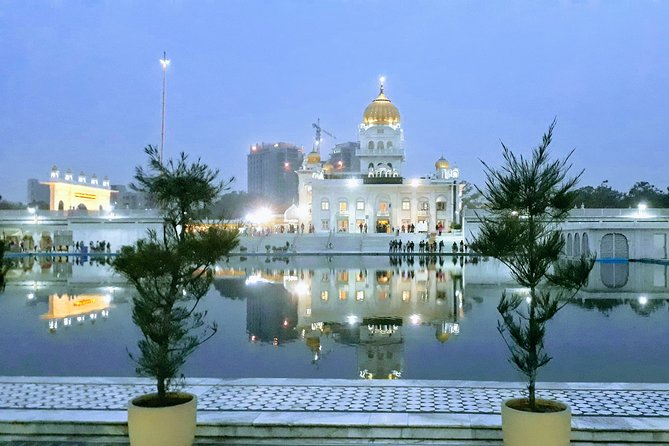
Gurudwara Sis Ganj Sahib: the Sikh stop that depends on the clock
The next religious stop is Gurudwara Sis Ganj Sahib. Admission is free, and you get about 30 minutes. The key detail here is that the visit depends on timings of the place.
It’s described as dedicated to the 9th Guru of Sikh religion, Guru Teg Bahadur, and built in 1785. Because this is timing-dependent, you’ll want to stay flexible. If the schedule shifts, the guide may adjust the exact moment you arrive, so don’t plan anything right after you’re dropped off later unless you’re prepared to be late.
If you do reach it at a good time, this can be a powerful contrast to the mosque stop. Same city, different faith space, and you get a more rounded idea of how Delhi’s spiritual landmarks function.
Red Fort and India Gate: the day’s big-photo ending
As the tour heads toward the final stretch, you’ll pass major landmarks tied to Delhi’s modern identity.
The route includes India Gate and also stops connected to government buildings: President House and Parliament House are listed as part of the drive-by sequence. These are more “see it from the road and get context” stops. They help you understand how Delhi balances old monumental architecture with newer national symbolism.
Then comes the highlight that many people came for: the Red Fort. The description calls it an unforgettable former royal residence built by Mughal emperor Shah Jahan. This is where the day becomes one big “who ruled what, where, and why” storyline.
Even if you don’t spend hours inside, Red Fort gives you scale and drama. The walls and gate structure do the heavy lifting, and your earlier Mughal stops make it easier to read what you’re seeing.
One note on pacing: because you’re trying to cover most places within the time window, you might miss a couple if the schedule tightens. That’s normal for a day tour in Delhi—traffic and timing happen. Keep your must-sees in mind, and trust that the guide will prioritize the major monuments.
Price and logistics: what you’re really paying for
Let’s talk value in a way that helps you decide.
For $11.19, you’re not just paying for a bus with stops. You’re paying for the effort of stitching together:
- Door-to-door style service (pickup and drop-off)
- Private air-conditioned car with driver (huge on a long day)
- Guide service (the difference between seeing buildings and understanding them)
- Bottled water & masala tea
- Entrance and camera fees for included monuments
- Rickshaw ride fees with the all-inclusive option
The one “gap” you’ll plan around is lunch not included. The tour includes a lunch break, so you’ll have time to eat on your own, but you’ll need to budget for it. If you want to keep the day smooth, eat earlier in your lunch break and stay close to where your group is gathering.
Also remember tips aren’t included. If your guide and driver do a good job keeping you on schedule, set aside a little gratuity in cash or the method you’re comfortable with.
Who this tour fits best (and who might want a different plan)
This tour suits you if you want a guided, efficient sweep through both New and Old Delhi in one day, especially if you’re short on time or don’t want to organize transport between far-apart areas.
You’ll likely enjoy it most if:
- You like having a guide connect sites to timelines
- You want a car to reduce street navigation
- You want a structured day with stops that cover Mughal, religious, and market areas
You might prefer something else if you:
- Hate tight schedules and prefer slow pacing
- Need long breaks for rest or meals
- Plan to spend major time inside only one monument rather than moving through many
Quick booking call: should you book this one?
If you’re the type who enjoys checklists with context—seeing landmark architecture, then walking a market and coming home with photos and stories—this is a strong buy for the money.
Book it if you want maximum coverage with the comfort of a private AC car, guided stops, and most fees handled. Skip it if you want a relaxed day without crowd energy or if you’re hoping for a long, unhurried lunch built into the price. One more practical note: this kind of tour can be in demand (average booking timing is around 85 days out), so grabbing your date earlier is smart.
And if plans change, cancellation is set up for free cancellation up to 24 hours in advance, which gives you some flexibility.
FAQ
How long is the full day Old & New Delhi city tour?
It runs for about 8 hours.
Is pickup and drop-off included?
Yes. The tour includes hotel/airport pickup and drop-off. Your end point depends on the last place you visit.
What’s included in the ticket price?
Included services cover the private air-conditioned car with driver, tour guide service, bottled water and masala tea, and monuments entrance and camera fees (and rickshaw ride fees are included with the all-inclusive option).
Is lunch included?
No. Lunch is not included, but there is a lunch break built into the day.
What are the main places you’ll see?
You’ll visit stops including Qutub Minar, Lotus Temple, Humayun’s Tomb, Raj Ghat, Jama Masjid, Chandni Chowk (with rickshaw ride), Khari Baoli, and then the day includes Red Fort plus India Gate and the President House/Parliament House drive-by stops. The Gurudwara Sis Ganj Sahib timing depends on opening times.
Where does the tour start?
The start point is the Qutub Minar Ticket Counter, Seth Sarai, Mehrauli, New Delhi.
Is there a limit on group size?
Yes. The tour lists a maximum of 50 travelers.
What is the cancellation policy?
You can cancel for a full refund if you cancel at least 24 hours before the experience starts. If you cancel less than 24 hours before, the amount paid is not refunded.
More Tours in New Delhi
- Old & New Delhi City Tour – Half or Full Day Options Available
★ 5.0 · 4,811 reviews - Half Day Private Delhi City Tour
★ 5.0 · 4,474 reviews - Same Day Taj Mahal, Agra Fort & Baby Taj Tour from Delhi by Car
★ 5.0 · 4,304 reviews - Taj Mahal Day Tour from Delhi by Superfast Train – TOP RATED TOUR
★ 5.0 · 4,166 reviews - Delhi: Old and New Delhi Private Full or Half-Day Tour
★ 4.9 · 3,776 reviews
More Tour Reviews in New Delhi
- Old & New Delhi City Tour – Half or Full Day Options Available
★ 5.0 · 4,811 reviews - Half Day Private Delhi City Tour
★ 5.0 · 4,474 reviews - Same Day Taj Mahal, Agra Fort & Baby Taj Tour from Delhi by Car
★ 5.0 · 4,304 reviews - Taj Mahal Day Tour from Delhi by Superfast Train – TOP RATED TOUR
★ 5.0 · 4,166 reviews - Delhi: Old and New Delhi Private Full or Half-Day Tour
★ 4.9 · 3,776 reviews
Old and New Delhi, Keep Exploring
- Old & New Delhi City Tour – Half or Full Day Options Available
★ 5.0 · 4,811 reviews - Delhi: Old and New Delhi Private Full or Half-Day Tour
★ 4.9 · 3,776 reviews - Delhi: Private Old & New Delhi Guided Half- or Full-Day Tour
★ 4.9 · 2,309 reviews - Old & New Delhi Private Tour – Half or Full Day (Rated Excellent)
★ 5.0 · 2,226 reviews - Old & New Delhi Full or Half Day Sightseeing Tour
★ 5.0 · 1,900 reviews
Just added: more New Delhi reviews to browse
- 4 days Golden Triangle Tour★ 5.0 · 3 reviews
- Discover Old & New Delhi: Private Tour with Street Food★ 5.0 · 3 reviews
- Taj Mahal Tour From Delhi By Private Car★ 4.5 · 3 reviews
- Golden Triangle Tour 5 Days★ 5.0 · 3 reviews
- Taj Mahal: Express Entry Ticket For Sunset Tour with guide★ 5.0 · 3 reviews
- Agra Taj Mahal Sunrise & Sunset Tour from Delhi★ 5.0 · 3 reviews
Old & New Delhi City Tours, compared.
 ★ 5.0Old & New Delhi City Tour – Half or Full Day Options AvailableFrom $384,811 reviews
 ★ 4.9Old and New Delhi Private Full or Half-Day TourFrom $23,776 reviews
 ★ 4.9Private Old & New Delhi Guided Half- or Full-Day TourFrom $72,309 reviews
 ★ 5.0Old & New Delhi Private Tour – Half or Full Day (Rated Excellent)From $202,226 reviews
 ★ 5.0Old & New Delhi Full or Half Day Sightseeing TourFrom $241,900 reviews
 ★ 4.8Full or Half-Day Old and New Delhi Private TourFrom $71,883 reviews
 ★ 4.9Private Full-Day City Tour of Old and New DelhiFrom $221,722 reviews
 ★ 5.0Old and New Delhi Guided Full or Half-Day TourFrom $20976 reviews
Browse the lists this tour appears in