

Reviewed · TAJ MAHAL TOURS FROM DELHI
Glories of the Past-3 Day Tour to Delhi Agra Fatehpur-Taj & More
Three days across Delhi and Agra. You’ll move through temples, markets, and royal monuments, with the kind of guided pacing that helps you actually understand what you’re seeing. I especially liked the quick, memorable stop at Khari Baoli and the calm start at Gurudwara Bangla Sahib, where the mood changes fast from spicy chaos to real peace. One thing to know: this is a packed schedule, so the day feels full even though each stop is timed.
My favorite part was the human touch from guides like Mehraj and Ali. They didn’t just point at sights; they answered questions and helped with practical details like taking family photos during the visits. If you’re the type who loves context (and needs your questions answered in clear English), this tour style tends to work well.
The main drawback for me is simple: 3 days of major highlights means less free time to wander on your own. Also, while monument entry tickets are listed as included on many stops, entry coverage can depend on the option you choose, and accommodation and meals are not part of the price.
In This Review
- Key Highlights at a Glance
- A Delhi Morning That Actually Changes Your Mood
- Humayun’s Tomb and Qutub Minar: Two Ways to Build Power
- Lotus Temple for Peace, Then Back to the Fast Lane
- Day 2 Transfer to Agra: The Long Drive Part
- Agra Fort: Red Sandstone Stories You Can Walk Through
- Itmad-ud-Daula: The Baby Taj That Earns Its Time
- Mehtab Bagh at Sunset: Taj Views Without the Headline Chaos
- Day 3 Taj Mahal: How to Get Value From a 2-Hour Visit
- Fatehpur Sikri: Akbar’s City and the Quiet Power of Courtyards
- The Price: What $195 Buys (and What It Doesn’t)
- How the “Private Tour” Feeling Works in Real Life
- Who This 3-Day Delhi-Agra Tour Fits Best
- Should You Book This Delhi-Agra Highlights Tour?
- FAQ
- Is pickup included?
- How long is the tour?
- What sites are included in Delhi on Day 1?
- Is the Taj Mahal included, and how much time do we get?
- Are monument entry tickets always included?
- Is this a private tour or a group tour?
- What’s included in the vehicle?
- Is free cancellation available?
Key Highlights at a Glance
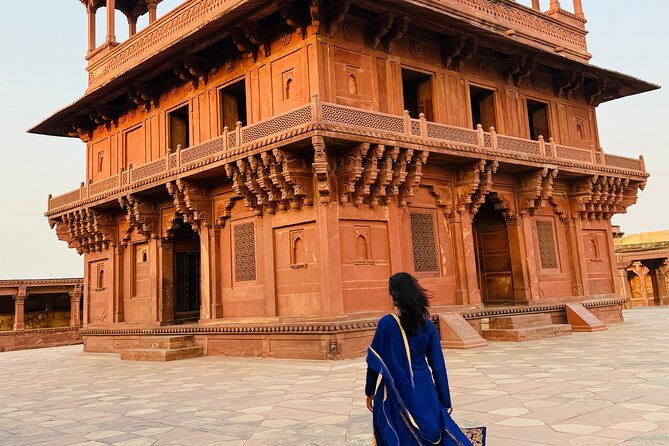
- Guides who handle questions and photos: Reviews specifically call out Ali and Meharaj for friendly, clear explanations and family photo help.
- Air-conditioned private transport + pickup: You’re picked up in Delhi, Noida, Gurugram, Ghaziabad, or Faridabad and driven between sites.
- A strong mix of Delhi contrasts: Gurudwara peace, Khari Baoli spice market energy, and Mughal-era monuments all in one day.
- Agra without rushing the details: You’ll hit Agra Fort, Itmad-ud-Daula, and Mehtab Bagh for Taj views across the river.
- Taj Mahal time built into the schedule: A dedicated 2-hour visit means it’s not squeezed into a drive-by.
- Fatehpur Sikri for the Akbar-era story: Long enough (4 hours) to take in the red-sandstone city planning and courtyards.
A Delhi Morning That Actually Changes Your Mood
Day 1 is built like a mood swing in the best way. You start at Gurudwara Bangla Sahib, a serene place of devotion where the atmosphere is calmer than the city outside. It’s scheduled for about 30 minutes with an admission ticket included, so you can slow down without feeling rushed.
Then you hit Khari Baoli, and the tone flips instantly. This is Delhi’s famous spice market, Asia’s largest by the tour’s description, and it smells like saffron, cardamom, and dried chilies. You’ll get about 30 minutes here, enough time to look, photograph, and understand why this area has been important for centuries.
After that sensory warm-up, the schedule moves to India Gate for a shorter stop (about 15 minutes). It’s a war memorial in the capital’s center, so think of it as a quick pause to get your bearings in Delhi’s layout and scale.
More ways to reach the Taj, weighed side by side




Humayun’s Tomb and Qutub Minar: Two Ways to Build Power
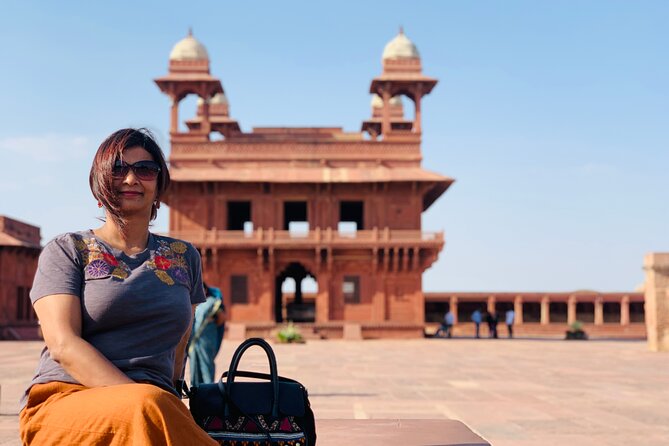
Humayun’s Tomb is one of those sites where the architecture does the storytelling for you. The tour gives you about an hour at the UNESCO World Heritage site, built in the 16th century, blending Persian and Mughal styles. It’s also the kind of monument where the guide matters—having someone explain why it was designed this way helps you notice details you might miss alone.
Next comes Qutub Minar, scheduled for about 45 minutes. It’s a 73-meter minaret from the 12th century, with Indo-Islamic design elements and carved inscriptions noted in the tour description. One practical upside of this order is that you’ve already seen one major Mughal mausoleum, so Qutub Minar’s older, different style lands clearly.
If you want the most value from this day, plan your photo timing. Humayun’s Tomb and Qutub Minar both work best when you pause and look up, not just at eye level. With a guide, you can quickly understand what you’re looking at before you spend your camera time.
Lotus Temple for Peace, Then Back to the Fast Lane
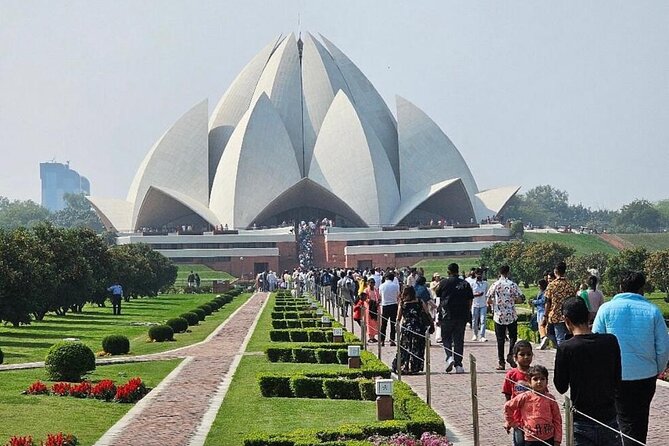
The Lotus Temple is the reset button on Day 1. You get about 30 minutes at this flowerlike building, and the tour notes it’s a symbol of unity and peace open to all faiths. Even if you’re not religious, I like sites like this because they change your mental pace in the middle of a busy sightseeing day.
This whole day is a lesson in how Delhi can feel like different cities within a few blocks. You go from markets and memorials to Mughal tombs and a universal space for quiet. The trade-off is that it’s still a full day, so keep your expectations realistic: there isn’t time to “get lost” between stops.
Day 2 Transfer to Agra: The Long Drive Part
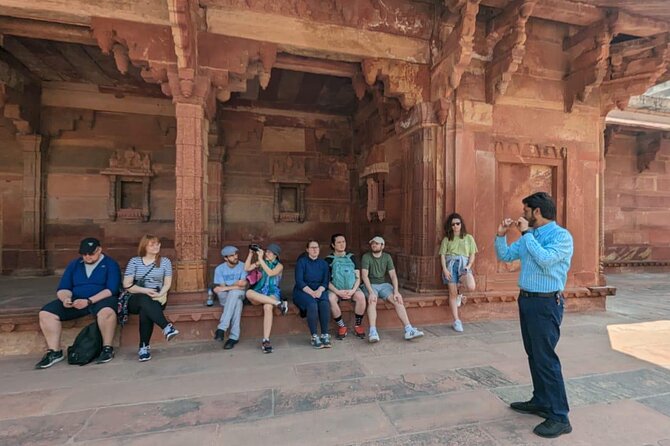
Day 2 begins with pickup and a drive to Agra from Delhi (and nearby pickup areas). The transfer is listed as about 4 hours, and it’s an important part of the overall experience because it’s part sightseeing by proxy: you’re moving through real life between major landmarks.
The tour includes an air-conditioned vehicle and in-car refreshment like bottled mineral water plus light snacks. That sounds small, but it matters on a long day. You’ll feel it when you’re not stuck searching for drinks mid-drive.
Agra Fort: Red Sandstone Stories You Can Walk Through
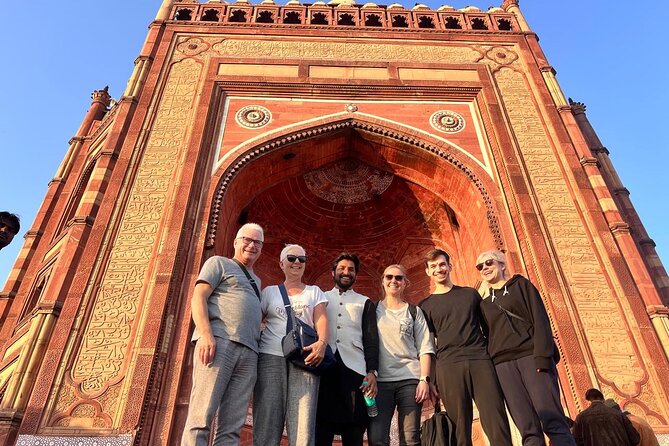
Once you arrive, the schedule hits Agra Fort for about 1 hour, with an admission ticket included. This fort is described as a red sandstone saga of empires, and the way it’s built helps you understand the Mughal mindset: power, defense, and control all in one complex.
Agra Fort can feel like more “stuff to look at” than a single monument. That’s why your guide is key here. With someone explaining the significance, you tend to notice the pattern in what you’re seeing rather than just scanning walls.
Other Agra runs out of Delhi worth a look


Itmad-ud-Daula: The Baby Taj That Earns Its Time

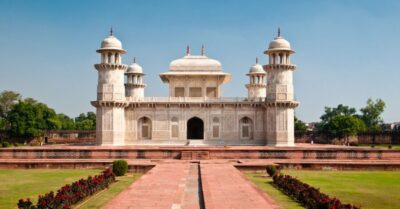
After Agra Fort, you visit Itmad-ud-Daula, often called the Baby Taj in the tour description. You get about 45 minutes here, and the focus is on delicate Mughal craftsmanship—an easier pace than the biggest fame sites, but still visually rewarding.
This stop is a smart value play. The Taj Mahal is the star, but Itmad-ud-Daula is the kind of place where you can slow down and learn the “language” of Mughal decorative style. It’s also a great option if you love details more than grand scale.
Mehtab Bagh at Sunset: Taj Views Without the Headline Chaos
Then comes one of the most practical, photography-friendly parts of Day 2: Mehtab Bagh, the Moonlight Garden. You’ll have about 1 hour, and the tour notes that it’s especially enchanting around sunset, with mirrored views of the Taj across the river.
Even if you’re not a hardcore photographer, I think this stop is worth it because it gives you a different angle and a calmer feel than the main Taj grounds. The tour description also highlights the chance to capture the Taj with a “gol…” perspective, which signals that composition matters here.
Day 3 Taj Mahal: How to Get Value From a 2-Hour Visit
On Day 3, your schedule centers on Taj Mahal with about 2 hours set aside, and an admission ticket included. This is the day’s headline, but the real question is how much of it you’ll actually absorb in limited time.
Two hours is enough if you travel with a plan. I’d spend the first portion orienting myself—walk slow at the key viewpoints—then use the second portion to return to the spots you like most. If your guide is Ali or Meharaj-style (friendly, clear, patient), you’ll likely get helpful context fast, which makes your photos and memories more meaningful.
The tour’s tone also emphasizes it as marble poetry and eternal love, which is a reminder not to treat Taj Mahal like just another photo backdrop. It’s a work of design, proportion, and materials. When you notice those things, it stops being a checklist item.
Fatehpur Sikri: Akbar’s City and the Quiet Power of Courtyards
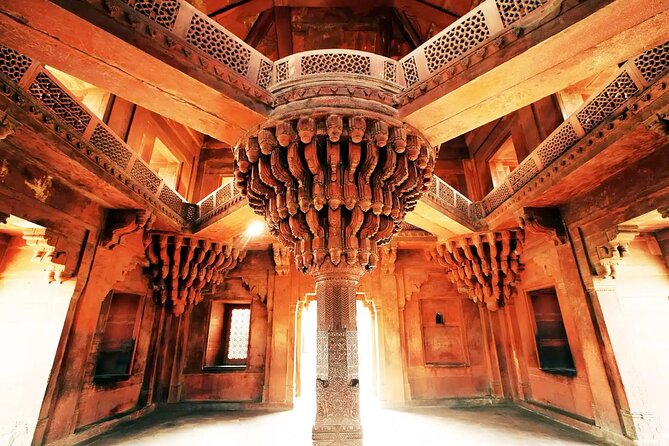
After Taj Mahal, you head to Fatehpur Sikri for about 4 hours. The tour describes it as a dream city shaped by Emperor Akbar, built in red sandstone, on the edge of the Aravalli hills. You get time to walk through courtyards and silent arches—exactly the kind of setting where you need space to let the place “click.”
I like Fatehpur Sikri for travelers who want the story behind the stones. It’s not only about one building; it’s about how the city plan reflects belief, administration, and imperial ambition. With 4 hours, you can take breaks, ask questions, and still end with a sense of how the place was meant to function.
The Price: What $195 Buys (and What It Doesn’t)
At $195 per person for a 3-day itinerary, the best way to judge value is to count what’s included: guided touring, an air-conditioned private vehicle, hotel or airport pickups from Delhi-area cities, and bottled water plus light snacks in the car. You’re also getting transfers between Delhi and Agra, which is a big time and energy saver compared to arranging everything yourself.
You’re not paying for accommodation or meals, and gratuities for guides and drivers are not included. So if you want to compare this to doing it independently, the right comparison isn’t just ticket cost—it’s time, stress, and having a guide handle route and context across multiple sites.
One more detail: monument entry tickets are listed as included if you choose that option. Many stop descriptions mention admission tickets included, but since the inclusion depends on your booking option, confirm it before you arrive so you don’t get surprised at the gate.
How the “Private Tour” Feeling Works in Real Life
The tour is described as private, meaning only your group participates. The schedule is still structured by site duration, but the guide can adjust to your pace and comfort. That’s a real benefit on days like Delhi Day 1, where you might want extra time at Khari Baoli or fewer stops if you’re tired.
Also, you’ll receive a mobile ticket. That’s minor, but it reduces hassle on the ground.
If you like your travel days with someone organized (pickup, transfers, guided explanations), this setup tends to feel comfortable. If you hate any structure at all, you might find the timed stops limiting.
Who This 3-Day Delhi-Agra Tour Fits Best
I think this tour is a strong match if you:
- Want big Mughal highlights in a short window
- Prefer a guide who can answer questions and explain what you’re seeing
- Appreciate a mix of Delhi landmarks plus Agra’s major sites
- Plan to rely on a private car for long transfers instead of trains or self-driving
It’s less ideal if you want long, unscheduled wandering time or you’re trying to build a mostly independent route where you control every stop detail.
Should You Book This Delhi-Agra Highlights Tour?
Yes, if your priority is clear: see Delhi’s key sights plus the core Agra and Fatehpur Sikri experience with guided context and private air-conditioned transfers. The reviews you’ll likely care about most point to Ali and Meharaj-style guiding—friendly, professional, strong English, and even help with family photos—so you’re not stuck just reading plaques.
Before you click confirm, do two quick checks: confirm whether monument entry tickets are included under your chosen option, and budget for what’s not included (accommodation, meals, and gratuities). If that fits your trip style, this is a practical way to get the “best of” Mughal landmarks without turning your vacation into logistics homework.
FAQ
Is pickup included?
Yes. Pickup is offered from Delhi, Noida, Gurugram, Ghaziabad, and Faridabad, and the tour includes seamless transfers from hotels or the airport area.
How long is the tour?
It’s a 3-day tour with approximate timing listed for each day’s route and stops.
What sites are included in Delhi on Day 1?
Day 1 includes Gurudwara Bangla Sahib, Khari Baoli, India Gate, Humayun’s Tomb, Lotus Temple, and Qutub Minar.
Is the Taj Mahal included, and how much time do we get?
Yes. The Taj Mahal is included on Day 3, with about 2 hours scheduled, and an admission ticket is listed as included.
Are monument entry tickets always included?
Monument entry tickets are included if you choose that option. Many stops list admission tickets included, but it depends on the option selected at booking.
Is this a private tour or a group tour?
It’s described as a private tour/activity. Only your group will participate.
What’s included in the vehicle?
The tour includes an air-conditioned vehicle and in-car refreshment such as bottled mineral water and light snacks.
Is free cancellation available?
Yes. You can cancel up to 24 hours in advance for a full refund.
More Tour Reviews in New Delhi
- Old & New Delhi City Tour – Half or Full Day Options Available
★ 5.0 · 4,811 reviews - Half Day Private Delhi City Tour
★ 5.0 · 4,474 reviews - Same Day Taj Mahal, Agra Fort & Baby Taj Tour from Delhi by Car
★ 5.0 · 4,304 reviews - Taj Mahal Day Tour from Delhi by Superfast Train – TOP RATED TOUR
★ 5.0 · 4,166 reviews - Delhi: Old and New Delhi Private Full or Half-Day Tour
★ 4.9 · 3,776 reviews
More Agra Day Trips out of Delhi
- Same Day Taj Mahal, Agra Fort & Baby Taj Tour from Delhi by Car
★ 5.0 · 4,304 reviews - Full Day Taj Mahal, Agra Fort & Baby Taj Tour from Delhi by Car
★ 5.0 · 3,647 reviews - From Delhi: Taj Mahal & Agra Private Day Trip with Transfers
★ 4.9 · 3,181 reviews - From Delhi: Taj Mahal and Agra Fort Private Sunrise Tour
★ 4.9 · 2,270 reviews - Sunrise Taj Mahal, Agra Fort & Baby Taj Tour from Delhi by Car
★ 5.0 · 2,243 reviews
The Taj, Reached a Few More Ways
- Same Day Taj Mahal, Agra Fort & Baby Taj Tour from Delhi by Car
★ 5.0 · 4,304 reviews - Taj Mahal Day Tour from Delhi by Superfast Train – TOP RATED TOUR
★ 5.0 · 4,166 reviews - Full Day Taj Mahal, Agra Fort & Baby Taj Tour from Delhi by Car
★ 5.0 · 3,647 reviews - From Delhi: Taj Mahal & Agra Private Day Trip with Transfers
★ 4.9 · 3,181 reviews - Taj Mahal Tour from Delhi by Express Train (Viator Award Winner)
★ 5.0 · 2,849 reviews
Just added: more New Delhi reviews to browse
- 4 days Golden Triangle Tour★ 5.0 · 3 reviews
- Discover Old & New Delhi: Private Tour with Street Food★ 5.0 · 3 reviews
- Taj Mahal Tour From Delhi By Private Car★ 4.5 · 3 reviews
- Golden Triangle Tour 5 Days★ 5.0 · 3 reviews
- Taj Mahal: Express Entry Ticket For Sunset Tour with guide★ 5.0 · 3 reviews
- Agra Taj Mahal Sunrise & Sunset Tour from Delhi★ 5.0 · 3 reviews
Taj Mahal Tours from Delhi, compared.
 ★ 5.0Same Day Taj Mahal, Agra Fort & Baby Taj Tour from Delhi by CarFrom $624,304 reviews
 ★ 5.0Taj Mahal Day Tour from Delhi by Superfast Train – TOP RATED TOURFrom $1004,166 reviews
 ★ 5.0Full Day Taj Mahal, Agra Fort & Baby Taj Tour from Delhi by CarFrom $623,647 reviews
 ★ 4.9From Delhi: Taj Mahal & Agra Private Day Trip with TransfersFrom $43,181 reviews
 ★ 5.0Taj Mahal Tour from Delhi by Express Train (Viator Award Winner)From $752,849 reviews
 ★ 5.0All Inclusive Private Taj Mahal Luxury Tour from Delhi by CarFrom $622,564 reviews
 ★ 4.9Same Day Taj Mahal, Fort & Baby Taj Tour from Delhi by CarFrom $502,534 reviews
 ★ 4.9From Delhi: Taj Mahal and Agra Fort Private Sunrise TourFrom $592,270 reviews