
Reviewed · AGRA DAY TRIPS FROM DELHI
Golden Triangle Agra Jaipur with Lalit Private Drivers India
Five days, three cities, and one stress-free ride. I like the way this private driver setup keeps your focus on the sights, not transport chaos, starting with pickup from New Delhi’s Indira Gandhi International Airport. You also build the trip around “big impact” stops: Old Delhi markets, Mughal-era monuments, Taj Mahal viewing from the Yamuna side, and Jaipur’s fortress-and-palace lineup.
I especially like that you’re not bouncing between random guides or hunting logistics. This package includes a licensed guide, an air-conditioned vehicle, WiFi onboard, bottled water, parking, and all arrival and departure fees, so you can move through the day on a real schedule.
One possible drawback: most major monuments list admission as not included, and several stops are time-boxed (for example, Red Fort is only 30 minutes). If you hate ticket lines or want slow museum time, you’ll need to plan your expectations—and your budget—for entrance fees.
In This Review
- Key highlights worth centering your trip around
- The Golden Triangle in five days: what your pace really feels like
- New Delhi: Birla Mandir, Humayun’s Tomb, Chandni Chowk, and the Qutb Minar zone
- Birla Mandir (Lakshmi Narayan)
- India Gate, Humayun’s Tomb, and Red Fort
- Chandni Chowk and the spice market energy
- Lotus Temple (free stop)
- Qutb Minar (Qutb/Qutub Minar)
- Agra Day 3: Taj Mahal views from the Yamuna side at Mehtab Bagh
- Taj Mahal view point (Mehtab Bagh area)
- Mehtab Bagh charbagh garden complex
- Agra Day 4: Taj Mahal itself plus Fatehpur Sikri as a style shift
- Taj Mahal visit (2 hours)
- Fatehpur Sikri (free stop)
- Jaipur Day 5: Hawa Mahal, Amber Fort, Jal Mahal, City Palace, and Jantar Mantar
- Hawa Mahal (palace of winds)
- Amber Palace (Amer Fort)
- Jal Mahal on the Man Sagar Lake
- City Palace of Jaipur
- Jantar Mantar: stone instruments and the world’s largest stone sundial
- Getting around with Lalit Private Drivers: value, timing, and ticket reality
- Who should book this Golden Triangle route
- Should you book Golden Triangle Agra Jaipur with Lalit Private Drivers India?
- FAQ
- What is the duration of the Golden Triangle Agra Jaipur tour?
- How many people are in a group for this private tour?
- Where does the tour pickup start?
- What’s included in the price?
- Are admission tickets included for the main monuments?
- Does the itinerary include both Agra sightseeing and a Jaipur day?
- Is alcohol included?
- Is there free cancellation?
Key highlights worth centering your trip around

- Private driver and AC vehicle with pickup from IGI Airport
- Licensed guide included for the route’s major stops
- Taj Mahal twice in different ways: viewpoint/Mehtab Bagh plus the main visit
- Old Delhi market experience at Chandni Chowk with a free stop duration
- Jaipur architecture sprint: Hawa Mahal, Amber Palace, City Palace, Jantar Mantar
- A mix of paid and free attractions, including Lotus Temple and Fatehpur Sikri
The Golden Triangle in five days: what your pace really feels like
This is a classic Golden Triangle format, but the private-driver version changes how it feels. You’re not sharing a group van with strangers, so your day tends to move like a plan instead of a suggestion. That matters in Delhi and Jaipur, where traffic and street layouts can turn “one more stop” into a time sink.
The trade-off is pace. Each day packs several highlights, with many stops listed around 20 to 60 minutes. So think of this as a “see the icons, understand the context” tour—not a slow, sit-down, linger-all-afternoon trip.
Your route starts in New Delhi, then moves to Agra for two big days and a Jaipur day that’s all about palaces, forts, and astronomical oddities.
Other Agra runs out of Delhi worth a look




New Delhi: Birla Mandir, Humayun’s Tomb, Chandni Chowk, and the Qutb Minar zone
Delhi is where this tour gives you range fast: modern monument energy, Mughal precision, and street-market India all in the same overall trip.
Birla Mandir (Lakshmi Narayan)
You start with Birla Mandir, dedicated to Lakshmi Narayan (Vishnu with Lakshmi). The temple was inaugurated by Mahatma Gandhi and is designed to allow members of all castes to worship there. It’s a quieter opening stop, and that’s useful—Day 1 is listed at about 30 minutes, so you’re not forced into a full day immediately after arrival.
If you like religious architecture that’s easier to take in than a chaotic marketplace, this opening works.
India Gate, Humayun’s Tomb, and Red Fort
On Day 2, you get the ceremonial axis view from India Gate, a war memorial near Rajpath (Kartavya Path). Then you pivot into Mughal “garden-tomb thinking” with Humayun’s Tomb (built in 1570). It’s noted as the first garden-tomb on the subcontinent and an architectural stepping stone toward ideas that later show up at the Taj Mahal.
Next is Red Fort (Lal Qila), commissioned by Shah Jahan in 1639 when he shifted his capital from Agra to Delhi. The visit is short (about 30 minutes), so it’s more about orientation and key views than deep exploration.
A practical note: the big monuments in Delhi can feel like you’re in a loop of people and gates. With a private driver and a licensed guide, you’re less likely to waste time at the wrong entrance or lose your bearings.
Chandni Chowk and the spice market energy
Chandni Chowk is one of the few “you should actually walk” segments in this route. You’ll spend about an hour in the heart of Old Delhi with markets that sell spices, dried fruit, silver jewelry, saris, essential oils, stationery, and traditional sweets. It’s described as very busy with narrow side streets and tiny shops, which means you’ll feel the city at street level, not just from a monument courtyard.
This is also one reason the tour works well for first-timers: it’s not all stone and marble. You’re getting the smells, the chatter, and the sense of daily life.
Chasing the Pink City? More Jaipur day trips
Lotus Temple (free stop)
Lotus Temple is listed as free and open to all, regardless of religion. It takes only around 20 minutes on this plan, but it’s a good contrast after older Mughal sites. If you want one stop where the architecture is the whole story—no bargaining, no crowd navigation—this is it.
Qutb Minar (Qutb/Qutub Minar)
The day ends with the Qutb Minar complex and the “victory tower” minaret, part of a UNESCO World Heritage Site. The listed time is about 1 hour, and admission is not included. Plan for it to feel more historical and technical than decorative, with lots of the complex to look at even if you’re only there briefly.
Agra Day 3: Taj Mahal views from the Yamuna side at Mehtab Bagh
Agra is where the tour’s structure starts to pay off. Instead of dropping you straight into the main Taj Mahal gates first, you get a viewpoint approach that helps you understand the building’s setting.
Taj Mahal view point (Mehtab Bagh area)
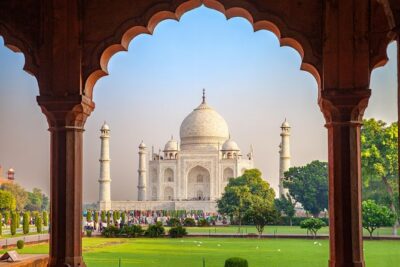
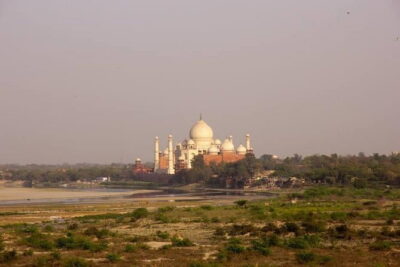
You’re taken to a developed viewpoint near the Yamuna, close to Mehtab Bagh. The goal is a panoramic sense of Taj Mahal across the river. It’s listed at about 1 hour and is not ticketed as described here.
This is one of the best ideas in the whole itinerary because Taj Mahal often hits hardest when you understand the geography—water, gardens, and the symmetry. Even if you’ve seen photos, seeing it framed by the riverbank landscape gives you context.
Mehtab Bagh charbagh garden complex
After the viewpoint, you visit Mehtab Bagh, a charbagh garden layout north of the Taj Mahal complex and across from it. The listed stop is about 30 minutes and is also noted as admission not included.
The charbagh design (a formal garden split into sections) matters because it explains why Mughal architecture loves geometry. You’ll probably feel the logic more than “enjoy the garden like a vacation park,” which is fine. Think of this as learning the Taj Mahal’s visual system.
Agra Day 4: Taj Mahal itself plus Fatehpur Sikri as a style shift
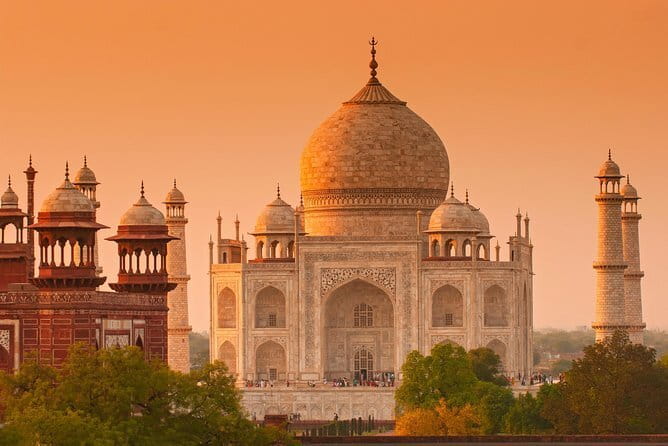
Day 4 is the main Taj Mahal day, followed by a trip out to Fatehpur Sikri.
Taj Mahal visit (2 hours)
This is the big one: an ivory-white marble mausoleum commissioned by Shah Jahan in 1631 for Mumtaz Mahal, with Shah Jahan’s own tomb also included. The visit is listed at about 2 hours, and admission is not included.
What I like about scheduling it after your riverside viewpoint day is that you can compare what you saw from across the Yamuna. When you finally face the Taj from the main side, it can feel like a reveal instead of a first encounter.
Also, with a licensed guide in the mix, you should get help interpreting details—placement, symbolism, and why the complex is arranged the way it is—rather than just standing and photographing.
Fatehpur Sikri (free stop)
Then comes a different mood: Fatehpur Sikri, a 16th-century Mughal city just west of Agra. It’s described as having red sandstone buildings clustered around the center, with Buland Darwaza as the entrance to the Jama Masjid mosque, plus the marble Tomb of Salim Chishti nearby. The listed stop is about 2 hours and marked as free.
This works because you’re not just stuck in one city’s style. Fatehpur Sikri gives you a broader Mughal “city planning” sense—how power shaped the whole environment, not just one monument.
Jaipur Day 5: Hawa Mahal, Amber Fort, Jal Mahal, City Palace, and Jantar Mantar
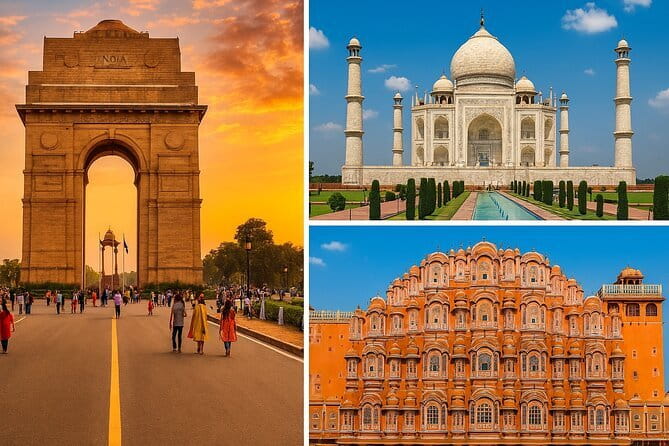
Jaipur on this plan is an all-in architecture day. You’re moving from facade drama to fort views, then into palace administration and finally into scientific instruments.
Hawa Mahal (palace of winds)
Hawa Mahal sits at the edge of City Palace and extends toward the Zenana, the women’s chambers. Built from red and pink sandstone, it’s famous as the palace of winds. The itinerary lists it first, but doesn’t give a time in the day’s section—so in practice, it’s likely a shorter orientation-style stop where you capture the look and structure.
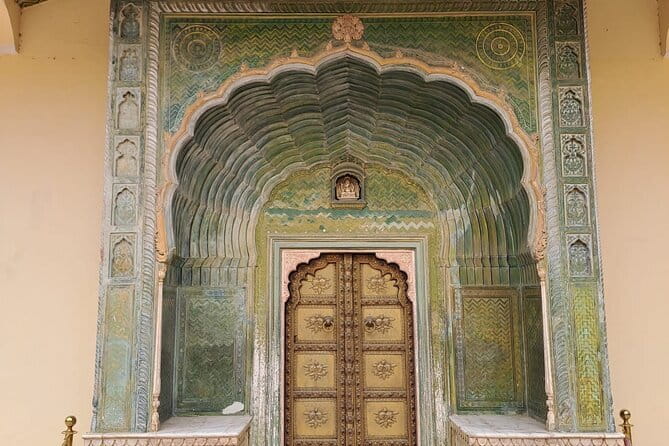
This is a great stop for understanding how design can serve daily life. Even if you’re only there briefly, the facade tells you this wasn’t just decorative; it was built for visibility and privacy in a specific social setting.
Amber Palace (Amer Fort)
Next is Amber Palace (Amer Fort) in Amer, about 11 km from Jaipur. It’s on a hill and is the principal tourist attraction in the area. The stop is listed at about 2 hours with admission not included.
If you like forts that feel like living spaces—not just defensive walls—Amber typically delivers. You’ll likely spend your time scanning courtyards, viewpoints, and the sense of power built into the hilltop position.
Jal Mahal on the Man Sagar Lake
Jal Mahal is a palace in the middle of Man Sagar Lake. It was originally constructed around 1699 and later renovated and enlarged in the early 18th century by Maharaja Jai Singh II of Amber. The itinerary lists it as a stop, but doesn’t specify a time.
This stop is for mood. Even though you’re not spending hours here, it gives you a classic Jaipur “postcard contradiction”: a palace that looks almost afloat, tied to the lake system.
City Palace of Jaipur
City Palace is your next anchor: a royal residence and former administrative headquarters for the Jaipur rulers. Construction started after the establishment of Jaipur, with Maharaja Sawai Jai Singh II moving the court to Jaipur in 1727. The stop is about 1 hour and admission is not included.
City Palace is valuable because it shows the administrative side of royalty. It’s not only about grandeur; it’s about how the palace functioned as headquarters.
Jantar Mantar: stone instruments and the world’s largest stone sundial
Finally, Jantar Mantar comes in near City Palace and Hawa Mahal. It includes 19 astronomical instruments built by Sawai Jai Singh, completed in 1734, and it features the world’s largest stone sundial. This is listed at about 1 hour and admission is not included.
This is one of the best “different brain” stops in the whole itinerary. When you’re done, you’ll probably appreciate that Jaipur wasn’t only about forts and textiles—it was also a center for measurement, timekeeping, and astronomy in stone.
Getting around with Lalit Private Drivers: value, timing, and ticket reality
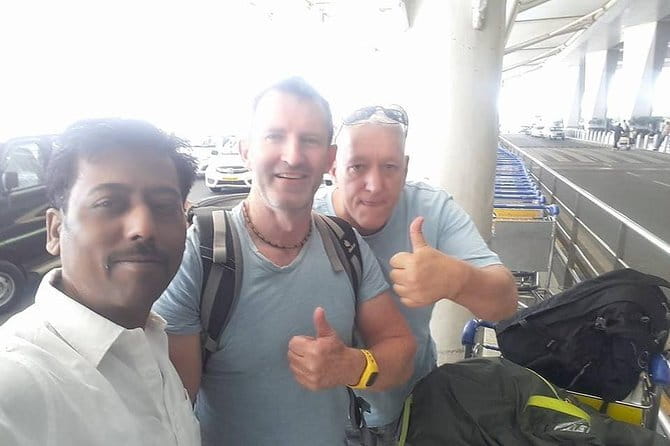
This is a private tour/activity with only your group participating, and the route includes arrival and departure fees, all fees and taxes, parking fee, and bottled water. You’ll also have WiFi on board and an air-conditioned vehicle.
That package coverage matters for value in India, where extra add-ons can quietly turn into a bigger bill. Here, you’re already paying for the vehicle and the operational costs. You’re also getting a licensed guide, which is a big deal when sites are busy and you want context without guessing.
Pricing: the tour is listed at $290.46 per group (up to 2) for about 5 days. For a private, AC car plus a licensed guide and covered operational fees, it’s not a splurge price. It can still feel like a good deal if you’re traveling as a couple or small group and you don’t want to spend your energy coordinating between cities.
Budgeting reality: many stops are marked as admission ticket not included, including Birla Mandir, Humayun’s Tomb, Red Fort, Qutb Minar, Taj Mahal, Amber Palace, City Palace, and Jantar Mantar. Some are marked free, including Chandni Chowk, Lotus Temple, and Fatehpur Sikri. So, you’ll want to budget for entrance fees even if the itinerary looks simple on the calendar.
Driver and service tone: the strongest thread in the feedback is how calm and safe the driving is and how well the guides and drivers handle the day. Names that come up include Rohit, Vinesh Kumar, Pawan, Jile, Jugroop (Jaggi) Singh, and Azad (also seen as Azat), with repeated praise for clear communication and stress-free driving even in heavy traffic. I’d take that as a hint that the company’s strength is the human part: getting you from gate to gate without drama.
One more logistics note: pickup is listed at Indira Gandhi International Airport, and the start time shows 12:00 am. That’s probably tied to your arrival schedule, but I’d double-check your exact pickup time when you confirm.
Who should book this Golden Triangle route
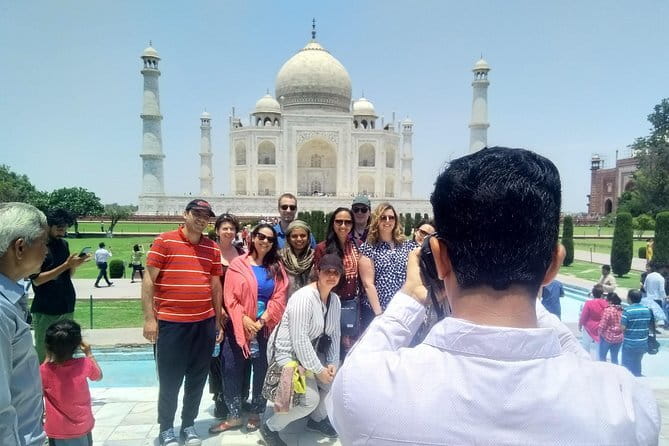
This tour fits best if you:
- Want a private driver and a licensed guide, not a shared group shuffle
- Like hitting major icons in a short time and getting context for what you’re seeing
- Travel as a couple or with a small group (it’s priced per group up to 2)
It may be less ideal if you:
- Want long museum-style pacing or deep time in fewer places
- Hate ticketed monuments and want admissions to be fully included
Should you book Golden Triangle Agra Jaipur with Lalit Private Drivers India?
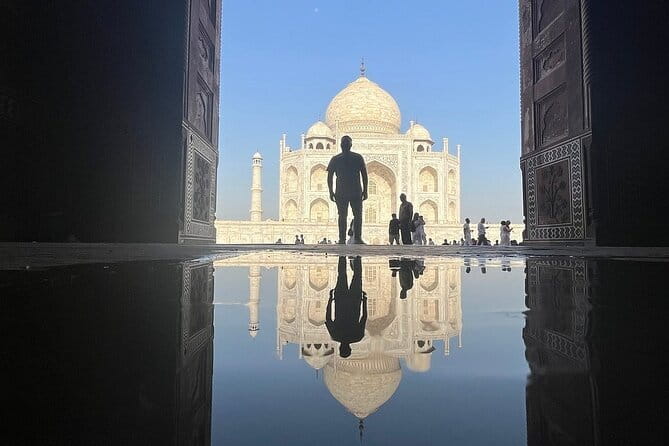
If you want the Golden Triangle experience without turning your trip into transportation homework, I think you should. The value sits in the private AC vehicle, included licensed guide, and the way the itinerary mixes viewpoint stops with the main monument days.
Just go in knowing the trade: lots of iconic stops, many with admission not included, and a schedule built for efficient touring. If you’re comfortable with that style, this is a smart way to get Delhi, Agra, and Jaipur into one smooth 5-day run.
FAQ
What is the duration of the Golden Triangle Agra Jaipur tour?
It’s listed as about 5 days (approx.).
How many people are in a group for this private tour?
The price is per group for up to 2 people, and it’s private, meaning only your group participates.
Where does the tour pickup start?
Pickup starts at Indira Gandhi International Airport in New Delhi, India.
What’s included in the price?
Included items are arrival and departure fee, all fees and taxes, parking fee, WiFi on board, air-conditioned vehicle, bottled water, and a licensed guide.
Are admission tickets included for the main monuments?
Most listed admission tickets are not included, including Taj Mahal, Humayun’s Tomb, Red Fort, Qutb Minar, Amber Palace, City Palace, and Jantar Mantar. Some stops are marked free, including Lotus Temple, Chandni Chowk, and Fatehpur Sikri.
Does the itinerary include both Agra sightseeing and a Jaipur day?
Yes. You’ll have Agra visits (including Taj Mahal viewpoint/Mehtab Bagh and then Taj Mahal plus Fatehpur Sikri) and then a full Jaipur day (Hawa Mahal, Amber Palace, Jal Mahal, City Palace, and Jantar Mantar).
Is alcohol included?
No. Alcoholic beverages are listed as not included.
Is there free cancellation?
Yes, free cancellation is offered. You can cancel up to 24 hours in advance for a full refund.
The Full Golden Triangle, More Options
- 3-Days Private Golden Triangle Tour: Delhi, Agra & Jaipur by Car
★ 5.0 · 1,107 reviews - 3-Days Private Golden Triangle Tour: Delhi, Agra & Jaipur by Car
★ 5.0 · 1,098 reviews - 3-Day Delhi, Agra and Jaipur Private Tour – India Golden Triangle
★ 5.0 · 812 reviews - Four-Day Private Luxury Golden Triangle Tour to Agra and Jaipur From New Delhi
★ 5.0 · 807 reviews - 5 Nights 6 Days Private Golden Triangle Tour – Delhi Agra Jaipur
★ 5.0 · 574 reviews
Onward to Jaipur: More Day Trips
- 3-Days Private Golden Triangle Tour: Delhi, Agra & Jaipur by Car
★ 5.0 · 1,107 reviews - 3-Days Private Golden Triangle Tour: Delhi, Agra & Jaipur by Car
★ 5.0 · 1,098 reviews - 3-Day Delhi, Agra and Jaipur Private Tour – India Golden Triangle
★ 5.0 · 812 reviews - Four-Day Private Luxury Golden Triangle Tour to Agra and Jaipur From New Delhi
★ 5.0 · 807 reviews - Jaipur Day Trip from Delhi by Car or Train – All Inclusive
★ 5.0 · 663 reviews
More Agra Day Trips out of Delhi
- Same Day Taj Mahal, Agra Fort & Baby Taj Tour from Delhi by Car
★ 5.0 · 4,304 reviews - Full Day Taj Mahal, Agra Fort & Baby Taj Tour from Delhi by Car
★ 5.0 · 3,647 reviews - From Delhi: Taj Mahal & Agra Private Day Trip with Transfers
★ 4.9 · 3,181 reviews - From Delhi: Taj Mahal and Agra Fort Private Sunrise Tour
★ 4.9 · 2,270 reviews - Sunrise Taj Mahal, Agra Fort & Baby Taj Tour from Delhi by Car
★ 5.0 · 2,243 reviews
Just added: more New Delhi reviews to browse
- 4 days Golden Triangle Tour★ 5.0 · 3 reviews
- Discover Old & New Delhi: Private Tour with Street Food★ 5.0 · 3 reviews
- Taj Mahal Tour From Delhi By Private Car★ 4.5 · 3 reviews
- Golden Triangle Tour 5 Days★ 5.0 · 3 reviews
- Taj Mahal: Express Entry Ticket For Sunset Tour with guide★ 5.0 · 3 reviews
- Agra Taj Mahal Sunrise & Sunset Tour from Delhi★ 5.0 · 3 reviews
Agra Day Trips from Delhi, compared.
 ★ 5.0Same Day Taj Mahal, Agra Fort & Baby Taj Tour from Delhi by CarFrom $624,304 reviews
 ★ 5.0Full Day Taj Mahal, Agra Fort & Baby Taj Tour from Delhi by CarFrom $623,647 reviews
 ★ 4.9From Delhi: Taj Mahal & Agra Private Day Trip with TransfersFrom $43,181 reviews
 ★ 4.9From Delhi: Taj Mahal and Agra Fort Private Sunrise TourFrom $592,270 reviews
 ★ 5.0Sunrise Taj Mahal, Agra Fort & Baby Taj Tour from Delhi by CarFrom $622,243 reviews
 ★ 5.0Taj Mahal and Agra Private Car Tour from Delhi with 5* LunchFrom $331,633 reviews
 ★ 4.9From Delhi: Private Taj Mahal and Agra Tour by Express TrainFrom $751,605 reviews
 ★ 5.0Taj Mahal, Agra Fort, Baby Taj Tour from Delhi by Superfast TrainFrom $751,494 reviews